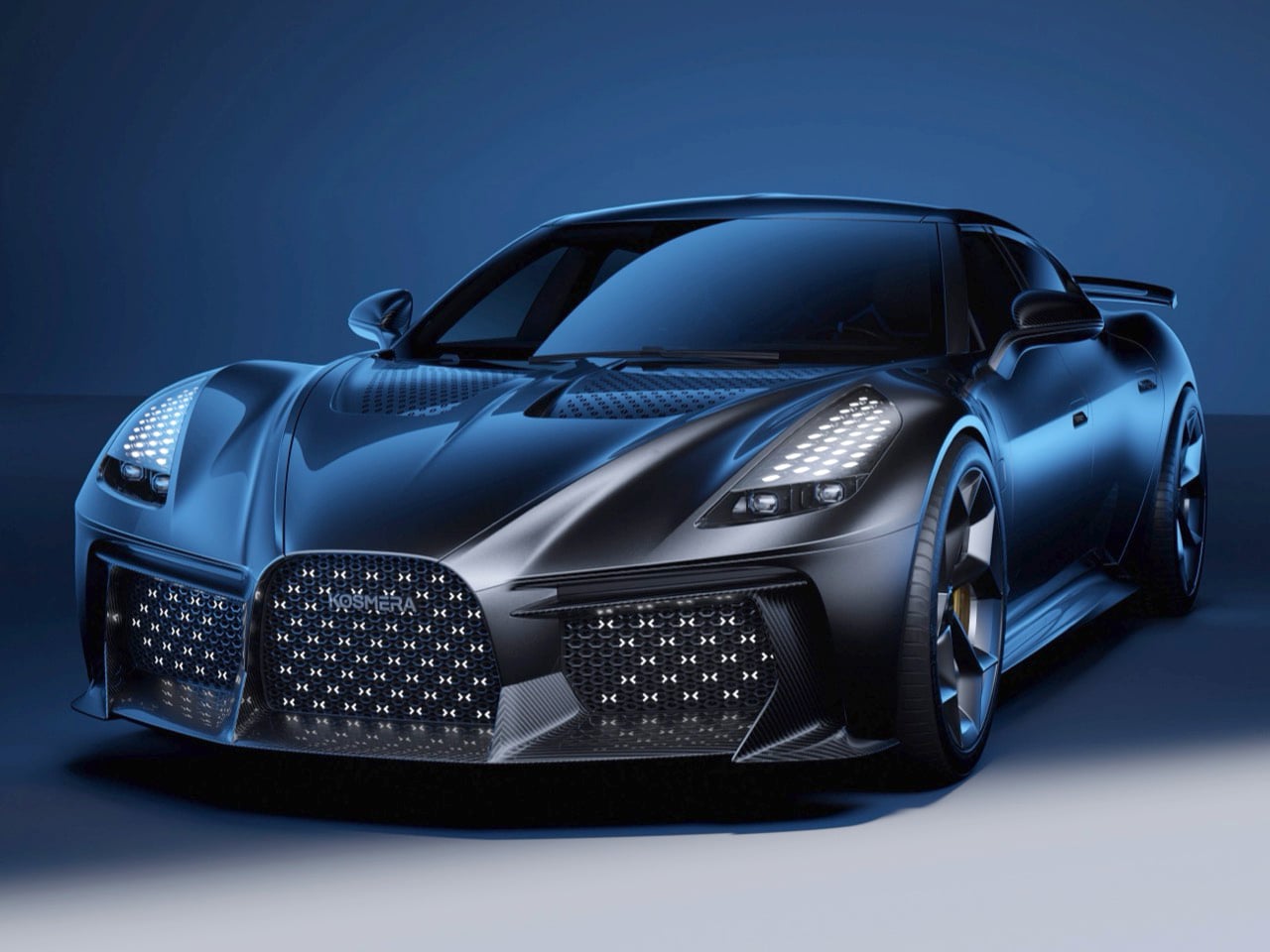

WIRED called them the brands that stole the show, and at CES Las Vegas in January 2026, KOSMERA arrived with a four-door high-performance GT prototype wearing a blue-black finish that New Atlas described as magnificent in person, noting its low-sloping hood, big rear wing, and dual-layer diffuser. SupercarBlondie’s verdict was equally direct: “a race car from the year 2199.” For a company that almost no one in the room had encountered before that week, the response was the kind that established brands spend decades trying to manufacture. KOSMERA’s founders, whose engineering lineage runs from China’s earliest quad-rotor UAV programs through 100,000 RPM-class digital motors and autonomous chassis research, had spent years building toward this moment. The car on the floor was proof that the preparation had translated.
The company calls itself “born global by design,” combining Chinese speed of innovation, American AI ambition, German engineering discipline, and Italian emotional design language into one evolving brand vision. R&D centers sit across Beijing, Suzhou, Shanghai, Shenzhen, and Los Angeles, with the design studio operating out of Turin and manufacturing anchored in Brandenburg, Germany. From hypercars and high-performance GTs to luxury all-terrain SUVs, KOSMERA is building a product portfolio powered by a shared foundation of performance, intelligence, and software-defined mobility. That portfolio breaks down into a collector-series hypercar called The Hypera, a pair of high-performance GTs in the Star Matrix and Star Razer, and a luxury all-terrain SUV called Terra. At the center of every vehicle is a quad-motor AWD system targeting 3,154 horsepower, a 0-100 km/h time of 1.7 seconds, and a top speed of 550 km/h.
Designer: KOSMERA
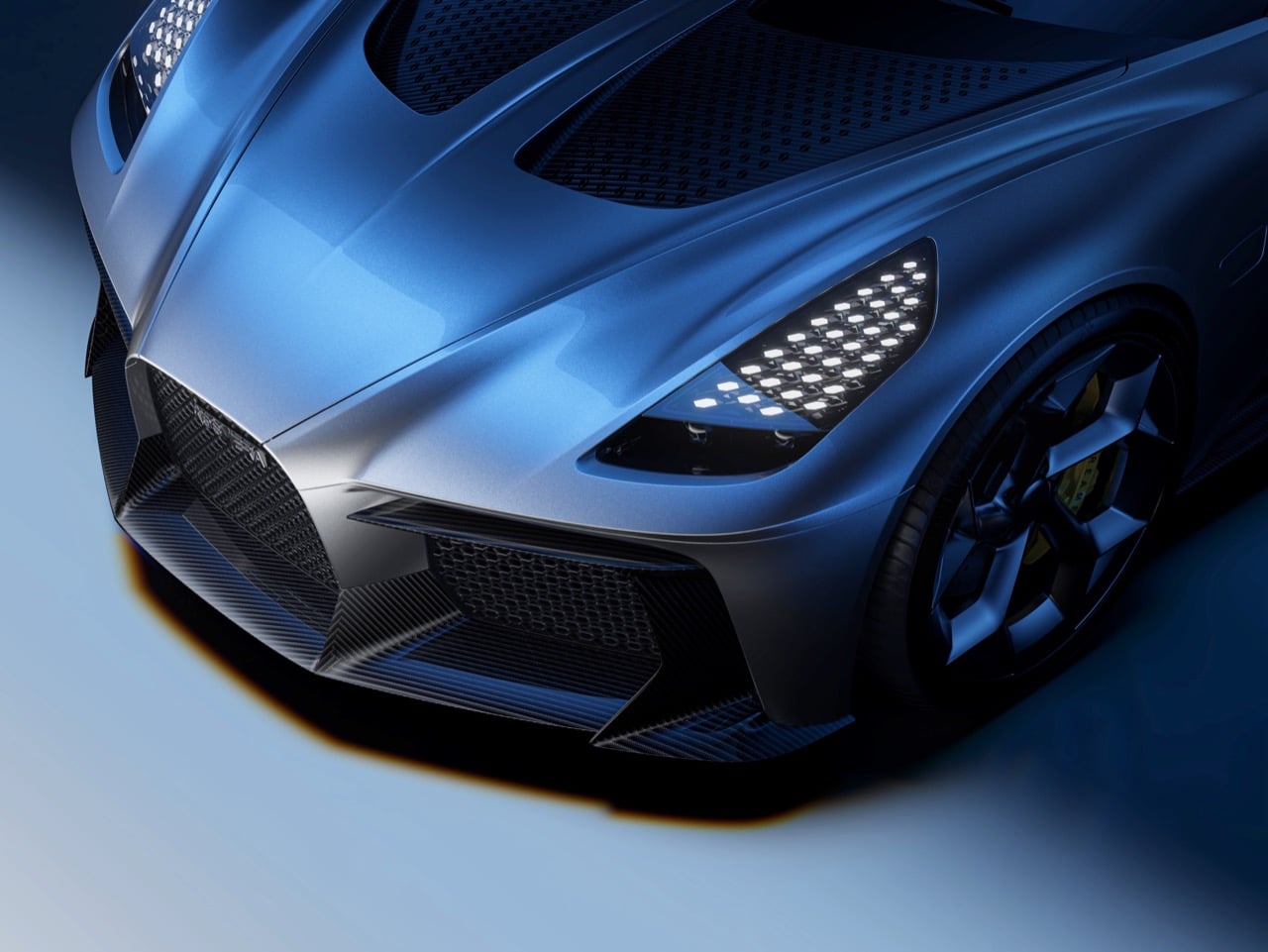

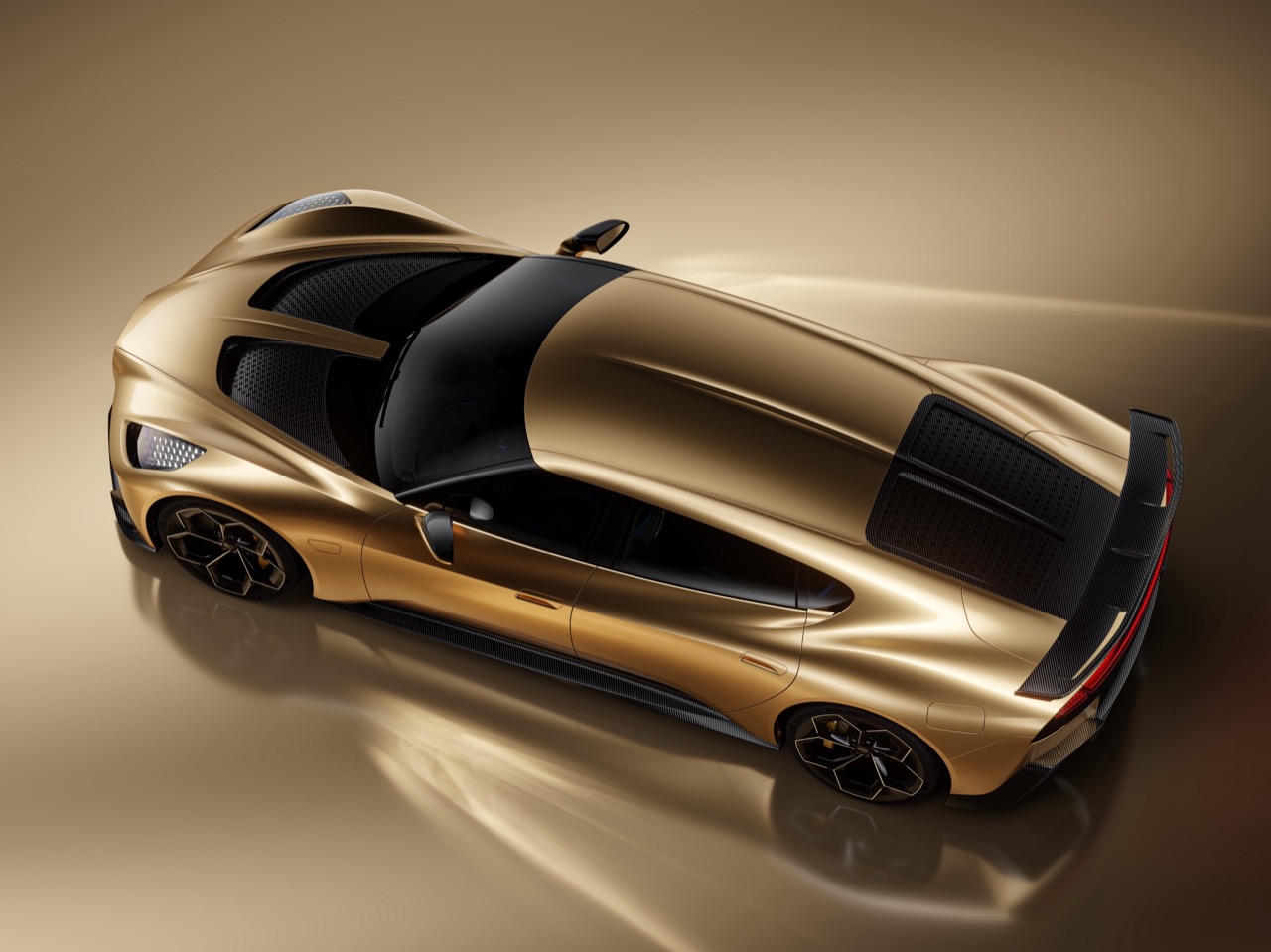
The Star Matrix is KOSMERA’s interpretation of intelligent performance built around balance, with an aluminum spaceframe wrapped in carbon-fiber panels, starburst rear lighting with a speed-responsive dynamic flow animation, and an acceleration pulse effect that makes the tail of the car feel alive at night. Designed as a next-generation high-performance GT, it combines extreme electric performance with aerodynamic efficiency and driver-focused ergonomics. Physical controls inside are reduced by 80 percent, leaving a driver environment of carbon fiber, aerospace textiles, and Alcantara with an AI Coach display projecting real-time racing lines and blind-spot alerts into the driver’s eyeline. The Star Razer carries the same architecture into wilder territory, arriving in Quantum Violet with frameless doors, a lower and wider stance, a breathing light bar, and a Cd of 0.20 achieved through aero blade lines and rear wheel channels. Where the Star Matrix reads as precision, the Star Razer reads as provocation.
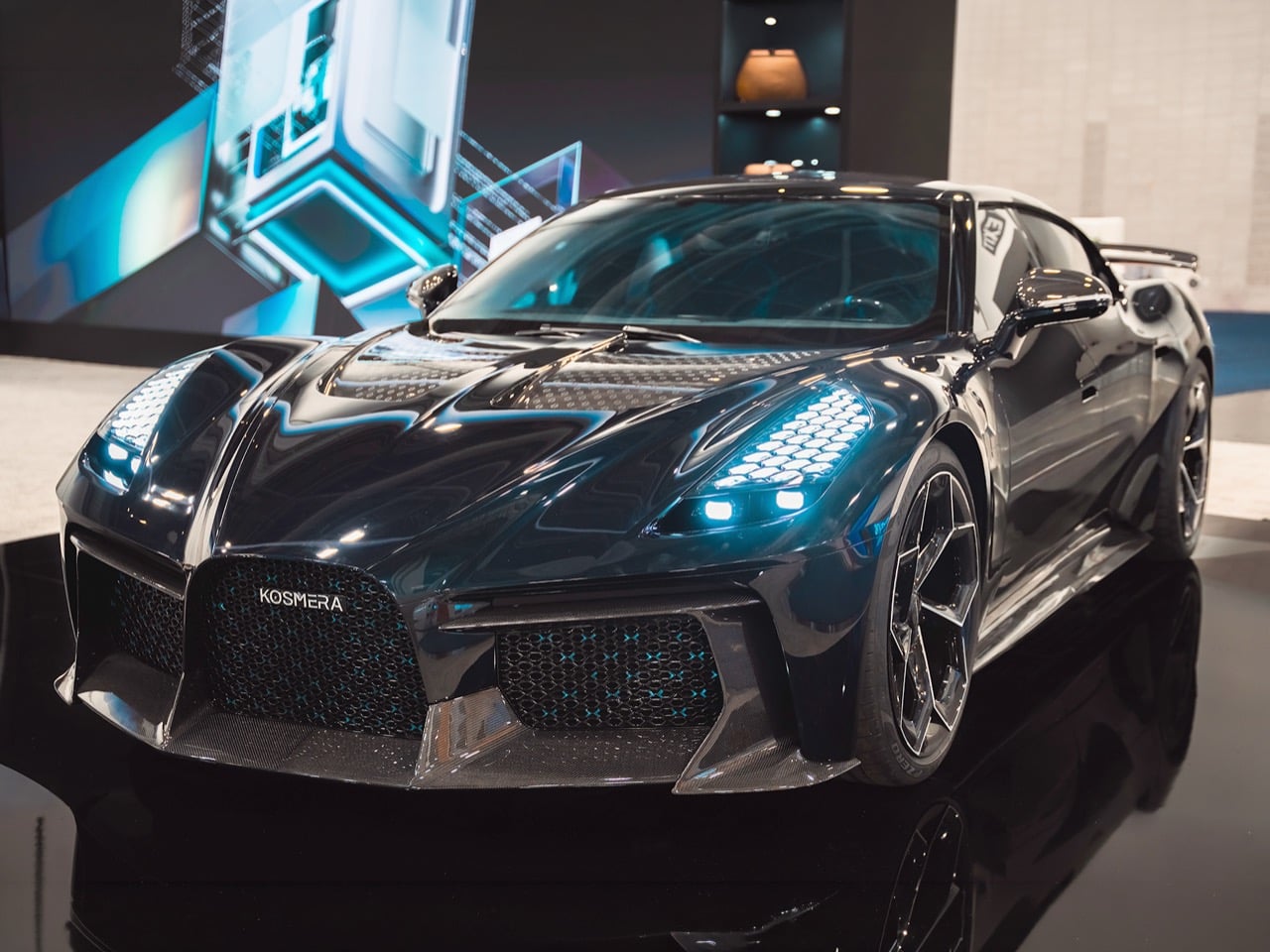
Kosmera Star Matrix
Axial-flux motors redirect magnetic flow along the rotation axis rather than radially, producing a shorter magnetic path and better torque leverage in a far more compact package, and the HyperDrive quad-rotor layout delivers up to 1,578 PS on a single shaft, achieving nearly twice the power density of conventional motors. The quad-rotor configuration targets 1,160 kW per axle, 7,500 Nm of peak wheel torque, and wheel-end speeds above 4,000 rpm. The power electronics use a full silicon-carbide inverter architecture, reducing conduction loss by approximately 40 percent compared to conventional silicon systems. Four independent motors deliver per-wheel torque vectoring, shaping cornering through real-time torque redistribution rather than braking intervention, a more precise and faster-reacting control philosophy. KOSMERA describes each axle as comparable to two Ferrari V12 engines combined, and for once the metaphor and the physics actually align.
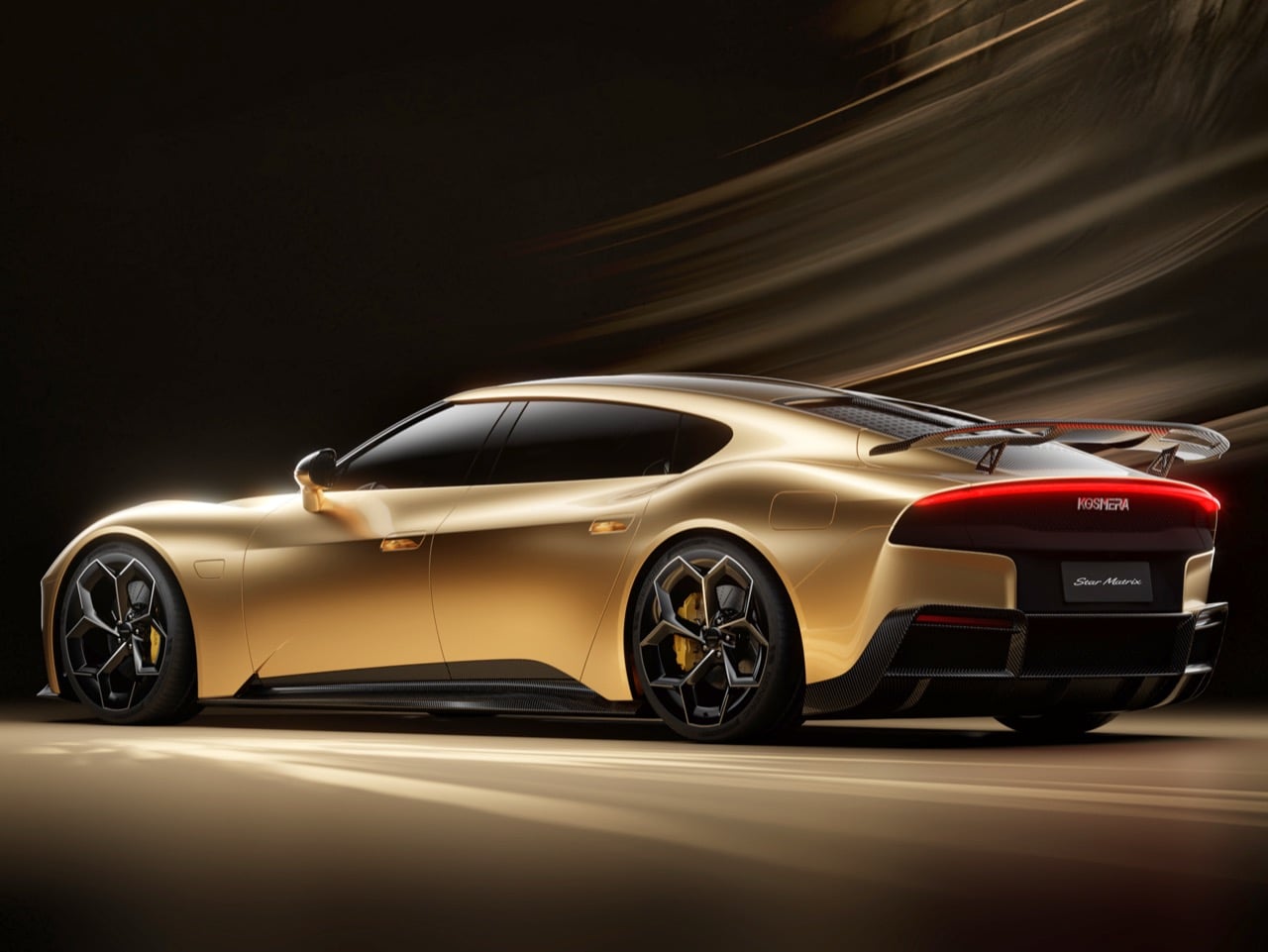
The HyperCore battery’s cell-to-pack architecture eliminates the module layer, pushing pack efficiency to 85 percent and enabling peak discharge above 2,500 kW on a 1,200-volt, 6C platform. Charging targets 10 to 80 percent in under seven minutes, a figure that starts collapsing the practical gap between an EV charge stop and a combustion fuel stop. KOSMERA’s HyperPilot Vision-Language-Action stack runs on a 2,000-TOPS compute platform with LiDAR, millimeter-wave radar, cameras, IMU, and HD mapping feeding a physics-based World Model architecture capable of predictive reasoning. The system covers predictive track mapping, an AI racing coach, AR headset integration, highway L3 assisted driving, and urban Navigate-on-Autopilot. The Star Razer extends the ecosystem further, adding an onboard drone interface that deploys autonomous UAVs for last-mile logistics, emergency delivery, and aerial capture, functioning as a mobile mothership for intelligent mobility. That prediction layer shifts the system from reactive driver assistance to genuinely anticipatory control.

FlexBase integrates drive, braking, steering, and suspension into a fully by-wire architecture with a closed-loop response time under 10 milliseconds, a latency figure that approaches the point where human perception cannot distinguish digital from mechanical control feel. A maximum steering angle of 90 degrees enables zero-radius turning and crab-walk capability that conventional suspension geometry cannot approach. Four-wheel independent control includes automatic compensation for single-wheel failure, and the ASIL-D safety certification aligns the platform with L4 autonomy requirements. KOSMERA claims the electrified integration reduces overall system cost and weight by 30 percent by eliminating components rather than replacing them. The modular chassis is designed to scale across the entire vehicle lineup, from The Hypera to Terra, meaning each model shares a validated foundation rather than developing bespoke hardware from scratch.
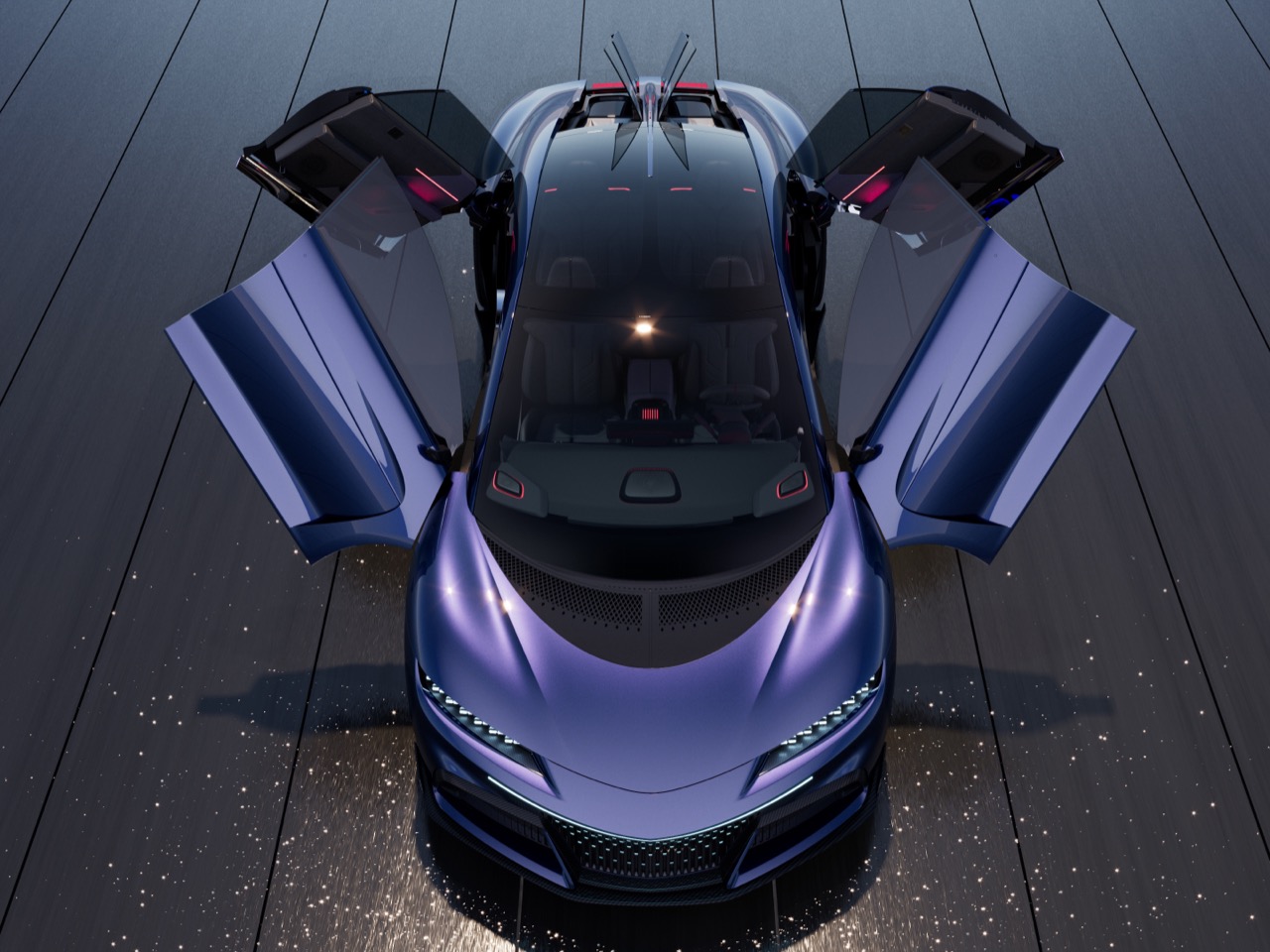
Kosmera Star Razer
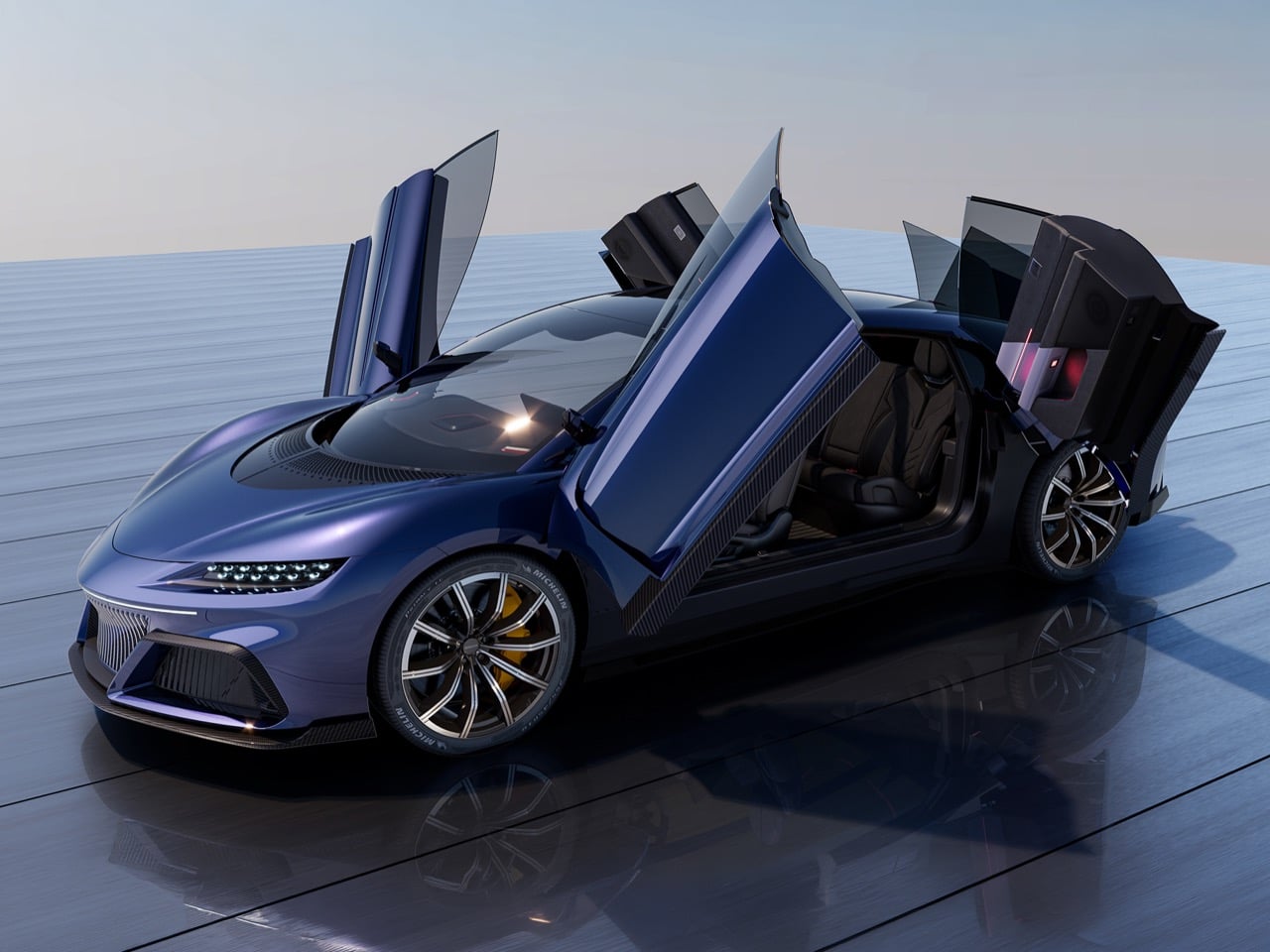
Kosmera Star Razer
AutoEvolution placed KOSMERA’s 1.7-second 0-60 claim squarely in “a league where Rimacs and Koenigseggs have been making the rules for years,” and that is the competitive frame the brand has chosen for itself. The Axion Power propulsion division confirmed in June 2026 that the 3,000-plus horsepower system remains in pre-development and patent application review, a qualifier worth holding onto when reading the headlines. What exists today is a technically serious platform grounded in axial-flux motor engineering, 1,200-volt battery architecture, AI-driven chassis control, and software-defined mobility. The founding team’s background spans decades of experience in AI, robotics, autonomous systems, and high-speed motor engineering, which means the ambition carries real engineering DNA behind it. Whether KOSMERA can close the gap between concept-stage intensity and production-validated performance will be the story worth watching through the rest of the decade.

