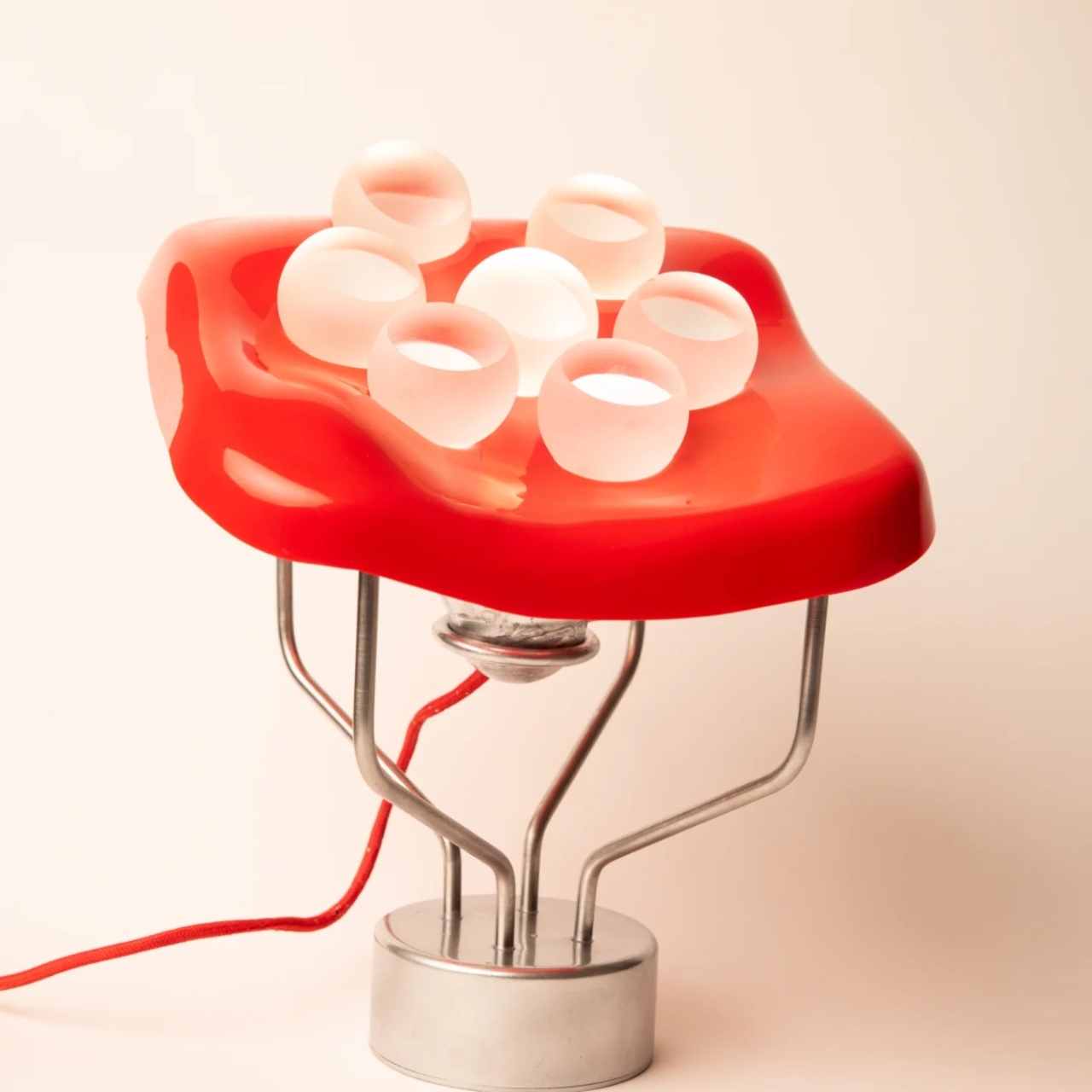

The first time you look at Gustav Friebel’s Hands On Light, you might do a double-take. Is it a lamp? A science experiment? An art installation that somehow found its way onto a side table? The answer, satisfyingly, is all three, and that is exactly the point.
Hands On Light is Friebel’s contribution to the exhibition of the same name, a master’s cooperation between ERCO, one of Germany’s most storied lighting manufacturers, and UDK Berlin (Universität der Künste). Fifteen prototypes were shown at Berlin Design Week 2026, each one exploring what the project called the “Alchemy of Light.” Friebel’s piece stood out immediately, not just for its color (that urgent, almost aggressive red) but for what it asks you to think about when you look at it.
Designer: Gustav Friebel
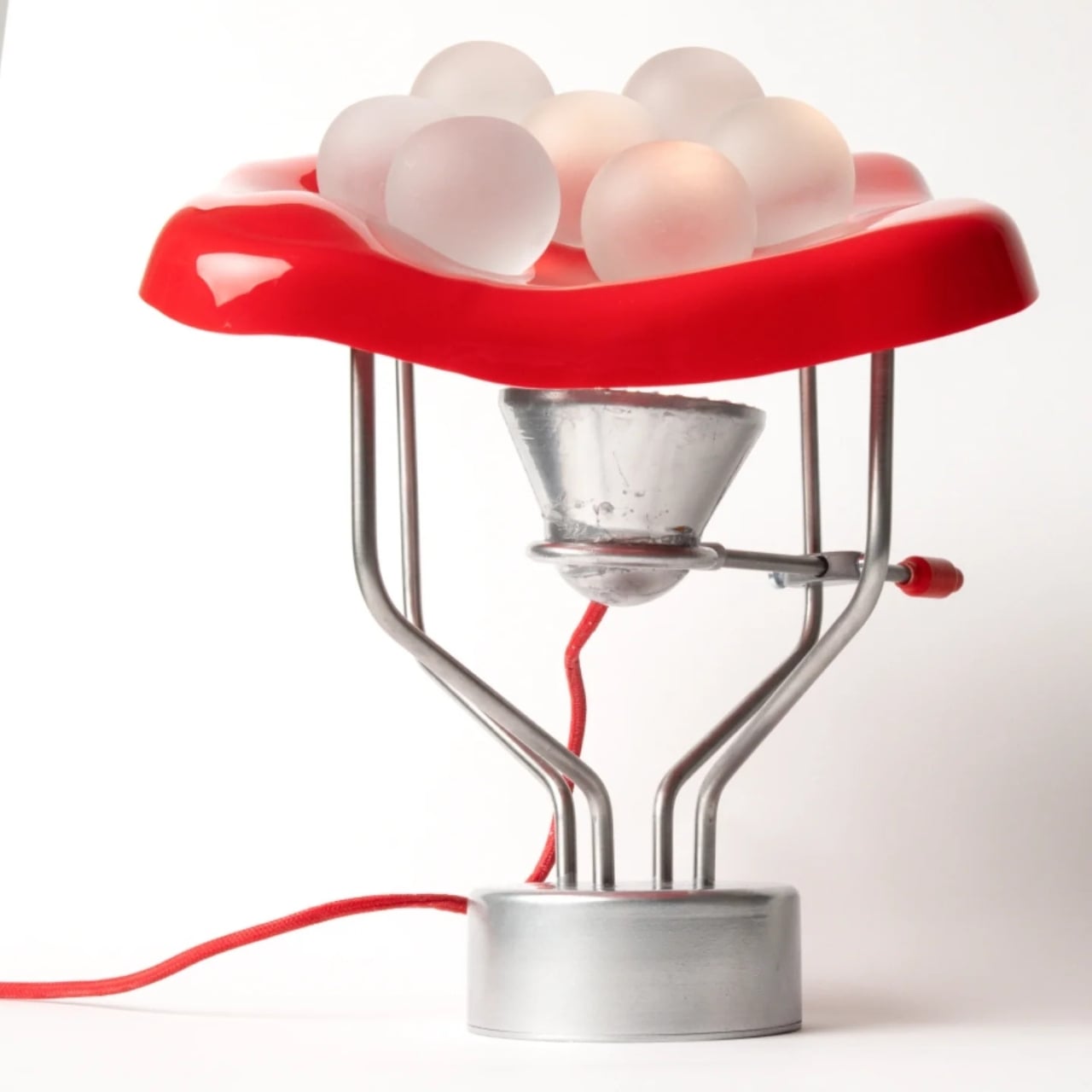

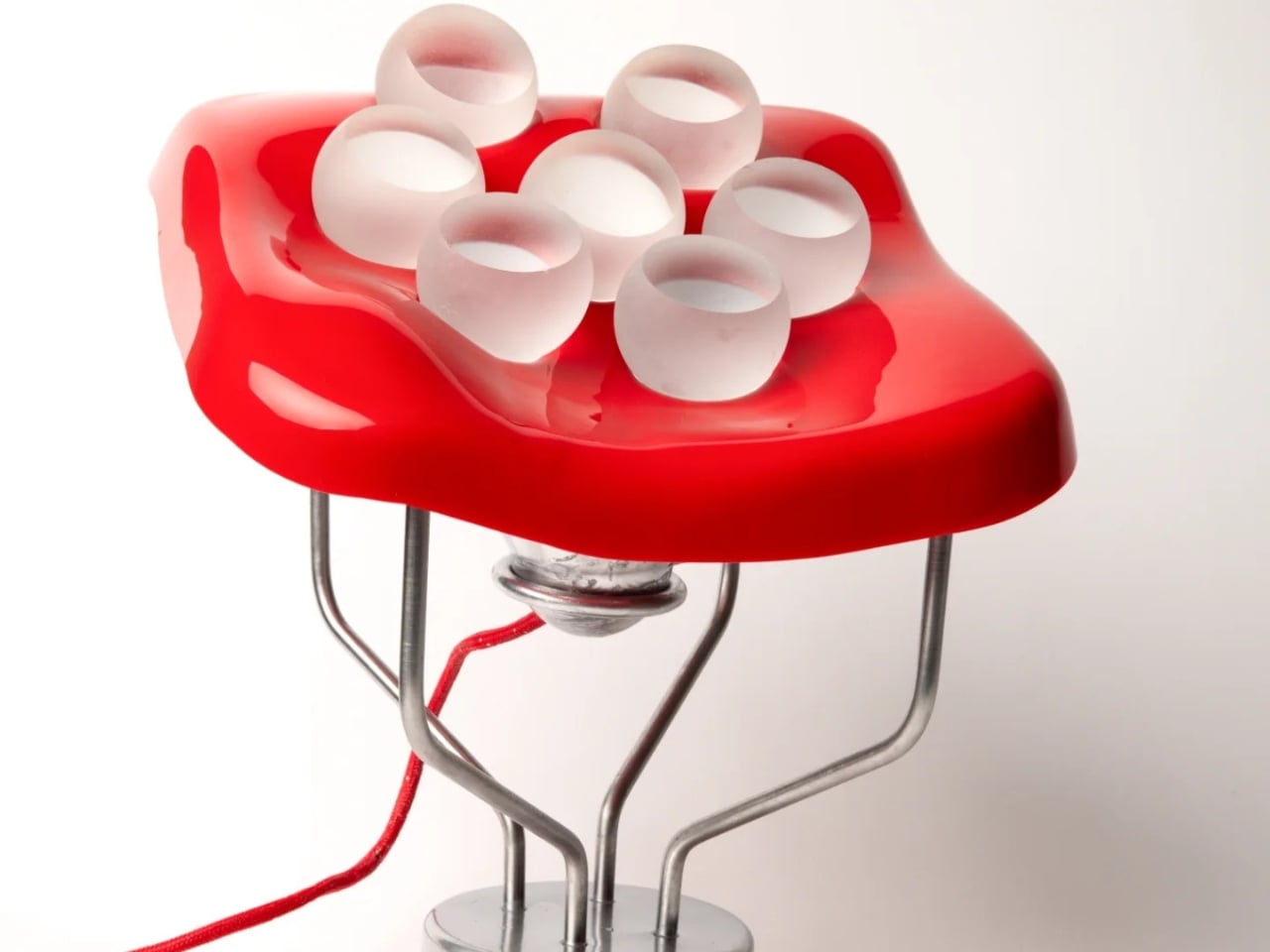
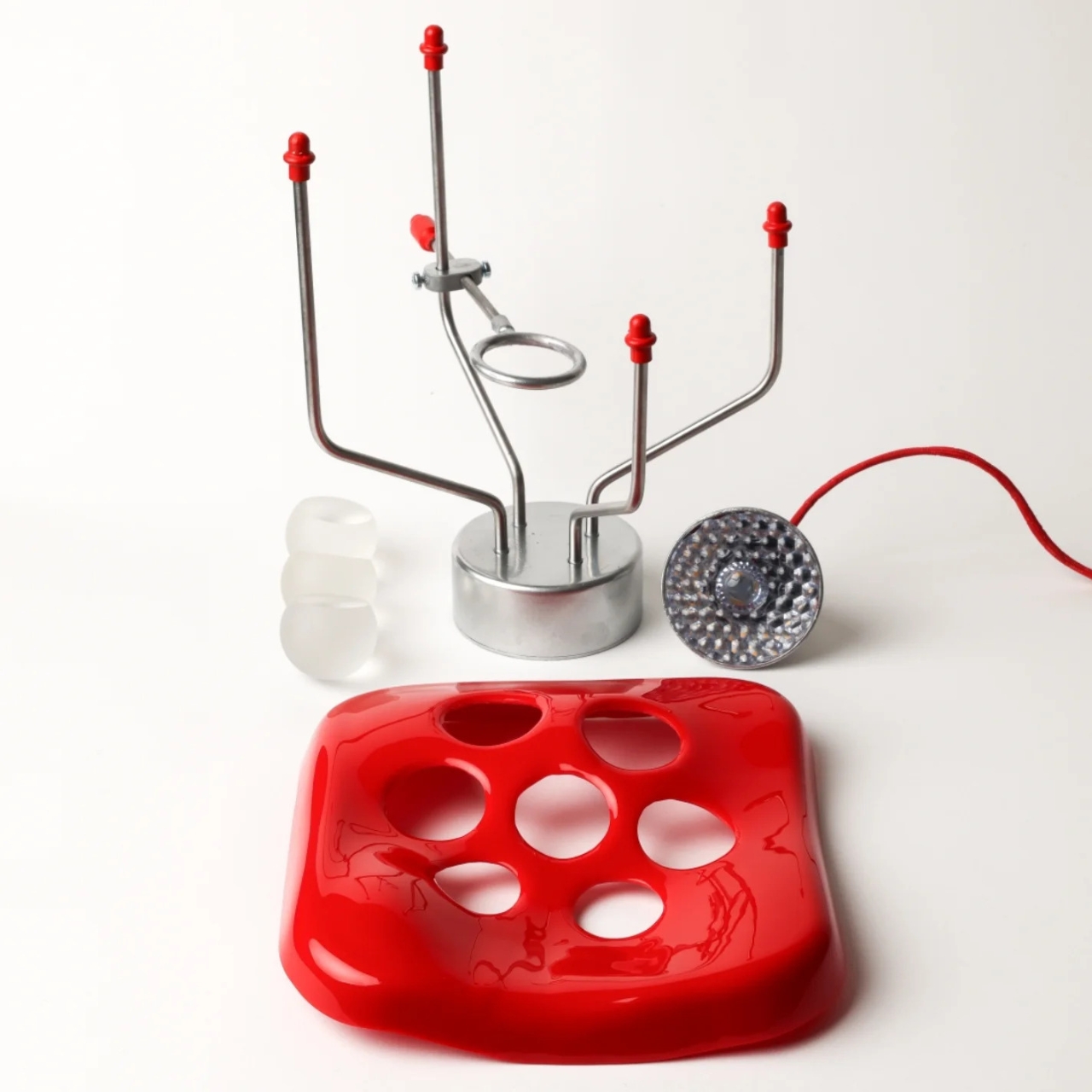
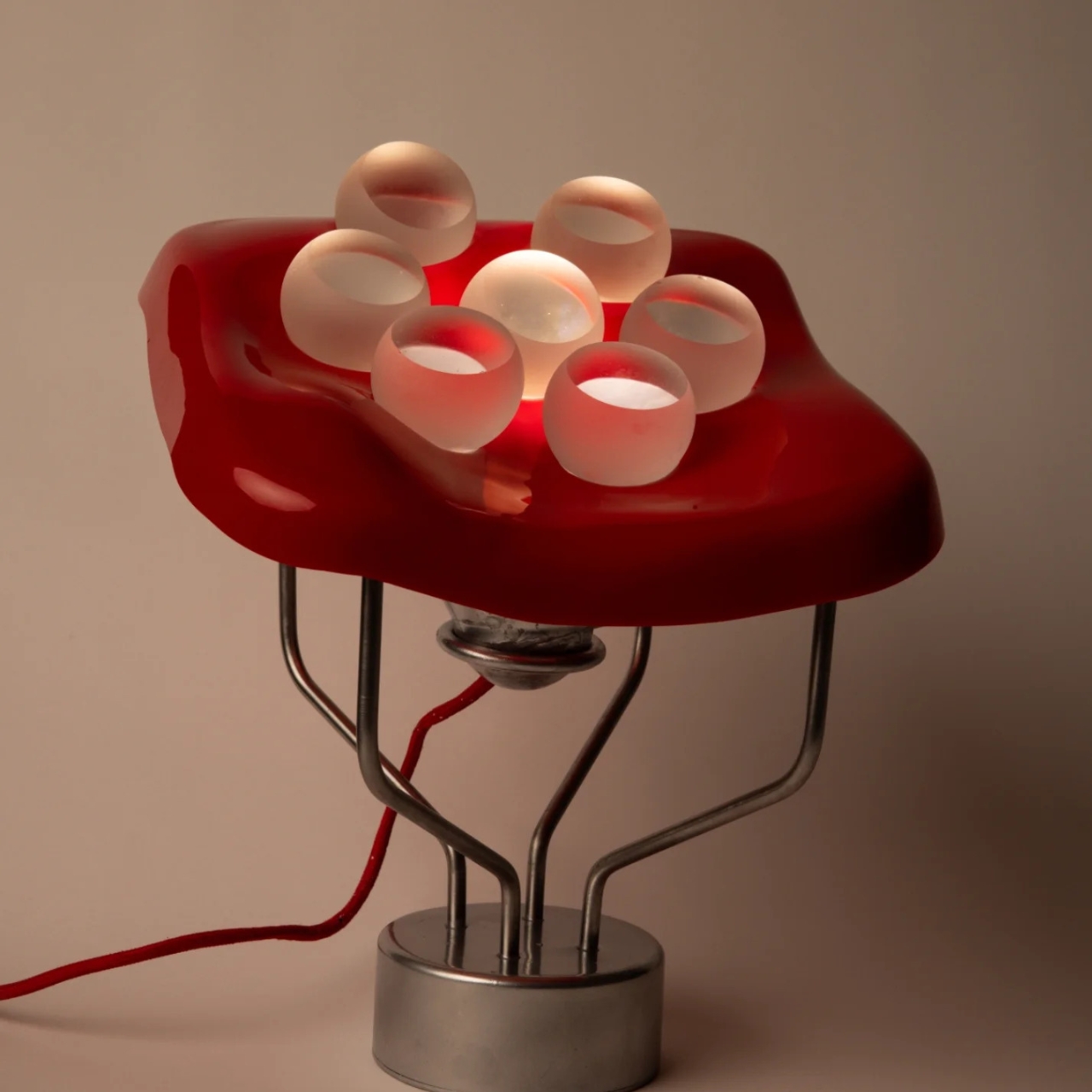
The concept is grounded in natural light segmentation. Think of the way sunlight hits a cluster of bubbles on water, or how dappled light falls through a canopy of leaves. Each point of light is distinct, separated, alive. Friebel took that idea and made it structural. Seven frosted glass spheres, each with polished sides, sit inside the holes of a deep-drawn PMMA sheet. That sheet, the red one that catches your eye first, is not a simple tray. It is a sculptural form in itself, its organic rounded edges suggesting something molten, like a material caught mid-transformation.
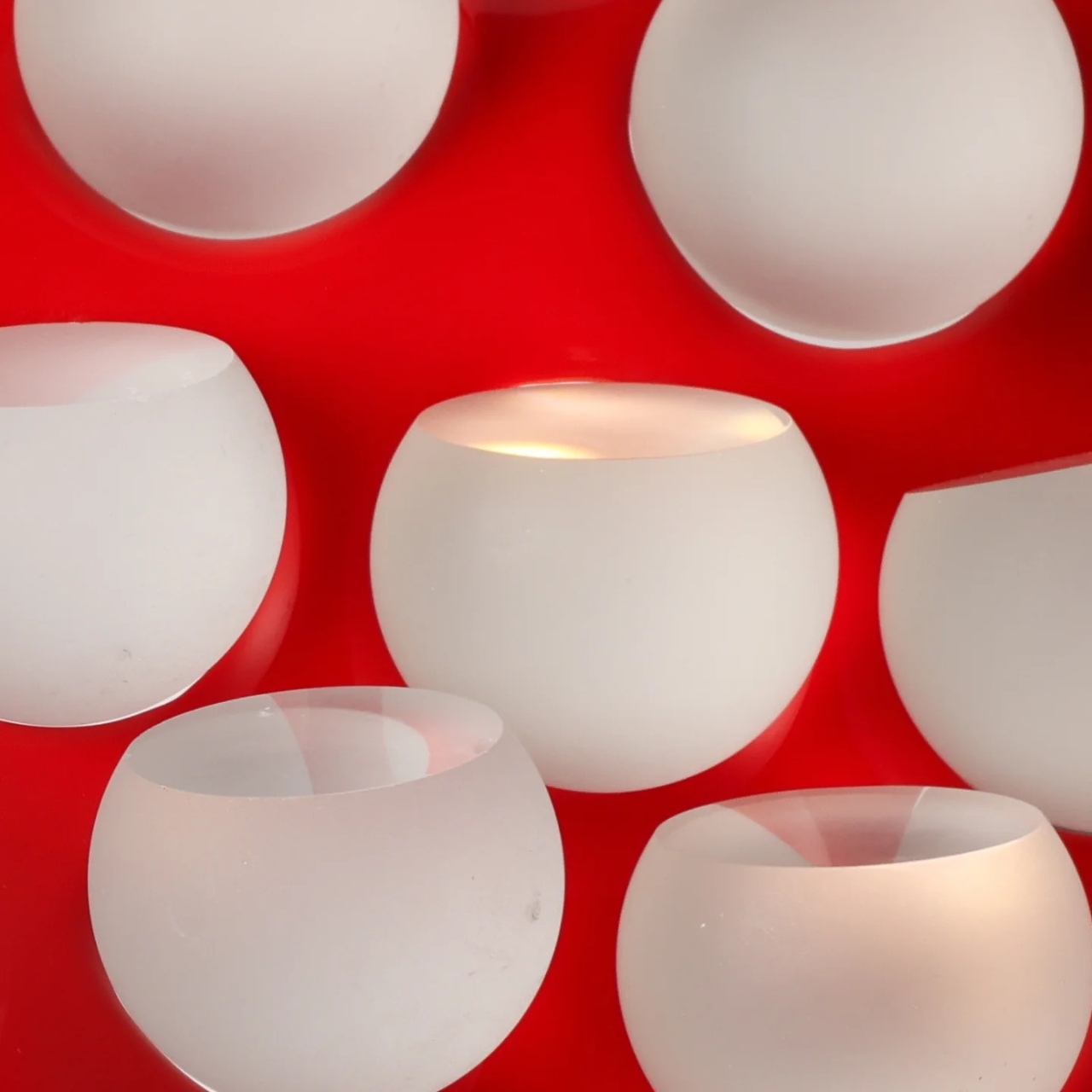
The glass spheres do something genuinely clever. The frosting diffuses the light, softening it into a gentle glow, but the polished sides of each sphere allow light and color to interact in a way that feels less like engineering and more like physics made beautiful. When the lamp is on, the red of the PMMA bleeds into the milky glass, and the whole thing pulses with warmth. Lit or unlit, it reads differently. That duality is not an accident.
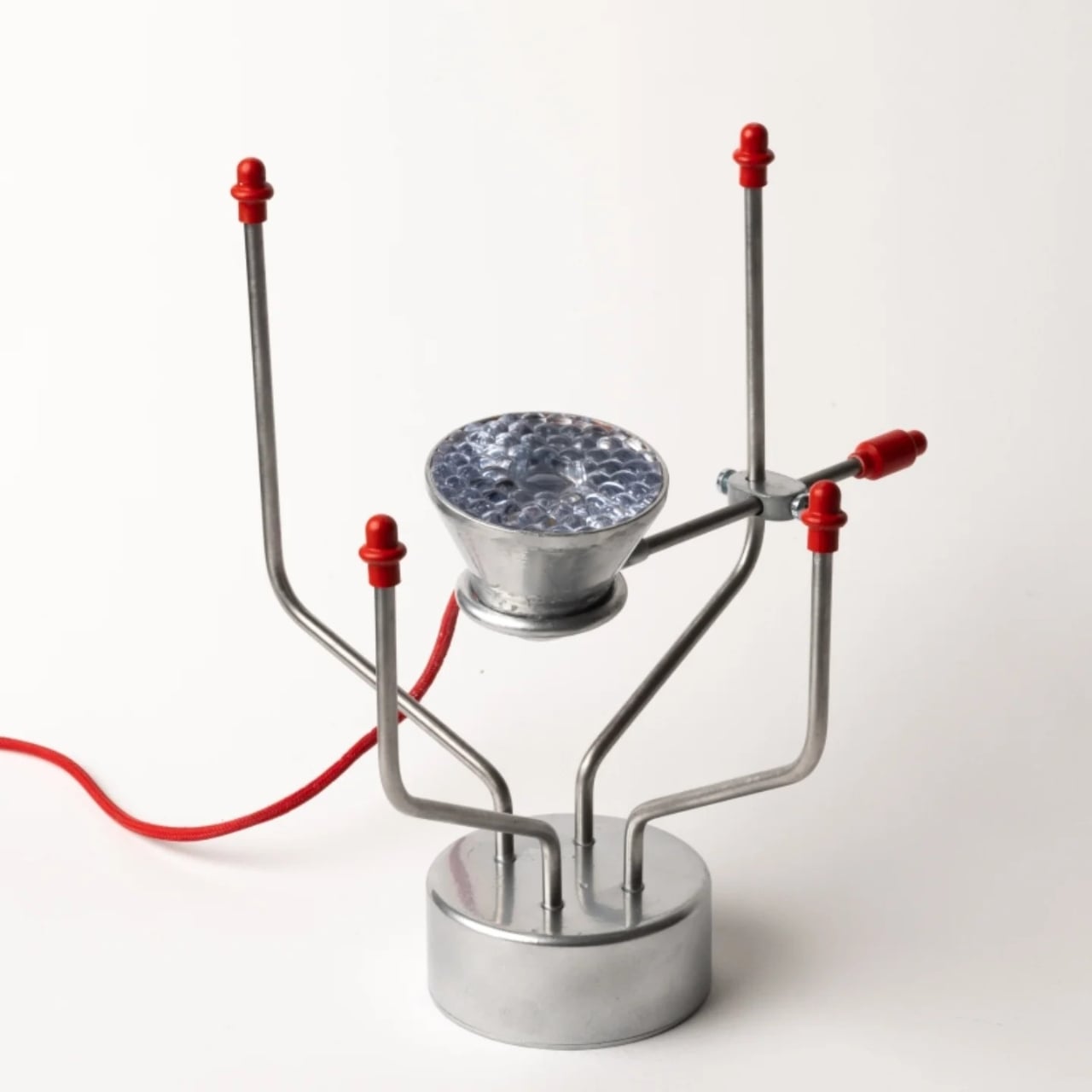
What sits beneath all of this is also worth paying attention to. The base is a chrome metal armature with a sculptural quality of its own. The supports branch out from a cylindrical foot, holding the whole assembly with a kind of studied asymmetry, like a model of an atom or something lifted from a lab. A red braided cord runs through it all, tying the color story together from bottom to top. Disassembled and laid out flat, as the photographs show, the components look like they belong to three different design languages. Assembled, they resolve into something surprisingly unified.
The collaboration context matters here. ERCO brings with it a serious design heritage. Otl Aicher, one of the most influential visual designers of the 20th century, is among those connected to the company’s tradition. That background gives the brief real weight, and you can feel it in the work the students produced. This was not a decorative exercise. The project pushed students to engage with light as a raw material, not a byproduct. Friebel clearly took that seriously.
My honest read on this is that Hands On Light sits in a genuinely interesting space between functional object and conceptual statement. The lamp works. It lights a room. But it also asks you to reconsider what a lamp is supposed to do, and whether utility and spectacle have to be in tension with each other. I do not think they do, and this piece makes a strong case for that position.
Lamps tend to be the most overlooked objects in interior design, bought last and thought about least. Friebel’s piece argues, quietly and colorfully, that they deserve better than that. Light is not just a utility. It is a mood, a texture, a quality of space. When a designer approaches it that way from the very start of the process, you end up with something that earns a second glance, a third, and eventually a permanent spot on your wishlist.