
Visit the Sagrada Família in person and it overwhelms you in a way that no single photograph or video ever could. I was there in March, and I remember thinking that Gaudí didn’t design a building so much as he composed a three-dimensional argument about what architecture could be, organic, mathematical, spiritual, and completely unlike anything built before or since. The outside alone requires hours: the Nativity façade, which Gaudí himself completed, layered with life and exuberance, versus Subirachs’ stark, geometric Passion façade on the opposite end, two completely different artistic philosophies on the same building. Inside, the columns taper and branch like trees in a forest canopy, and the stained glass floods everything in color that shifts as the sun moves.
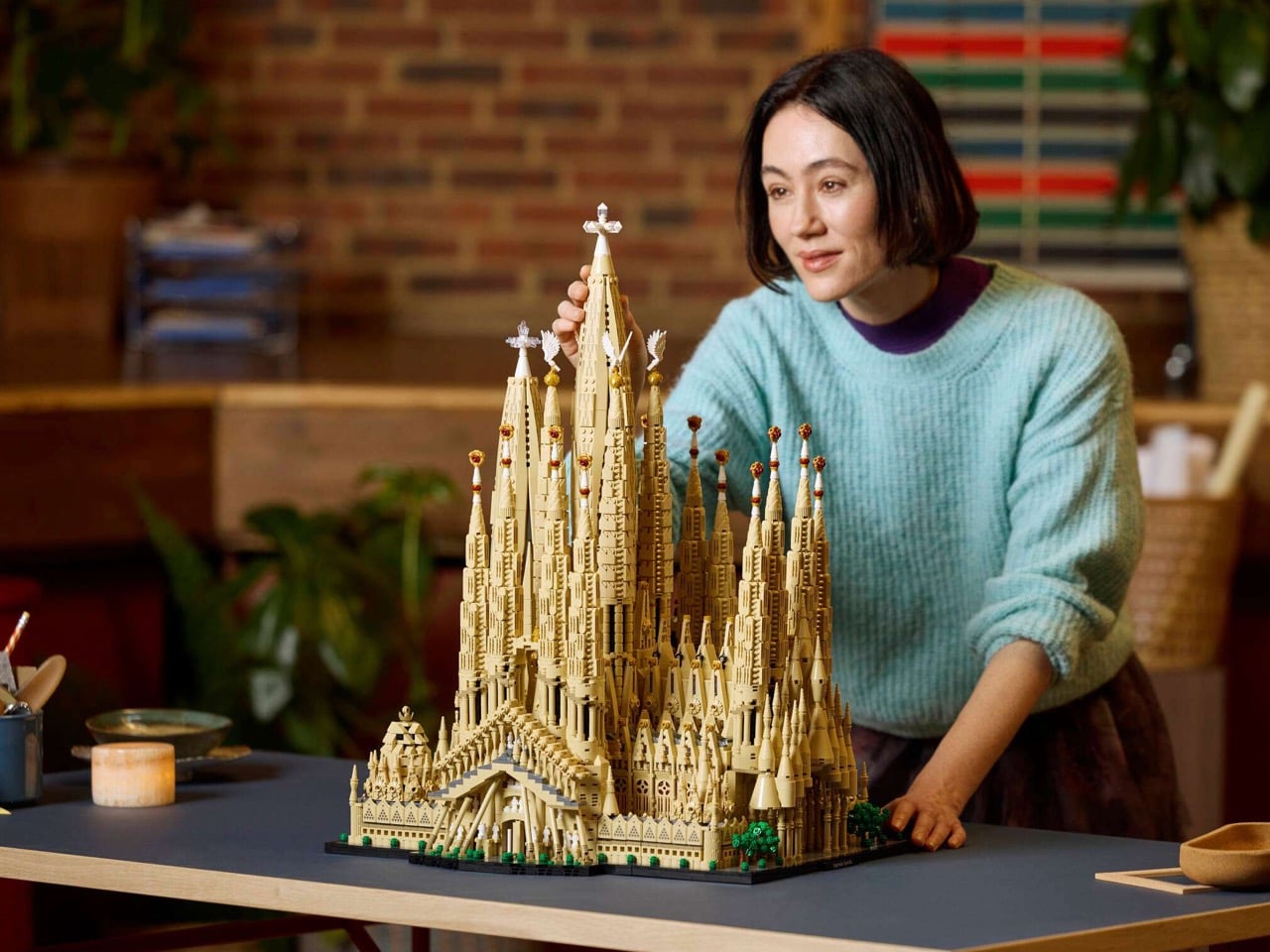
Asking LEGO to capture that in plastic bricks is like asking someone to transcribe a symphony into morse code. Something is always going to be lost in translation. What surprises me about the new Architecture Sagrada Família set is how much isn’t. At 12,060 pieces, the largest LEGO building set ever produced, this feels like LEGO swinging for something genuinely historic.
Designer: LEGO
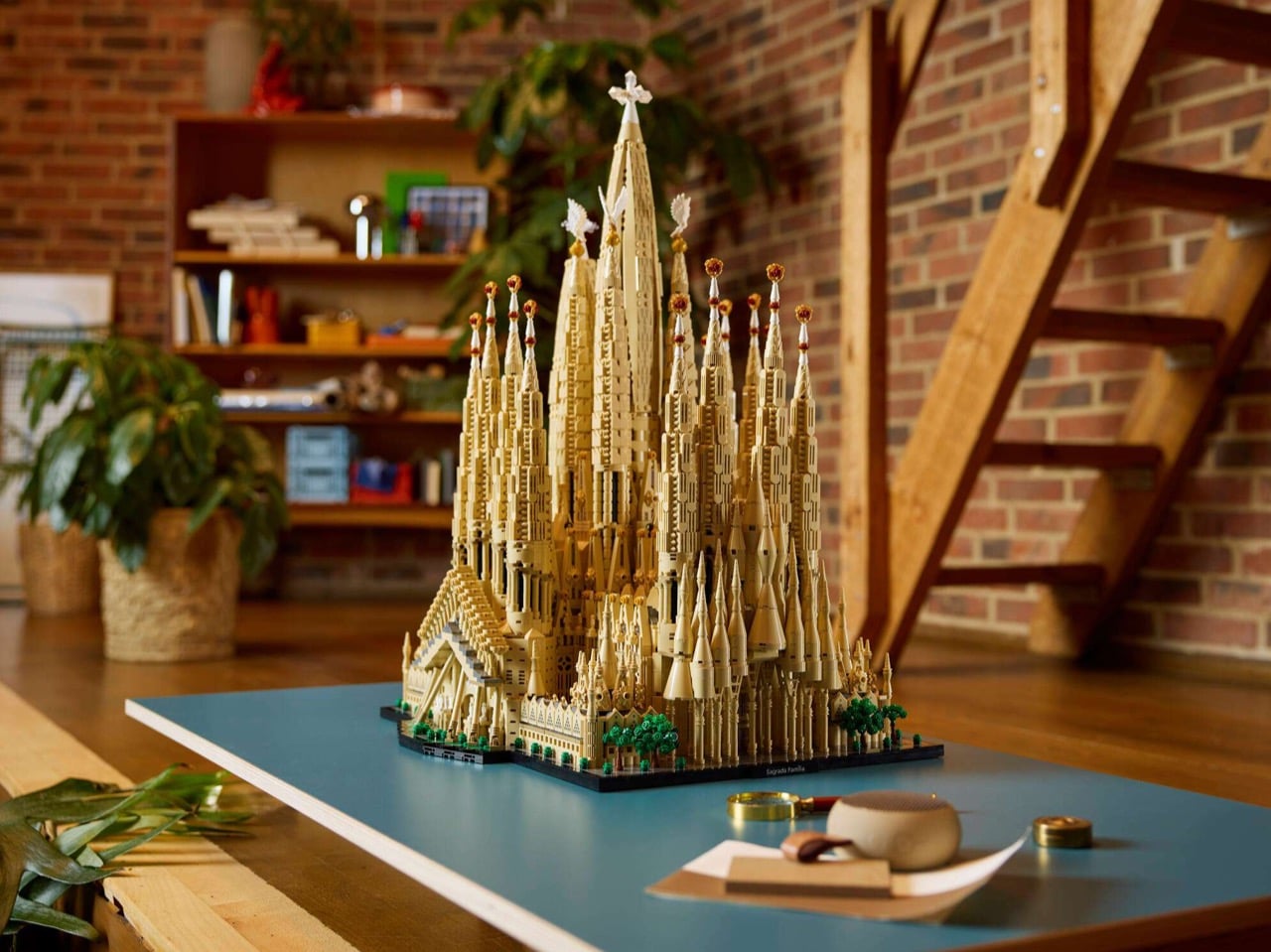

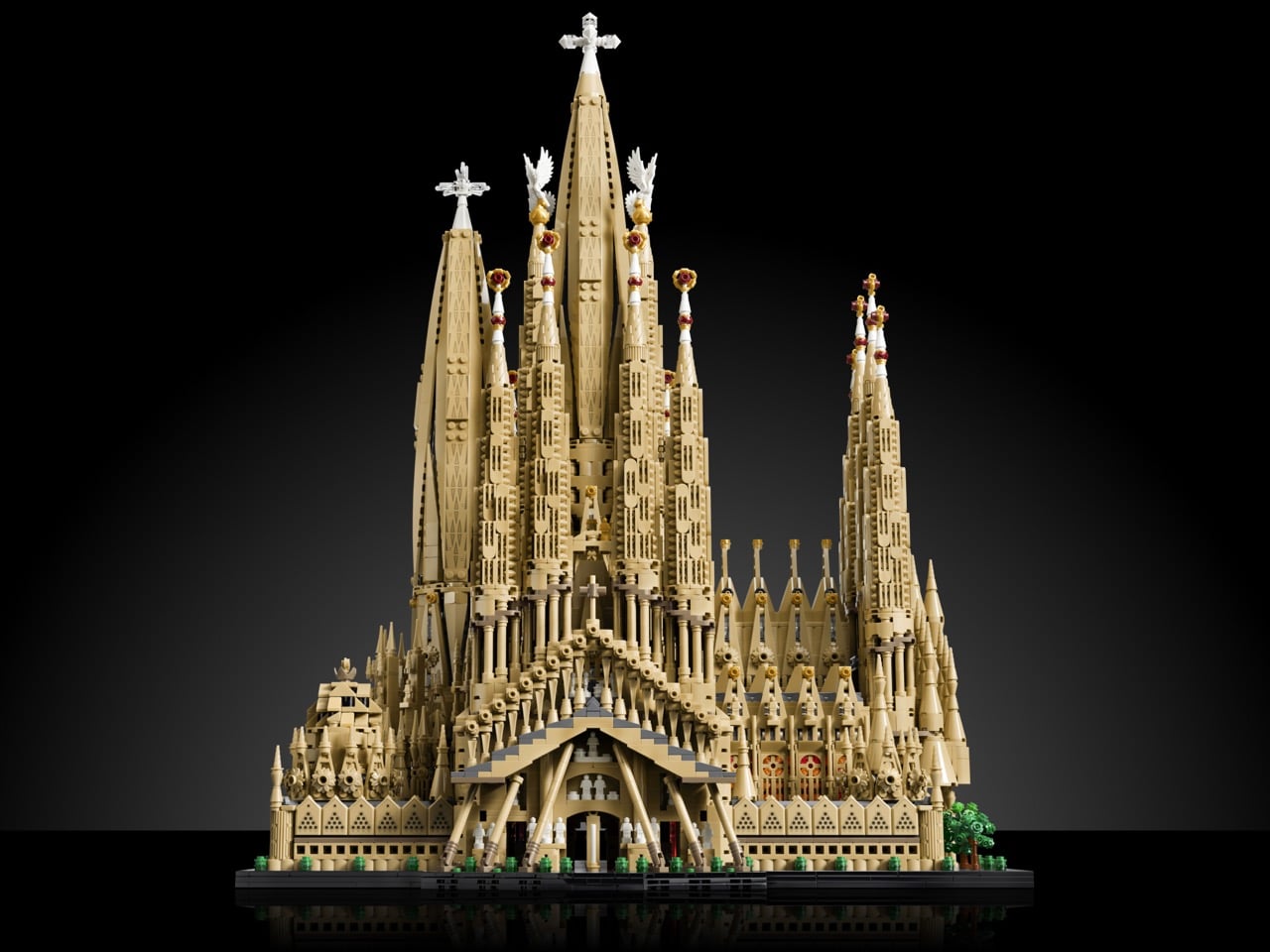
The overall silhouette is unmistakable, that iconic cluster of spires rising in tiers toward the tallest central tower, each one tapering to a decorated finial with the characteristic Gaudí flair. In warm tan and cream tones, the model reads authentically stone-like, and the sheer verticality of the completed build, standing over 24 inches tall and nearly 19 inches wide, gives it a genuine presence on a shelf or table. This isn’t a model you glance at. It’s one you walk around, the same way you would the real thing.
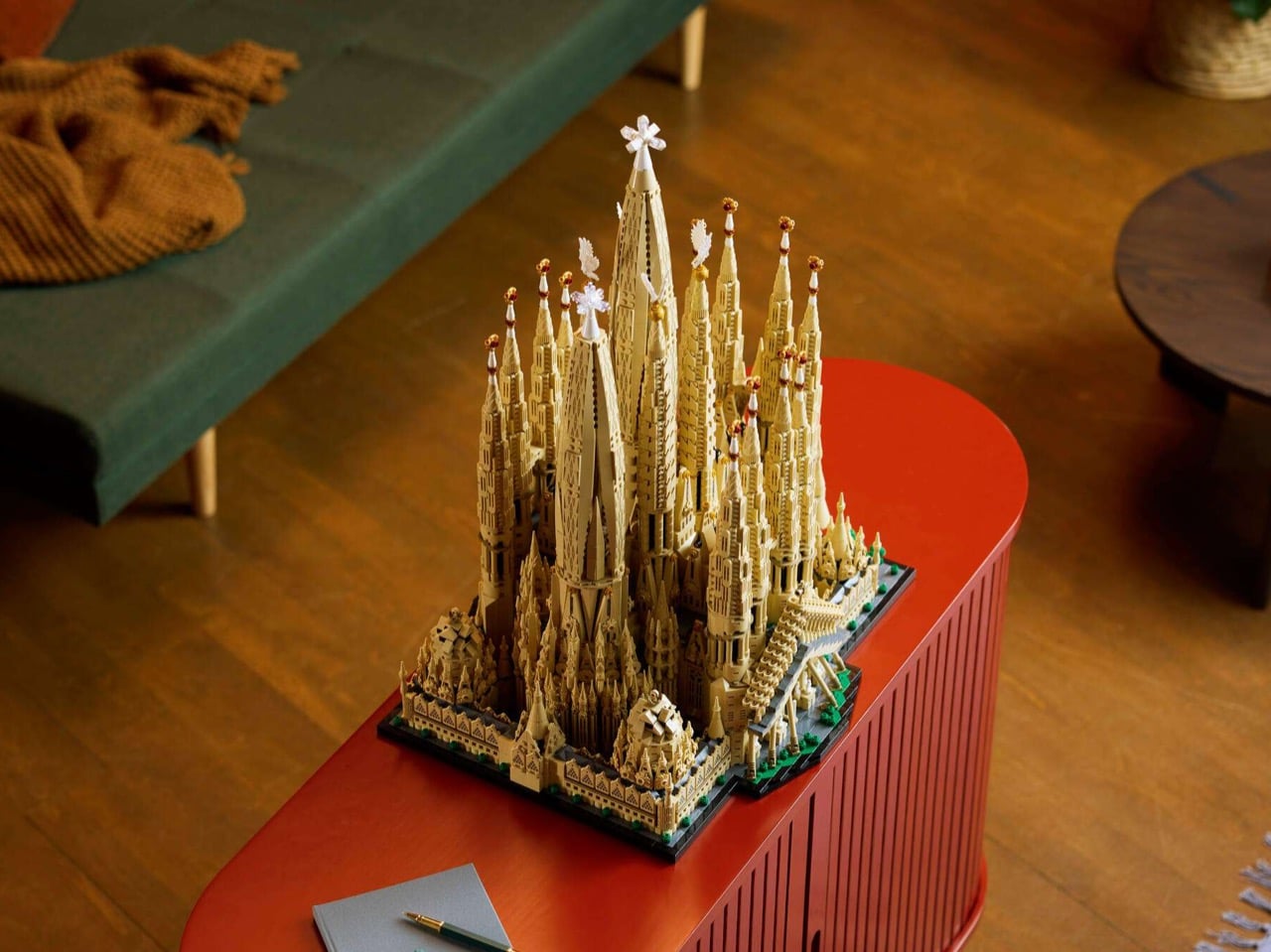
Up close, each tower has its own surface texture, horizontal banding, elongated window openings, and decorative elements rendered at a scale that shouldn’t be possible given the geometry of a standard brick. The finials at the top of the Nativity towers are crowned with crosses assembled from transparent elements that catch light beautifully, flanked by small white dove pieces that perch on the spire tips. These aren’t approximations. They’re genuinely faithful to the real ornamental language Gaudí used, and seeing that level of commitment at minuscule scale is quietly staggering.
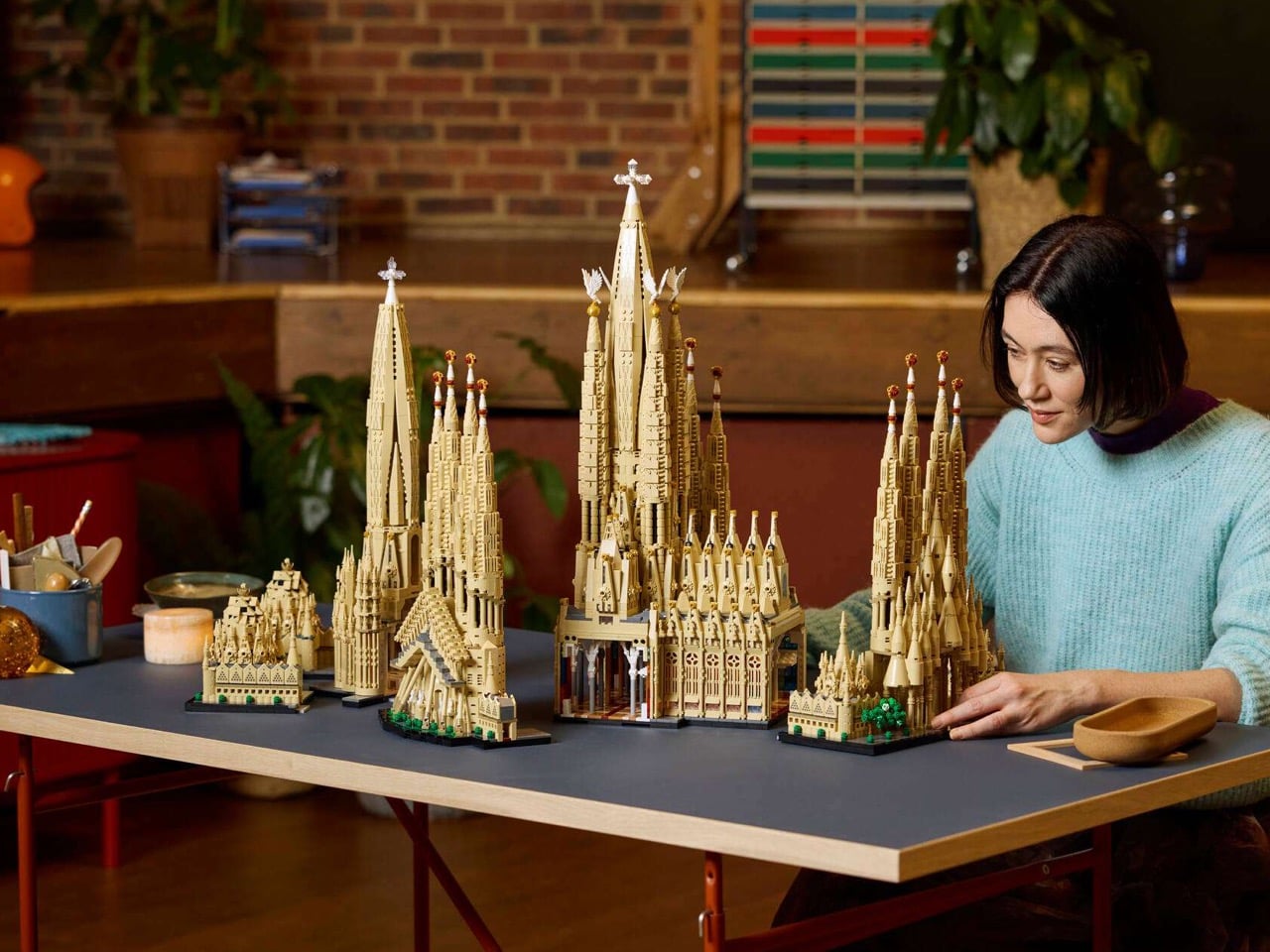
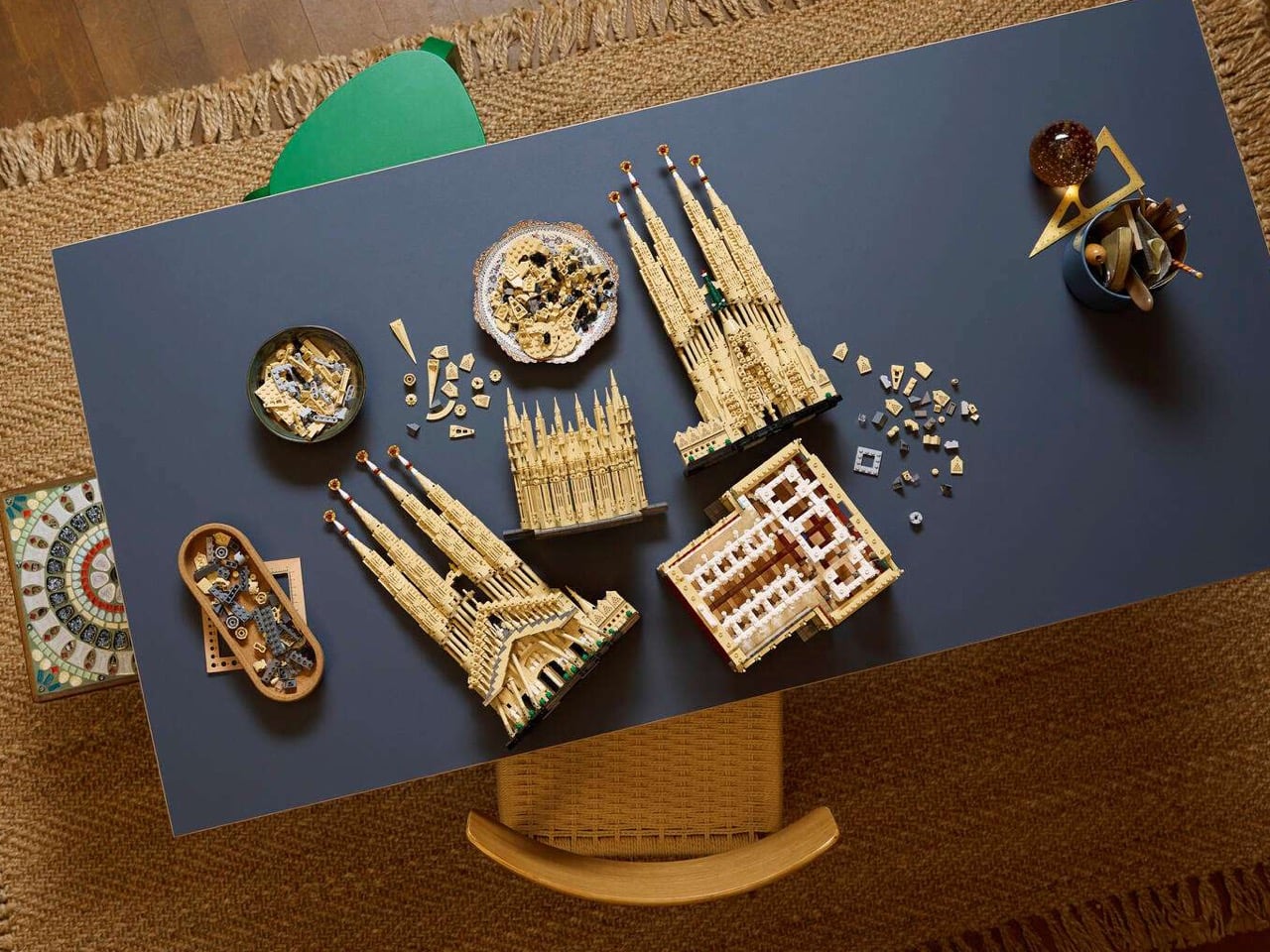
The build sequence itself is one of the set’s most thoughtful features, and a detail that LEGO deserves real credit for. Rather than assembling the model in generic stages, the construction follows the actual chronological history of the basilica. You begin with the Apse and Crypt, then build out the Nativity façade, the only section Gaudí lived to complete, before moving to Subirachs’ Passion façade. Then come the naves, the Western Sacristy, all six towers, and finally the Eastern Sacristy and the Glory façade. Building it in that sequence gives the process a narrative weight that most LEGO Architecture sets simply don’t have. You’re not just stacking bricks, you’re tracing 140-plus years of construction history with your hands.


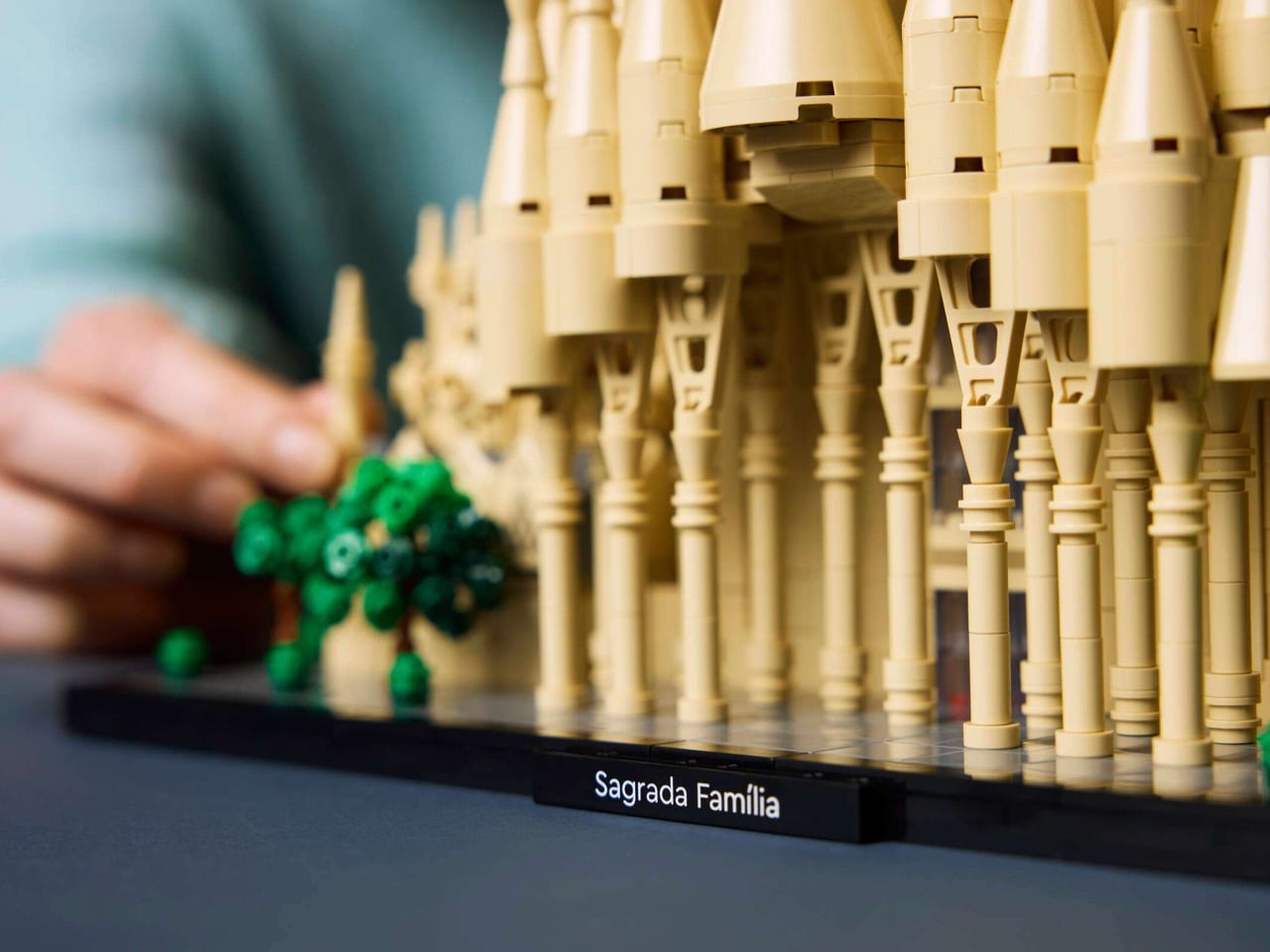
Clusters of dark green tree elements ring the building’s perimeter, tiny but effective, grounding the cathedral in its urban context in a way that gives the completed model a sense of place rather than floating in abstract space. The nameplate on the base is a clean, elegant touch that finishes the presentation without overselling itself.
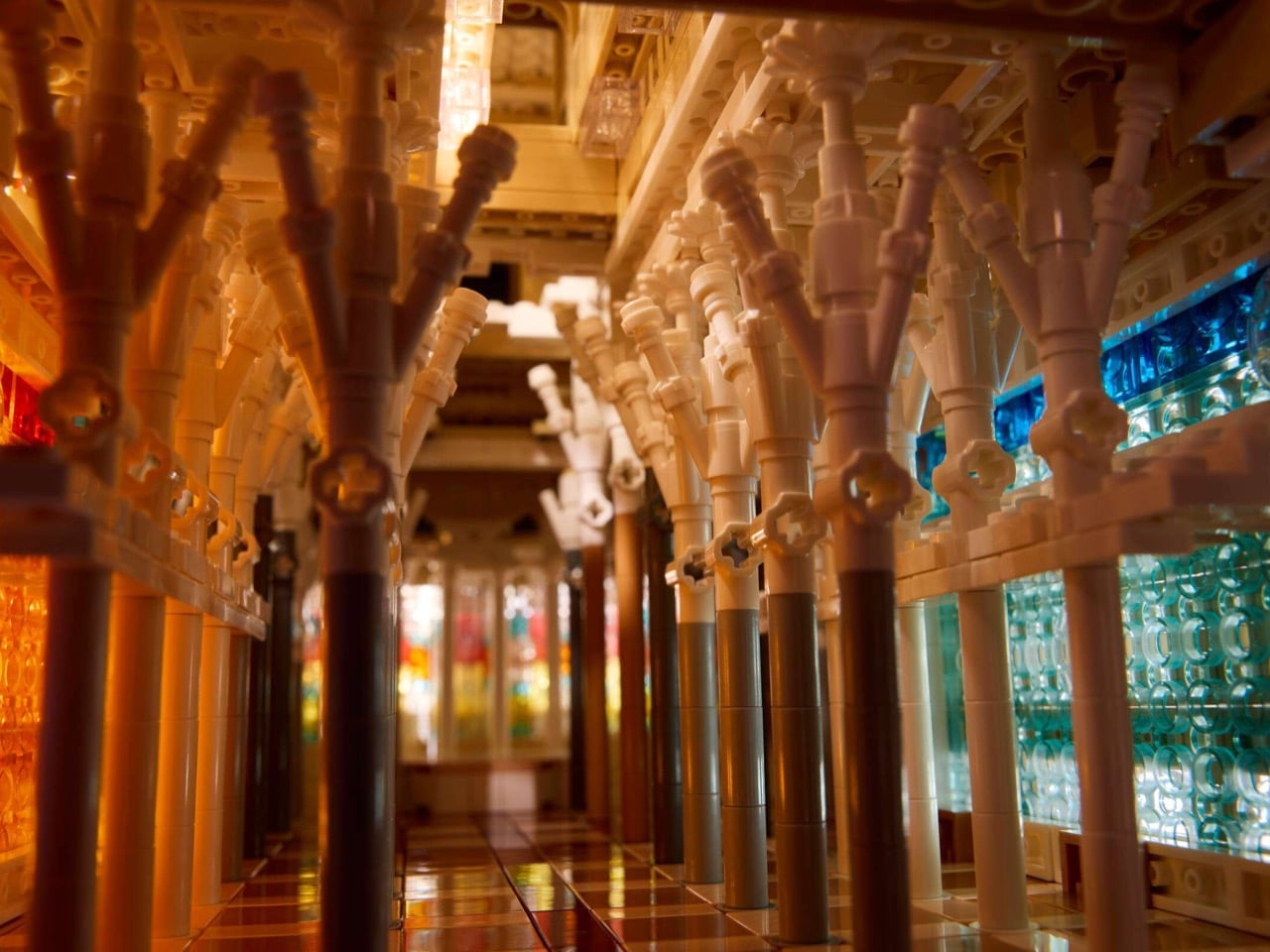
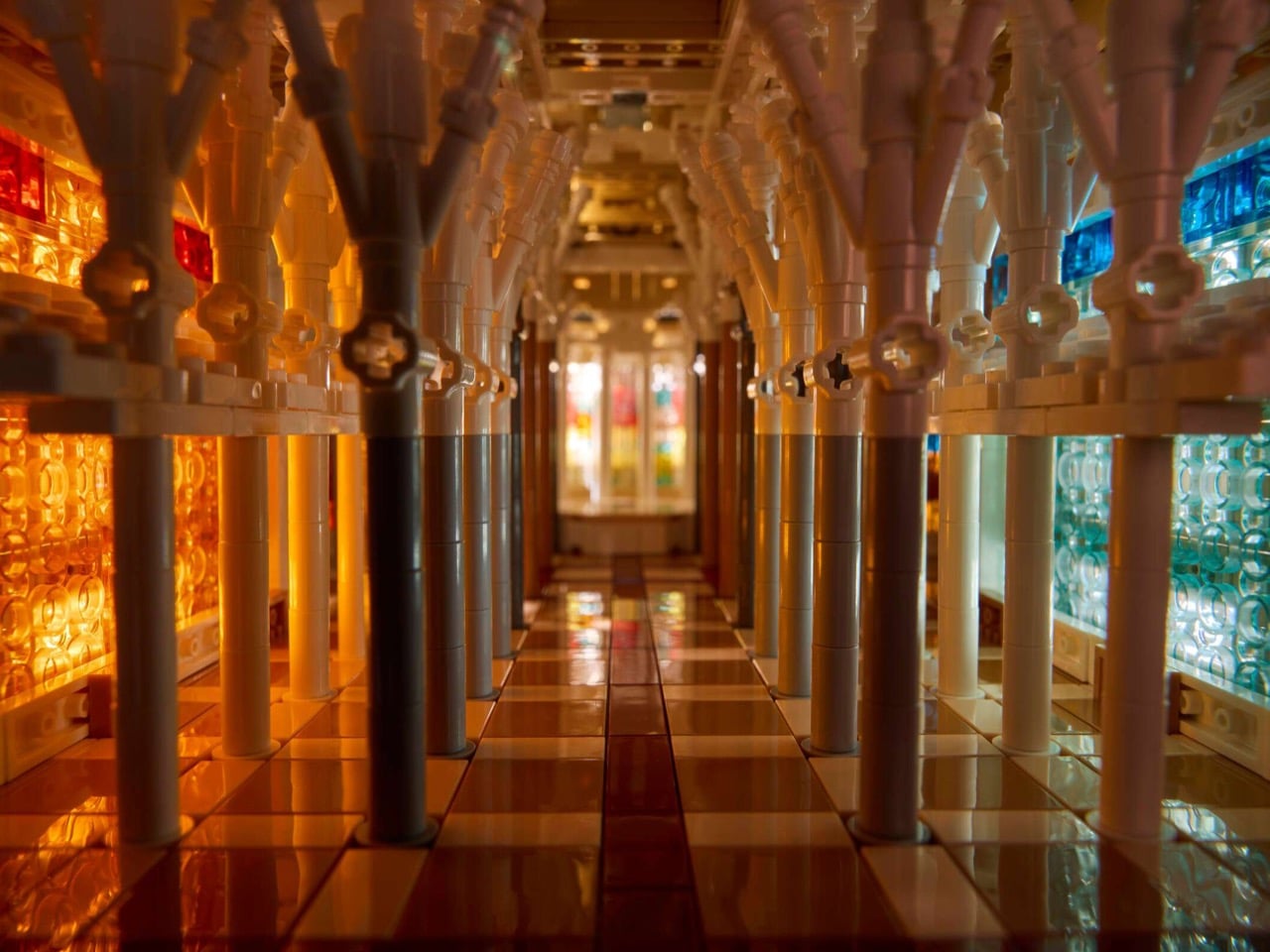
Then you look inside, and the set shifts registers entirely. The nave interior is genuinely breathtaking for a LEGO build, with rows of white branching columns that replicate Gaudí’s tree-forest structural concept with surprising fidelity. Transparent blue, amber, and red elements fill the window apertures, and when light hits them, the color washes across the interior tiles in a way that mirrors the real cathedral’s most magical quality. My favorite detail, though, is the tiled floor, rendered in warm reddish-brown and cream checker tiles that make the nave feel genuinely inhabited rather than merely constructed. It’s a small thing that makes an enormous difference, and it’s the kind of detail that tells you the designers who worked on this set had actually been inside the real building.
At $799.99 and 12,060 pieces, this is unambiguously a serious investment, the kind you make when you want something on your shelf that earns a second look every single time. LEGO has produced landmark Architecture sets before, the Empire State Building, the Eiffel Tower, the Taj Mahal, but none of them came with this degree of narrative depth or building complexity. The Sagrada Família is a building the world has been watching take shape for over a century, and somehow, LEGO has made a version of it that feels worthy of that legacy. Take a bow.