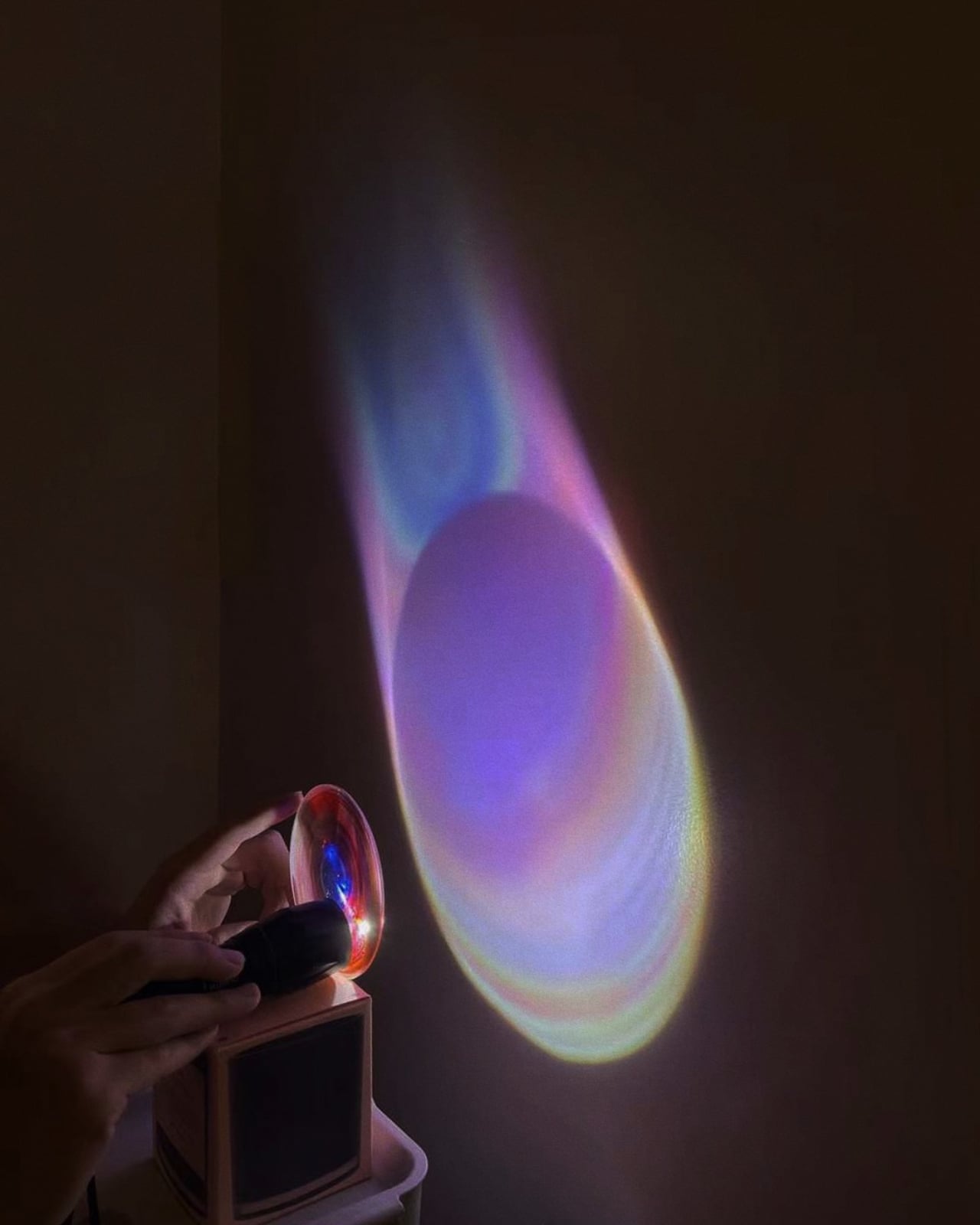
Most lamps exist to solve a problem: you need light, so you buy a lamp. THE MIROR Collection, by design studio MIRORlab, starts from a completely different premise. Rather than asking how to illuminate a room, it asks what light could be if it were designed to make you feel the passage of time. The answer is a kinetic lighting system that is part optical instrument, part ambient installation, and one of the more quietly radical design concepts I’ve come across in recent memory.
At its heart, THE MIROR is built around a slowly rotating light source paired with a set of six interchangeable magnetic glass lenses. Each lens contains embedded micro-patterns and textures that refract and fragment light into shifting projections across walls, ceilings, and floors. Nothing in the room physically changes. Yet from one minute to the next, the space looks and feels entirely different. The effect is genuinely mesmerizing, the kind of thing you notice out of the corner of your eye and then can’t stop watching.
Designer: MIRORlab
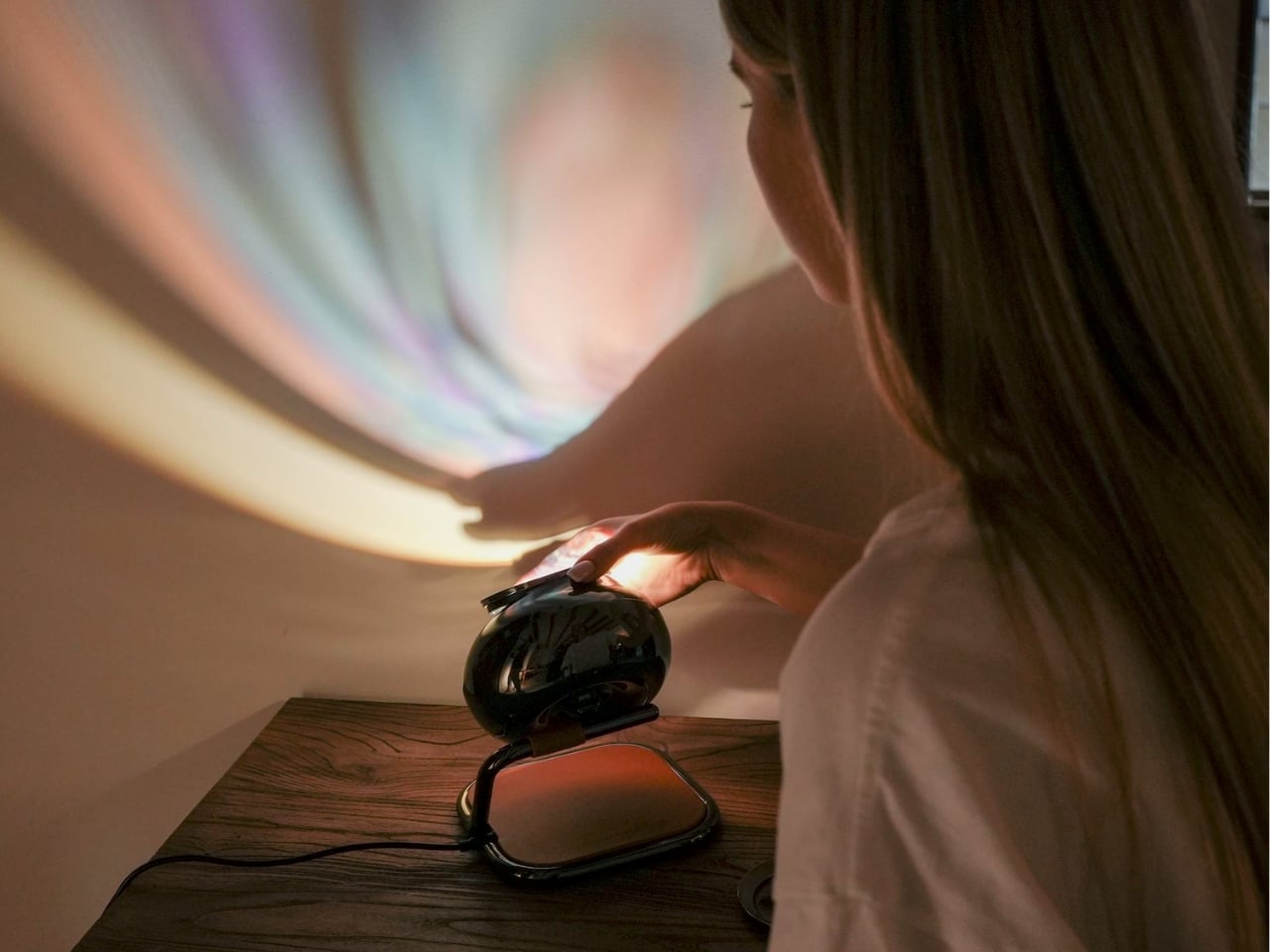

The detail worth dwelling on is the rotation speed: exactly one revolution per minute. That’s not an arbitrary number. It’s calibrated to align with a natural perceptual rhythm, slow enough to feel meditative rather than dizzying, but active enough that you remain aware of it at all times. The light is always doing something. It’s the design equivalent of a really good ambient soundtrack, present without being intrusive, affecting the room without demanding your full attention.
What MIRORlab is essentially arguing is that most lighting design treats time as irrelevant. You flip a switch, the room is lit, and that’s the end of the relationship. THE MIROR reframes light as a time-based medium, something that unfolds, rotates, and transforms continuously. No two projected moments are ever identical, even with the same lens. In that sense, it has less in common with conventional lighting and more in common with kinetic sculpture or generative art. The lamp isn’t just a tool for visibility. It’s a system for experiencing duration.
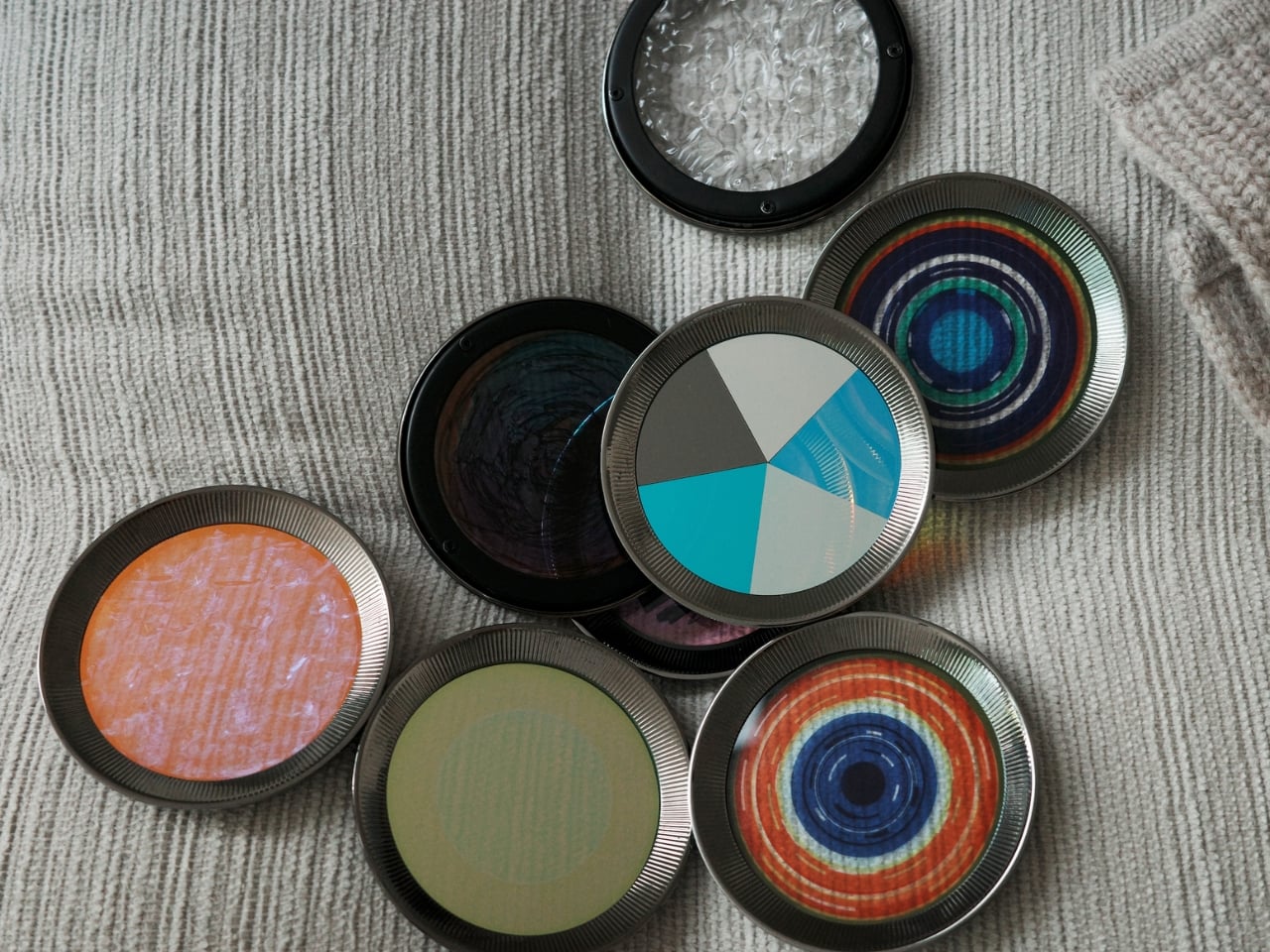
The six lenses, named Earth, Nebula, Dune, Bloom, Warmwhite, and Metropolis, were each developed through research into atmospheric perception and environmental light conditions. The reference points are genuinely cinematic: sunset diffusion across open landscapes, deep-space nebula imagery, solar eclipse transitions, water reflections under shifting cloud cover, and city lights seen from altitude at night. Most product designers think in finishes and colorways. MIRORlab thought in atmospheres. Swapping a lens doesn’t just adjust the quality of the light; it changes the entire emotional register of the room, and that’s a remarkable thing to get out of a piece of magnetized glass.
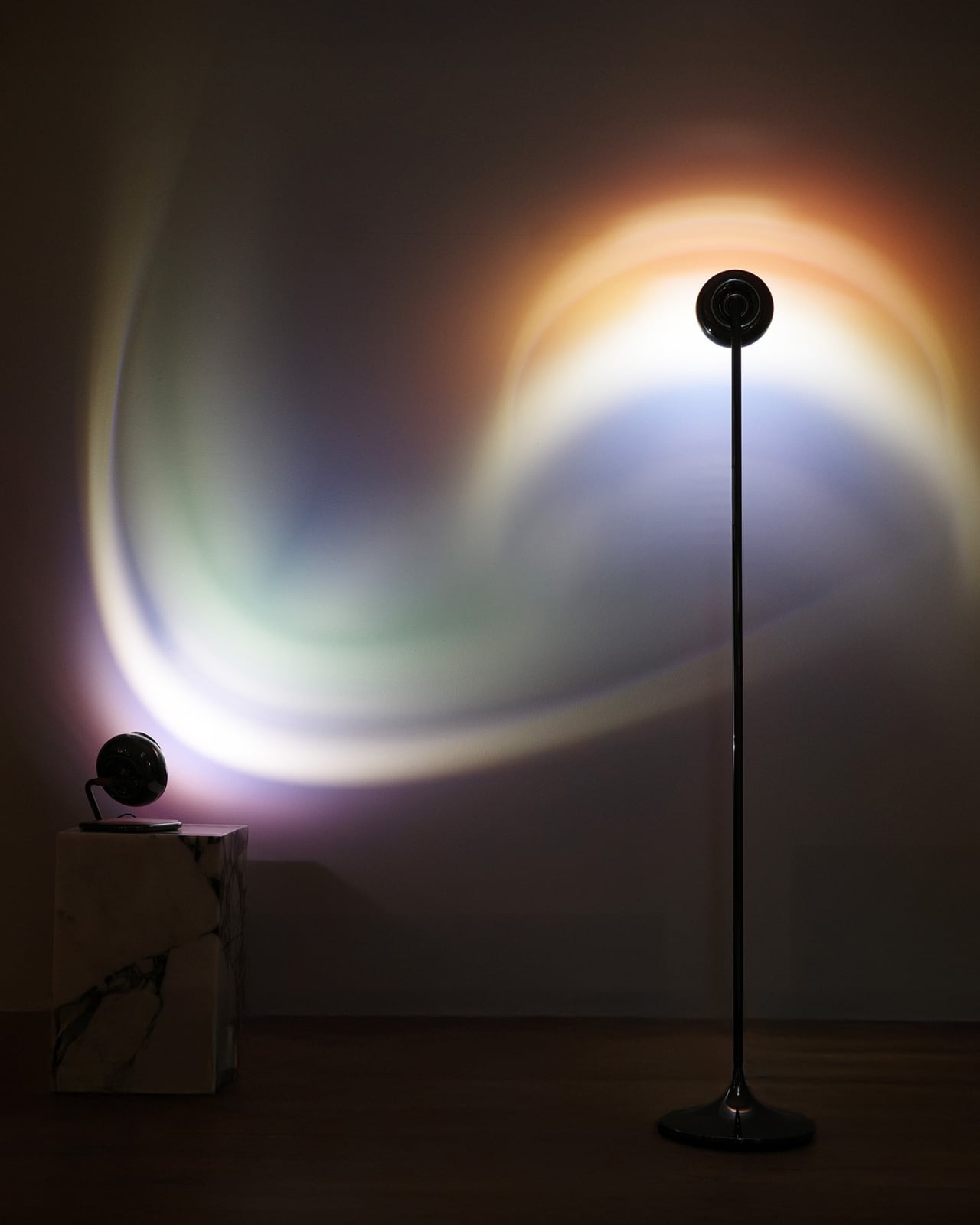

I think the broader cultural moment makes THE MIROR feel especially timely. We spend more time than ever in rooms that don’t change, and the relationship between a person and their living space has become both more intimate and more psychologically loaded. Design has started responding to that shift with a growing category of objects that prioritize atmosphere over function: white noise machines, scent diffusers, smart lighting systems, biophilic elements. All of them are answers to the same underlying question about how space should make us feel. THE MIROR fits cleanly into that conversation, but with a level of optical and conceptual depth that most of its peers simply don’t reach. It doesn’t just set a mood. It gives the room a sense of time passing, which is a genuinely different thing.
The more I sit with THE MIROR Collection, the less it feels like a lighting product and the more it feels like a quiet philosophical statement. It suggests that a room should move with you rather than simply surround you, that ambient experience doesn’t have to be passive, and that something as unassuming as a lamp can carry a real point of view about how we inhabit space. That’s a significant ask of a rotating glass lens. But if the projections look anything like the concept promises, it’s a completely fair one.