
The images from the pandemic were hard to forget. Surgical masks tangled in mangroves, disposable gloves floating past fishing boats, lateral flow tests piling into landfills at a scale nobody had anticipated or planned for. At its peak, an estimated 129 billion face masks and 65 billion gloves were being consumed every single month worldwide, and more than 140 million COVID-19 test kits generated around 731,000 litres of chemical waste alone. The pandemic did not create the disposable medical plastic problem; it simply made it large enough, and visible enough, that ignoring it became harder to justify. Healthcare products had always been designed around urgency, accuracy, and immediate disposal. What the pandemic exposed was the full weight of that logic applied at planetary scale.
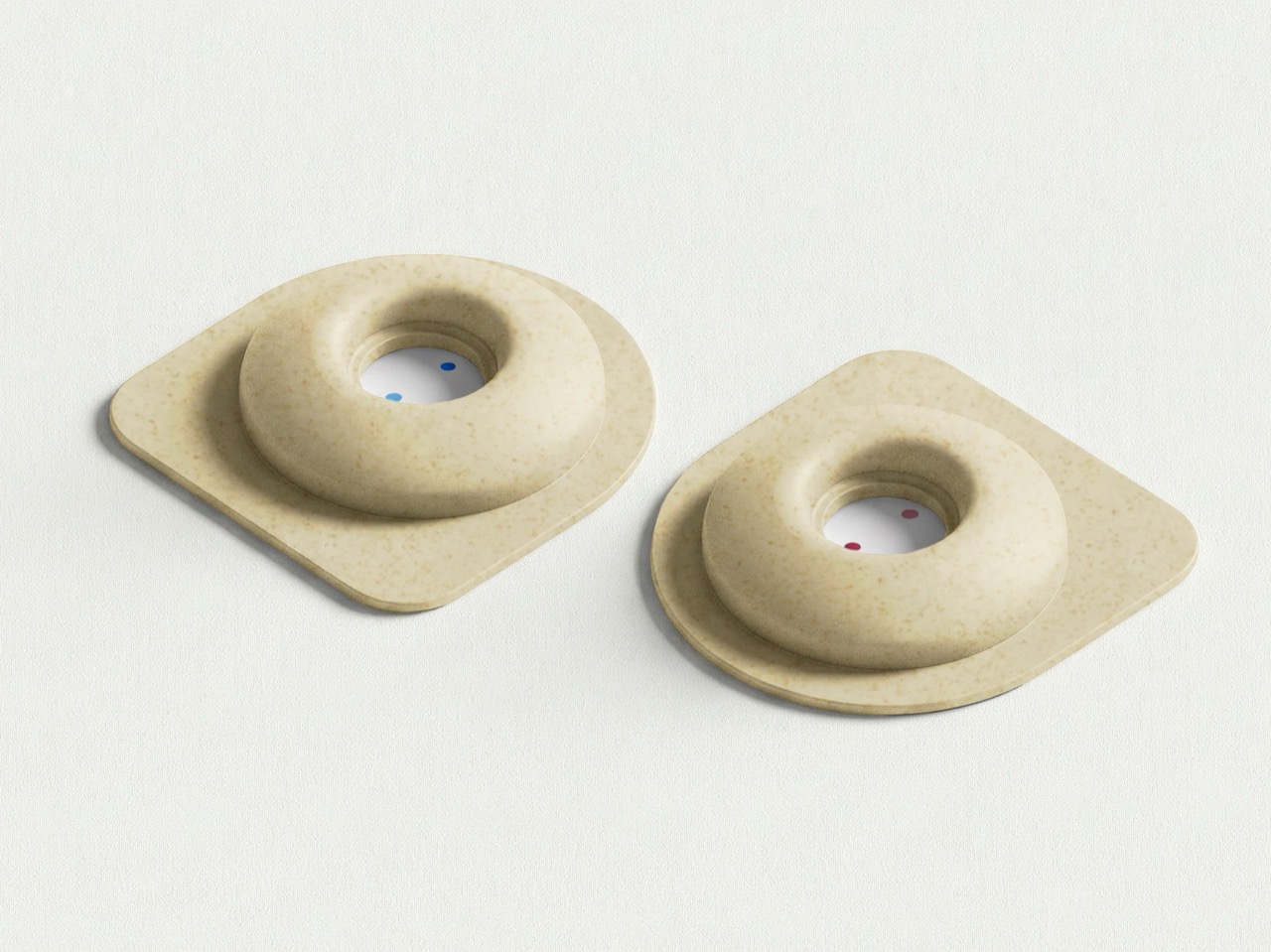
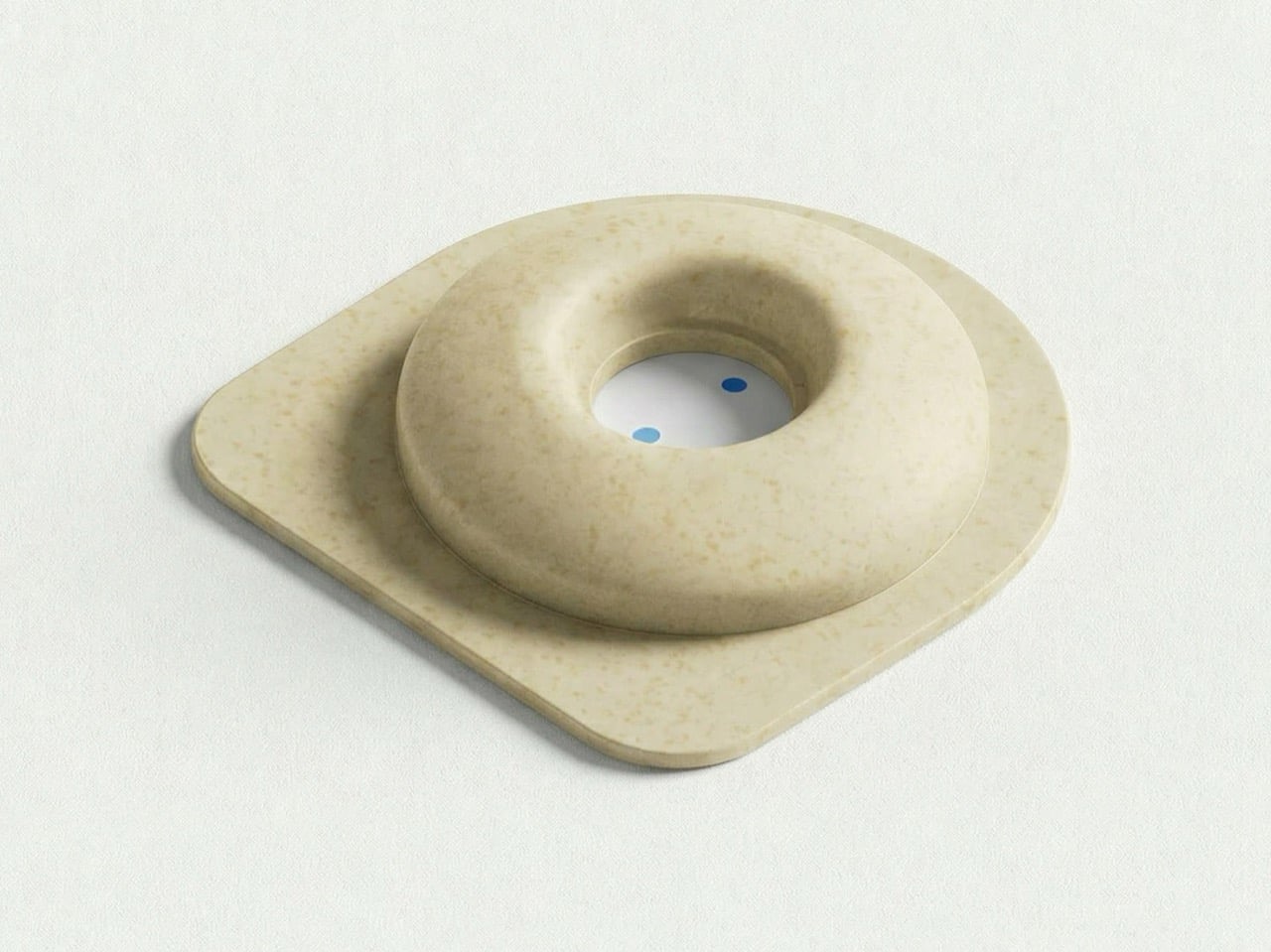
Created by Okos Diagnostics with industrial design by Luis Fernando Barrios, ‘Measuring the Invisible’ arrives at that problem from a direction with an unusual internal coherence. The project proposes a biodegradable rapid test concept for detecting microplastics in the human body – a zero-waste testing kit designed to detect the plastic waste in your body. Rather than treating sustainability as a coating applied after the product logic was already fixed, the material strategy and the diagnostic function are developed as a single integrated argument. Because everyone has microplastics in their body – but the Earth can’t take the load of everyone testing for microplastics only to dispose of used kits in the millions or billions.
Designers: Luis Fernando Barrios / Okos Diagnostics
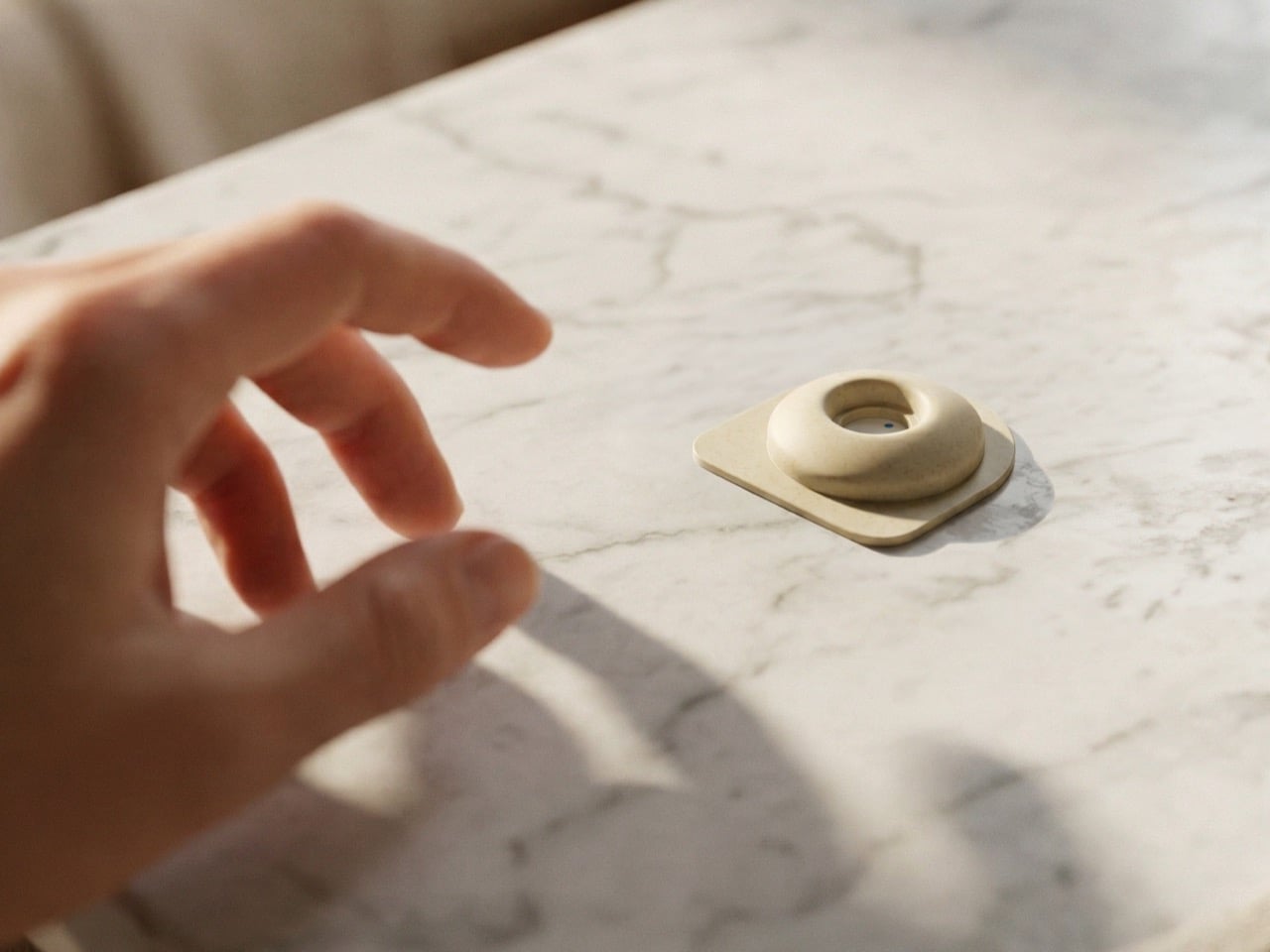
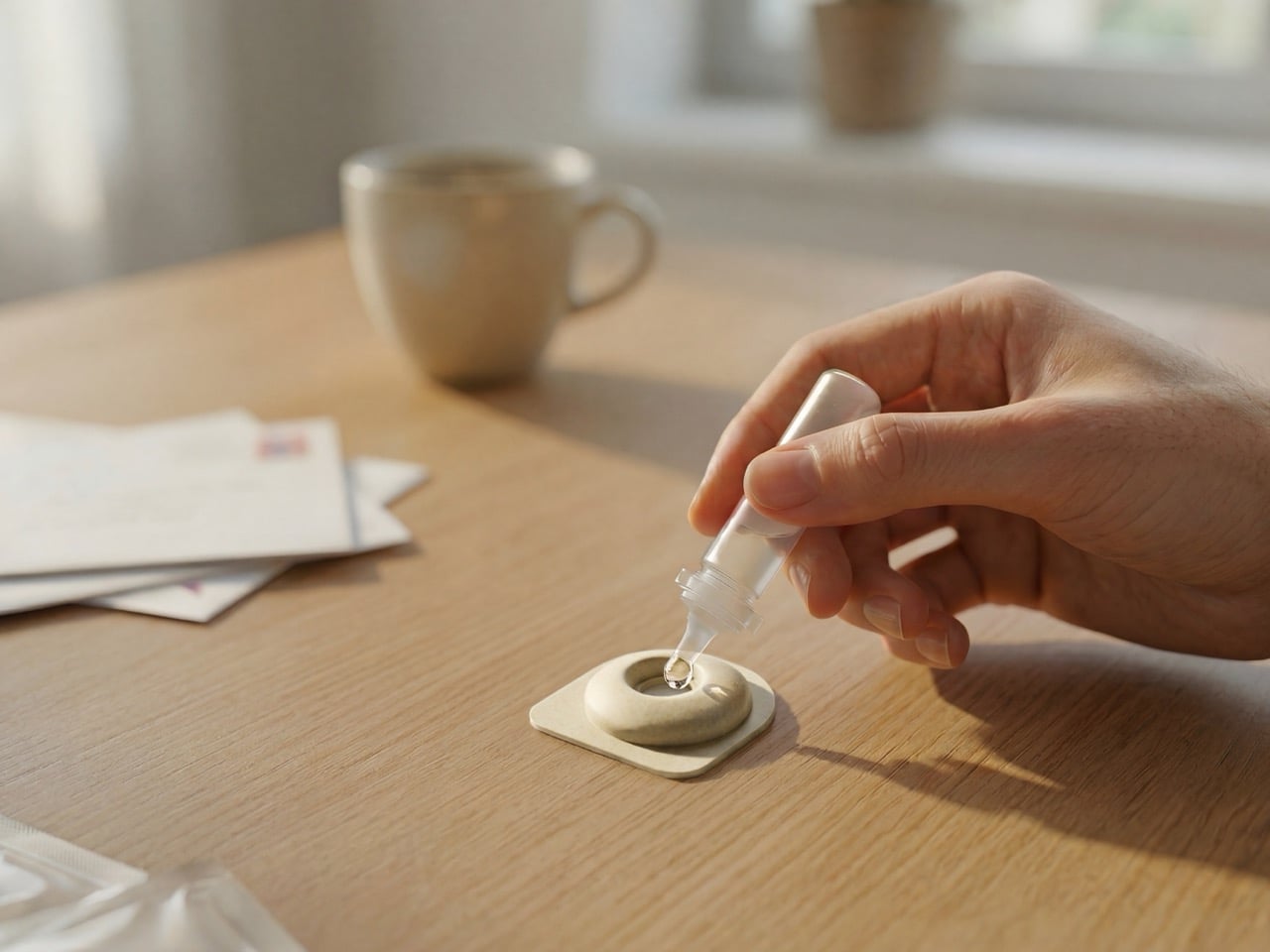
Measuring the Invisible uses a vertical-flow system where a biological sample interacts with a reactive surface, generating a chromatic response tied to the presence and concentration of specific microplastic particles. Rather than reading two lines, the user interprets a dot-based visual field where tone, saturation, and density do the interpretive work. Color intensity communicates contamination levels as gradients rather than binary outcomes, a visual language closer to environmental data than a clinical checklist. The 2020 James Dyson Award international winner, The Blue Box, enabled breast cancer home-testing through a urine sample; the 2025 shortlist featured Urify, a toilet-cleaning tablet that also screens for kidney disease. Measuring the Invisible occupies that same design space, applying the point-of-care impulse to a contamination problem nobody has yet brought home.
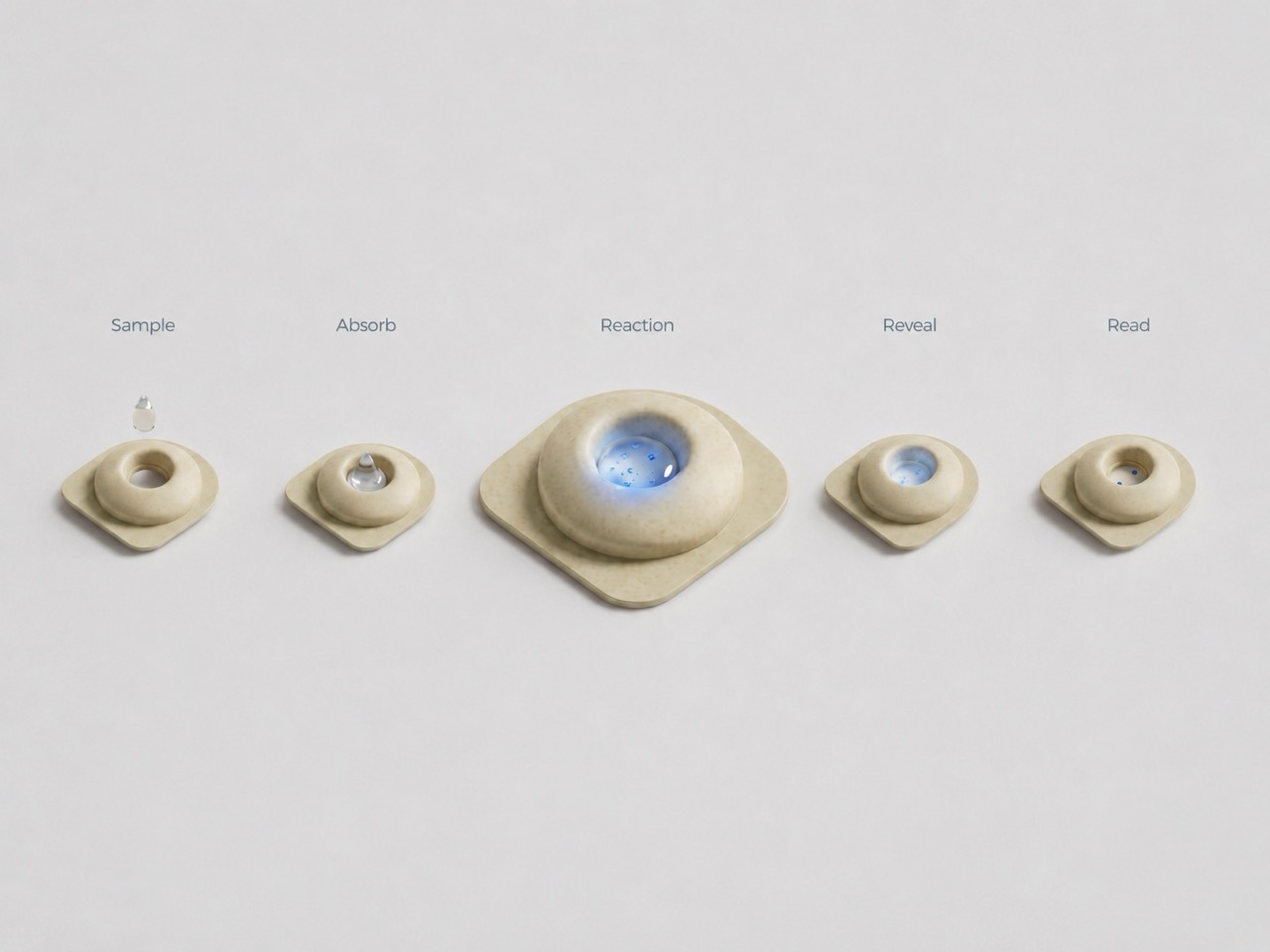
The housing uses Okos’ own biodegradable material formulations, with compatibility with existing molding infrastructure treated as a core constraint. That practicality separates the project from speculative material concepts that collapse at the production stage, unable to be processed without complete retooling. Visually, the design resists the earthy textures and performative naturalism common to sustainability-led objects, maintaining the clinical restraint of standard medical hardware. The biodegradable material sits beneath the surface, invisible in the same way microplastics are invisible, doing its work without announcing it. Whether Okos Diagnostics takes this from concept to validated clinical product depends on scientific and regulatory groundwork that renders cannot shortcut, but the design argument it makes is already worth the attention.