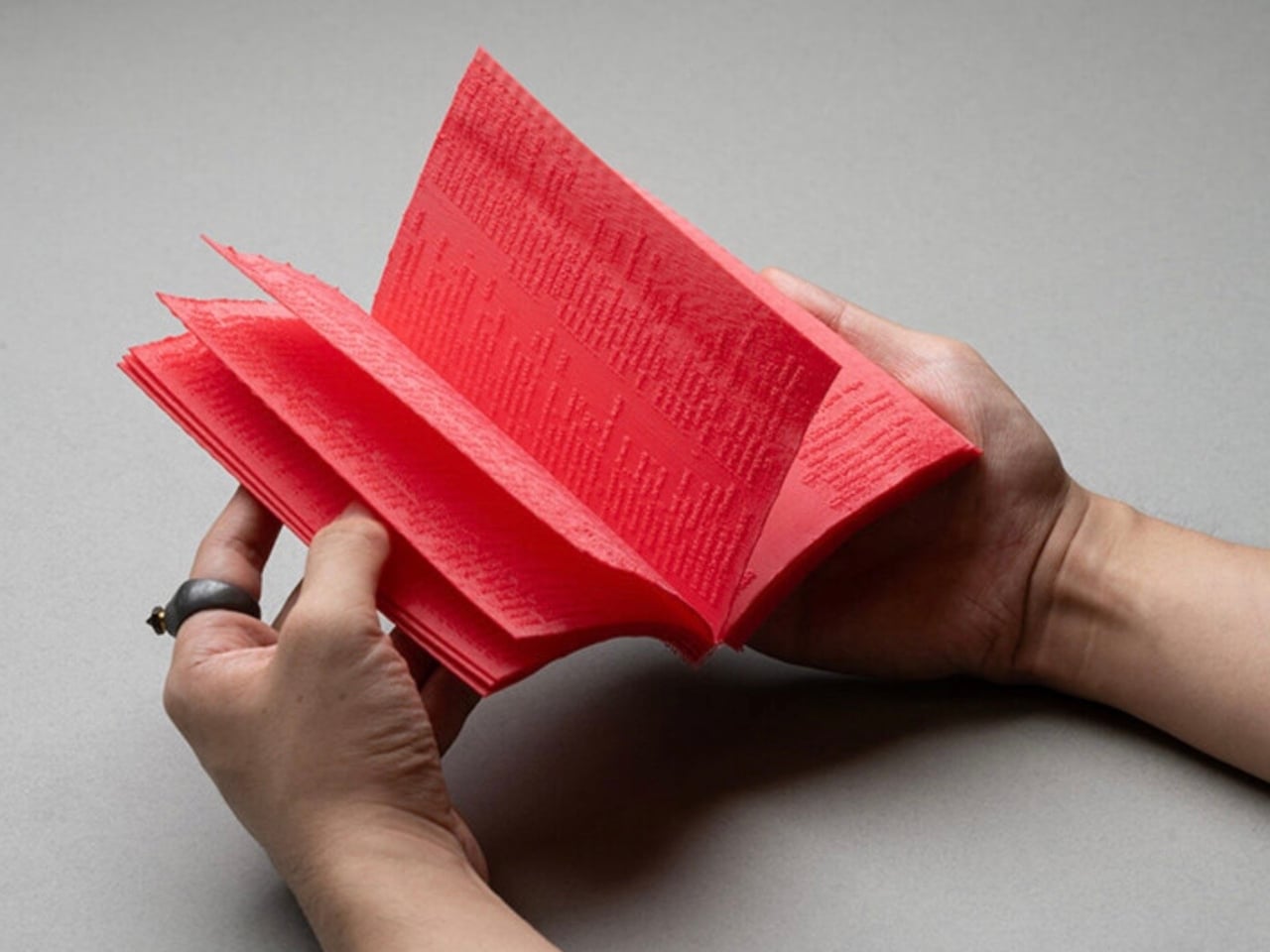

Books have always held secrets. Marginalia scrawled by long-dead readers, watermarks pressed into pulp centuries ago, the particular weight of a first edition in your hands. But Manual, a new project by Studio Darius Ou and Benson Chong, holds a different kind of secret entirely: the literal code of its own making, raised right there on its pages. Let me explain why that matters, because it sounds technical until it doesn’t.
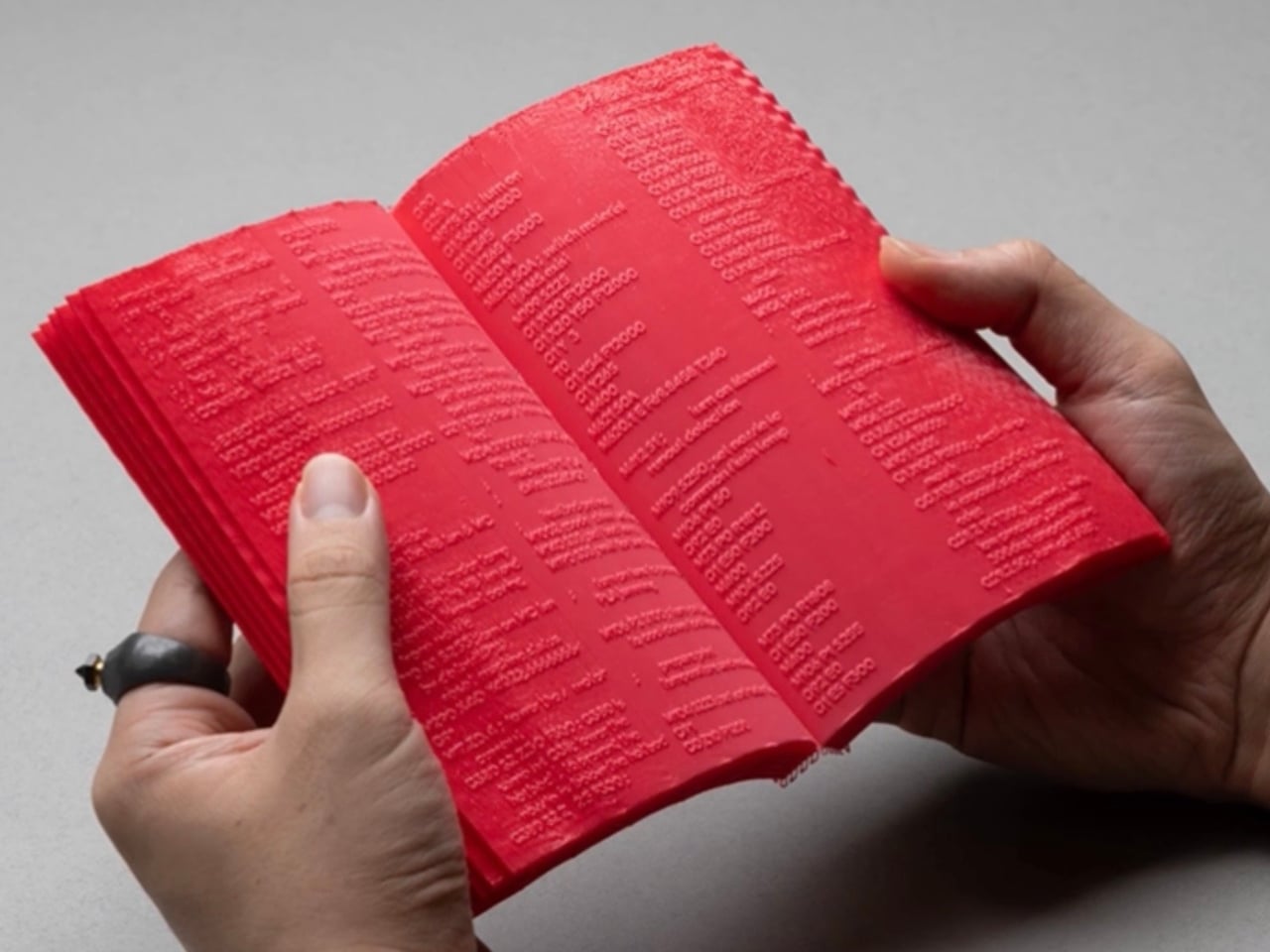
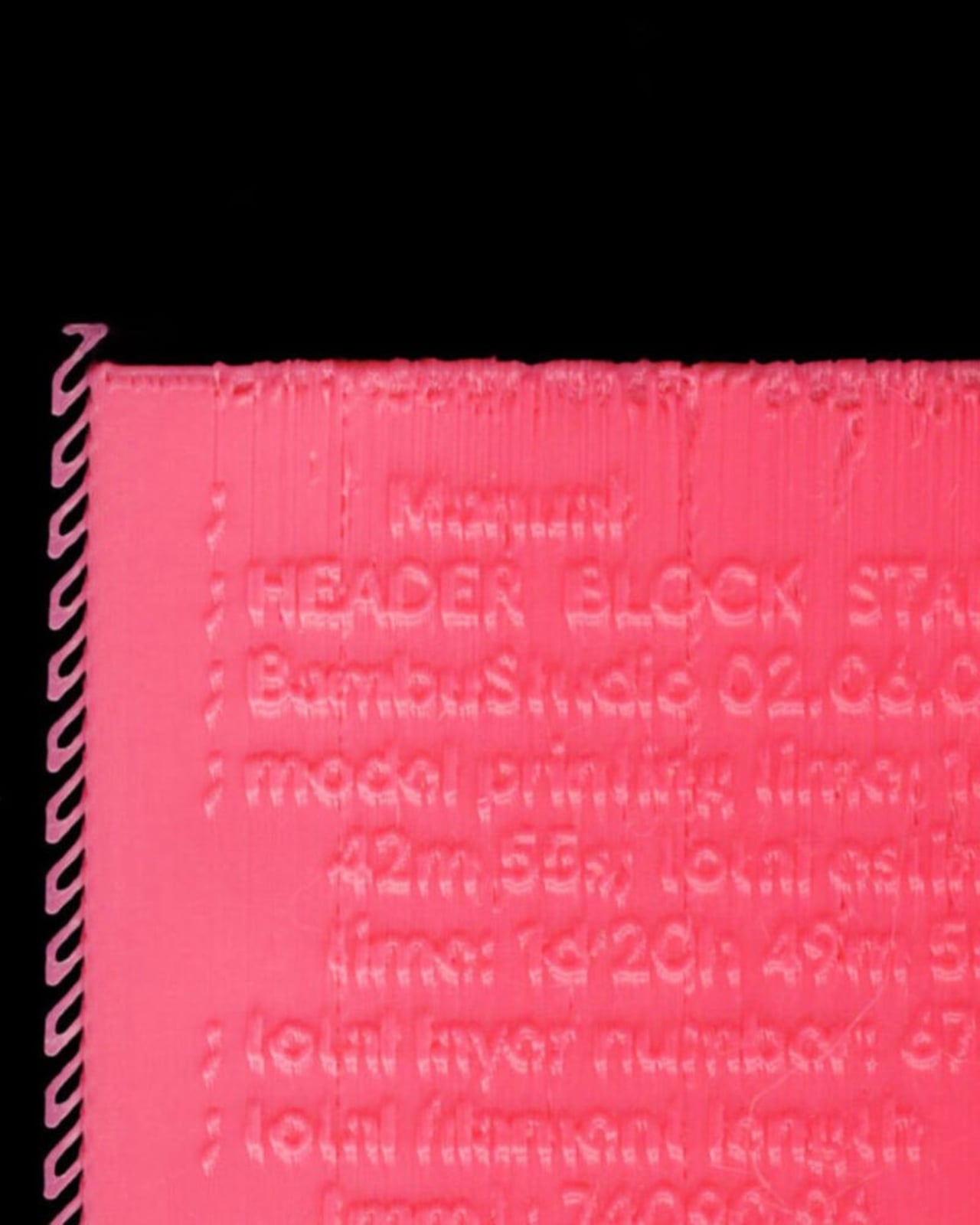
Manual is a fully 3D-printed book, and that phrase alone gets thrown around often enough that it risks losing its punch. But what Darius Ou and Benson Chong have done goes several layers deeper than “printed object shaped like a book.” The raised text embossed across its pages is G-code, the machine language that directed the printer during fabrication. Every coordinate, every movement instruction, every signal the printer received to bring this object into existence lives inside the book itself. The book you’re reading, or rather running your fingers across, is partly a transcript of its own birth.
Designer: Studio Darius Ou with Benson Chong
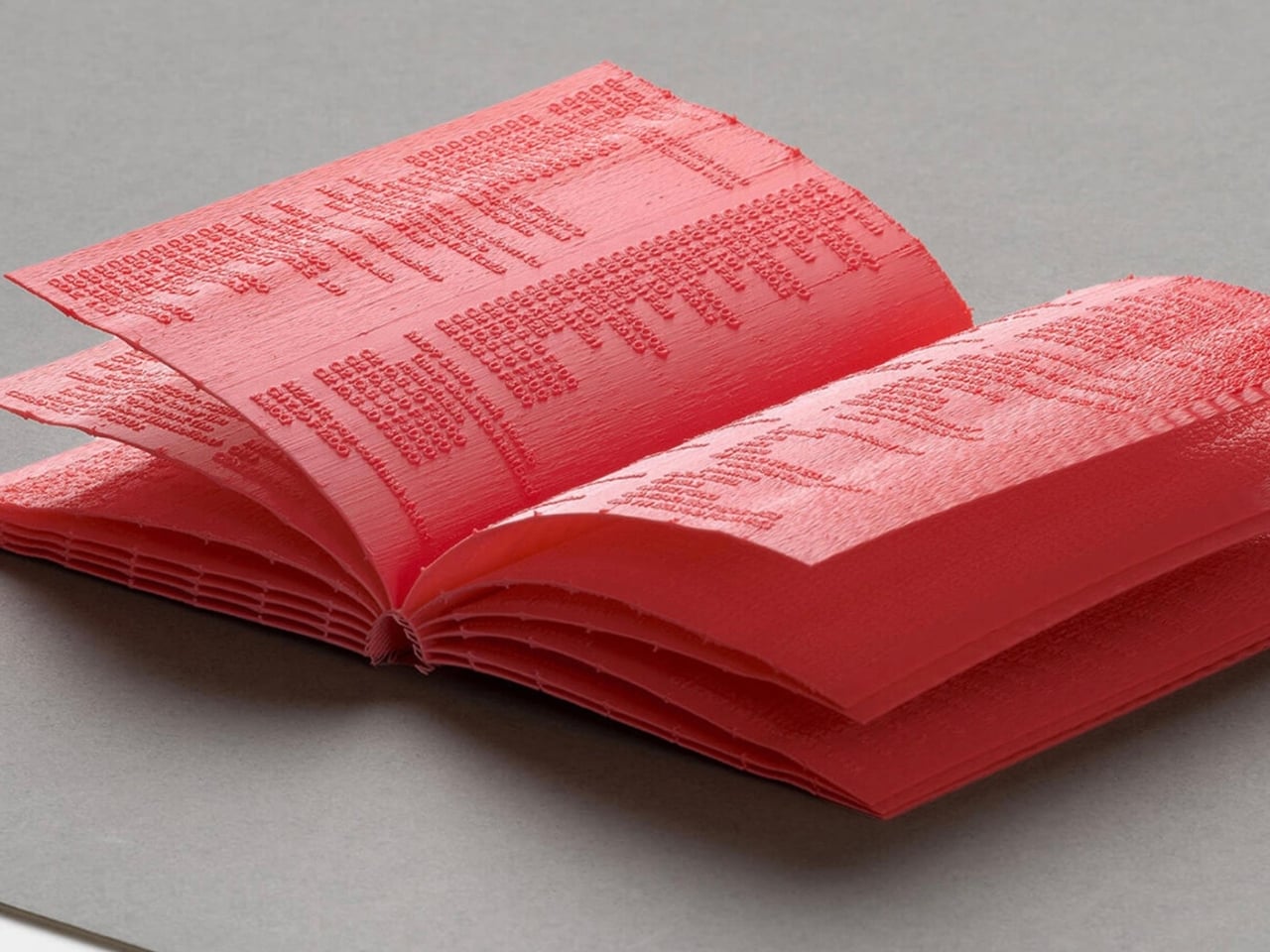
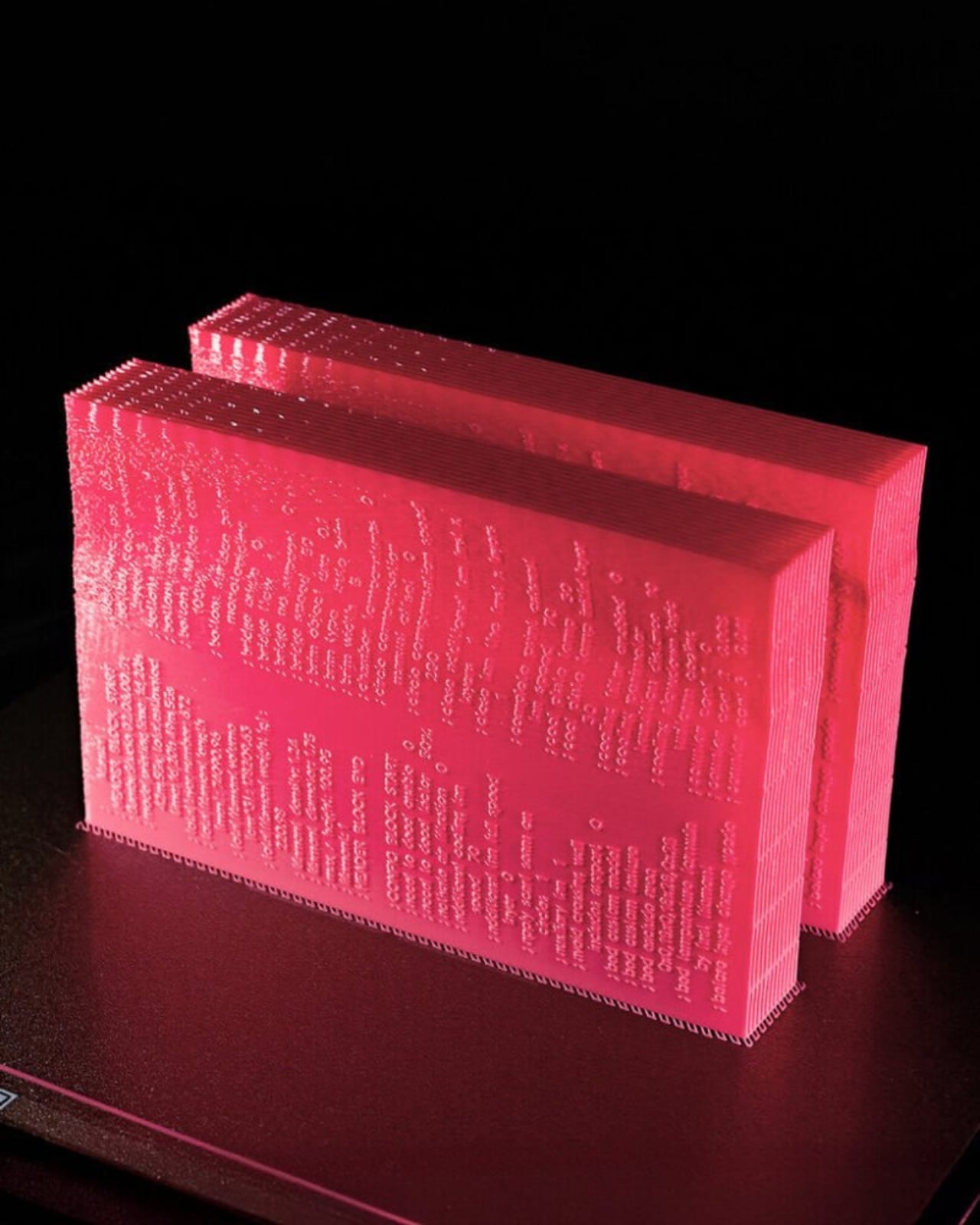
The printing method is worth understanding too, because it’s not standard. Ou and Chong use an XY-for-Z technique, where the printhead moves horizontally and vertically rather than building straight upward layer by layer. This allows Manual to emerge from the machine already bound, pages and all, in one continuous sequence. No assembly afterwards. No binding stage. No applied graphics. The whole object, text and structure together, comes off the print bed as a finished thing.
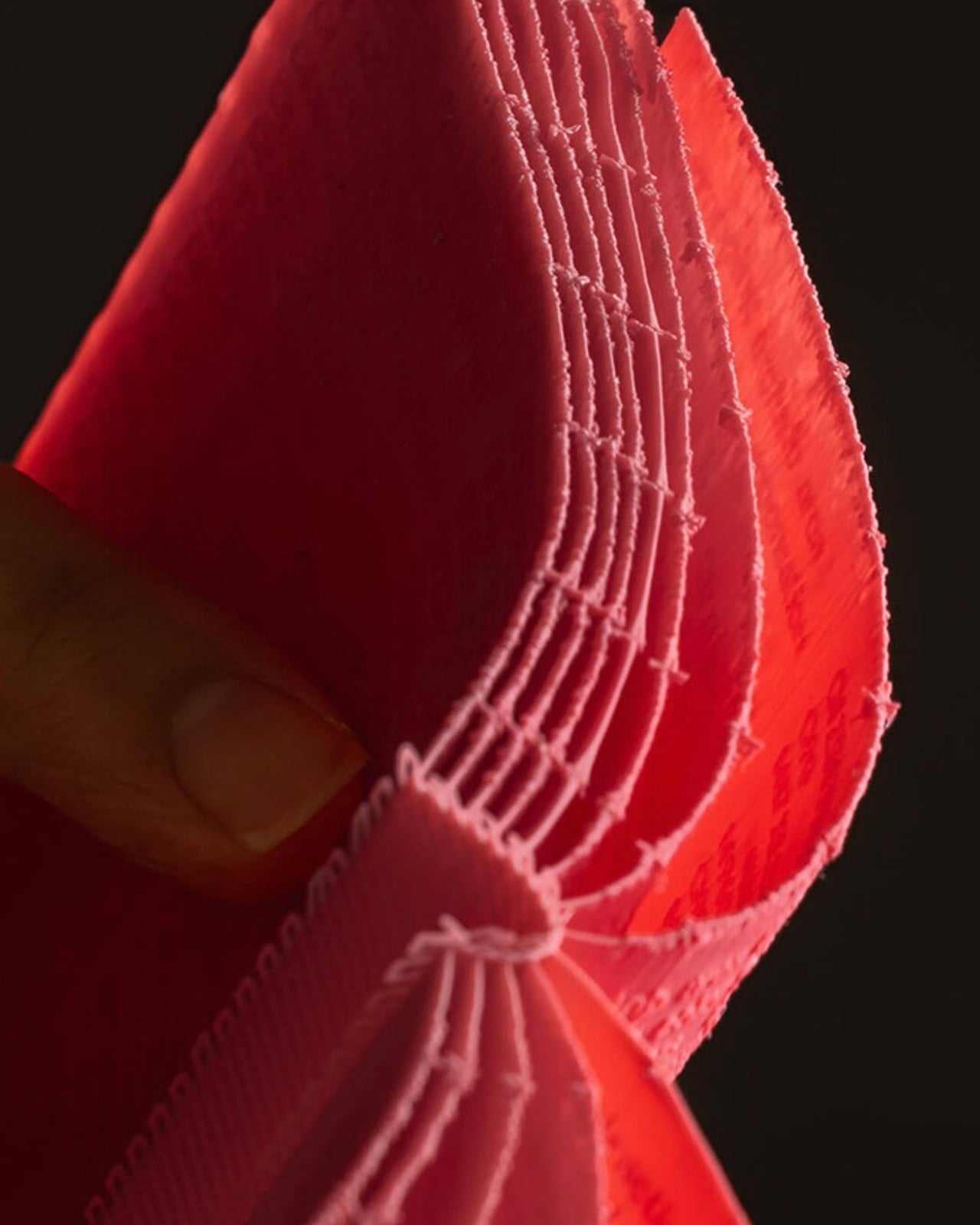

For anyone who has spent time thinking about what makes a book a book, that should feel genuinely strange. We’ve separated the process of making from the process of reading for so long that we barely question it. A manuscript gets written, typeset, printed, bound, shipped, and only then read. Each stage is invisible to the next. Manual collapses all of that. The making and the reading occupy the same surface.
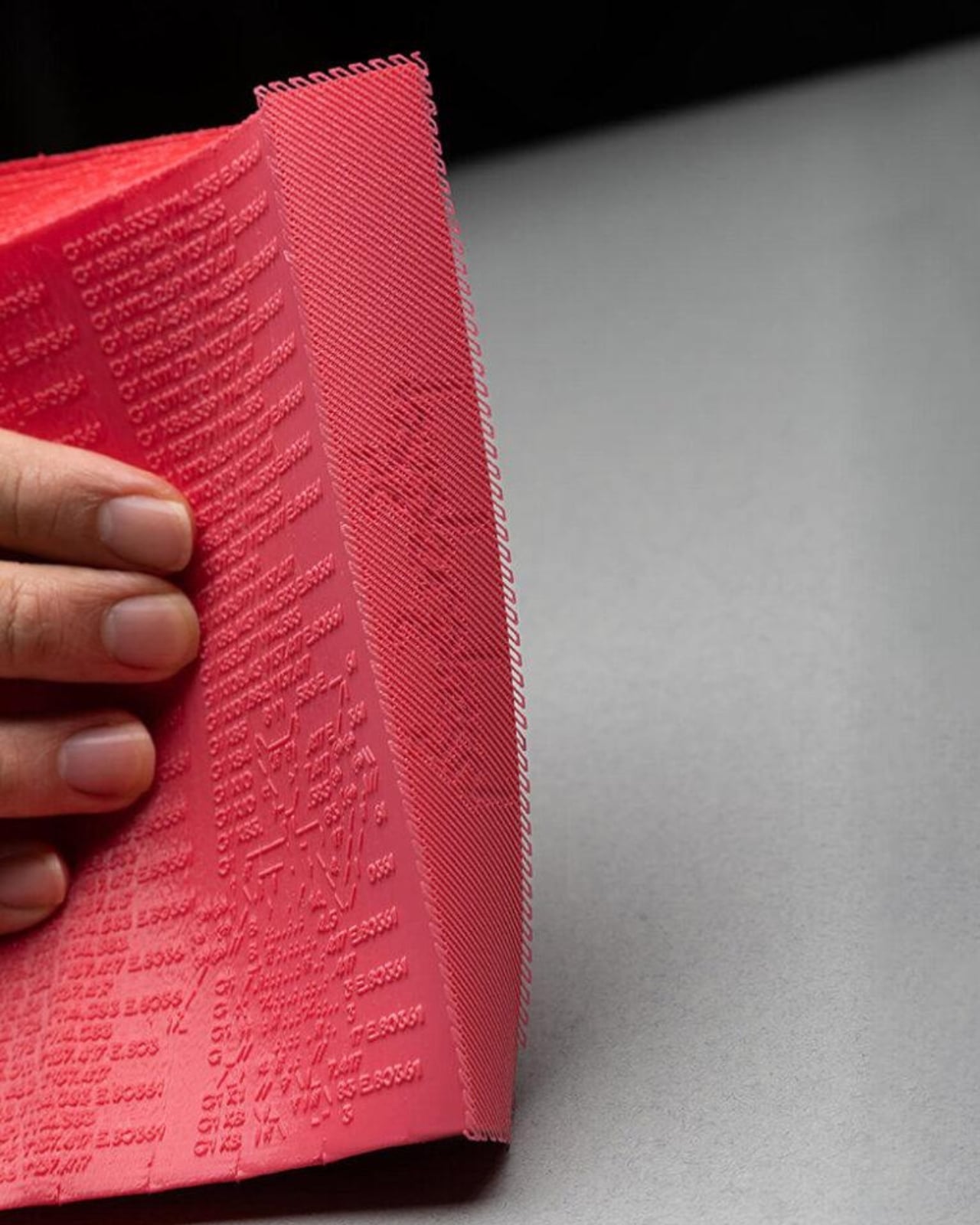
I keep thinking about the name. Manual is doing a lot of work in one word. It calls up instruction manuals, the kind of document you consult to understand how something operates. It also calls up “manual” as in by hand, by touch, physical. The raised G-code text can be read through touch as much as sight, which means the book is almost braille-adjacent in how it asks to be experienced. You don’t just look at it. You feel the instructions the printer followed. That’s a design decision I find quietly brilliant, the kind that seems obvious in retrospect but required a very specific way of thinking to arrive at.
The project also nods to a longer lineage of self-replicating and self-referential machines, including the RepRap project, the open-source 3D printer initiative from 2005 that was specifically designed to print its own components. Manual isn’t trying to replicate itself, but it shares that same philosophical preoccupation: what does it mean for a machine-made object to carry knowledge of its own machine within it?
For the design and tech communities, the answer is clearly exciting. But I think Manual has something to offer anyone who has ever picked up an object and wondered how it got to be that way. Most of the time, that story is hidden from us. It lives in factories, in files, in supply chains we’ll never see. Manual refuses that invisibility. It puts the receipt right in the product.
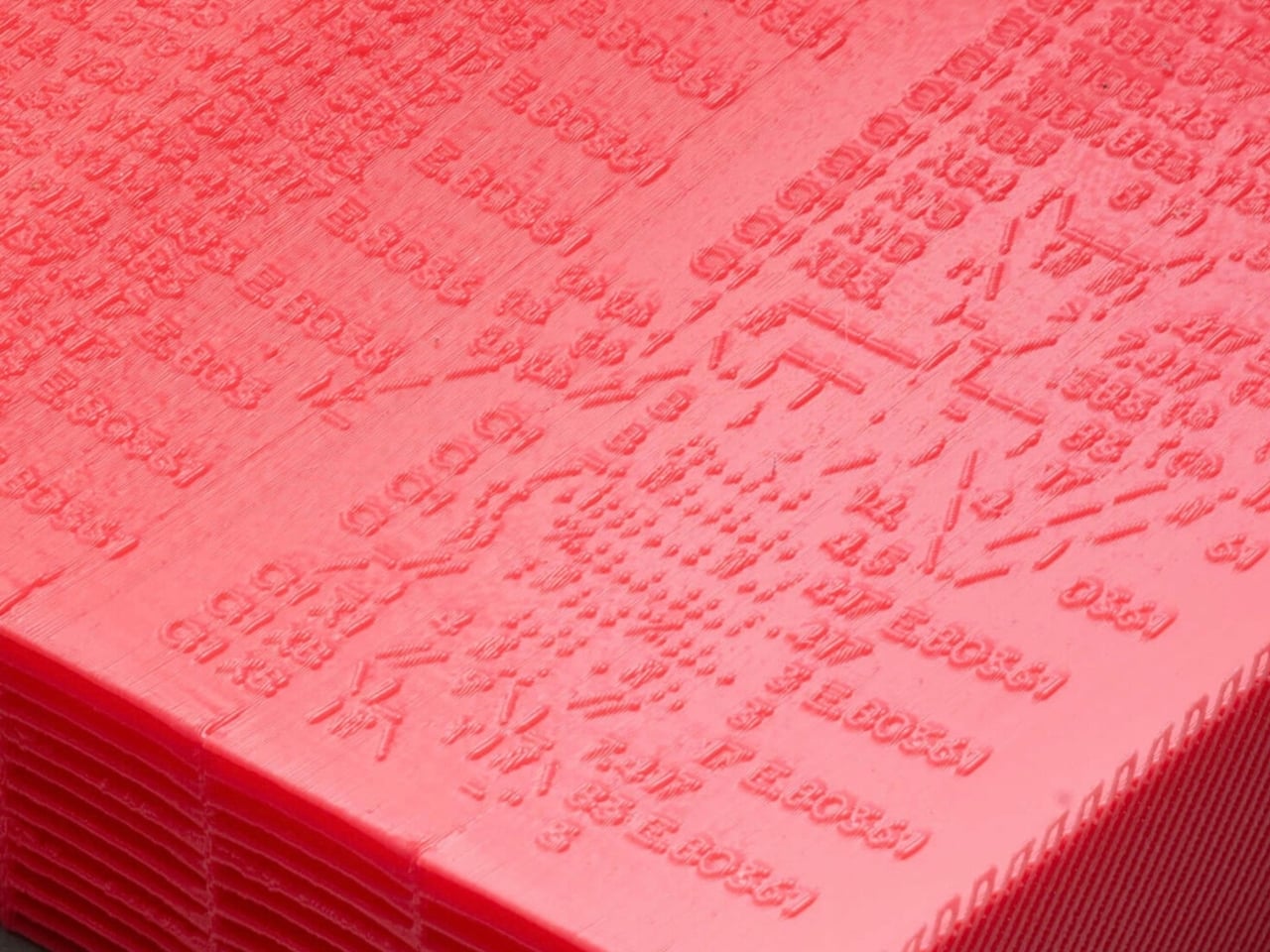
Whether this opens a new chapter for publishing, or remains a provocative one-off, is an open question. I lean toward thinking it plants a seed. As digital fabrication becomes more accessible and designers get more comfortable interrogating their own tools, the idea of objects that document their own making seems less like a conceptual stunt and more like a natural evolution. A book that knows how it was built, and tells you so, is a very different kind of object than one that hides it. Manual makes that difference feel worth caring about.