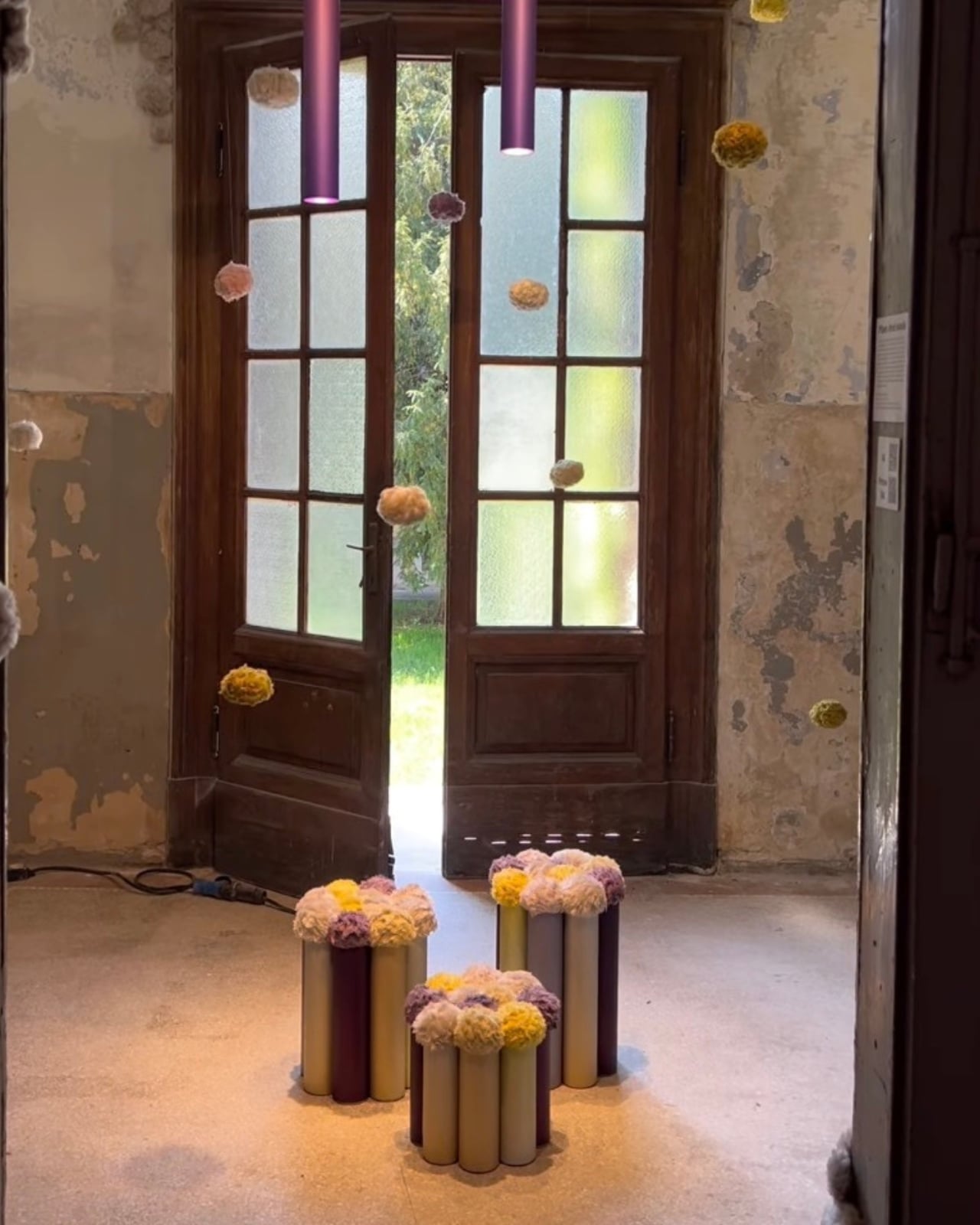
Sustainable design has a branding problem. Not an ethics problem, not a materials problem, but a branding problem. For years, the conversation around circular materials and responsible production has been wrapped in language that feels like a lecture. Worthy, yes. Exciting, rarely. So when a stool shows up at Alcova during Milan Design Week looking like a bouquet of pompoms crowning a cluster of dreamy pastel cylinders, it stops you mid-stride. That stool is the Alice Stool by Studio LoopLoop, and it’s making a very quiet but very pointed argument.

Founded in 2022 by Odin Visser and Charles Gateau, Studio LoopLoop is a Dutch practice that operates somewhere between science lab and design studio. Their approach is hands-on and deliberately self-sufficient, developing their own processes rather than outsourcing to industrial systems they’d rather move away from. For Alice, that methodology produced something that looks almost nothing like what we typically picture when someone says “sustainable furniture.”
Designer: Studio LoopLoop
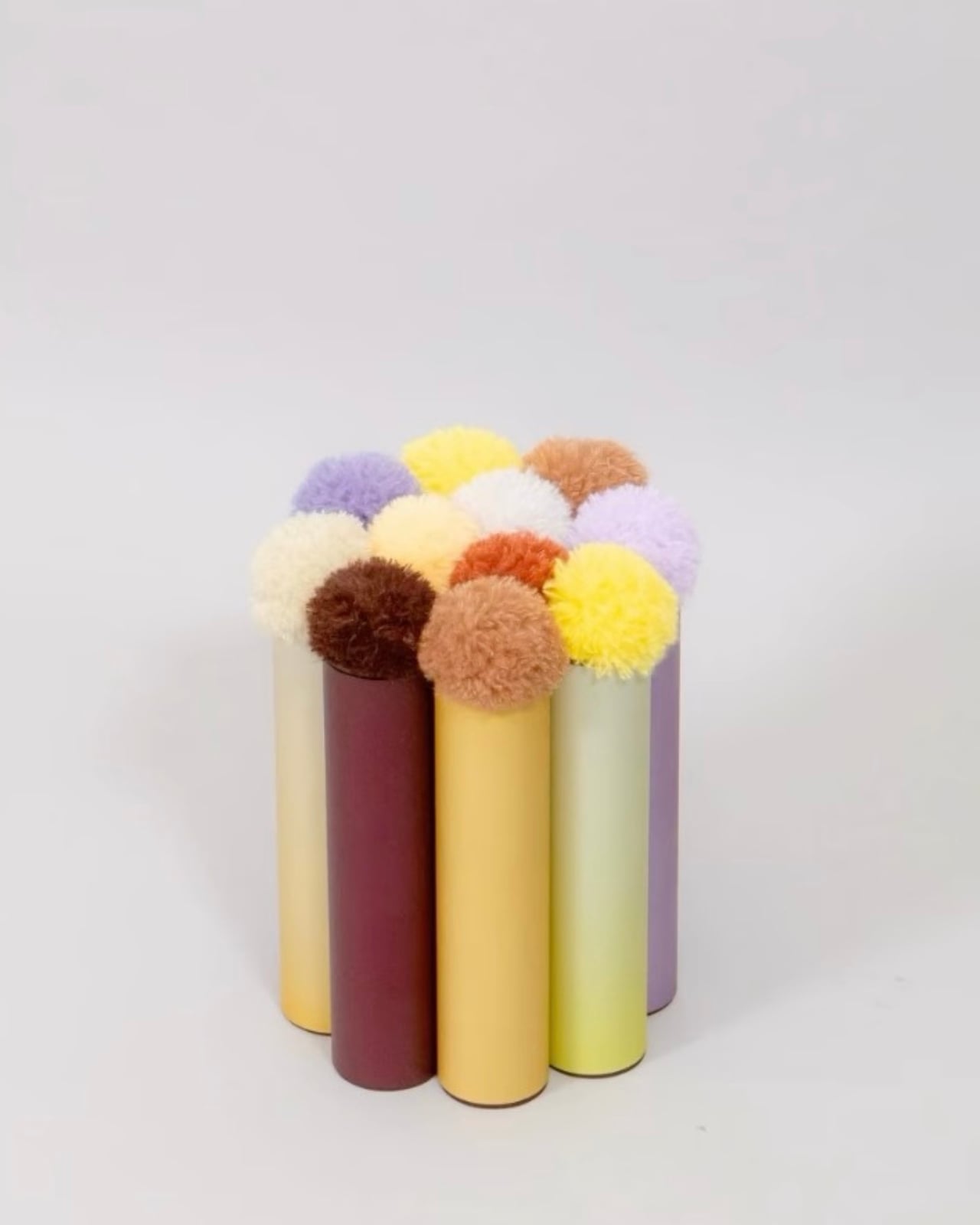

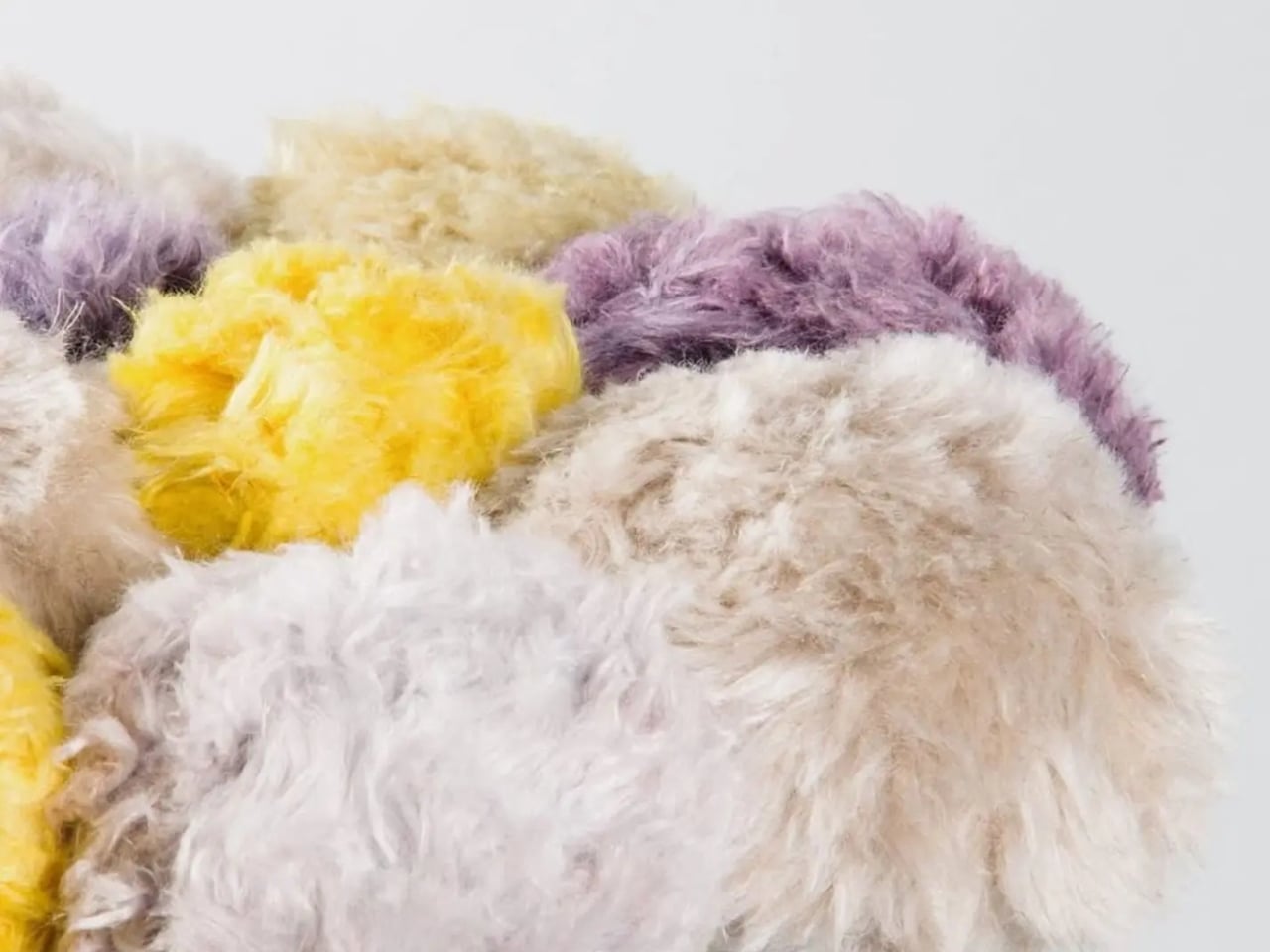
The base of the stool is made from 100% recycled aluminium, specifically Hydro 100R extrusions, and coloured using a plant-based anodising technique the studio developed in-house. The result is a range of subtle colour gradients that shift from soft sage to deep plum to warm yellow, achieved through controlled dyeing rather than chemical baths heavy with petrochemical inputs. The seat is upholstered with Savian by Bio-Fluff, a plant-based faux fur hand-dyed with NIG natural pigments. The combination is tactile in a way that feels almost irrational for a piece of furniture. You want to touch it. You probably want to sit on it and not get up.
And that’s exactly the point. Studio LoopLoop titled their Alcova presentation “Alice Atomicus,” a nod to both Lewis Carroll’s dreamlike world and the idea of material elements rearranged into something new and entirely unexpected. Sustainability, they’re saying, doesn’t have to arrive in a brown paper wrapper with a guilt trip attached. It can be playful. It can be seductive. It can be soft and sculptural and genuinely desirable.
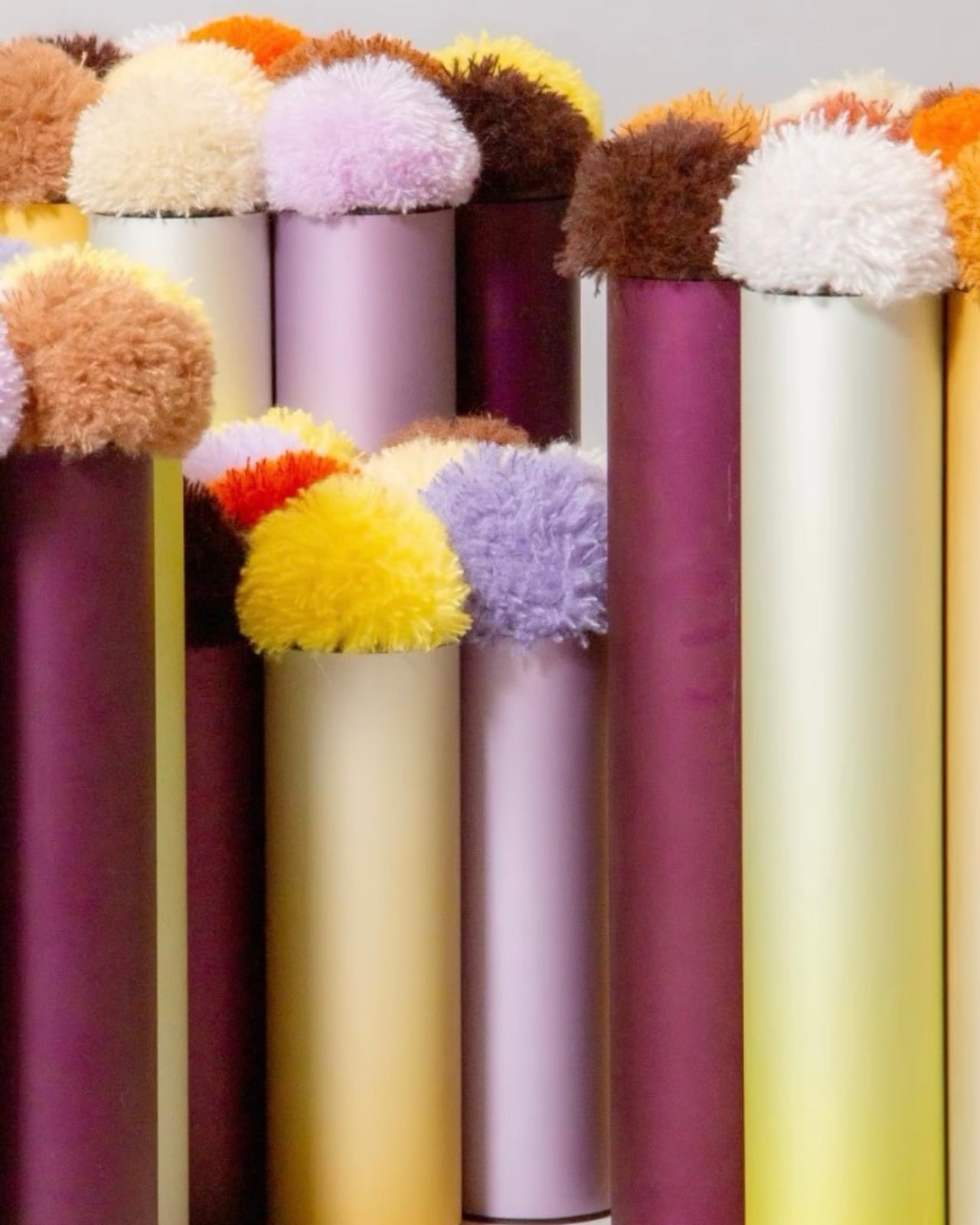
I think this matters more than it might seem. The design industry has spent years making the case that circular materials can be high-quality, and that case has largely been won. But the emotional argument is trickier. If sustainable design feels like an obligation rather than a pleasure, it will always occupy a niche, admired from a distance but rarely chosen with enthusiasm. The Alice Stool feels like a genuine attempt to close that gap, to make the responsible choice the one you actually want because it’s beautiful, not just because it’s correct.
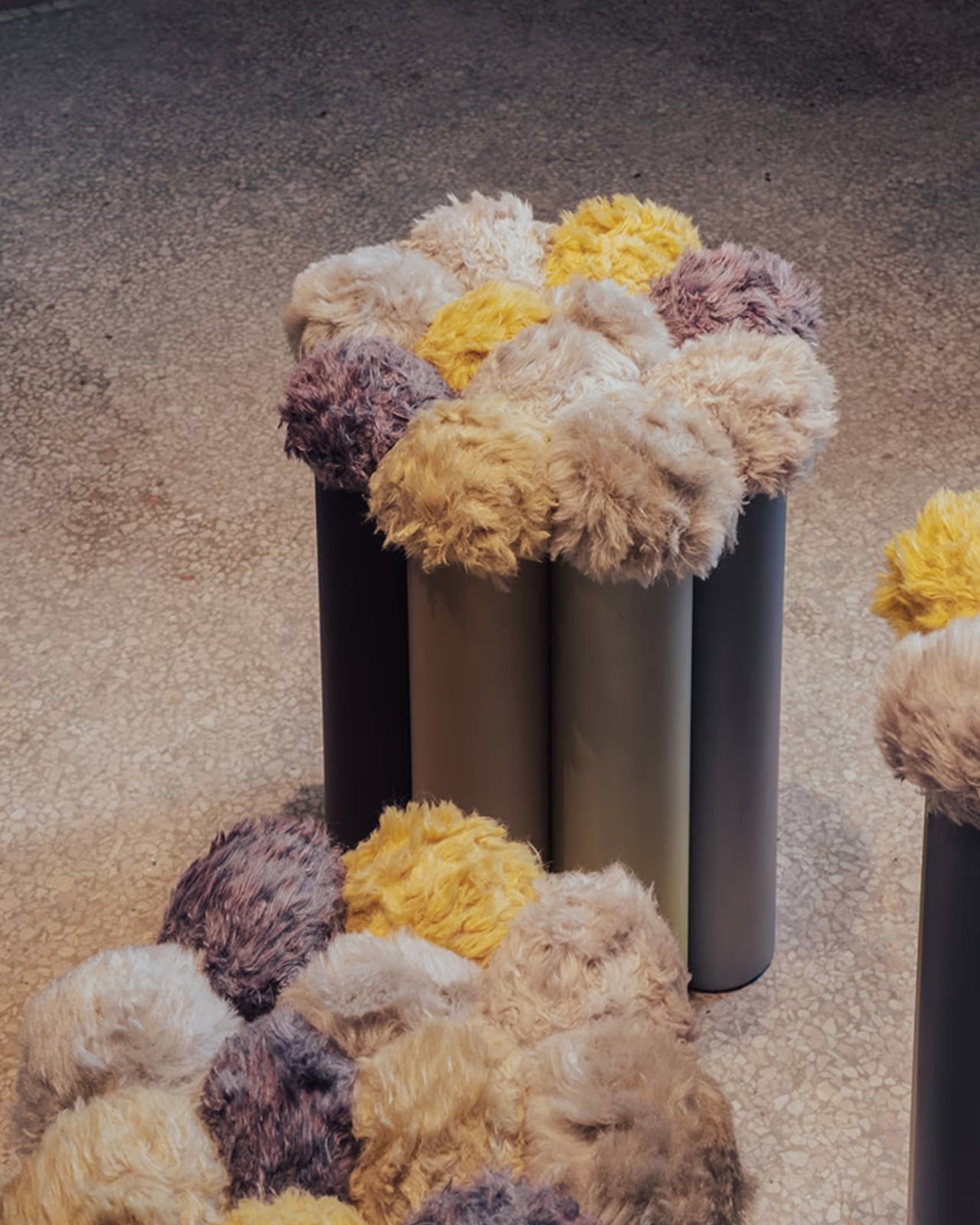
The use of Savian is worth pausing on. Bio-Fluff’s plant-based fur made its breakthrough in fashion through collaborations with Collina Strada, Martine Rose, and Louis Vuitton, finding a foothold in a luxury market that was already starting to rethink its relationship with animal materials. Moving into furniture feels like a natural extension, and the Alice Stool is one of the clearest demonstrations of Savian’s material potential outside of a clothing rack. Against cool metal cylinders, the fur reads as something almost otherworldly. It’s plush in a way that synthetic faux fur typically isn’t, and the hand-dyed variation in the seat means no two stools look exactly alike.
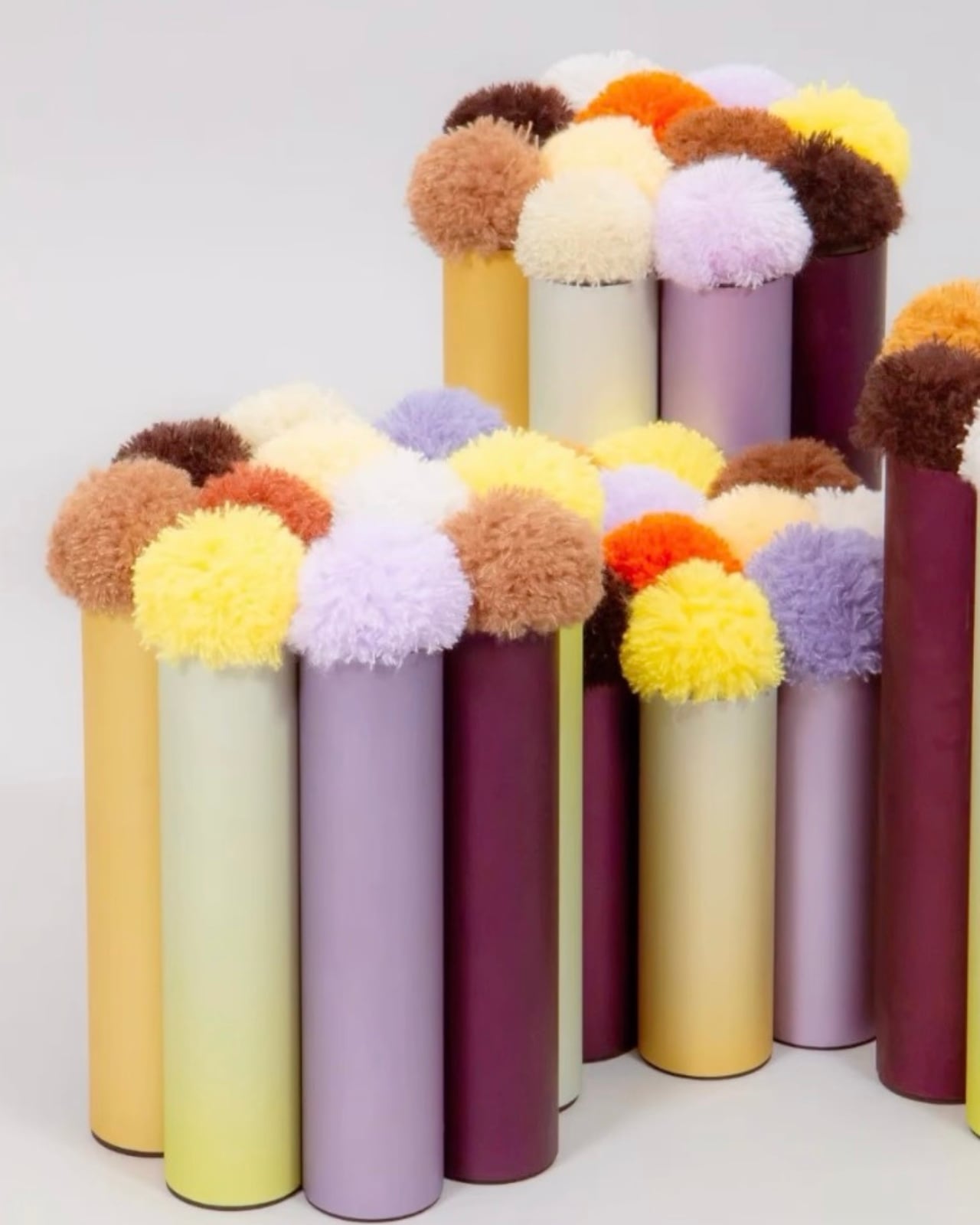
That detail matters to me personally. Mass production has its place, but there’s a real cultural hunger right now for objects that carry the trace of human hands. The Alice Stool has that quality in abundance. The graduated aluminium tones, the slight unpredictability of natural dye, the tactile generosity of the seat, together they suggest something made with attention rather than efficiency as the primary value.

Studio LoopLoop is a young studio, only four years old, but they’re working with a clarity of vision that feels well ahead of their timeline. The Alice Stool isn’t a concept piece hedged with caveats. It’s a fully formed object that asks a simple question: why should doing the right thing look boring? The answer, apparently, is that it doesn’t have to.