
Why does every electric truck feel like it was designed by someone who wanted to leave the truck category as quickly as possible? The Rivian R1T is an adventure vehicle. The Tesla Cybertruck is a stainless steel provocation. The Ford F-150 Lightning is a suburban driveway proposition with a frunk. Each of these vehicles is genuinely impressive in specific ways, and each of them has, in various degrees, moved away from the mechanical foundations that made the pickup truck the best-selling vehicle category in America for 47 consecutive years. That foundation is body-on-frame construction, a solid rear axle, and mechanical locking differentials, the kind of hardware that lets a working truck go places a smart suspension system simply cannot follow.
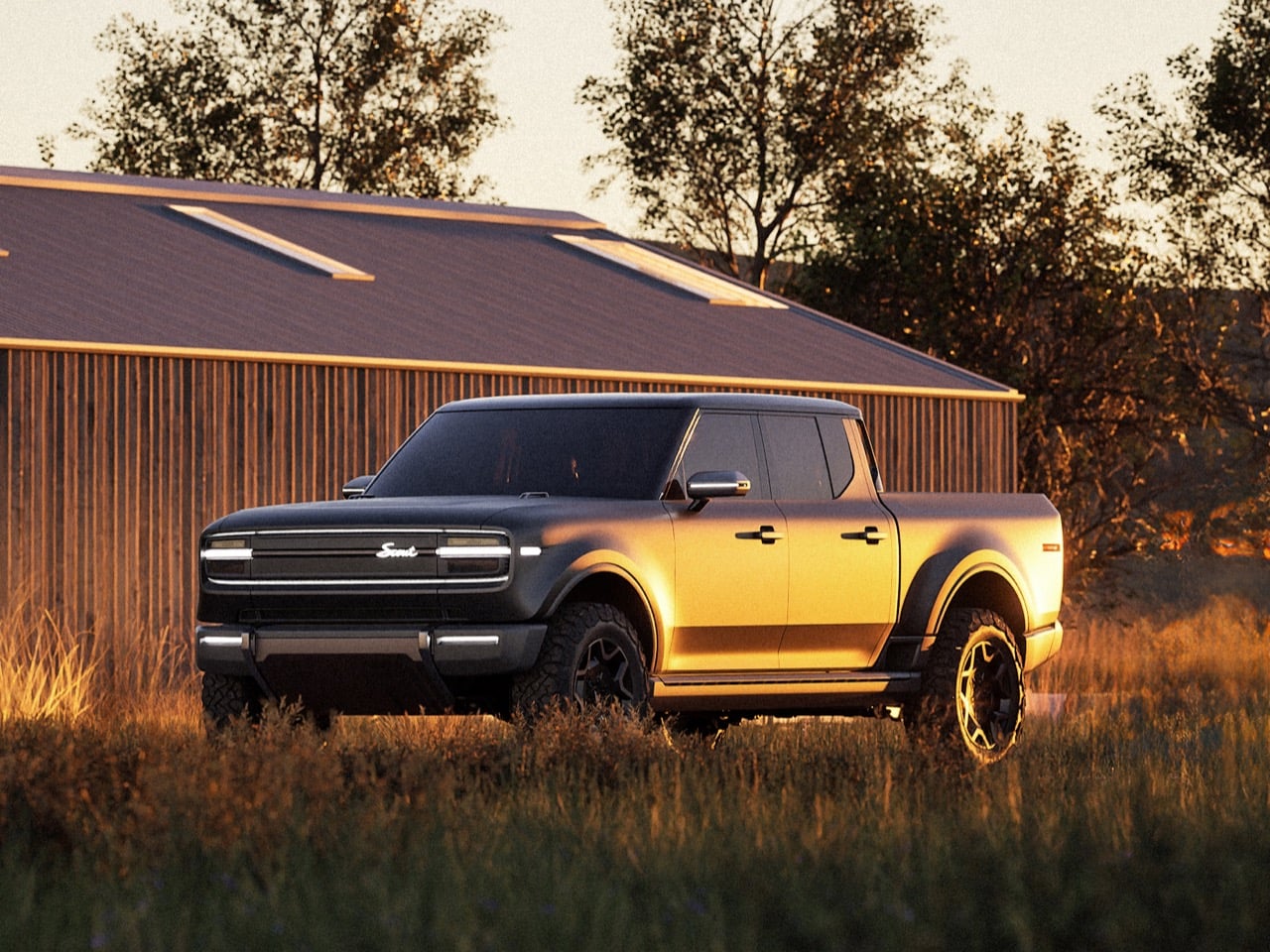
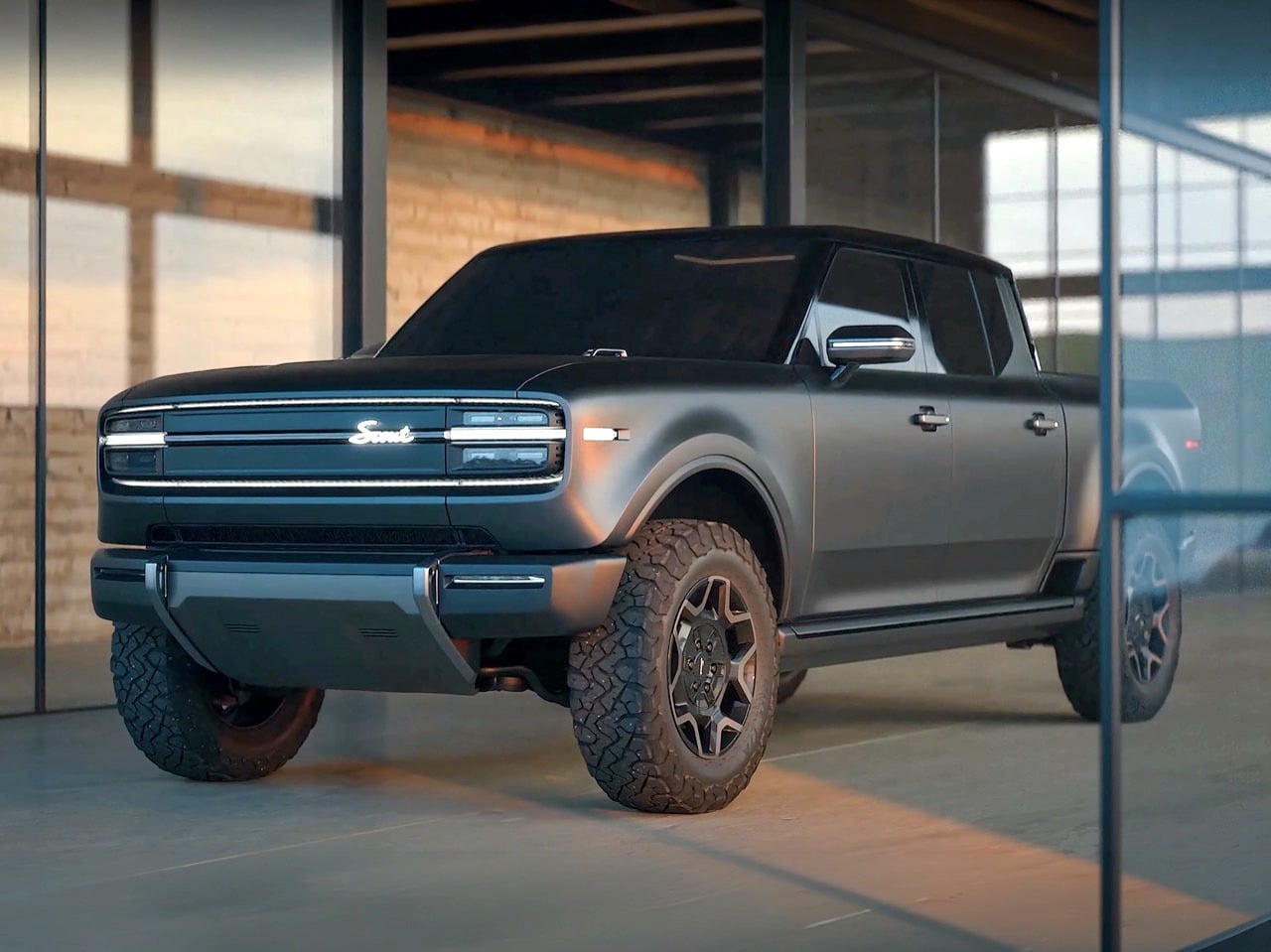
Scout Motors, the Volkswagen-backed revival of the old International Harvester Scout, showed journalists the production-intent Terra pickup on May 15 and delivered something the EV truck segment has been conspicuously missing. Body-on-frame ladder chassis. Solid rear axle. Mechanical lockers front and rear. A 5.5-foot bed with a retractable rear window and an in-bed overlanding kit. The Harvester EREV variant tucks a rear-mounted naturally aspirated VW four-cylinder just ahead of the axle, running purely as a generator against a 63 kWh battery, for a combined range north of 500 miles. The pure-electric variant manages 350. Both variants tow over 10,000 pounds, carry around 2,000 pounds of payload, and price out under $60,000, landing near $51,500 after federal and state incentives clear.
Designer: Scout Motors
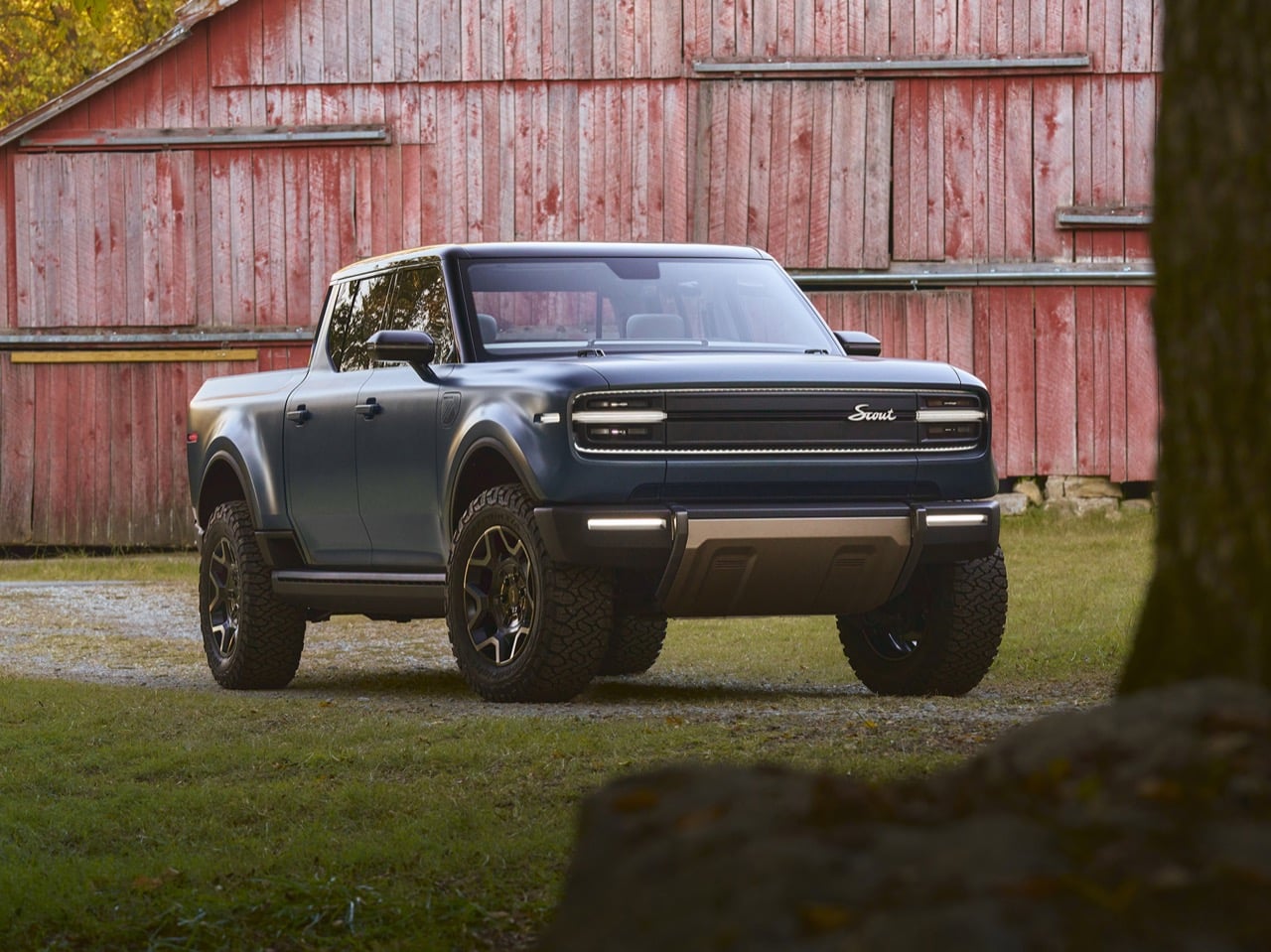
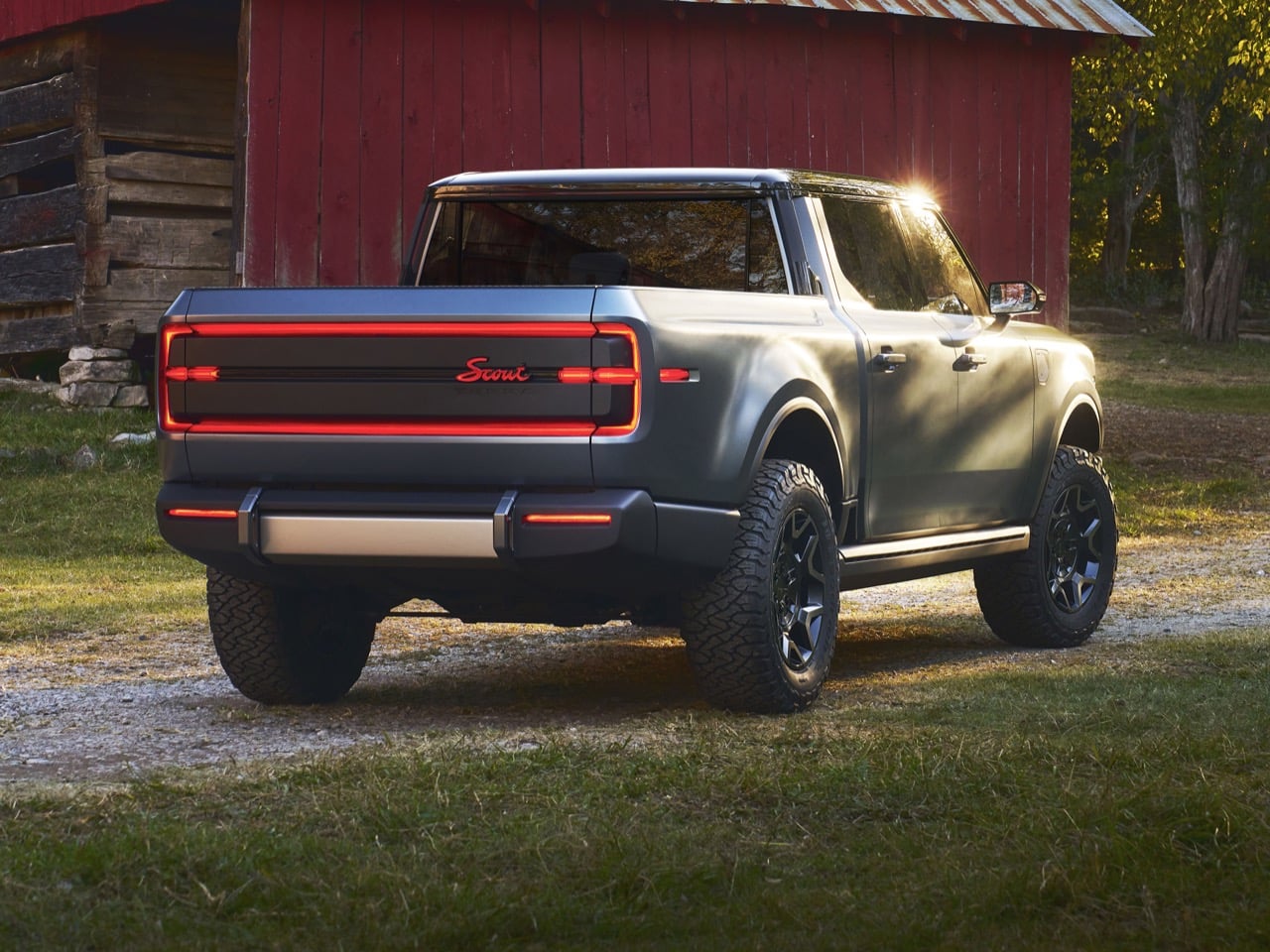

Short overhangs, a boxy greenhouse, and an upright stance give the Terra a deliberately rugged silhouette that refuses the aero-optimized wedge profile every other EV truck chases. The downward-sloping C-pillar and angled cargo area window reference the original 1960s Scout’s proportions directly, and the whole thing reads like it was designed by people who actually wanted it to look like a truck, not a concept car that compromised its way into a bed. Against the Rivian R1T’s smooth, tech-forward surfacing and prominent body-colored C-pillar, the Terra feels more worksite than weekend warrior content, which is precisely the positioning Scout is betting on.
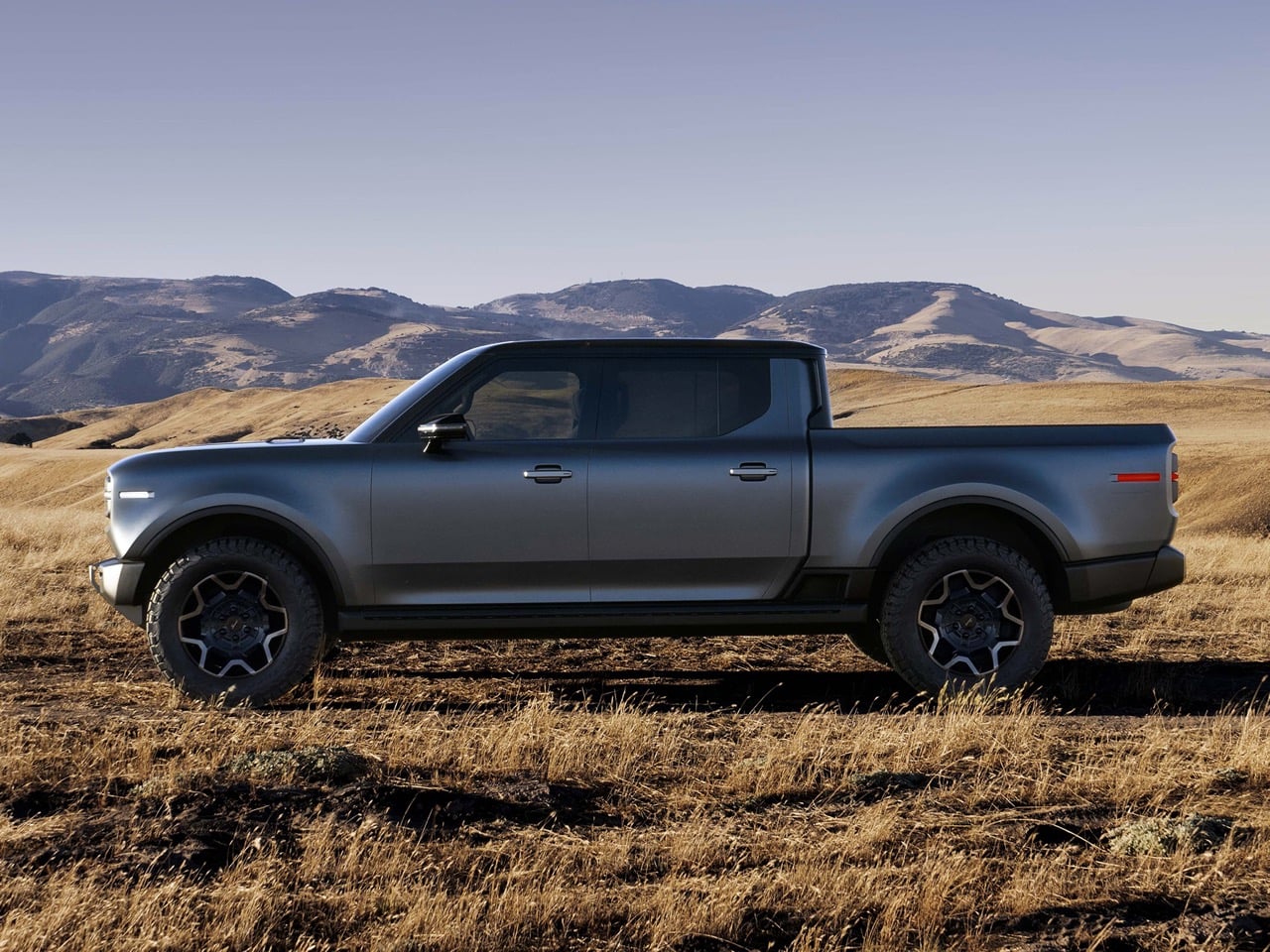
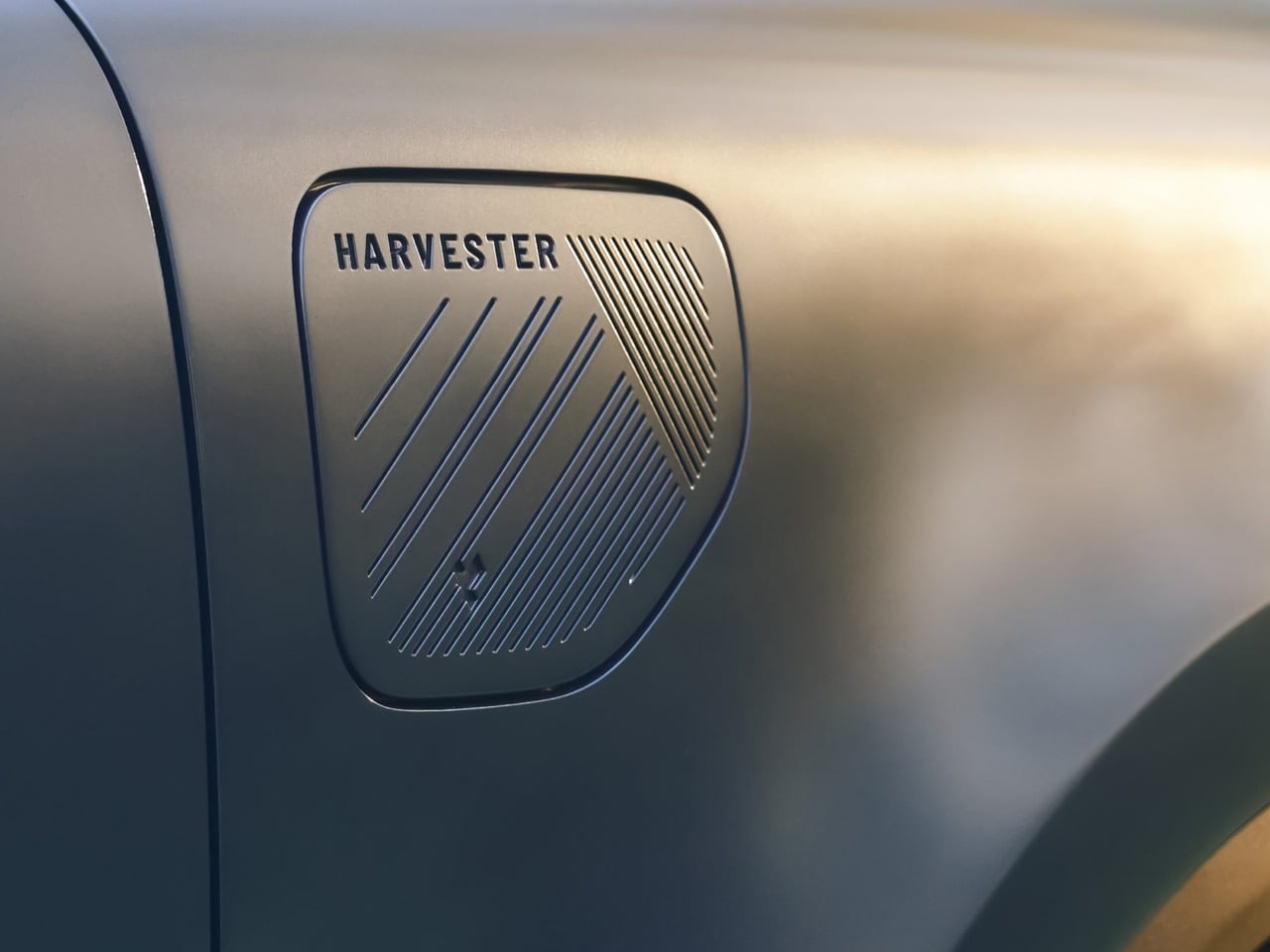
The Harvester range extender runs at a constant optimized speed as a pure generator, never driving the wheels directly, with propulsion staying fully electric throughout. Mounting the engine just ahead of the rear axle keeps the front end clean and preserves frunk space identical to the pure-EV variant. There are still open questions around how that rear weight placement affects off-road departure angles and payload capacity at the limit, and Scout hasn’t fully detailed those tradeoffs yet. What the market has already signaled is unambiguous: over 80% of Scout’s reservations are for the Harvester EREV, which tells you everything about how much range anxiety still drives purchase decisions for truck buyers who actually use their trucks.
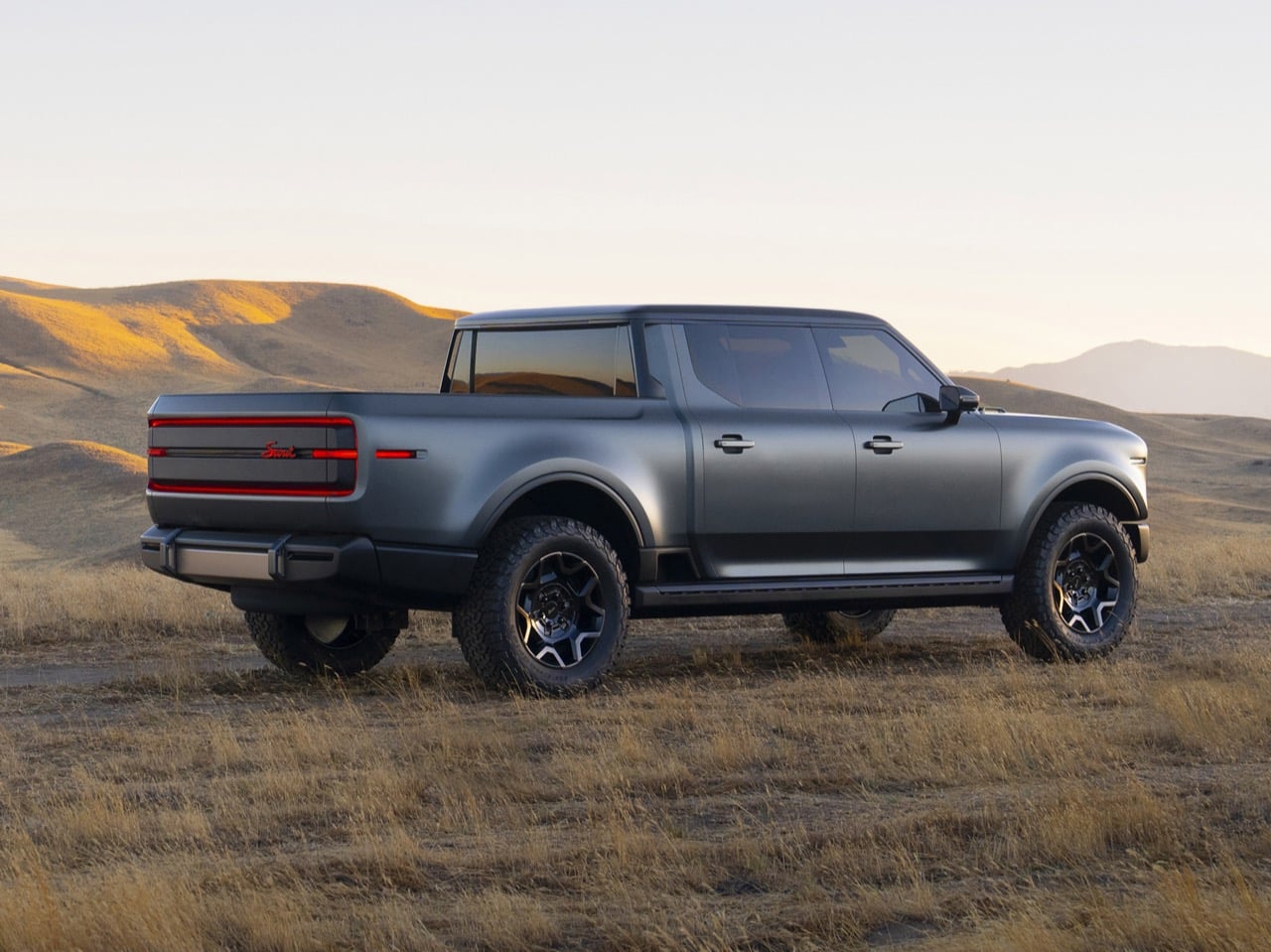
Where Rivian’s independent rear suspension delivers a more comfortable highway ride, it compromises wheel articulation on uneven terrain compared to a proper solid axle. Scout’s approach pairs independent front suspension for on-road ride quality with a solid rear axle for trail articulation, then adds a disconnecting front sway bar and factory availability of 35-inch all-terrain tires to complete the picture. It’s a hardware spec that would send a Rivian’s air suspension into a fault state on terrain the Terra would walk through without a second thought.
Production was originally slated for 2026, slipped to 2027, and now targets 2028 for the Traveler SUV, with the Terra potentially pushed to 2030 according to recent reporting. By then, the F-150 Lightning will be a generation older, Rivian will have the more affordable R2 on sale, and Scout will be arriving into a market that has had years to harden its habits. The Terra is making exactly the right arguments about what an electric truck should be. Whether those arguments land in 2028 or 2030 matters enormously.