
The Flipper Zero always looked like it was designed by someone who grew up on Game Boys and cyberpunk anime simultaneously, and that instinct paid off spectacularly. A toy-shaped hacker tool with a pixelated dolphin mascot somehow became one of the most culturally significant pieces of open hardware of the past decade, racking up a million units shipped and a string of government ban attempts that only made it more desirable. We’ve covered the Zero’s behind-the-scenes, and the throughline was always the same: great design lowers the barrier to entry, and a device that looks fun gets picked up, explored, and loved in ways that a purely utilitarian box never would.
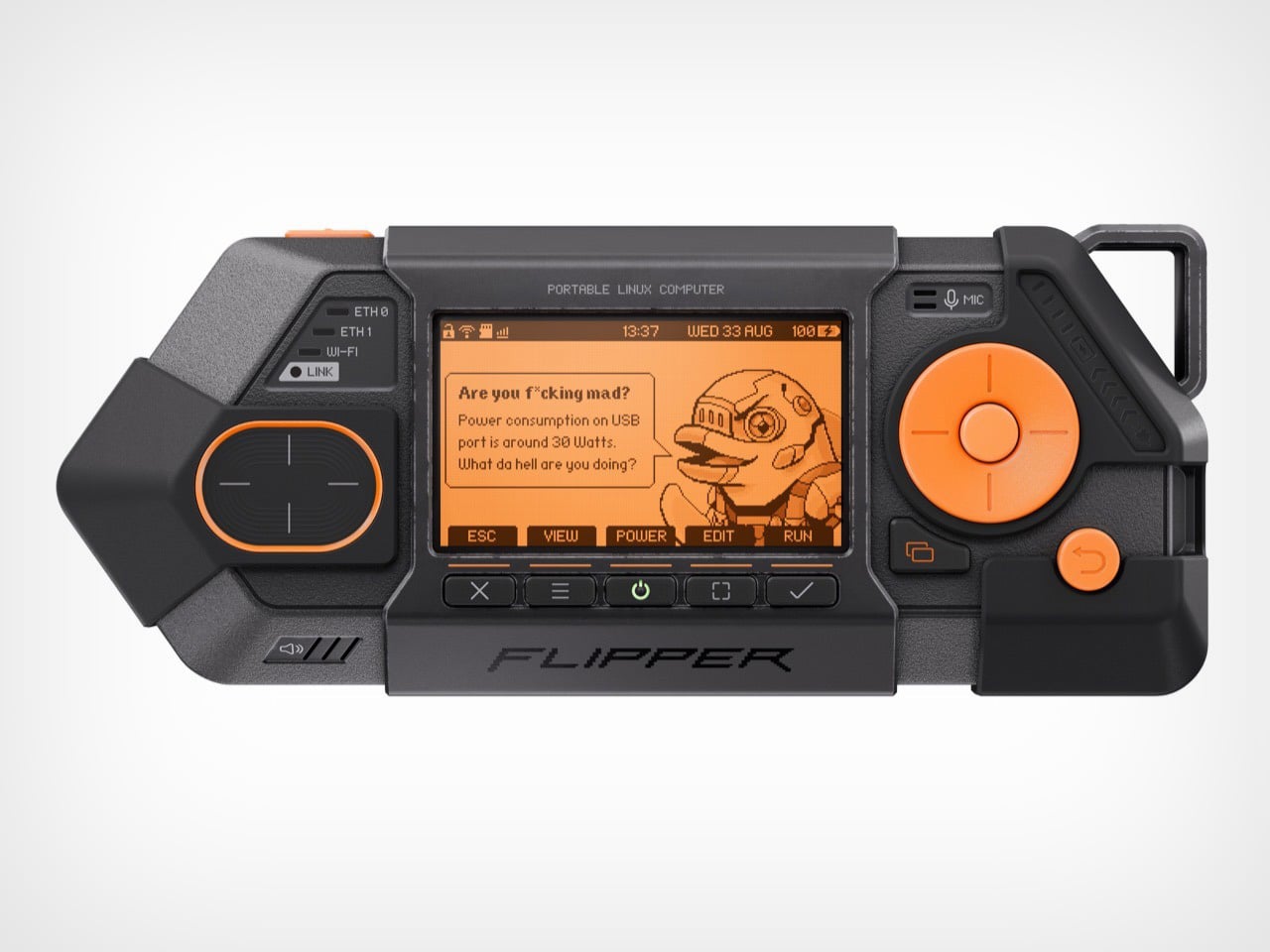
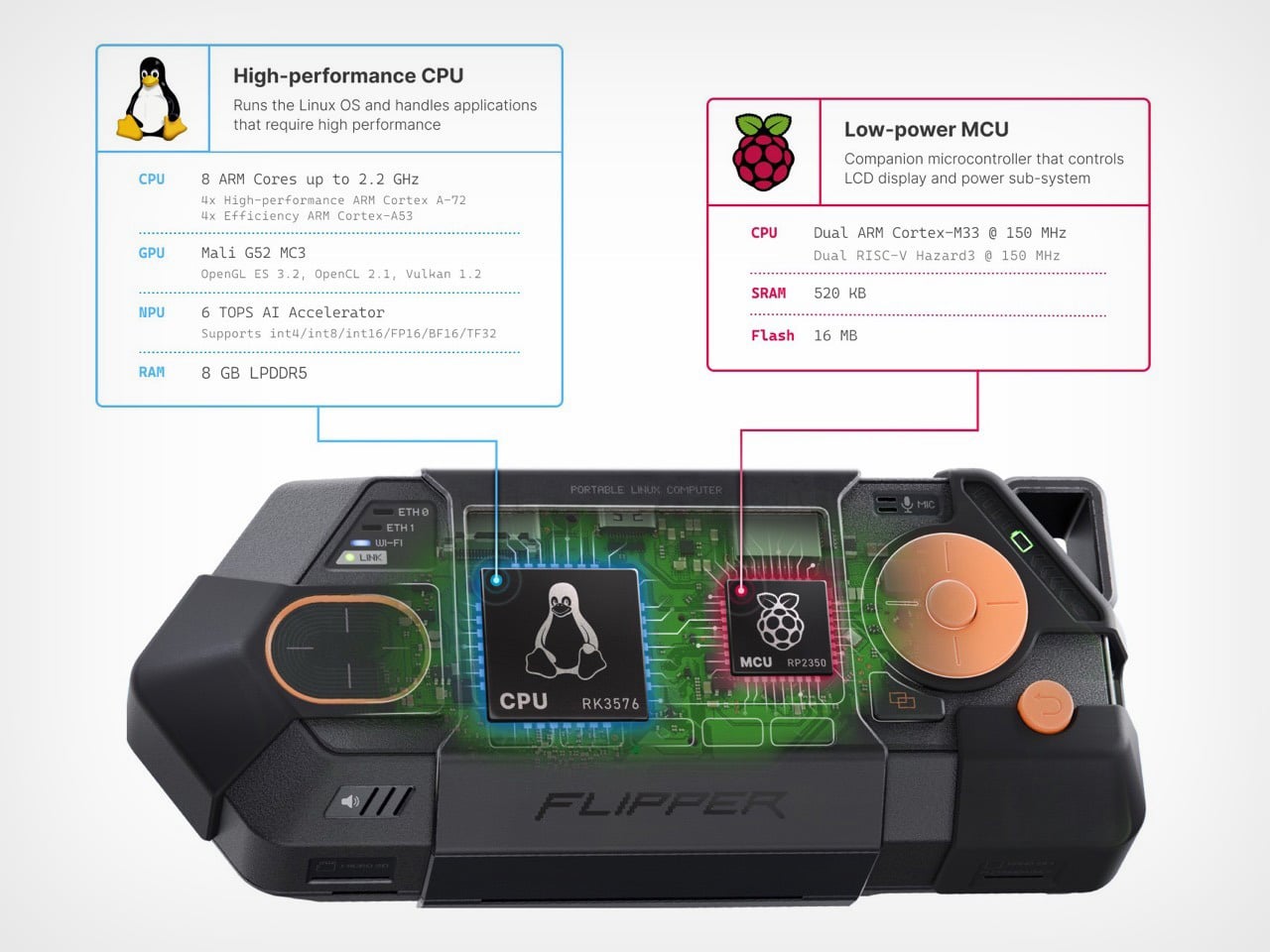
Flipper One lands with that same energy, except the mascot is now visibly unhinged. The screen on the press images shows the dolphin yelling “Are you f*cking mad?” at the user for drawing too much power from the USB port, which tells you everything about the tonal direction here. This thing stamps “PORTABLE LINUX COMPUTER” across its forehead, wears its network indicator LEDs like a badge of honor, and ships with a carabiner loop because Flipper knows exactly who is buying this. The hardware underneath that attitude is a full Linux machine capable of operating as a router, a network analyzer, a travel desktop, and a satellite-connected field tool, all depending on what you slot into its M.2 expansion bay.
Designers: Pavel Zhovner & Flipper Devices
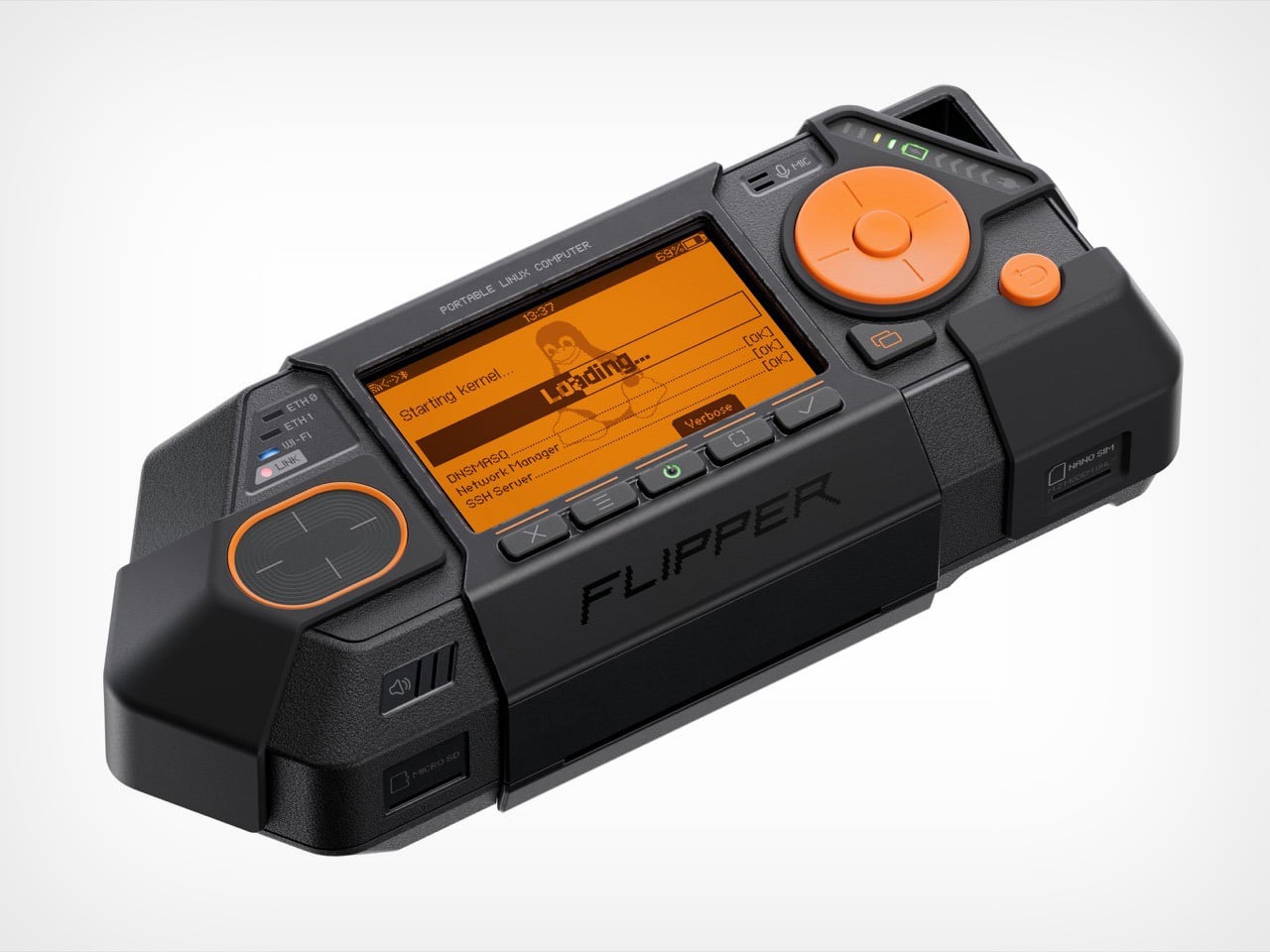
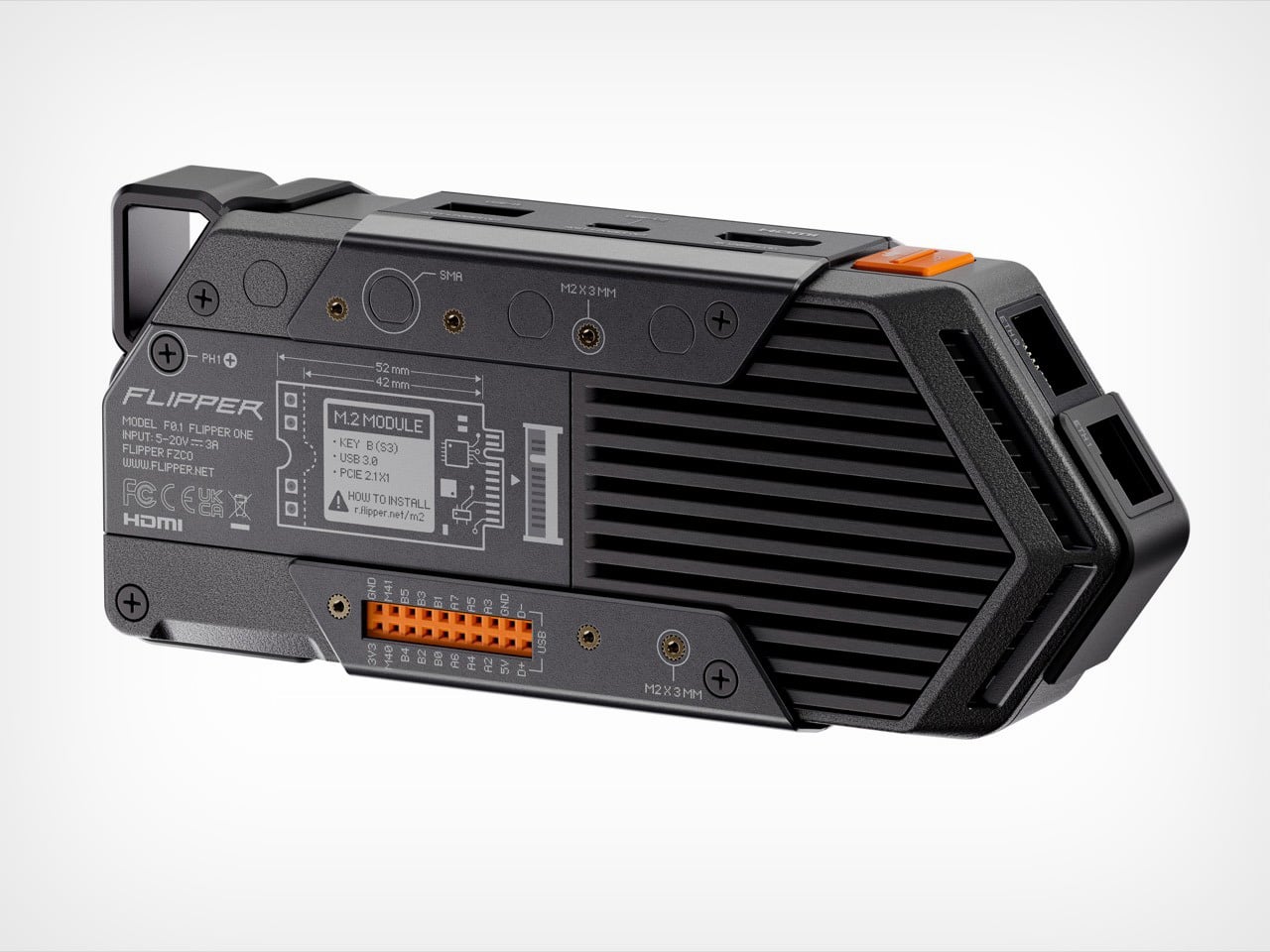
I’ll be honest, when the Flipper One CAD files leaked in March, my first reaction was that it looked like someone scaled up a Game Boy Advance and bolted Ethernet ports onto it. My second reaction, about thirty seconds later, was that I wanted one immediately. The form language was unmistakably Flipper, angular and purposeful and slightly aggressive, but the proportions told a completely different story than the Zero. This was not a radio tool. The Zero’s pixel dolphin was charming and approachable, a deliberate design choice that got a hacking tool onto TikTok and into mainstream conversation. The One’s mascot has apparently developed strong opinions and a short temper, which fits a device aimed at people who want their pocket computer to reflect how seriously they take their craft.
That craft, in practice, looks like this. You’re at a conference, hotel Wi-Fi is the usual disaster, and you want a clean network environment for your laptop. Flipper One bridges its dual Gigabit Ethernet ports, runs a VPN tunnel through the cellular modem you’ve slotted into the M.2 bay, and your laptop connects through USB-C Ethernet at 5 Gbps without touching the hotel network once. Or you’re a field engineer doing network diagnostics in a location with no cellular, and the NTN satellite modem module gives you an IP connection via the same low-orbit infrastructure newer phones use for emergency SOS messaging. Or you’re traveling light and plug the One into the hotel TV via full-size HDMI 2.1, grab a Bluetooth keyboard, and have a working Linux desktop controlled by the room remote through HDMI CEC. These aren’t edge cases dreamed up for a spec sheet. They’re the actual use cases Flipper is designing toward.
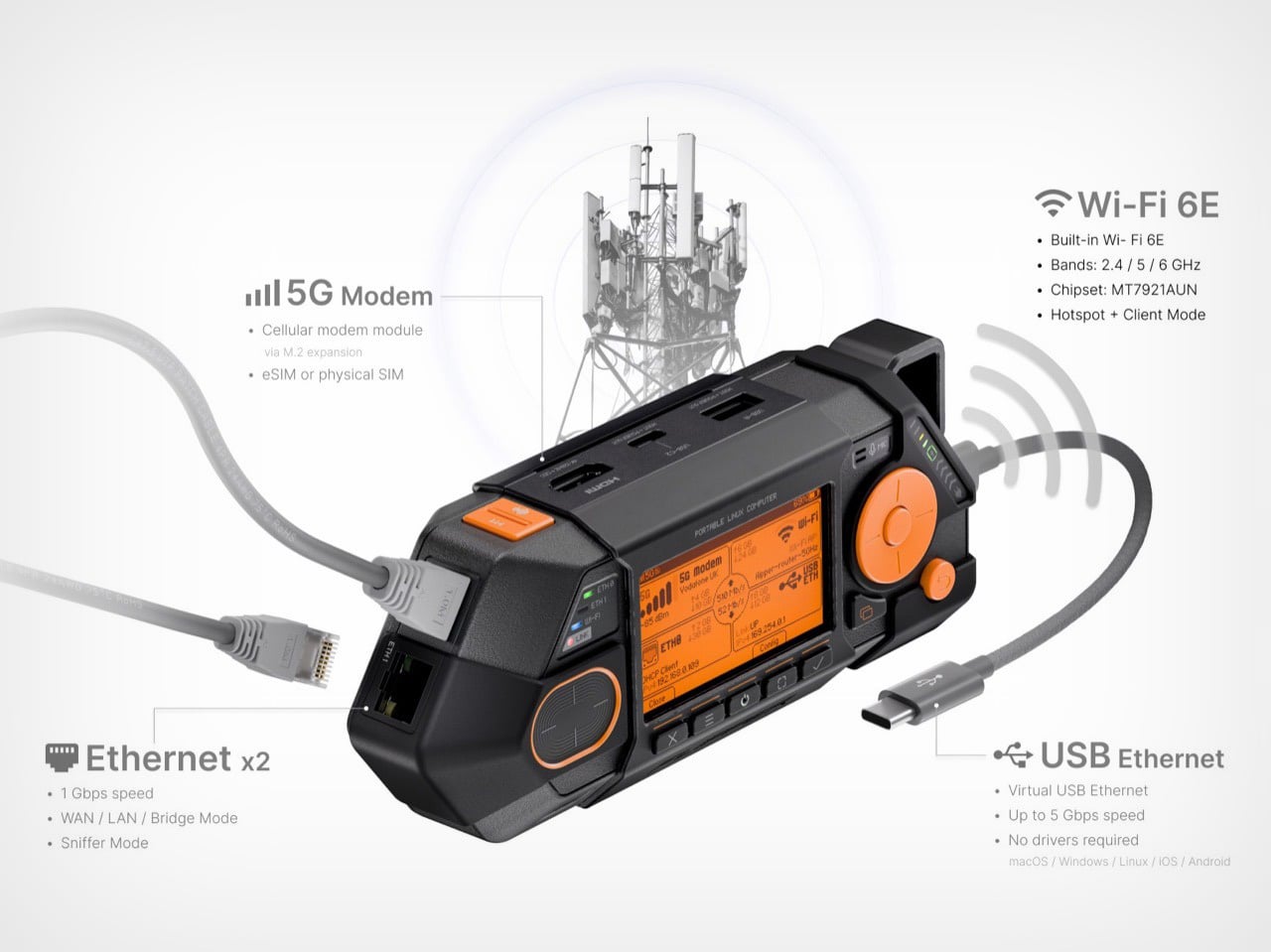

The software architecture is as interesting as the hardware. Flipper OS introduces a profile system where each configuration is a complete, isolated OS snapshot. Boot a network analysis profile, install whatever you need, break things freely, then switch to a clean travel desktop profile without any experimental residue carrying over. Anyone who has re-flashed a Raspberry Pi SD card for the fourth time in a week because a router experiment ate the system will understand exactly why this matters. FlipCTL completes the picture, a UI framework that wraps existing Linux command-line tools like nmap, ping, and traceroute in a clean, D-pad-navigable interface purpose-built for the One’s small screen, rather than squeezing a full desktop environment into a space it was never designed for.
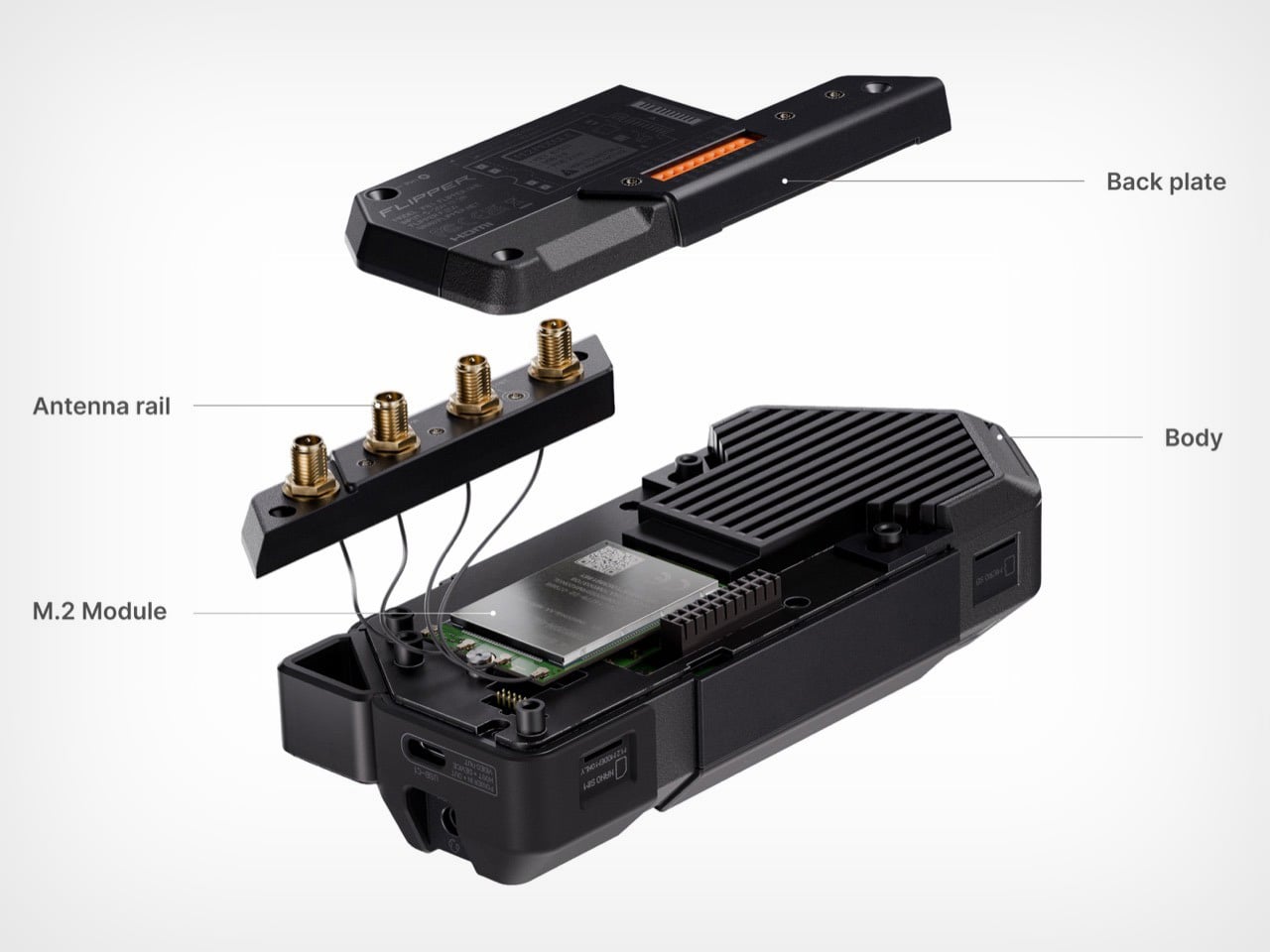
Flipper Devices shipped a million Zeros by making a serious tool feel approachable and fun. The One is a bet that the same philosophy scales up to a full Linux platform, and that an unhinged pixel dolphin yelling at you about USB power draw is exactly the right mascot for a machine with this much capability packed into a chassis you can clip to a bag and carry anywhere.