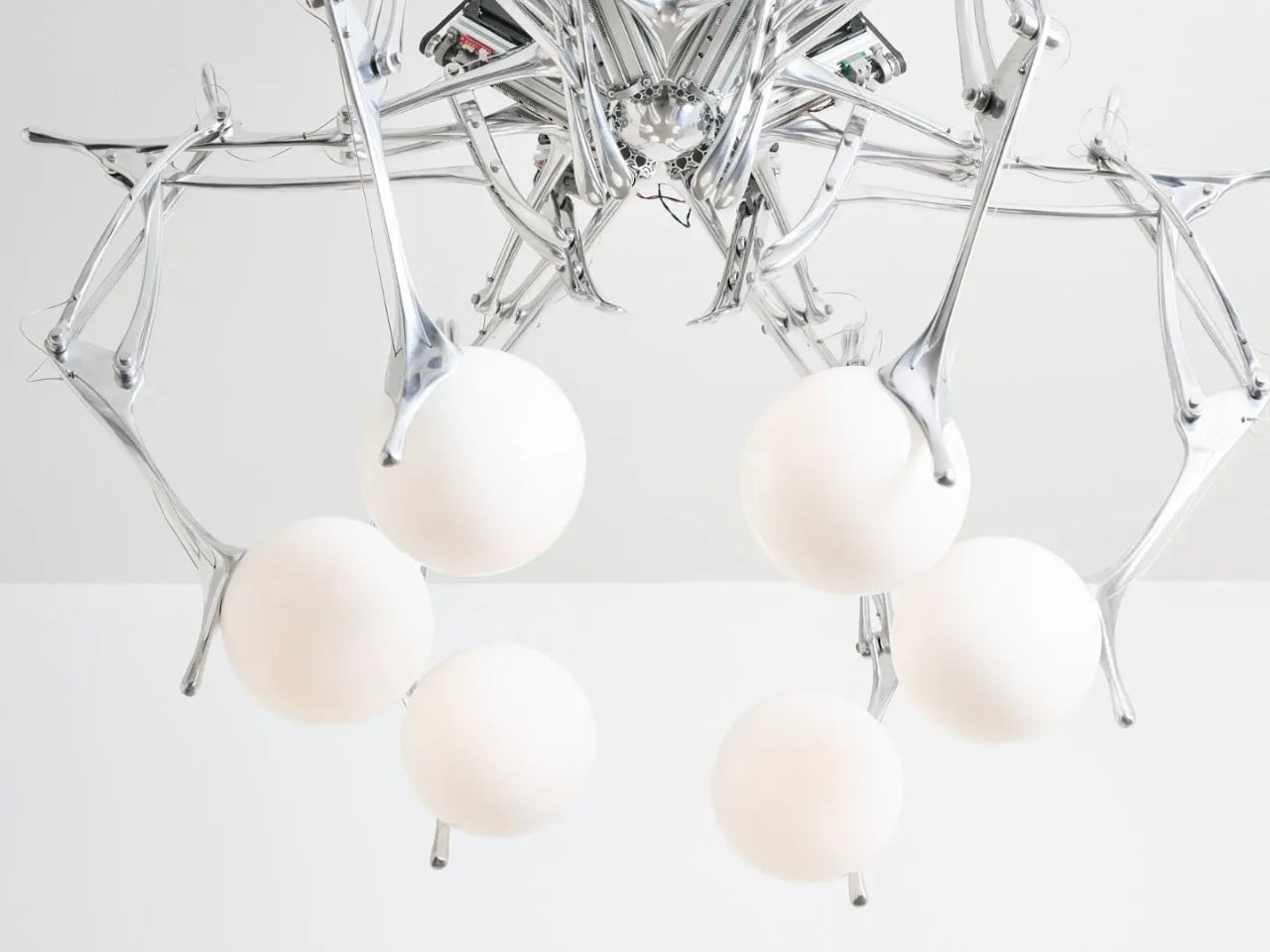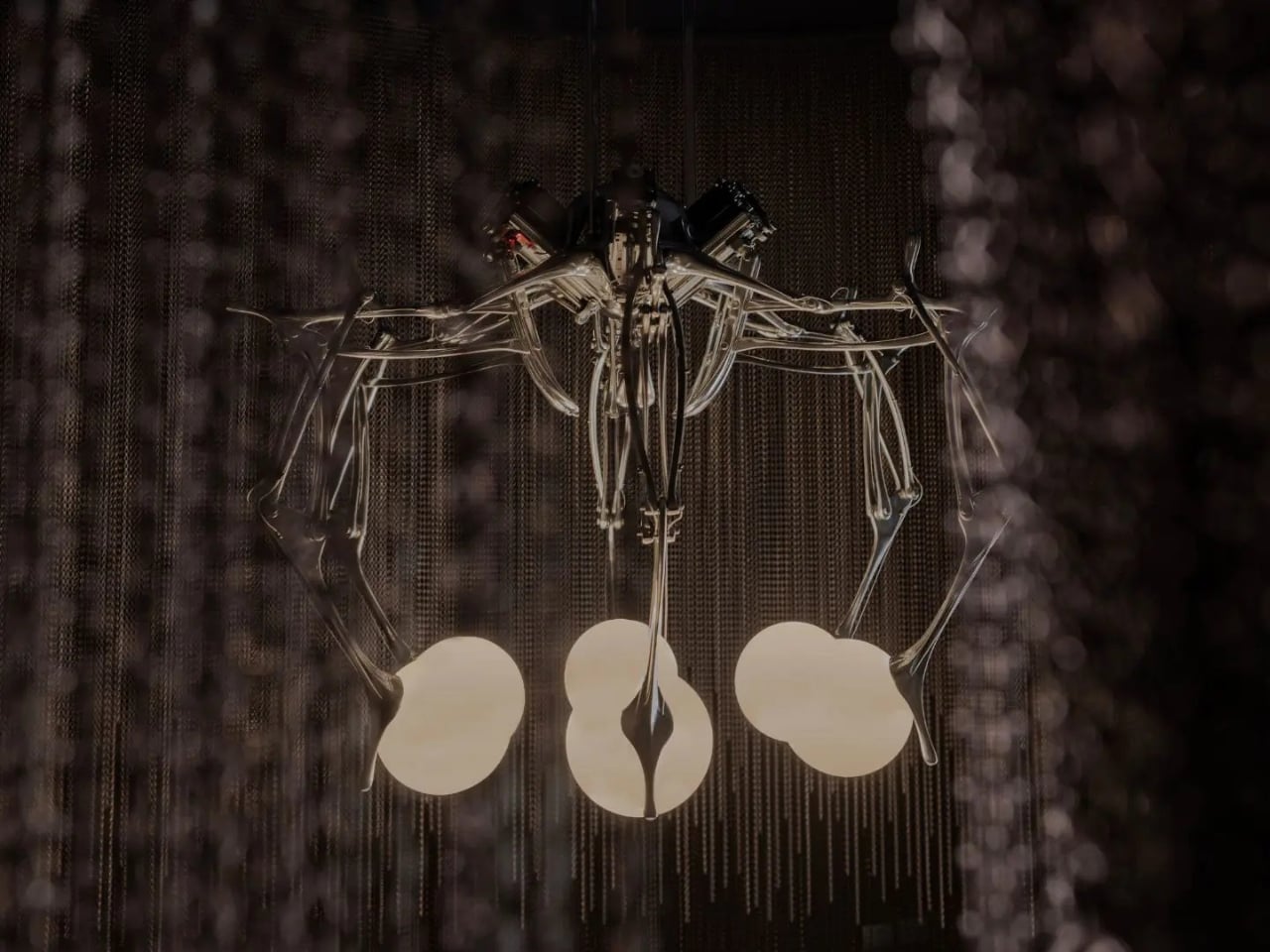

Milan Design Week 2026 was, by most accounts, a fair deeply in love with the handmade. Craft, texture, labour, and the visible trace of human effort were the recurring themes that season. So it felt like a deliberate and well-timed provocation when, inside Nilufar’s historic gallery on Via della Spiga, Andrea Mancuso unveiled LUMIAC: a chandelier that moves on its own, generates its own choreography of light, and takes its name from a 1950s computer.
The name is no accident. LUMIAC stands for Light Unit Mechanized Intelligence Apparatus Computer, a direct nod to MANIAC, one of the earliest autonomous computers built in the 1950s and one of the machines that essentially launched the age of computation. Mancuso chose this reference deliberately, grounding the piece in the origins of electronic thinking rather than in the shinier, more marketable language of today’s AI conversation.
Designer: Andrea Mancuso
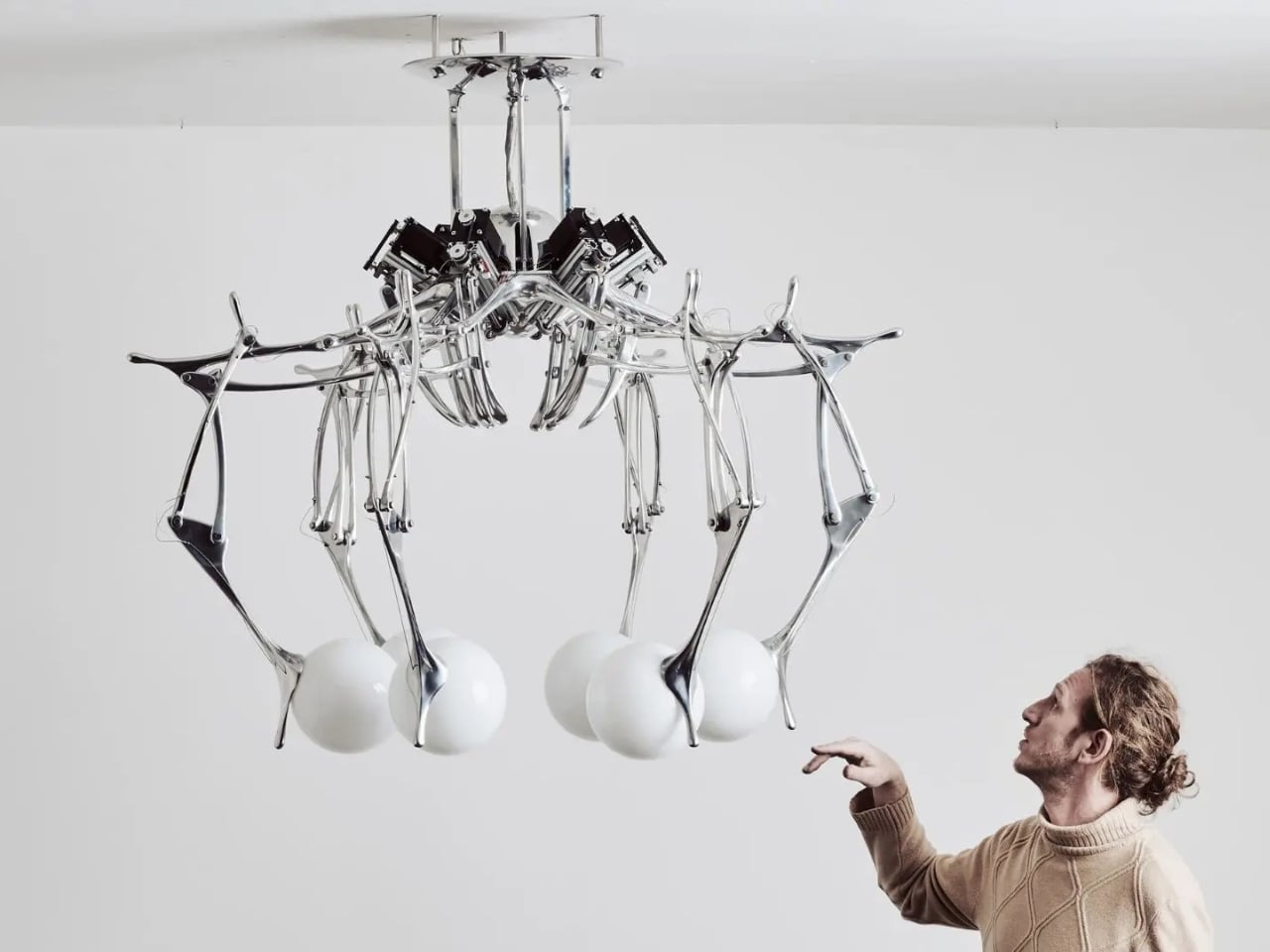
That distinction matters more than it might seem at first. Anyone can slap the word “intelligent” on a product in 2026 and call it a day. Mancuso went further back, to a time when the boundary between human logic and machine logic was first being tested, and asked what it would look like to translate that early electronic reasoning into light and movement.
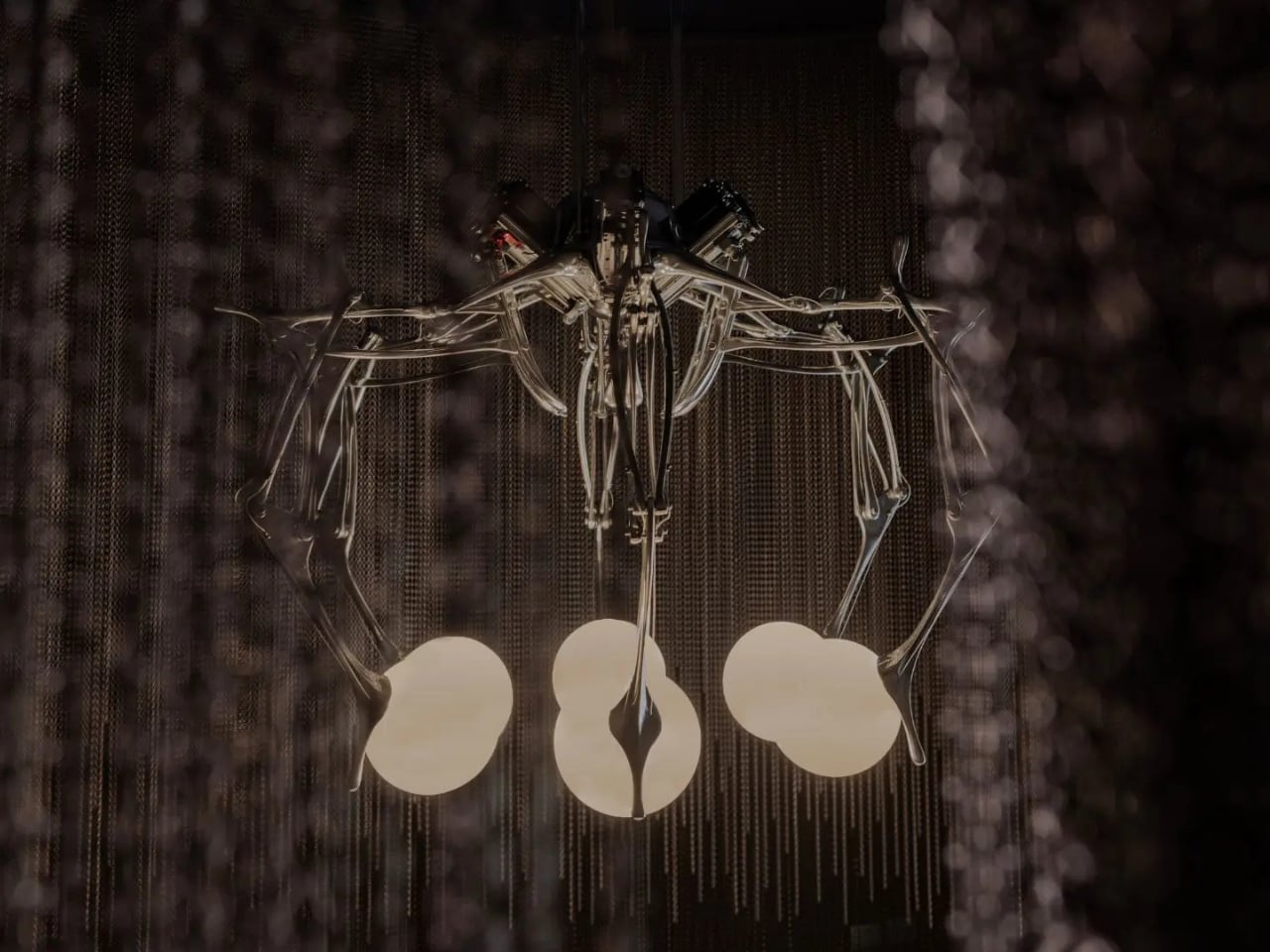
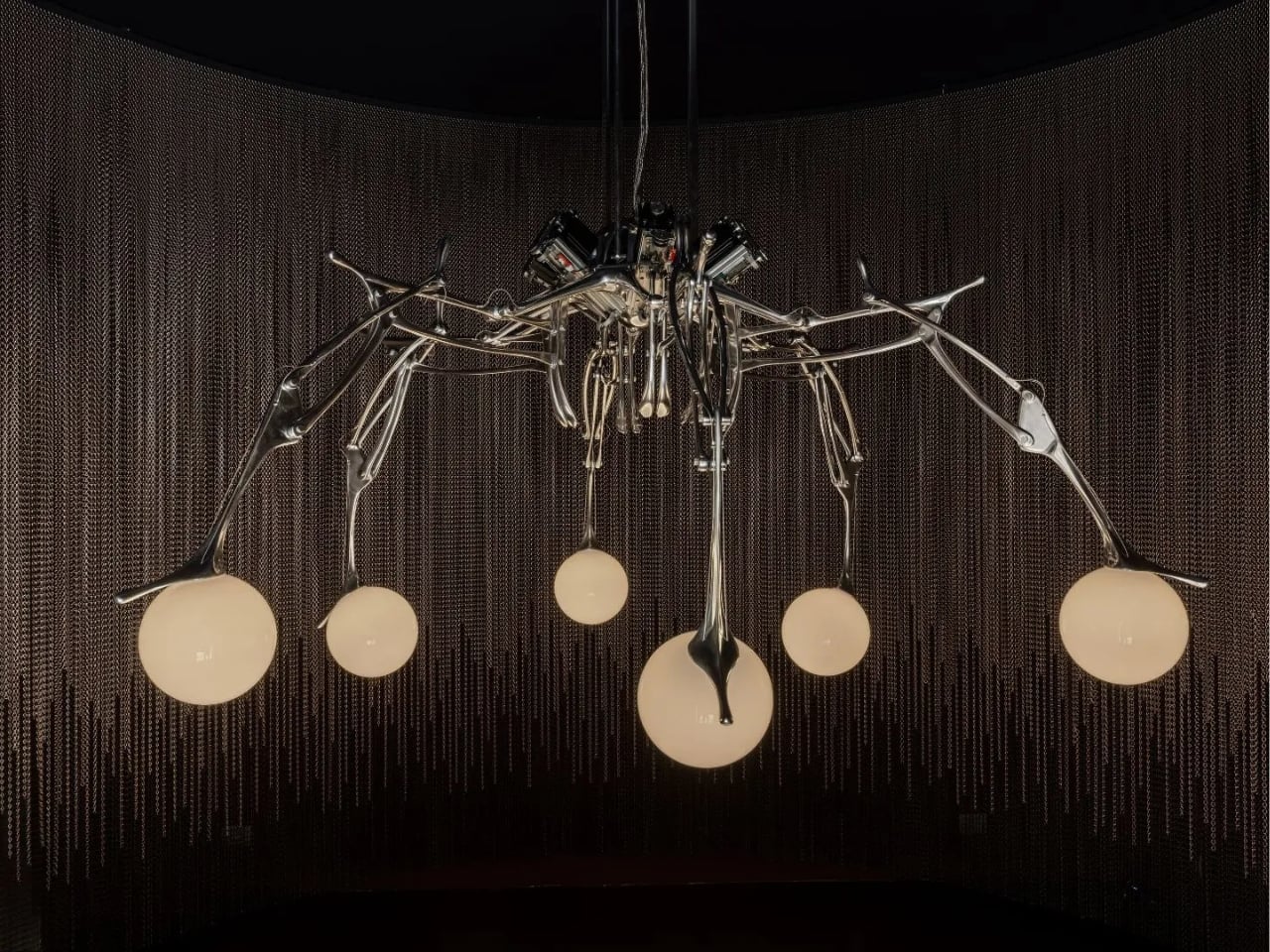
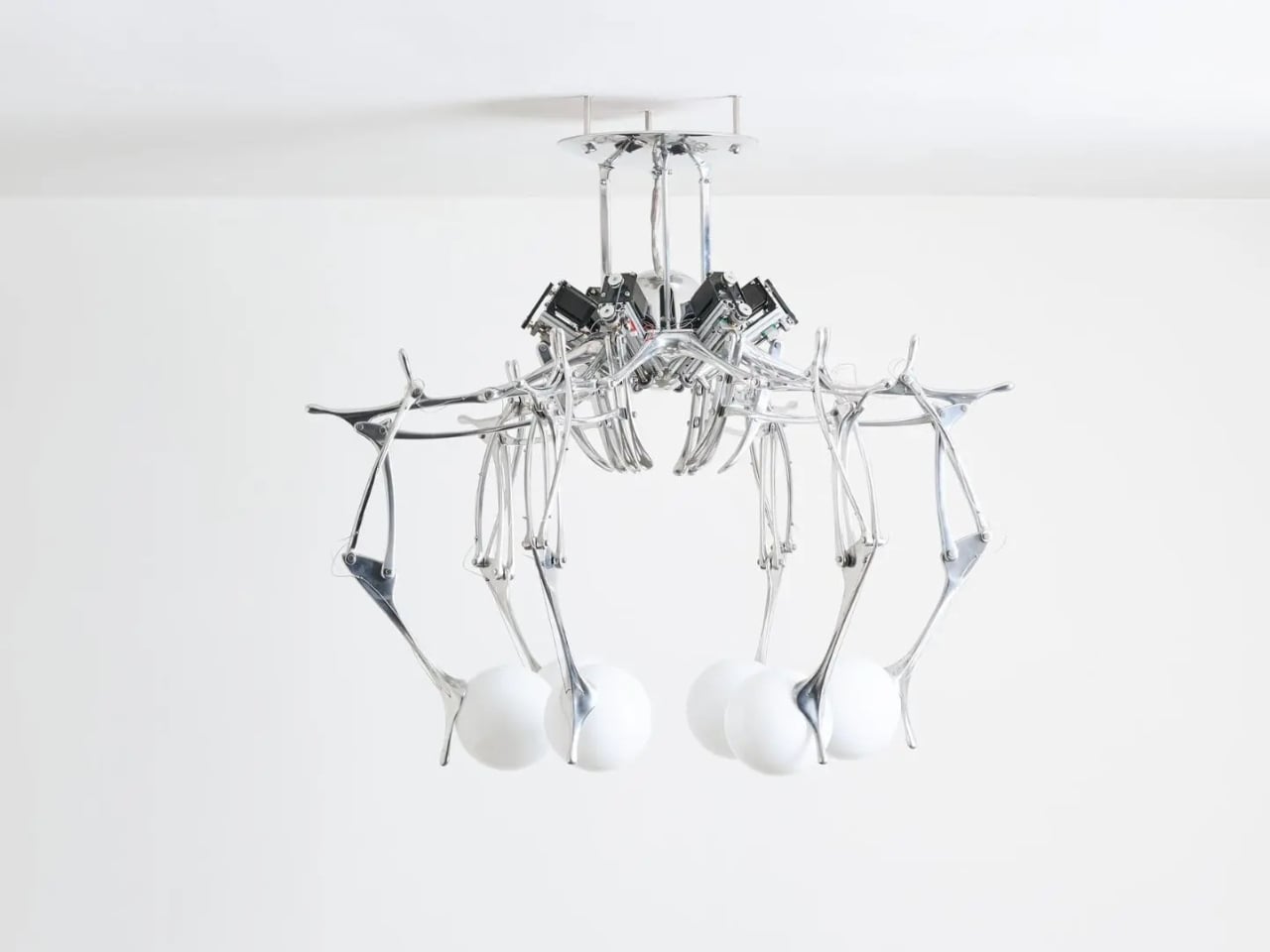
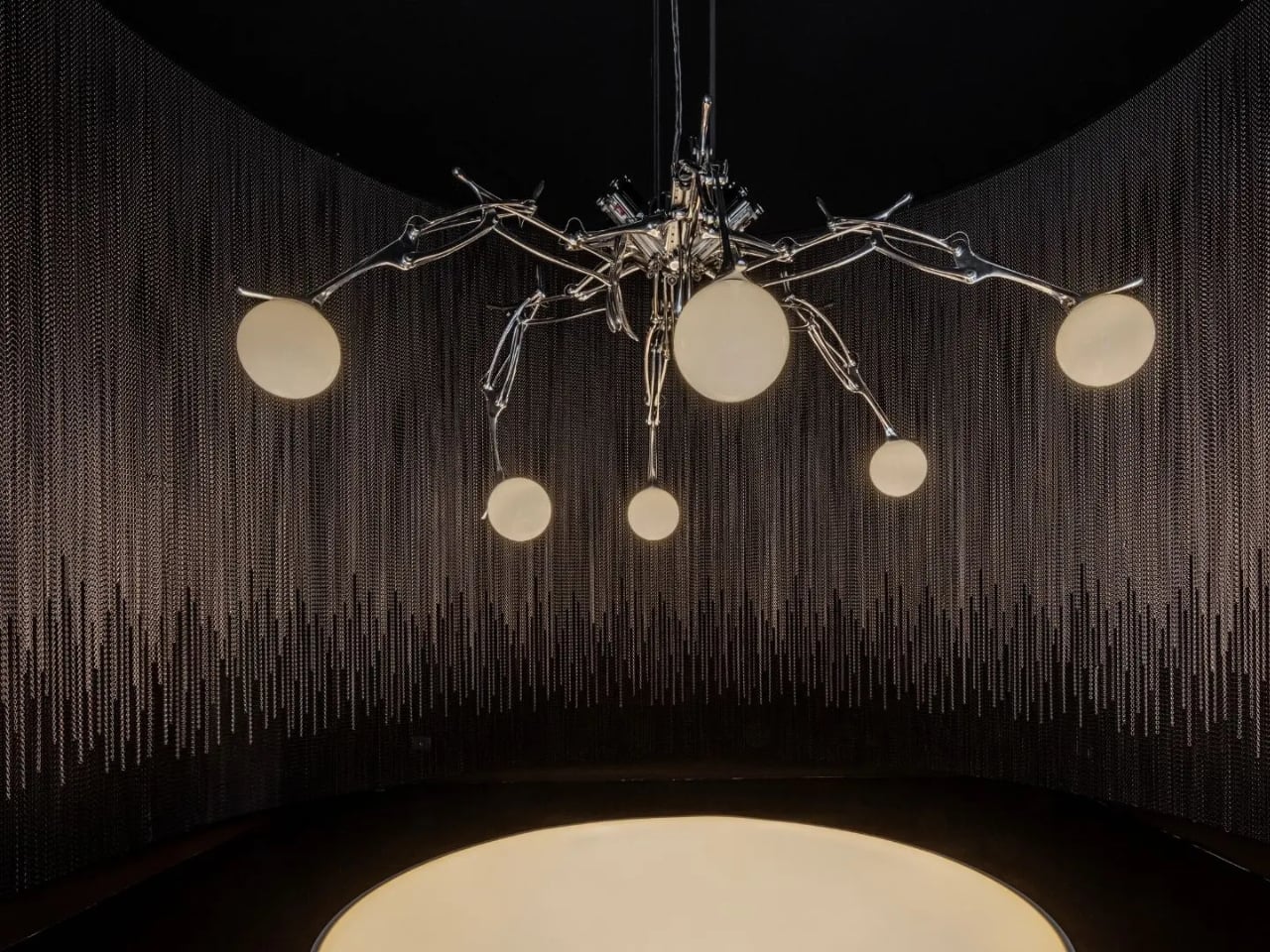
What you actually see at Nilufar is a cast aluminium and glass ceiling lamp that generates what the designer calls a choreography of light and movement. It does not sit still, and it does not simply illuminate. It behaves. That single word does a lot of work here. Not “performs,” not “functions,” but behaves. The shift in language reframes the entire object, placing it in a category of things that act rather than simply exist, and once you see it that way, it is very hard to unsee.
Surrounding the chandelier is a spatial installation developed in collaboration with Kriskadecor, a Spanish company that has spent a century, since 1926, transforming aluminium chains into architectural and expressive surfaces. At the gallery, two superimposed curtains of chains enclose LUMIAC in a kind of ceremonial cocoon. The outer layer is coffee-toned, anchoring the perimeter of the space. The inner curtain is amethyst, softer and more translucent. At the base, the two blend into one another in a gradient that feels less like a decorative choice and more like a gradual change in atmosphere.
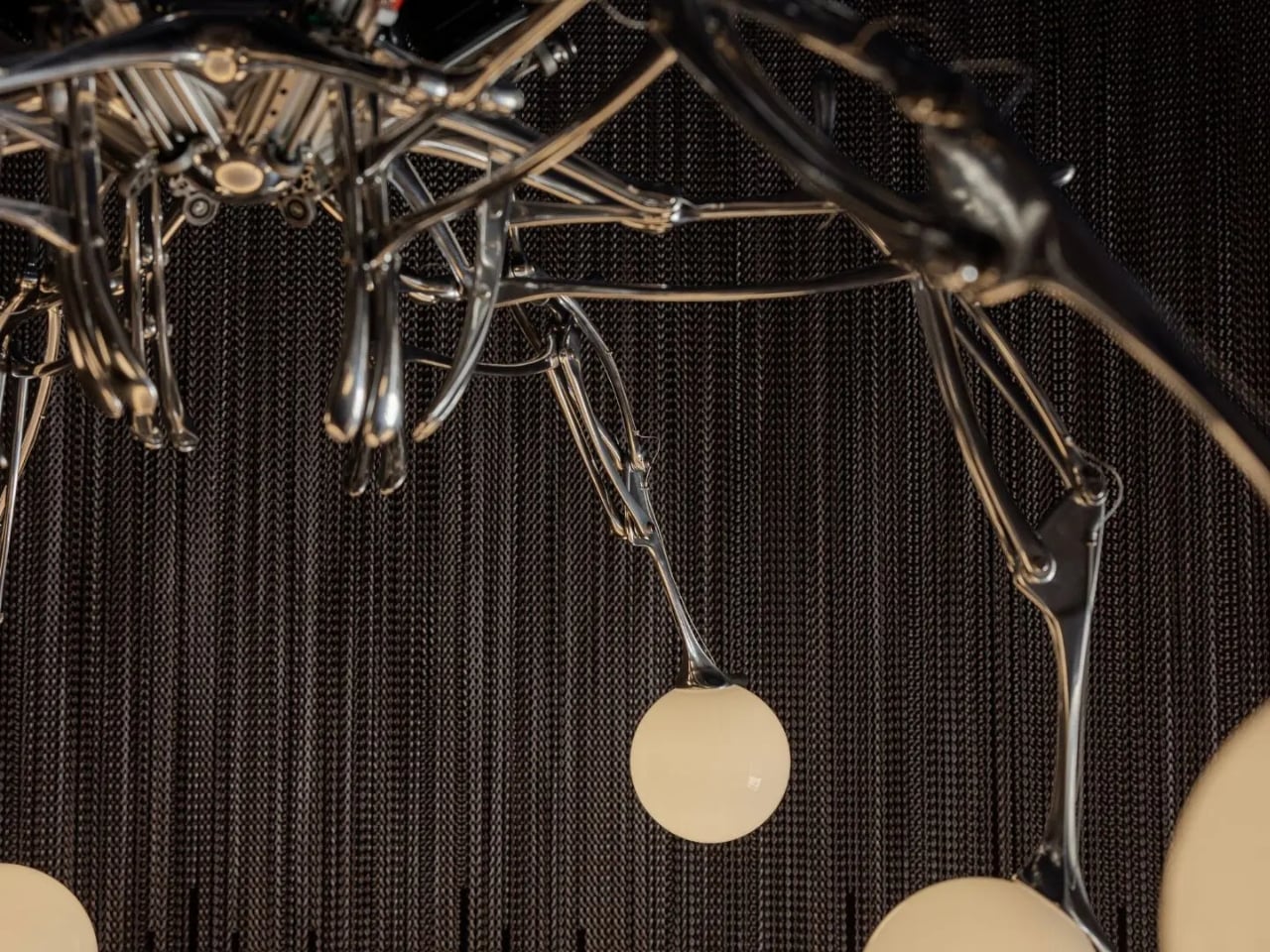
The collaboration works because neither element competes for dominance. The chains frame LUMIAC without trying to match its presence, which is harder to pull off than it sounds. Too often, spatial installations feel like a product surrounded by visual noise. Here, the room has a mood. The closest word for it is quietly unsettling, though that sounds like a criticism and it is not. It is unsettling in the way that a genuinely good question is.
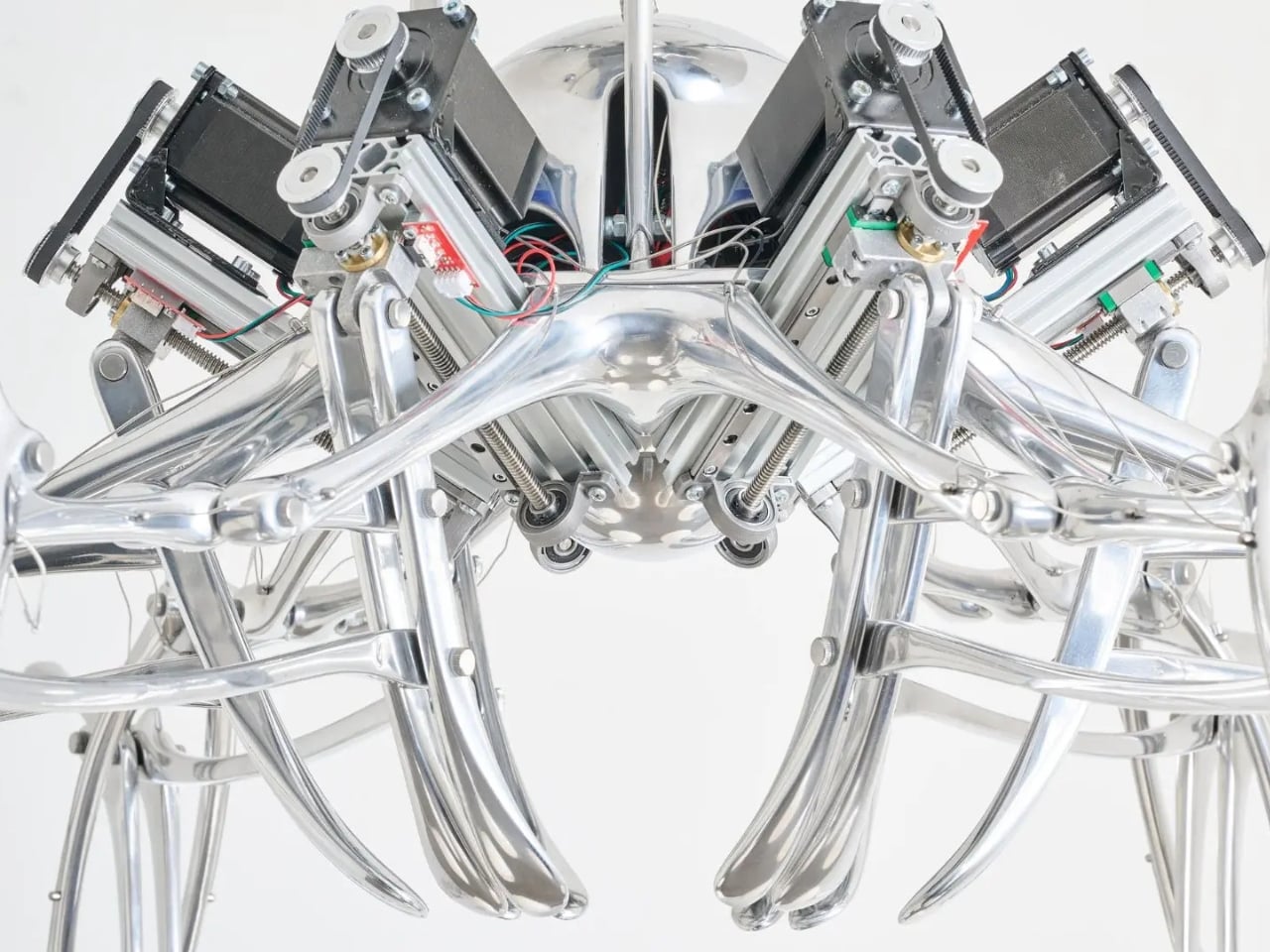
Mancuso’s earlier work pulled from deep time: geology, cave paintings, the slow logic of the natural world. LUMIAC is a turn in direction but not in spirit. The same designer who once looked at rock formations and asked how they got there is now looking at a moving machine and asking where this all ends up. That kind of long-view thinking is genuinely rare when the pressure to be current and commercially relevant is so relentless in the design world.
The piece also lands with particular weight given the broader cultural moment. Conversations about AI in 2026 tend to swing between uncritical enthusiasm and existential alarm, and design is not immune to either extreme. LUMIAC does something more interesting by stepping back to the very beginning of the machine-human conversation and holding that origin point up to the light, literally. It is a reminder that these questions are not new, even if the technology is.