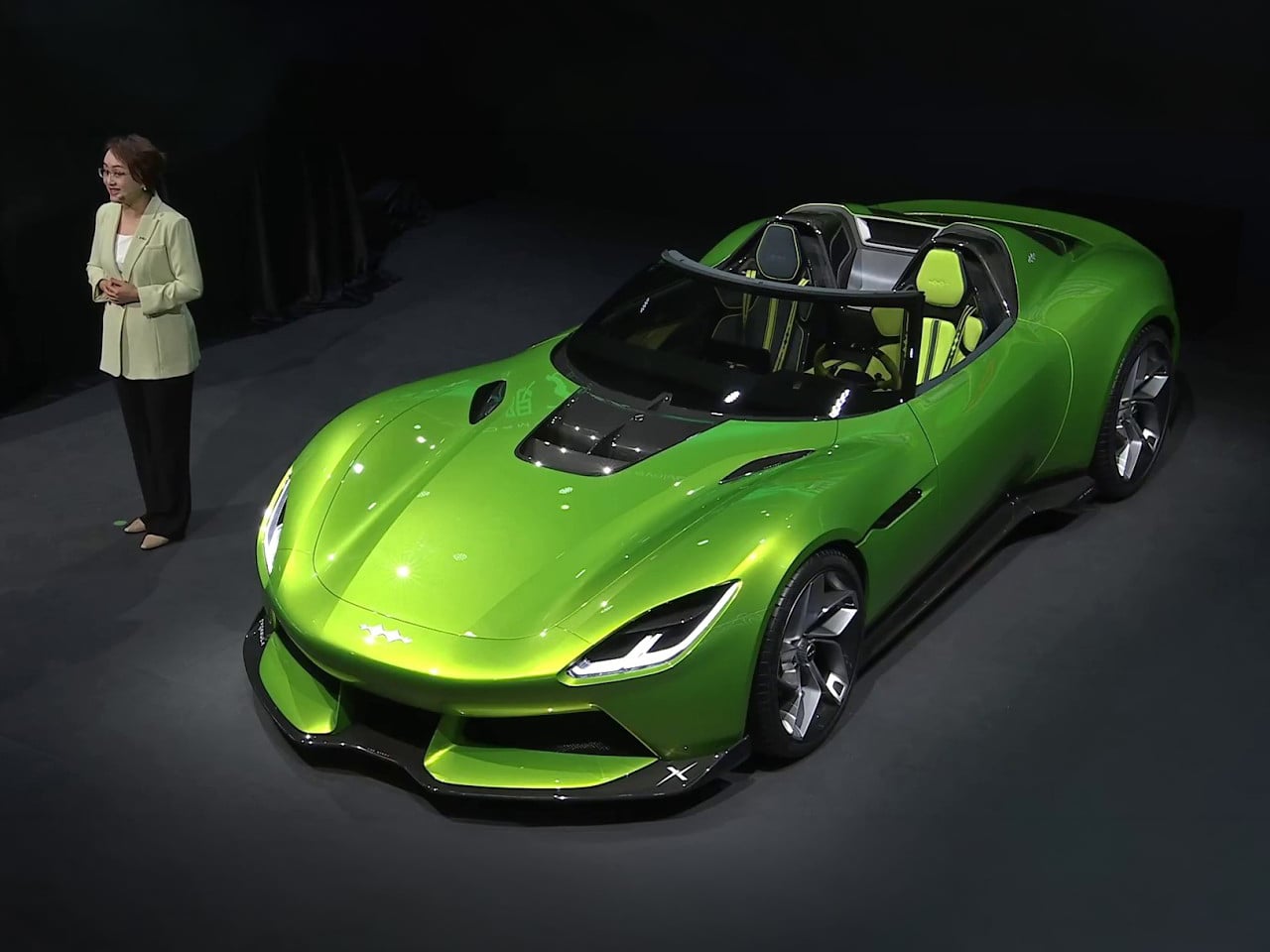

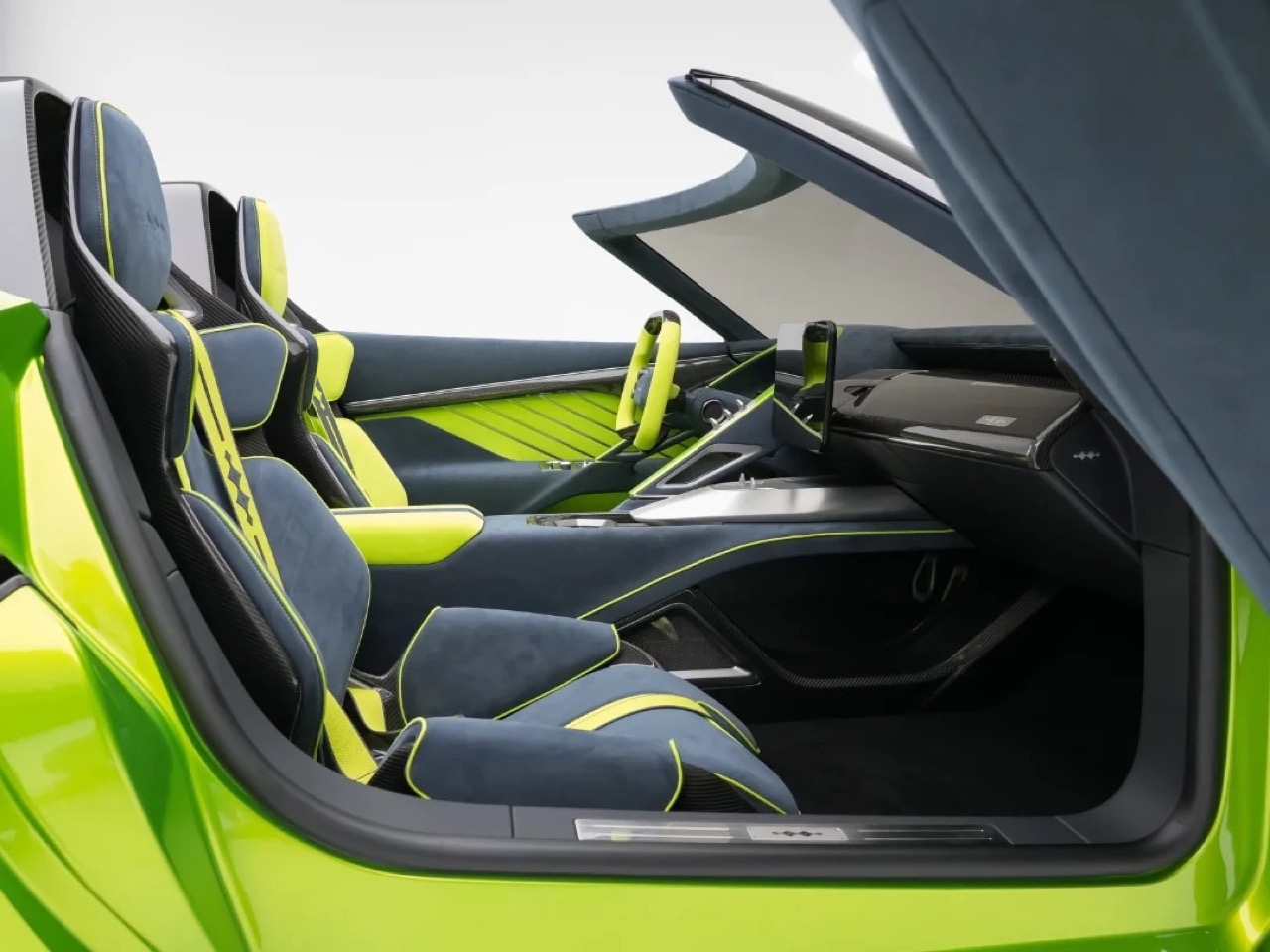
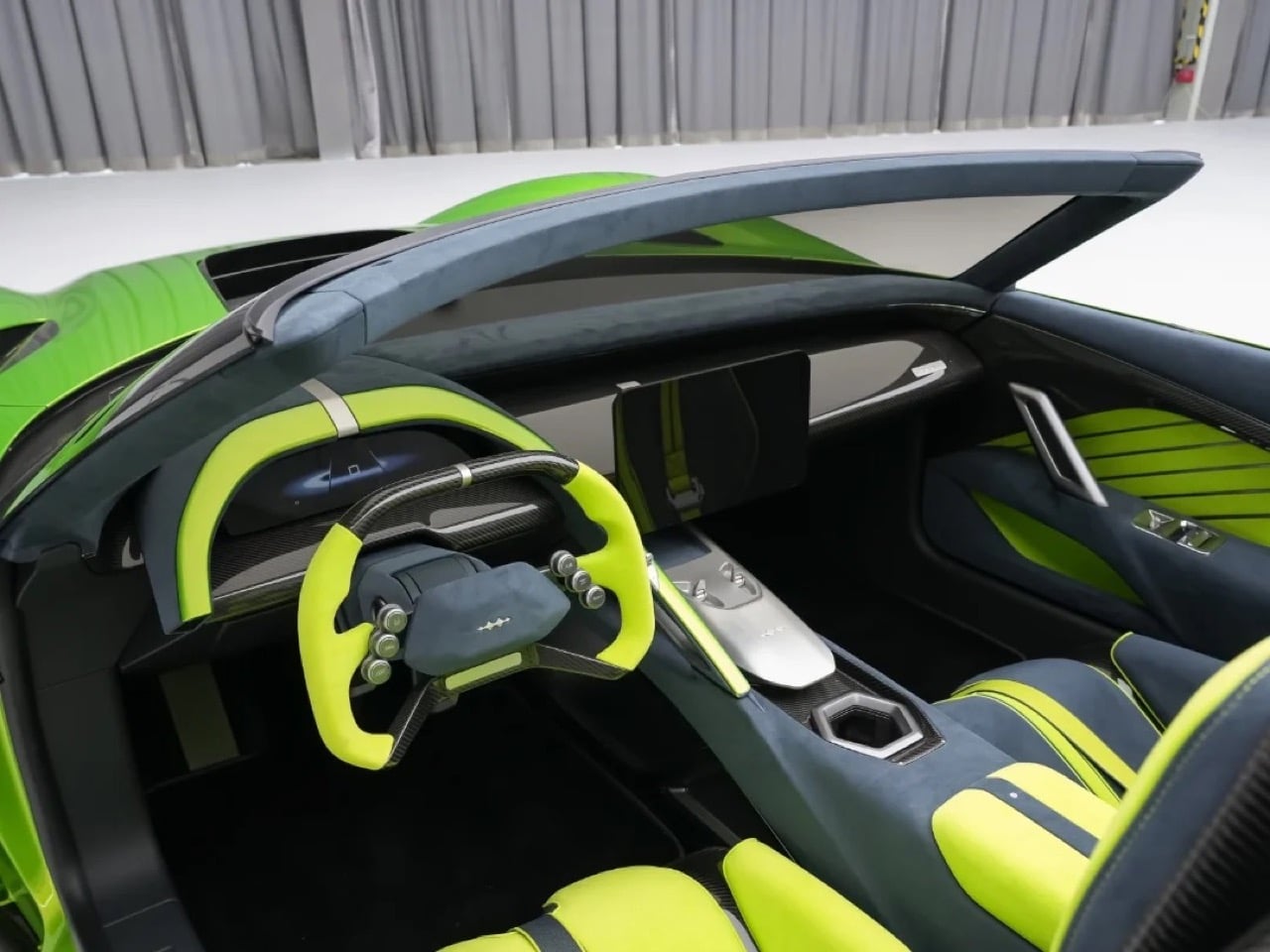
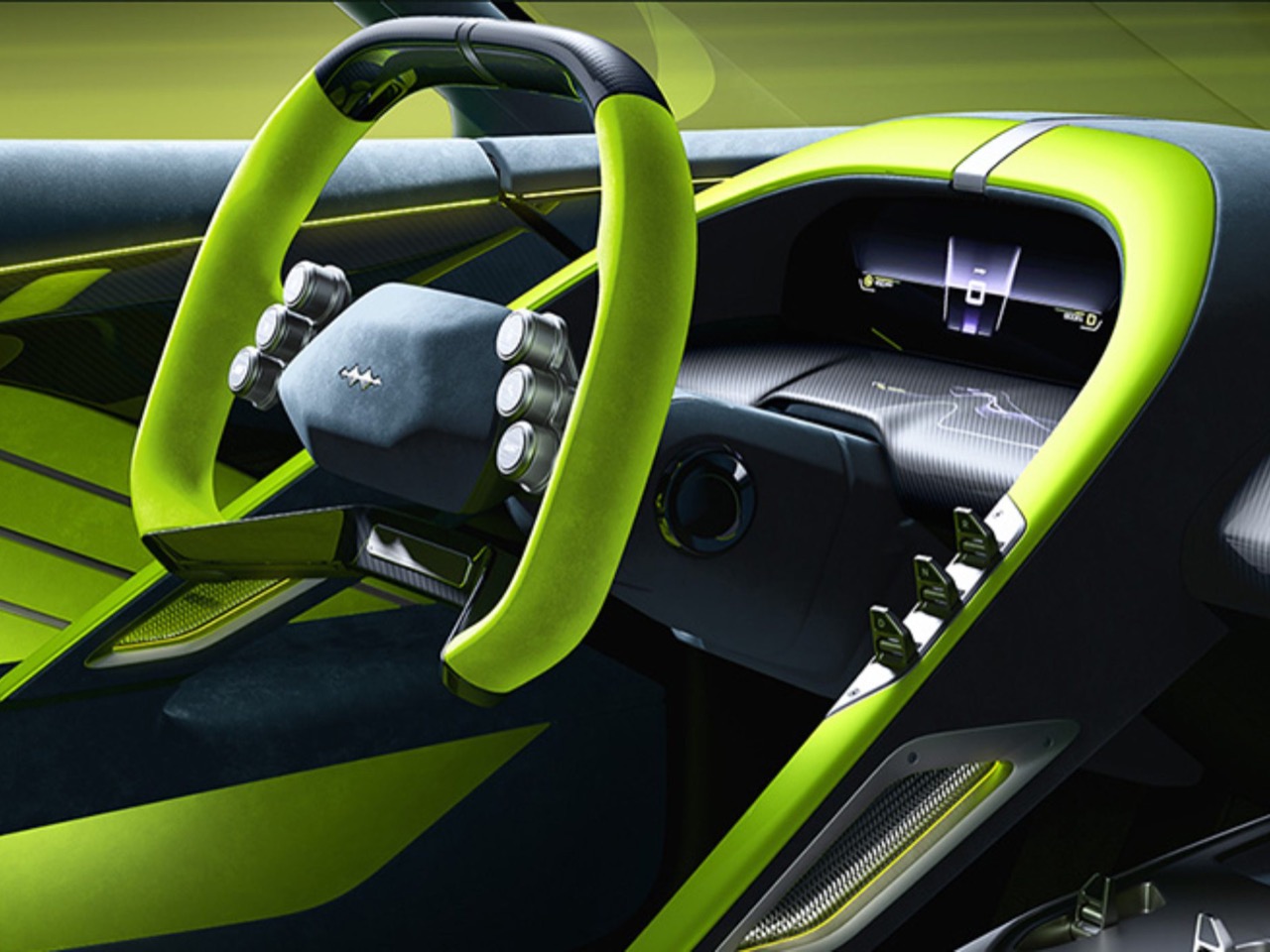
Rest in peace, minimalism. You were hated with a vengeance by every car owner forced to jab at a touchscreen just to change the AC. After years of dashboards flattening into glossy digital panes, Fang Cheng Bao’s Formula X swings the pendulum back with a cockpit full of physical mechanical buttons, a retractable steering wheel, integrated sport seats, and four-point harnesses that make driving feel tactile again. The formula is not complicated. Give the driver something real to touch.
Fang Cheng Bao, a BYD marque introduced in 2023 with rugged body-on-frame SUVs like the Bao 5, unveiled the Formula X at the 2026 Beijing Auto Show as the centerpiece of a new Formula sub-range that also includes the brand’s first-ever sedans. The supercar’s wraparound “battle cockpit” suggests a fresh design appetite for interfaces with texture, theater, and presence. General Manager Xiong Tianbo described the interior direction as “an all-new sporty intelligent cabin,” which undersells it considerably. The Formula X positions itself as the halo above a family of Formula S sedans Fang Cheng Bao also revealed in Beijing. Where the Bao series asked what an off-road SUV could be, the Formula X asks what an EV cockpit should feel like, and it answers with buttons.
Designer: Fang Cheng Bao
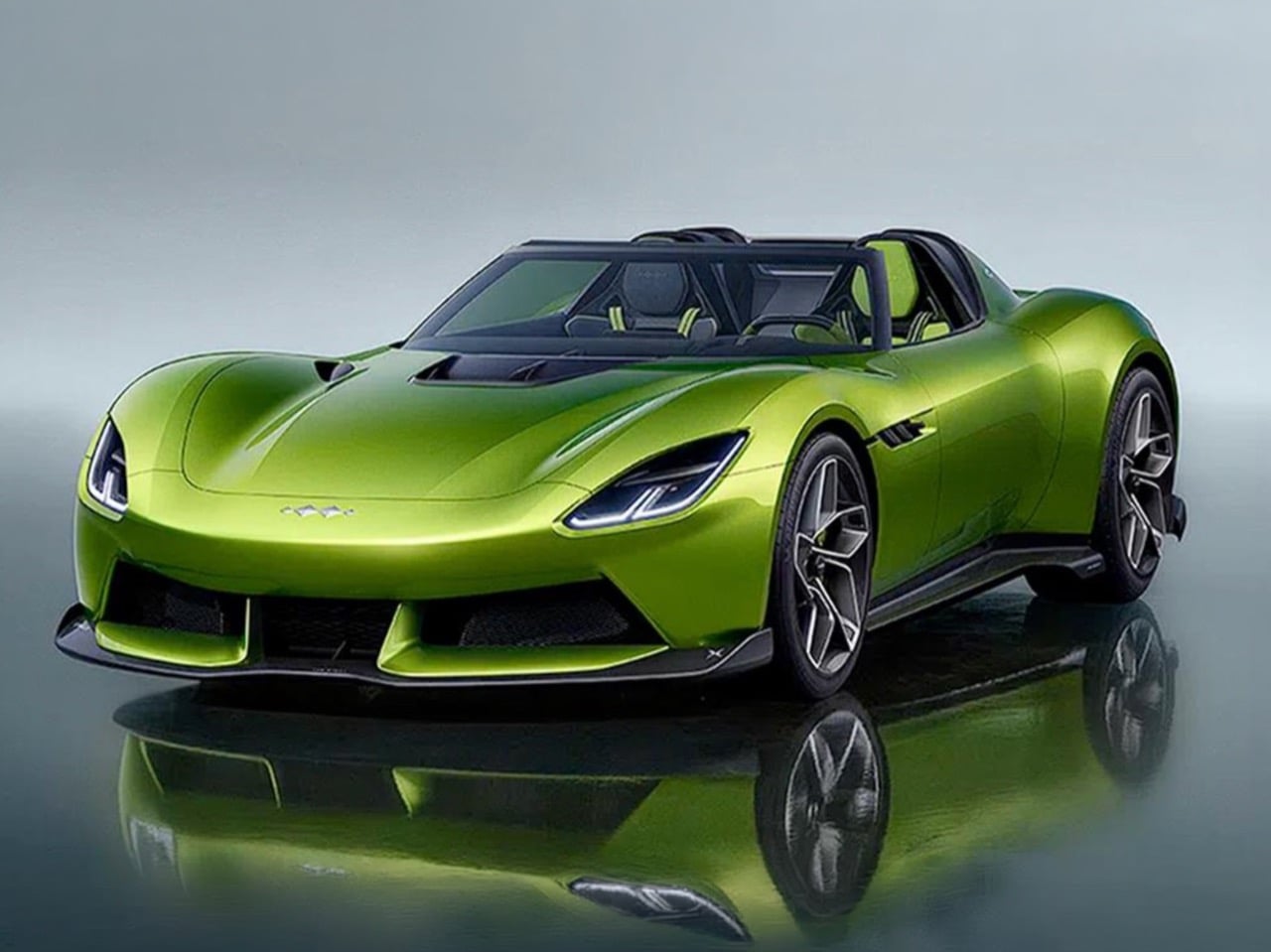

“Fangchengbao” translates directly to “formula leopard,” a name loaded with speed and precision that spent its first three years attached to body-on-frame off-road SUVs built on a proprietary platform called the DMO, or Dual Mode Off-road. The Bao 5 launched in late 2023 as a premium PHEV SUV roughly the size of a Land Rover Defender, followed by the larger Bao 8. Both vehicles were credible, capable, and about as far from supercar territory as a product can get. Fang Cheng Bao’s monthly sales were already growing over 200% year-on-year in early 2026, which means the brand pivoted from momentum, not desperation. The Formula X is Fang Cheng Bao finally catching up to its own name.
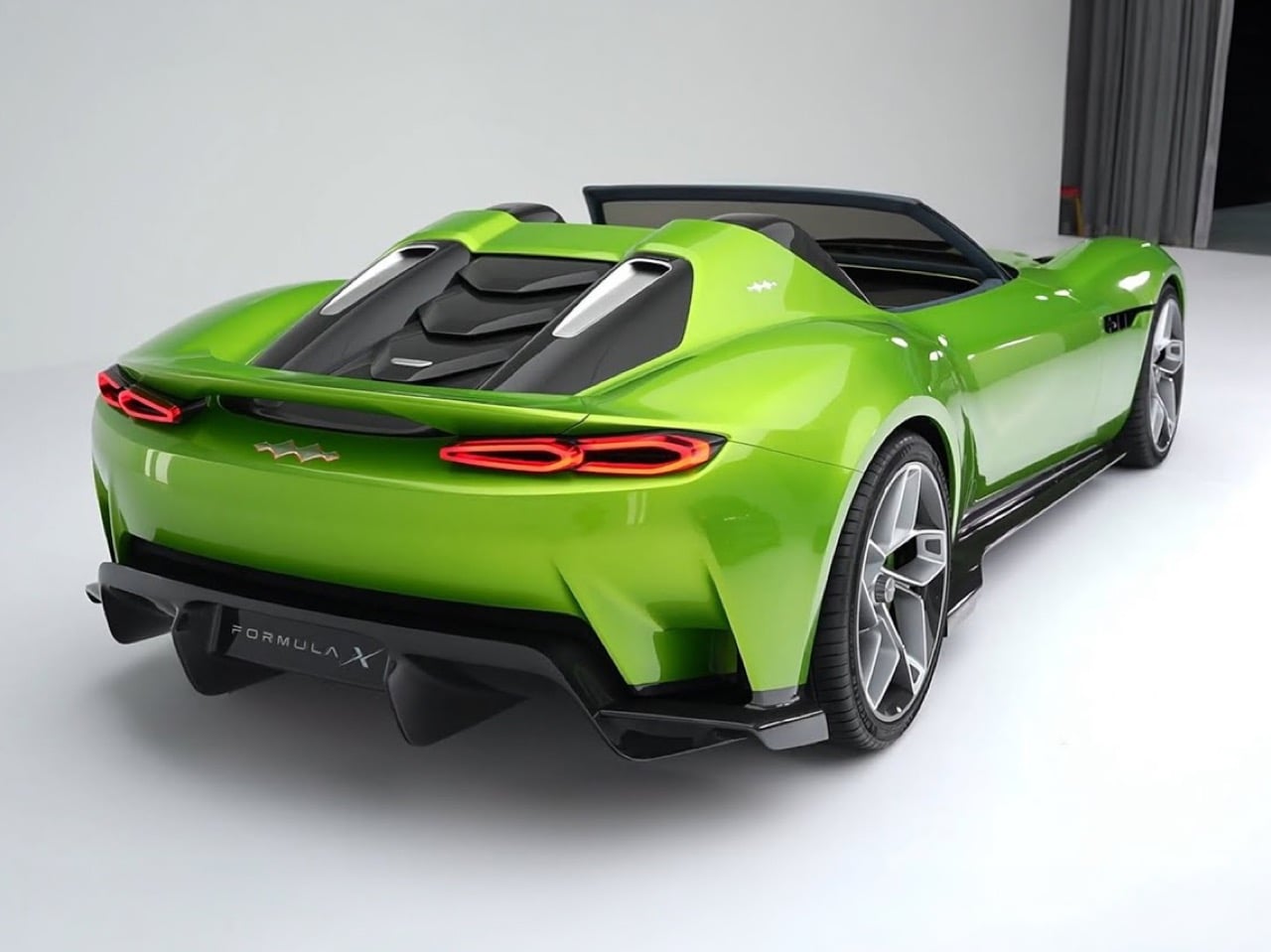
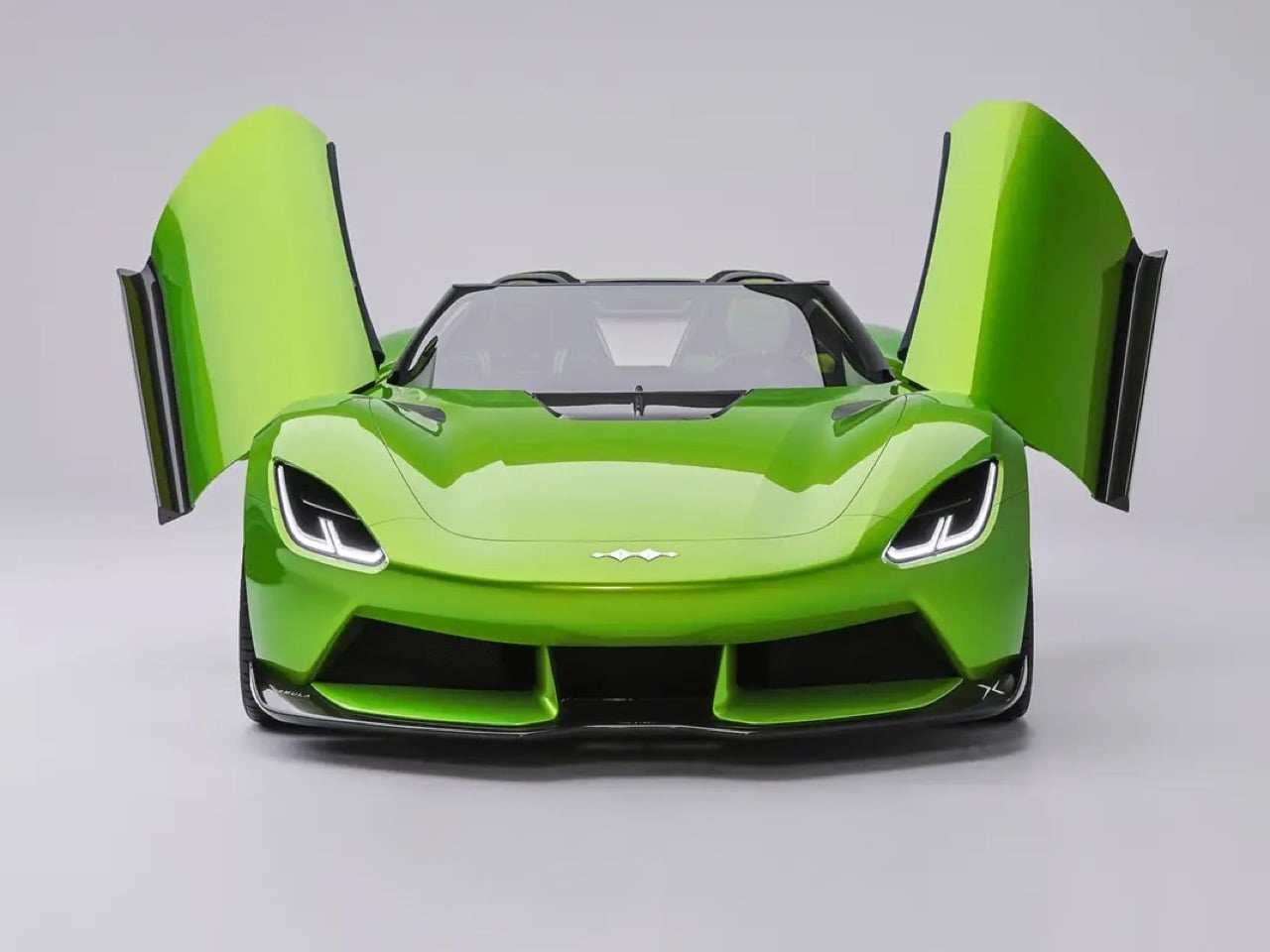
Sitting ankle-low to the ground, the Formula X presents a roofless carbon-fiber body that looks like someone stretched a predator’s silhouette over a racing tub. Six airflow channels and 19 vent openings distribute active aerodynamics across the exterior, giving the bodywork a technical density that reads as sculpture before it reads as engineering. The “Fengbao Eye” headlights up front and the Infinity Ring taillights at the rear establish a lighting signature Fang Cheng Bao is clearly positioning as the visual cornerstone of its new Formula design language. Doors open in a gull-wing and scissor configuration, the kind of theatrical entry ritual that turns a parking lot into a performance. A tri-motor setup delivers a combined 1,000 hp and 1,000 Nm of torque, numbers that once defined hypercar territory and now apparently define a production-intent show car from Shenzhen.
The wraparound “battle cockpit” ditches the screen-centric serenity of most EV flagships in favor of physical mechanical buttons, a retractable steering wheel, integrated sports seats with four-point racing harnesses, and a grey and green color scheme that feels like someone took a Le Mans prototype and gave it a luxury fit-out. The retractable steering wheel transforms a static interior element into a kinetic ritual, revealing itself on demand and making the act of sitting down feel ceremonial. Physical controls here signal that the driver’s hands, not a menu tree buried behind glass, are the primary interface. The four-point harnesses make the cabin feel shaped around a body in motion rather than around a pair of eyes pointed at a screen. This is a cockpit that demands physical participation, and that distinction carries real weight in 2026.
Spotify’s 20th anniversary rebrand traded flat iconography for a more dimensional, texturally rich visual identity, and it landed as a cultural signal because it captured something design had been quietly renegotiating for years. Minimalism, in its strictest form, conflated sophistication with invisibility, training users to expect interfaces that disappear rather than engage. On the automotive side, Jony Ive’s work with Ferrari on its interior direction has pointed the same way, moving back toward tactile driver-focused experiences and away from touchscreen dominance. What these moves share is a rediscovery of depth, texture, and physical legibility as luxury signals rather than signs of technological regression. The Formula X’s cockpit belongs squarely in that conversation, and the fact that it arrives from a brand that was selling off-road SUVs three years ago makes it a sharper cultural data point.
BYD confirmed the Formula X carries approximately 80% of the show car’s design into production, with a market launch targeted for 2027. I’m inclined to believe the cockpit philosophy survives even if some of the carbon theater gets value-engineered on the way to the factory floor. Read the Formula X alongside the Formula S sedans Fang Cheng Bao also unveiled in Beijing, and a consistent brand identity emerges: tactile, expressive, and built on the premise that premium design should communicate through form rather than through its own disappearance. The brand spent three years perfecting the capable, rugged SUV, then used a single auto show to rewrite what “formula leopard” was always supposed to mean. Shenzhen now has a supercar, and it came loaded with buttons.