
Sustainable design has spent years negotiating an awkward identity crisis. The moment a material gets labeled biodegradable or plant-based, it tends to be filed under “eco-alternative,” which is shorthand for “almost as good as the real thing, but greener.” That framing puts the worth of the material almost entirely on what it replaces, rather than what it can become as something genuinely new.
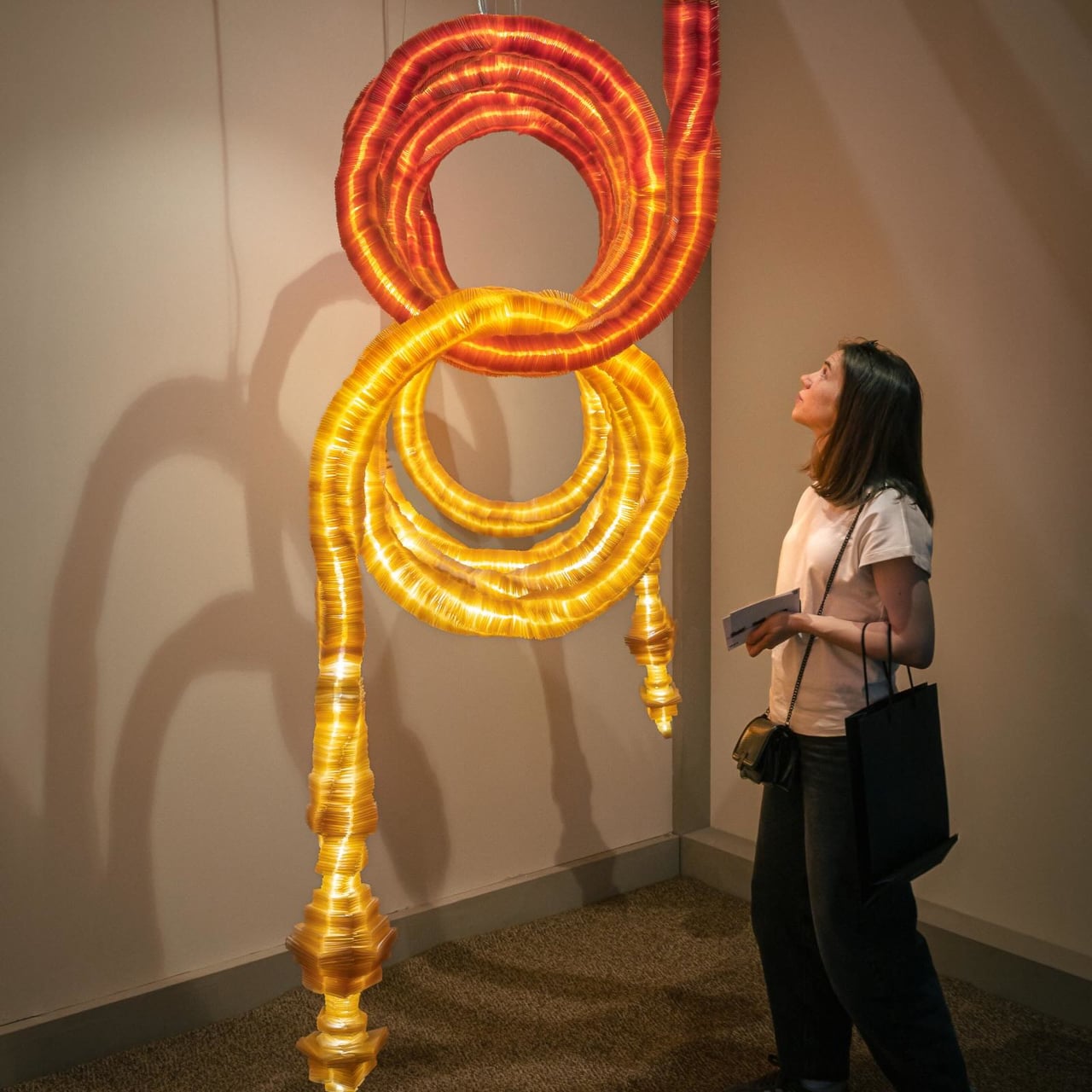
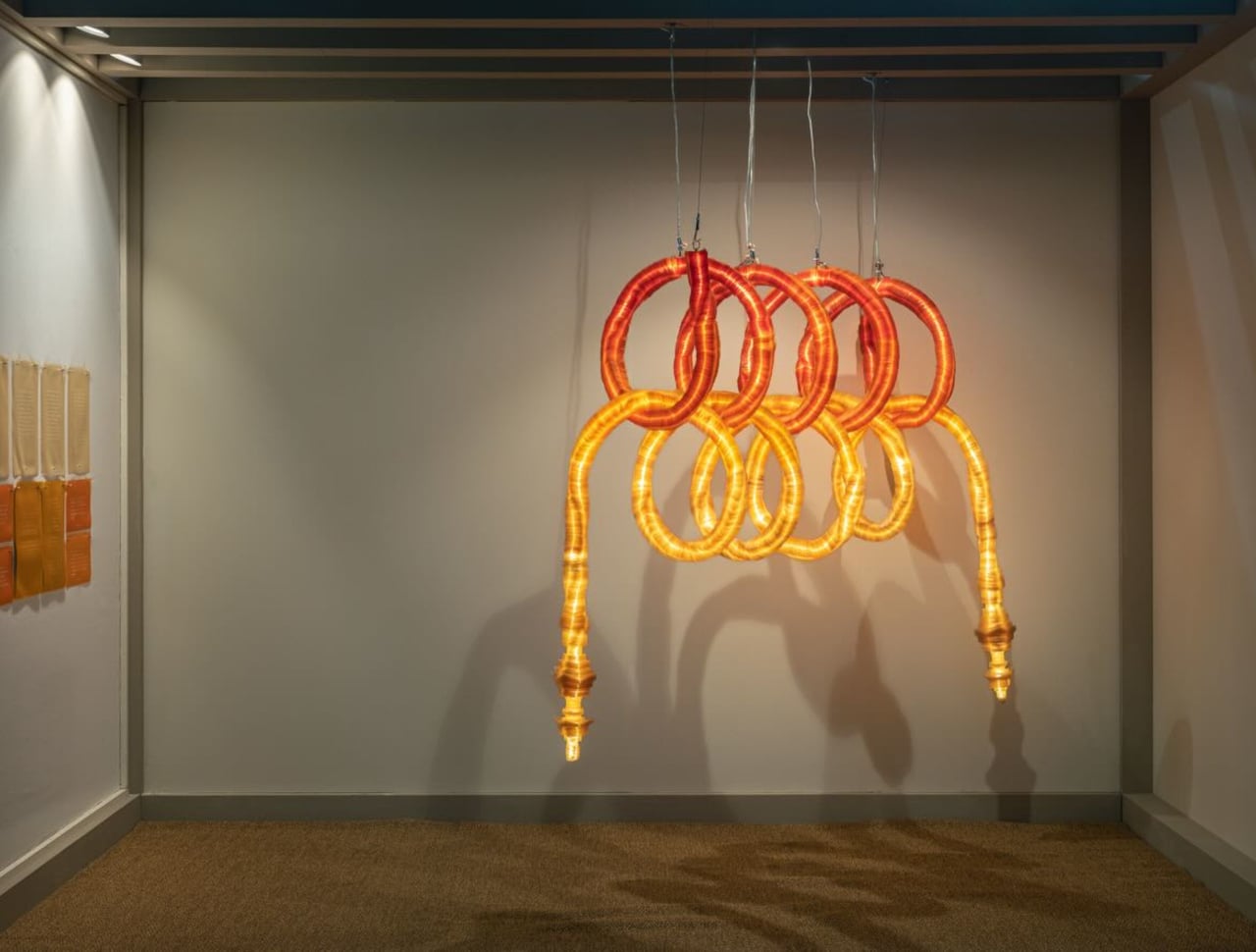
Designer Su Yang Choi has been pushing back against that assumption with the Slow Project series, an ongoing investigation into seaweed-derived agar as a material with its own aesthetic voice. Slow2, the series’ second work, was presented at Salone Satellite 2026 in Milan as a pair of glowing tubular light installations that don’t quite look like anything industrial design or nature has produced before.
Designer: Su Yang Choi
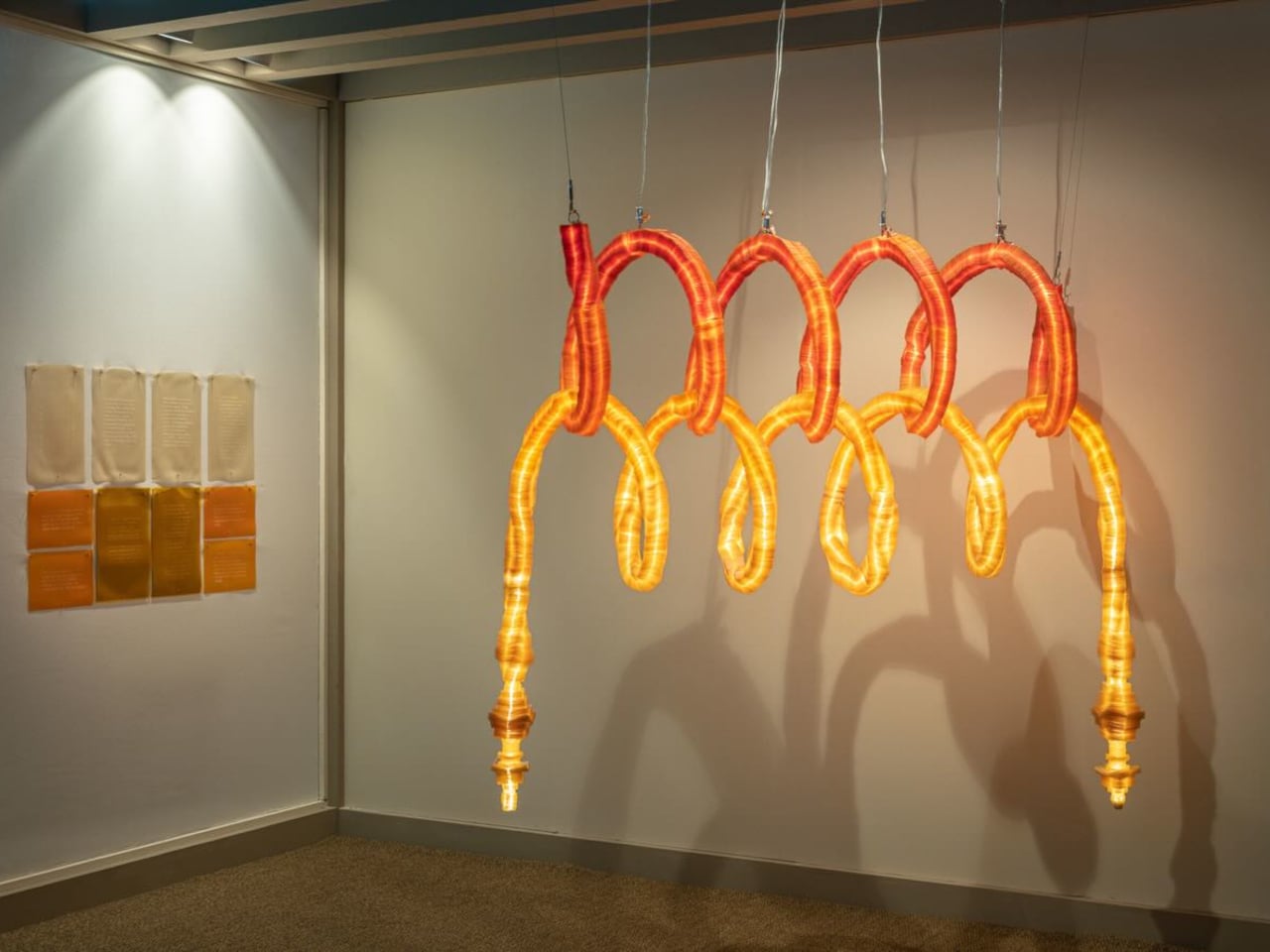

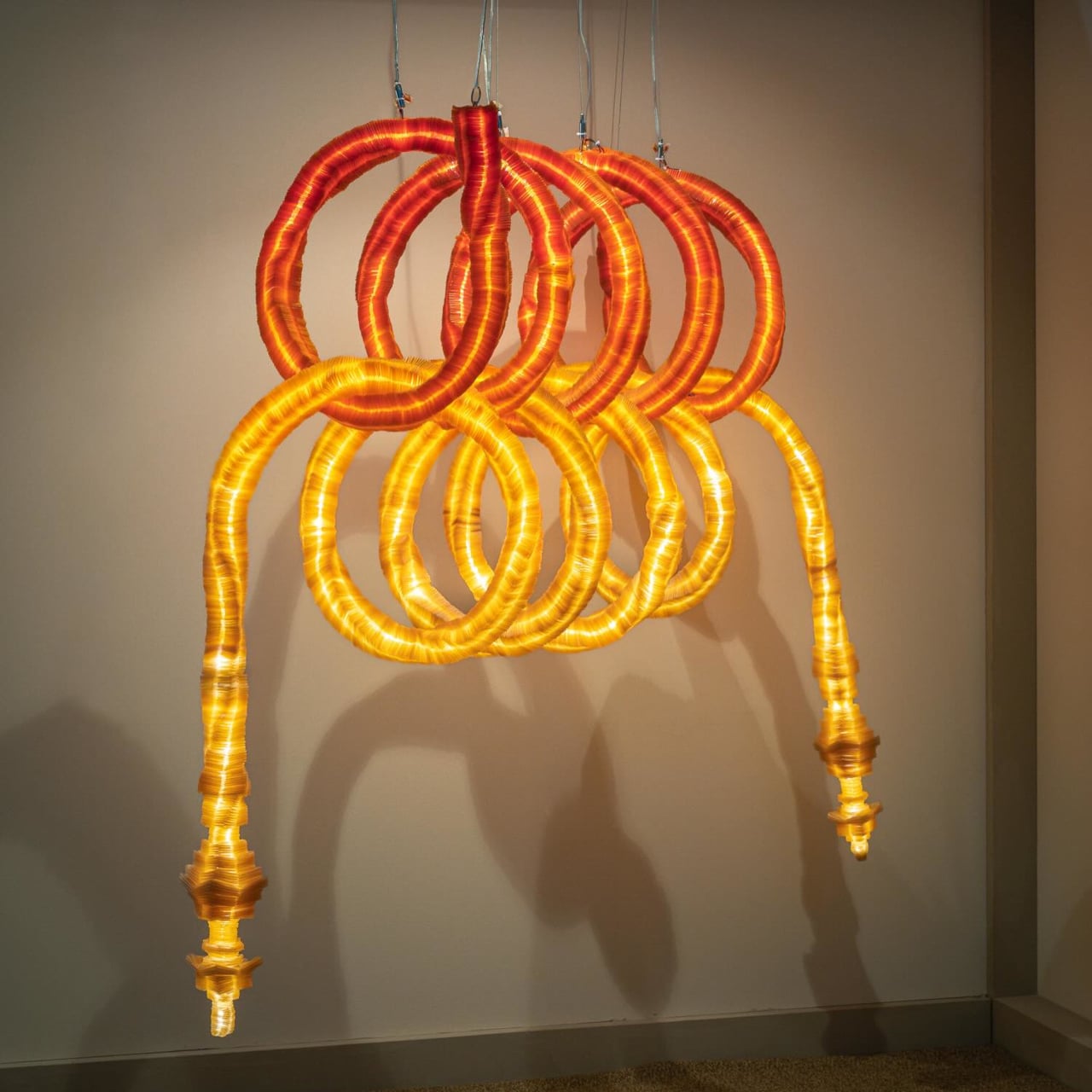
The structural idea comes from baramgil, a spatial principle in traditional Korean hanok architecture where doors and windows line up along a single axis, letting the gaze pass through layered planes and create the impression of depth. Choi translates that logic into two vertically interlocking circular tubular structures, which build perceived depth through repetition and overlap rather than any physical expansion.
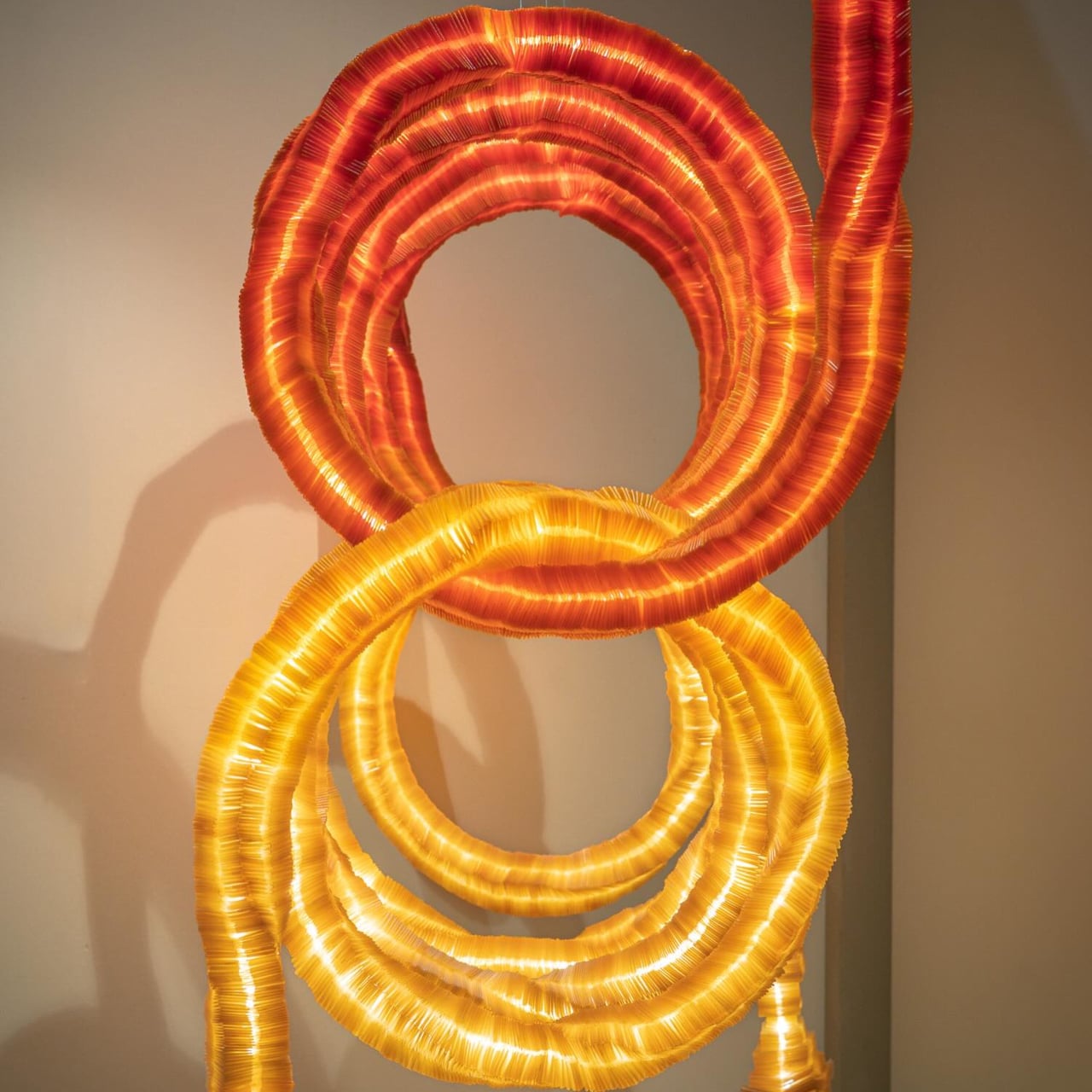

The tubes are built around a steel armature wrapped in layers of seaweed-derived agar, a biodegradable biopolymer Choi formulated independently without any synthetic additives. LED strips run through the core alongside insulating tubing, and the light passes outward through the semi-translucent material. The agar’s own surface texture, tight ridges spiraling along each curved section, reads as integral to the form rather than incidental.
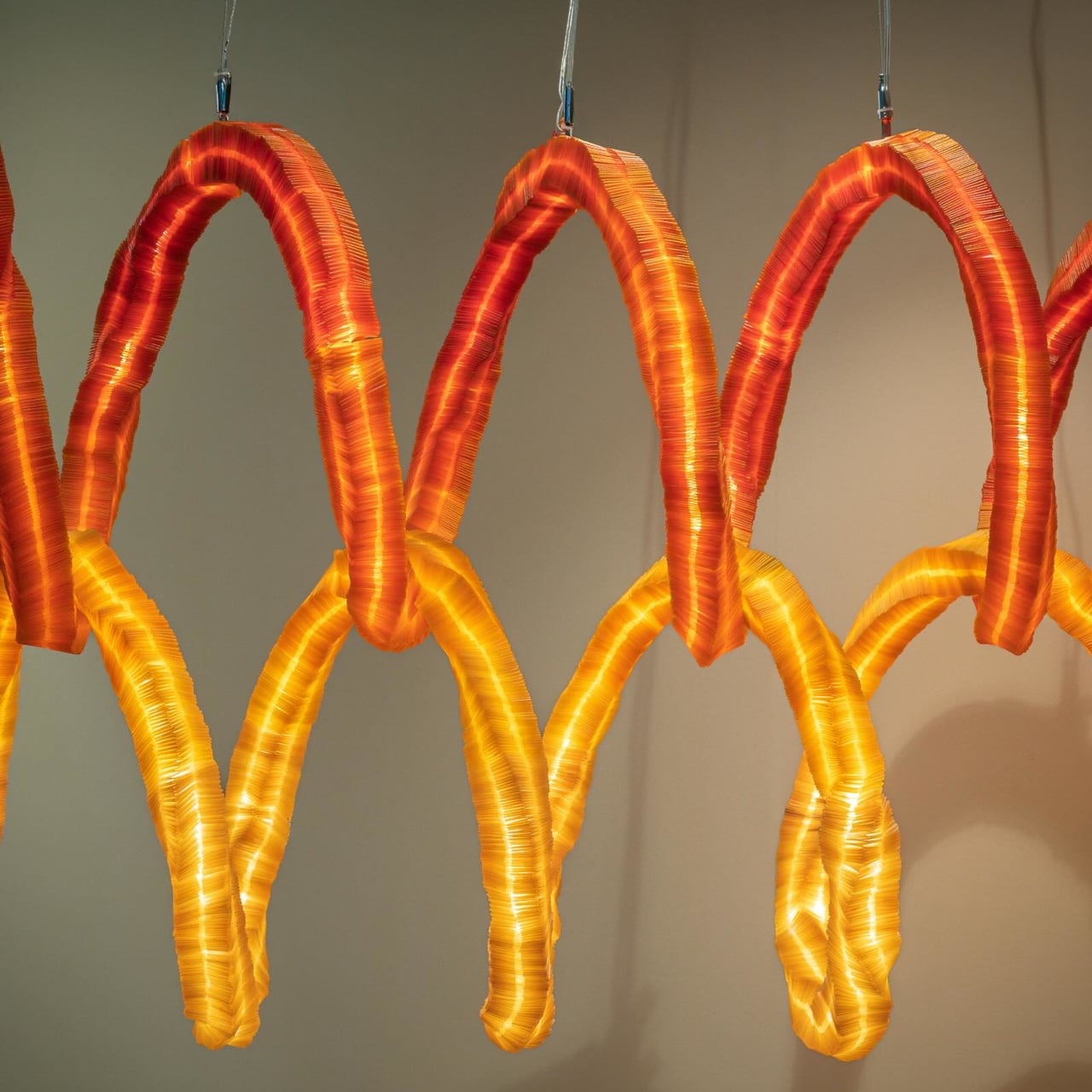
Color comes entirely from natural pigments, specifically gardenia and paprika, which produce a gradient from warm amber and gold at the lower sections to a deeper red toward the top. The shift isn’t applied in flat bands but moves gradually across the form, and the LED light amplifies those variations differently through each layer of agar, so the coloration changes depending on where you look from.
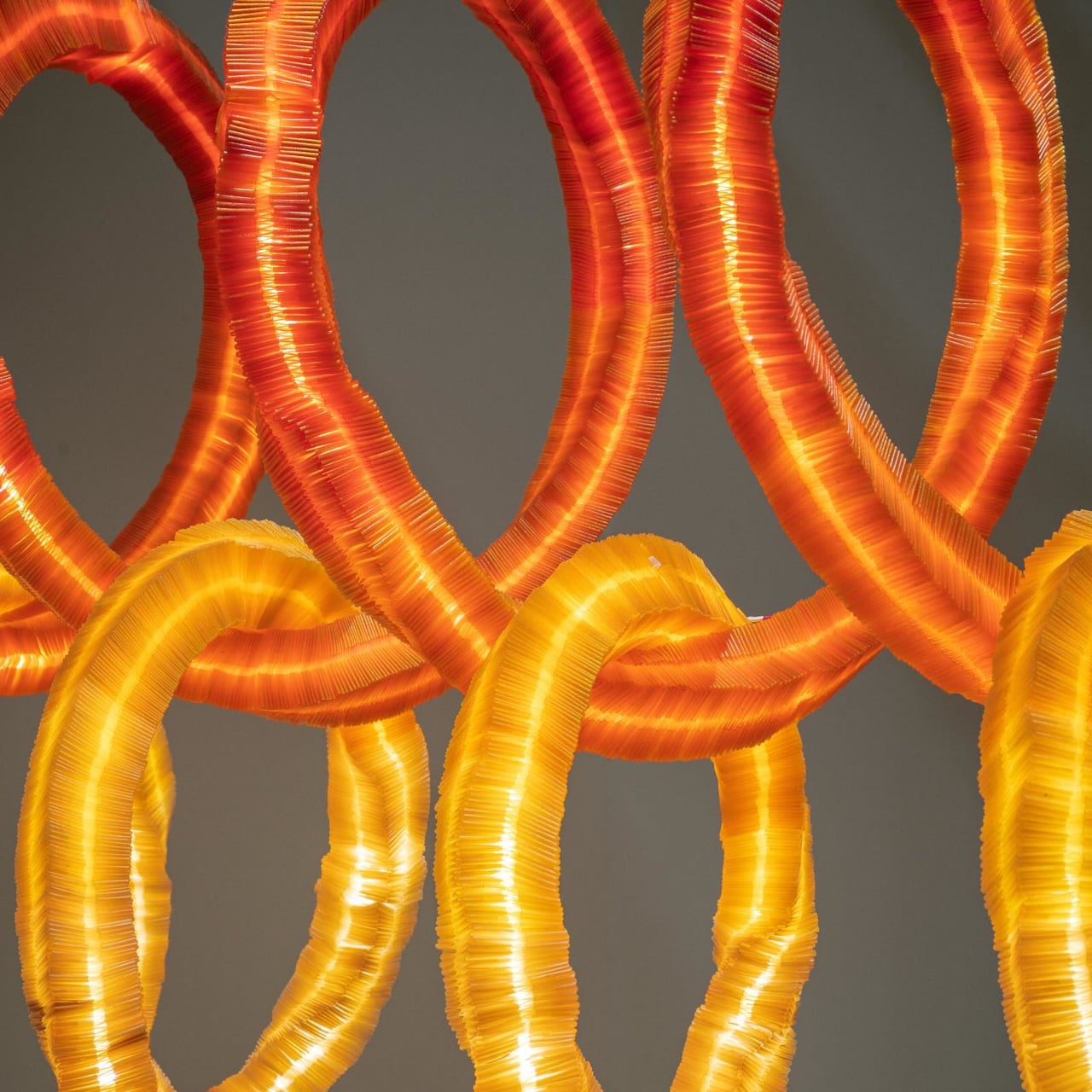
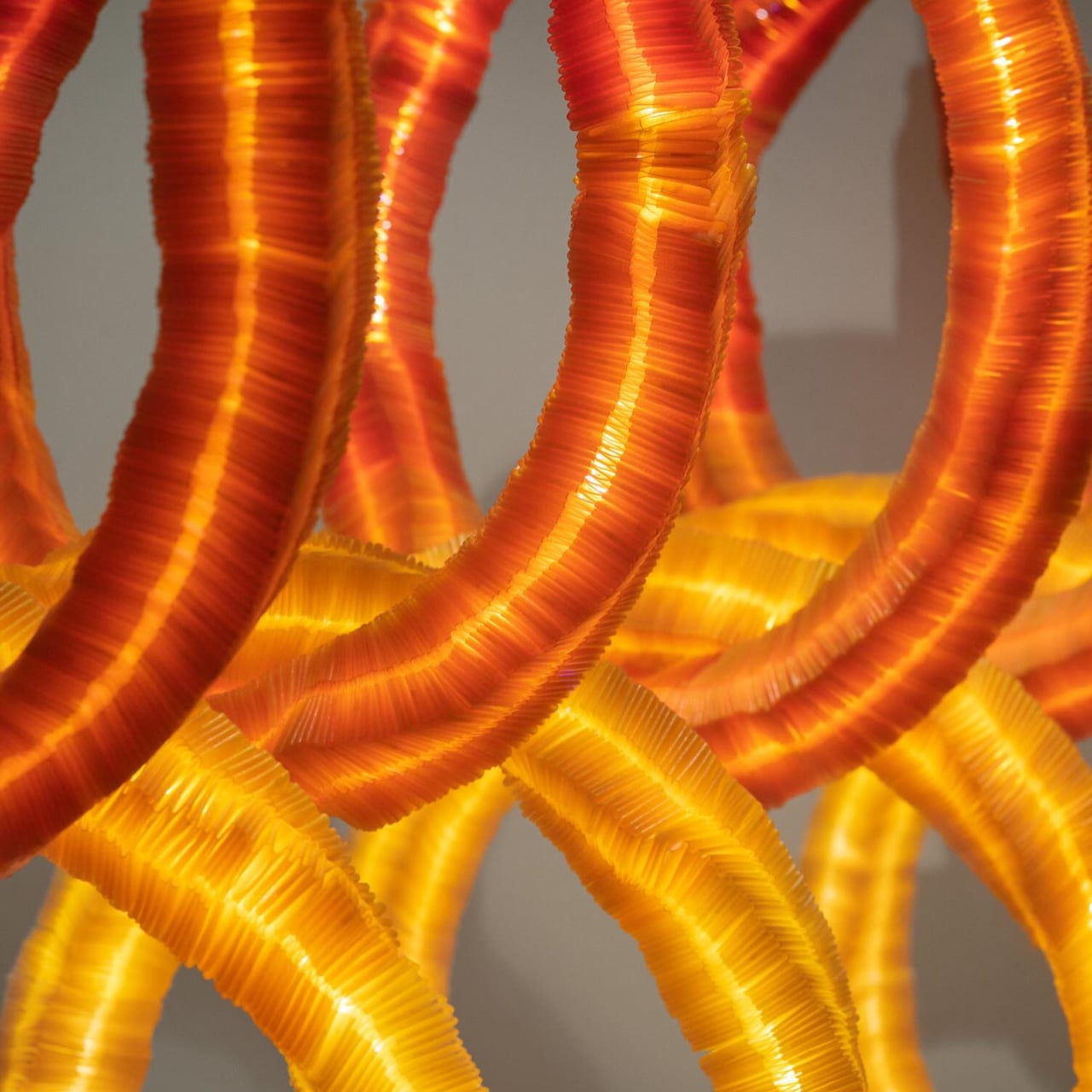
Hung from the ceiling, the installation casts shadows on the wall behind it, the overlapping loops producing a secondary layer of visual information that extends the work beyond its physical boundaries. That doubling mirrors the baramgil idea at a different scale. Seen from the front, the structures read as a single unified form; shift to an angle and the depth between the interlocking sections opens up considerably.
What makes Slow2 compelling is what Choi is actually arguing through it. The Slow Project series isn’t about demonstrating what seaweed agar can replace; it’s an inquiry into whether the material can develop enough formal character to stand on its own. The baramgil reference, the natural pigments, the hand-wrapped tubes, none of it reads as sustainable messaging but as decisions the material itself invites. The concept, the form, and the substance aren’t three separate layers but one coherent thing, which is precisely where the Slow Project series seems to be heading.