
Automotive design in May 2026 is being shaped less by motor show stages and more by individual designers working outside traditional studio systems. The most compelling concepts this month didn’t arrive with manufacturer press releases. They arrived with a point of view, a specific problem to solve, or a visual language worth paying close attention to. That independence is producing some of the most focused design thinking the industry has seen in years.
The five designs below span endurance racing prototypes, road hypercars, a reimagined icon, a utility e-bike, and a resurrected nameplate. What connects them isn’t a shared aesthetic; it’s intentionality. Each one either solves something real or pushes a visual language somewhere it hasn’t traveled before. These aren’t mood board exercises. They’re the kind of design thinking that eventually turns into the vehicles you actually want to own.
1. Renault Double Barrel Le Mans Hypercar Concept
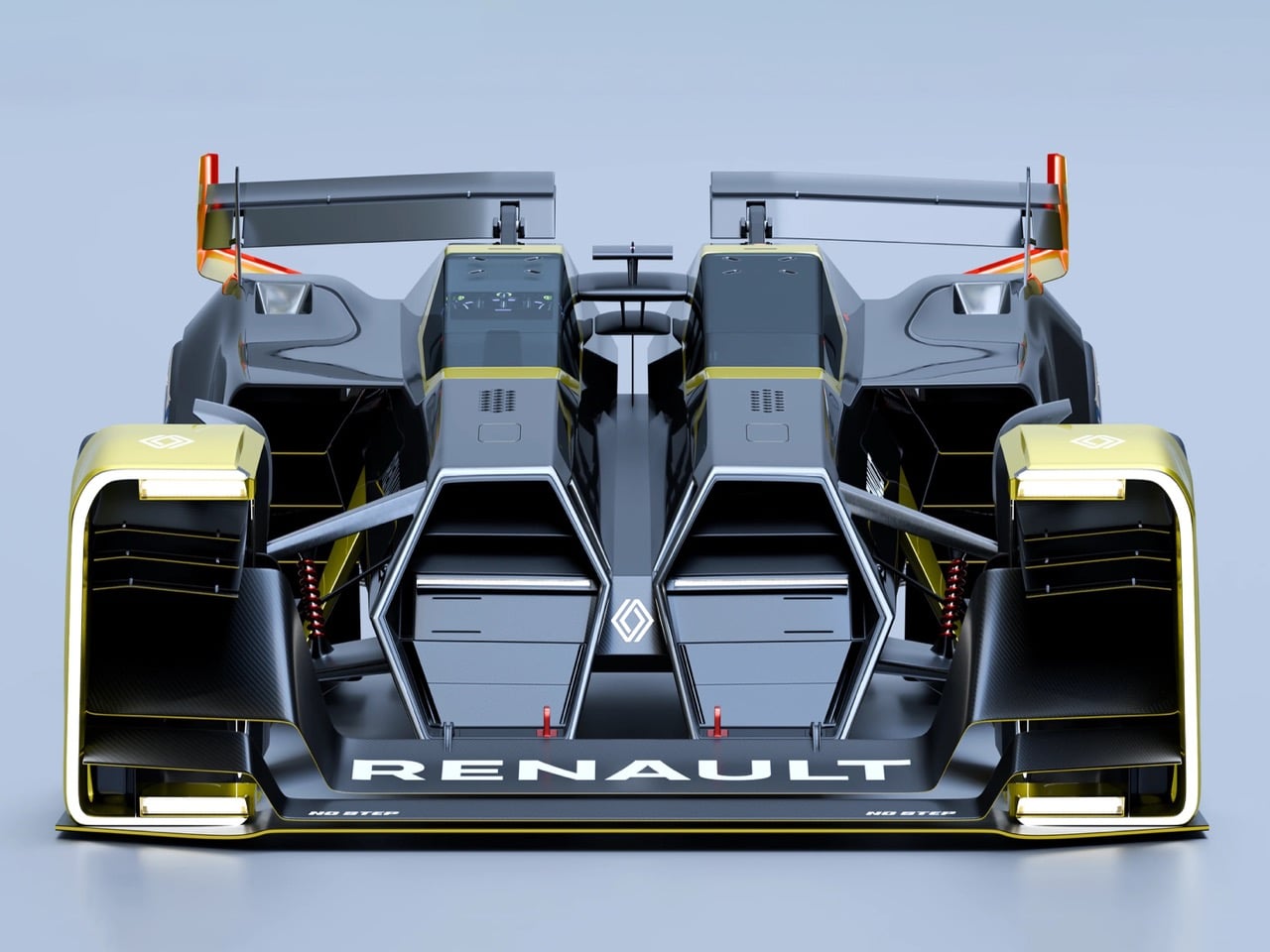
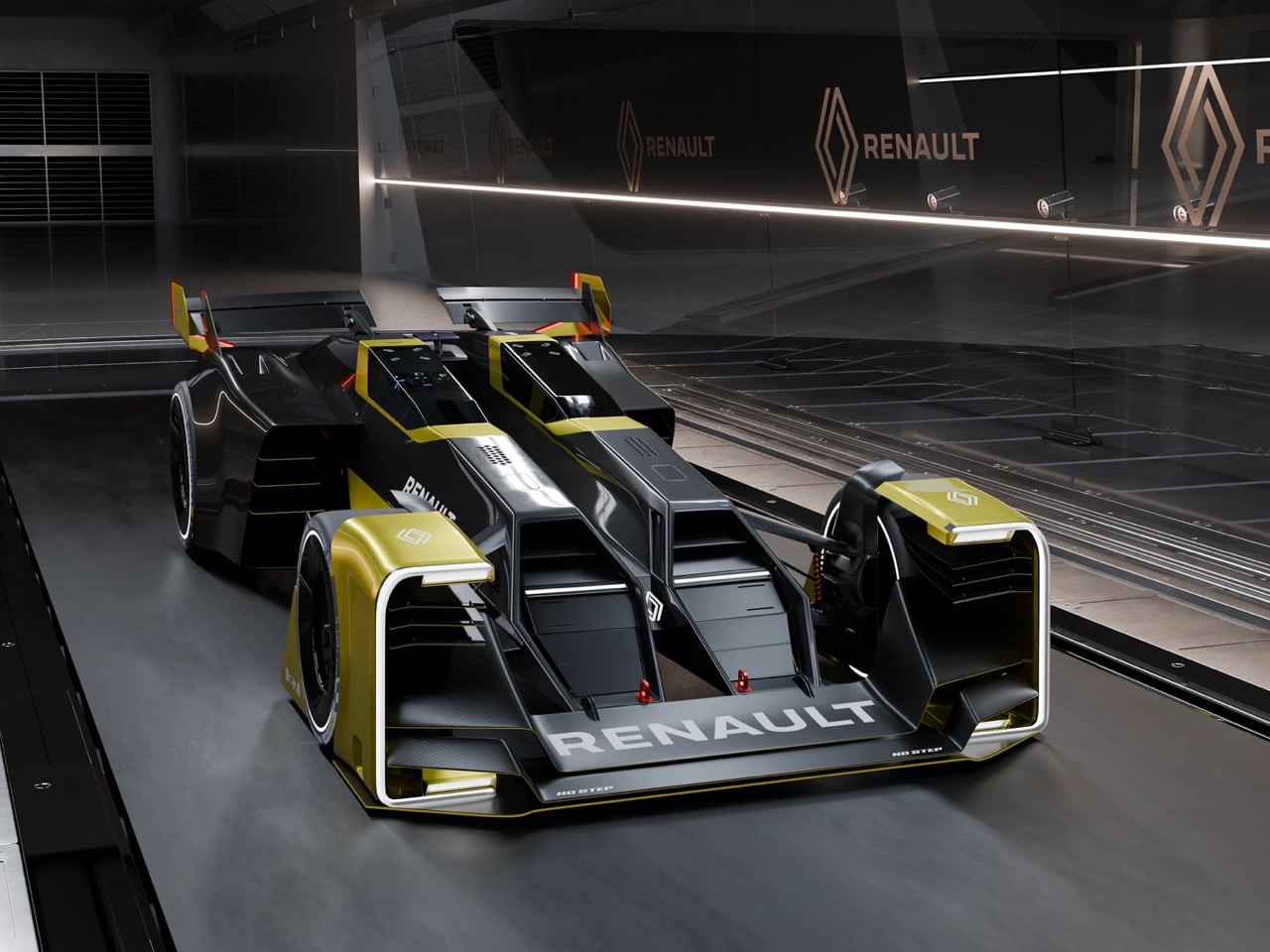
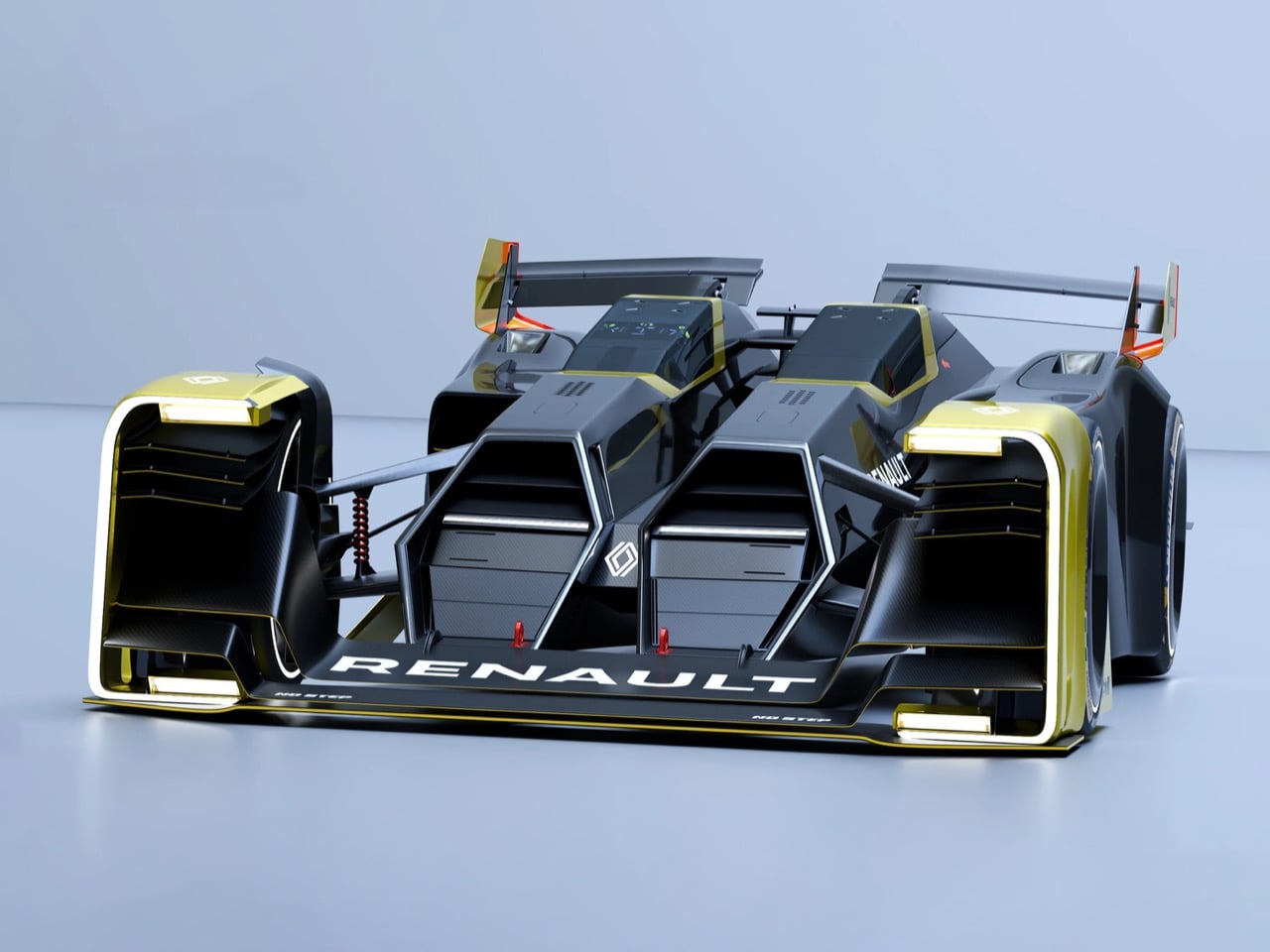
The Double Barrel arrives with a premise so clean it makes most motorsport concepts look timid. Designer Kim reached back to the 1955 Nardi Giannini ND750 Bisiluro, an Italian streamliner that split its driver and engine across two separate fuselages connected by a central spine, and repurposed that architecture entirely. Where the Bisiluro used twin bodies for straight-line speed, the Double Barrel uses them to solve endurance racing’s most persistent safety problem: the pit stop. Two independent pods, one for the driver and one for the hydrogen powertrain, each replaceable in ten seconds.
The engineering logic is tight. The hydrogen module integrates the fuel cell stack, electric motors, power electronics, and thermal management into a single cartridge that loads into the left fuselage through a shotgun-inspired breech mechanism. The driver pod on the right contains the safety cell, steering column, and pedal box as a self-contained unit. A central carbon monocoque spine handles both structural loads and aerodynamic surfaces. For anyone who follows endurance racing and its history of pit lane accidents, this is the concept that makes Le Mans’ darker chapters feel like a problem finally approaching a structural answer.
What we like:
- The twin-fuselage architecture solves a real safety problem through engineering rather than regulation, making it one of the few motorsport concepts this year that’s genuinely consequential in its thinking rather than purely formal
- The hydrogen powertrain module treating propulsion as a replaceable cartridge is a significant conceptual shift, with the potential to bring refueling closer to a ten-second operation under pit lane conditions
What we dislike:
- Splitting mass across two fuselages introduces aerodynamic and structural complexity that existing endurance racing regulations weren’t written to accommodate, which means the concept would require a regulatory framework to be built around it
- The specialized pit equipment required for module swaps places significant infrastructure demands on teams, essentially asking the entire paddock to standardize around a system that currently exists only as sketches
2. Aston Martin Veil Concept
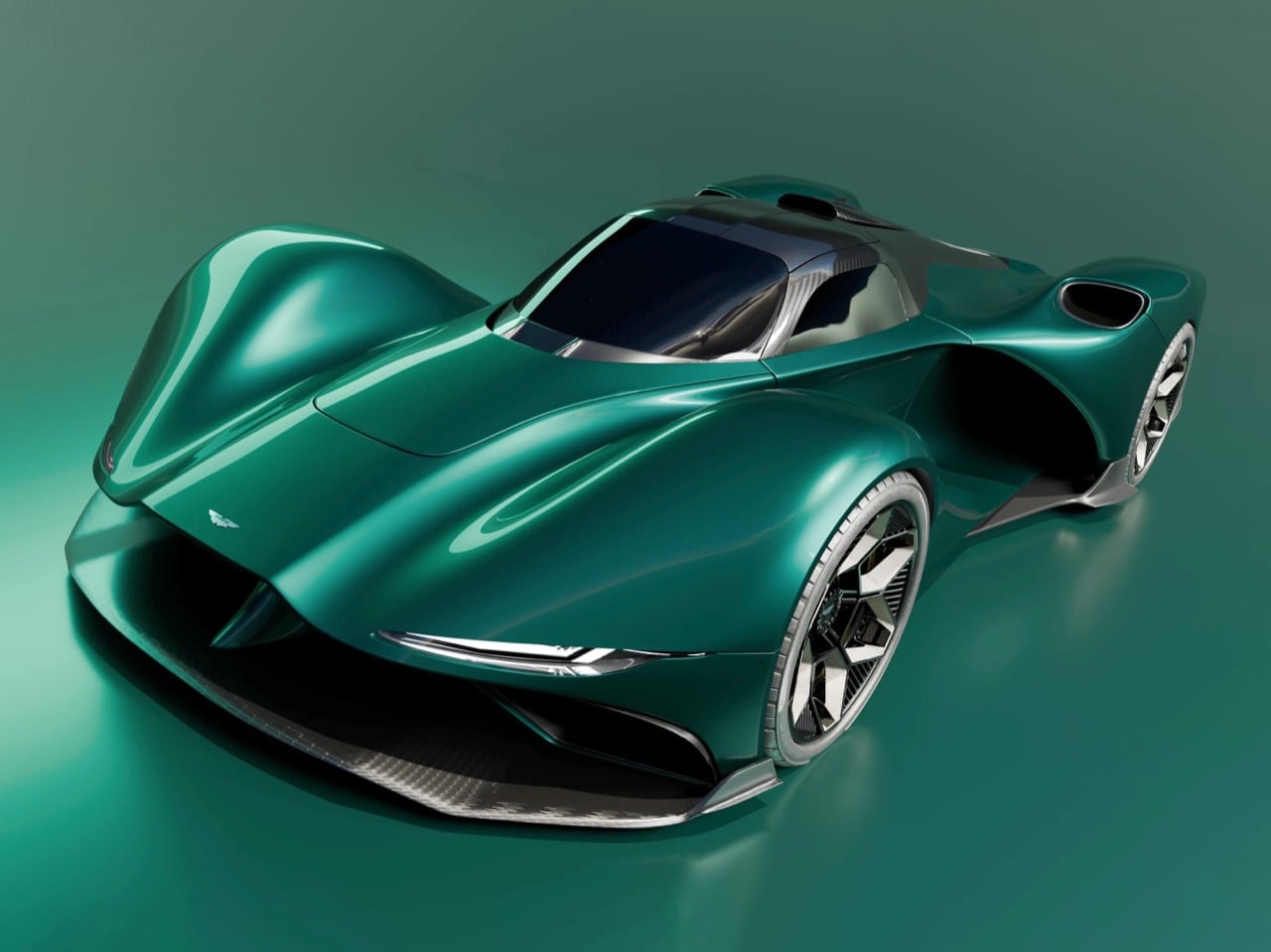

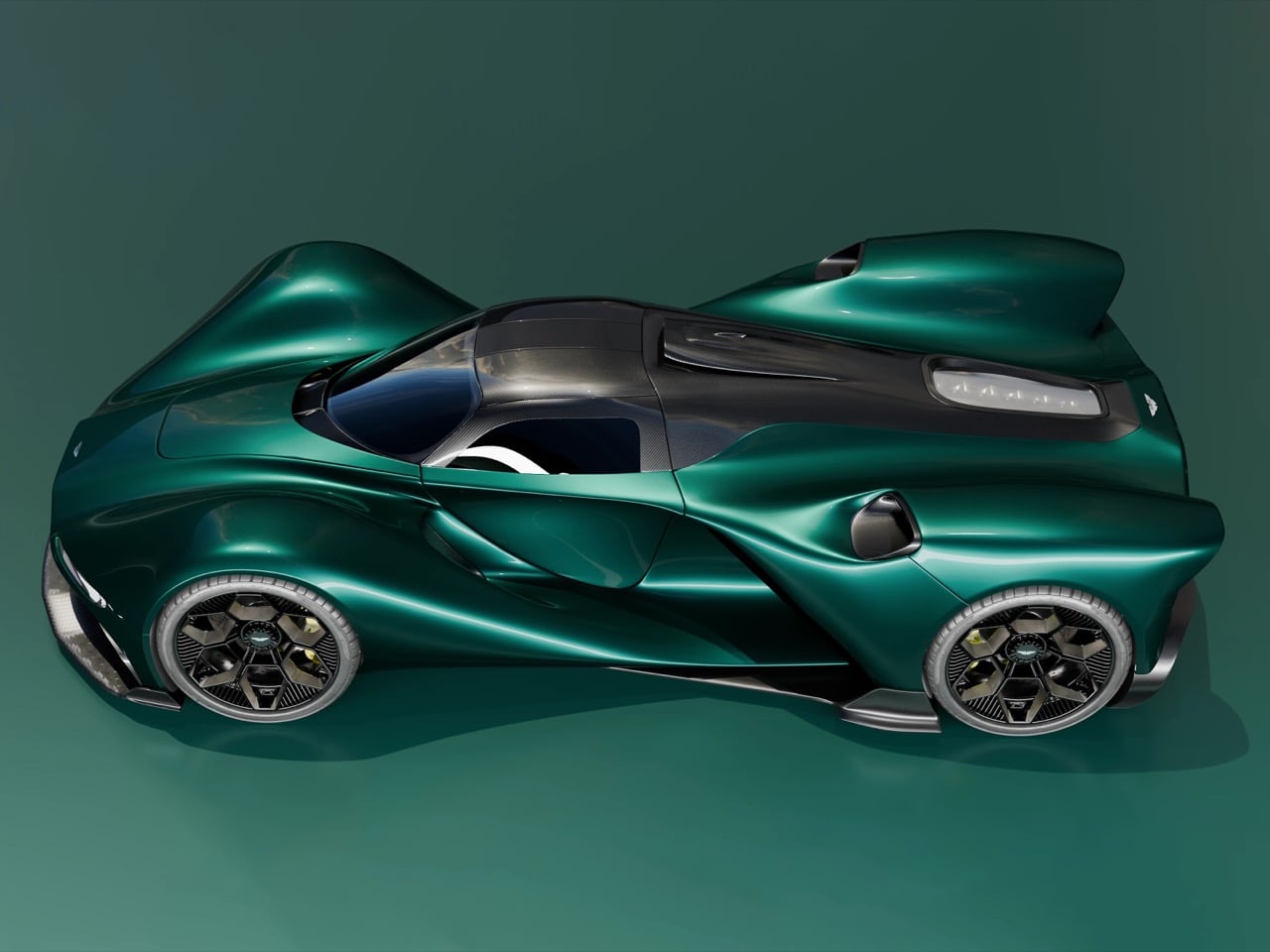
Hyunwoo Kim’s Veil asks a question Aston Martin’s own studio probably can’t ask while managing current production timelines: what happens to the brand’s visual language when you trade angular carbon fiber aggression for something closer to organic sculpture? The result is a hypercar where every surface transition is so smooth you’d need calipers to find the break points. The teal finish, a near-match for Aston’s current F1 team livery, doesn’t just reference the brand’s motorsport presence; it makes every curve feel like light bending around water.
Kim developed the concept through physical paper mock-ups before committing anything to CAD, and the proportions show it. From above, the Veil reads like a manta ray, with massive rear fender volumes extending from a central spine that bisects the cockpit. The process produced surface relationships that feel discovered rather than designed. The concept was subsequently photographed alongside Aston Martin F1 team members, suggesting Gaydon took notice. For design followers, this is the kind of work that maps where a brand’s visual language might be heading in a decade.
What we like:
- The paper mock-up development process is rare in an era of pure CAD workflows, and it produced proportions and surface relationships that feel genuinely spatial in a way that screen-first design rarely achieves
- The teal livery reference creates a coherent visual link between Aston’s motorsport identity and its road car future without resorting to obvious badging or explicit F1 call-outs
What we dislike:
- The ultra-smooth surface language, while visually striking, raises real questions around cooling and downforce that a functional prototype would need to resolve before the form could survive contact with actual track conditions
- The concept exists as a personal exploration without confirmed manufacturer involvement, which limits how directly it can influence what Gaydon’s advanced studio is working on right now
3. McLaren F1 Concept
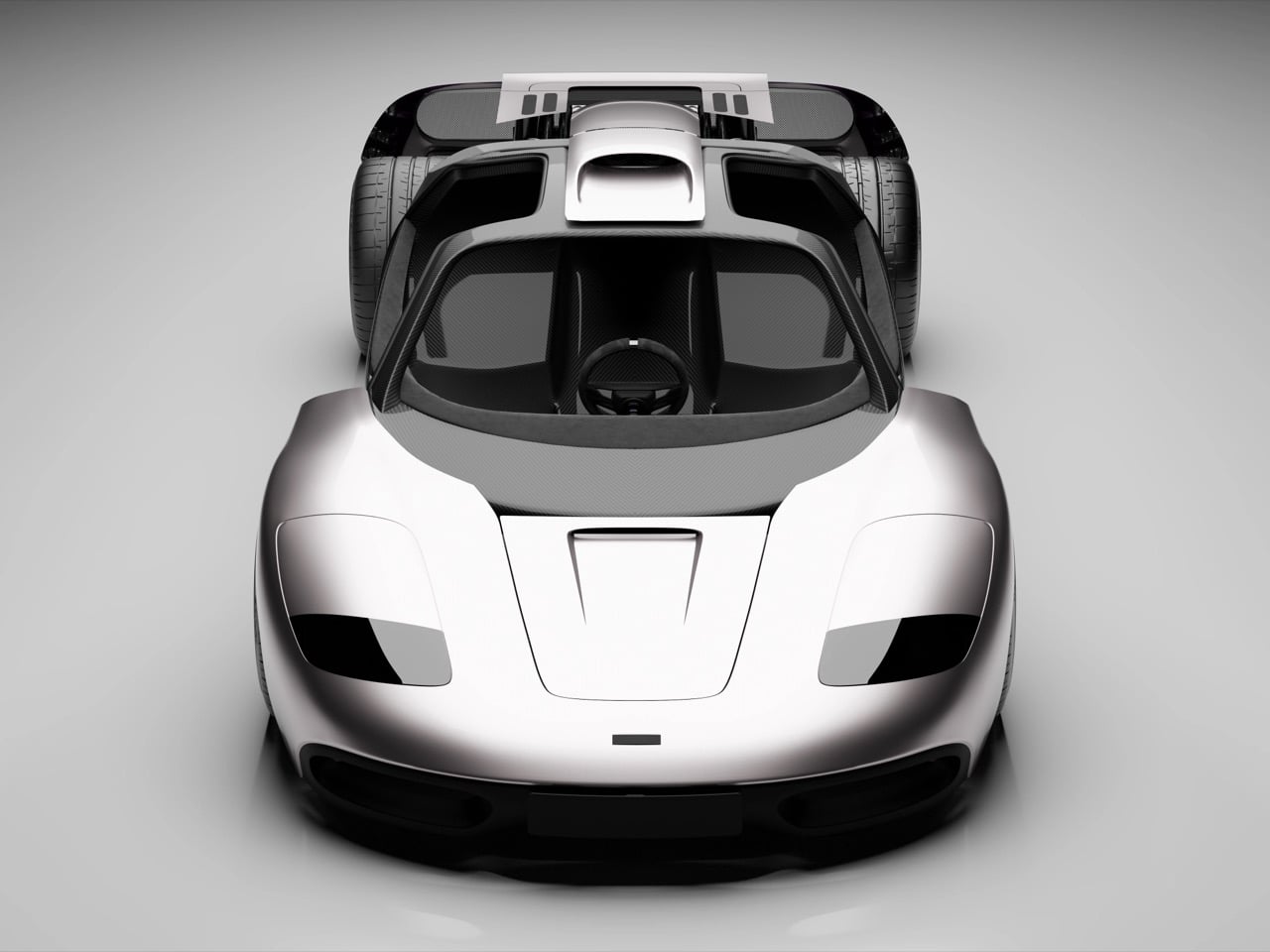
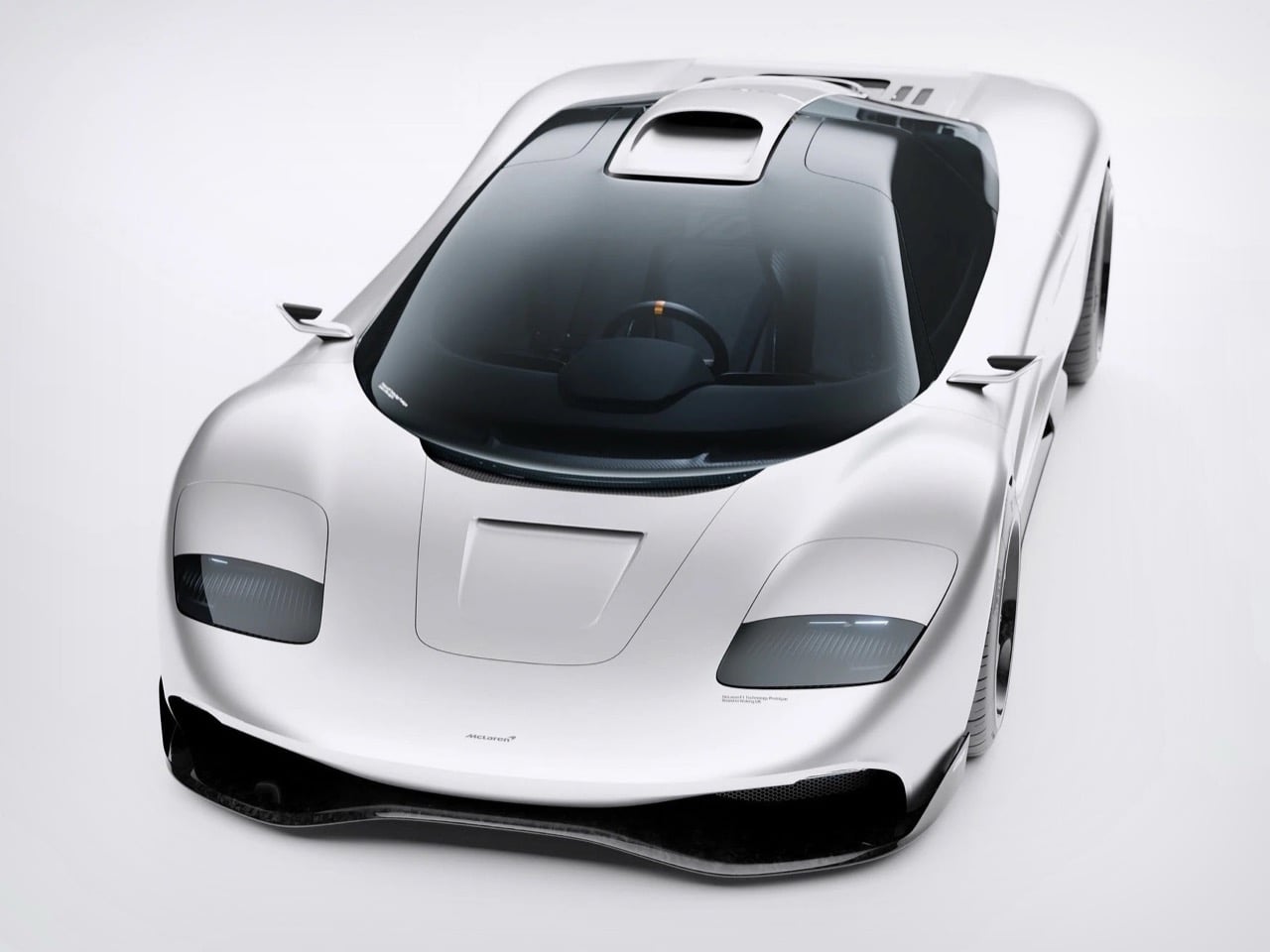
Kevin Andersson’s reimagining of the McLaren F1 operates in the most demanding space in automotive design: the icon reboot. Gordon Murray’s original was shaped by specific constraints, 1990s carbon fiber manufacturing limits, and aerodynamic understanding that three decades of Formula 1 development have since transformed completely. Andersson’s concept strips those constraints away while keeping the design philosophy intact. The long hood, the cab-forward greenhouse, the rear haunches that read as muscle rather than theater. Everything that made the original feel inevitable still does, translated into a contemporary surface language.
The renders, produced in Blender and presented in both glossy white and dark gray, show a car McLaren’s design studio could plausibly release today if the brand decided to revisit its analog past. The naturally aspirated engine placement stays legible in the hood proportions, and the whole form reads as a single cohesive object rather than an assembly of surfaces. For anyone who grew up wanting an F1 and couldn’t get close to owning one, this is the version that proves the original’s proportions remain the most elegant answer to the question of what a driver’s car should look like.
What we like:
- The long hood and cab-forward stance preserve the original F1’s spatial logic in a completely contemporary surface language, showing that Murray’s proportional decisions were correct beyond their era
- The Blender workflow produces photoreal renders that communicate design intent with enough clarity to evaluate the concept seriously, rather than treating it as a sketch exercise
What we dislike:
- As a personal study completed without McLaren’s involvement, there is no direct pathway for the concept to influence actual product direction at Woking, which limits its reach beyond the design community
- The dark gray render obscures surface detail in areas where the concept’s nuance lives, making certain transitions harder to read and the full quality of the work more difficult to assess
4. Segway Muxi E-Bike


First introduced at CES 2026, the Muxi is Segway’s first short-tail utility e-bike, and it makes its case through restraint rather than specification sheets. It carries a payload of up to 418 pounds and accommodates optional accessories, including a child kit, but it doesn’t look like a cargo barge doing it. The step-through frame keeps access easy, integrated frame storage maintains a clean silhouette, and the whole package reads as a practical daily tool rather than a conspicuous statement about urban mobility values.
The 750W rear hub motor produces 80 Nm of torque, paired with a 48V, 716Wh battery delivering up to 80 miles of range per charge. Riders can toggle between Class 1 and Class 2 modes depending on terrain and local regulations. For urban commuters who need to carry real loads without a car, the Muxi offers something genuinely useful: a vehicle that handles groceries, gear, or a child passenger without requiring a license or a parking permit. The design keeps that utility from reading as a compromise, which is a harder problem to solve than it looks.
What we like:
- The 80-mile range paired with 418-pound payload capacity makes the Muxi a credible car replacement for short-range urban logistics without the bulk or visual weight of traditional long-tail cargo bikes
- The step-through frame and integrated storage keep the silhouette honest and uncluttered, which reflects thoughtful design decision-making rather than feature stacking
What we dislike:
- The short-tail format, while visually leaner, does limit rear cargo platform length compared to long-tail alternatives, which matters for riders carrying larger or less stackable loads regularly
- Class 1 and Class 2 mode flexibility is useful, but the cap on assisted speed that comes with staying below Class 3 territory will frustrate commuters who need to keep pace with faster urban traffic
5. Freelander Electric SUV
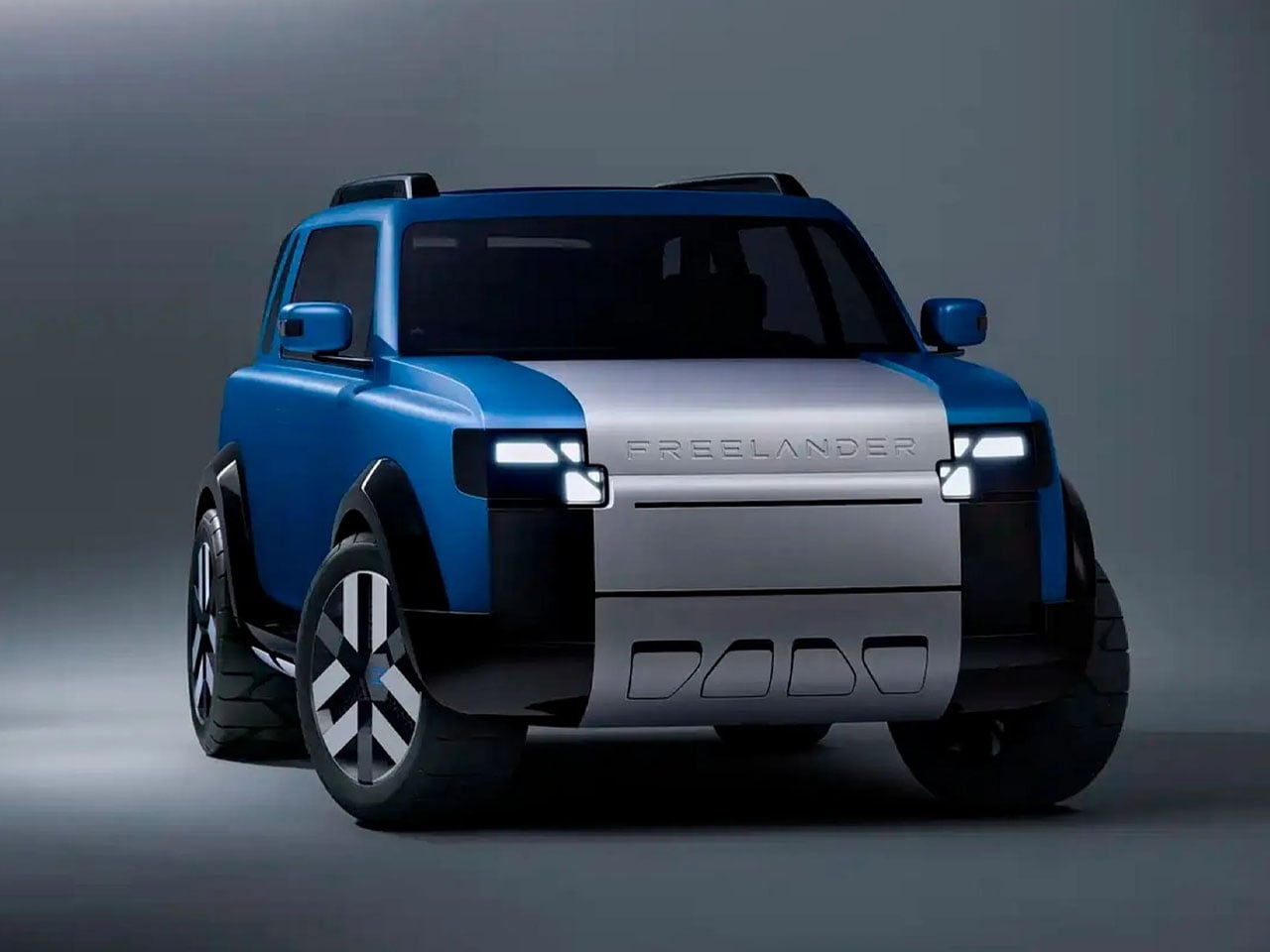
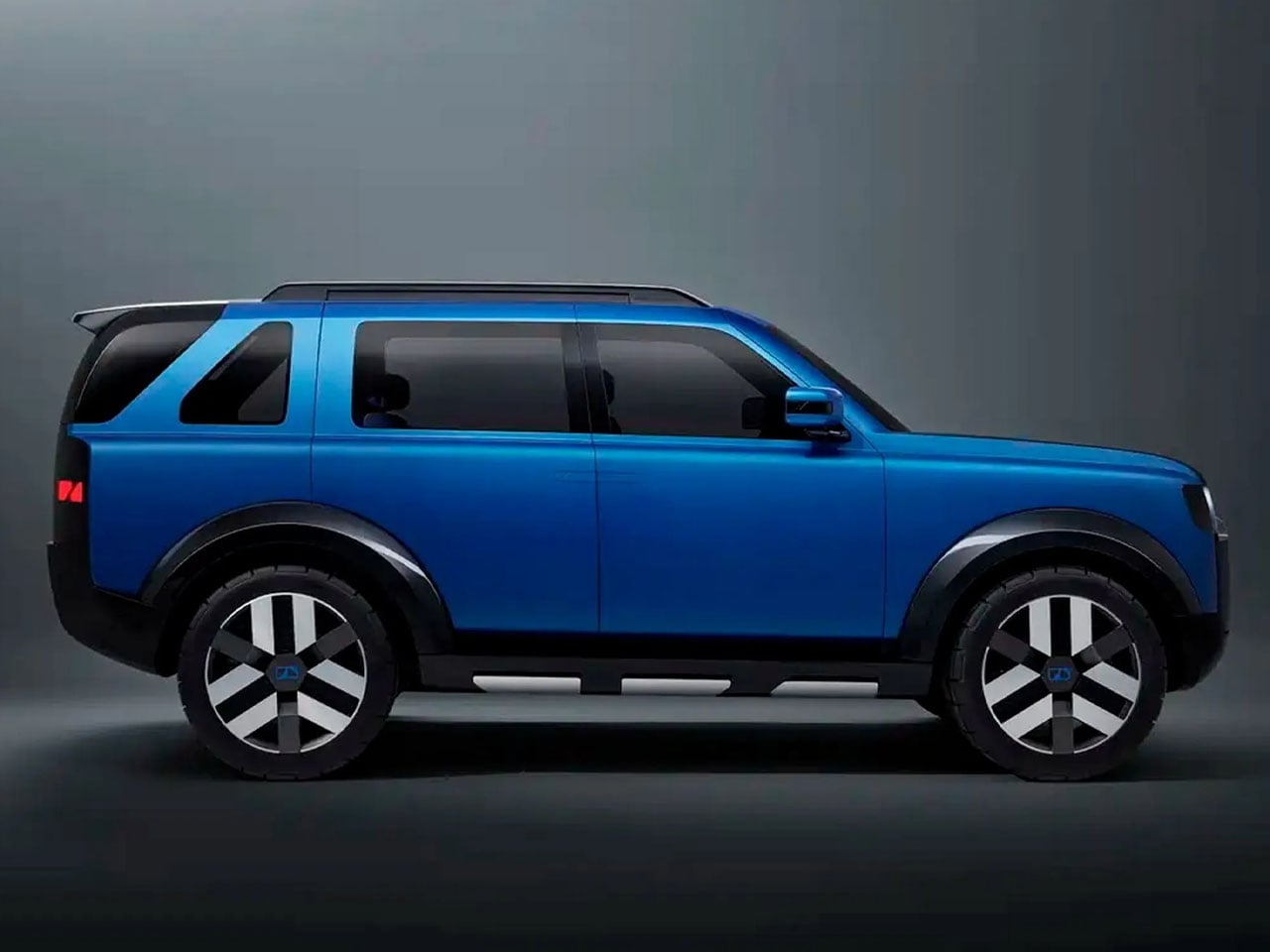
The Freelander nameplate’s return arrives as a JLR and Chery co-development, and the design treats its heritage with more precision than most revivals manage. The boxy silhouette, upright stance, and angled D-pillar all reference the original three-door Freelander from the late 1990s without tipping into pure nostalgia. The rugged proportions stay consistent with classic Land Rover SUV design, while modern lighting elements and a more contemporary design language prevent the whole thing from reading as a tribute act rather than a genuine successor with something new to offer.
The technical foundation centers on an 800-volt platform supporting fully electric, plug-in hybrid, and range-extended electric configurations across a planned lineup of six models. Production takes place at the Chery-Jaguar Land Rover joint-venture facility in Changshu, China, combining British design direction with Chinese EV platform technology. For buyers who want a compact, capable off-roader with genuine electrification credentials and a nameplate that carries weight, the new Freelander’s combination of design heritage and modern platform engineering gives it a strong opening argument before a single production car rolls out.
What we like:
- The angled D-pillar and upright stance respect the original Freelander’s design DNA without reducing the new car to a retro exercise, striking a balance that most nameplate revivals fail to find
- The 800-volt platform supporting multiple powertrain configurations gives buyers real flexibility across six planned model variants rather than locking the lineup into a single electrification strategy
What we dislike:
- The Chery co-development structure raises legitimate questions about how much of JLR’s build quality reputation will translate across a manufacturing partnership, regardless of how strong the design direction is
- Six models across a freshly relaunched lineup is an ambitious target that risks diluting design consistency before the Freelander brand identity has had time to re-establish itself in a competitive EV market
The Best Design Always Starts With a Problem Worth Solving
What the strongest designs this month share is a willingness to treat constraints as creative material rather than obstacles. Whether that means engineering a Le Mans pit stop into a ten-second module swap, developing a hypercar form from physical paper before touching a computer, or bringing back a beloved nameplate through a cross-continental manufacturing partnership, the best work here didn’t arrive from playing safe.
Design is always a negotiation between ambition and reality. The concepts at the top of this list lean hardest into ambition, and the production-bound entries use real engineering constraints to sharpen rather than limit their vision. If these five designs reflect the direction automotive culture is moving, the next few years should produce some of the most considered vehicles the industry has attempted in a long time.