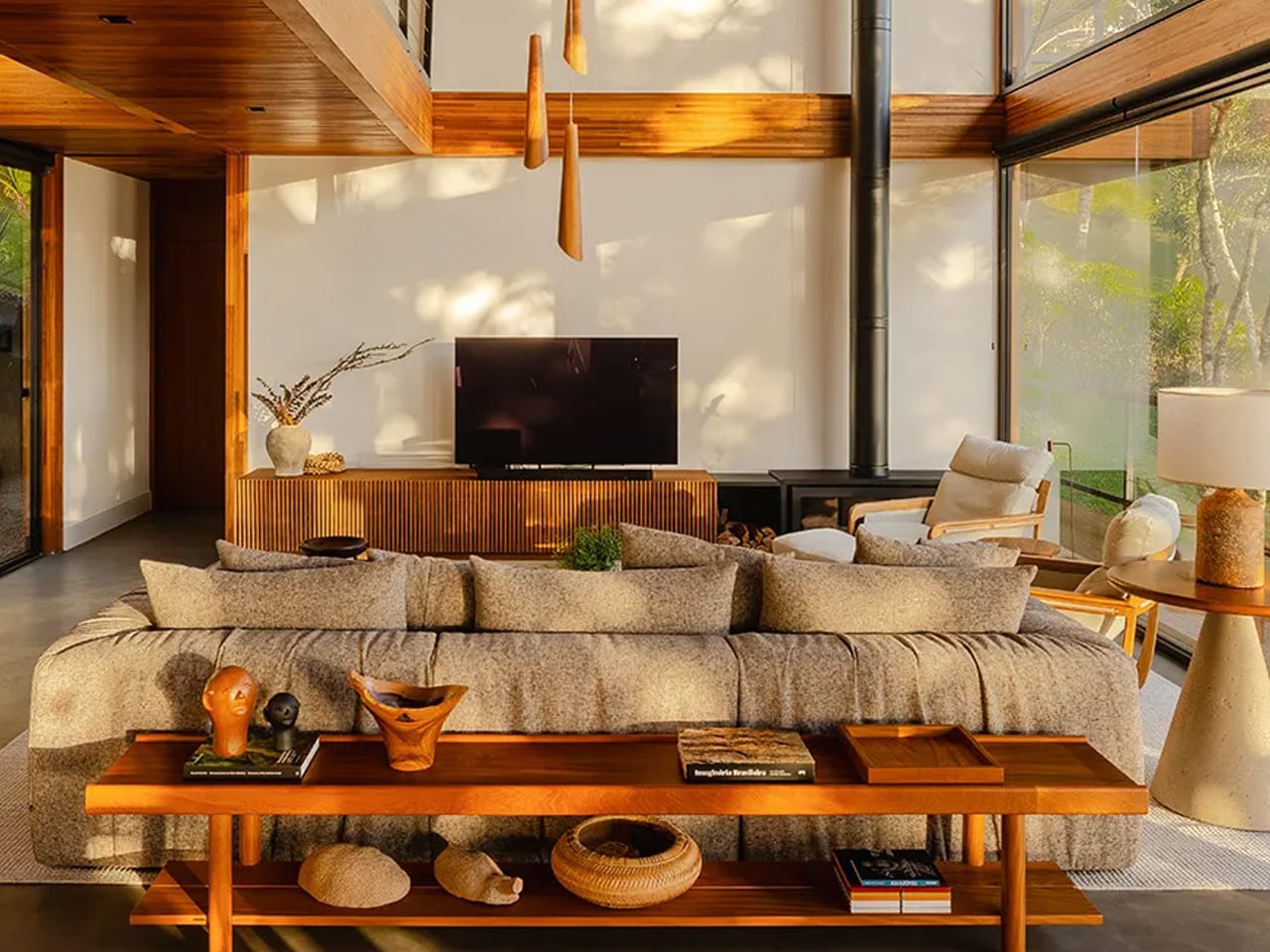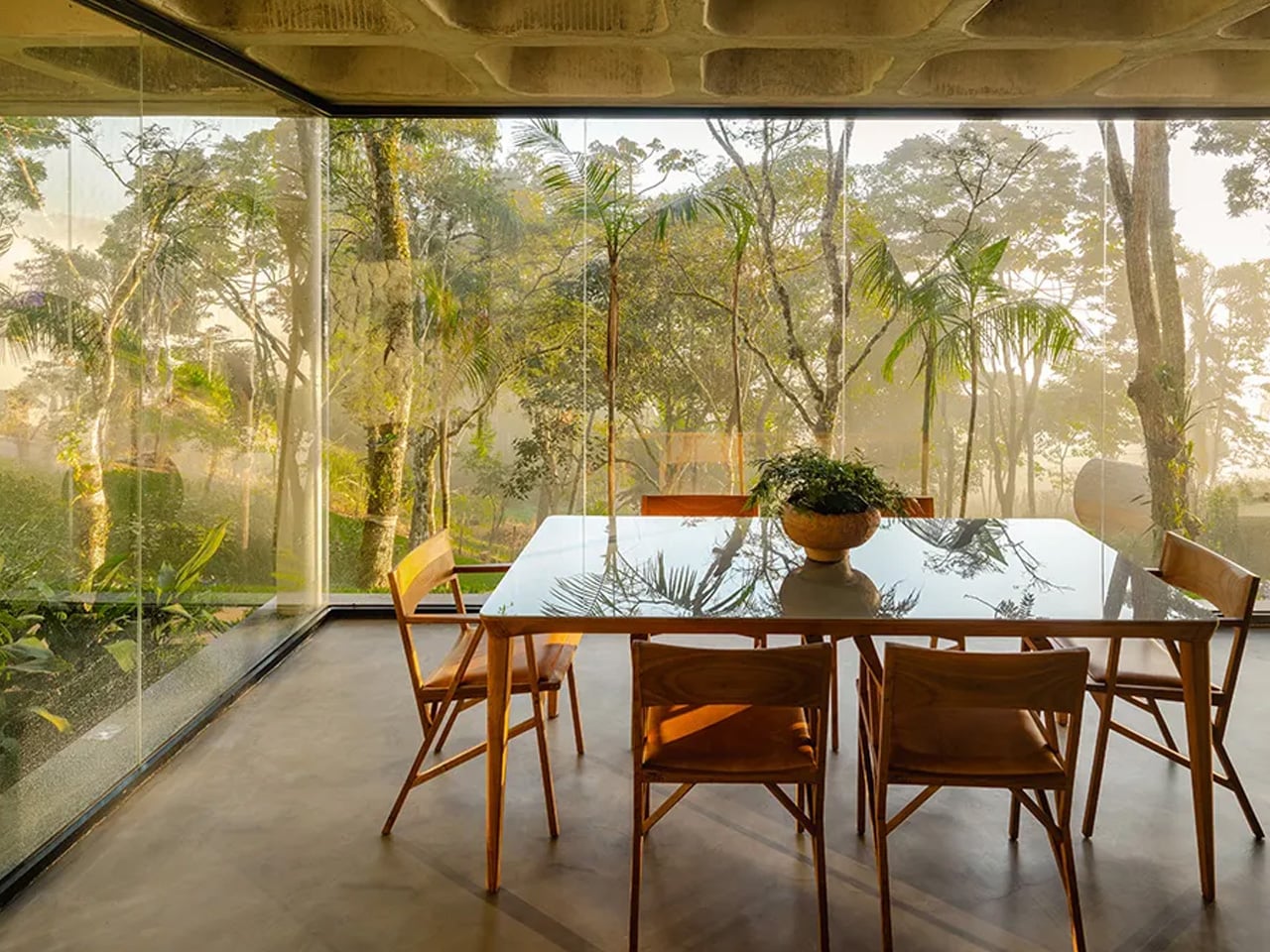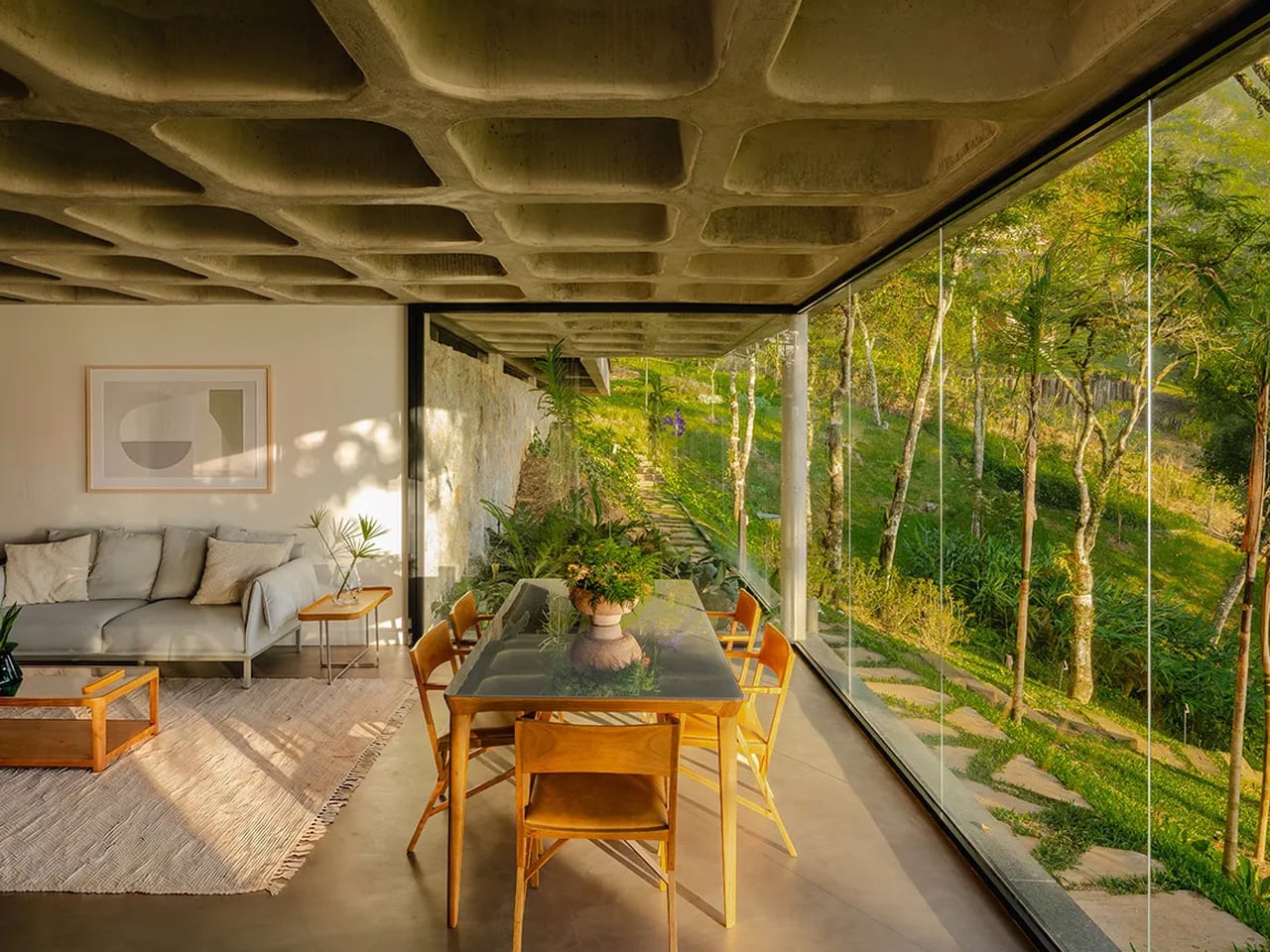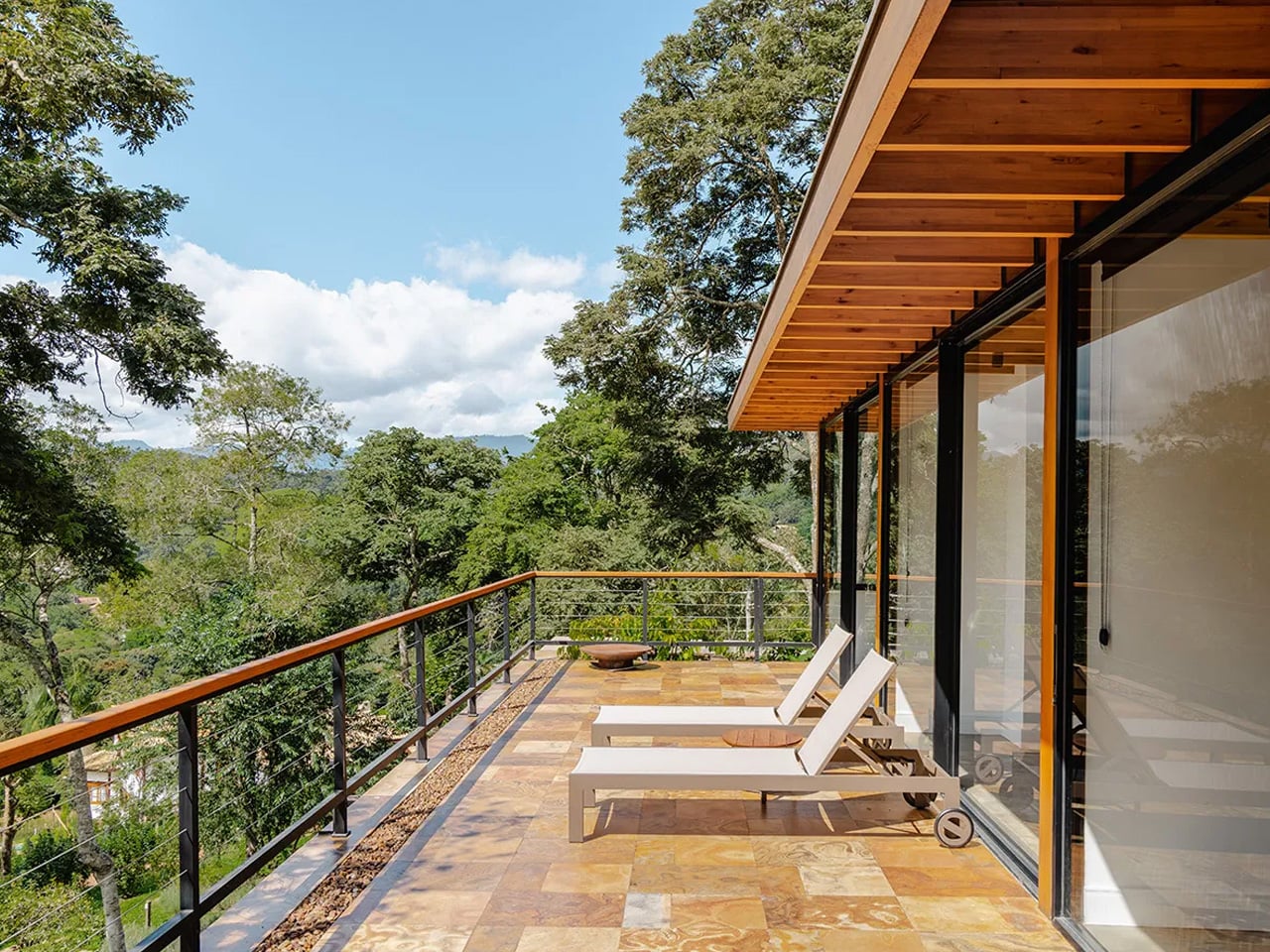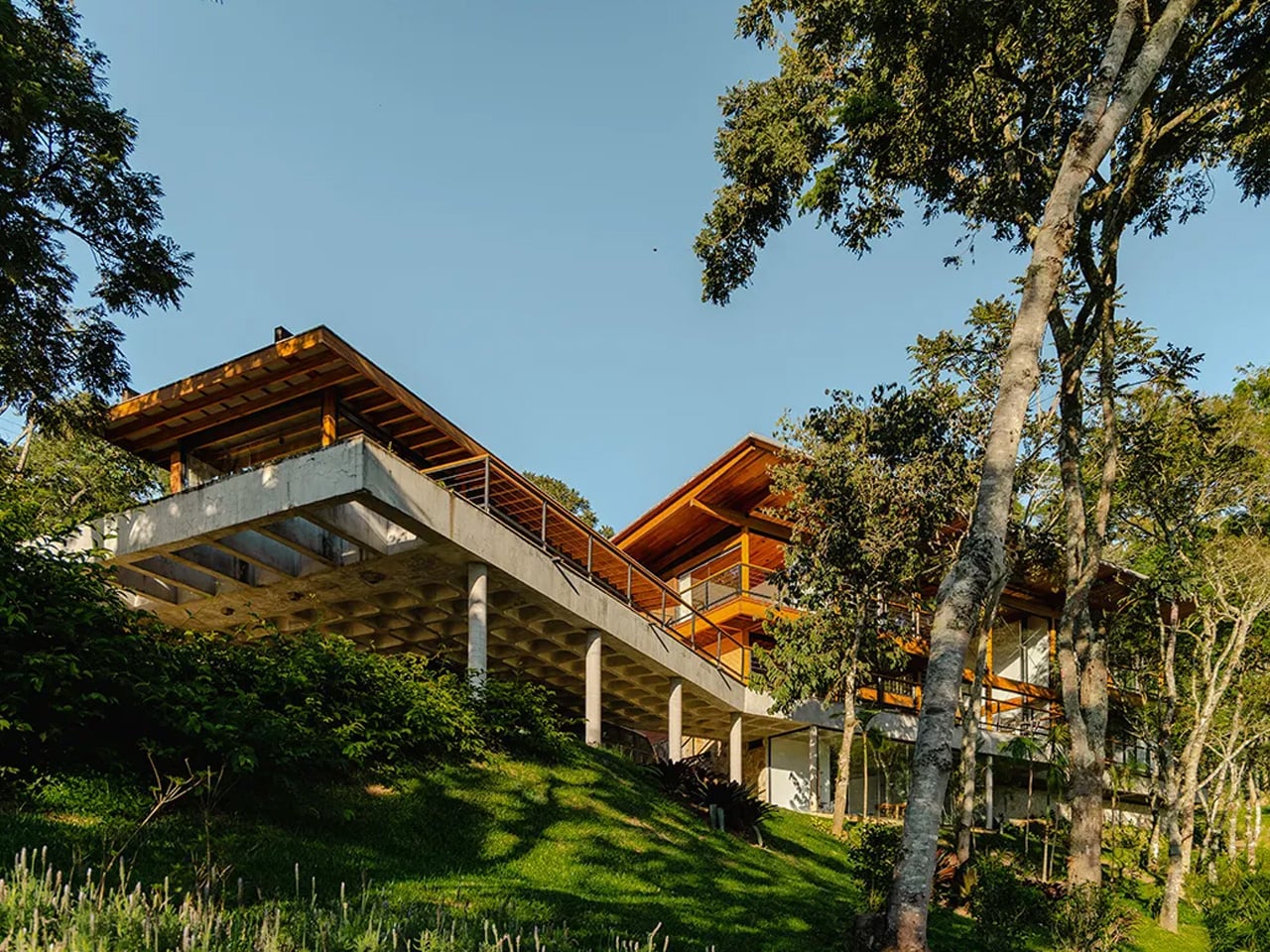

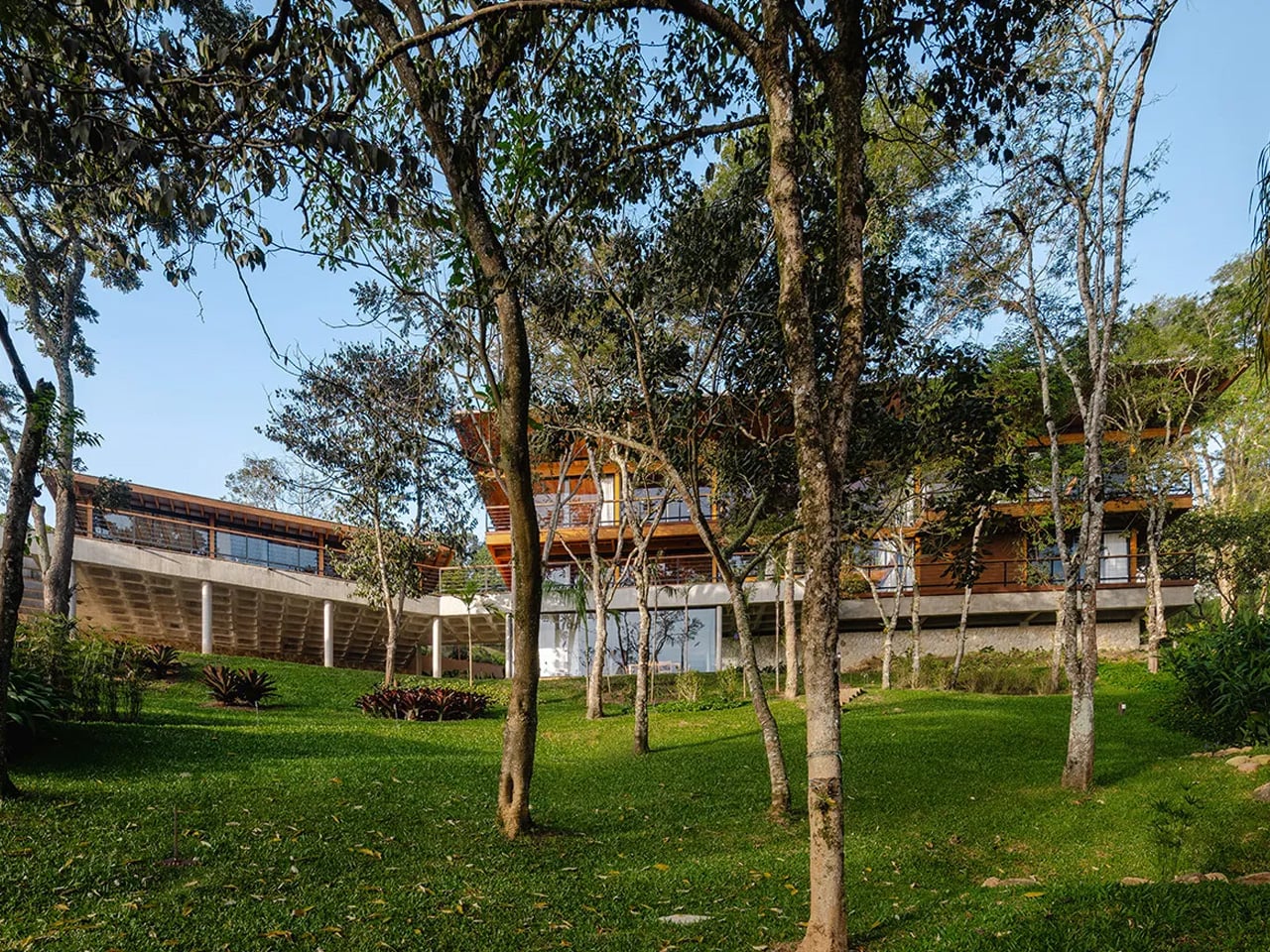
Deep in the Serra da Mantiqueira, where the air is thin and the forest floor barely registers sunlight, Cornetta Arquitetura has completed Casa Pinhal — a 690-square-metre residence in Santo Antônio do Pinhal, São Paulo, that reads less like a building dropped into nature and more like one that grew out of it.
The site is demanding by any measure: a 4,900-square-metre plot with a steep incline and dense native vegetation already well established across it. Rather than fight the terrain, lead architect Pedro Cornetta made the land itself the primary design brief. The project was guided by one clear principle — touch the ground as little as possible. The result is a holiday house that gives its guests the impression of walking among trees rather than beside them.
Designer: Cornetta Arquitectura
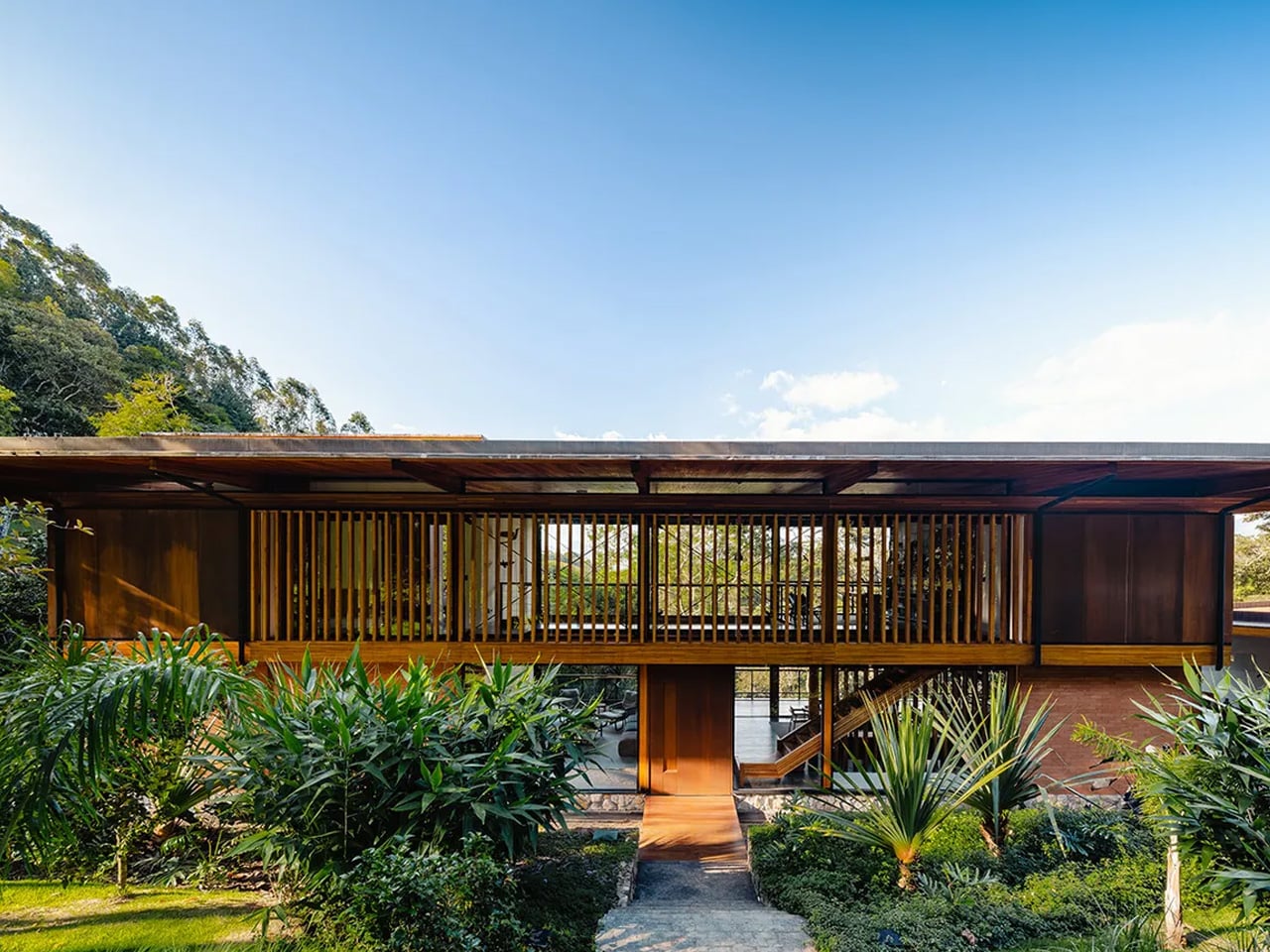
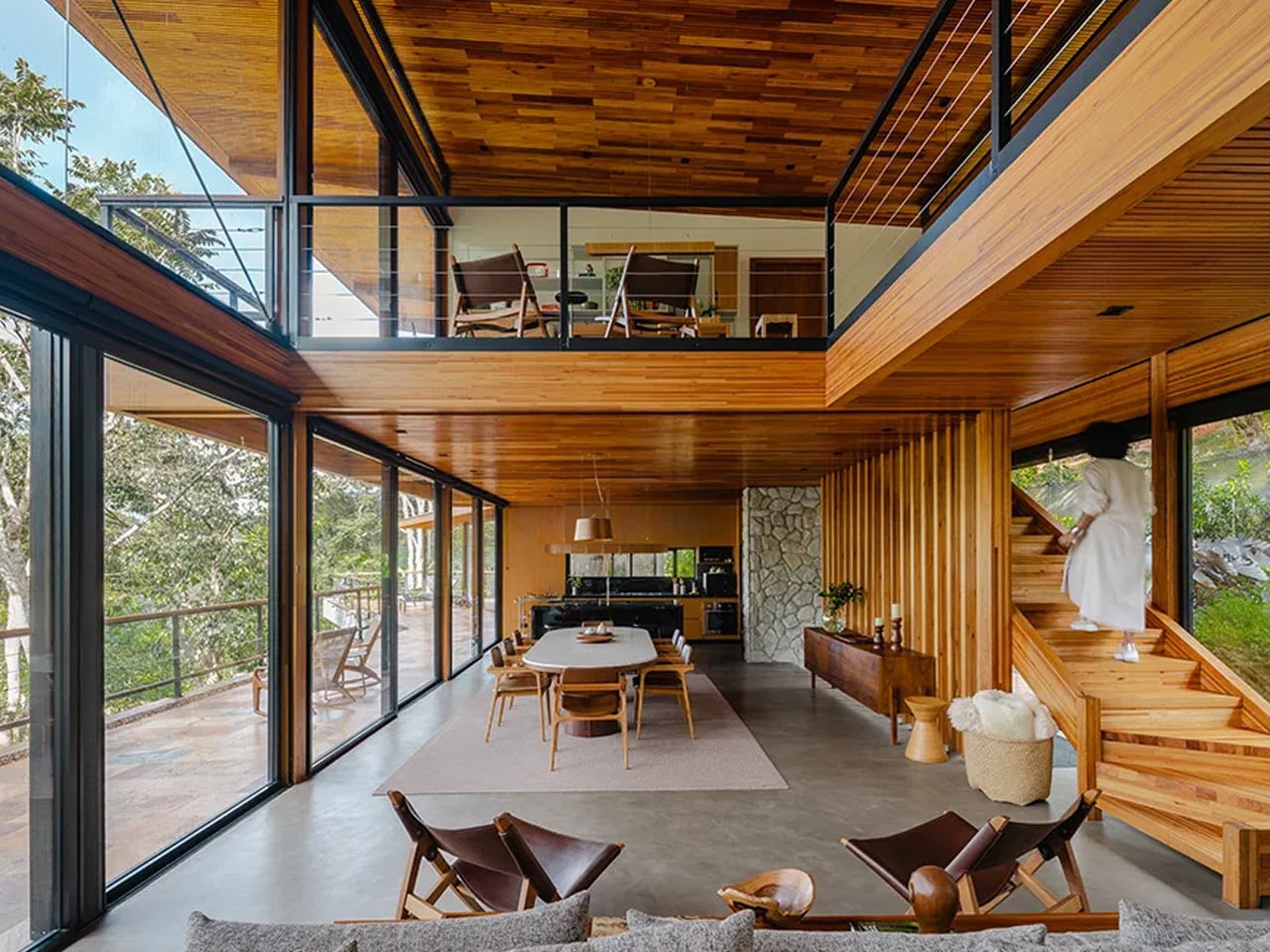
The structural language is built around glued laminated timber (MLC — Madeira Laminada Colada) and wood frame construction, executed in collaboration with Rewood using eucalyptus sourced for the project. Rewood completed the entire timber structure in just 30 days — 40 cubic metres of glulam going up with a pace that conventional concrete construction rarely allows. The system combines a column beam frame, a trapezoidal sandwich roof, dry panel floor slabs, and wood frame walls, all working together as a prefabricated assembly that keeps the site footprint minimal and the build time compressed.
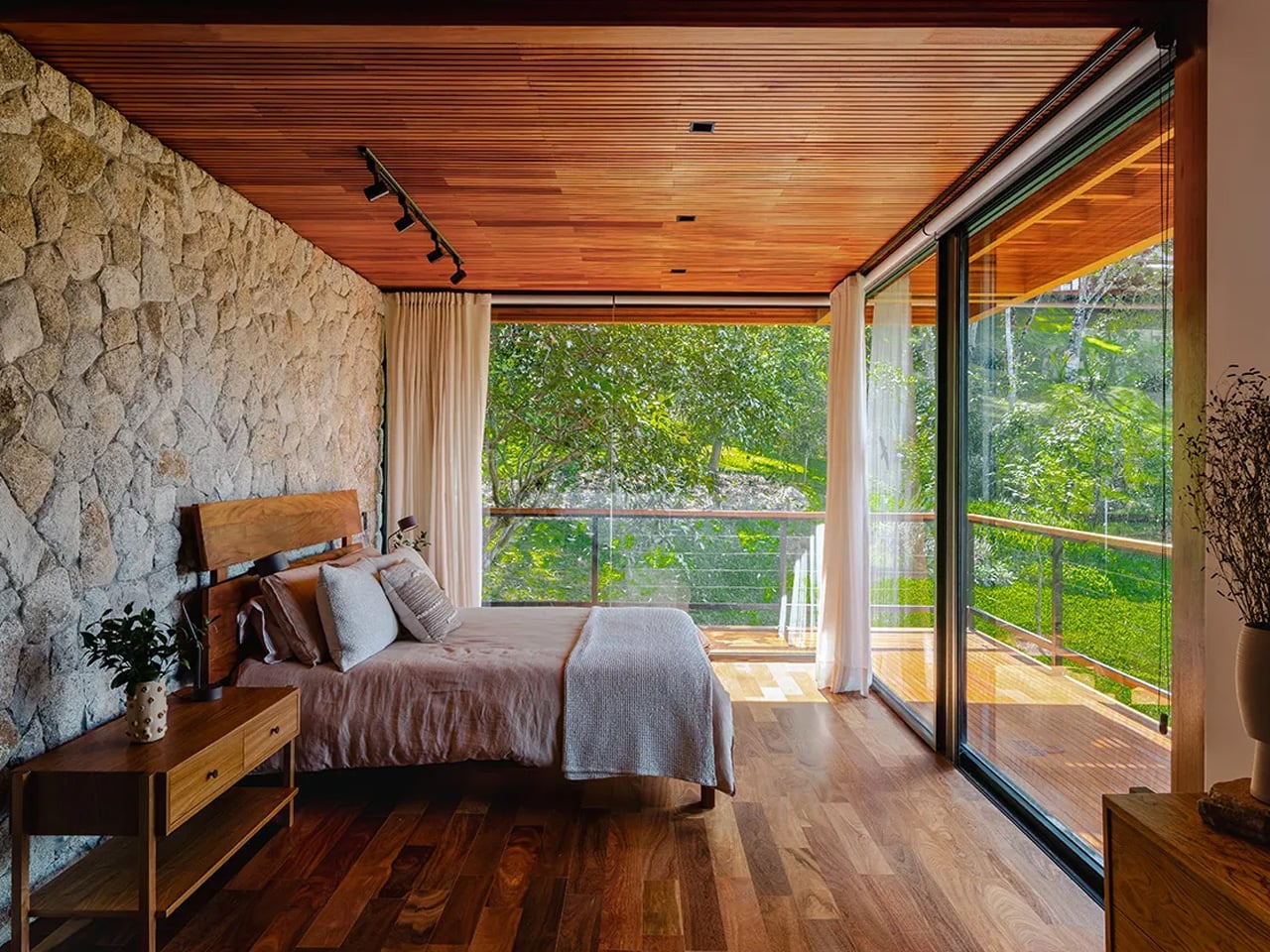
Inside, the material palette is quieter than the engineering behind it. Wood, concrete, and expansive glass panels define the interior volumes — a combination that Cornetta has refined across several projects, but here feels especially deliberate given the forest density outside. At night, the house undergoes a shift: internal lighting catches the grain of the timber, bounces off the concrete, and filters through the glass, turning what is a disciplined structure by day into something closer to a lantern. It’s the kind of detail that separates a house that photographs well from one that actually earns its place on a hillside.
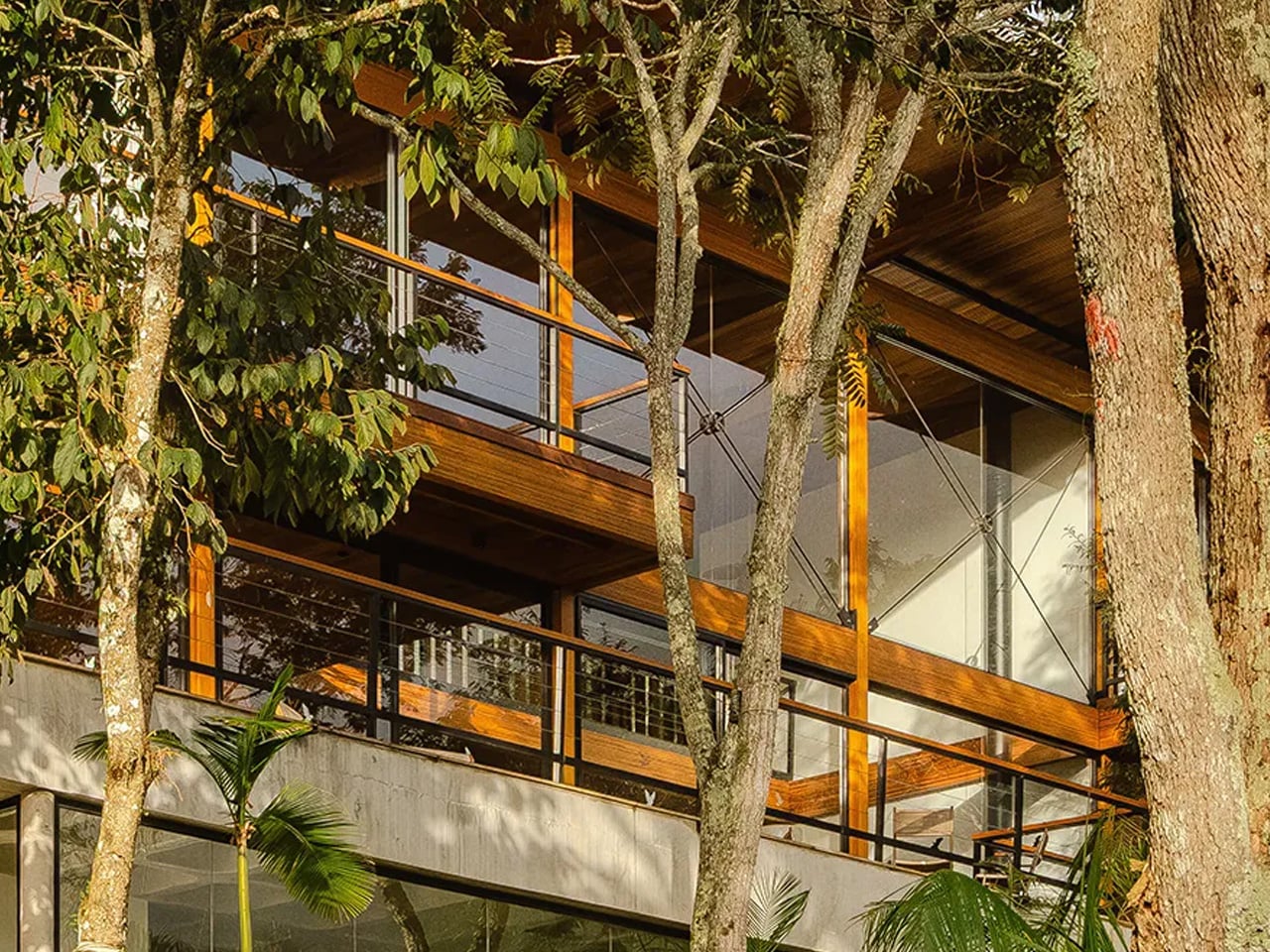
Casa Pinhal sits in a lineage of work from Cornetta Arquitetura that treats sustainability not as an add-on feature but as a structural argument. Like Casa Guapuruvus before it — positioned to avoid disturbing existing flora and elevated off the ground to protect wildlife — Casa Pinhal was placed where native vegetation was already under stress, turning conservation into a site strategy rather than a branding point.
It’s a house built with the kind of restraint that takes real confidence. And in the Mantiqueira mountains, restraint might be the loudest architectural statement you can make.