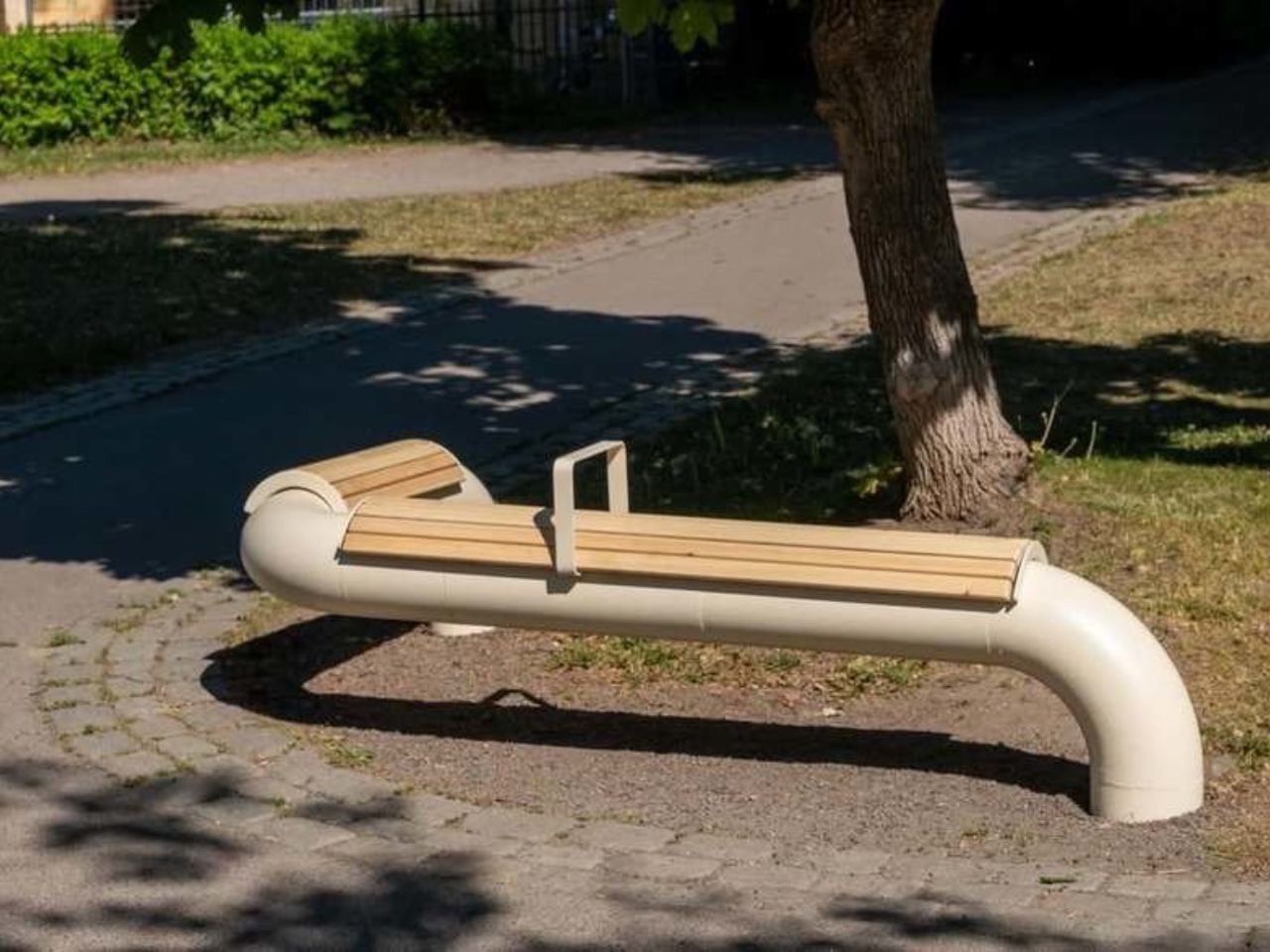

Norway is a nation shaped by oil. Its wealth, its global standing, and much of its infrastructure are rooted in extraction. But what is striking about the Venture seating system is not just what it is made of, but what it represents. A material once tied to industry and scale is quietly redirected toward something deeply human.
Designed by Jens-Egil Nysæther and Line Mari Sørra of Lije Studio, Venture repurposes 6.3 mm thick steel tubing used in the oil industry and transforms it into a public seating system. The gesture feels simple at first glance. Curved and straight pipes are joined together and topped with smooth wooden saddles. But the design does something more subtle. It reframes how we relate to space, to objects, and to each other.
Designer: Lije Studio (Jens‑Egil Nysæther and Line Mari Sørra)
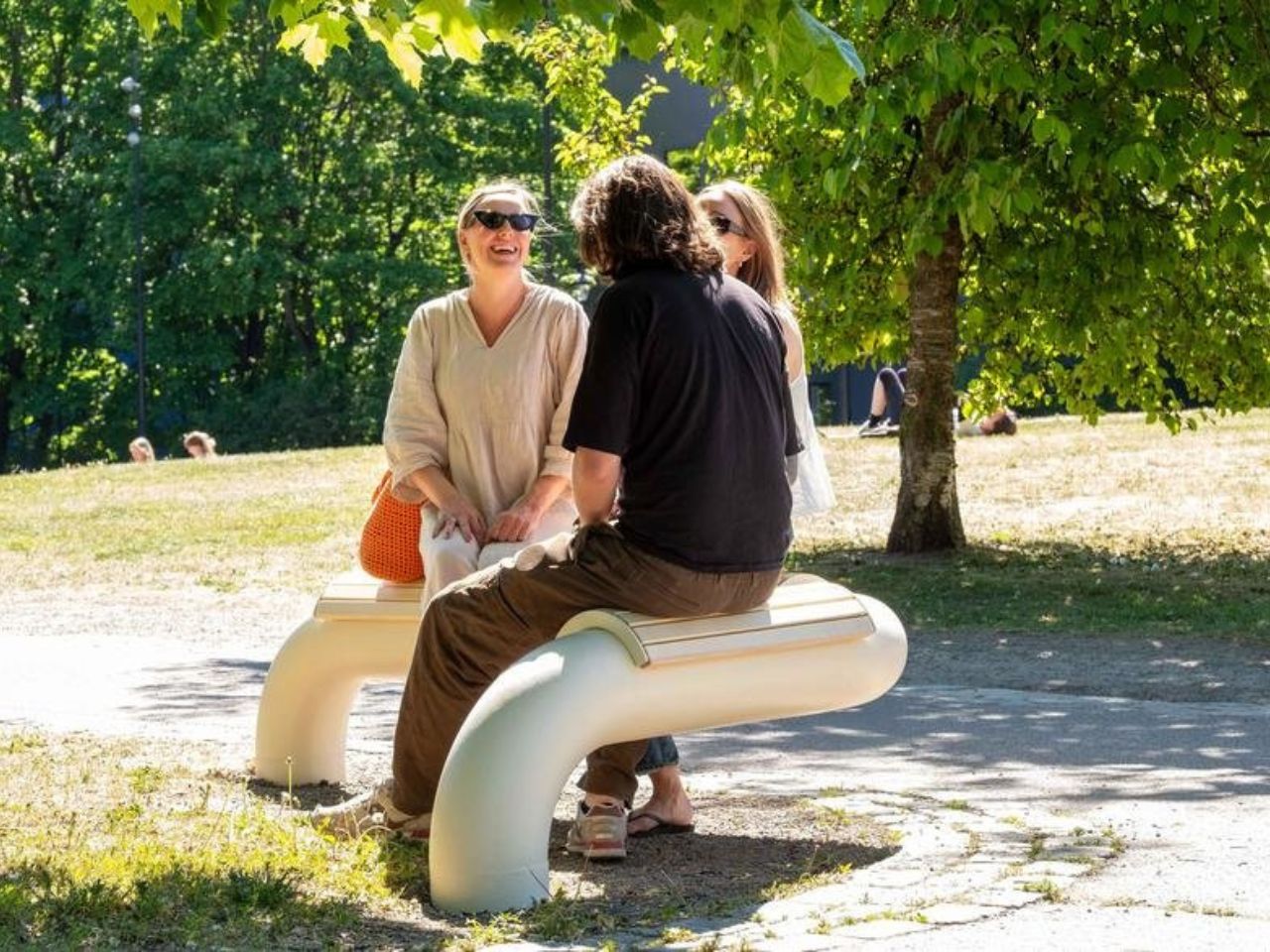
At the core of the project is the idea of proxemics, introduced by Edward T. Hall. It is the study of how distance shapes human interaction. Instead of forcing a fixed posture or direction, Venture removes instruction altogether. There are no backs. No obvious front. No single correct way to sit. The object does not dictate behavior. It invites interpretation.
This is where the project becomes particularly interesting. Public seating is often designed with control in mind. Benches align bodies, regulate posture, and define how long one should stay. Venture does the opposite. It allows ambiguity. A person can sit facing outward, disengaged from others. Or turn inward, becoming part of a shared moment. It supports solitude without isolation and togetherness without obligation.
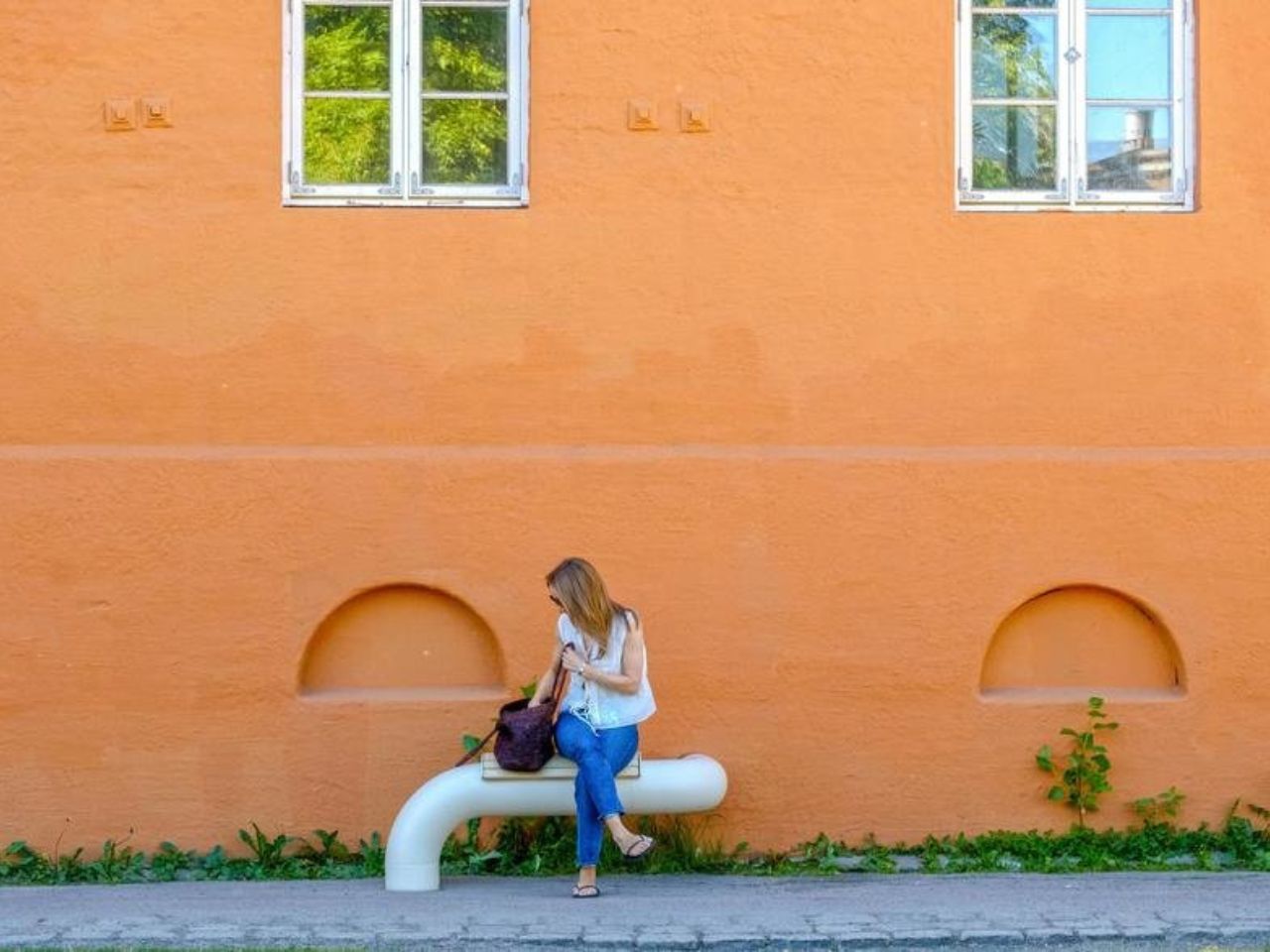
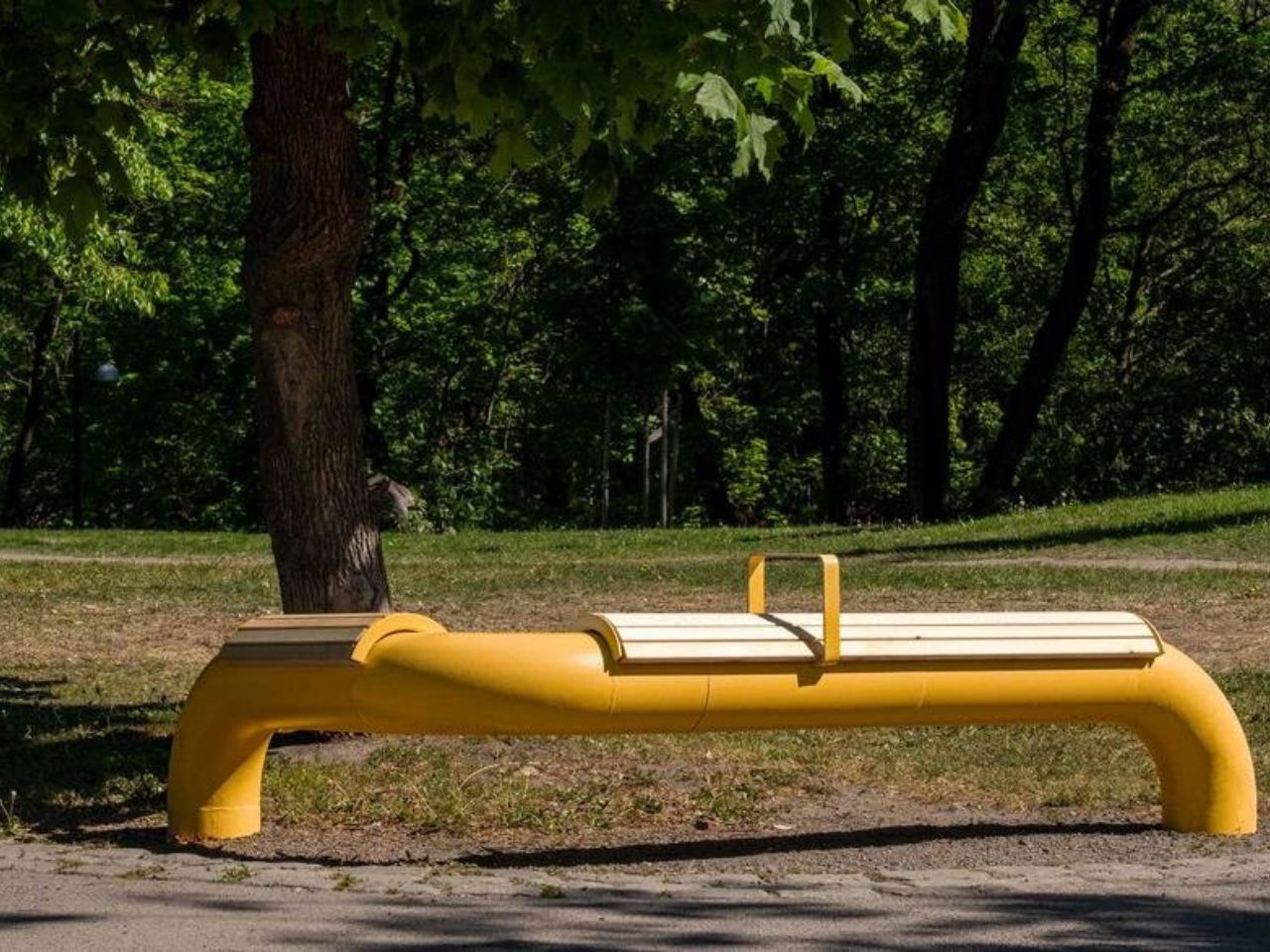
The modularity of the system further expands this idea. Developed in dialogue with landscape architects, the design adapts to different environments rather than imposing itself on them. It can stretch across a plaza, cluster into smaller social pockets, or exist as a sculptural standalone piece. It does not behave like furniture alone. It behaves like infrastructure for interaction.
Material contrast plays a quiet but powerful role. The steel retains its industrial clarity. It is direct, almost unapologetic in its origin. The wooden saddles soften this experience, introducing warmth and tactility. Together, they create a balance between familiarity and surprise. You recognize the material, but you engage with it differently.
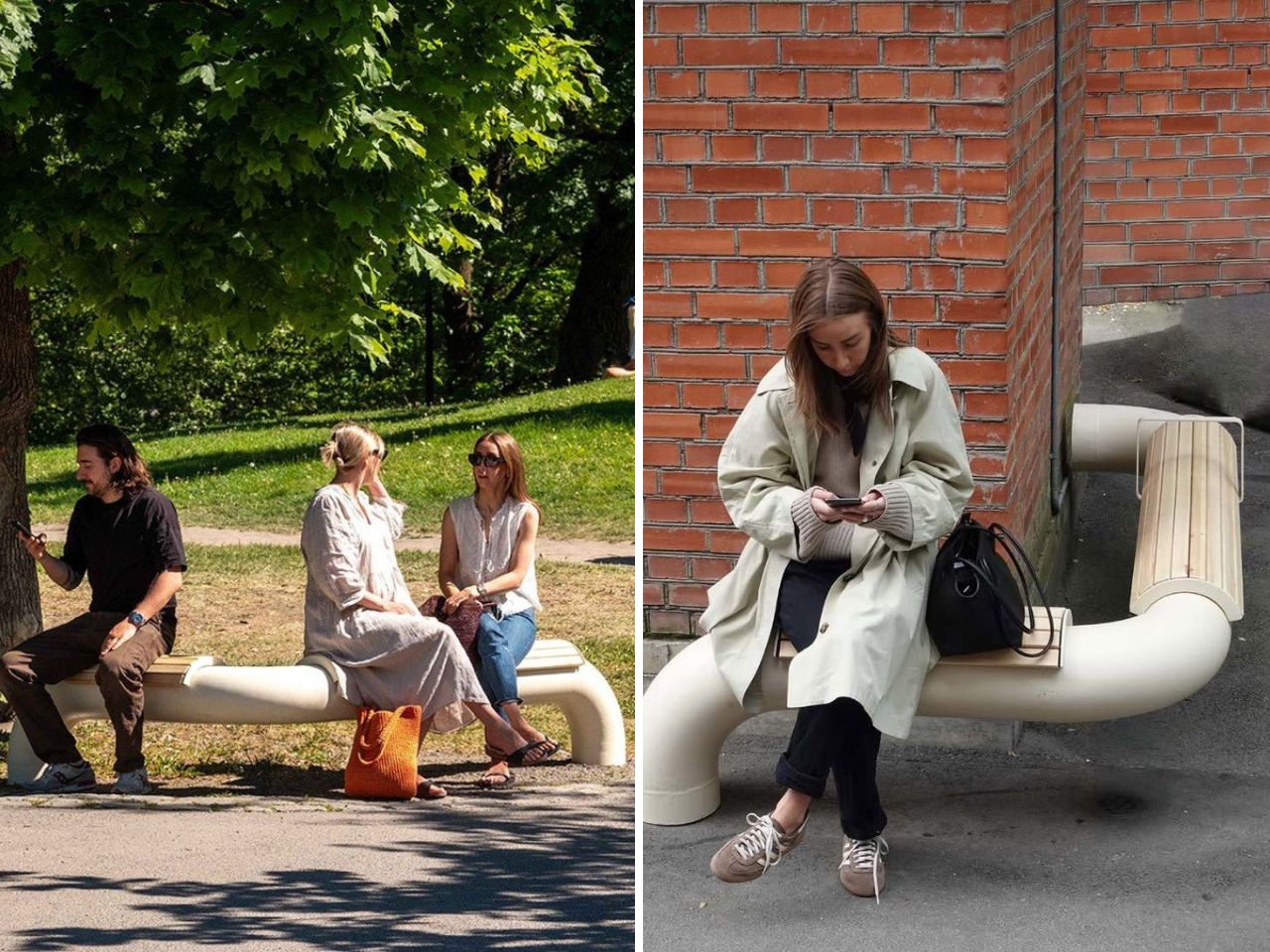
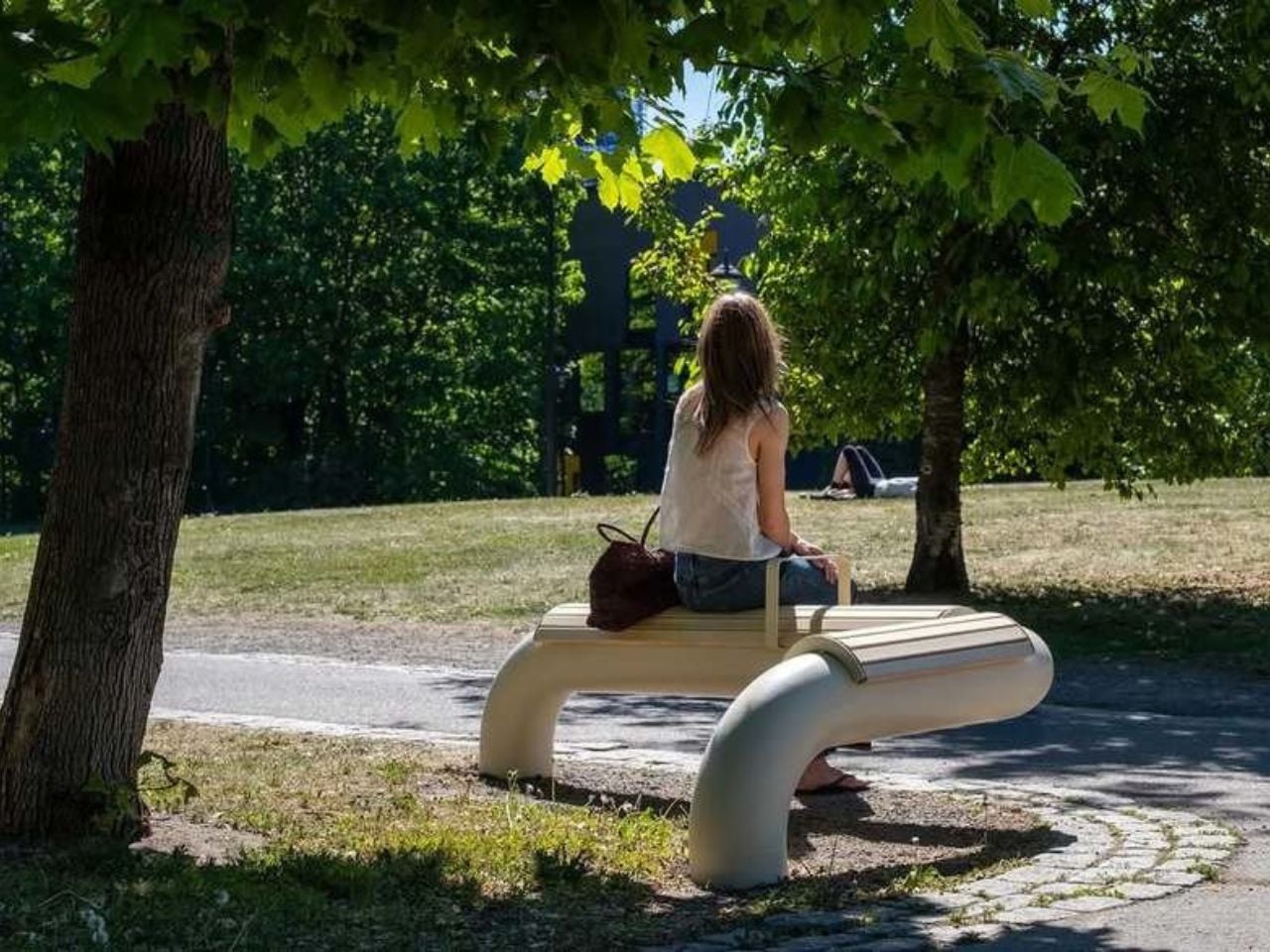
There is also a larger cultural shift embedded within the project. Urban spaces today are increasingly focused on encouraging participation. People already sit on edges, lean against railings, and gather wherever they can. These informal behaviors reveal a gap between how spaces are designed and how they are actually used. Venture does not try to correct this behavior. It legitimizes it. By making seating more open and less prescriptive, it amplifies what people naturally do.
What makes the system compelling is not just its sustainability or its modular logic. It is the redefinition of value. Steel that once moved oil now supports conversation. Infrastructure, once built for extraction, now enables connection. The object shifts from serving systems of production to serving systems of people.

