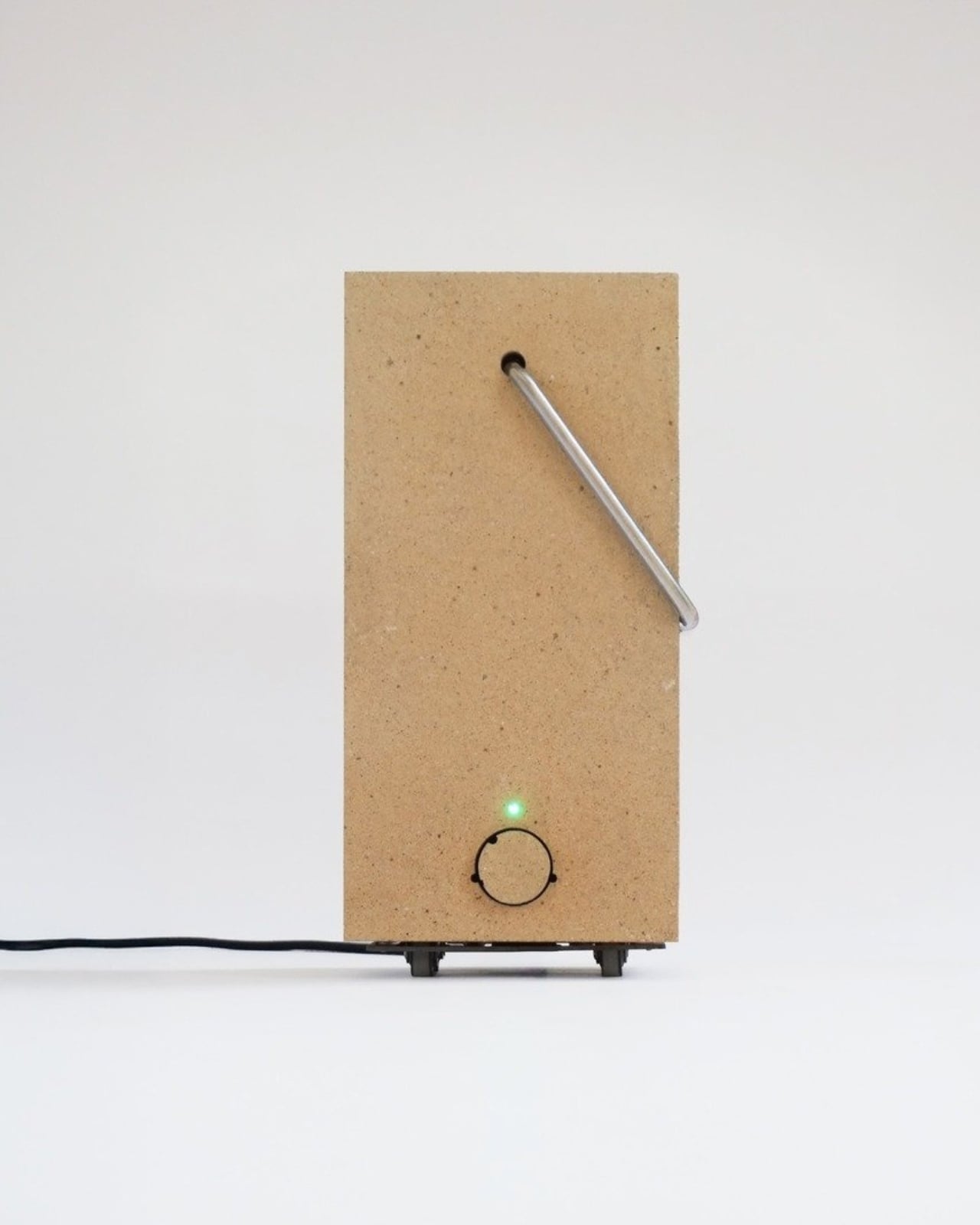

Most of the time, when we talk about innovation in home appliances, we mean sleeker apps, voice control, or some kind of sensor that automatically adjusts to your preferences. Eliot Andrault went in the complete opposite direction, and I think he was right to do it.
STEA is a personal heater designed by Andrault as his Masters project at École nationale supérieure des arts visuels de La Cambre in France. At its core, literally, are refractory bricks. Not smart chips, not Wi-Fi connectivity, not an OLED display. Bricks. The kind of material you’d find in a kiln or a fireplace, chosen specifically because it stores heat and releases it slowly. That’s the whole point.
Designer: Eliot Andrault

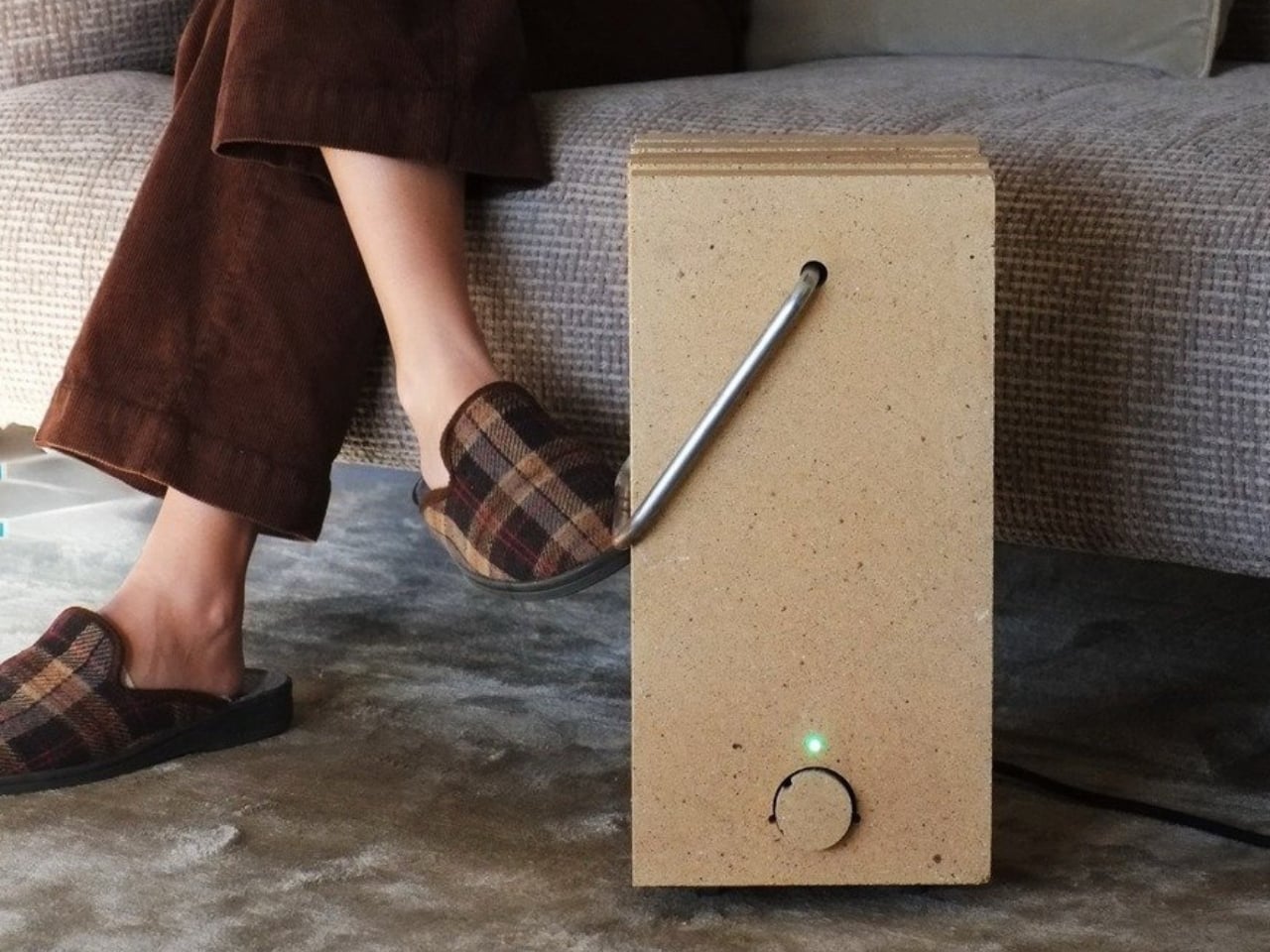
The idea Andrault started with is deceptively simple: how do we heat ourselves differently without giving up comfort? That question sounds obvious, but it almost never gets asked. We default to thermostats and central heating systems that warm up entire rooms, burning energy to heat the air that surrounds you and then some. STEA does something much more targeted. It creates a microclimate around the person using it, right where the body needs warmth most.
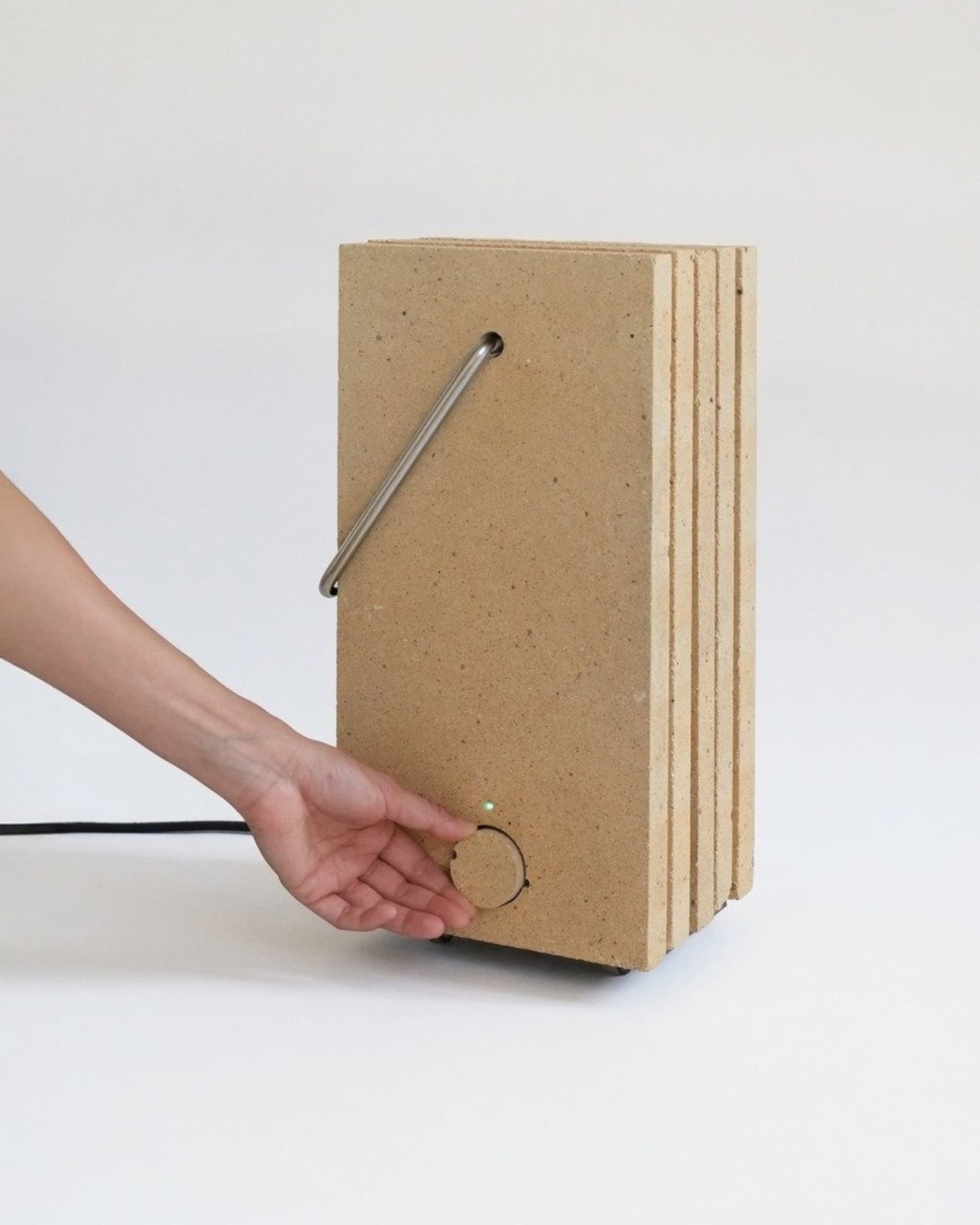
The mechanism is equally understated. STEA heats up for ten minutes, then spends the next twenty releasing that warmth. That 1/3–2/3 rhythm means the device is drawing power for only a fraction of the time it’s actually keeping you warm. It’s not a constant draw on electricity. It’s a brief charge followed by a long, quiet exhale of heat.
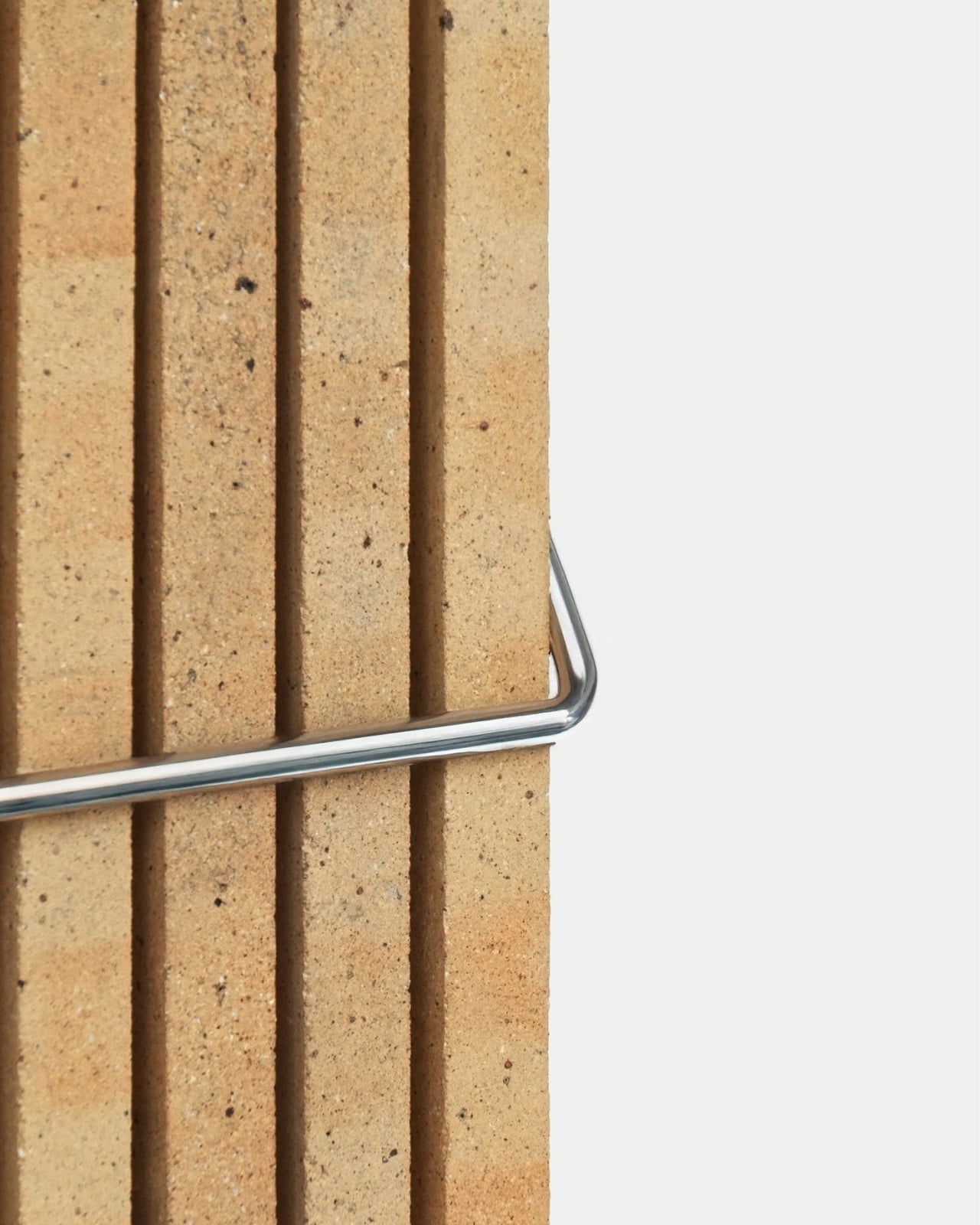
The material choice matters more than it might seem at first glance. Refractory bricks have what designers call thermal inertia. They don’t just get hot and then cool down the moment power cuts off. They hold that warmth and let it go gradually, which is what gives STEA its particular feeling of comfort. Andrault describes it as enveloping, and that word is accurate. It’s not the sharp, dry blast of a conventional space heater. It’s something steadier.
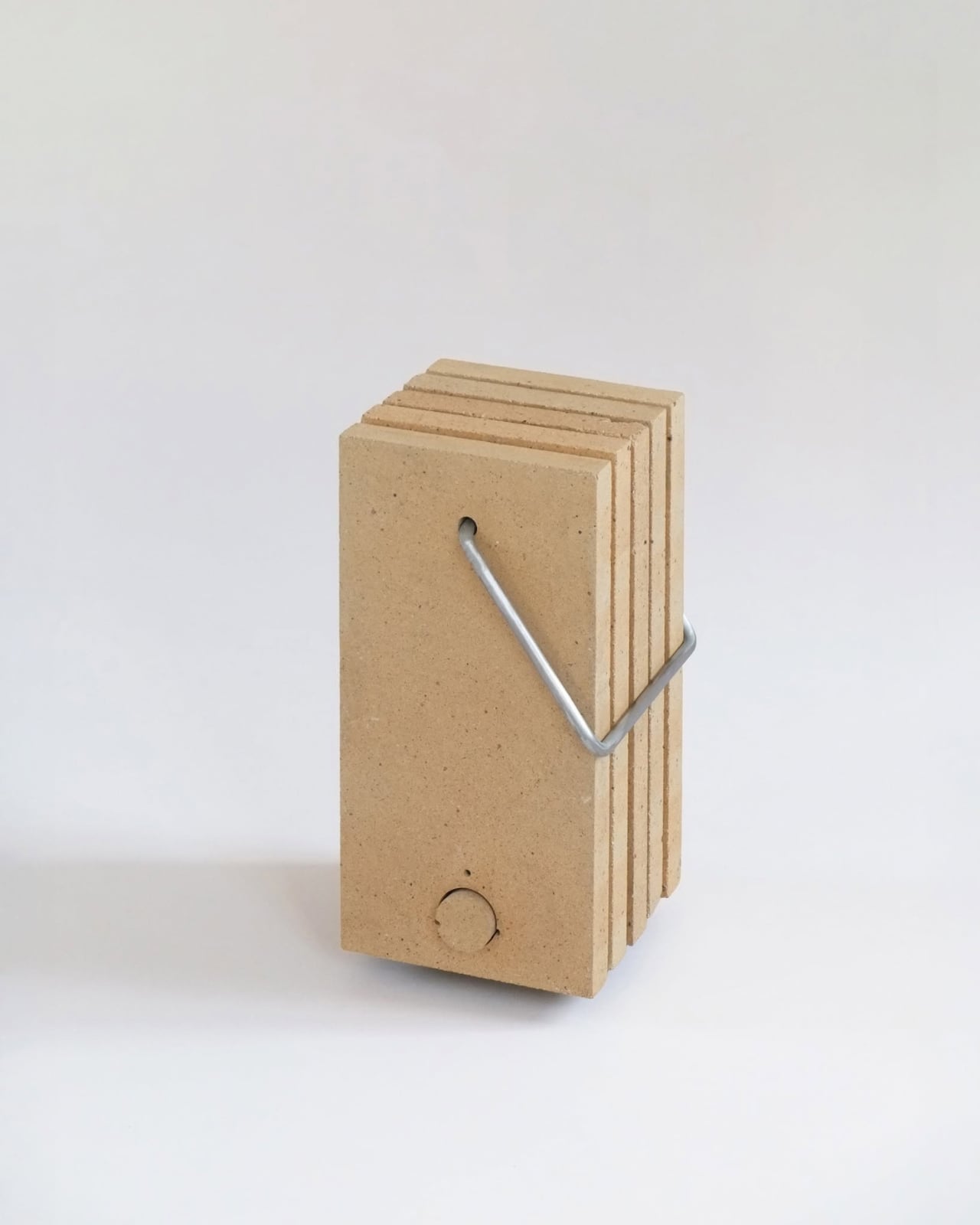
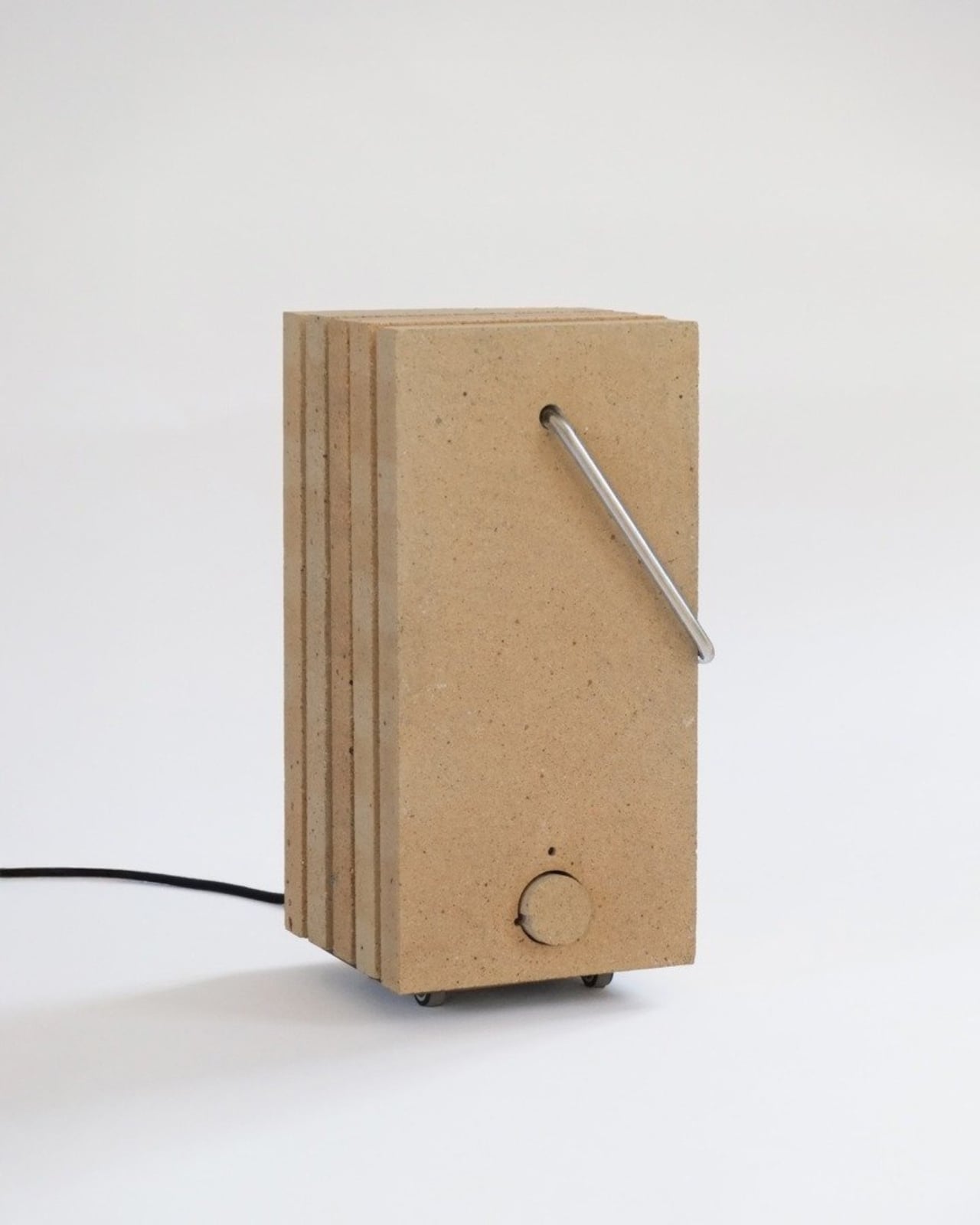
Formally, STEA is gorgeous in a way that feels earned. Andrault drew inspiration from traditional cast-iron radiators, and you can see it in the vertical stacking of the bricks, the monolithic silhouette, the sense of weight and solidity. What cuts through that industrial seriousness is the tubular steel handle, which introduces a human gesture to the whole thing. It makes the object feel carryable, usable, personal rather than architectural. That balance between raw and refined is harder to pull off than it looks.
I’m also genuinely impressed by how Andrault approached the end of STEA’s life before it even began. The entire device can be disassembled with a single Allen key. Materials are locally sourced and fully recyclable. It’s designed to be repaired, not replaced. In a market where most products are engineered toward obsolescence, this feels like a quiet act of defiance, and an honest one.
The context behind STEA is worth pausing on. Andrault designed this while studying in Belgium, where heating accounts for nearly two tons of CO2 emissions per person per year. That’s not a small number. And STEA doesn’t pretend to be the total solution to that problem. Andrault says explicitly that it isn’t meant to replace existing heating systems. It’s meant to propose a different relationship with warmth, one that’s more local, more bodily, more intentional.
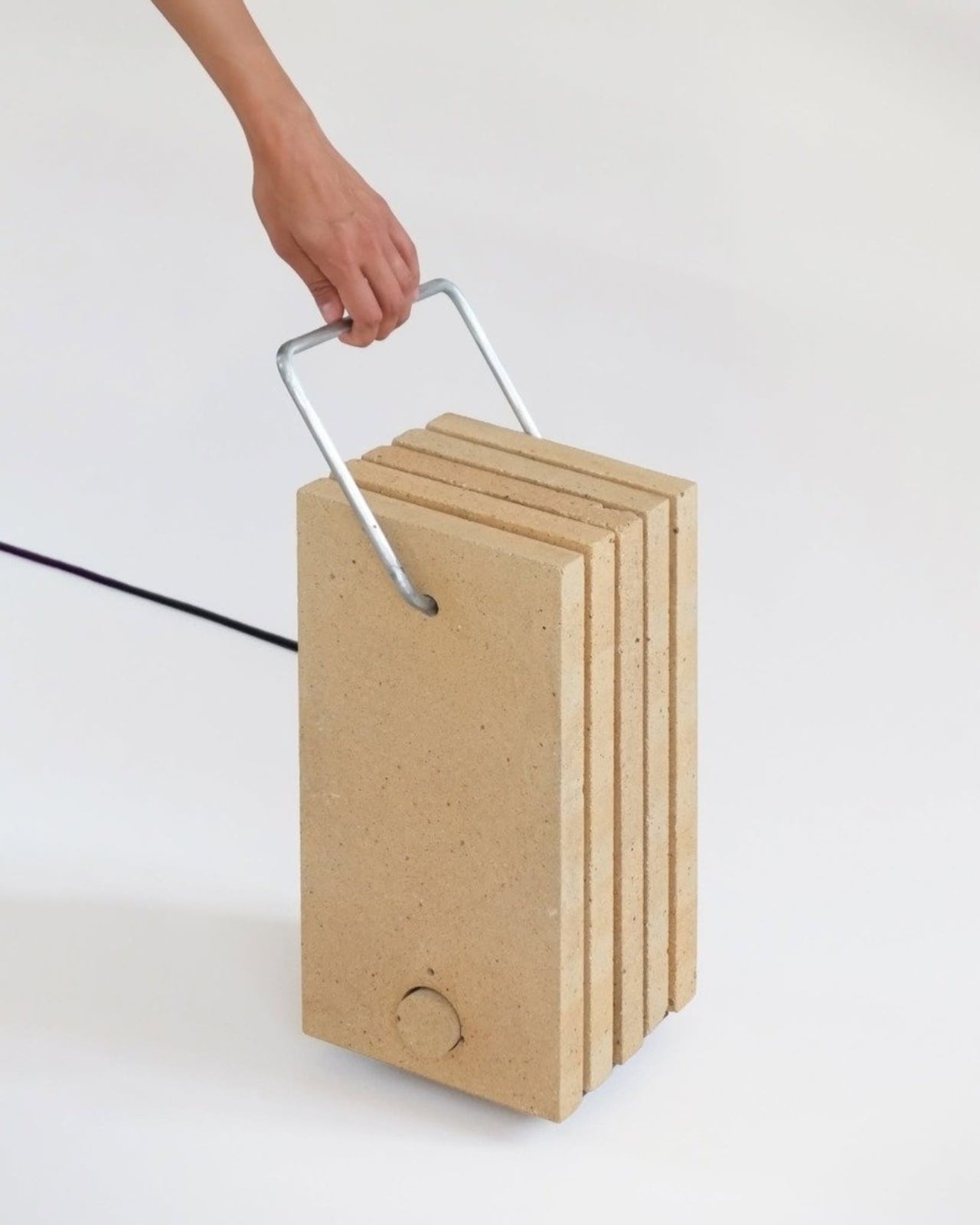
That philosophy puts STEA in a category of objects that are harder to evaluate by spec sheet alone. It’s not competing with your boiler or your smart thermostat. It’s asking whether you could lower your overall energy use by staying warmer at the scale of your body rather than the scale of your apartment. It’s a design that assumes you’re sitting still, reading, working, resting, and gives you exactly what you need for that moment.