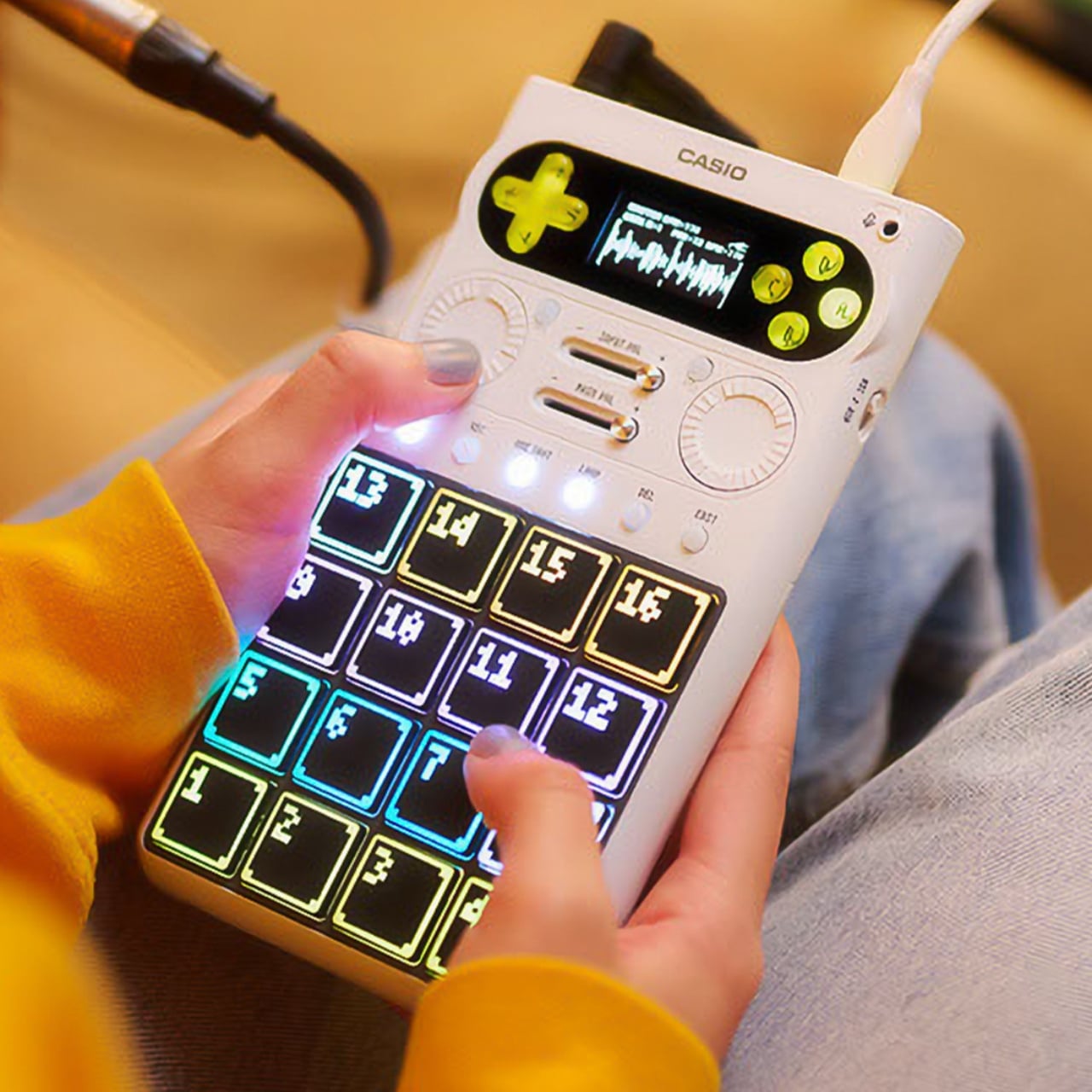
When Casio showed up at NAMM in January with an unannounced sampler, no press rollout, no teaser campaign, people kind of lost their minds a little. It was unexpected in the best way. The music gear community had not been thinking about Casio in that particular conversation, and then suddenly there it was. A boxy, padded, retro-looking device called the SXC-1, sitting quietly in a booth like it had always been there. That kind of entrance says a lot about how confident Casio was in what they brought. It also signals something bigger: Casio is not just trying to stay relevant. They are actively reclaiming territory they actually originated.
For a certain kind of person, whether you are a producer, a music nerd, or a design obsessive, the Casio SK-1 is practically sacred. Released in 1985 for about $100, it was a small plastic sampling keyboard that let you record any sound and play it back across a tiny row of keys. It was deliberately toy-like, and yet it ended up in the hands of experimental musicians, lo-fi producers, and everyone in between. The SK-1 was the gateway into sampling for an entire generation, and its cultural weight has never really gone away.
Designer: Casio
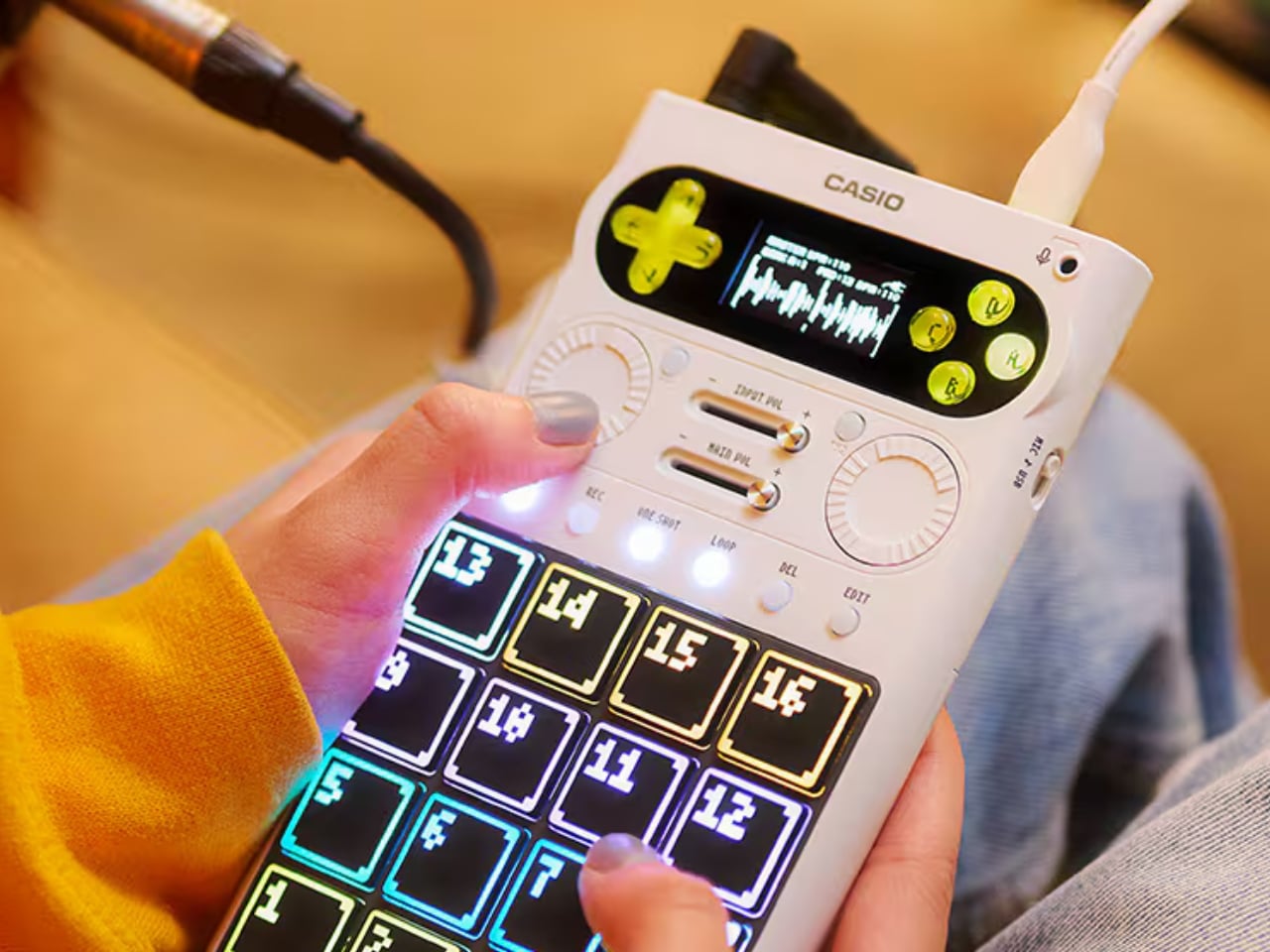

The SXC-1 is Casio’s answer to where that legacy goes next. The aesthetic DNA is still present: the boxy form factor, the emphasis on immediate usability, the sense that this is a tool meant to be picked up and played without a manual. But where the SK-1 was charming in its limitations, the SXC-1 is built for serious work. The specs back that up. It runs on a 16-bit/48kHz sampling engine with 64GB of onboard eMMC storage, supports WAV, MP3, and FLAC files, and gives you up to 15 minutes of total sampling time. A 1.3-inch OLED screen and two large rotary encoders handle the interface, and the 4×4 pad layout gives you 16 pressure-sensitive pads tuned specifically for finger drumming.
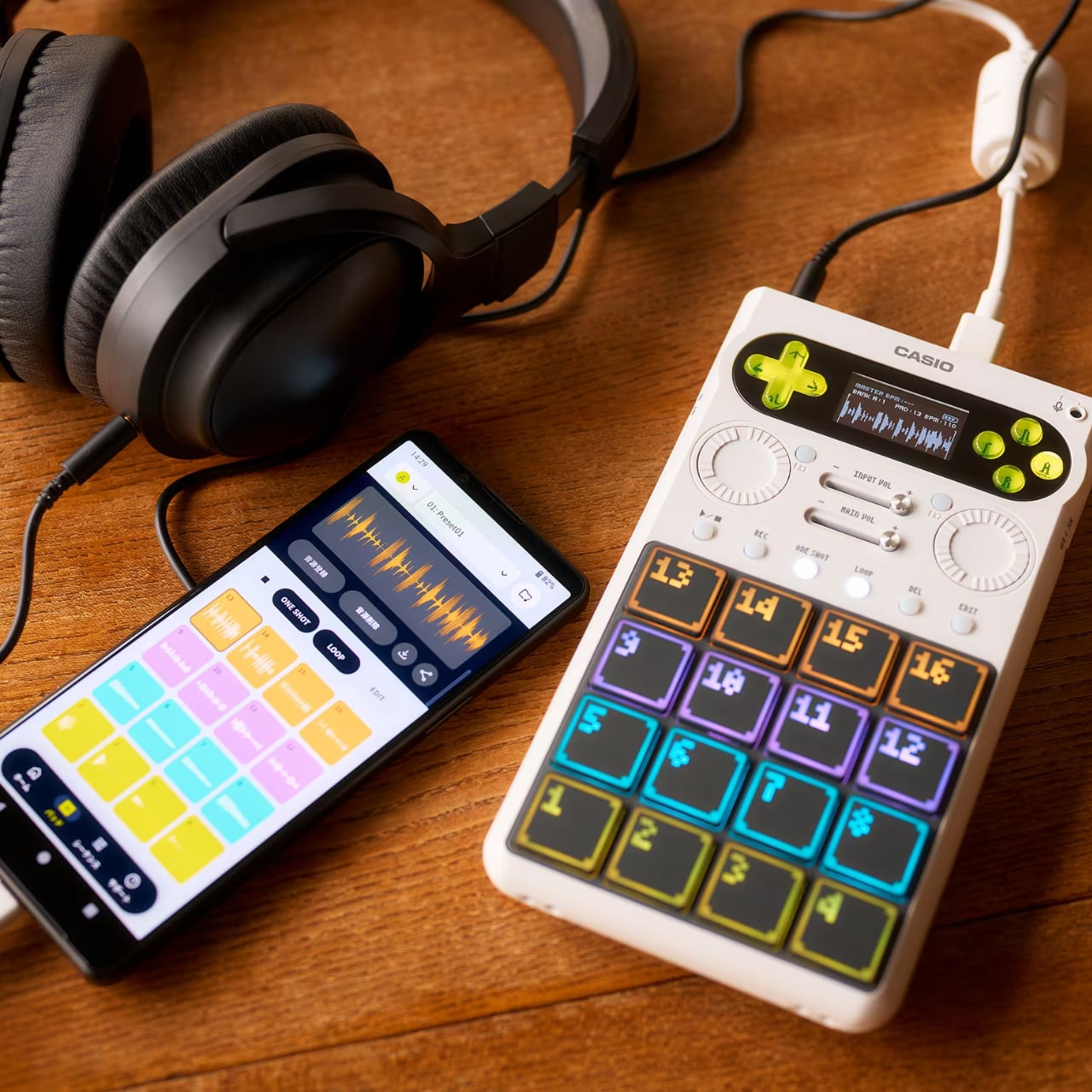

It also ships with over 80 sample banks pulled from classic Casio instruments, including the SK-1, SK-5, CZ-101, and MT-40. Those loops are automatically tempo-synced via a beat-sync function, which is a genuinely smart move. It means that even out of the box, with zero setup, you have a ready library of usable, nostalgia-soaked sounds that are immediately production-ready. For content creators or producers who need to move fast, that matters more than most brands realize.
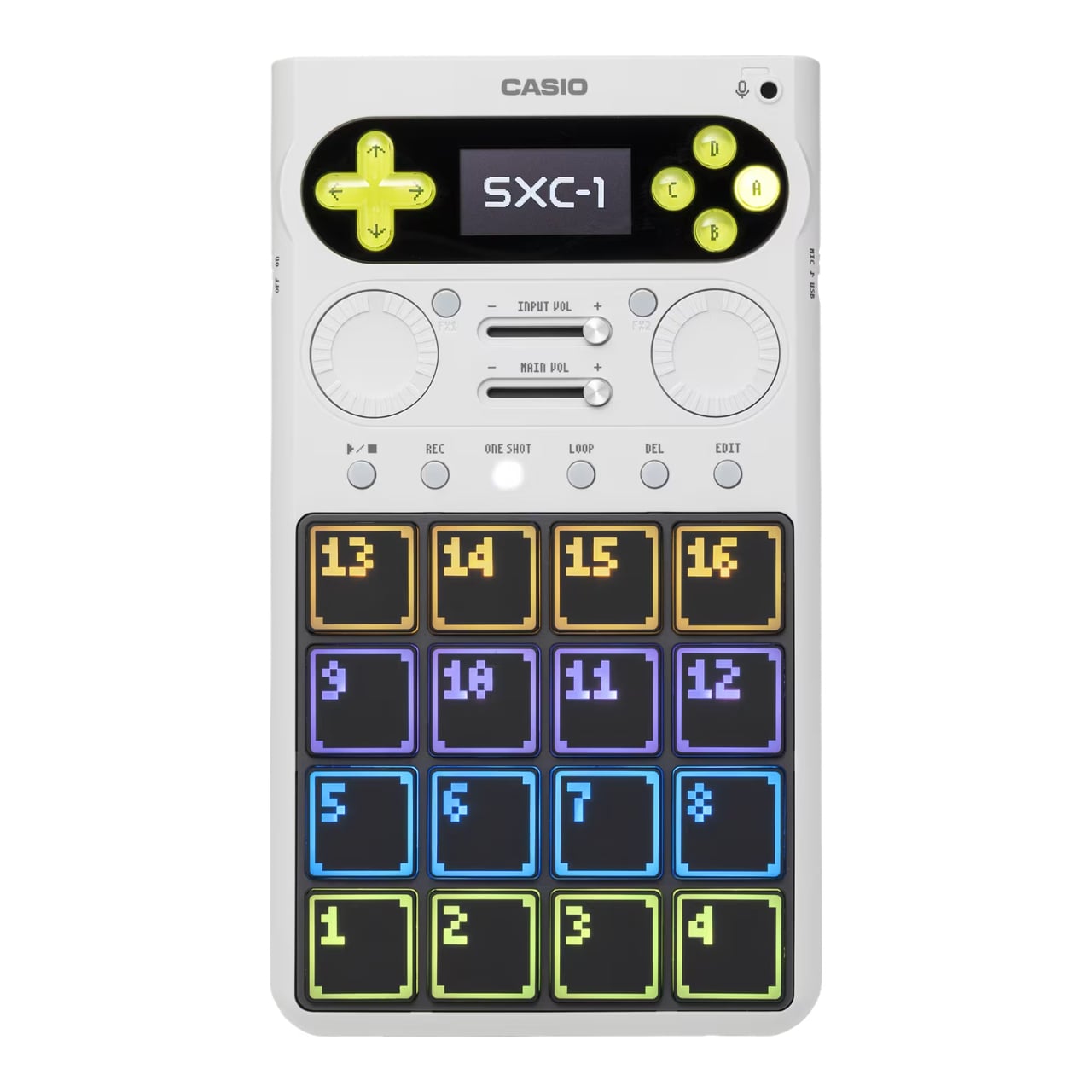
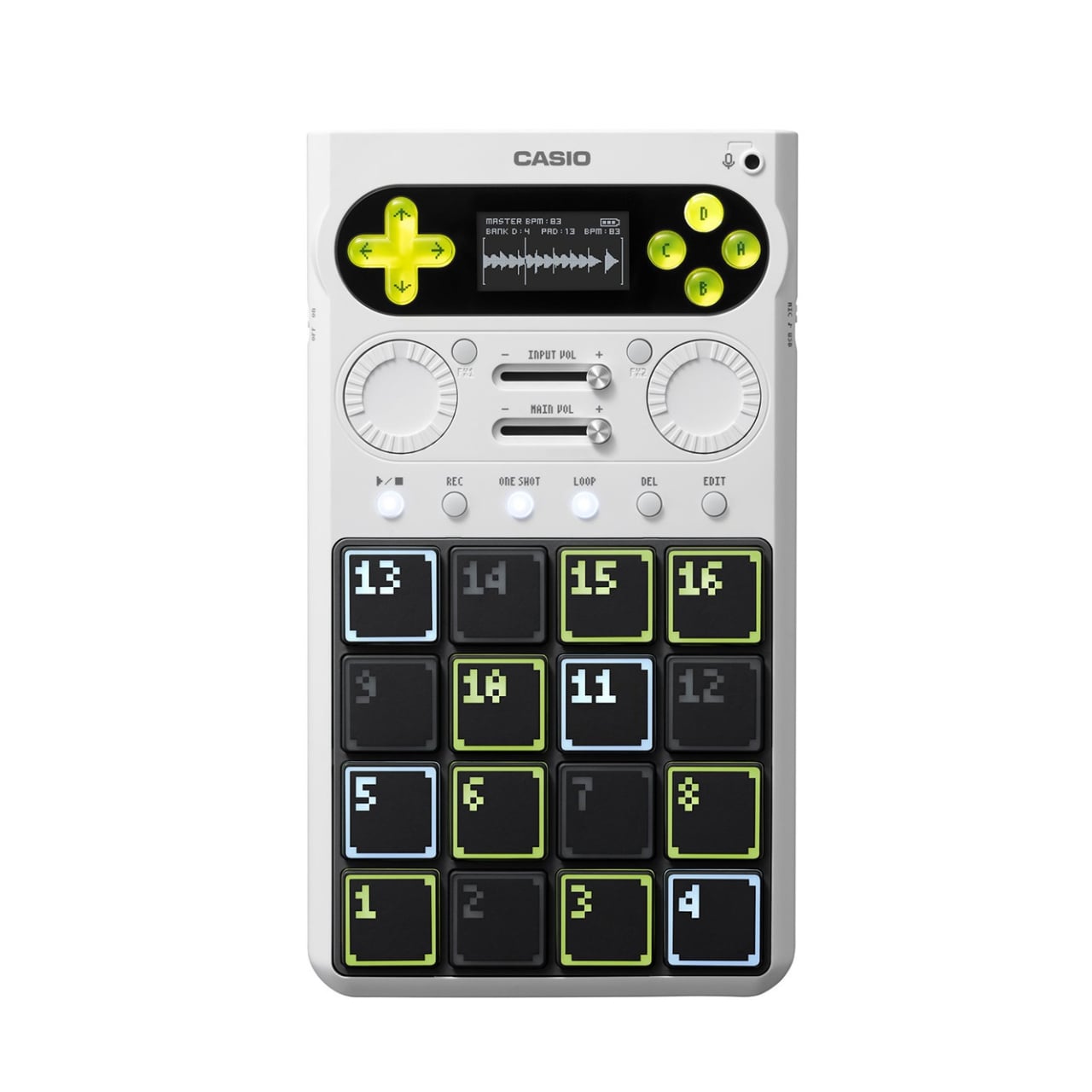
The connectivity is equally well-considered. There is a built-in mic, external analog input, USB audio, headphone output, main output, and dual USB-C ports for data and power. This is clearly built for people who move between environments: bedroom studios, live sets, cafes, wherever the work happens to be. Battery life sits at around two hours, there is a built-in speaker, and the device ships with step sequencing at up to 50 patterns of 8 bars each. Effects are on the leaner side, covering filter, flanger, phaser, and bitcrusher, but that restraint feels intentional rather than cheap.

Casio is marketing the SXC-1 explicitly as a tool for the “Creator Economy,” which is the kind of phrase that usually makes me skeptical. But here it actually fits. Independent artists and producers today are working across formats, platforms, and workflows all at once. They need gear that is fast, flexible, and small enough to live in a backpack. The SXC-1 appears to understand that assignment.
The device is currently available for pre-order on the Casio Japan website at 39,930 yen, with a release date of May 28, 2026. Global pricing has not been confirmed, but estimates put it somewhere between $230 and $300 depending on region.
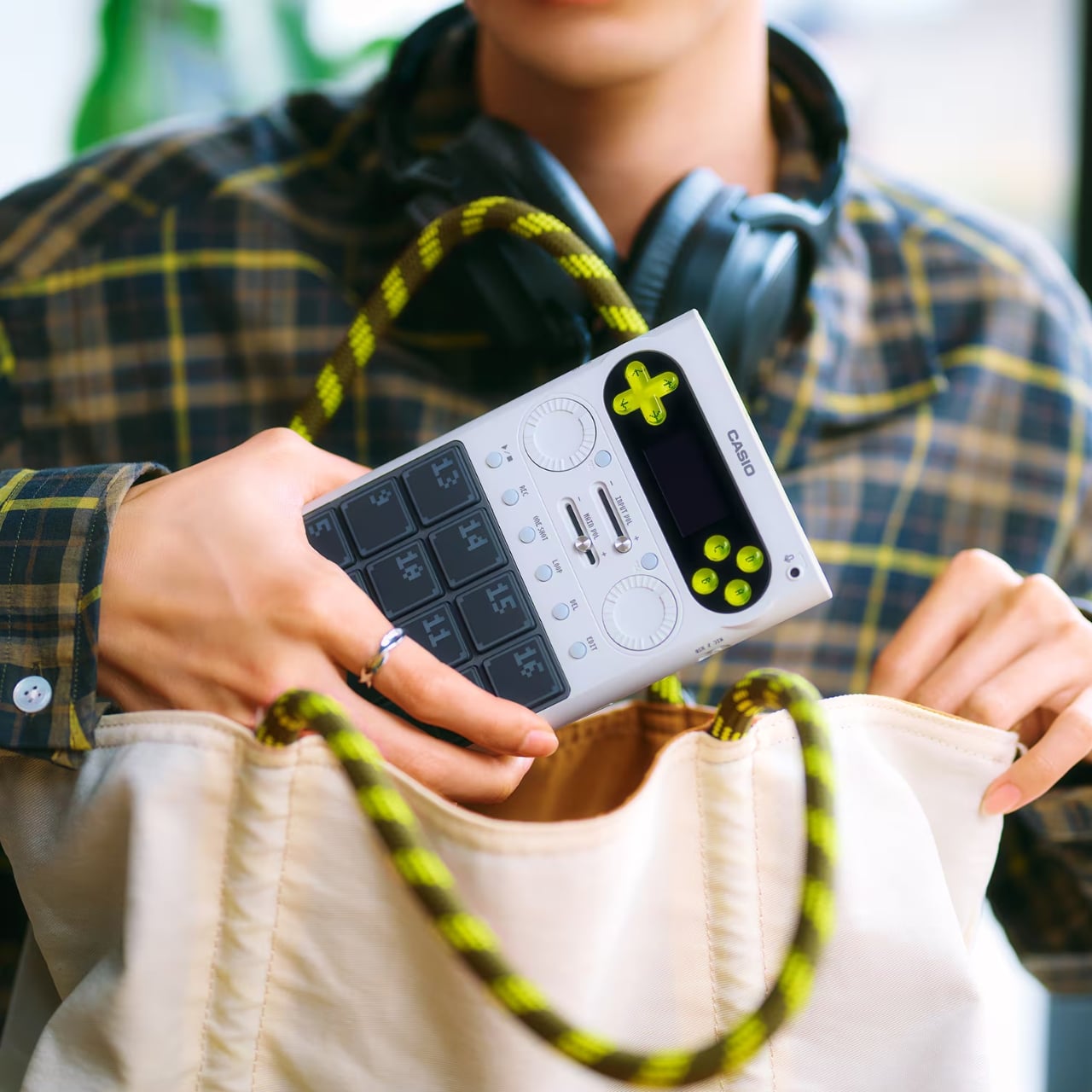
Whether the SXC-1 lands the way Casio hopes will depend partly on how it feels in hand, which is something specs cannot fully answer. But the design intent is clear and it is smart. Casio looked at what made the SK-1 culturally significant, stripped out the nostalgia bait, and built something that can actually do the job today. That is not a small thing.