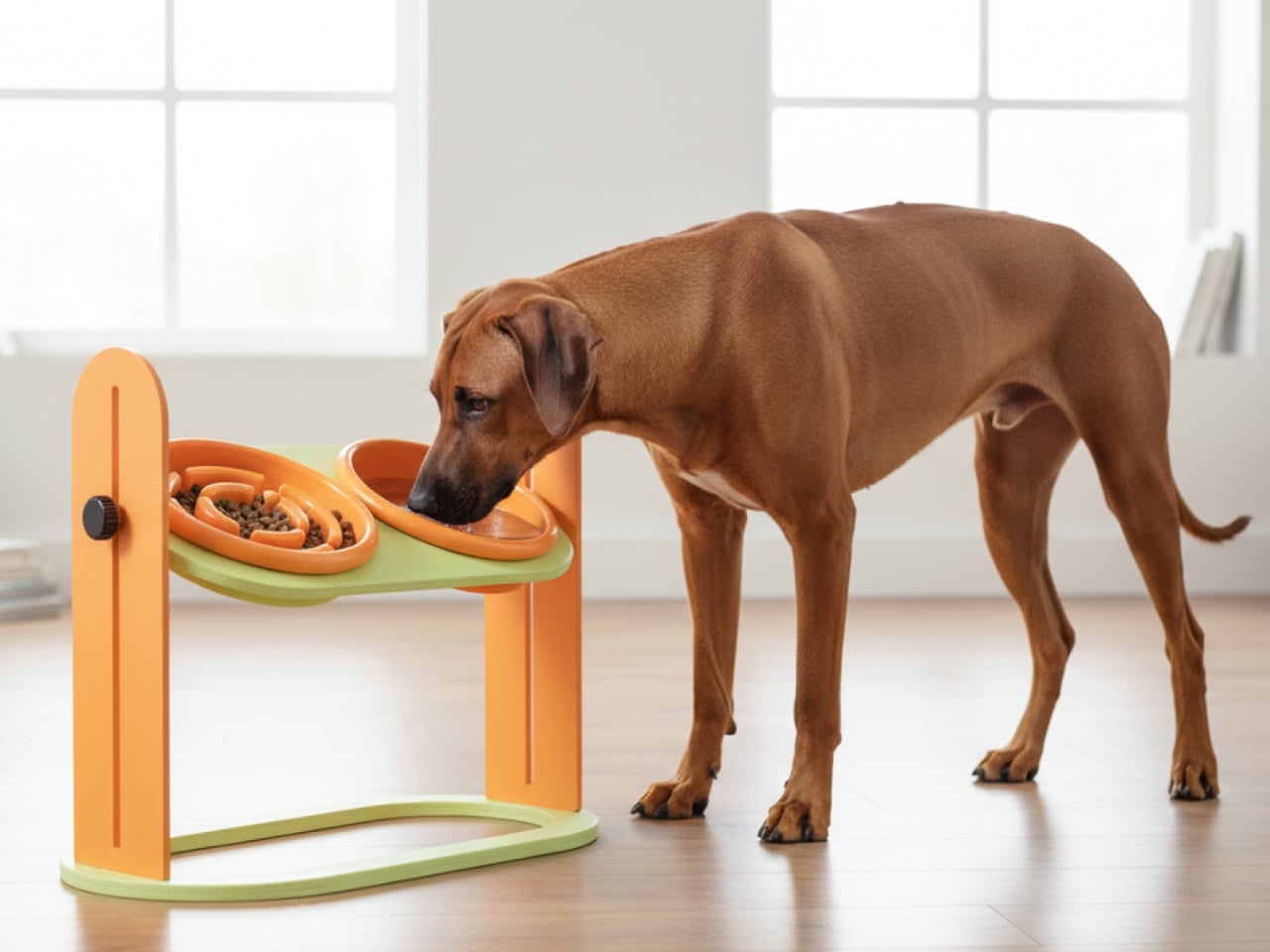

Most slow feeders work exactly once. You put one down, your dog spends a week figuring it out, and then mealtime goes back to being a five-second vacuum session. If you’ve ever watched a dog inhale kibble like it’s a competitive sport, you already know the frustration. Not just the mess, but the genuine health concern behind it. Bloating, choking, poor digestion. It’s a real problem that a single maze-shaped bowl just doesn’t solve long-term.
That’s the gap that designer Kyung-seo Yoo set out to close with Sloddy, a slow-feeder dog bowl that recently earned recognition at the NY Design Awards. At first glance, it looks like another entry in the slow-feeder category. But spend a few minutes with the concept and it becomes clear that Yoo was thinking about a problem most products never get to: what happens after your dog figures it out.
Designer: Kyung-seo Yoo
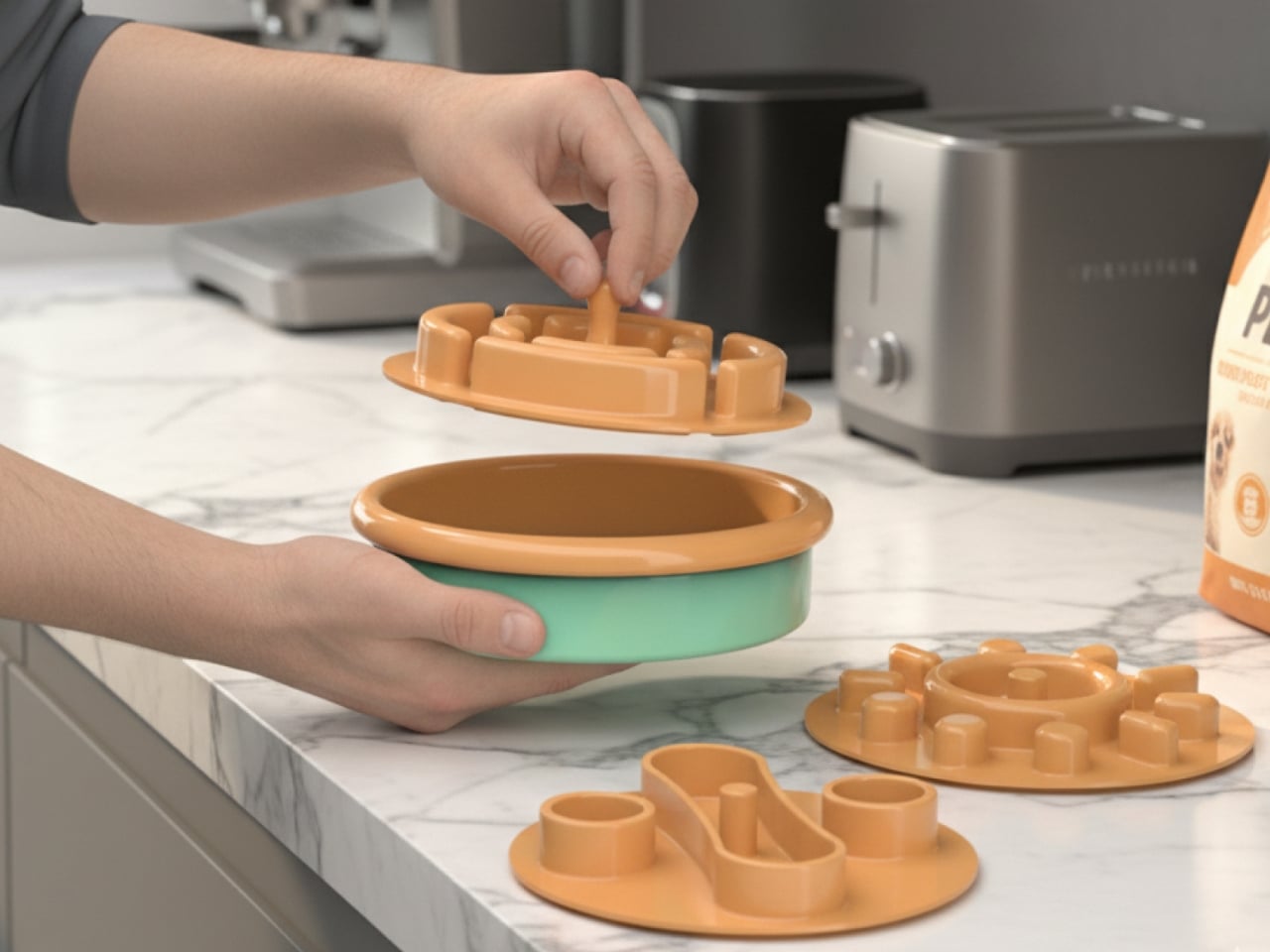
The core idea is clever and, once you hear it, sort of obvious in the best way. Instead of a single fixed insert with ridges and grooves your dog will eventually memorize, Sloddy comes with multiple interchangeable puzzle inserts at varying difficulty levels. Slow, slower, slowest. You swap them out as your dog adapts, which keeps the challenge fresh and the eating pace genuinely controlled over time. It’s the kind of design thinking that asks: what happens after the first week? Most pet products don’t bother with that question.
The modular system also makes cleaning considerably less annoying. Every component comes apart fully, which means no trapped food, no bacterial buildup in the corners you can’t quite reach. For anyone who has ever tried to scrub out a single-piece slow feeder and quietly given up halfway through, this alone is worth paying attention to. Hygiene in pet products is so often treated as an afterthought, and Sloddy clearly isn’t doing that.
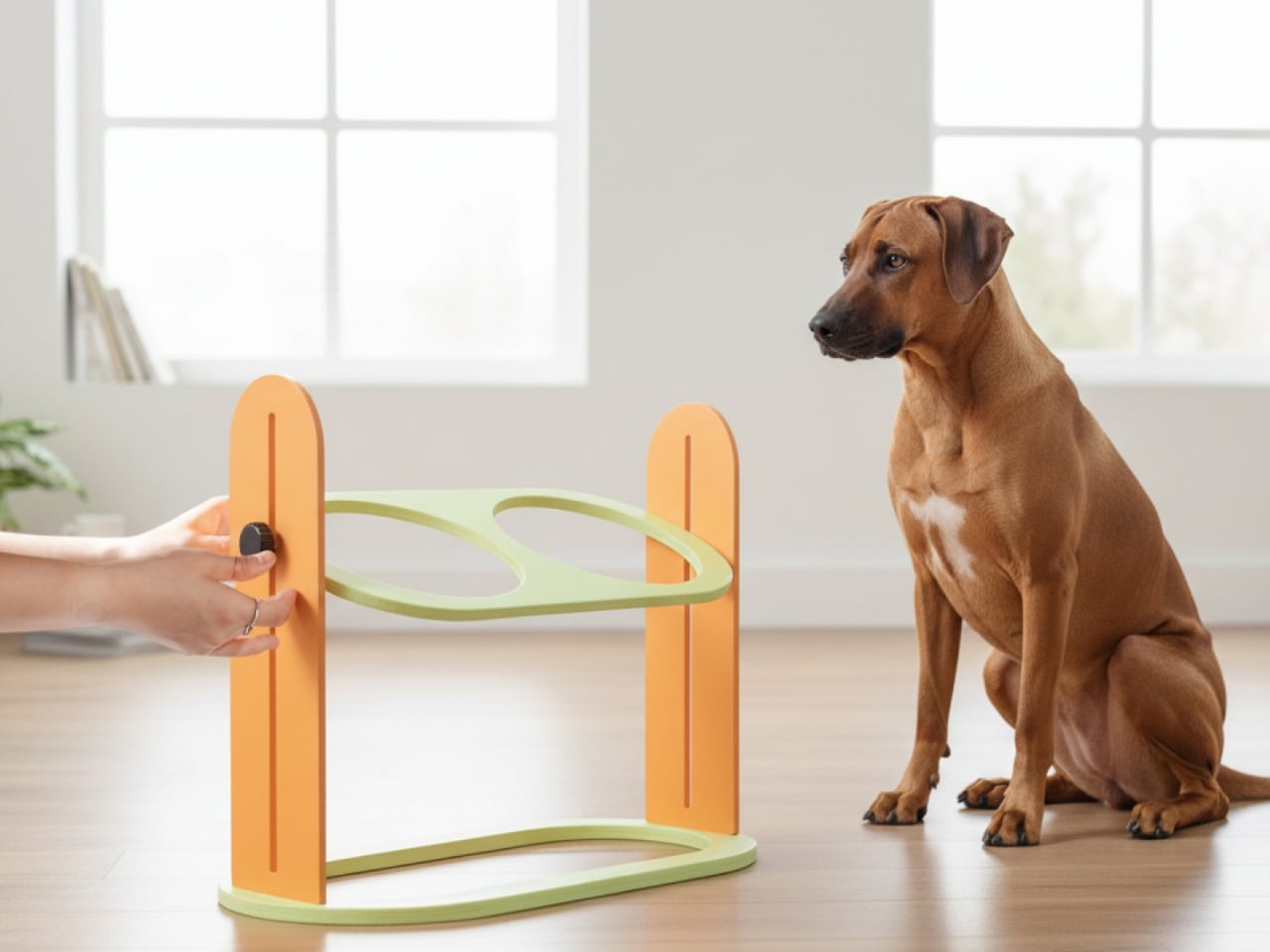
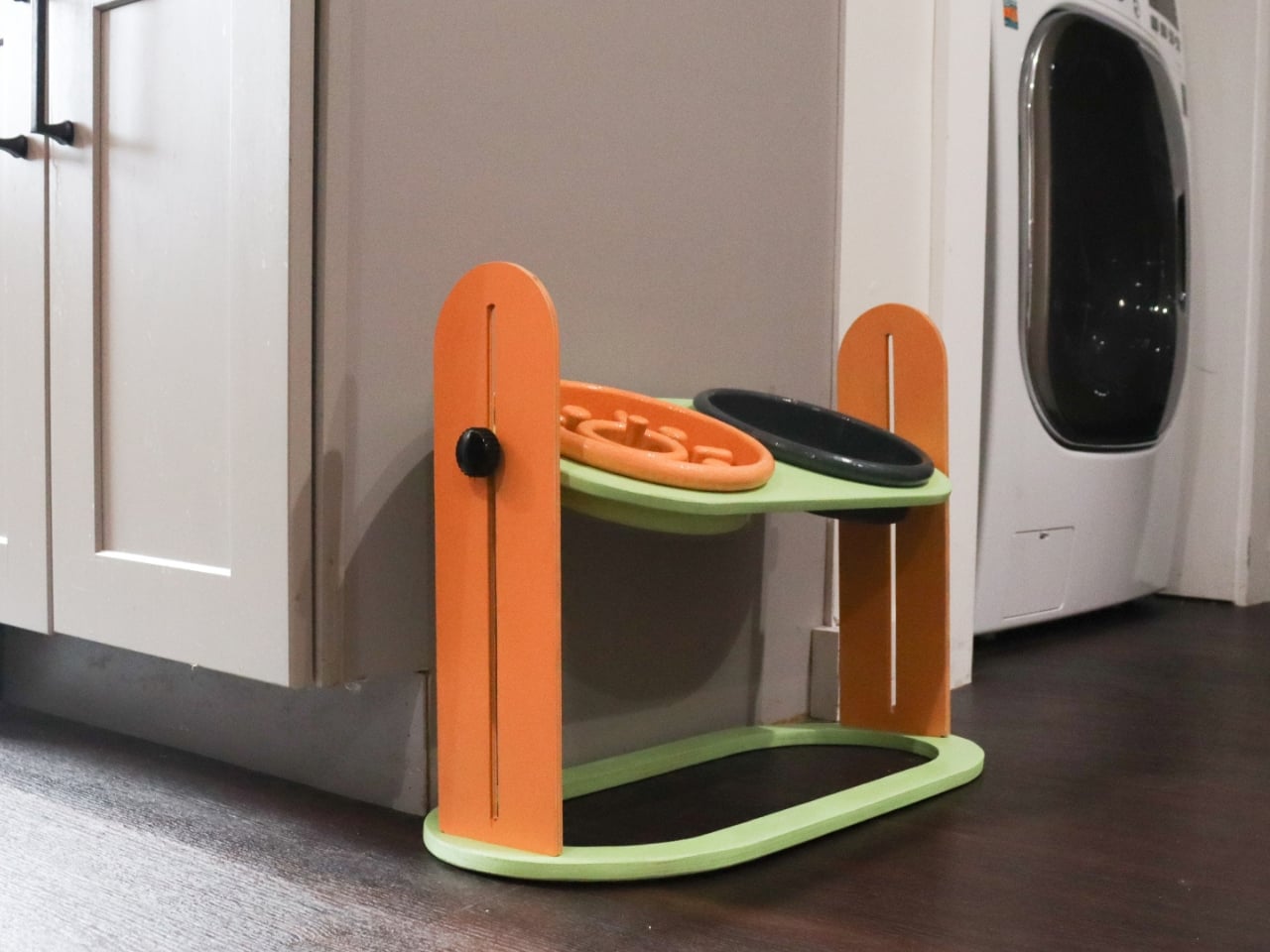
Then there’s the stand. An adjustable-height MDF wood stand lets you raise or lower the bowl to match your dog’s shoulder height, addressing a posture concern that many pet owners don’t even know they should be thinking about. Elevated feeding can ease strain on joints and improve digestion, especially for larger breeds. The fact that this is built into the design from the start, rather than sold separately as an add-on, feels like a genuine commitment to the product’s wellness promise rather than a feature that exists to justify a higher price point.
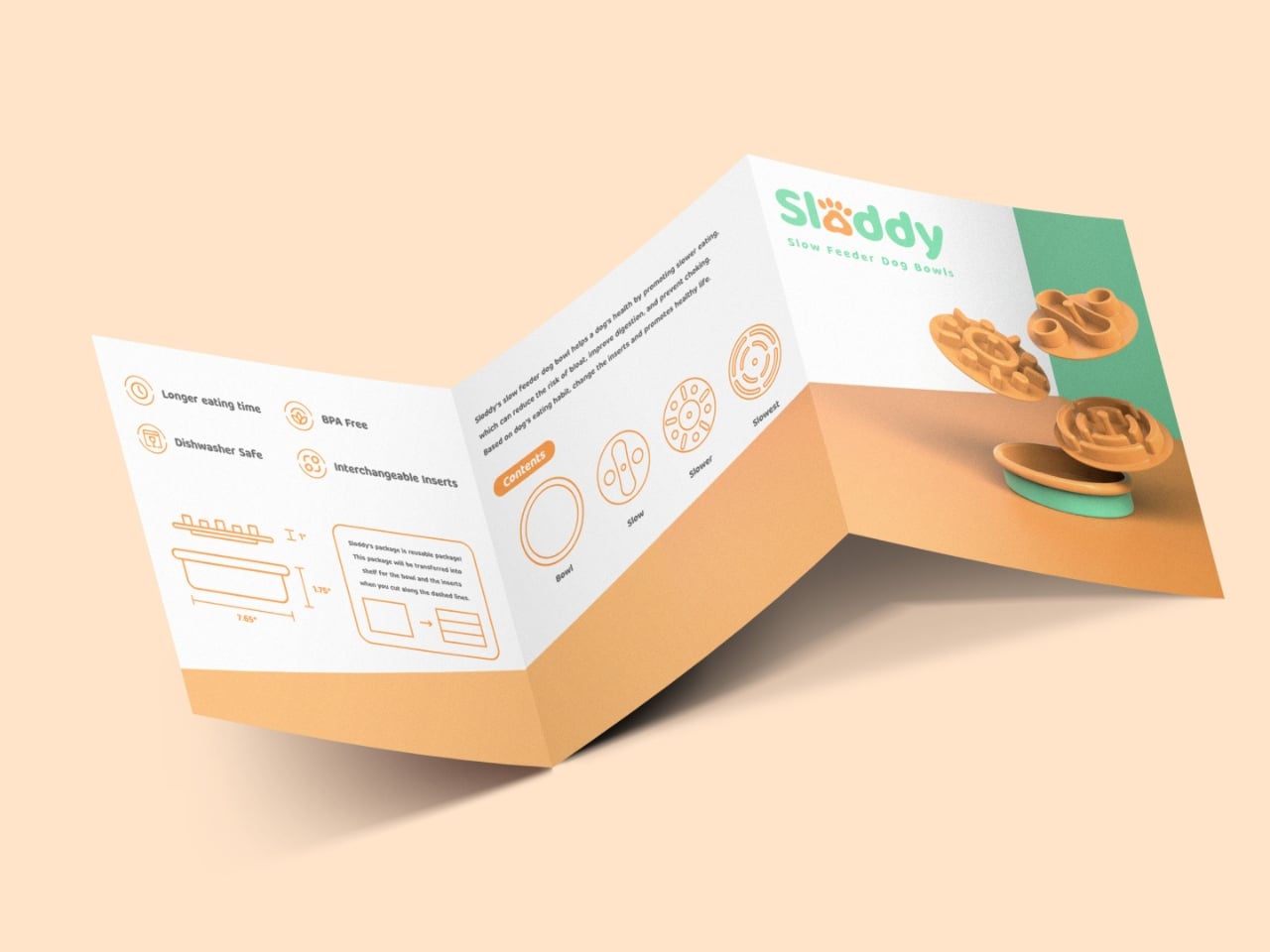
Visually, Sloddy is warm and friendly without being loud. The peachy-orange palette and the clean wooden stand wouldn’t look out of place in a considered home, and the packaging is recyclable cardboard that can be repurposed as a storage shelf for the inserts. That kind of detail matters. It says something about how a designer thinks, and Yoo clearly thought about the full experience, from the moment you open the box to the daily routine of setting up and cleaning up after your dog.
The materials are BPA-free, PVC-free, lead-free, and phthalate-free. That list is not small. Pet product safety standards are notoriously inconsistent across the market, and this kind of spec sheet tends to get buried in tiny font or skipped entirely. With Sloddy, it reads like a feature, not a footnote.
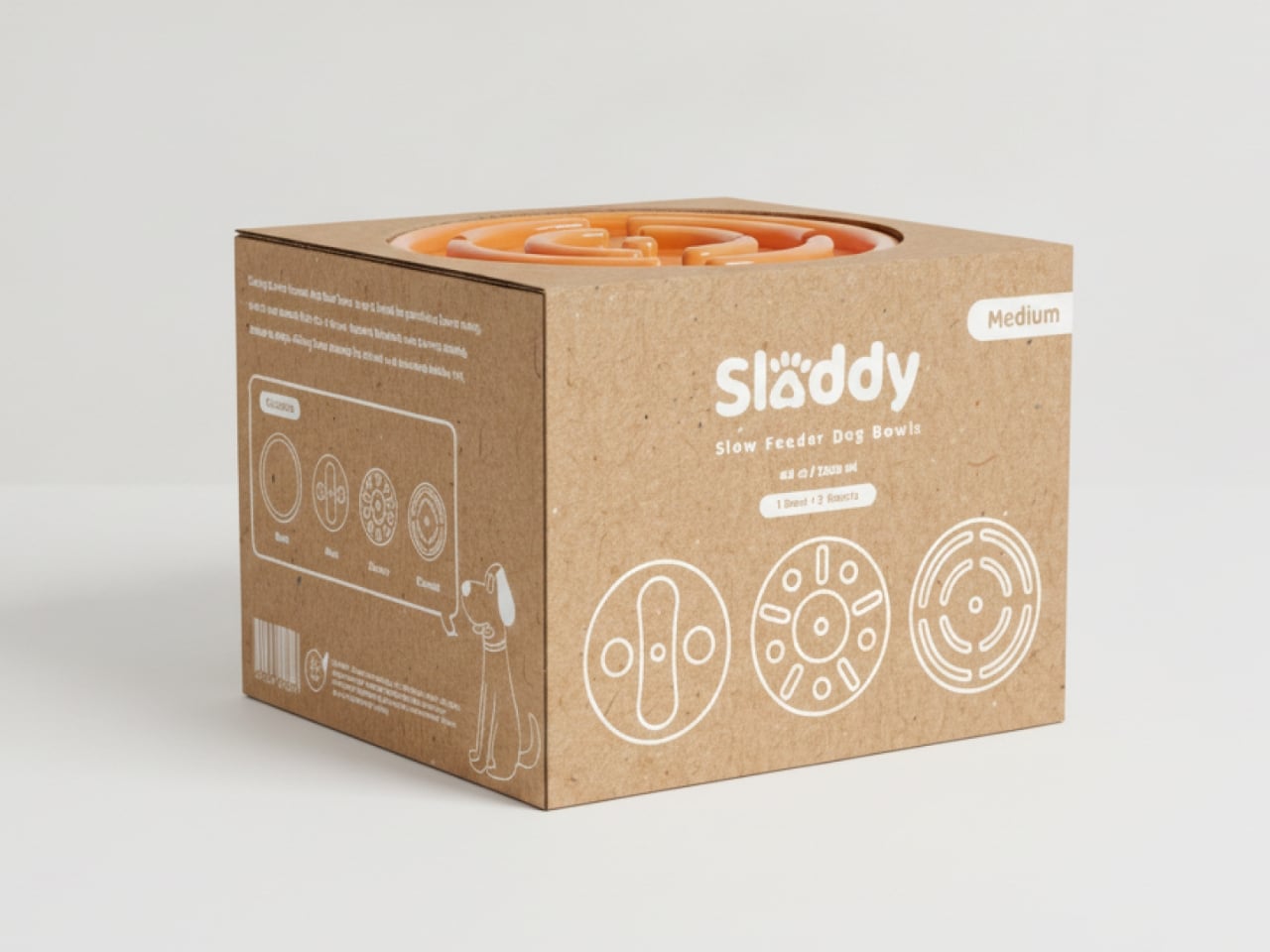
My honest take is that slow feeders as a category have been stuck in a design rut for years. They’re functional but rarely elegant, and almost none of them account for what happens once a dog learns the pattern. Sloddy approaches the problem differently, thinking about adaptability, longevity, and the full life of the product. Whether you have a rescue with food anxiety, a greedy golden retriever, or a senior dog managing digestive issues, the layered difficulty system means the bowl actually grows with your dog instead of becoming irrelevant to it.