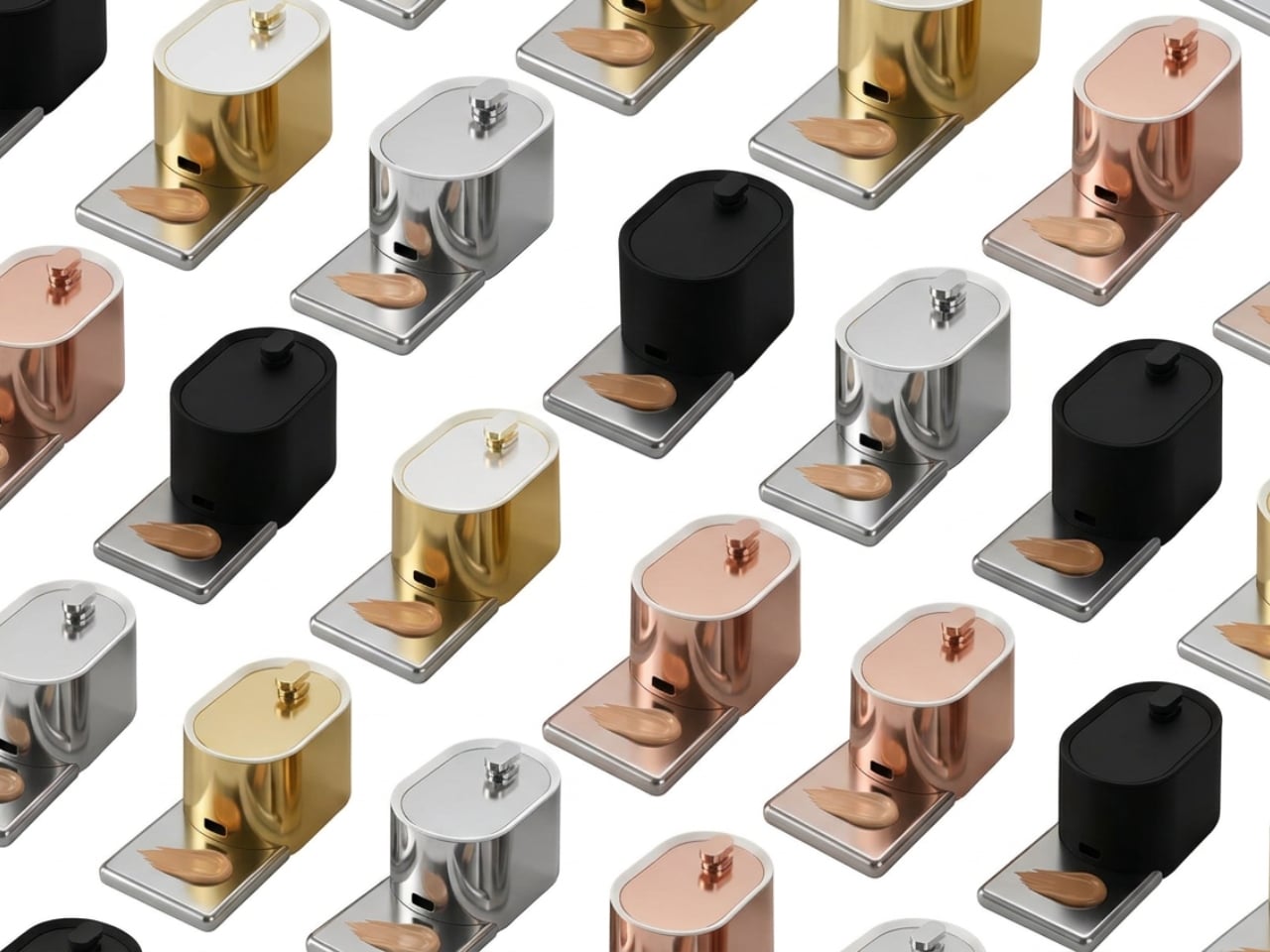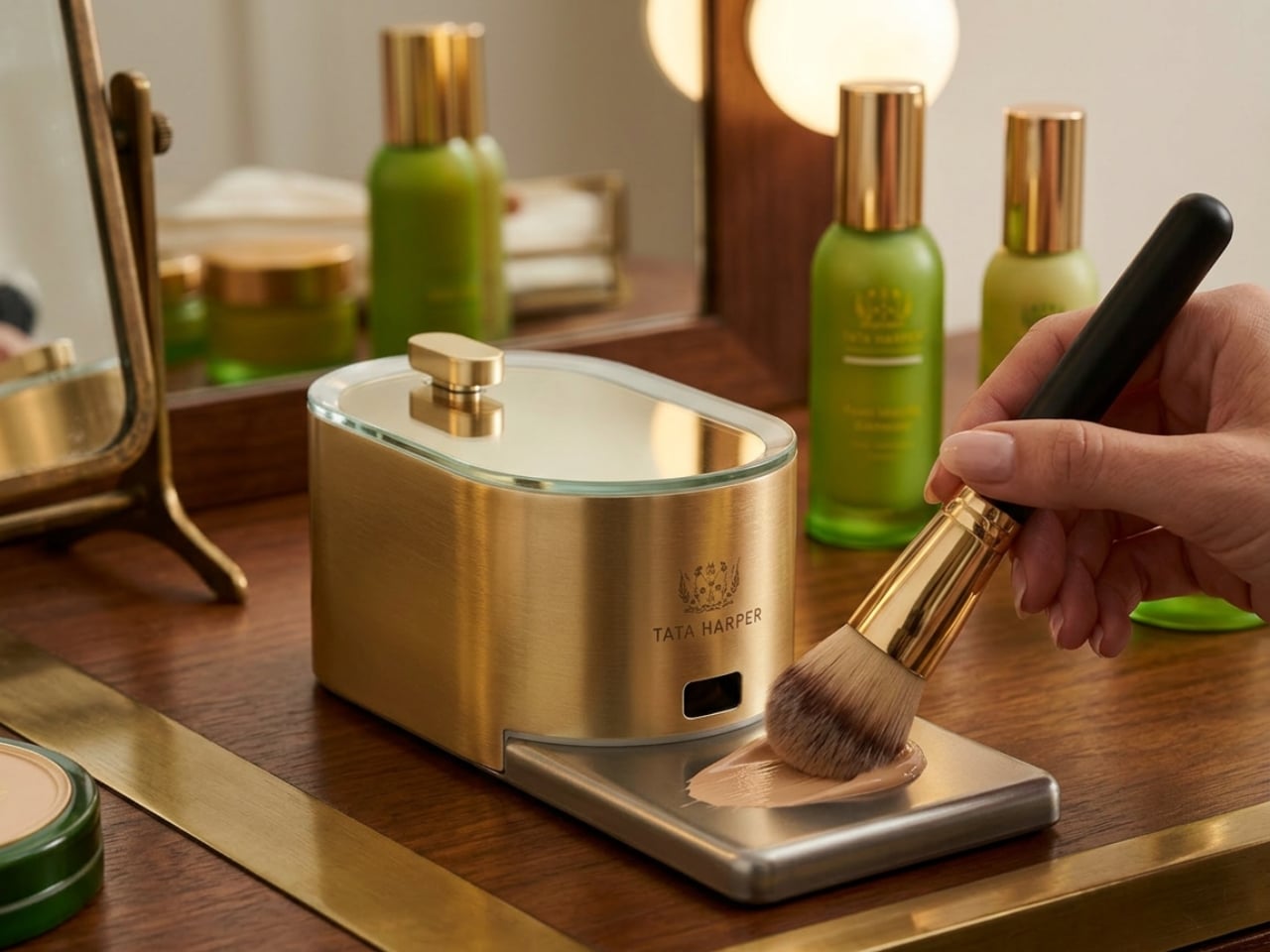

Most sustainable beauty products come with a visual apology. You know the look: matte recycled paper, utilitarian shapes, a general aesthetic that signals good intentions while quietly penalizing you for having taste. Designer Sanya Jain’s unsolicited concept for a Tata Harper foundation system refuses that trade-off entirely, and the result is one of those rare design exercises that feels more polished than half the things sitting on Sephora shelves right now.
Tata Harper, for anyone who hasn’t fallen into that particular rabbit hole, is the brand that built its entire identity on the idea that luxury and purity don’t have to be in conflict. Founded in 2010 and formulated on an organic farm in Vermont, the brand made its name in skincare with 100% natural, high-performance formulas free of synthetic chemicals, toxins, and fillers. It’s a rigorous philosophy, and one that its existing packaging already respects to a degree. But the color cosmetics side of things has always felt like an unfilled gap. Jain spotted that gap independently, and used it as the brief for something worth paying attention to.
Designer: Sanya Jain
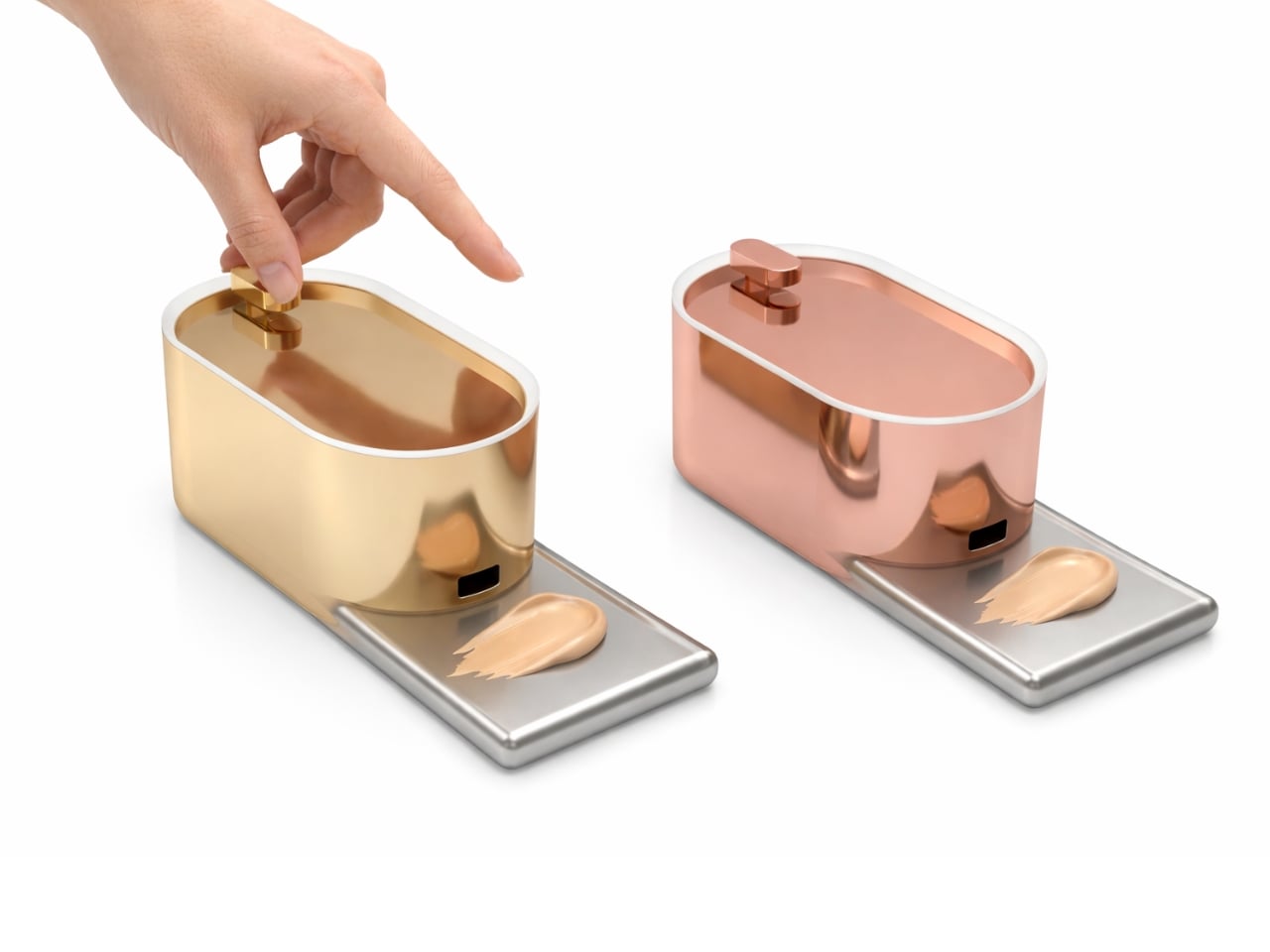
The concept, which she calls PureDose Foundation, centers on a refillable, modular system. The product lives inside a Viomer pod, a material valued for being lightweight, durable, and designed for circular reuse. That pod slots cleanly into a polished, gold-toned dispenser that looks less like something from a drugstore and more like a small piece of modernist sculpture you’d display on purpose. Press the top button once, and the foundation dispenses in a controlled drop directly onto a detachable metal slate positioned at the base. You load your brush from there and go. No squeezing, no guesswork, no wasted product sitting in the cap.
That last part matters more than it sounds. Foundation is one of the more quietly wasteful categories in makeup. Products get dispensed in excess, oxidize before you can blend them, or sit in bottles that are technically not empty but practically impossible to finish. The PureDose concept sidesteps most of that friction by making the application point clean, controlled, and hygienic. The metal slate rinses under the tap. The pod refills. The dispenser stays on your vanity indefinitely. It’s a smarter loop, and the fact that it manages to look this refined while doing it is not accidental.

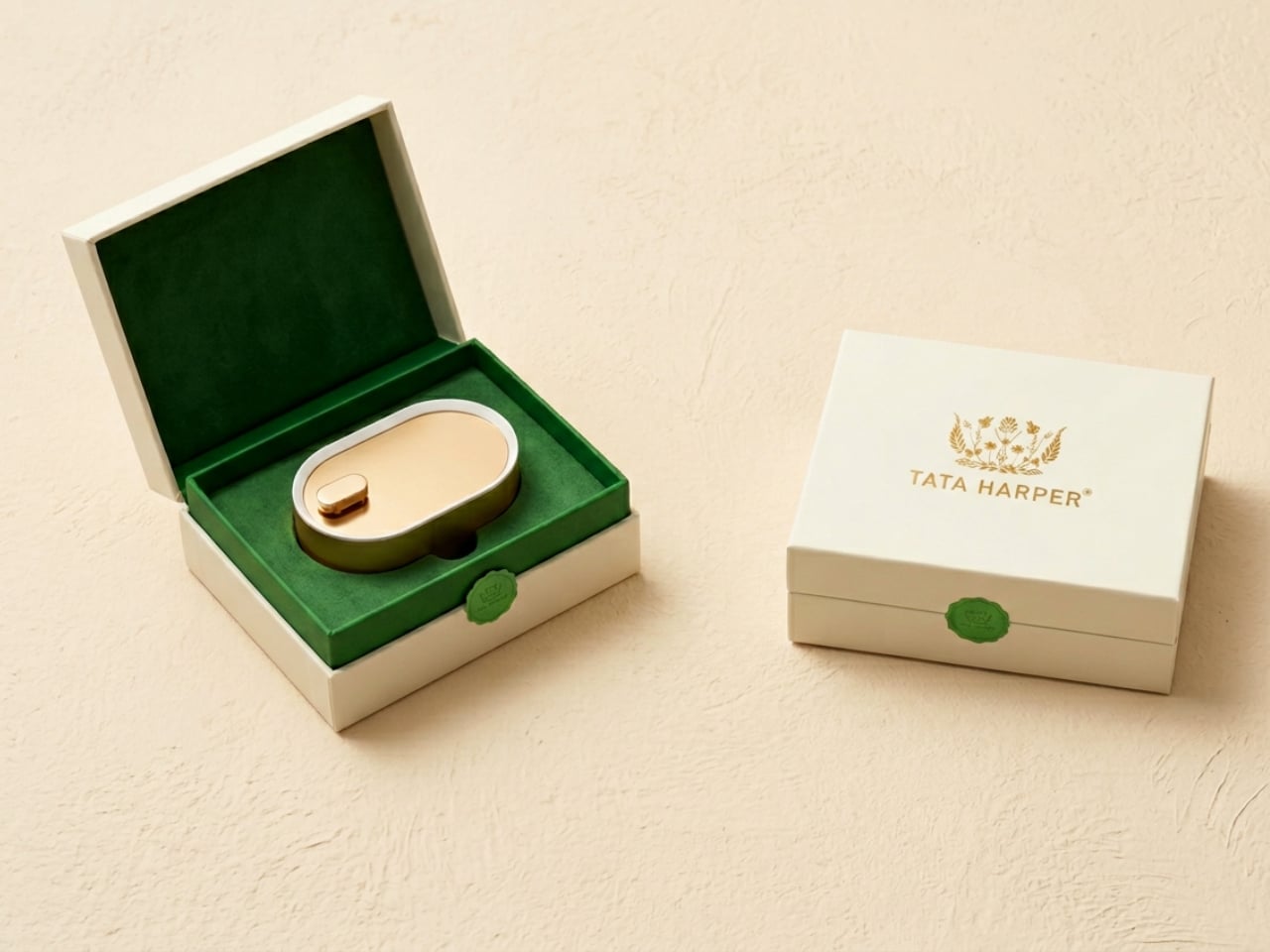
Jain pulled from biomimicry and clean geometry throughout the design. The rounded, organic silhouettes of both the pod and the dispenser echo the natural world that Tata Harper draws from as a brand, and that kind of visual consistency is harder to achieve than it appears. The colorway options, gold, rose gold, silver, and matte black, give the system range without diluting the identity. And the unboxing experience is worth noting: a velvet-lined jewelry box for the dispenser and a kraft-paper octagonal carton for refill pods. It’s one of the more layered packaging stories I’ve come across in concept work. It understands that luxury is at least partly emotional, and that the ritual of opening something should feel like it belongs to the rest of the experience.

What makes this project compelling beyond the aesthetics is how faithfully it mirrors the brand’s existing values without any official mandate to do so. Tata Harper already commits to FSC-certified paper, transparent ingredient sourcing, and eco-conscious material choices. Jain’s concept simply asks the next question: what would a color cosmetics line look like if it operated with the same level of rigor? The answer is something that sits on your vanity like a design object, performs with precision, and leaves significantly less behind when it’s done.
Concept work in industrial design usually lands in one of two places. It either solves a real problem with no aesthetic investment, or it produces something visually stunning that would fall apart after a week of actual use. This one manages to hold both ends of that tension together, which is the harder achievement. Jain didn’t find a way to make sustainability bearable. She found a way to make it worth wanting. Whether or not Tata Harper ever sees this, the question it raises is one the beauty industry should be sitting with.