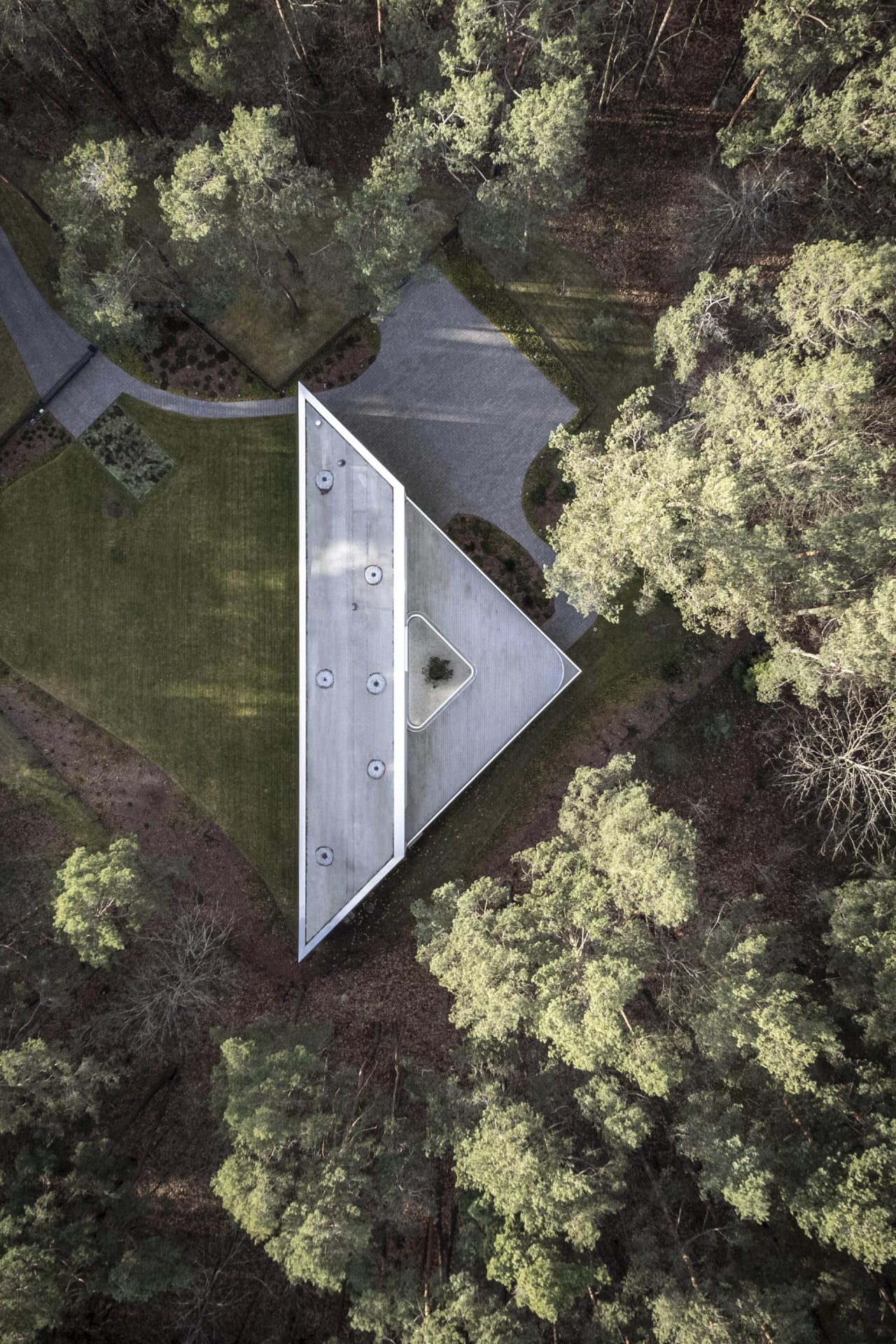

Most architects fold when the rules change. The Trim House by Polish firm KWK Promes, completed in 2025 in a forested suburb of Vilnius, Lithuania, is exactly that kind of project. It began in 2016, when KWK Promes, led by Robert Konieczny, won a closed competition to design a luxury single-family home on a wooded plot in suburban Vilnius. The site carried its own quiet history, once dotted with interwar wooden cottages that had long since disappeared, leaving behind open ground and a loose scatter of trees. What followed was a straightforward brief and an optimistic timeline. Then, mid-design, local planning regulations changed everything.
The allowable building footprint was slashed in half. The driveway was also repositioned, now cutting directly through the garden. The client’s instinct was to abandon the site altogether. KWK Promes had a different idea. Rather than retreat, the firm persuaded the client to stay, reduce the total area by 40%, and let the new constraints rewrite the geometry entirely. The result was a triangular floor plan, precise, deliberate, and oddly inevitable once you see it.
Designer: KWK Promes
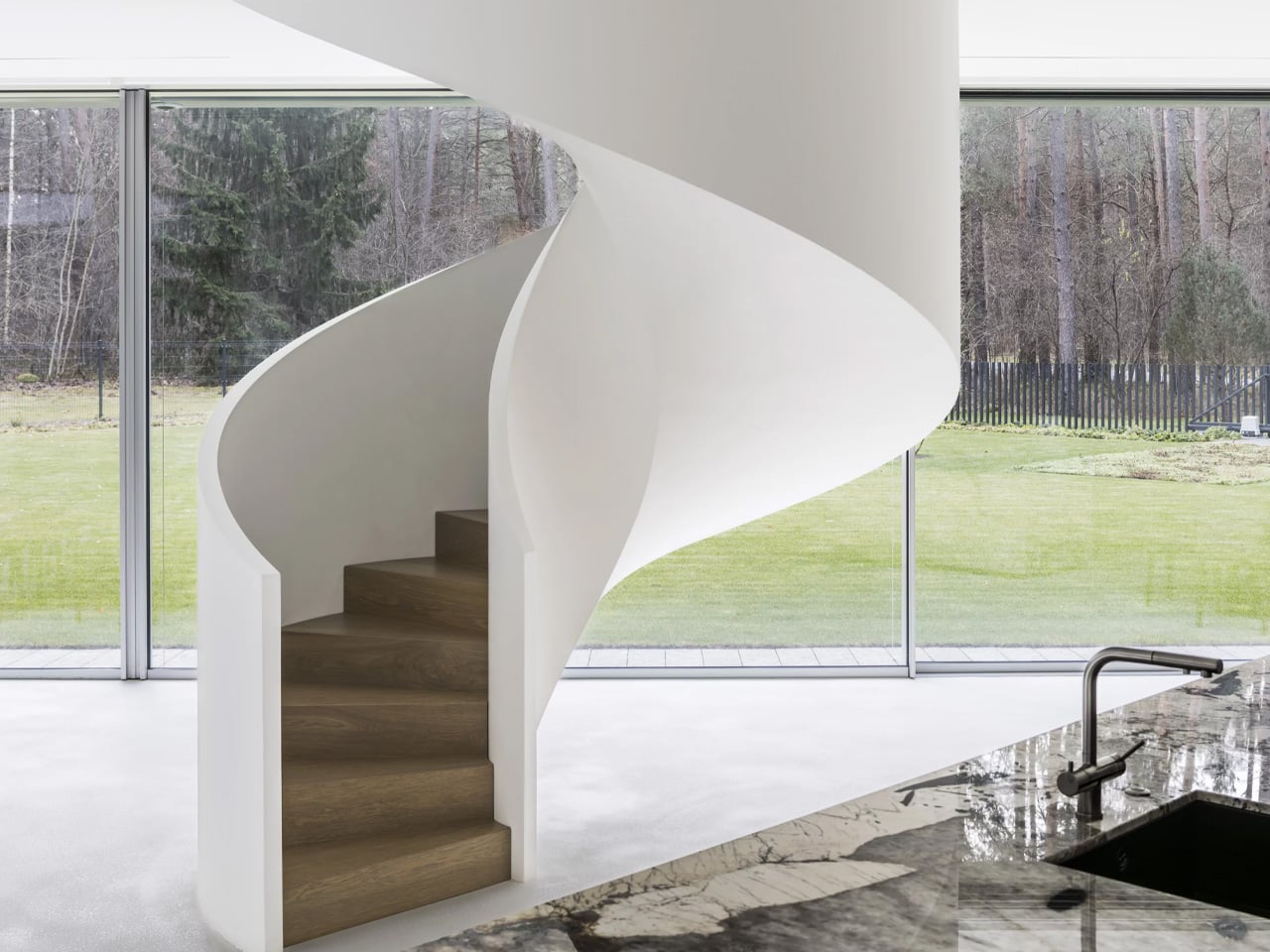
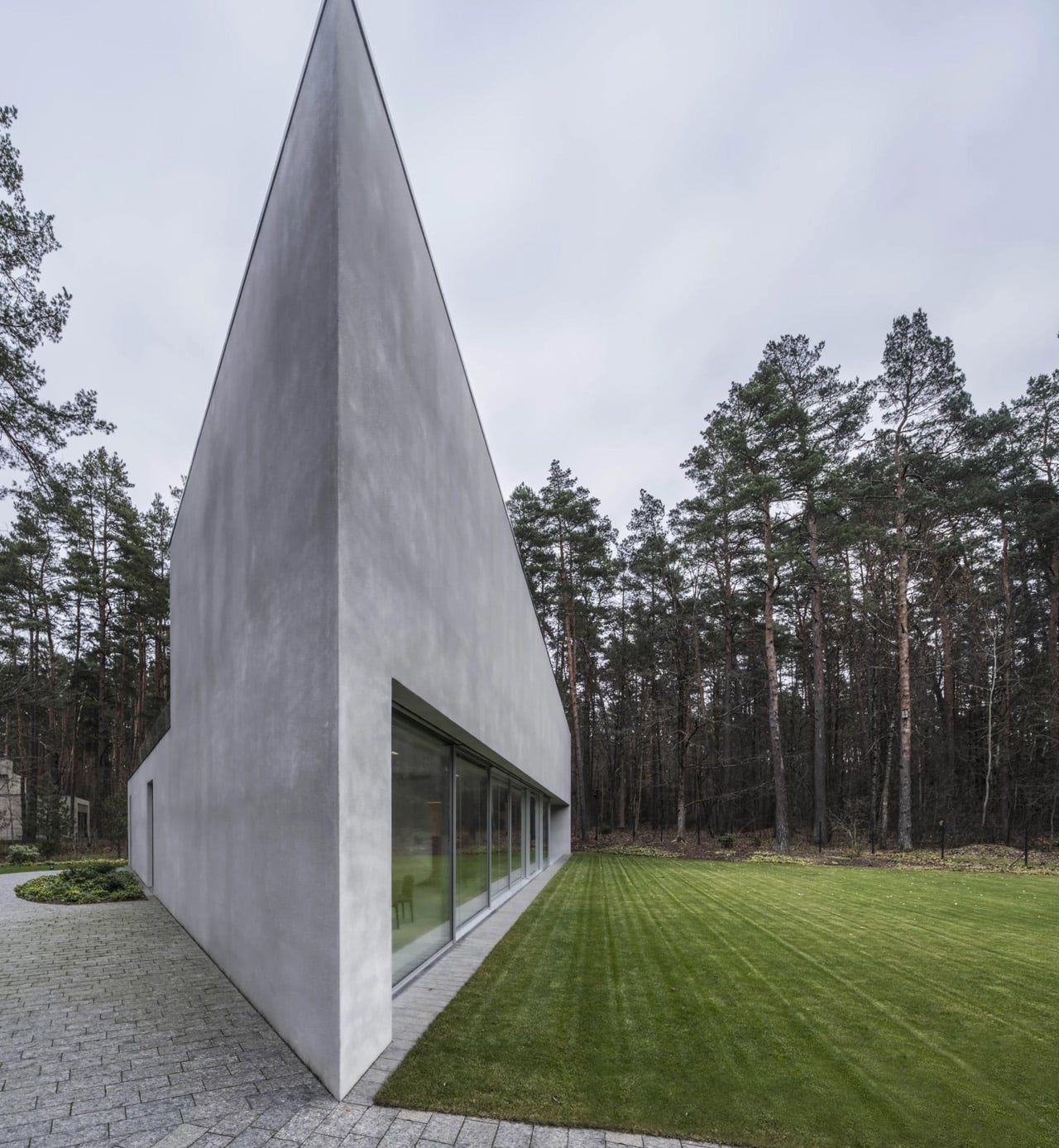

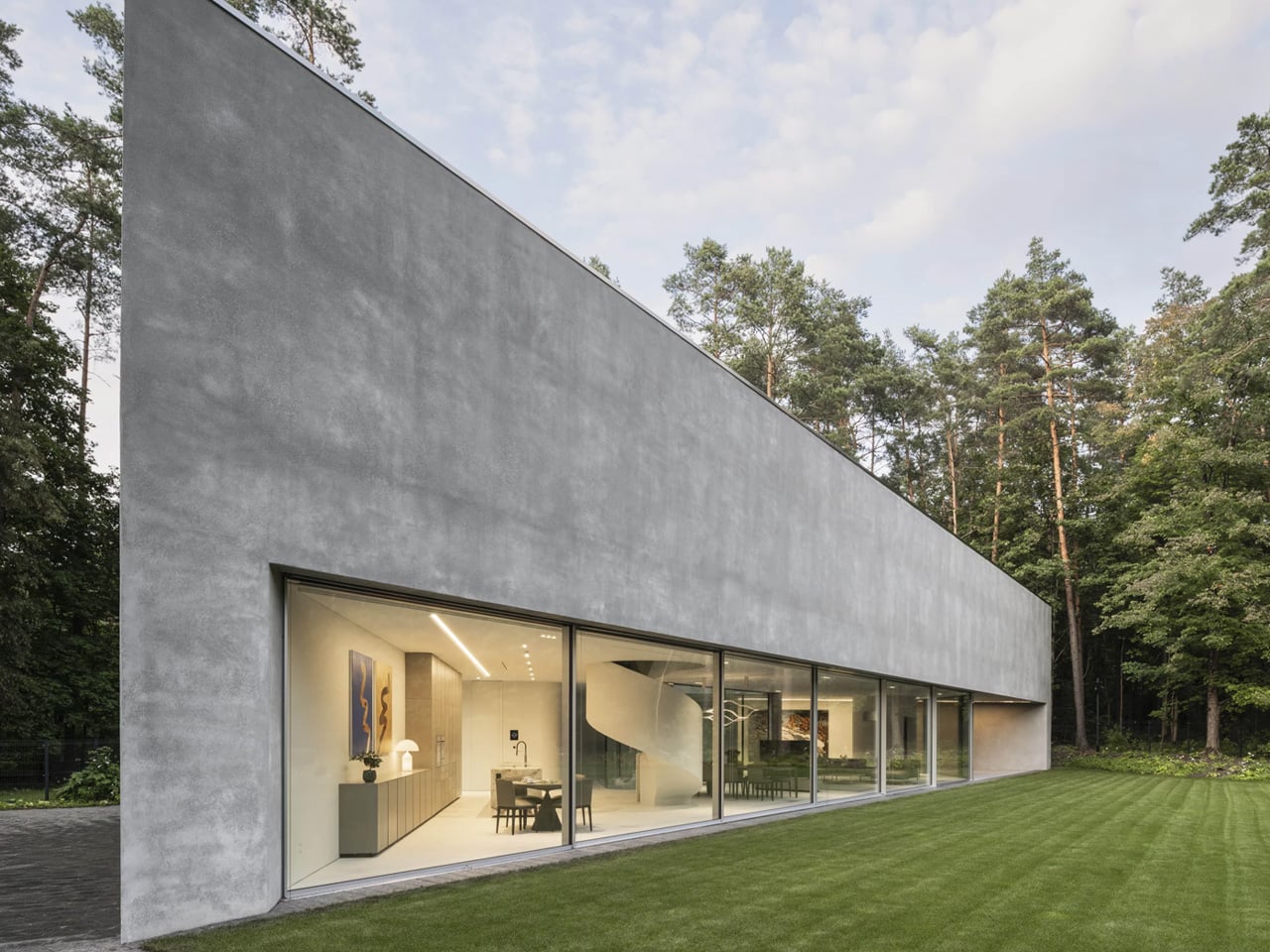
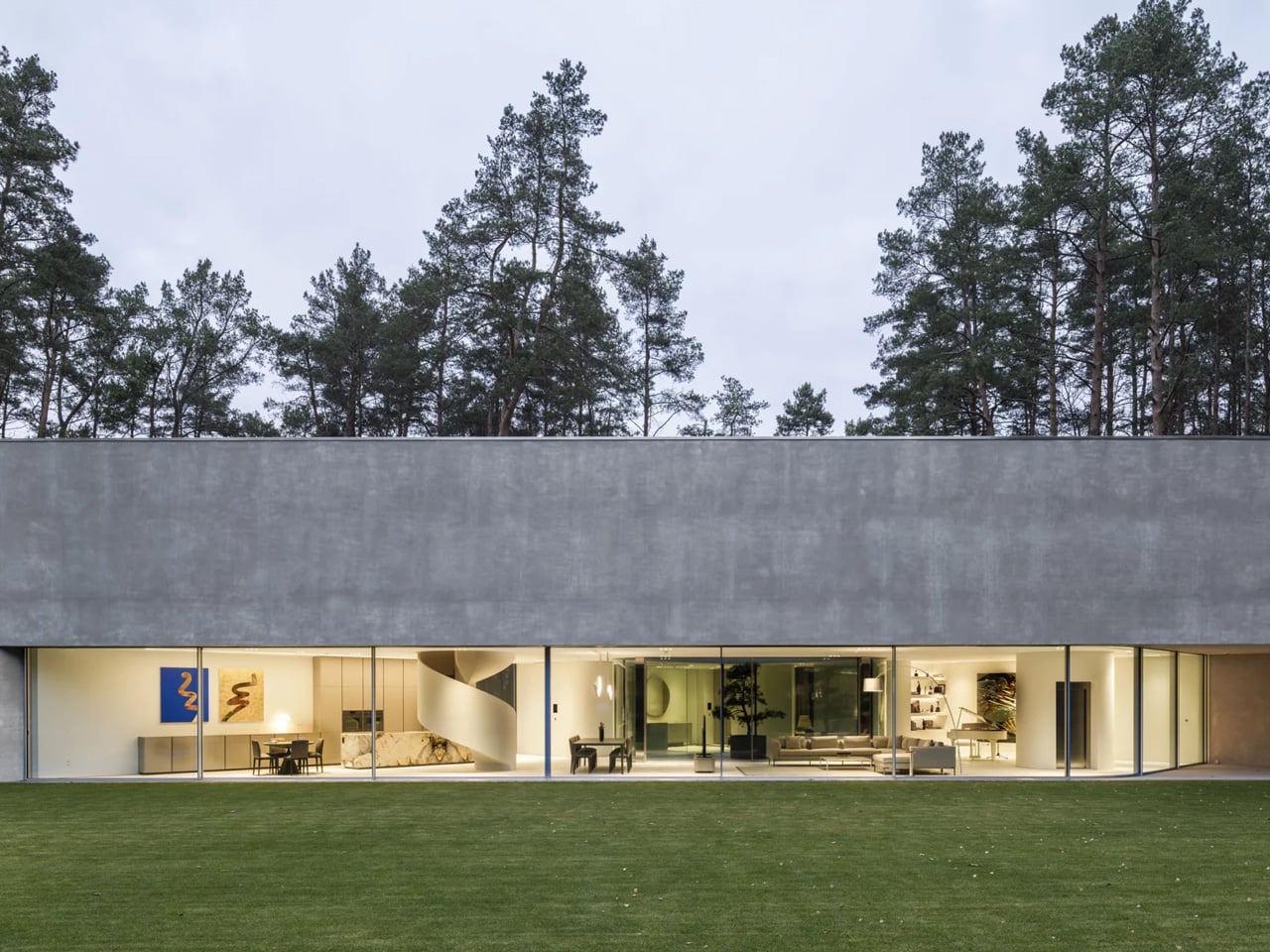
The name does exactly what it says. The house was trimmed. And in being trimmed, it became something far more interesting than the original design might have been. Spanning 299 square meters, the Trim House is a composition of concrete and glass, its sharpest corner cutting through the landscape like an ocean liner carving through ice. The most dramatic elevation reads almost like a flatiron building scaled down to domestic life, angular, taut, and satisfying in a way that’s hard to place. The surrounding pine trees press close, softening what could have felt severe.
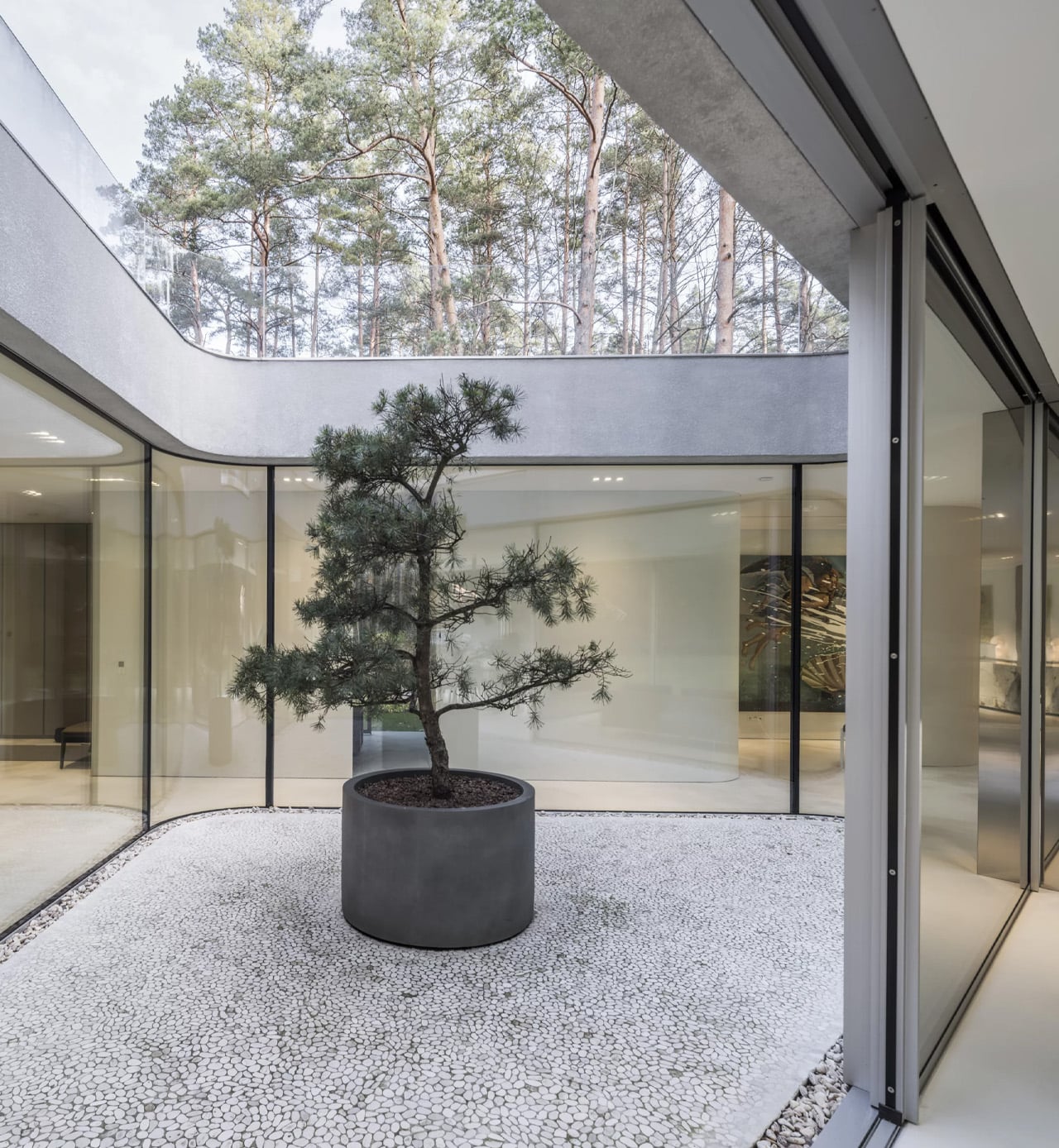
Inside, the two-level plan is organized around a central patio that pulls daylight deep into the heart of the structure. The ground floor holds the living spaces and opens seamlessly into the garden, while the raised first floor contains the private bedrooms, each with access to a terrace that sits above the ground-floor volume. The section plays the two zones off each other, the social, grounded, garden-facing level below, and the quieter, more elevated, view-oriented rooms above. Privacy and nature, held in careful balance.
What makes the Trim House worth paying attention to isn’t just its sculptural confidence. It’s the story behind the form. Constraints aren’t obstacles but essential drivers of innovation, as KWK Promes put it. The Trim House makes that argument with concrete and glass, and it’s hard to argue back.