
The name says two. The building delivers three. Tucked behind a 1912 home in Fairfax, California, Two-Fold Studio is the latest project from San Francisco-based practice ONO, founded in 2020 by Max Obata and Tyler Noblin, and it might be one of the most quietly considered small structures the firm has produced yet.
The client, a general contractor and a ceramic artist who also teaches Pilates, came to ONO with a precise brief: build a pavilion that could hold a Pilates studio, a ceramics workshop complete with kiln, storage, and kitchenette, and, when the occasion calls for it, a guesthouse. Three programmes, one 800-square-foot structure, and a yard full of trees that weren’t going anywhere. The architects delivered on all counts.
Designer: ONO

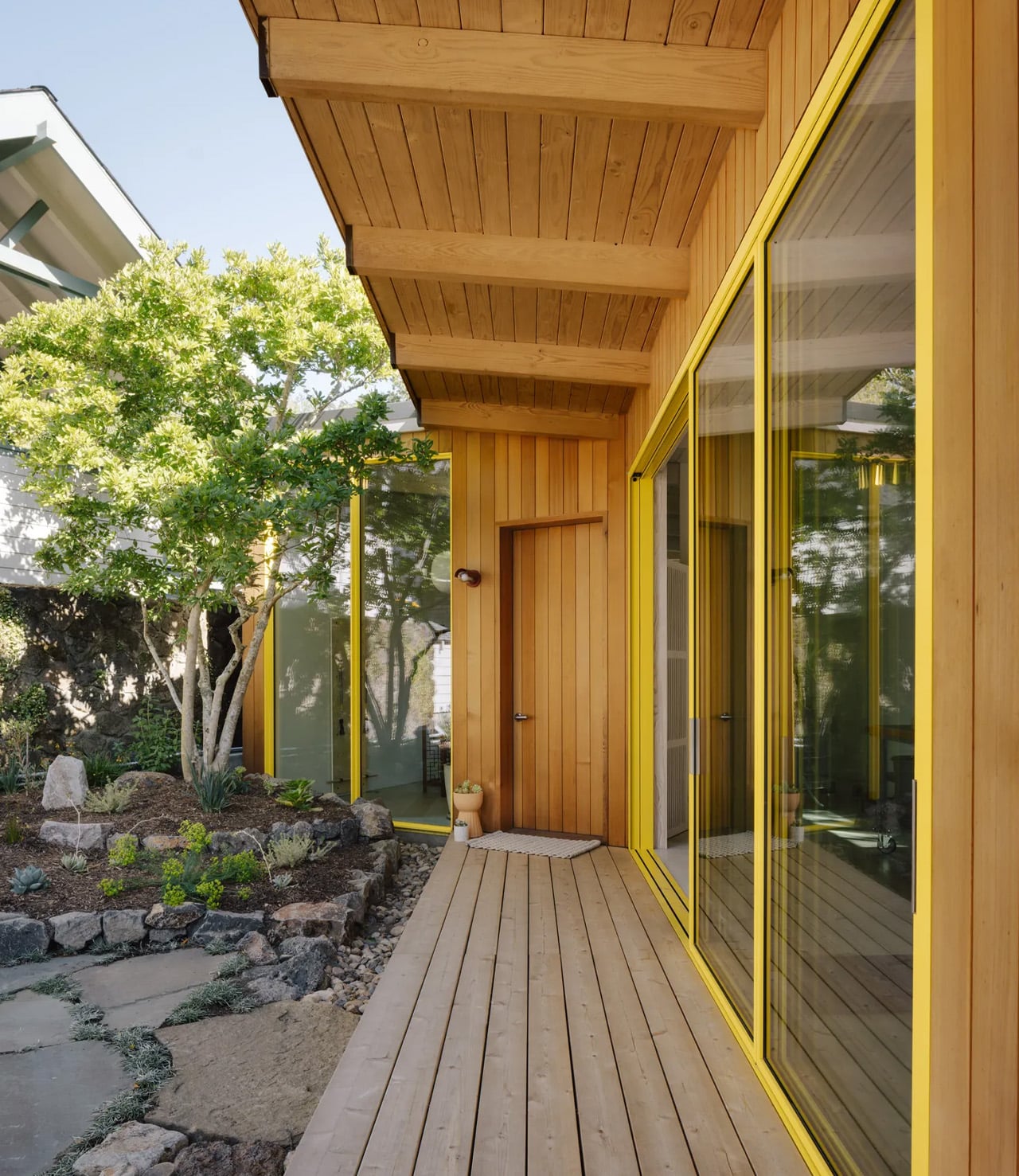
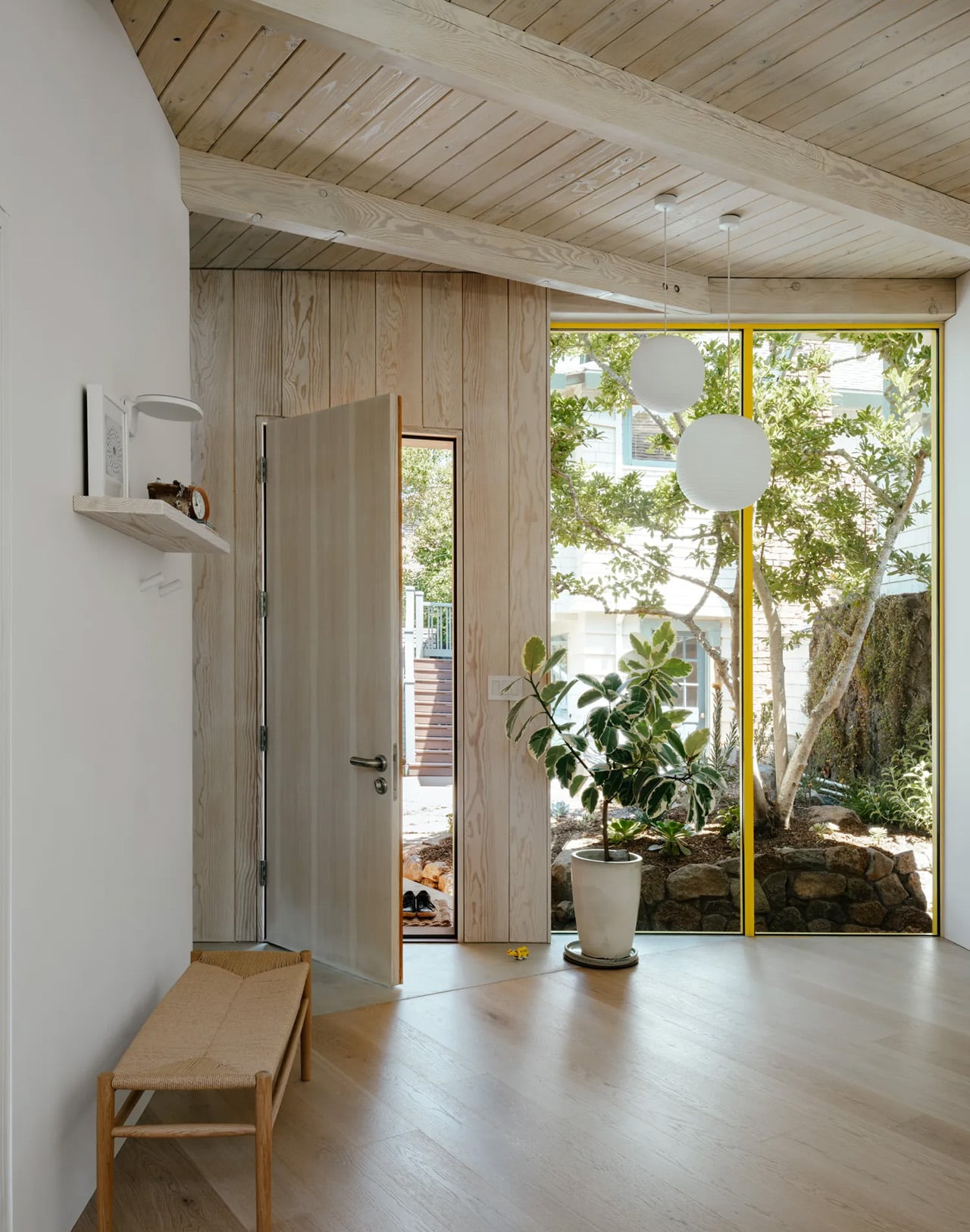
Rather than bulldoze the site into submission, ONO bent the building around it. The structure contorts into an L-shape, folding around the pre-existing trees to maintain the yard’s existing character. The form then becomes a kind of frame, a viewing pavilion, in ONO’s words, taking direct reference from the Ryoan-ji Rock Garden in Kyoto. The relationship between building and landscape isn’t incidental here; it’s the whole point.
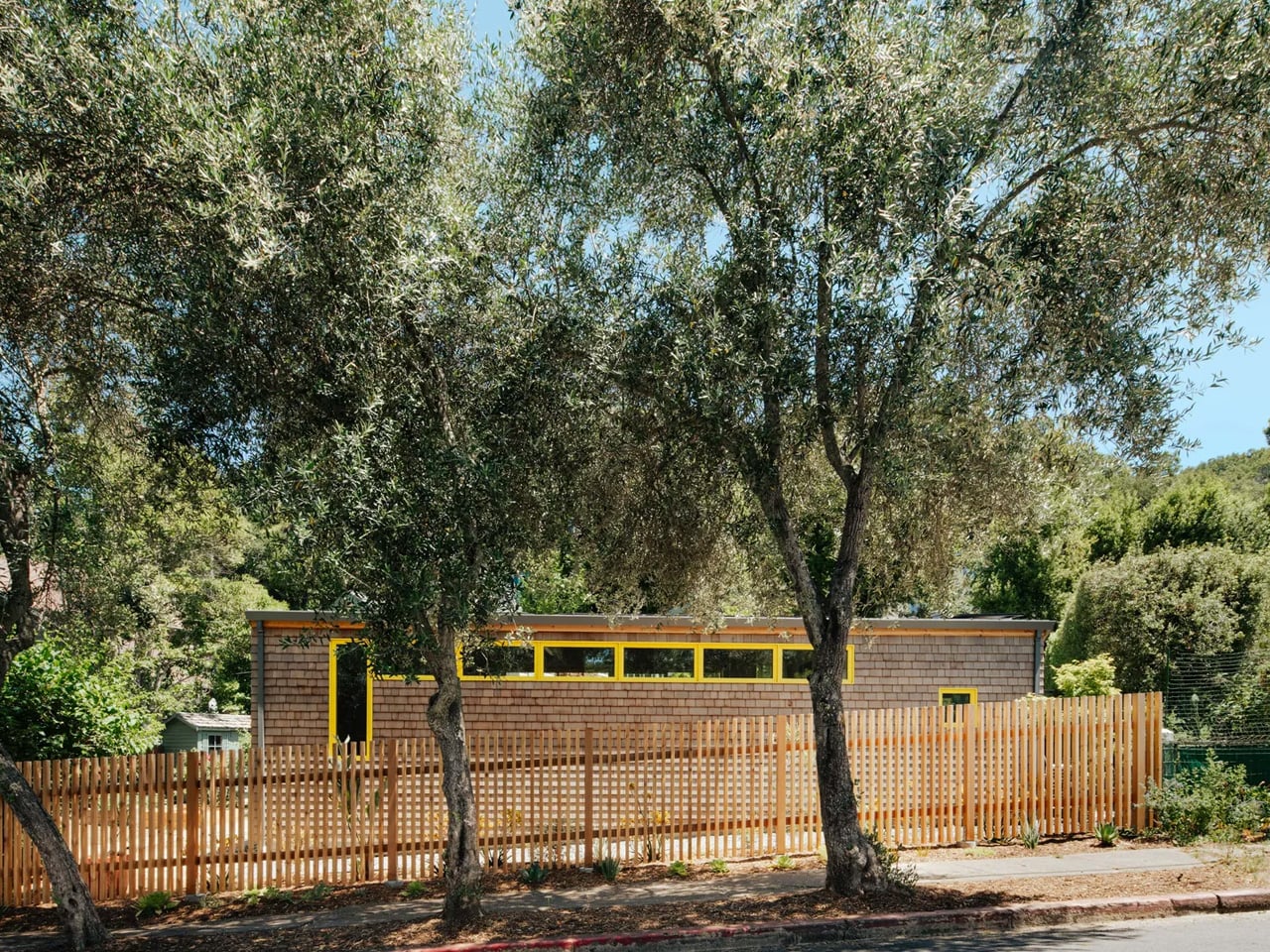
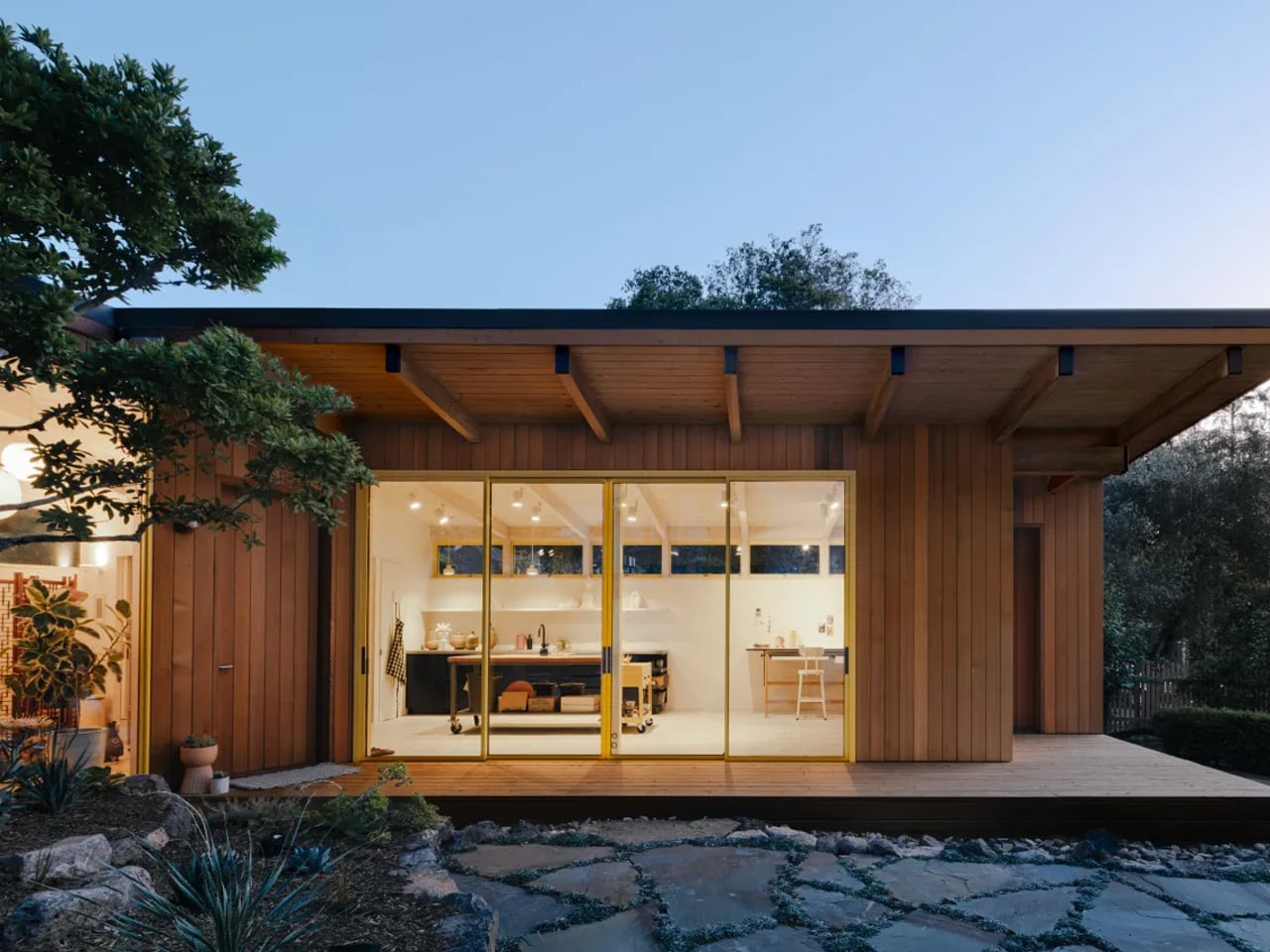
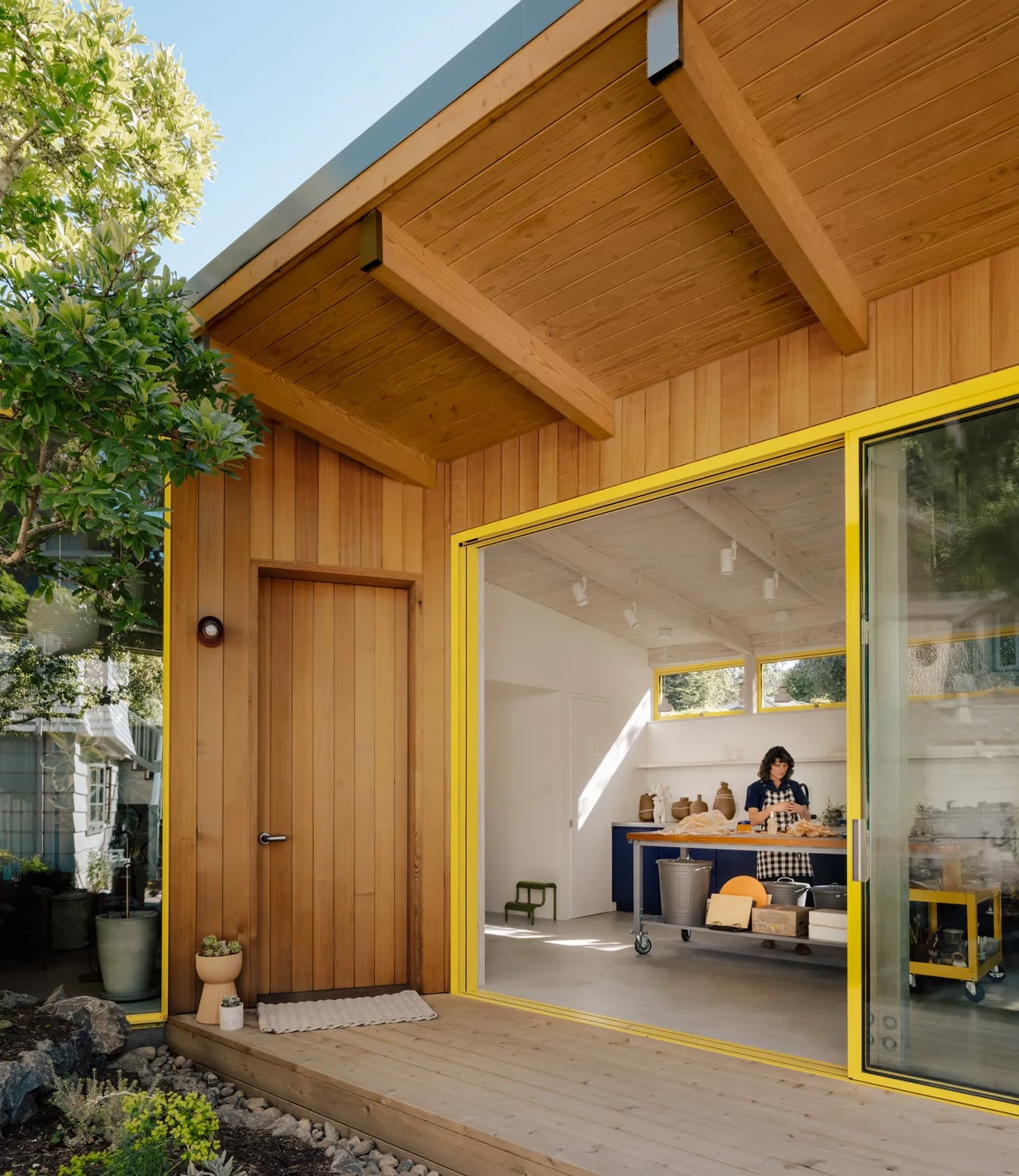
On the outside, the building reads modestly. Cedar shingles tie it back to the original home, keeping the new structure from announcing itself too loudly against the surrounding hills. Sliding glass doors, cheerfully framed in yellow powder-coated aluminum, open one side of the building entirely to the outdoors, creating a small patio underlined by the roof’s generous overhang. The yellow wasn’t arbitrary. Obata has noted that the client works in bold colour in her ceramics, so the palette needed to hold its own.
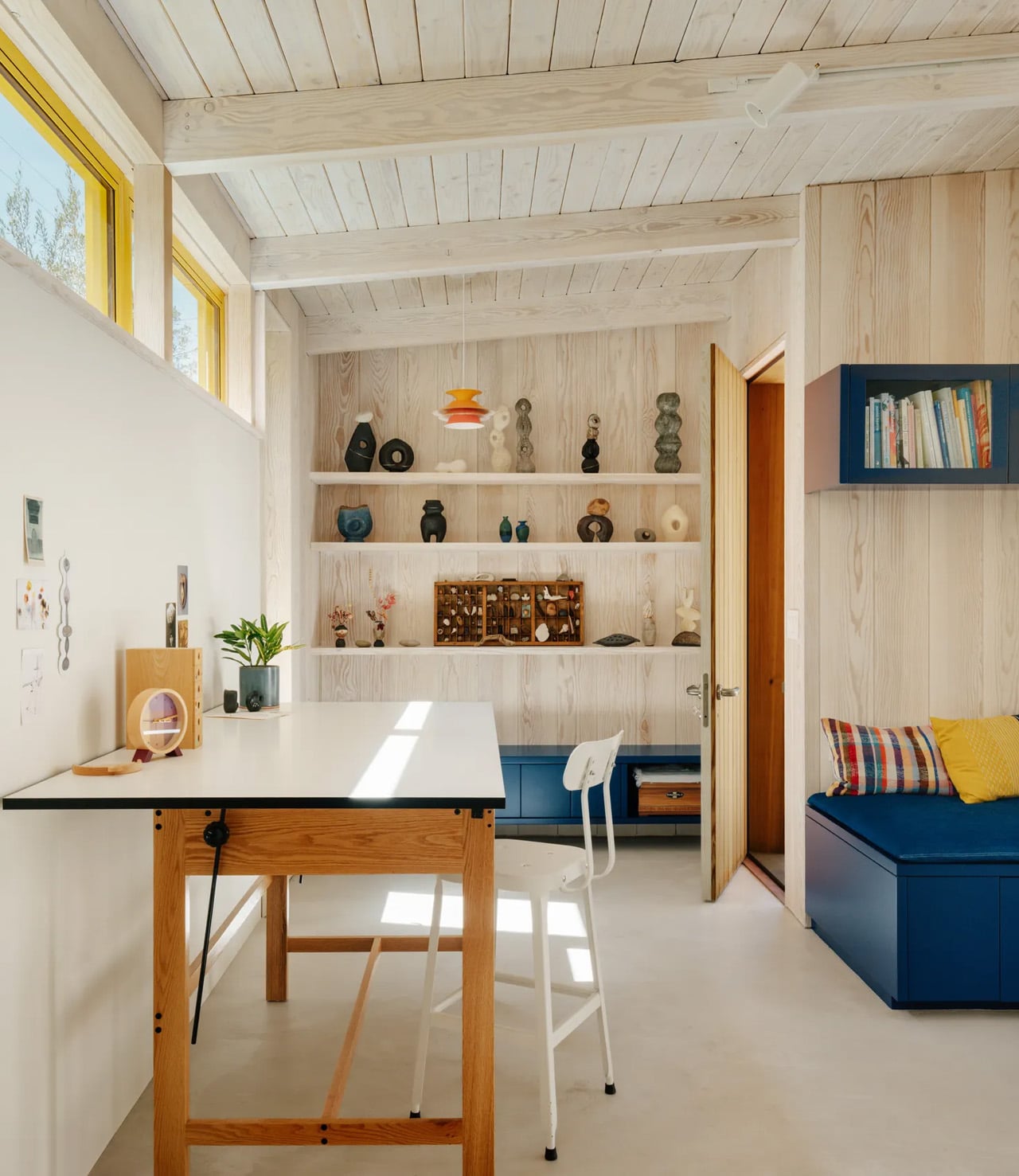
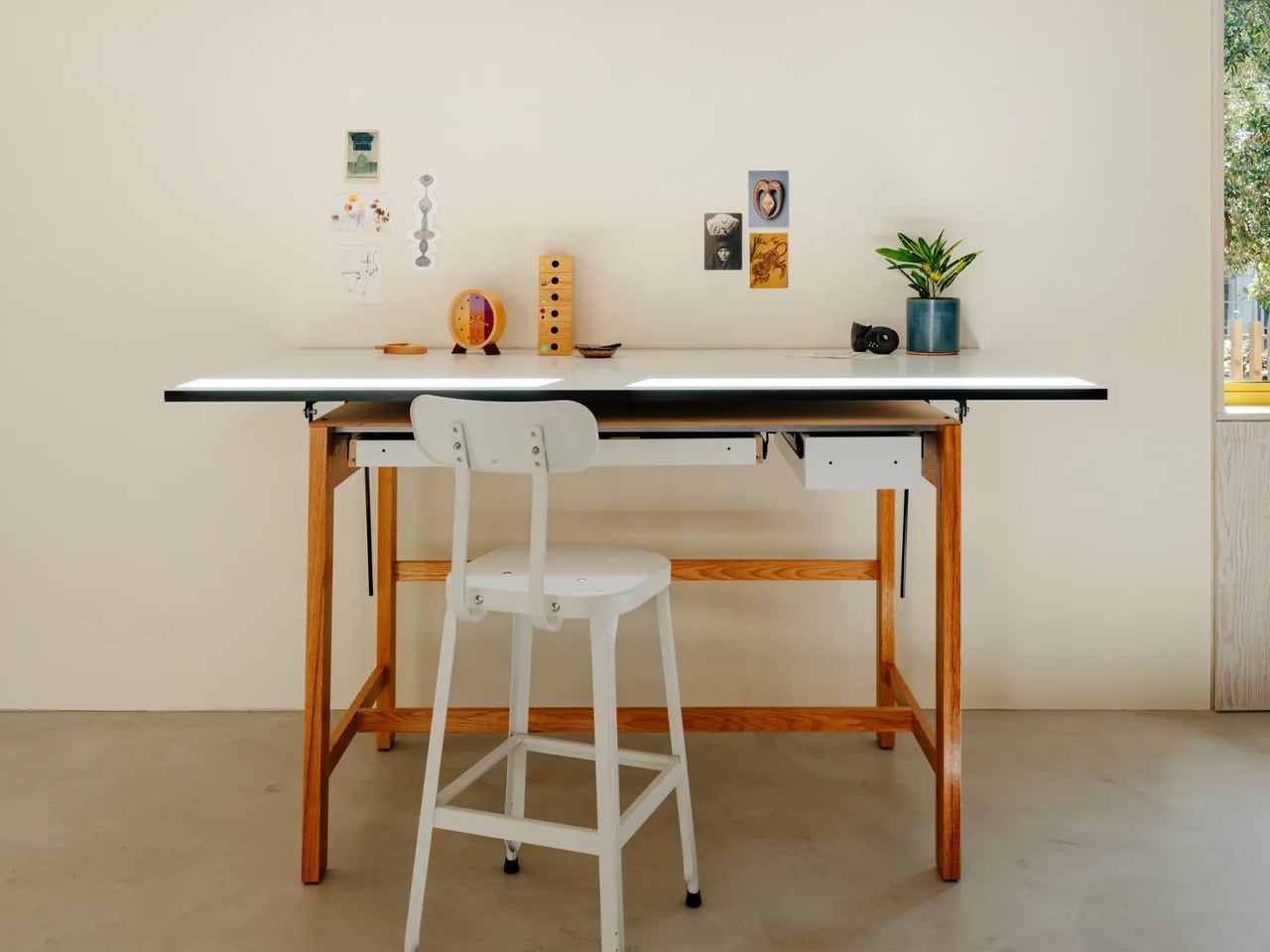
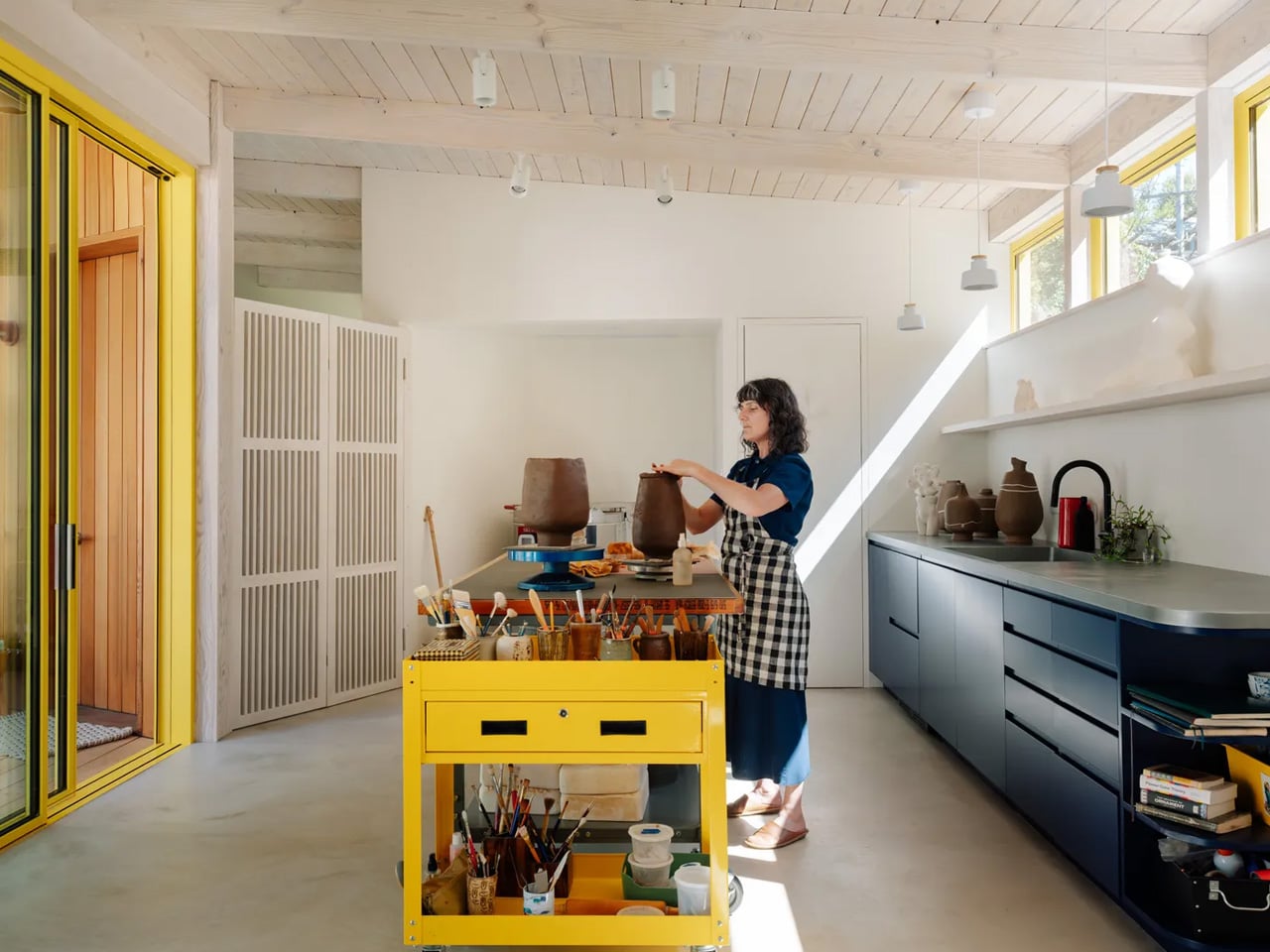
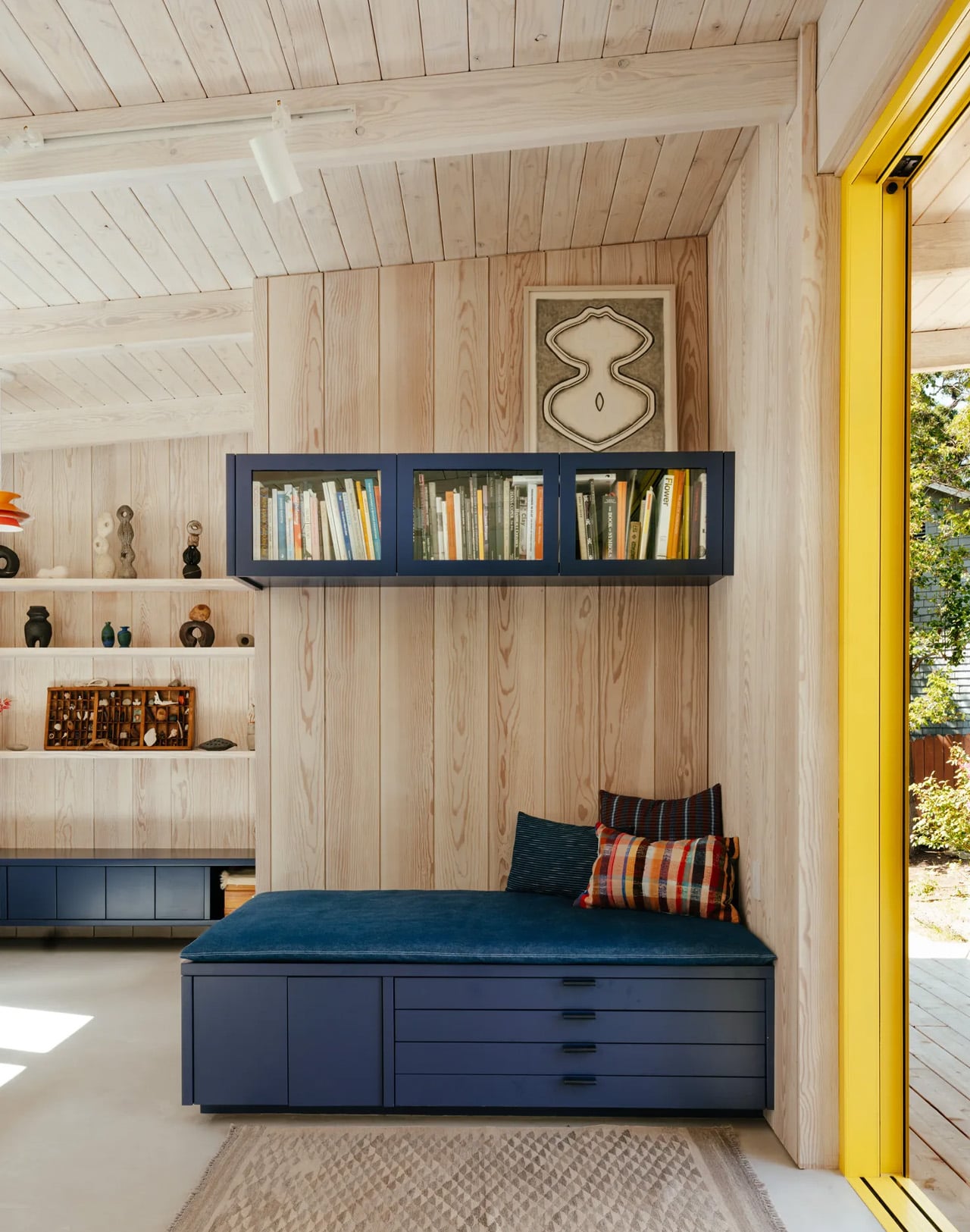
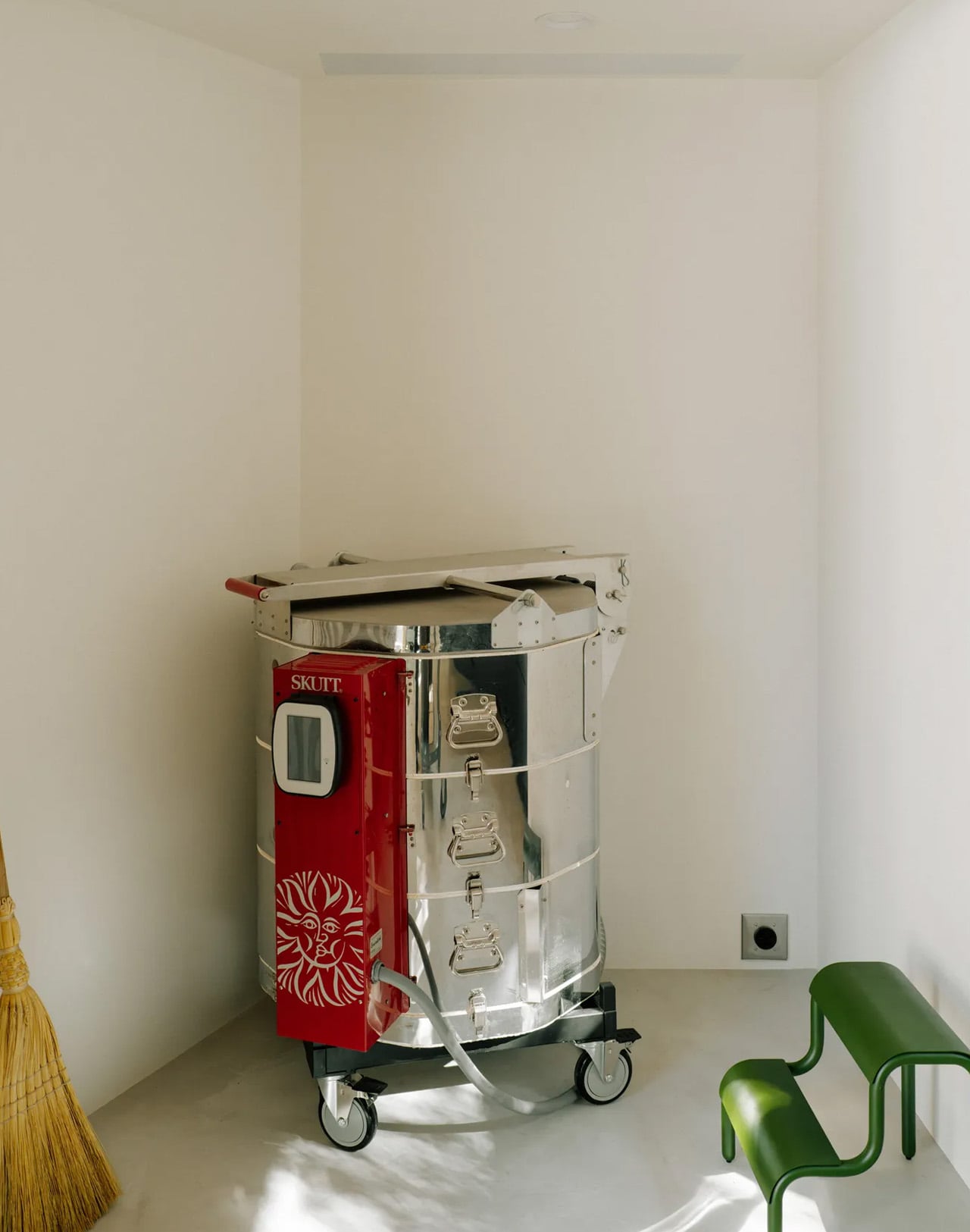
Step inside, and the two halves of the studio read distinctly but feel continuous. The Pilates side is warm and spare, finished in wood that flows through to a bathroom lined in plaster, a softer material that adds texture without breaking the natural language of the space. The ceramics side opens wider, with blue cabinets, exposed ceiling beams, and zinc countertops chosen specifically for the way they’ll patina into a silvery blue over time. A long work desk doubles as a kitchen counter, adjacent to a kiln neatly tucked into a wall niche.
Clerestory windows flood the ceramics studio with light while maintaining privacy from the street. In summer, with the sliding doors thrown open, afternoon light comes in late and high, ideal, as Obata puts it, for working well into the evening. Two-Fold is small, specific, and built entirely around the person who uses it. That’s what makes it memorable.