
If you’ve ever watched the pleating process behind ISSEY MIYAKE’s iconic garments, you already know it’s one of the most satisfying things in fashion. The fabric goes in, it comes out textured and alive, and for decades, that has been the whole story. Satoshi Kondo, one of the design directors at MIYAKE DESIGN STUDIO, chose to flip the script. He looked not at the pleated garment coming off the machine, but at what was left behind: compressed rolls of wafer-thin paper, stacked and destined for the bin.
The result is The Paper Log: Shell and Core, a special exhibition running at the ISSEY MIYAKE Milan store this April, timed to coincide with Milan Design Week 2026. And it’s the kind of project that makes you want to rethink every process you’ve ever considered mundane.
Designer: Satoshi Kondo of MIYAKE DESIGN STUDIO
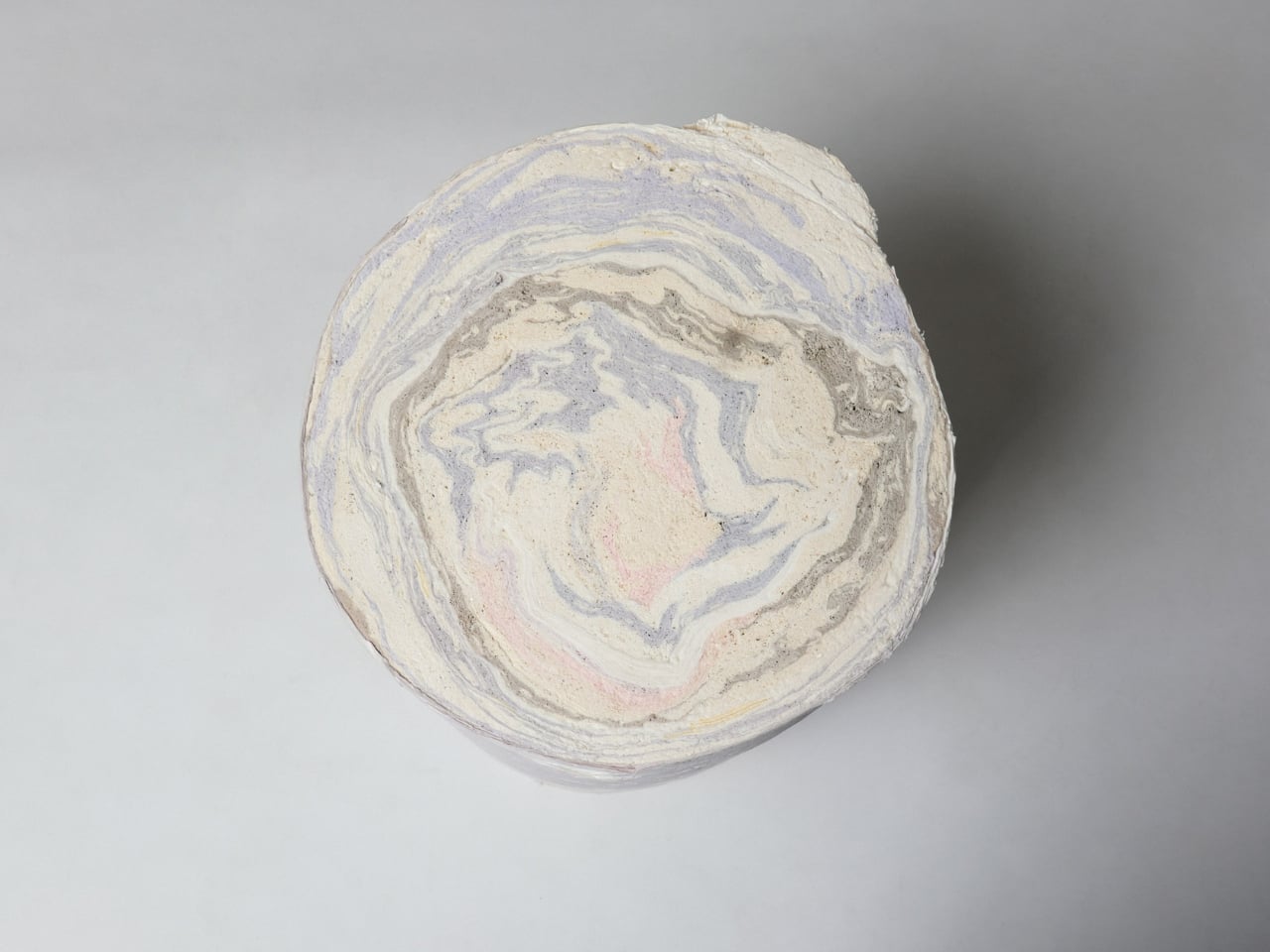
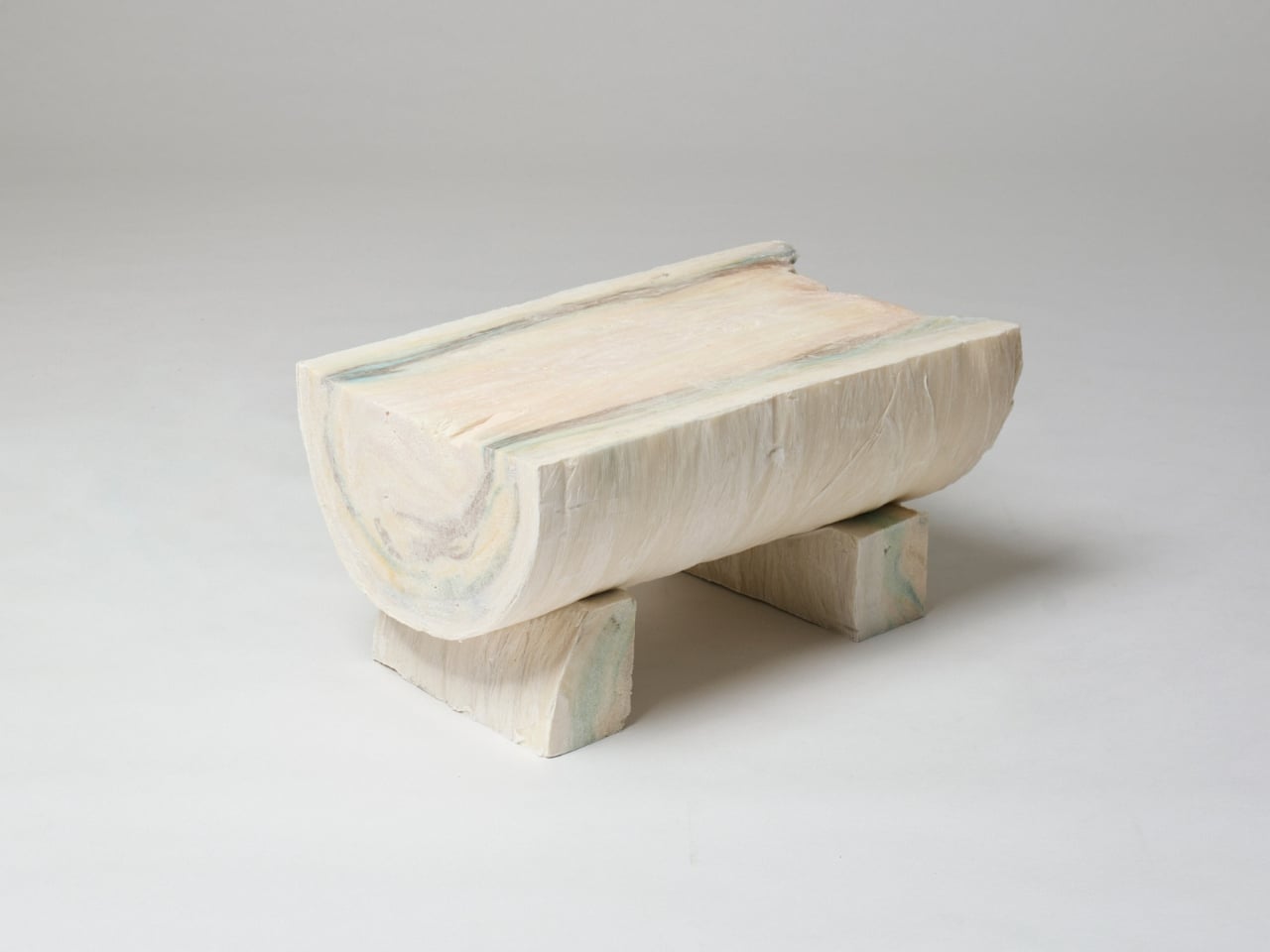
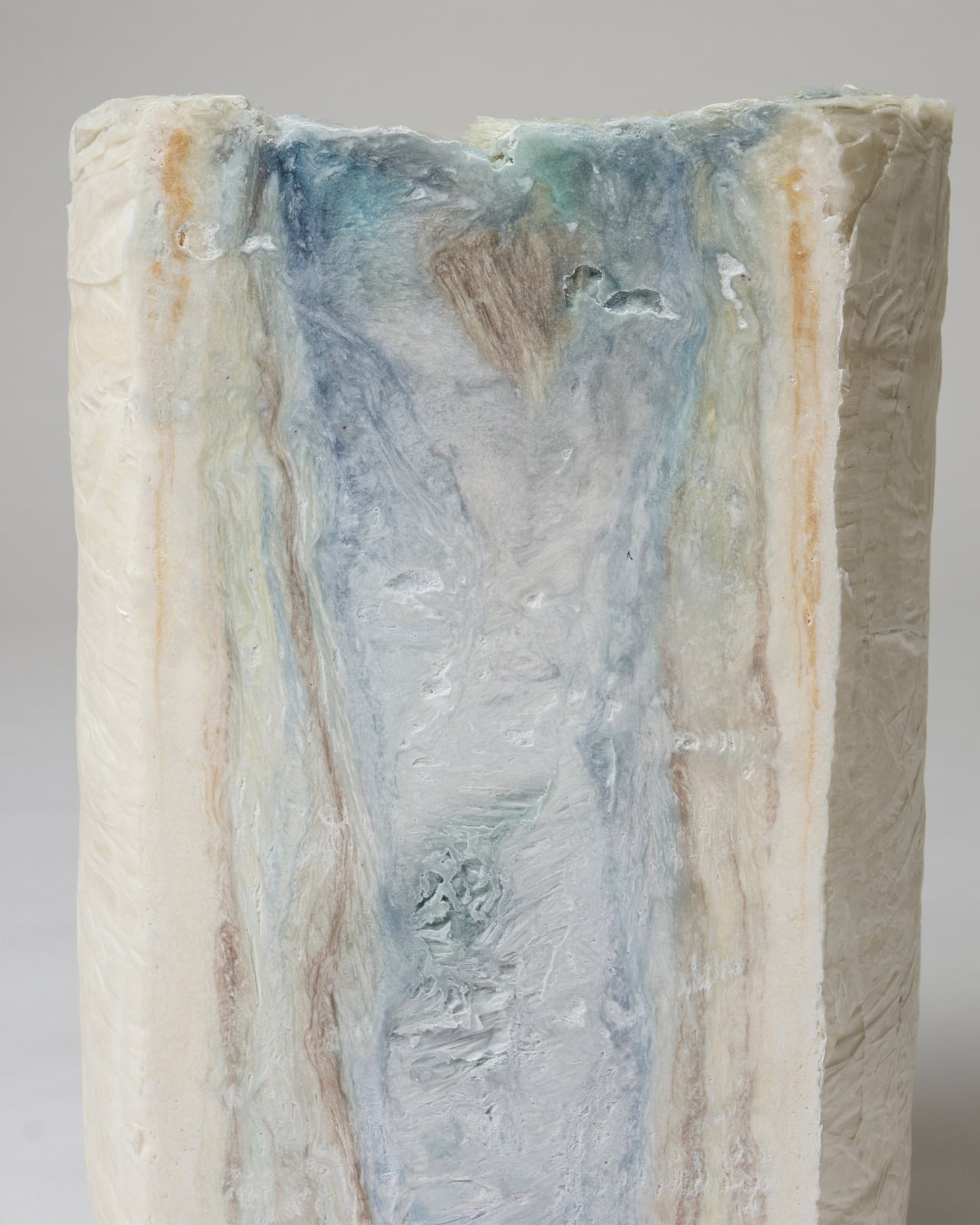
The paper in question is a production byproduct. These thin sheets are used to protect the fabric as it moves through the pleating machine, and when the garments are done, the sheets are rolled up, compressed, and typically moved off-site for recycling or disposal. What Kondo noticed during a visit to the manufacturer, though, was that these rolls look like logs. Not metaphorically, but structurally. Each compressed roll stands 80 cm tall and 40 cm wide, and when you look at the end of one, the layered paper creates a marbled, circular pattern that resembles the growth rings of a tree. Hence the name.

That visual parallel carries real weight. The Paper Log doesn’t just look like a tree trunk; it shares its logic. Growth rings mark time in a living thing, and the layers of the Paper Log carry the memory of every garment made at the house. It’s a surprisingly poetic idea from an industry that usually discards its footnotes.
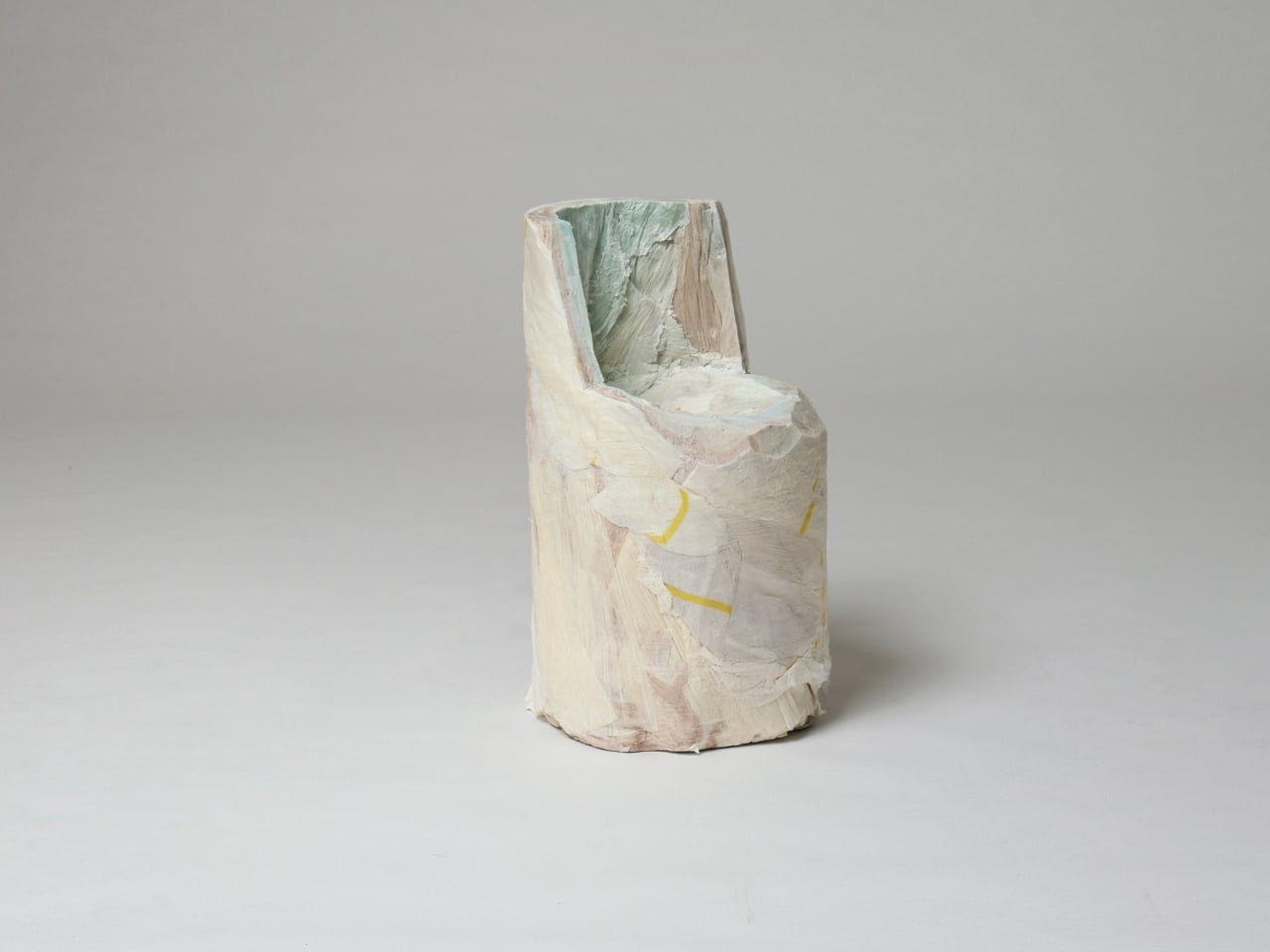
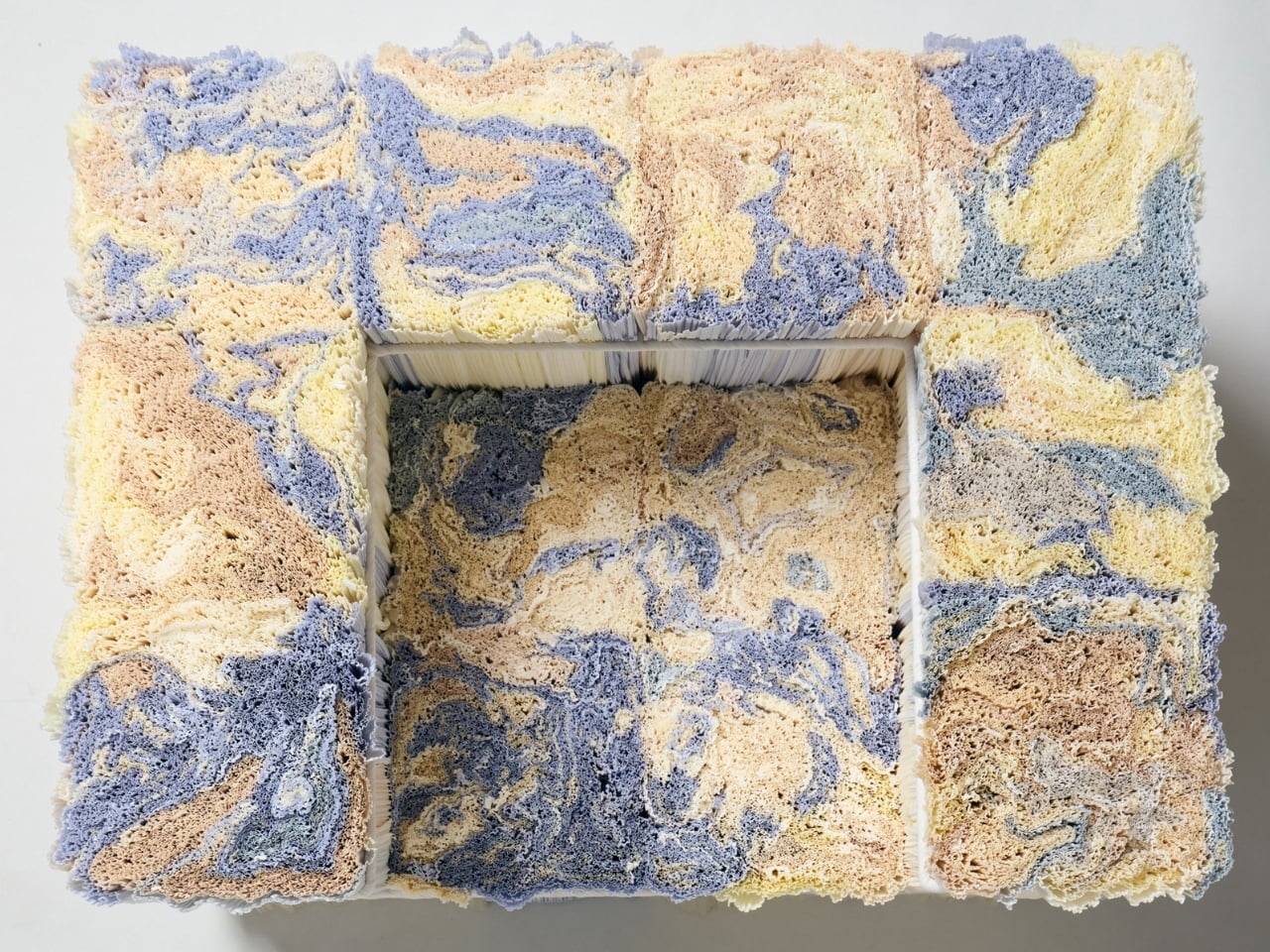
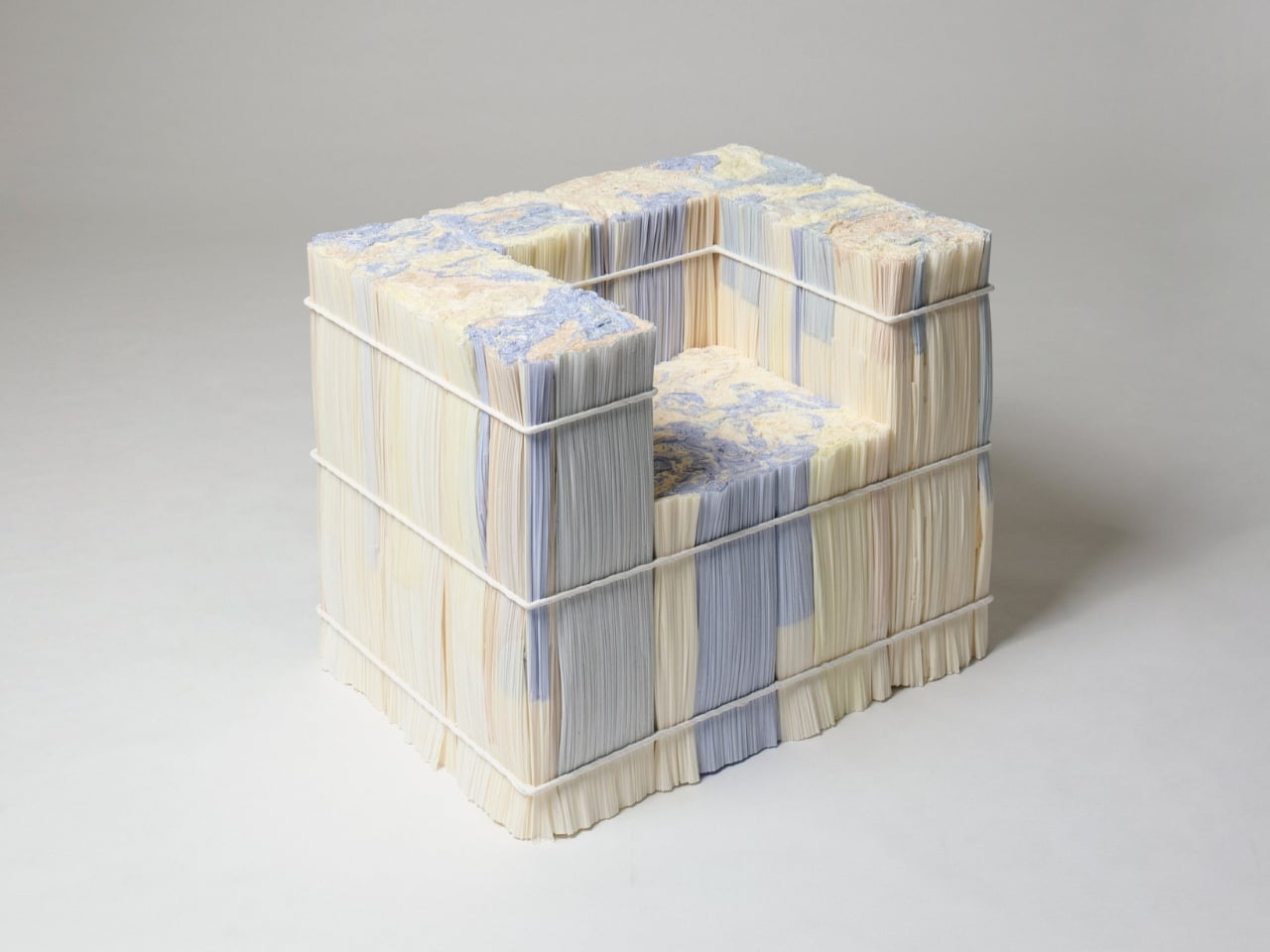
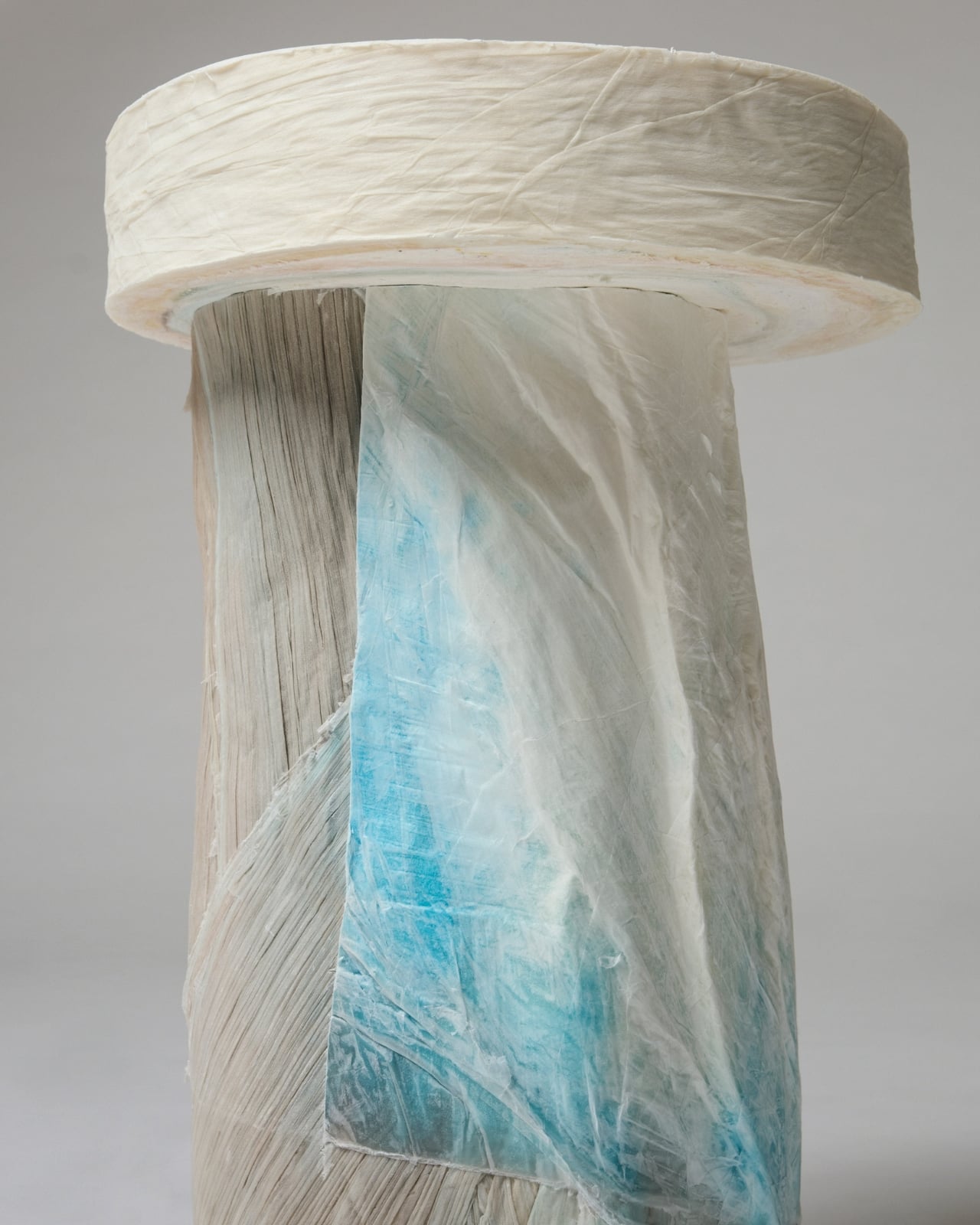
For the exhibition, Kondo brought in Spanish architecture office Ensamble Studio to develop two distinct bodies of work from the same material. The first, Shell, takes the paper log apart and treats it like a sculptural material, creating crisp, delicate objects that feel frozen mid-process. They’re almost ghost-like, holding a shape the way paper holds a crease. The second body of work, Core, goes in the opposite direction. Here the paper is treated as structure, forming actual furniture prototypes including stools, chairs, and tables. Robust and handcrafted, these pieces sit in direct contrast to the fragility of Shell, and that tension is very much the point.
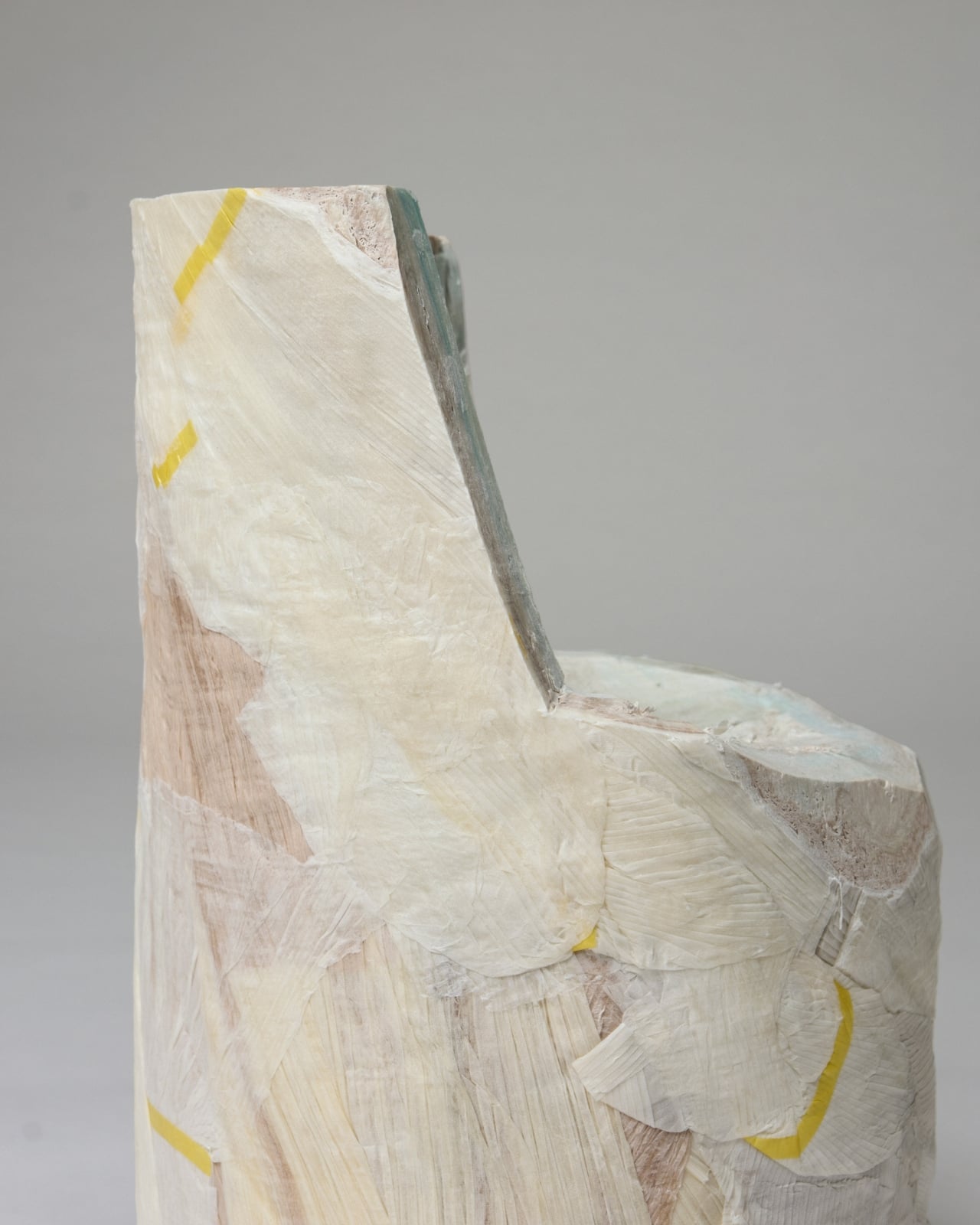
The installation is arranged throughout the store to play Shell and Core against each other, presenting opposing ideas side by side: ephemeral versus concrete, delicate versus robust. I find this curatorial framing genuinely effective. It’s rare to see a single waste material handled in ways that feel this philosophically distinct, and rarer still to see a fashion house direct that kind of rigorous design thinking toward something that would otherwise not exist at all.
What makes The Paper Log worth your attention beyond the visual spectacle is the quiet insistence that process deserves as much consideration as product. Issey Miyake has always been a house obsessed with how things are made. The pleating technology itself is a kind of philosophy, a belief that the mechanics of creation are as meaningful as the finished object. Applying that thinking to the waste materials of that same process feels less like an act of sustainability and more like an act of honesty.
Whether or not furniture made from fashion scraps becomes a commercial category (and it absolutely could), The Paper Log: Shell and Core operates primarily as a provocation. It asks what we overlook when we’re focused on the final product, and suggests that the answer might be the most interesting material in the room. The exhibition runs at the ISSEY MIYAKE Milan store on Via Bagutta 12, from April 21 to May 5, 2026.