
Electric vehicles have been gaining ground steadily, but one of the more stubborn problems hasn’t been the cars themselves; it’s been finding somewhere to charge them when you’re far from a city. In a high desert environment, that problem gets considerably more pointed. The open stretch between towns can be long, the heat unforgiving, and the typical charging infrastructure designed with urban convenience in mind rather than remote landscape realities.
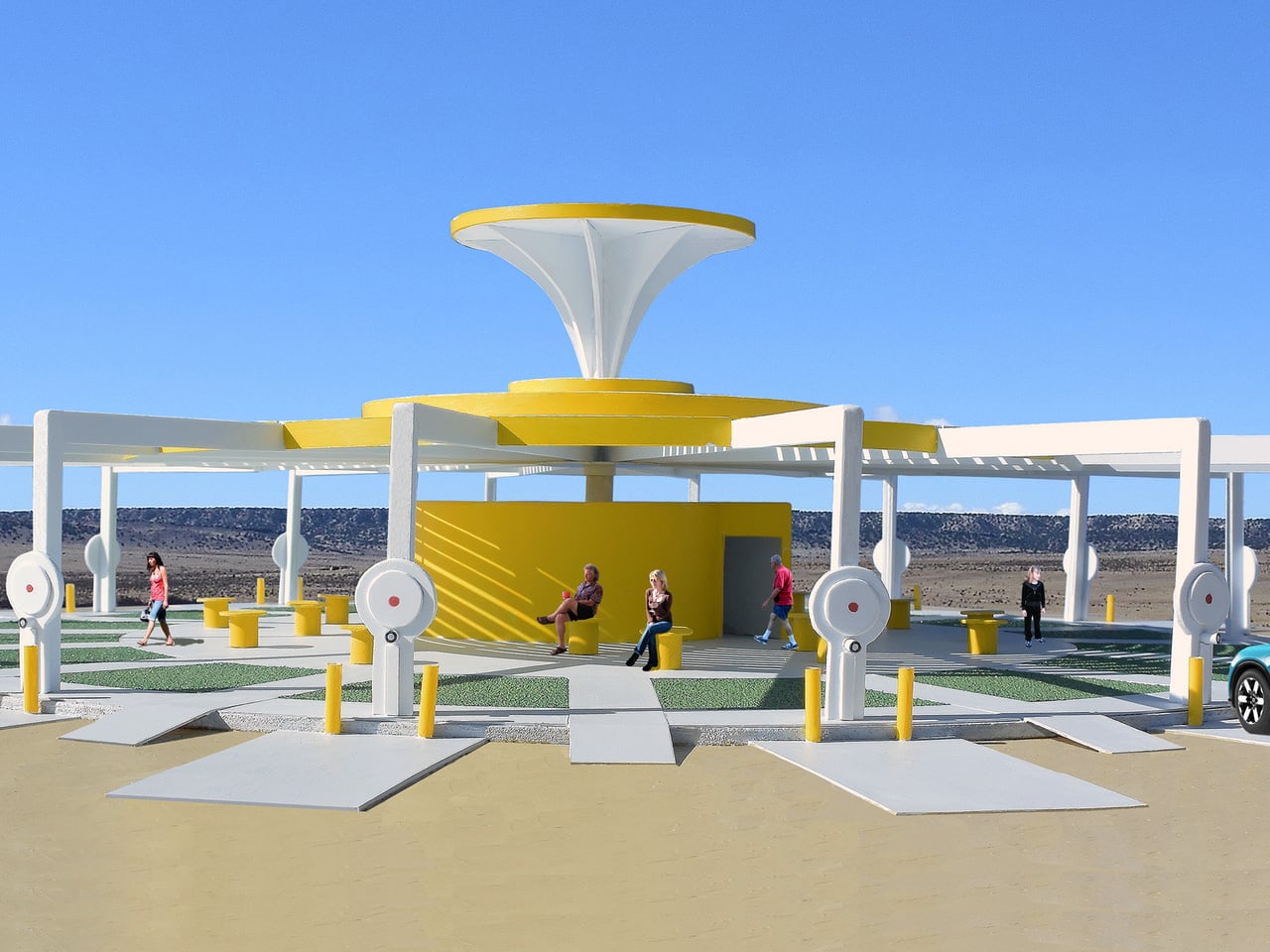
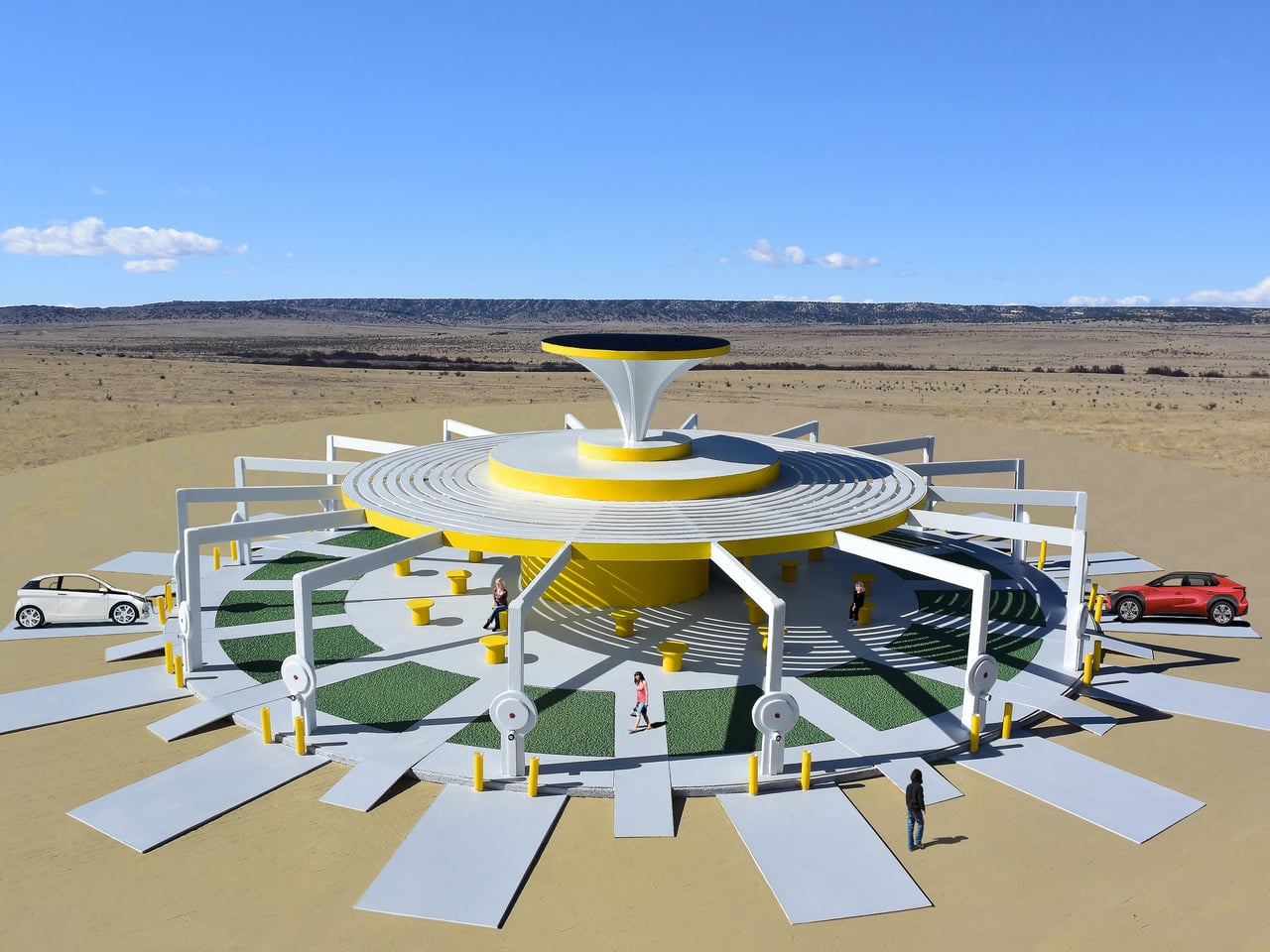
Designer Michael Jantzen, based in Santa Fe, has been exploring exactly this gap with his proposal for the High Desert Charging Station, a large steel solar-powered facility conceived specifically for hot, sunny desert environments. The design doesn’t try to transplant a suburban charging setup into an unfamiliar context. It takes the desert’s most defining characteristic, its relentless sun, as the primary resource.
Designer: Michael Jantzen
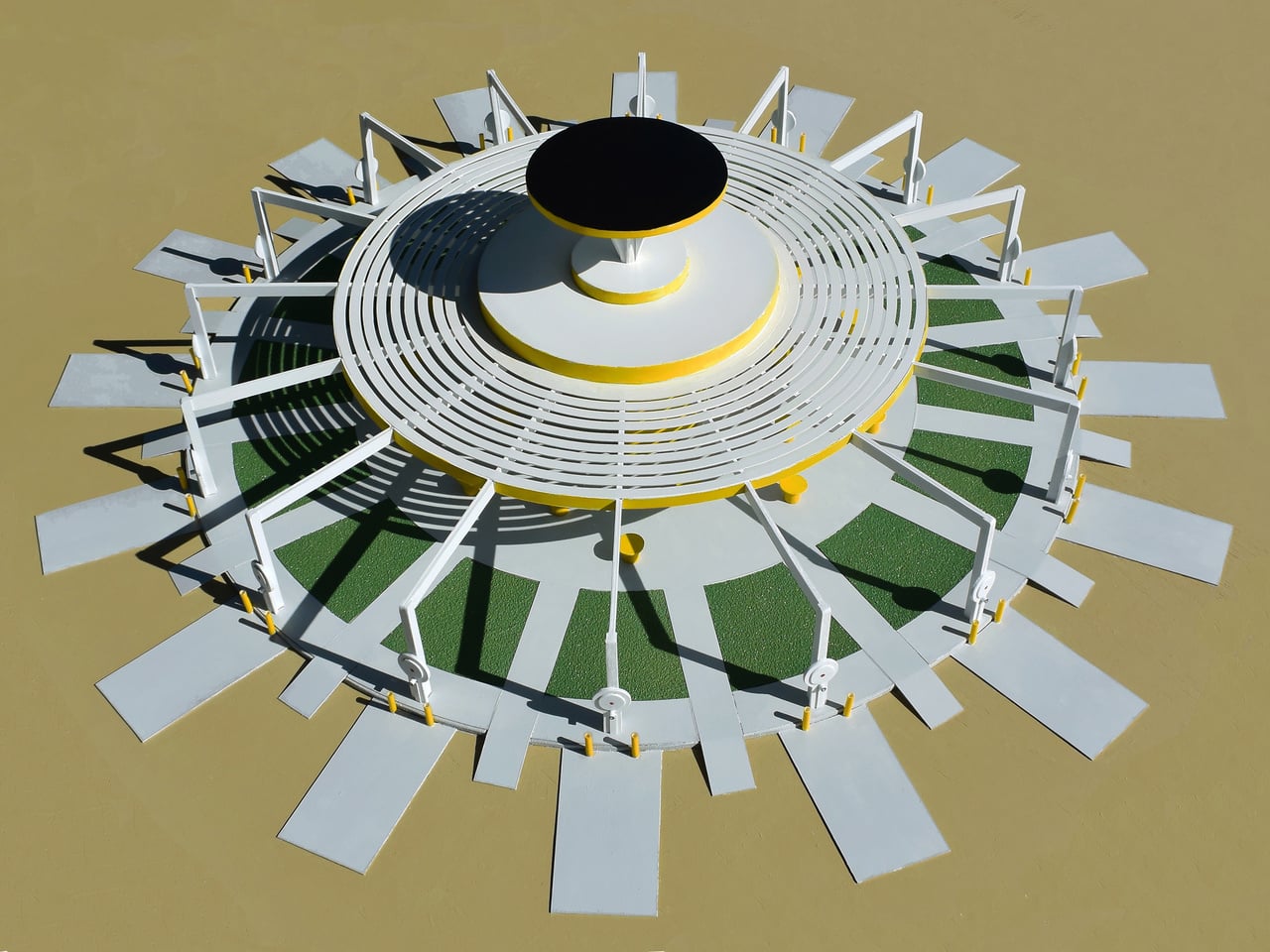
The structure is built around a circular plan, with a large solar panel disc elevated on a tapered central pedestal. Sunlight converts directly into electricity for the vehicles below. When generation exceeds demand, the excess feeds back into the local power grid. When the sun isn’t enough, the grid returns electricity to the station, keeping all 16 charging spots running regardless of conditions.
Those 16 spots are arranged symmetrically around the facility’s perimeter, each one marked by a concrete docking pad, a pair of yellow security bumpers, and a dedicated charging pedestal. Walkways connect each spot inward toward the center, threading through alternating patches of synthetic green grass that bring a small but deliberate contrast to the surrounding landscape. It’s a reminder that the design intends to do more than just charge cars.
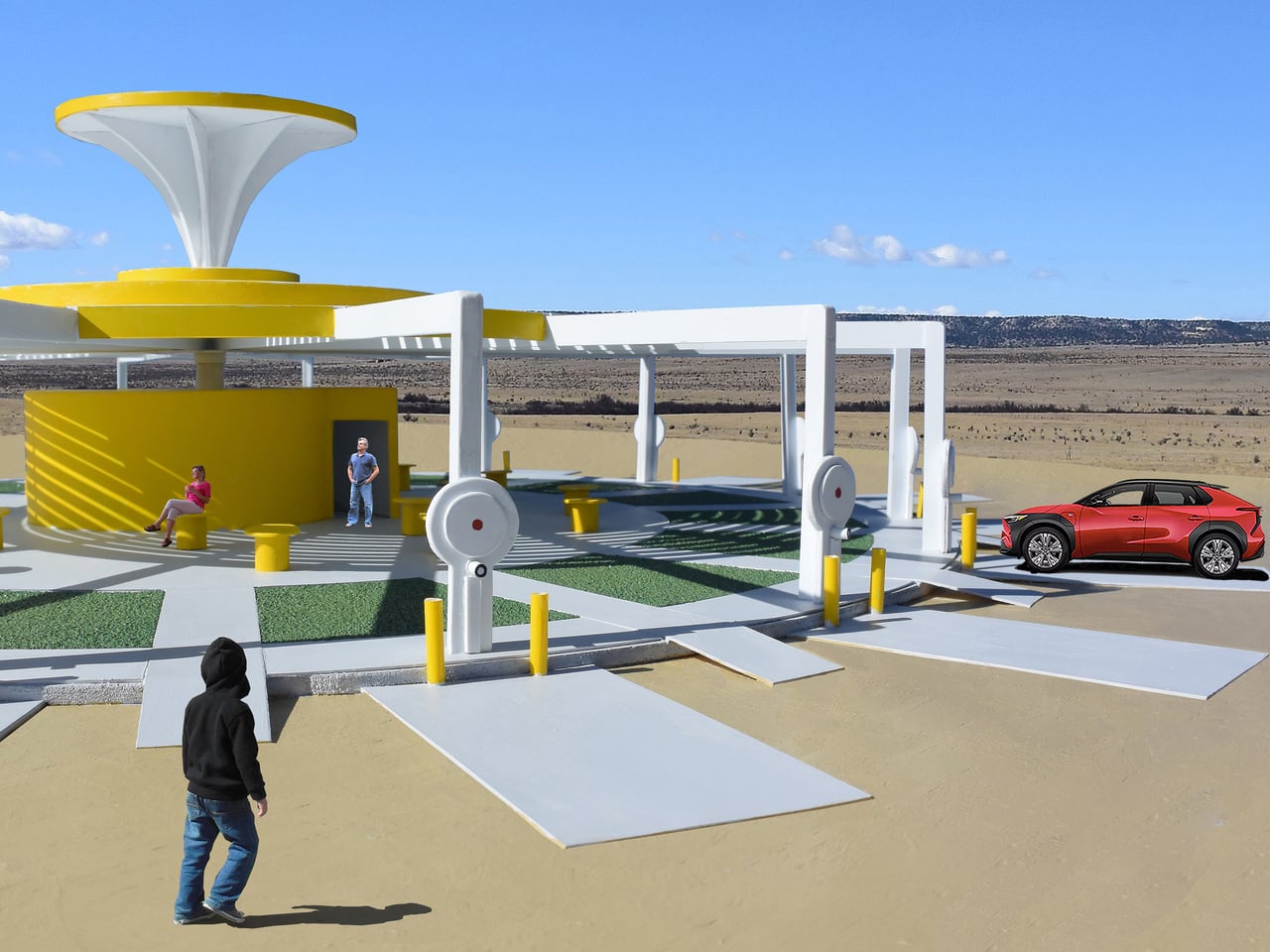
Jantzen intends the walkways and ground-level layout to feel more like a destination than a service stop. The synthetic grass patches introduce a note of green into an otherwise arid setting, and the circular plan gives the facility a clear sense of orientation. You pull in, follow a path inward, and arrive at a shaded space at the center. The sequence is deliberate.
That’s where the shade canopy comes in. The open steel framework radiates outward from the central core, creating a covered space beneath the solar panel above. Drivers aren’t expected to stand in the open desert heat while their vehicles charge. They can move inside, where yellow cylindrical seats and a restroom built into the central structure make the wait genuinely more comfortable.
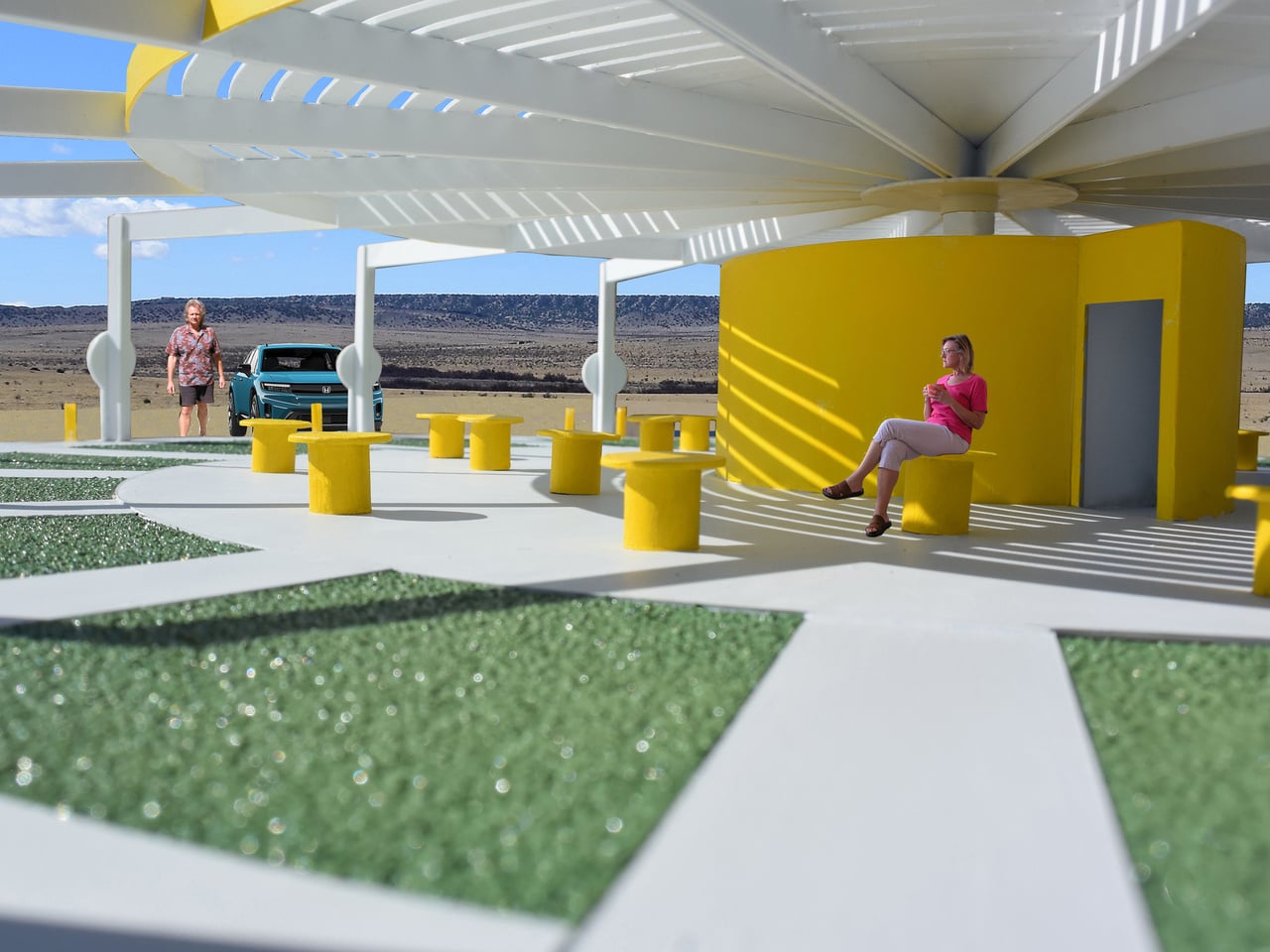
The whole thing is conceived as a landmark as much as it is a facility. Jantzen describes the conceptual logic as electricity flowing from the sun, down through the structure, and into the vehicles below, a visible cycle that gives the station a coherent narrative from top to bottom. That kind of intentionality is what separates it from the standard box-and-cable approach that dominates most existing charging infrastructure.
EV adoption in remote and rural areas still lags, in part because the charging infrastructure hasn’t caught up with demand. A proposal like this doesn’t solve that shortfall outright, but it does ask a more useful question than most: not how to transplant an existing model into the desert, but how to let the desert itself dictate what the design becomes.