
If you follow design at all, you’ve probably seen hundreds of polished chair photos. The perfect angle, the right lighting, a finished product posed against a white backdrop or styled in a beautiful room. What you almost never see is what came before any of that. Not the sketches, not the CAD renders, but the actual physical thinking that happens in a studio before a chair even has a name.
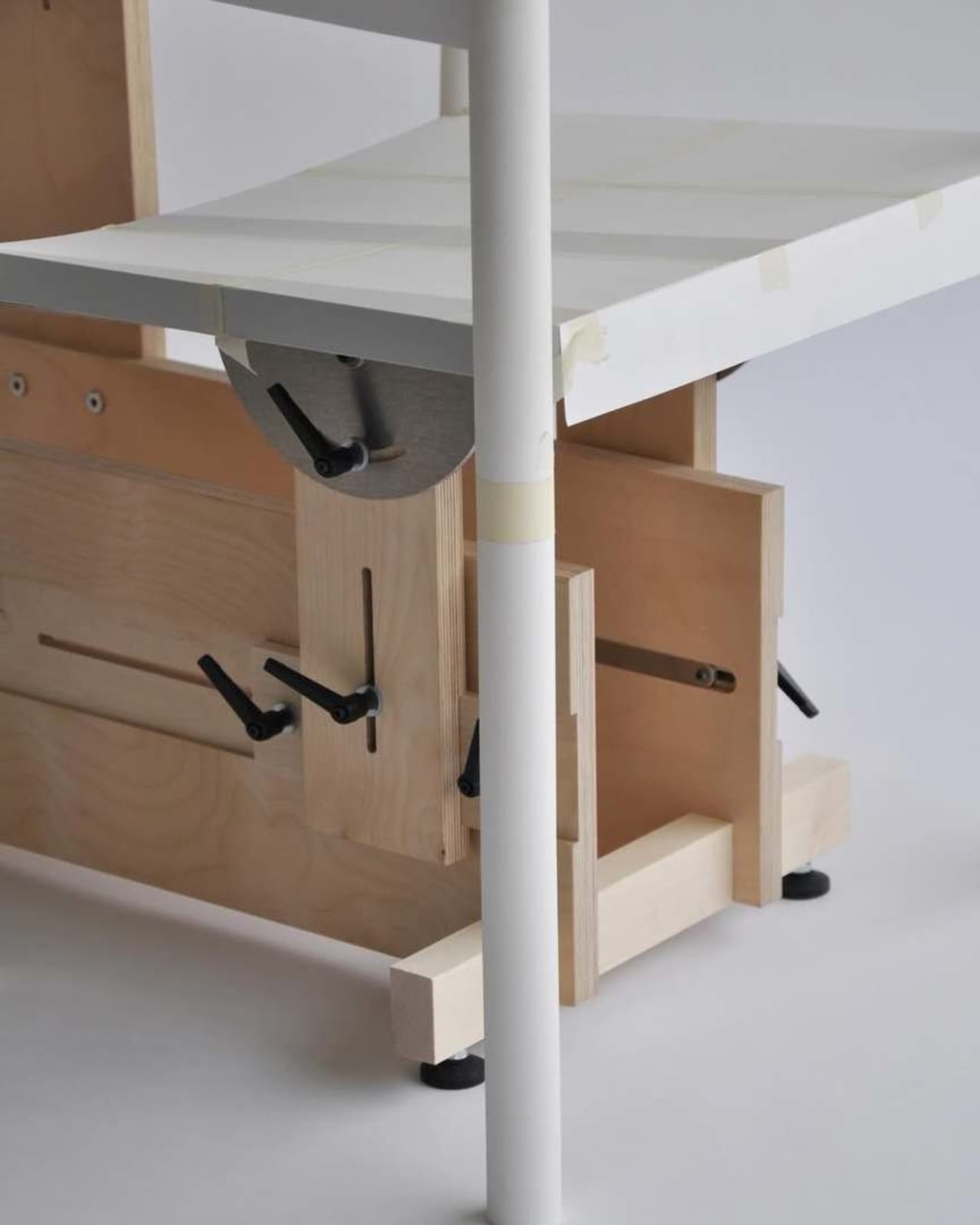
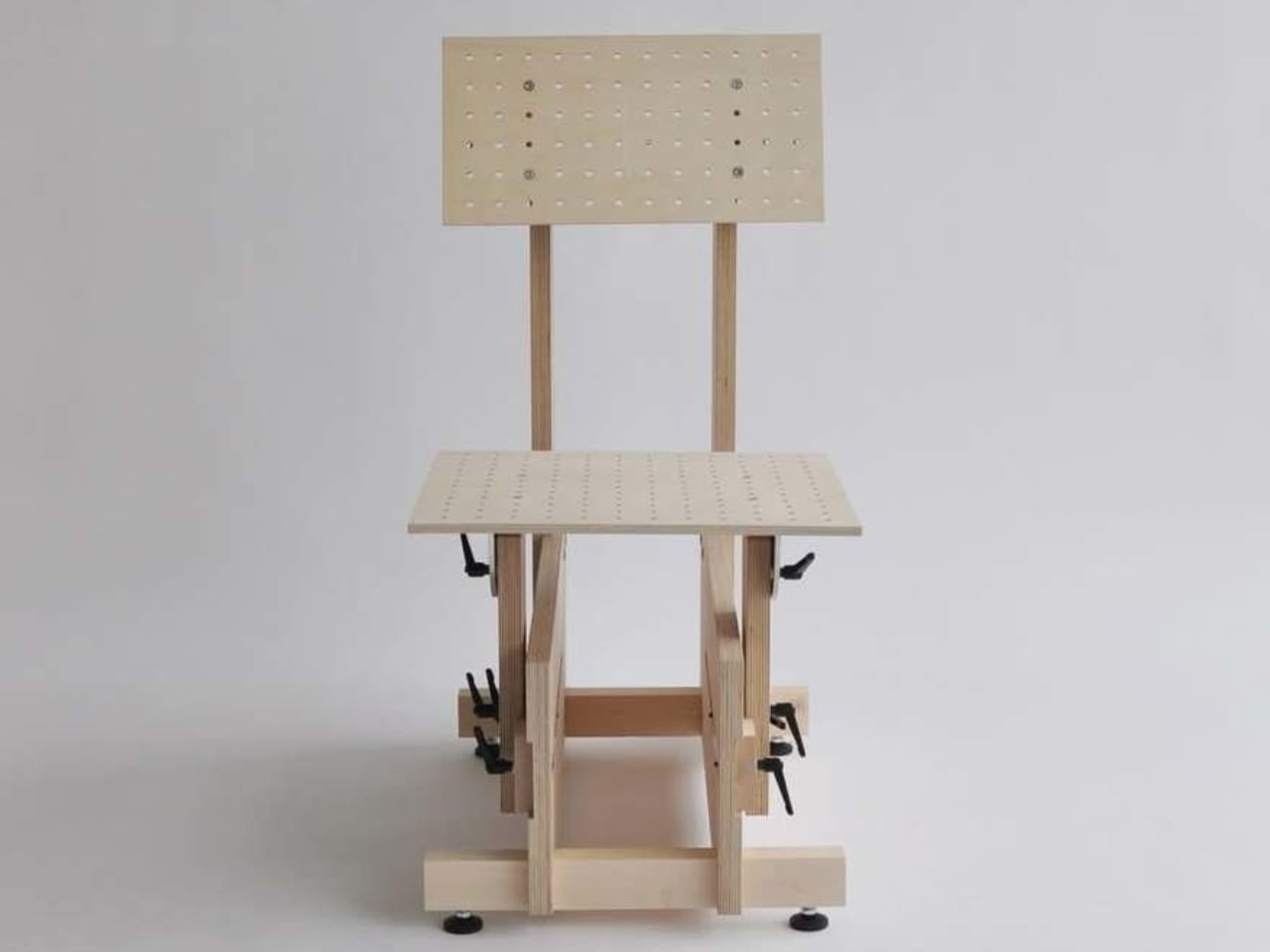
That’s what makes Paris-based industrial designer Timothée Mion’s chair buck such a compelling thing to stumble across. A chair buck, for the uninitiated, is an adjustable rig used to map out the geometry of a chair before committing to any final form. Seat height, seat angle, backrest tilt, all of it gets dialed in on this contraption before a single joint is cut. Mion uses his to work out the exact heights and angles of contact points, then physically sketches in hypothetical supports to see how they feel in real space.
Designer: Timothée Mion
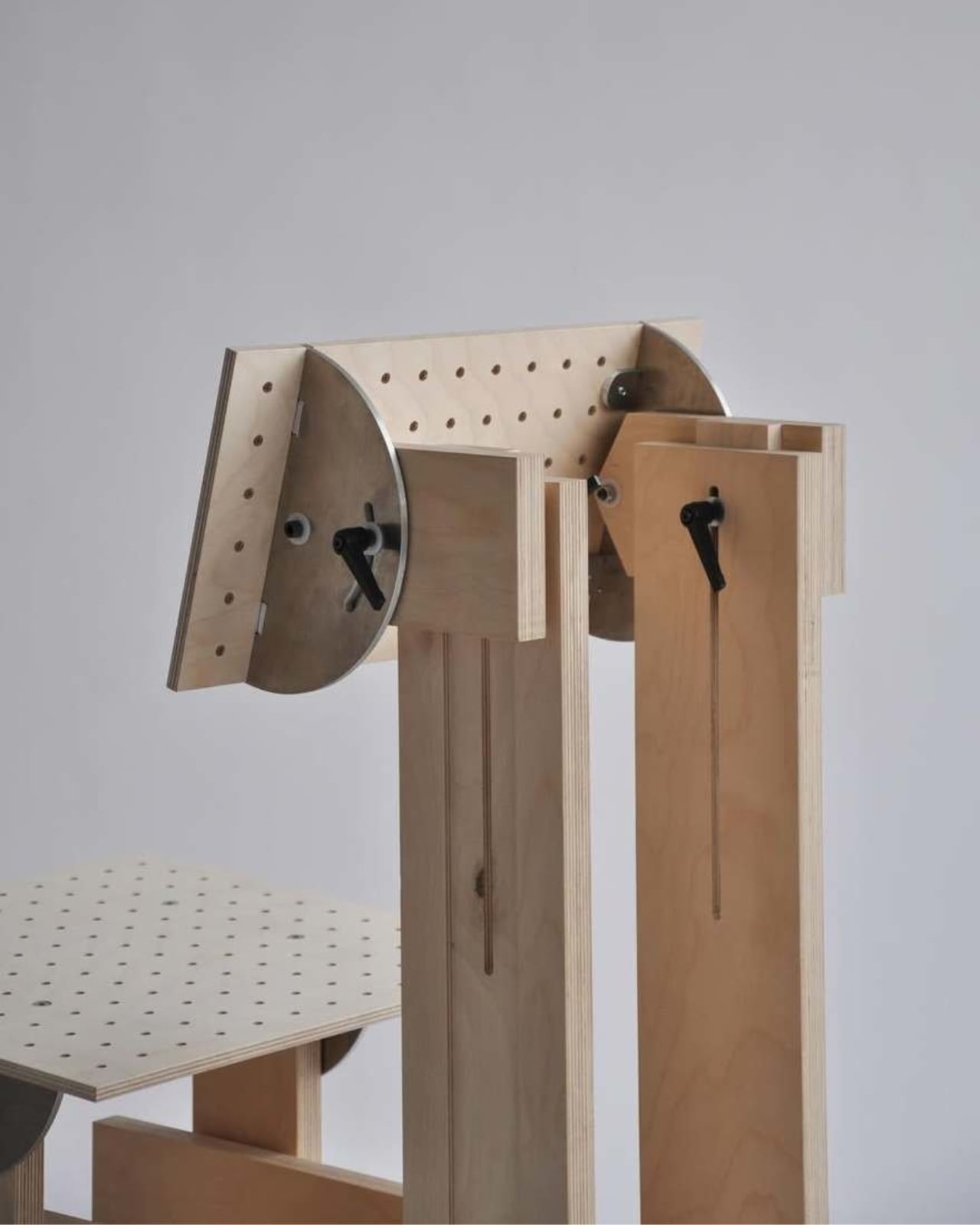

It sounds deceptively simple, but the implications of that process are worth sitting with. We live in an era where the default assumption is that better design tools mean more screen time. Better software, better renders, better simulations. And those tools matter enormously. But Mion’s chair buck is a reminder that some problems still require a body. You can render a chair at any angle and tweak dimensions to the millimeter, but you cannot feel it through a monitor.
This is part of why the chair buck feels quietly radical. It’s an analog tool being used at the front end of a very intentional design practice. Mion studied at Central Saint Martins, trained at studios like Barber & Osgerby, and worked with Hermès before completing his master’s at ECAL in Switzerland. He received the Design Guild Mark award in 2016 for excellence in the British furniture industry. His work is precise, thoughtful, and deeply rooted in materials and craft. The chair buck isn’t a workaround; it’s a deliberate choice to test ideas in the physical world before formalizing them.
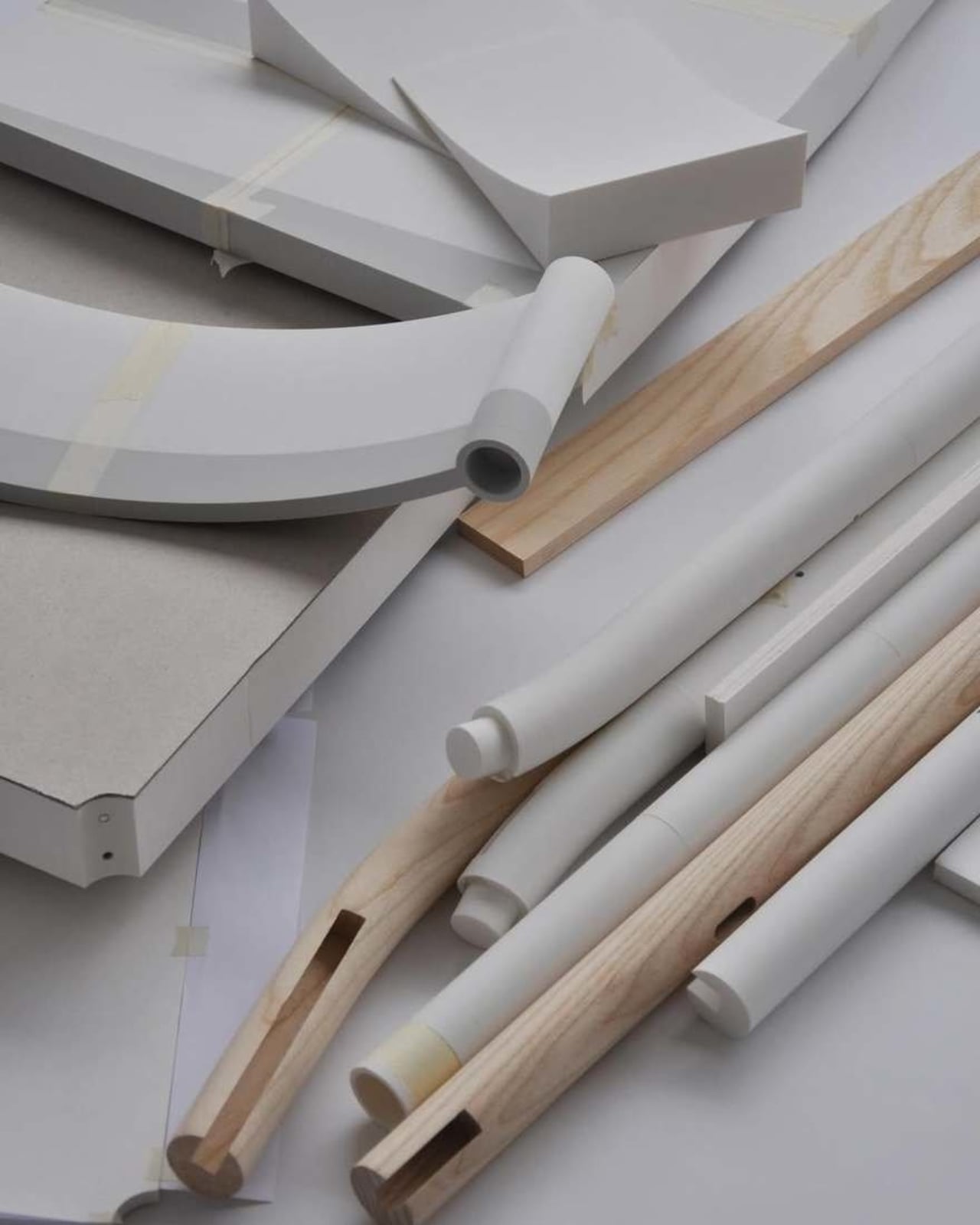
Core77, which featured Mion’s buck earlier this month, noted that these rigs are used widely among industrial designers but are rarely shared publicly. That scarcity feels telling. Design culture tends to celebrate the final object and occasionally the sketch, but the awkward in-between stages? Those usually stay in the studio. There’s a vulnerability to showing a contraption of adjustable parts and raw materials. It doesn’t look polished. It looks like problem-solving, and apparently, we’re more comfortable with the solved version.
But the messy middle is often the most interesting part. Mion describes the process as one where “the act of making becomes part of the design itself.” The proportions get explored in real space. The angles get tested by an actual body. The design doesn’t just live on a screen; it gets inhabited before it’s finished. That reframes the chair buck not as a preliminary step but as a core part of the creative act.
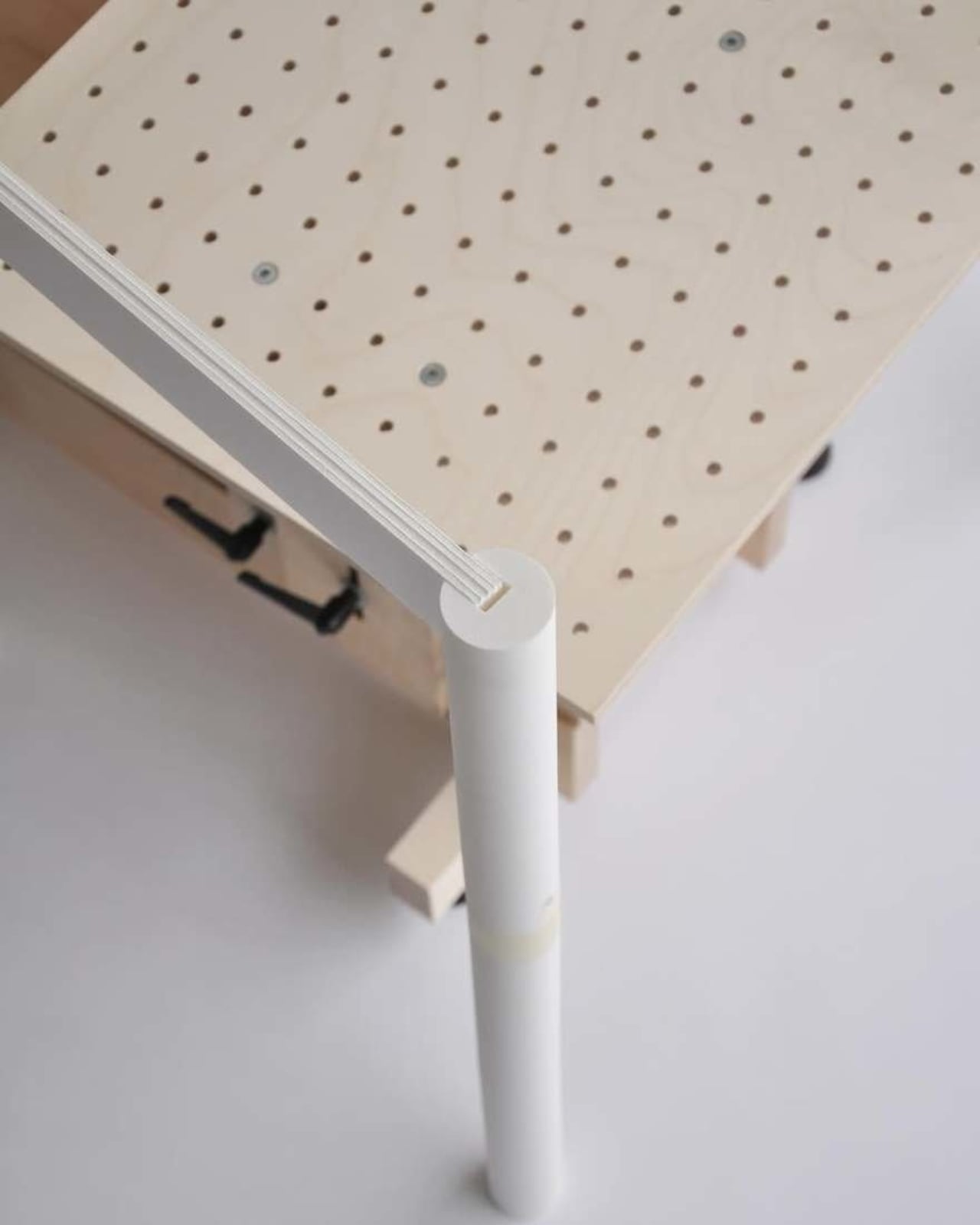
This approach isn’t exactly new, but it is becoming rarer, and that’s worth paying attention to. Before software like CAD put ergonomic data at everyone’s fingertips, chair bucks were a standard part of the furniture design process. They were how you figured out if something would actually feel good to sit in. Now that information largely lives in databases and simulation tools, and the physical prototype often comes much later in the process, if at all.
Mion’s chair buck feels like a quiet argument for slowing down. Not in any nostalgic sense, and not a rejection of digital tools, but a genuine belief that physical intuition belongs in the process too. It’s the kind of design thinking that doesn’t make headlines, but tends to produce chairs that are genuinely good to sit in. And at the end of the day, that might be the most honest benchmark there is.