
What does a McLaren F1 look like when you strip away the constraints of 1990s manufacturing technology but keep the design philosophy intact? That was the challenge Kevin Andersson set for himself when he began reimagining the iconic supercar as a personal design study. The original F1 was the product of specific limitations: Gordon Murray’s engineering team worked with the tools, materials, and aerodynamic understanding available in the early 1990s, and the car’s form emerged from that context. Andersson’s concept operates in a different world, one where carbon fiber monocoques are routine, where Formula 1 suspension systems inform road car design, and where Blender can generate photoreal renders that communicate design intent with startling clarity.
The reimagined F1 maintains the sacred proportions of the original while evolving its surface language into something more contemporary. The long hood remains, a visual reminder that this car houses a naturally aspirated engine positioned just behind the driver. The greenhouse retains the cab-forward stance that made the original F1 look like it was moving even when parked. The rear haunches are muscular without being cartoonish, and the whole package reads as a single, cohesive form rather than an assembly of disparate parts. Andersson’s renders, shot in both glossy white and menacing dark gray, show a car that could plausibly emerge from McLaren’s design studio today if the brand decided to revisit its analog past.
Designer: Kevin Andersson

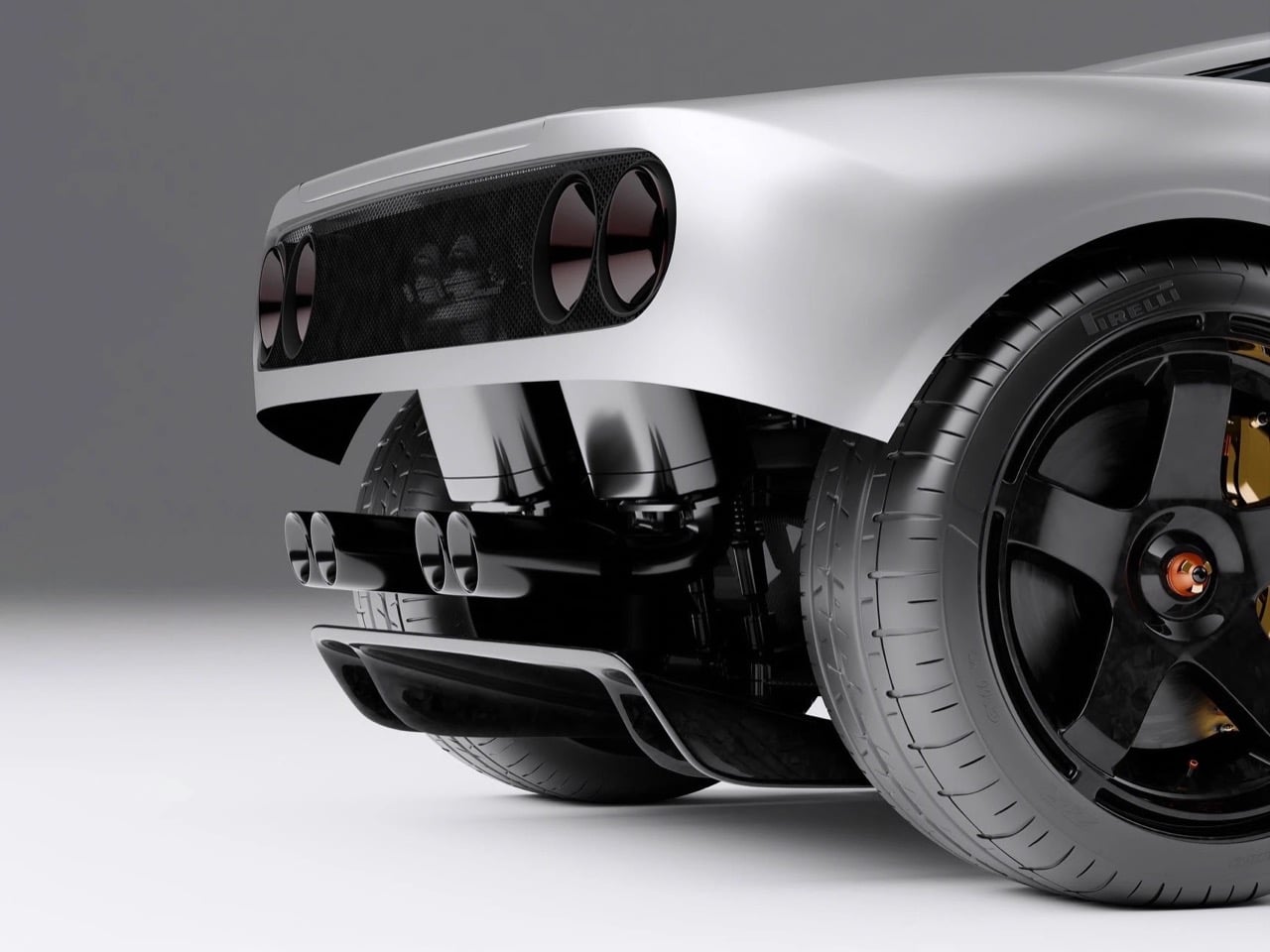
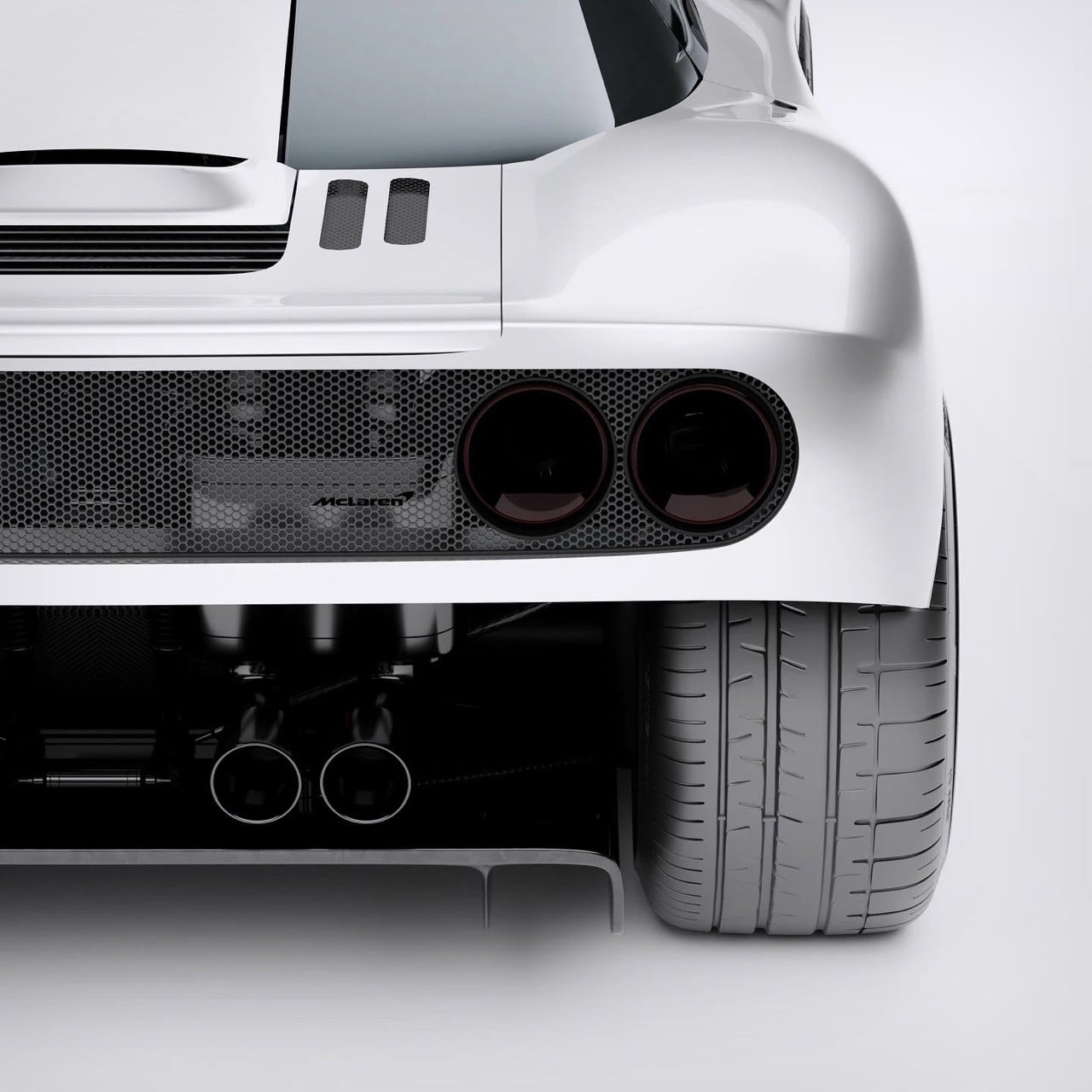
Andersson began with the monocoque, the structural skeleton that defines a car’s fundamental character. His design uses an exposed carbon fiber tub that references contemporary Formula 1 construction, with integrated mounting points for pushrod suspension components visible in the cutaway renders. The suspension itself draws directly from modern F1 technology, using inboard-mounted dampers and pullrod geometry at the front, pushrod at the rear. Gold-anodized brake calipers grip carbon-ceramic rotors, a functional nod to the original F1’s gold-lined engine bay. The exhaust system, rendered in titanium with a purple-blue heat patina, exits through centrally mounted tips that echo the original car’s triple-pipe signature.

The exterior form language walks a careful line between heritage and modernity. Andersson retained the original F1’s defining visual cues: the teardrop cabin, the prominent side air intakes, the dihedral doors (he kept the distinctive upward-swinging doors rather than the gullwing configuration). The headlights are recessed horizontal units that recall the original’s pop-up lights without literally reproducing them. The front splitter and rear diffuser are far more aggressive than anything Gordon Murray would have approved in 1993, a reflection of three decades of aerodynamic development in motorsport. The rear wing deploys from a recess in the engine cover, maintaining clean lines when retracted but providing genuine downforce when needed.



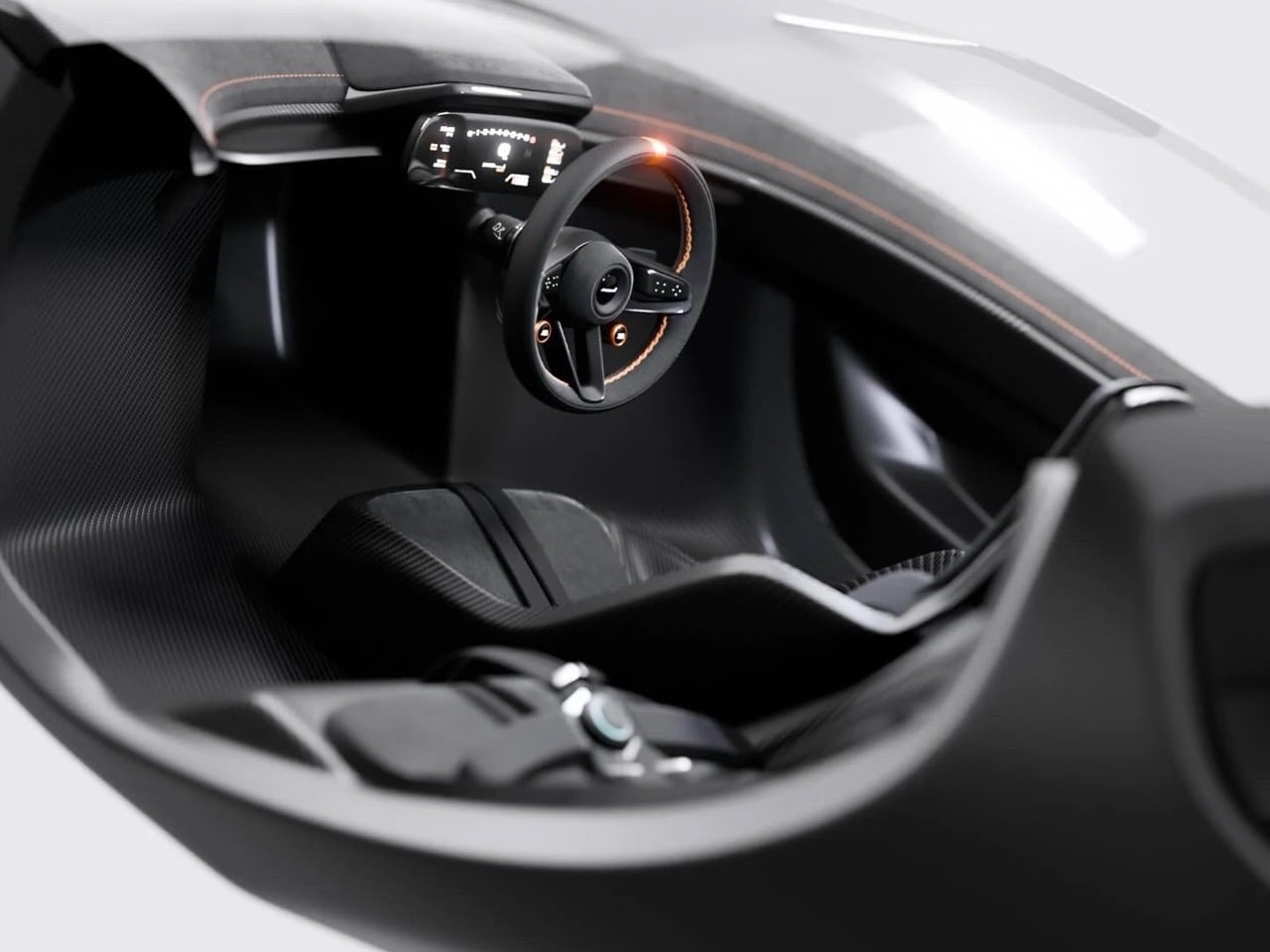
Inside, the central driving position remains sacred. Andersson designed a minimalist cockpit wrapped entirely in carbon fiber, with two flanking passenger seats positioned slightly rearward in the classic McLaren F1 three-seat configuration. The steering wheel is a flat-bottomed carbon unit with integrated controls and orange anodized paddle shifters. The instrument cluster is a single curved digital display that spans the width of the dash, showing speed, revs, and telemetry data with the clarity of a modern race car. Orange contrast stitching runs throughout the black leather trim, providing visual warmth without compromising the cockpit’s focused, technical atmosphere. The six-point harnesses are mounted directly to the carbon tub, reinforcing the competition intent.
Andersson’s eight-month journey from initial concept to final renders demonstrates what’s possible when a talented designer commits to a genuinely thoughtful reinterpretation rather than a superficial homage. His McLaren F1 Reimagined preserves the original’s analog soul while embracing the materials, manufacturing techniques, and aerodynamic understanding that define contemporary hypercar development. The renders communicate a car that Gordon Murray might actually approve of, a genuine evolution of his original vision rather than a pastiche. Whether McLaren itself will ever revisit the F1’s central-seat, naturally aspirated philosophy remains unlikely, but Andersson has shown what that future could look like if they did.