
PROS:
- Bright and smooth 11.2-inch display
- Solid accessory ecosystem
- Long battery life
CONS:
- No microSD card slot
- No official IP rating
Xiaomi Pad 8 is built for casual buyers who want a fast, good-looking tablet without paying flagship prices. It keeps the familiar Pad design, but pairs it with a sharp 11.2-inch 3.2K class 144 Hz display, strong quad speakers, and a noticeably more powerful Snapdragon 8s Gen 4 chipset. The result is a device that feels premium for streaming, browsing, and gaming, even if it is not trying to reinvent what a Xiaomi tablet looks like.
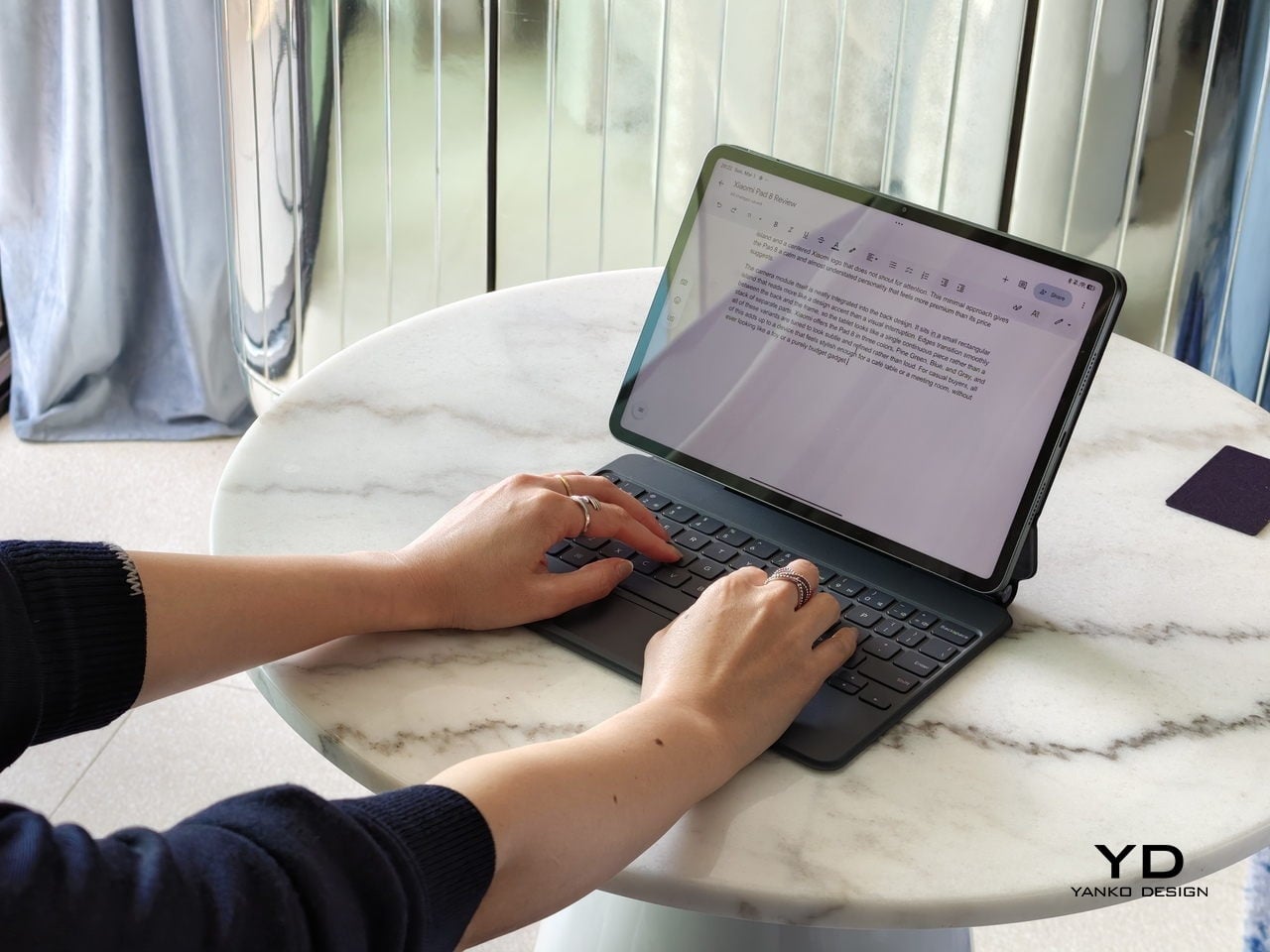
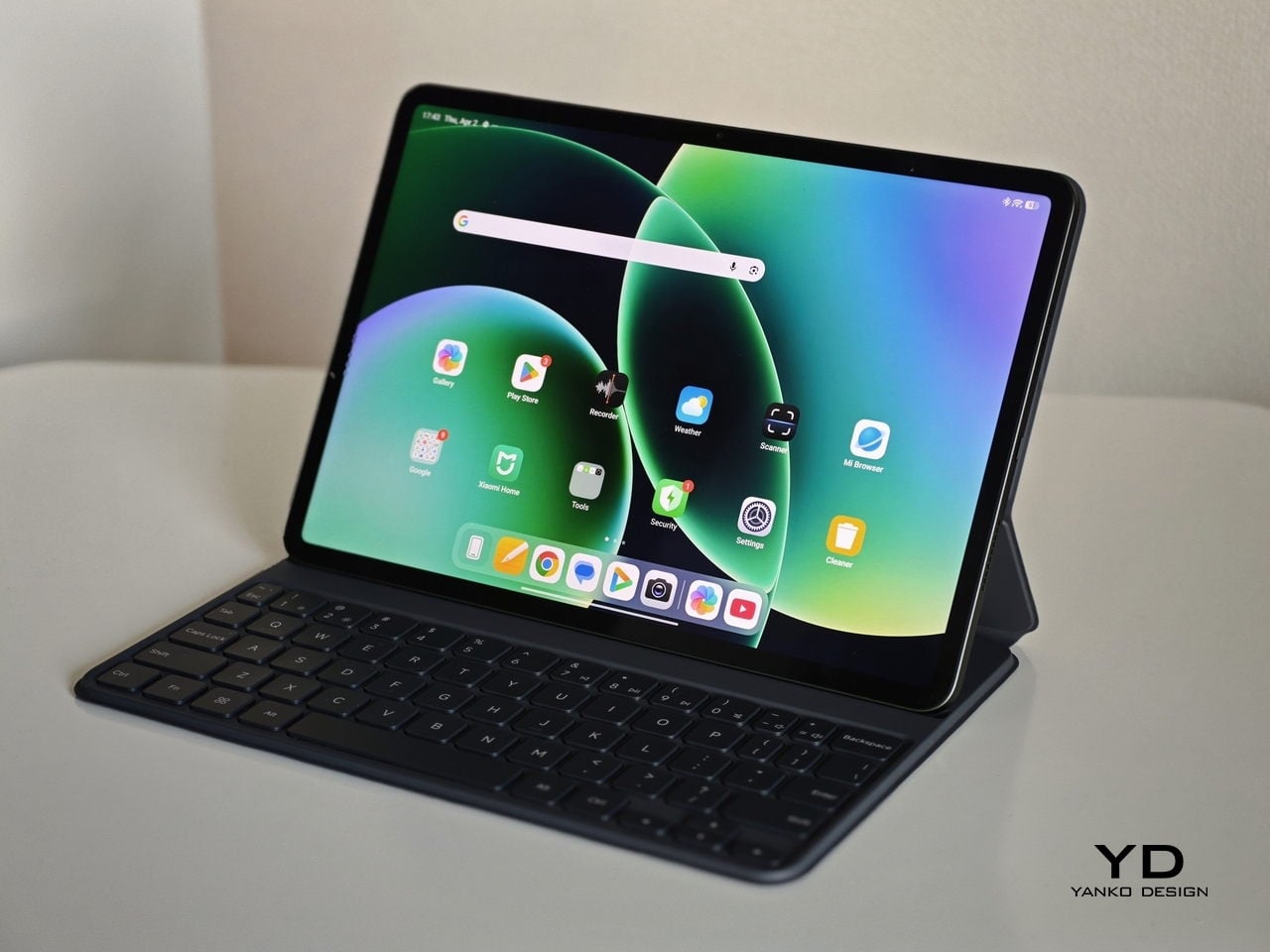
What matters is how complete the package feels in daily use. HyperOS 3 keeps the interface smooth and adds useful multitasking tools like split screen and desktop mode for light productivity. Xiaomi also supports the tablet with practical accessories, including two keyboard options, a cover that doubles as a stand, and the Focus Pen Pro for notes and sketches. If you want one tablet that can handle entertainment and occasional work, Pad 8 is designed to fit that role.
Designer: Xiaomi
Aesthetics
From the outside, the Xiaomi Pad 8 looks almost identical to its predecessor, the Xiaomi Pad 7. The design follows a flat edge language with soft rounded corners that soften the overall silhouette and keep it friendly in the hand. The rear panel is simple and uncluttered, with a single camera island and a centered Xiaomi logo that does not shout for attention. This minimal approach gives the Pad 8 a calm and almost understated personality that feels more premium than its price suggests.
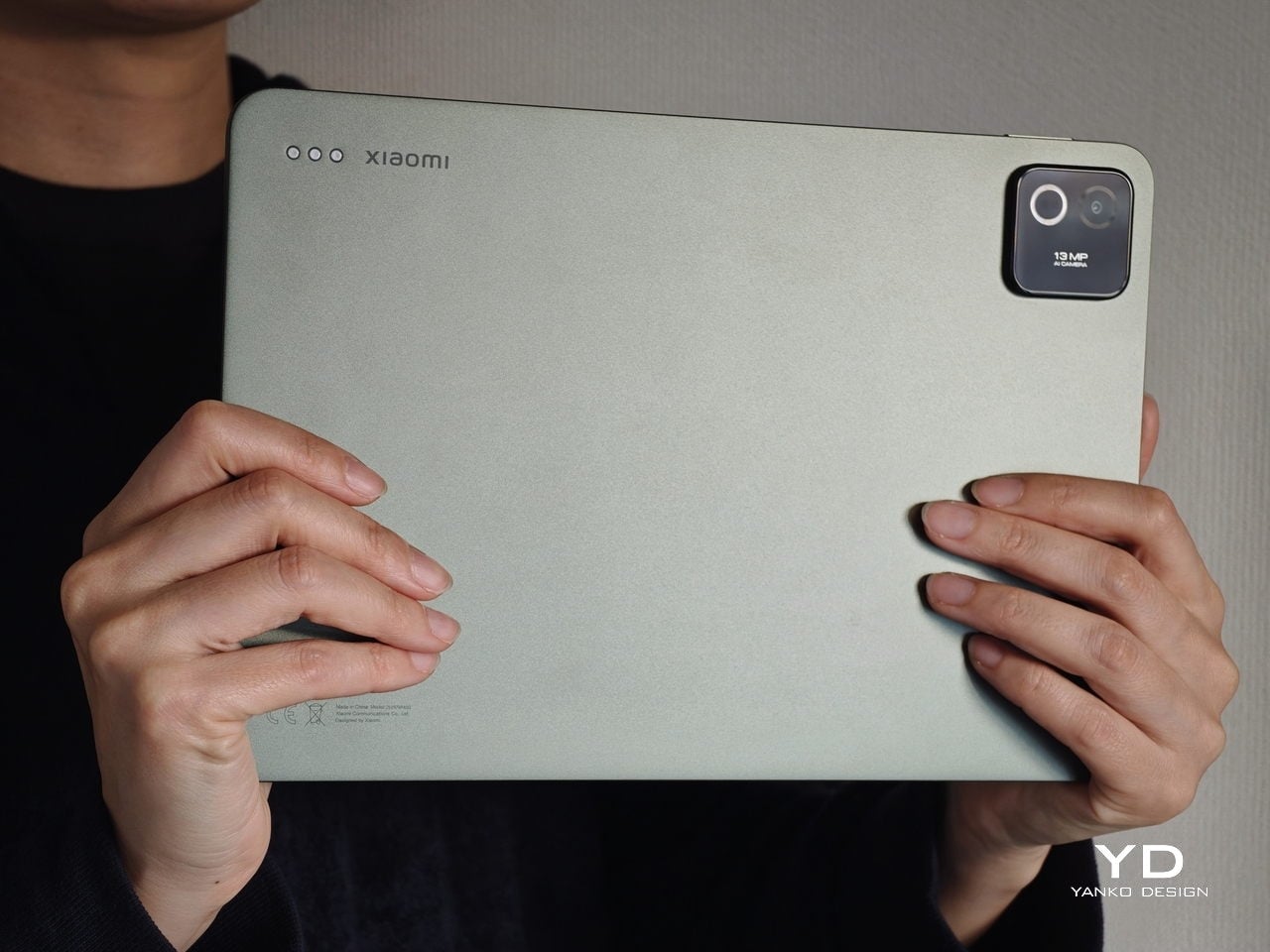
The camera module itself is neatly integrated into the back design. It sits in a small rectangular island that reads more like a design accent than a visual interruption. Edges transition smoothly between the back and the frame, so the tablet looks like a single continuous piece rather than a stack of separate parts. Xiaomi offers the Pad 8 in three colors, Pine Green, Blue, and Gray, and all of these variants are tuned to look subtle and refined rather than loud. All of these add up to a device that feels stylish enough for a café table or a meeting room, without ever looking like a toy or a purely budget gadget.
Ergonomics
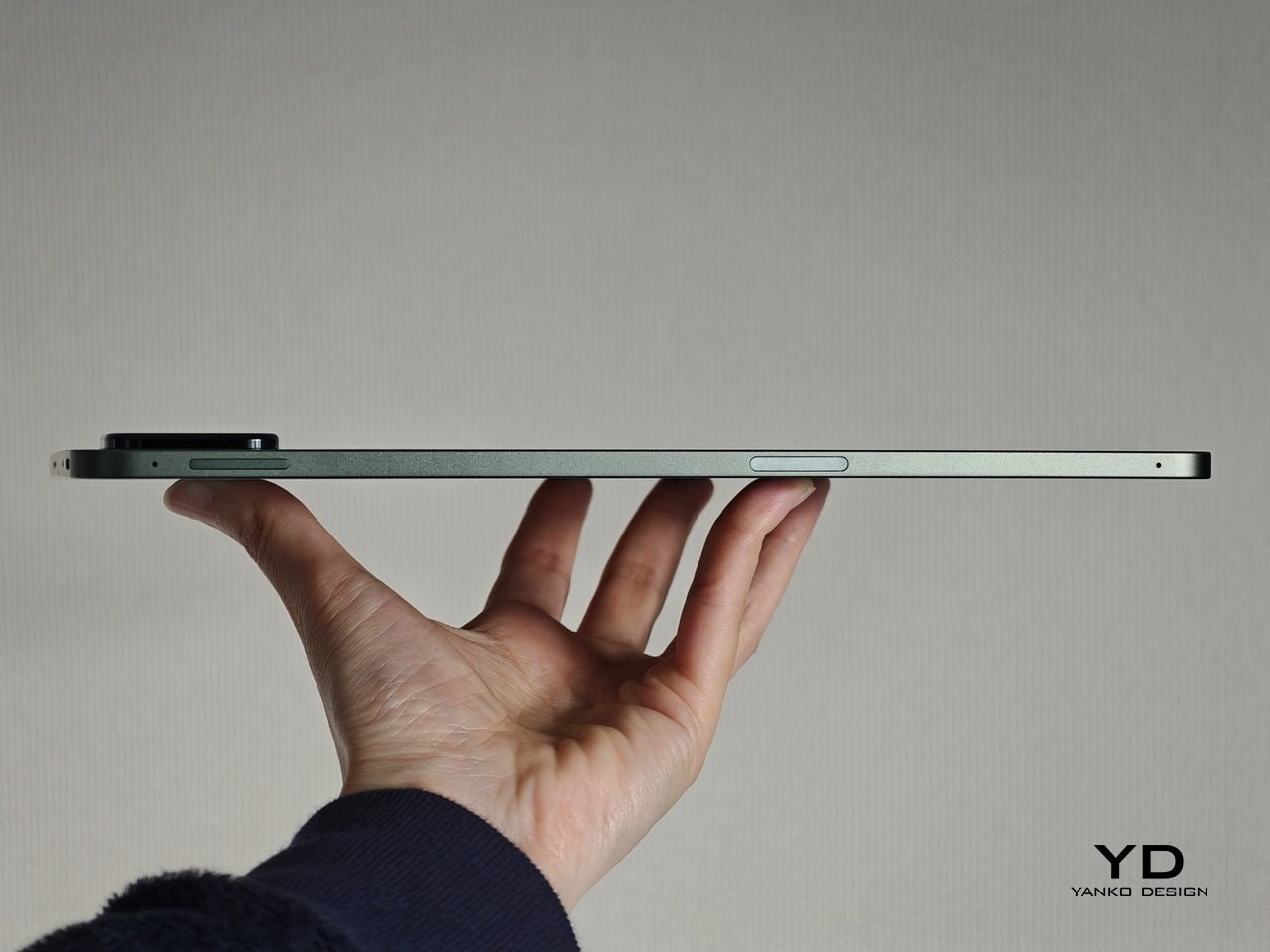
While the design focuses on clean lines and visual calm, the build of the Xiaomi Pad 8 focuses on comfort and practicality. Pad 8 measures 241.2 x 173.4 x 5.8 mm and weighs either 485g or 494g, depending on the variant, which makes it slightly slimmer and lighter than Xiaomi Pad 7. The difference on paper may look small, yet in the hand it translates into a tablet that feels more refined and easier to hold for long stretches. For casual users who spend evenings streaming or reading, this gentle reduction in bulk becomes a quiet but meaningful upgrade.
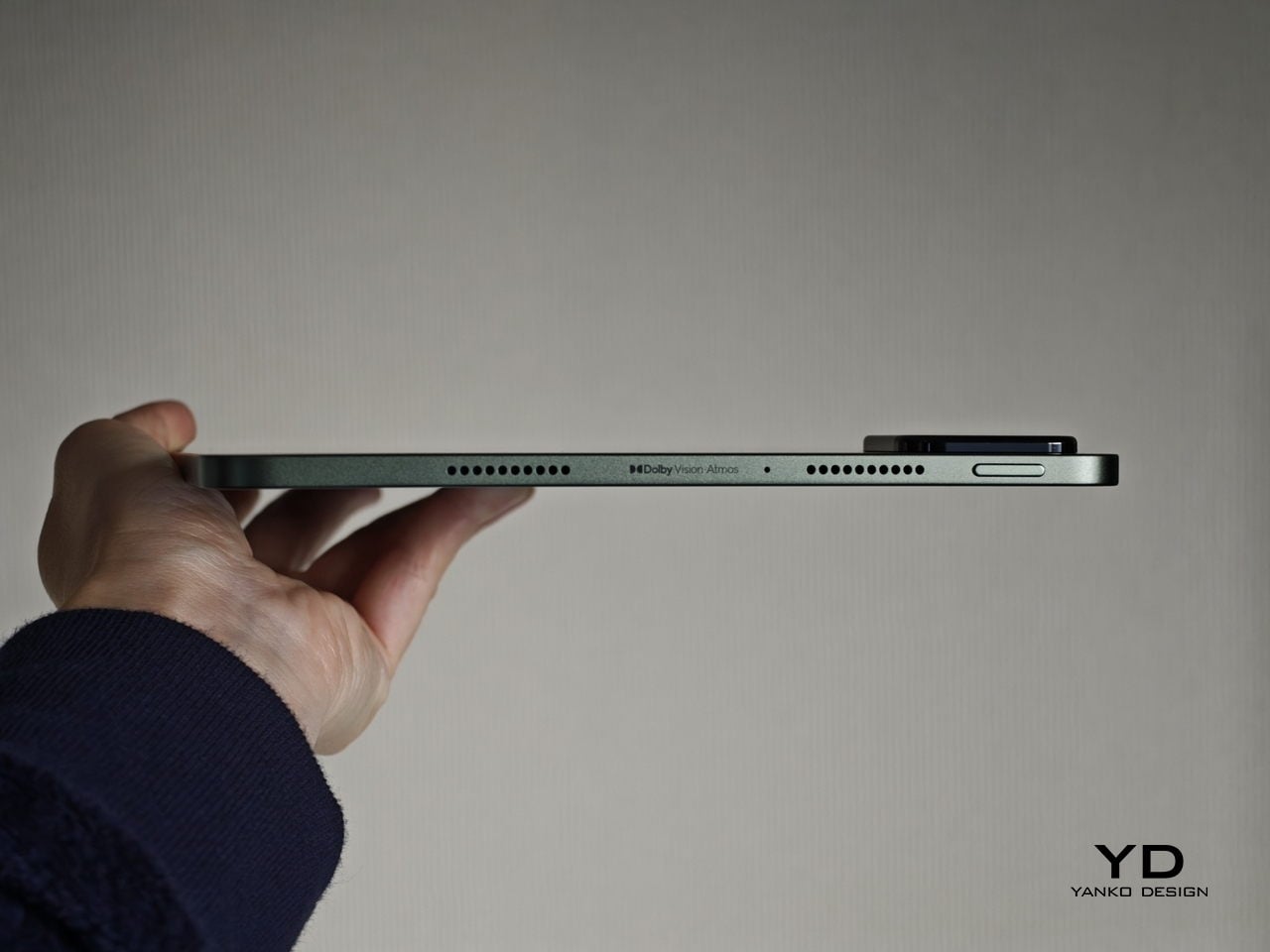
The metal frame feels sturdy in the hand and gives the tablet a reassuring sense of solidity. Button placement feels thoughtful as well, with the power and volume keys sitting where your fingers naturally land when you hold the tablet. You do not have to stretch awkwardly to adjust volume during a show, which keeps the experience relaxed and natural. The stereo speakers are positioned so that your hands are less likely to block them when you grip the device in landscape, which helps maintain clear sound without forcing you to change how you hold the tablet.
Performance
The display remains largely unchanged from Pad 7. You get an 11.2-inch IPS panel with a sharp 3.2K class resolution and a very fast 144 Hz refresh rate. Brightness peaks around 800 nits, which is strong for an LCD in this range and helps keep the screen readable near windows or outdoors on bright days. It supports DCI P3, HDR10, HDR10+, HDR Vivid, and Dolby Vision, so movies and shows benefit from richer colors and better contrast when the content is mastered for it.
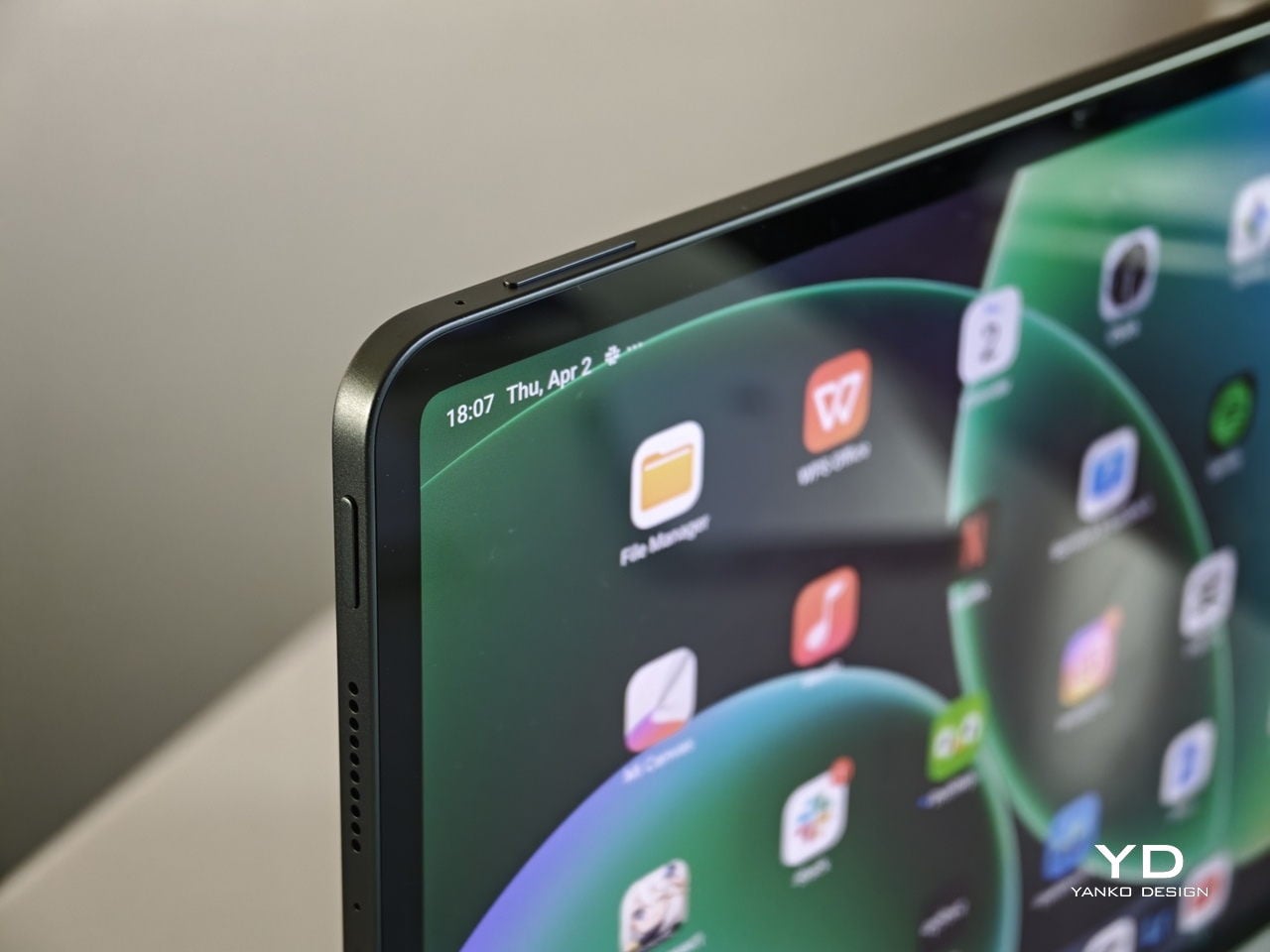
Like most tablets with a glossy front glass, the Pad 8 screen is fairly reflective, so you will notice glare near bright windows or under strong indoor lighting. It is not worse than what you will see on most competing tablets. Xiaomi will also offer a Pad 8 Matte Glass version globally, and that option should be the better pick if reflections annoy you.
Audio quality keeps pace with the visuals. The Pad 8 uses a four-speaker setup that creates a satisfying level of volume and a well-balanced soundstage. Voices stay clear in dialogue-heavy scenes, while music and effects have enough presence to make games and films feel more immersive. This means you can comfortably watch or play without always reaching for headphones.
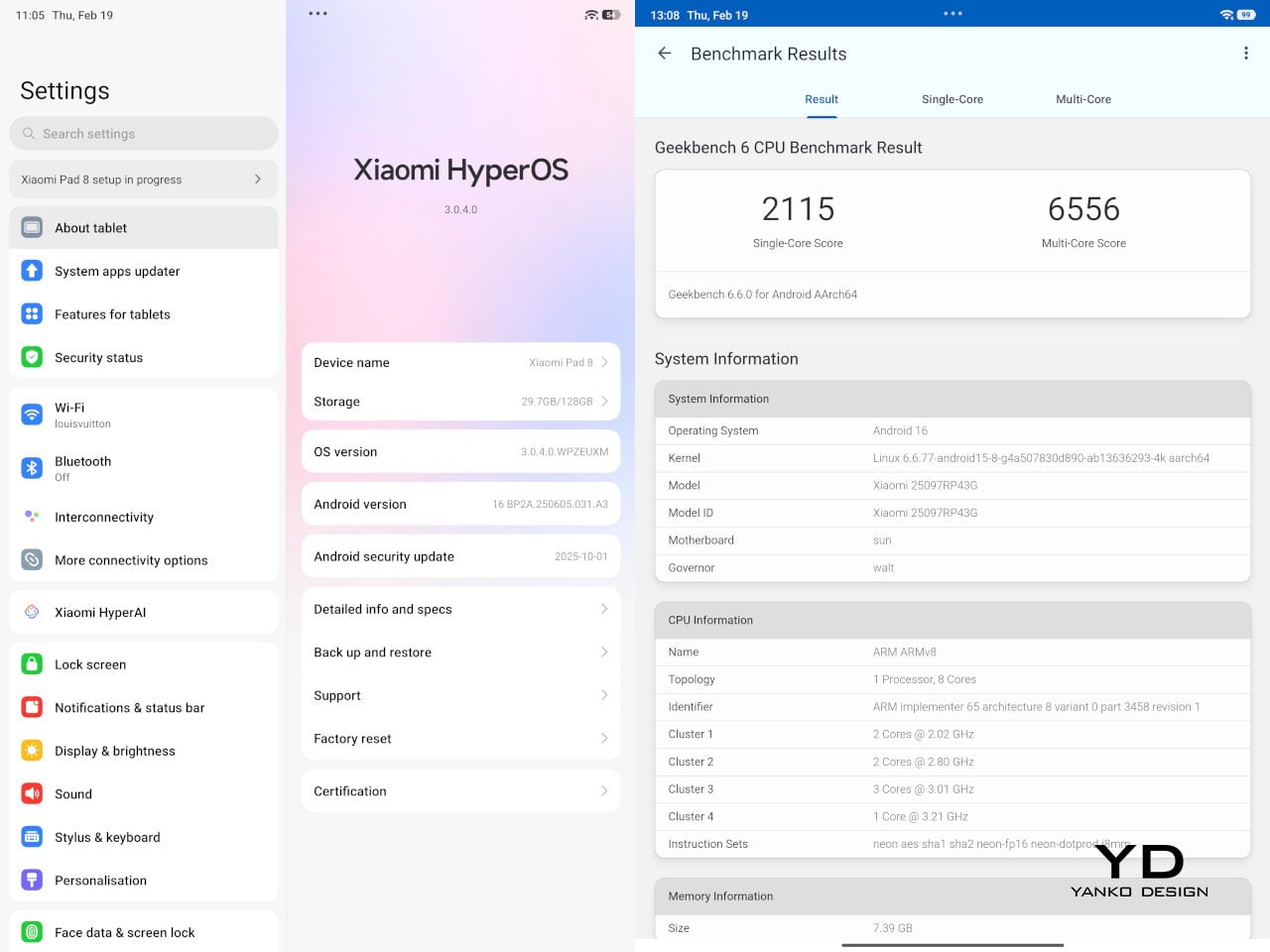
The biggest upgrade comes from the chipset. Xiaomi Pad 8 runs on the Snapdragon 8s Gen 4 processor, and the GPU delivers plenty of power for modern titles and smooth animations across the interface. Even when you play graphically demanding games for long sessions, the device does not stutter, and it keeps its temperature under control, so performance remains stable, and the tablet stays comfortable to hold.
That performance is backed by a straightforward set of memory and storage options. You can choose between 8 GB and 128 GB, 8 GB and 256 GB, or 12 GB and 256 GB. The 8 GB model uses LPDDR5X memory, while the 12 GB model steps up to LPDDR5T, and storage is either 128 GB UFS 3.1 or 256 GB UFS 4.1, depending on the version you choose. There is no microSD card slot, so it is worth picking the capacity you will be happy with long term. The USB-C port also supports display output, so you can connect Pad 8 to an external monitor when you need a bigger screen for work or entertainment.
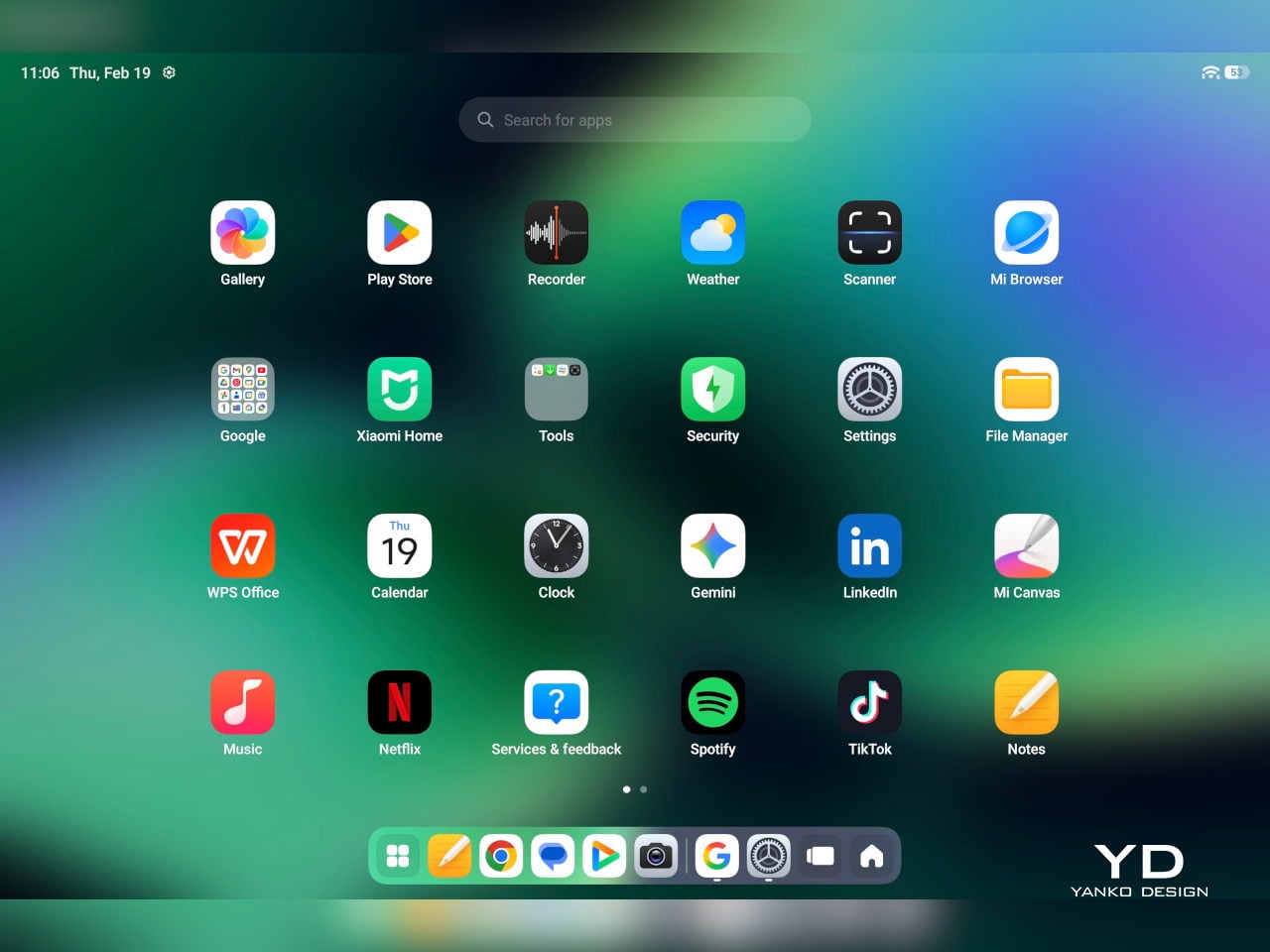
Xiaomi Pad 8 runs HyperOS 3 based on Android 16, and it feels quick and modern. The interface is clean, and it makes the large screen feel purposeful rather than like a stretched phone layout. It stays out of your way and keeps everyday tasks feeling smooth.
It supports split-screen multitasking, including a vertical split view that makes better use of the display. Xiaomi also keeps its desktop mode here, letting you open up to four floating, flexible windows at once for light productivity. This is handy when you want to browse, chat, and reference a document without constantly switching apps.
If you already own a Xiaomi phone, the ecosystem integration works very well. You can transfer calls and files between your phone and tablet seamlessly, and you can even mirror your phone screen directly on the Pad 8. For users who live in the Xiaomi ecosystem, this kind of connected experience makes the tablet feel like a natural extension of your phone rather than a separate device.
Cameras are not a headline feature on most tablets, and Xiaomi Pad 8 follows that familiar pattern. You get a 13 MP rear camera and an 8 MP front camera, which is enough for scanning documents, grabbing reference photos, and handling video calls without fuss. Image quality is best in good light, but for casual use, it is perfectly serviceable and convenient.
Battery size sees a modest upgrade, now with a 9200 mAh cell instead of the 8850 mAh unit in Pad 7, and it matches the capacity of the more expensive Pad 8 Pro. In real use, that means a full day of mixed activity is easy to achieve, even if you spend several hours streaming video and browsing. Light users who mostly read, check email, and watch a bit of content in the evening can often stretch the tablet across multiple days between charges.
Charging speed is unchanged from Pad 7 at 45W, so you still get reasonably quick top-ups when you plug in. Pad 8 now also supports 25W reverse charging, which lets you use the tablet as a power source for other devices when needed. This is especially handy for phones, earbuds, or accessories that are running low, and it adds a practical bonus to that large battery that casual users will appreciate on trips or long days out.
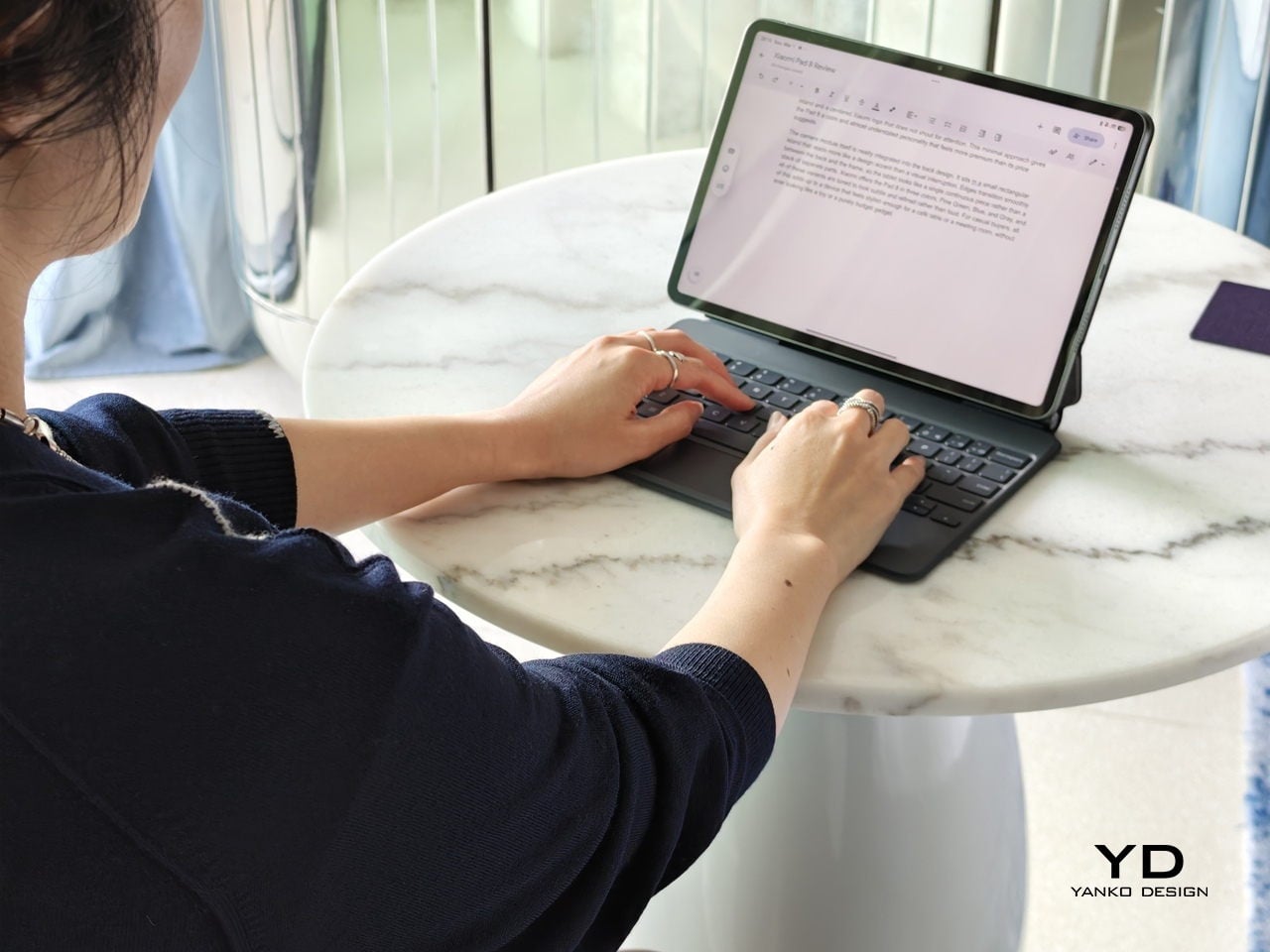
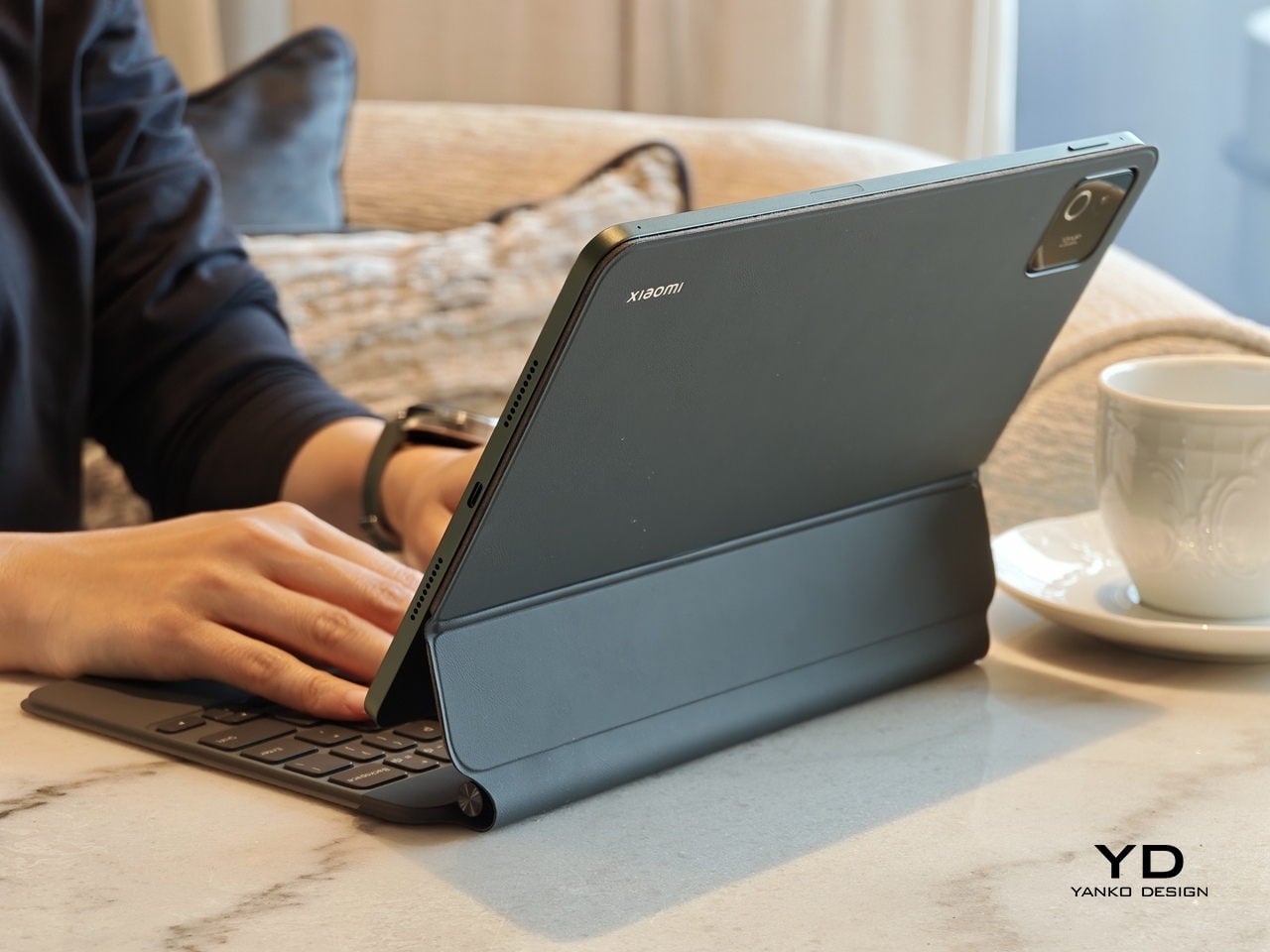
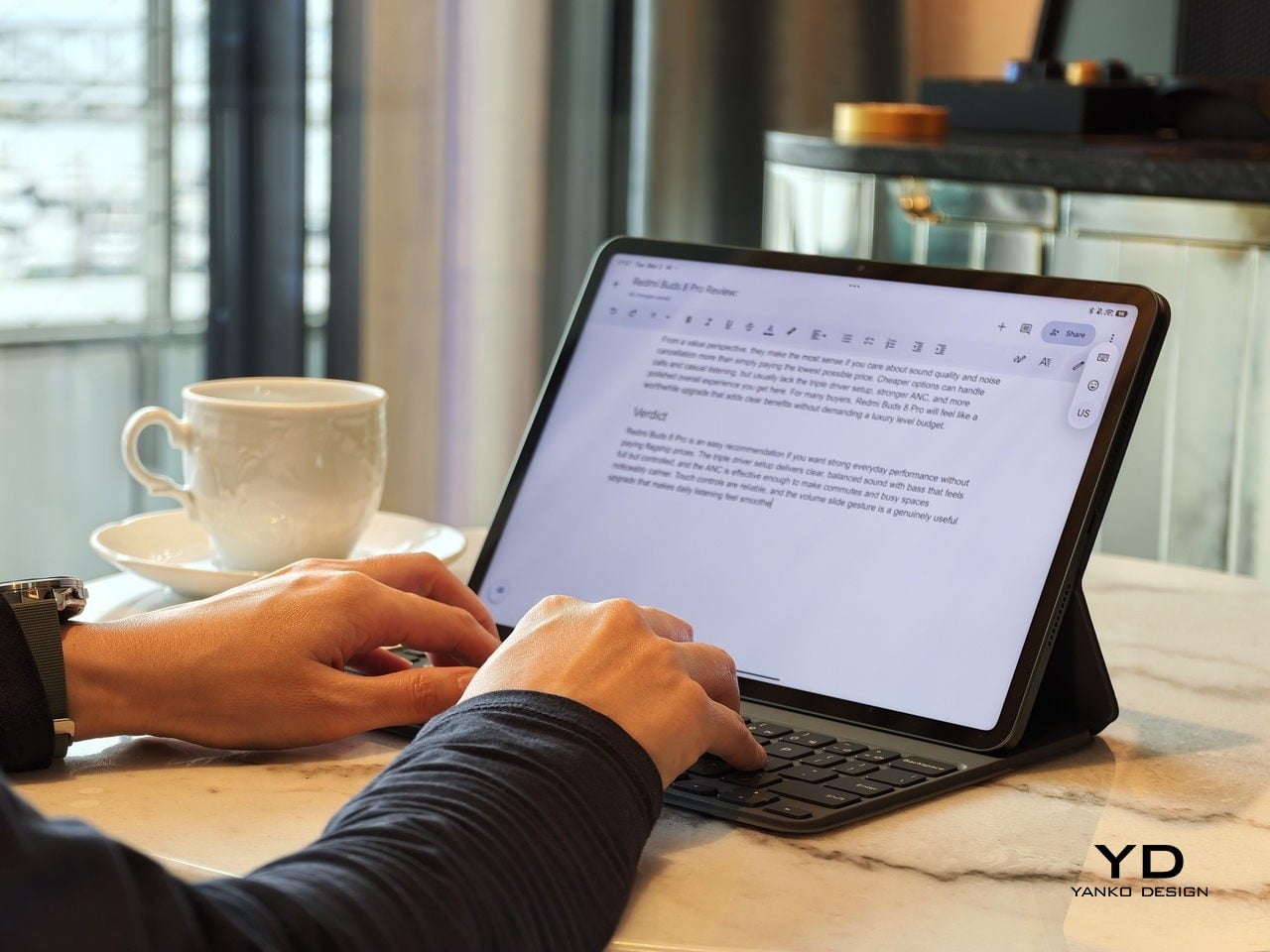
Xiaomi offers a solid accessory lineup for Pad 8, including the Xiaomi Pad 8 and Pad 8 Pro Focus Keyboard, the standard Keyboard, the Cover, and the Xiaomi Focus Pen Pro. Both keyboards are comfortable to type on, and the cover doubles as a stand for easy viewing. If you are coming from Pad 7, most of these accessories will feel familiar, since the Focus Keyboard, Keyboard, and Cover are largely unchanged from the previous generation.
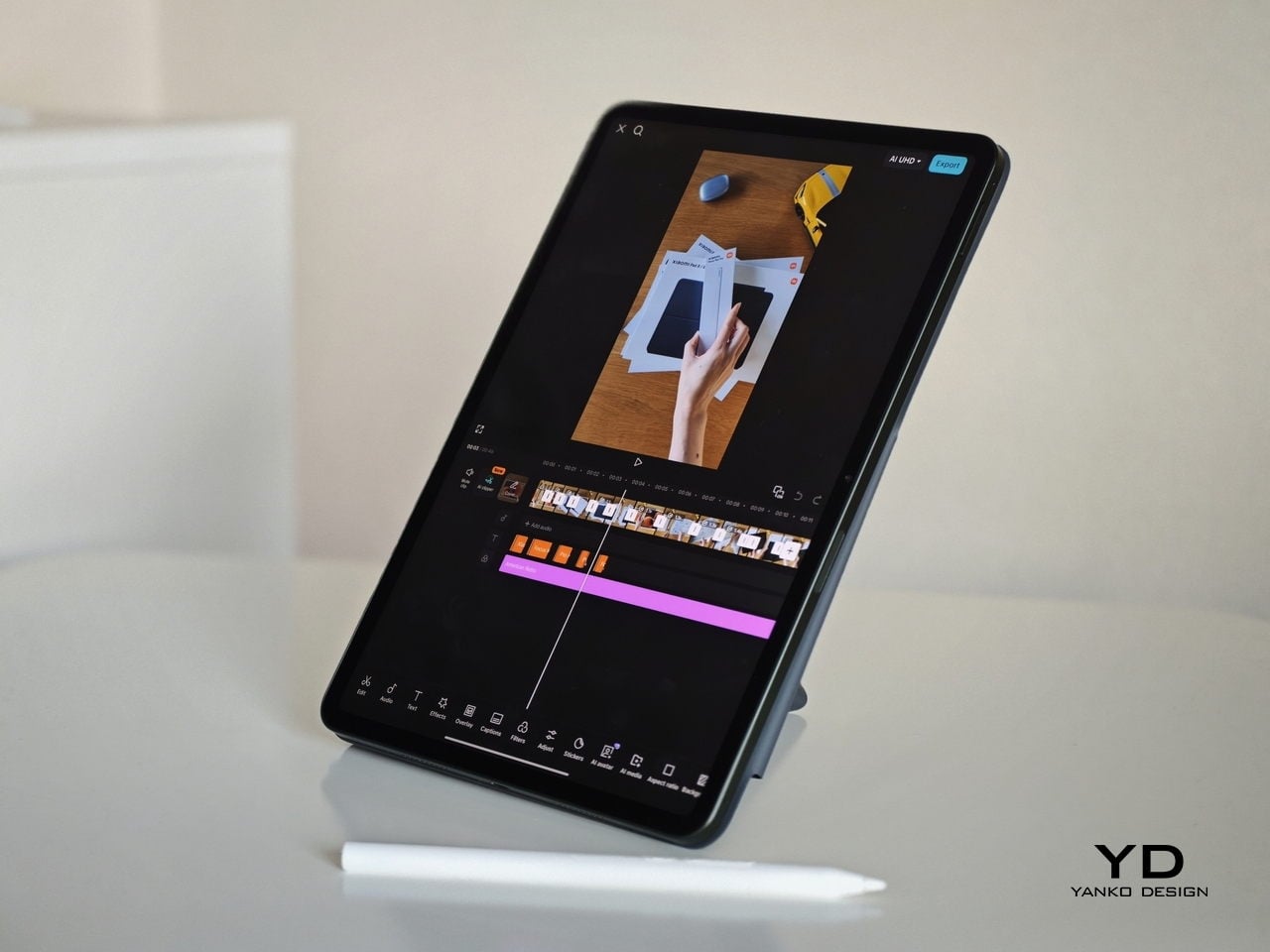
The most interesting addition is the Xiaomi Focus Pen Pro. It goes button-free for a cleaner, simpler feel, and it adds pressure sensitivity with haptic feedback for more natural writing and sketching. Even if you are not an artist, pressure sensitivity makes note-taking feel smoother and more expressive than a basic stylus. You can squeeze to open a choice of three apps. In the drawing app, you can slide your finger through the Pen to change the brush size. It will take some time to get used to, and the sensitivity and responsiveness can be improved.
Sustainability
Xiaomi makes a solid commitment to longevity with Pad 8. The tablet is promised 4 years of OS updates and 6 years of security patches, which helps it stay secure and usable for much longer than many budget and mid-range Android tablets. For casual buyers, that means you can treat it as a long-term device rather than something you will quickly need to replace.
On the hardware side, the build feels solid and reassuring in the hand, but there is no official IP rating for dust or water resistance, so you still need to be careful around spills and rough environments. A decent case and perhaps a screen protector are sensible additions if you plan to carry it everywhere. In short, the software support looks built to last, the chassis feels robust, and the overall physical durability will still depend on how well you protect it.
Value
Xiaomi Pad 8 offers strong everyday value for casual buyers, with a sharp 11.2-inch 3.2K class 144 Hz display, quad speakers, Snapdragon 8s Gen 4 performance, and a large 9200 mAh battery. In China, pricing starts at CNY 2,199 for the 8 GB and 128 GB models, commonly quoted as about $310, with higher tiers at CNY 2,499, about $350, and CNY 2,799, about $390. US and EU pricing will differ, but the message is clear. Xiaomi is aiming for premium specs without a premium price.
The compromises are straightforward. There is no microSD card slot on the Pad 8, so you need to choose your storage tier carefully from the start. There is also no fingerprint sensor on Pad 8, so you need the Pad 8 Pro if you want that convenience. The standard screen is also reflective unless you opt for the Matte Glass version. If those points do not bother you, Pad 8 lands in a very appealing sweet spot for streaming, browsing, and gaming.
Verdict
Xiaomi Pad 8 is an easy tablet to like because it focuses on the basics and executes them well. The display is sharp and fluid, the speakers are loud and balanced, and performance stays stable even during longer gaming sessions. It also feels solid in the hand, and the slimmer, lighter body makes it comfortable for long reading or streaming sessions.
The downsides are straightforward, with no fingerprint sensor, no microSD card slot, and a glossy screen that can show reflections unless you choose the Matte Glass version. On the plus side, Xiaomi’s accessory lineup gives you room to grow, whether you want a keyboard setup for light work or a pressure-sensitive pen for note-taking. The overall package lands as a strong value, especially if your tablet time revolves around entertainment with occasional productivity.