
LEGO has always occupied a peculiar space between toy and medium. For most of us, the bricks are nostalgic — associated with childhood bedrooms, pieces stepped on in the dark, and the specific satisfaction of snapping something into place after searching the floor for ten minutes. For a different kind of builder, LEGO is something closer to a precision instrument: a material that responds to spatial thinking with the same seriousness that marble responds to a sculptor’s chisel. April 2026 made a compelling case for the latter.
This month produced five builds that sit comfortably outside any toy aisle — a gear-driven monument to exponential mathematics disguised as abstract art, a 1,106-brick variant of my favorite dessert ever, a retro desk piece hiding a fully functional modern computer, a sharp recreation of the most universally procrastinated game in office history, and a kinetic brick portrait of the greatest basketball player who ever played the game.
1. LEGO Eternal Mosaic — The Gear Train That Outlasts the Universe
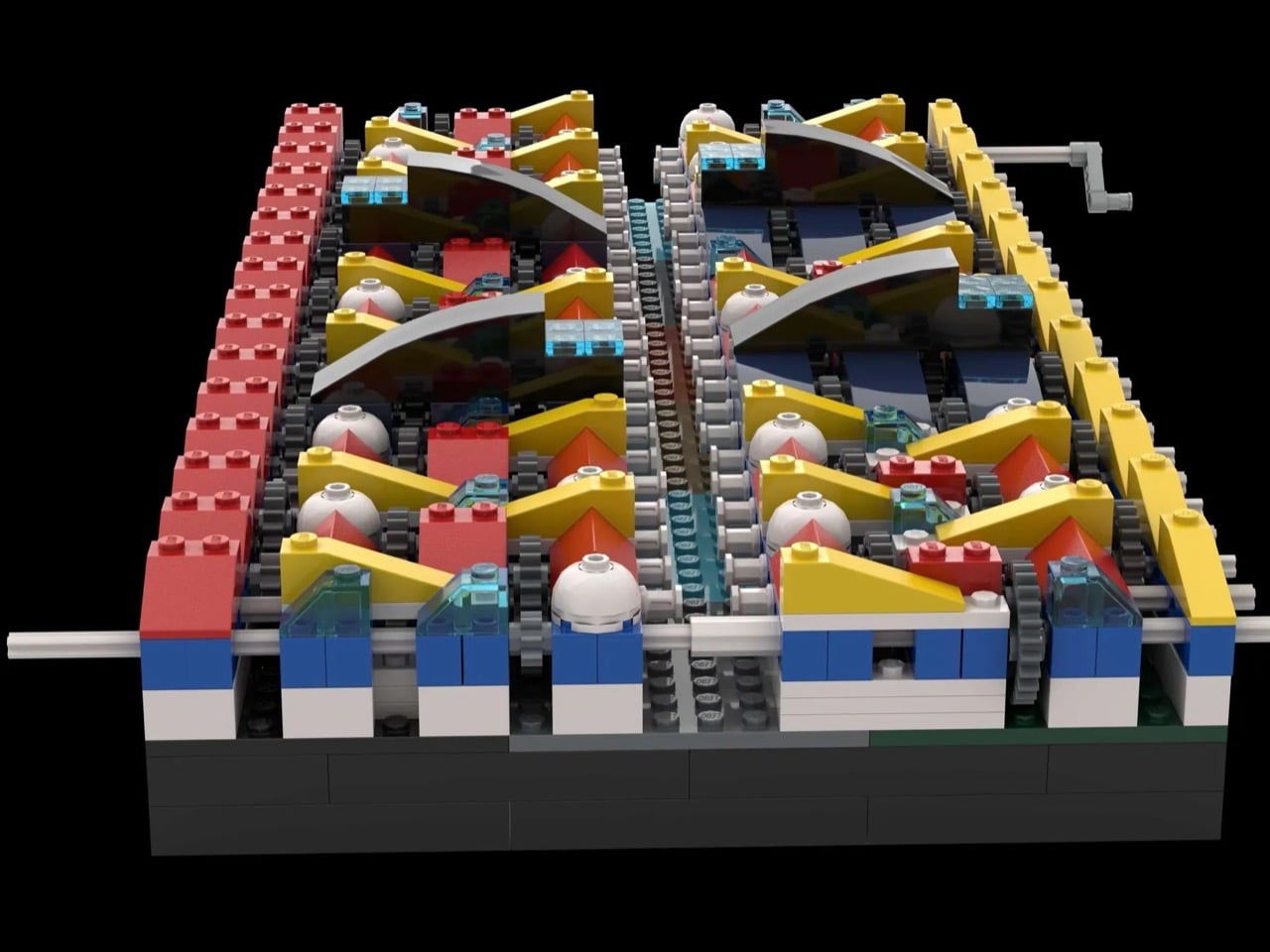


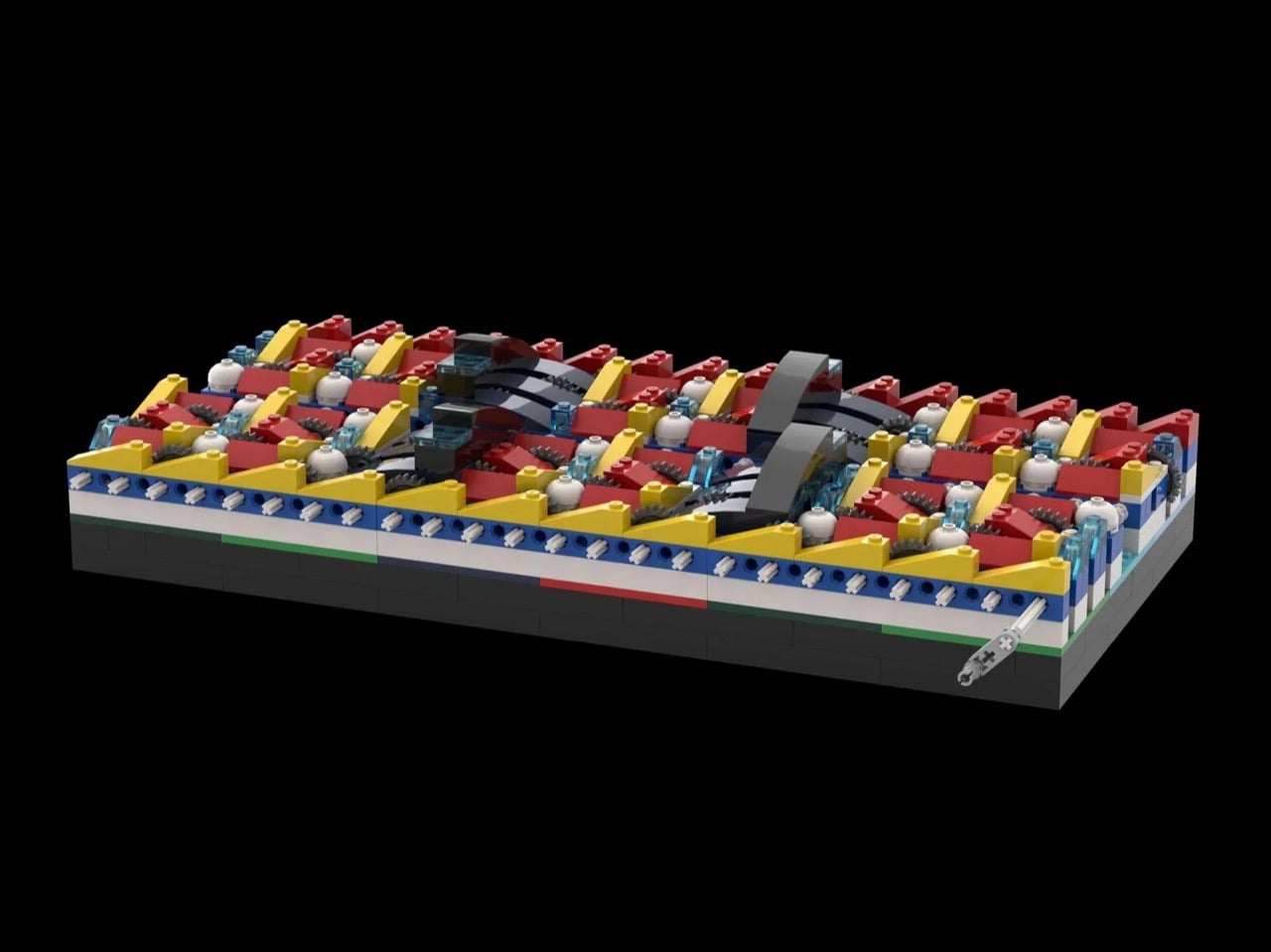
The Eternal Mosaic is a 655-piece LEGO Ideas concept that bridges the visual language of Mondrian’s De Stijl compositions with the mechanical logic of compound gear reduction. The build contains 46 stages of gear reduction using 24-tooth to 8-tooth ratios at every step. Compound that across all 46 stages and you arrive at a total gear reduction of approximately 9 billion trillion to one — a number that stops making intuitive sense almost immediately and doesn’t start again.
At 100 RPM, the first gear completes a rotation every 0.6 seconds. The final gear, embedded in the Mondrian-inspired color panel, will complete its first full rotation in approximately 90 trillion years — the universe is 13.8 billion years old by comparison. The Mondrian connection isn’t cosmetic. The rigid geometry of De Stijl shares an underlying grammar with compound gear logic: both systems operate by fixed, uncompromising rules and produce results that appear arbitrary until the governing principle becomes visible.
2. LEGO Tiramisu — The Food MOC That Makes You Question What You’re Actually Looking At


Tiramisu crossed out of northeastern Italy in the late 1960s and spent the next few decades becoming the world’s most universally loved no-bake dessert. LEGO Ideas creator Micdud has now built one from 1,106 bricks at nearly 1:1 scale — a corner slice served on a decorative round plate, complete with chocolate drizzle, cream dollops, and a fork mid-bite suspended in the air on a transparent support. The result makes you do a genuine double-take.
The cocoa topping is a masterclass in using disparate brown elements to simulate an organic, dusty texture — the kind of surface detail that food MOCs either nail or miss entirely. Micdud hid a raspberry made from a red clown hairpiece and blueberries built from purple astronaut helmets beneath the garnish, which is exactly the lateral thinking that makes a build memorable. Food MOCs live and die by their surface detail, and this one gets every layer right.
3. Michael Jordan LEGO Relief Poster — Air, Rendered in Brick
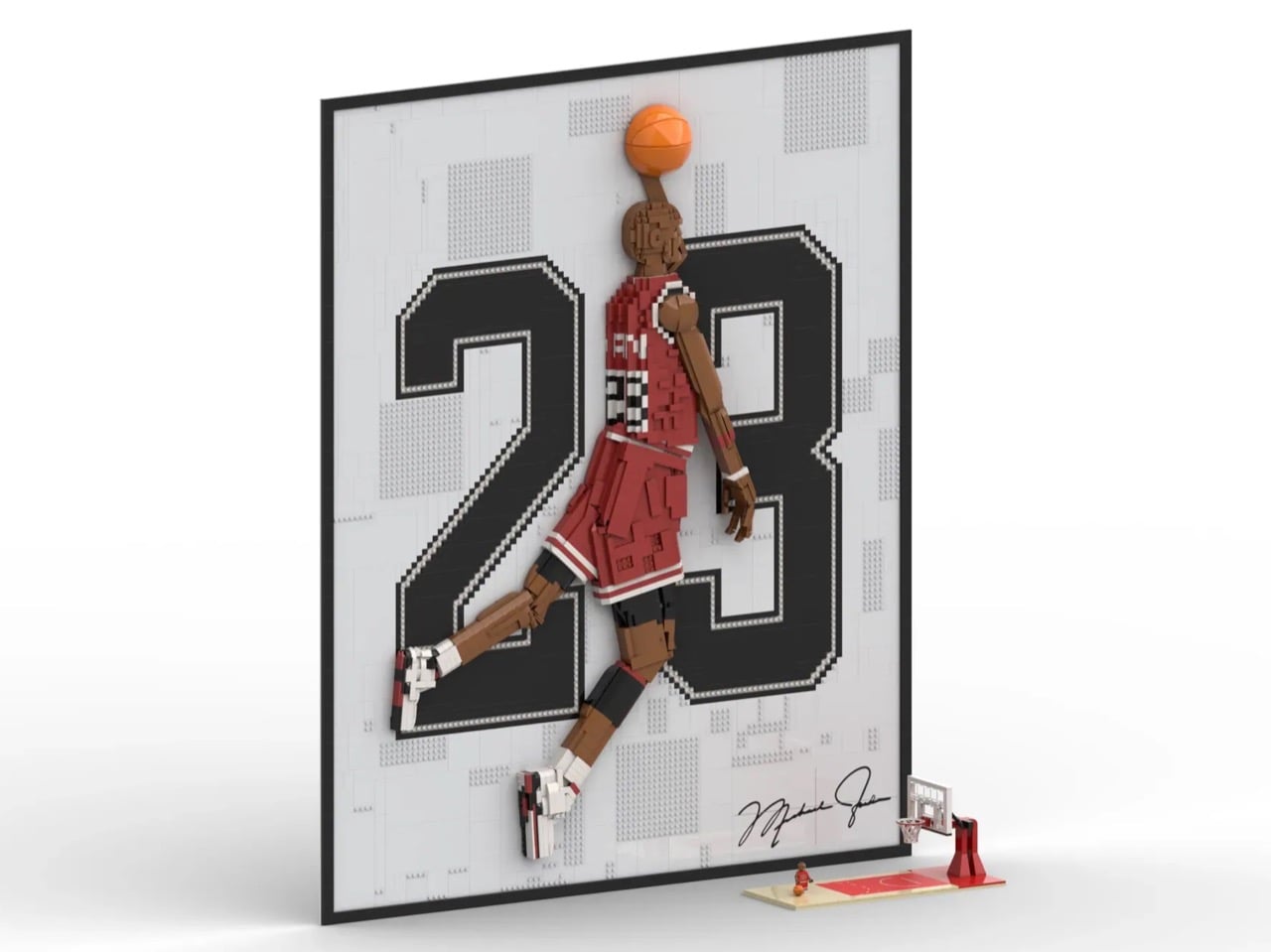
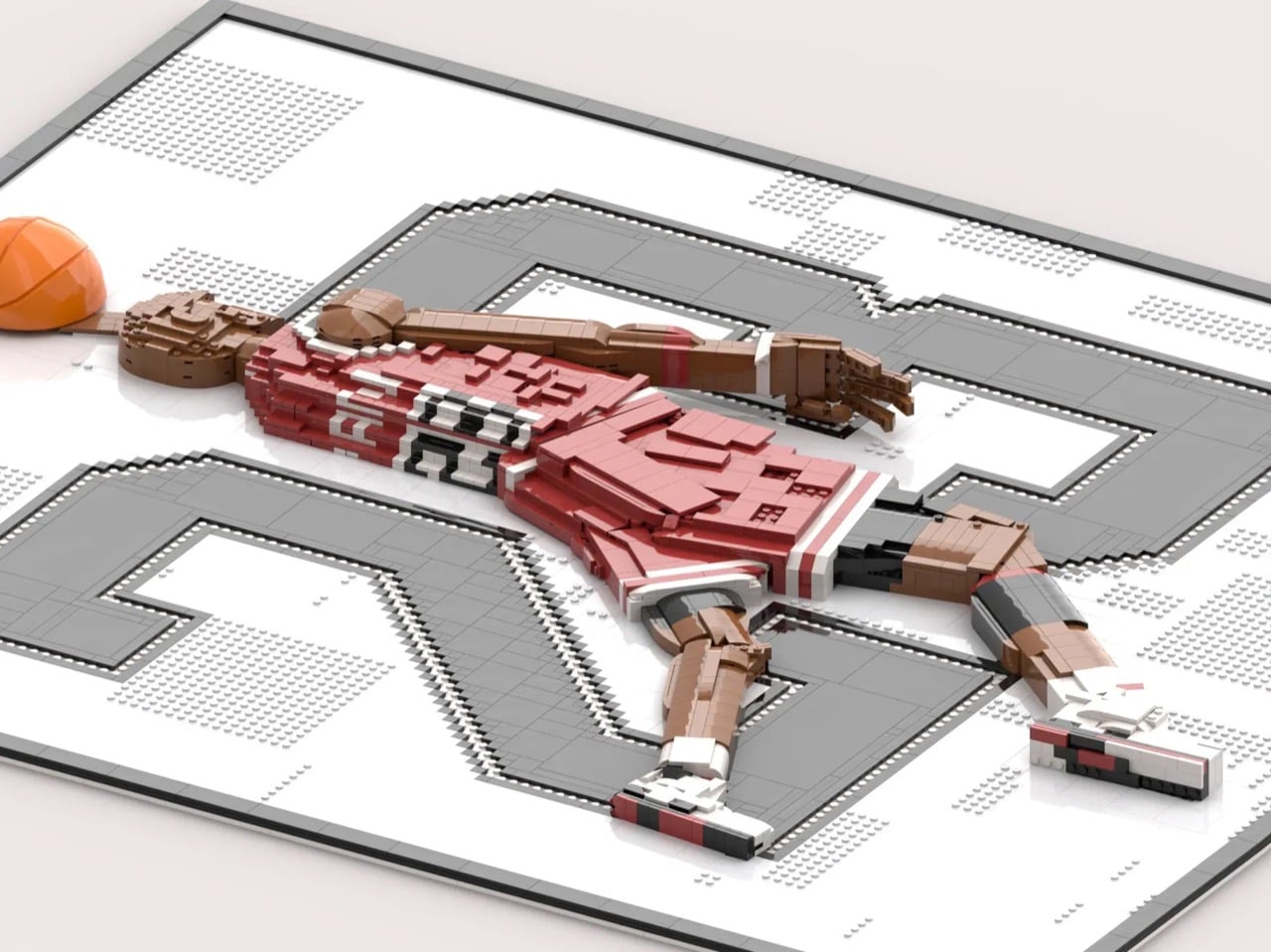
Most LEGO art stays flat. Builder LAFS85 made the harder choice with this 3,424-brick Michael Jordan portrait — a relief sculpture where Jordan’s figure physically protrudes from the background plane through layered brickwork, so the silhouette genuinely leaps toward you. In the front-facing renders, Jordan is mid-flight, ball raised, and the bold pixelated “23” filling the dark grey background amplifies the drama in the way confident typography always does when it knows exactly what it’s doing.
The technical decisions here reward close attention. LAFS85 used SNOT — Studs Not On Top — techniques throughout the figure to capture the flow of jersey fabric and the muscular geometry of Jordan’s legs. Flat tile surfaces read as smooth fabric. Angled plates suggest tension in the limbs. The red and white of the Chicago Bulls uniform pops hard against the dark grey background, and the brick-built recreation of Jordan’s signature in the lower corner is a genuinely considered finishing touch.
4. LEGO Minesweeper — A Functional Tribute to the World’s Most Productive Distraction
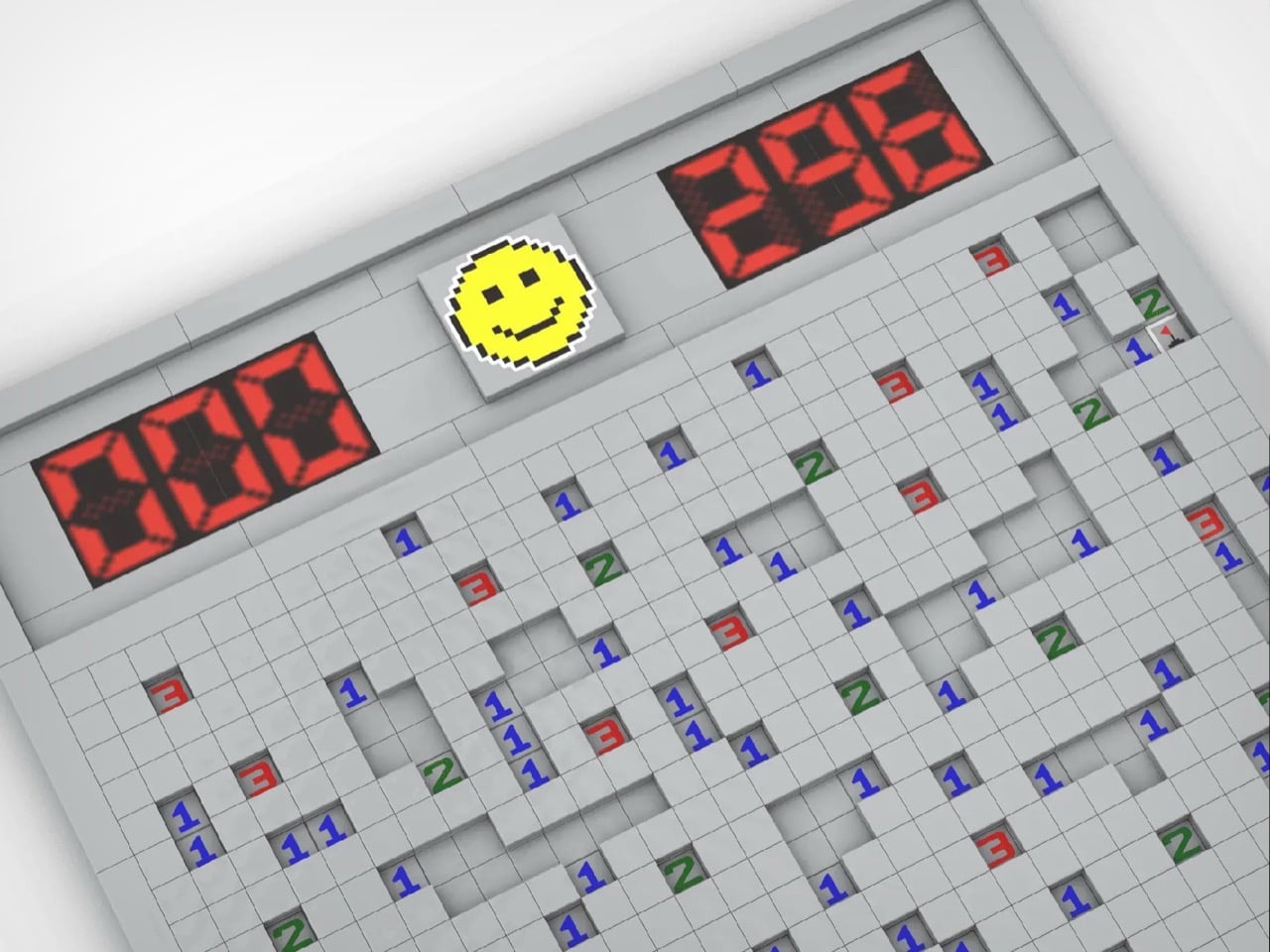
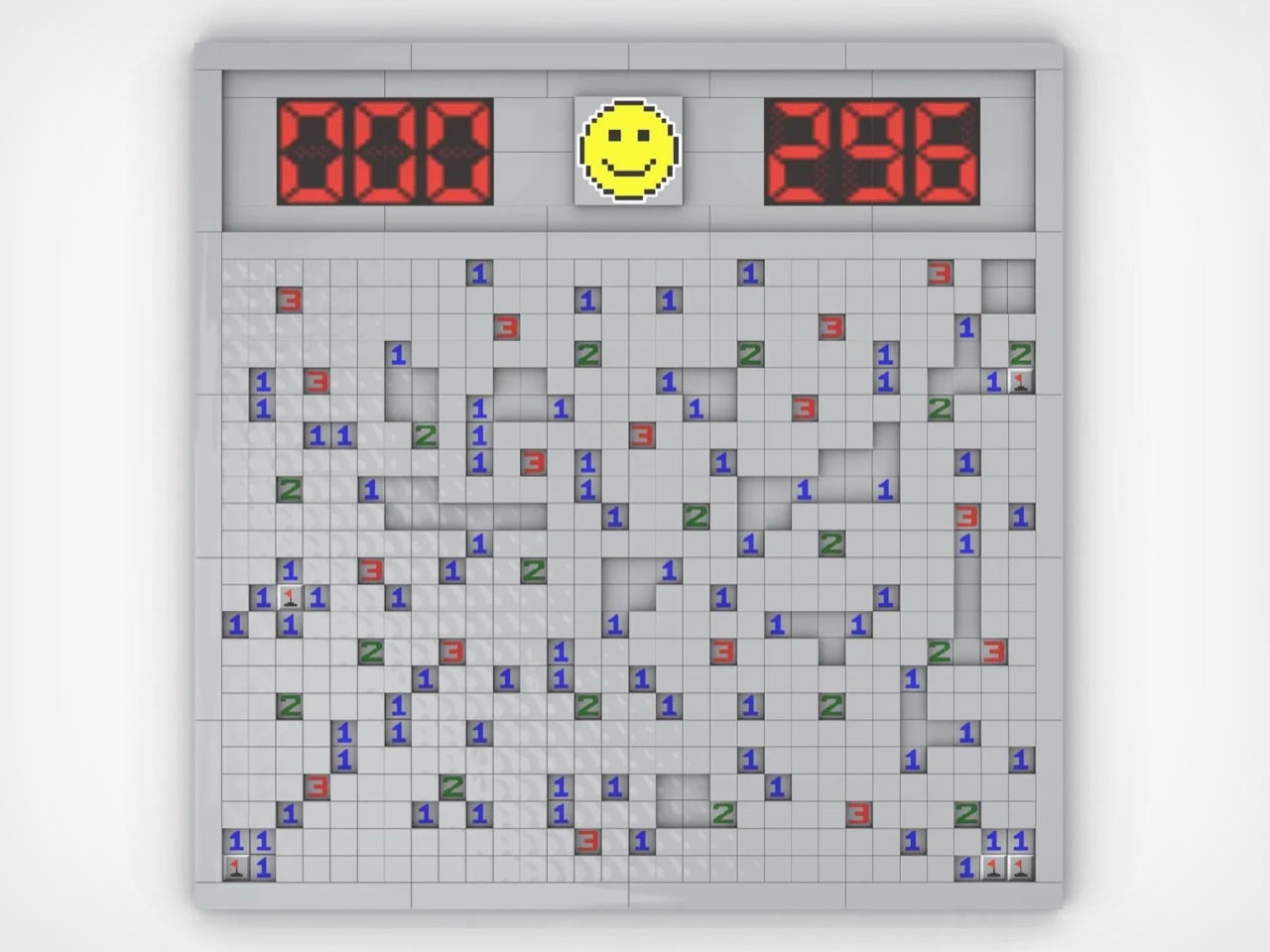
Before social media had the chance to dismantle workplace productivity, Minesweeper was already doing it quietly and for free. Created by Robert Donner and Curt Johnson for Microsoft in 1990, it shipped with every copy of Windows from 1992 onwards and spread through offices with the calm efficiency of something nobody wanted to admit spending time on. Conservative commentators were calling it a genuine threat to American business productivity. The alt-tab reflex became a survival skill.
LEGO builder carlos_silva94 rebuilt that gray grid in brick with more deliberateness than the concept strictly required. The build replicates the Windows 95 interface with real accuracy — raised tile surfaces recreating the three-dimensional texture of unpressed buttons, working seven-segment displays tracking mine counts and elapsed time, and the iconic yellow smiley face watching from above. The textured tiles are the detail that lifts this from casual tribute to considered design object, giving the build physical weight and tactile presence.
5. LEGO M2x2 Workstation — The 1979 LEGO Brick That Actually Runs macOS
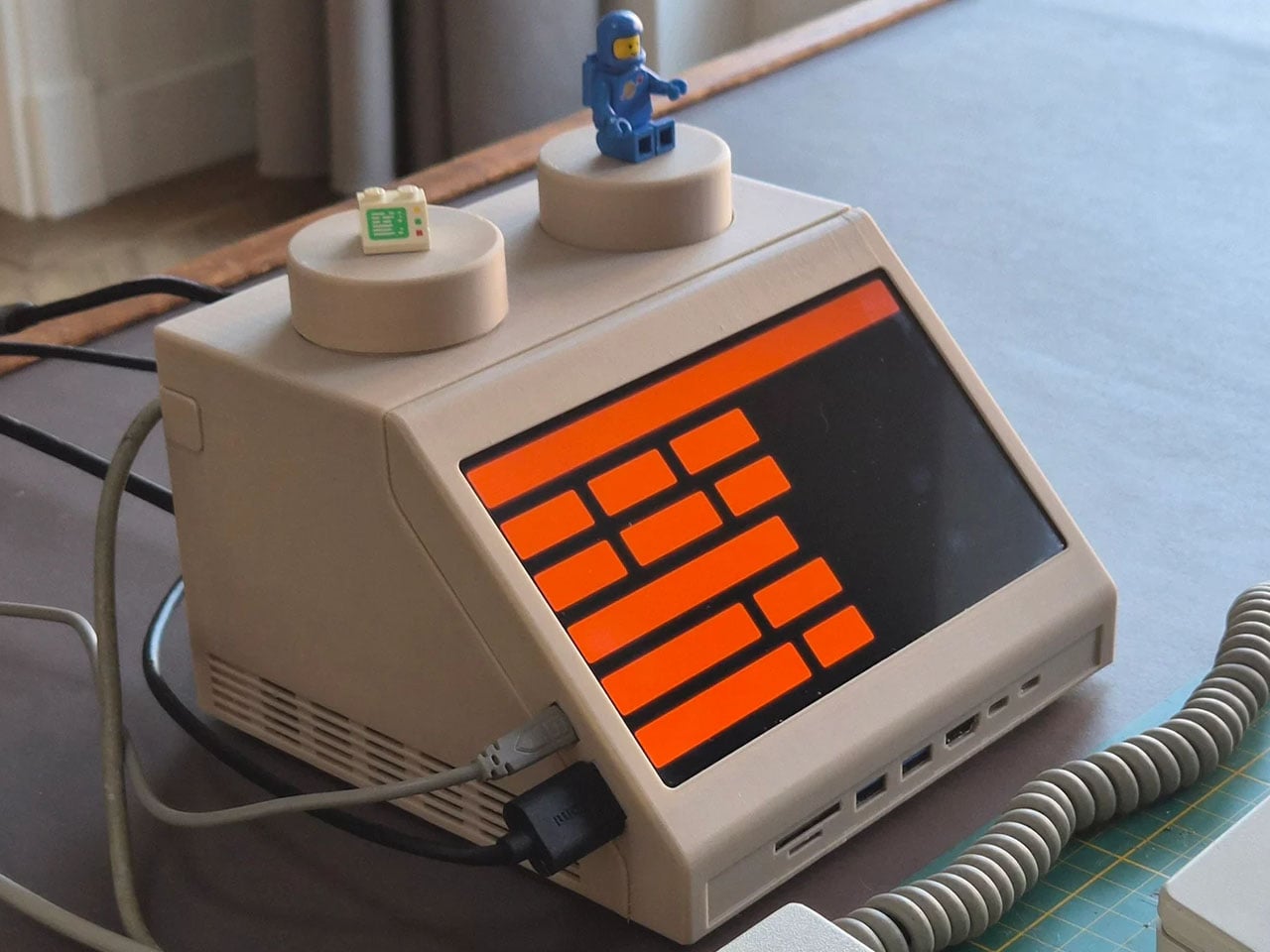
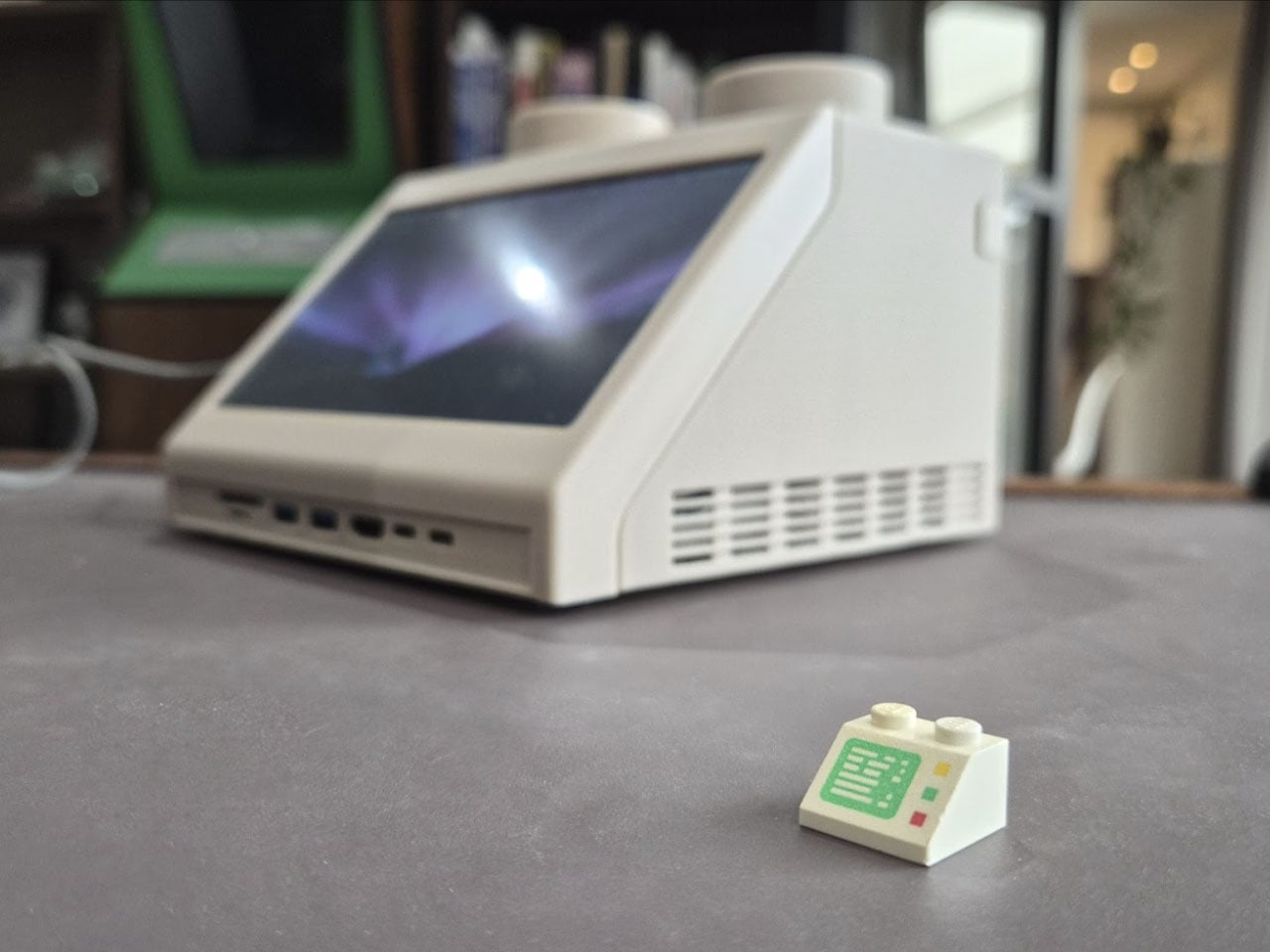
Dutch designer Paul Staal took the iconic LEGO Slope 45 2×2 brick — a wedge-shaped piece introduced in 1979 that appeared in classic space-themed sets as a visual shorthand for spacecraft computer terminals — and scaled it up to roughly ten times its original size. The result is a fully operational desktop computer housing that looks like it was pulled from a vintage LEGO Space playset and placed directly onto a modern desk.
Inside that oversized brick sits an Apple Mac mini equipped with Apple’s M4 chip, transforming a retro toy aesthetic into a capable, fully functional desktop system. What elevates this beyond novelty is the design intelligence underneath. Staal honored the Slope 45’s cultural memory while operating at a completely different scale and purpose. The M2x2 earns the term “conversation piece” without sacrificing utility — quietly asking why computing hardware defaults to featureless black rectangles when it could look like this.
The Month LEGO Stopped Playing Around
April 2026 demonstrated something the LEGO community has always known but rarely gets to show all at once: the brick is not a limitation, it’s a vocabulary. These five builds span engineering, portraiture, product design, retro computing, and food sculpture, and each one executes its concept with a precision that makes the medium feel like the only logical choice. Whether 655 pieces or 1,106, the ambition is entirely consistent.
What ties all five together is the specificity of vision behind them. The Eternal Mosaic is conceptually staggering in a way no other medium could reproduce. The Tiramisu challenges your eyes to accept that plastic bricks can convincingly look edible. The Jordan portrait rewards inspection at every level. The Minesweeper build lands immediately for anyone who worked in an office before 2000. And the M2x2 makes you rethink what computing hardware could look like. That is a strong month by any standard, in any medium.