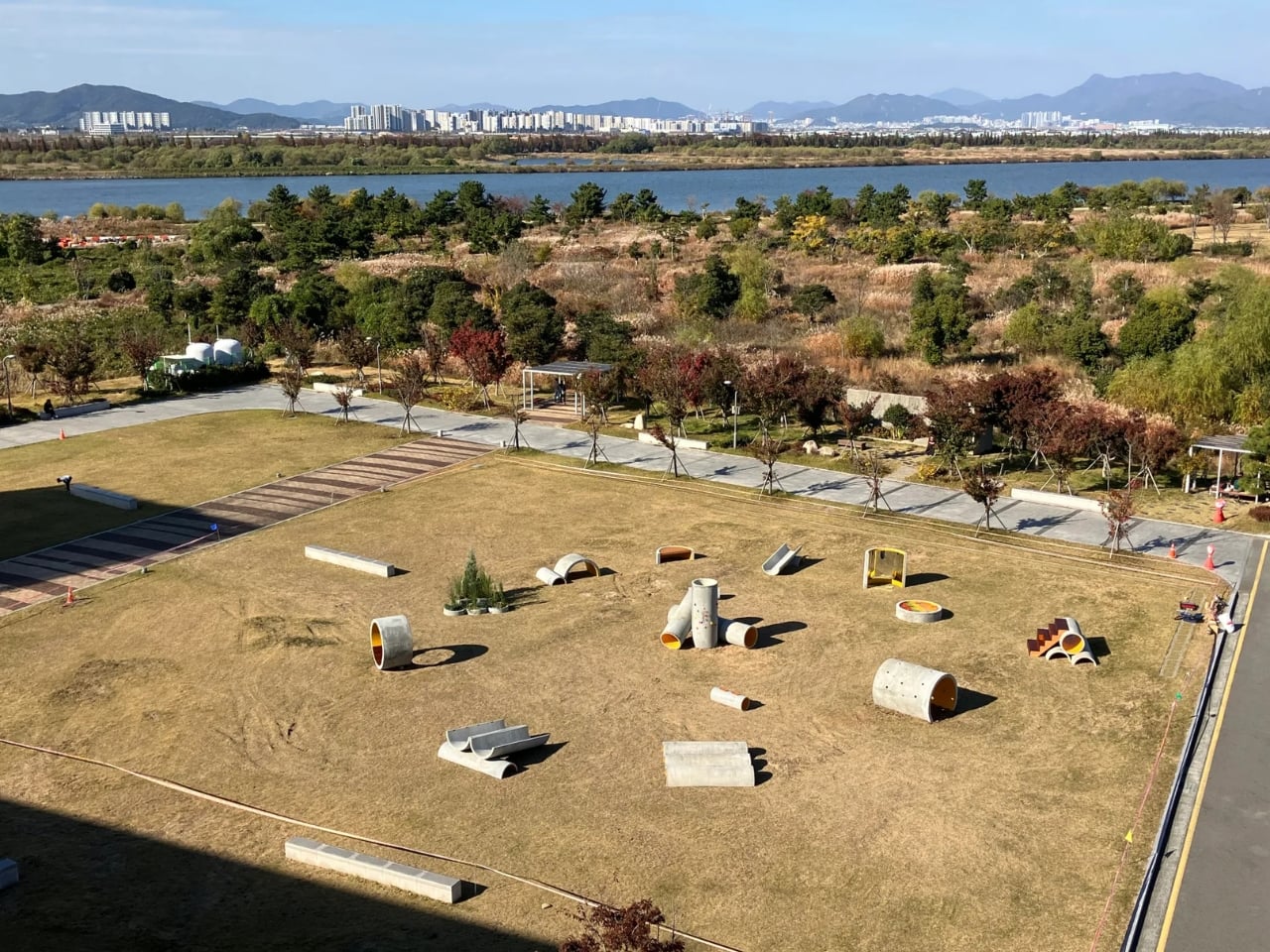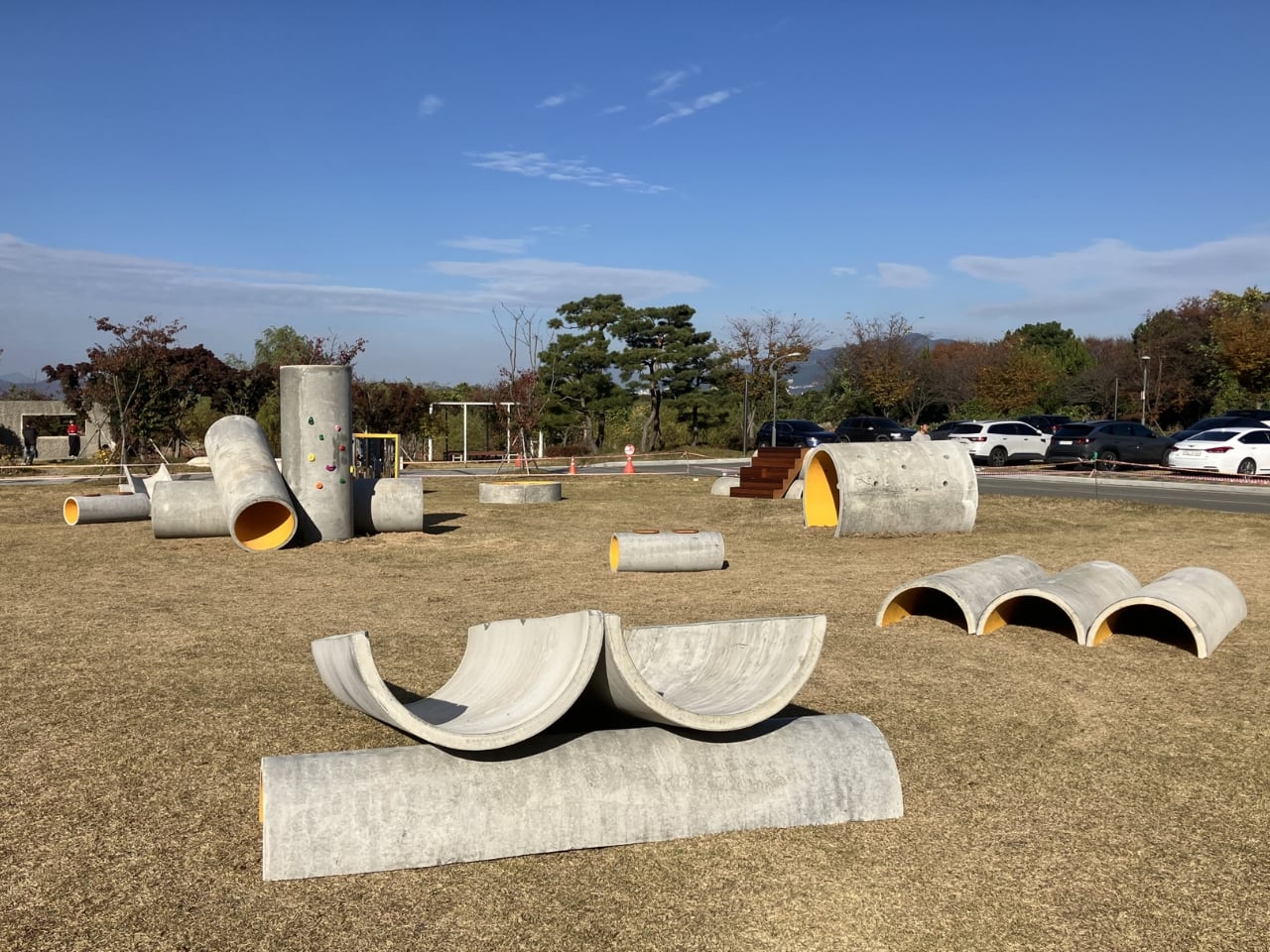

The first time I saw images of Concrete Utopia, I assumed it was a render. The kind of thing that circulates on design Instagram before quietly disappearing into the “concepts that never got built” pile. Chunky grey pipes arranged in an open courtyard, people moving through and around them like it was always supposed to be this way. But the project is real, it lives outside the Museum of Contemporary Art Busan in South Korea, and the more I sat with the images, the more I found myself studying them the way you study something that seems simple until it isn’t.
Concrete Utopia is the work of South Korean designer Hyunje Joo. The material is straightforward: discarded concrete pipes, the kind used in construction infrastructure and typically hauled away once a build wraps up. What Joo does with them is the interesting part. Rather than disguising or dramatically transforming them, he arranges the pipes into a configuration that preserves exactly what they are while completely changing what they do. The cylinders are grouped and stacked at varying orientations, creating a composition that reads less like a salvage pile and more like a spatial argument. You can tell it was designed. You just can’t immediately tell how.
Designer: Hyunje Joo
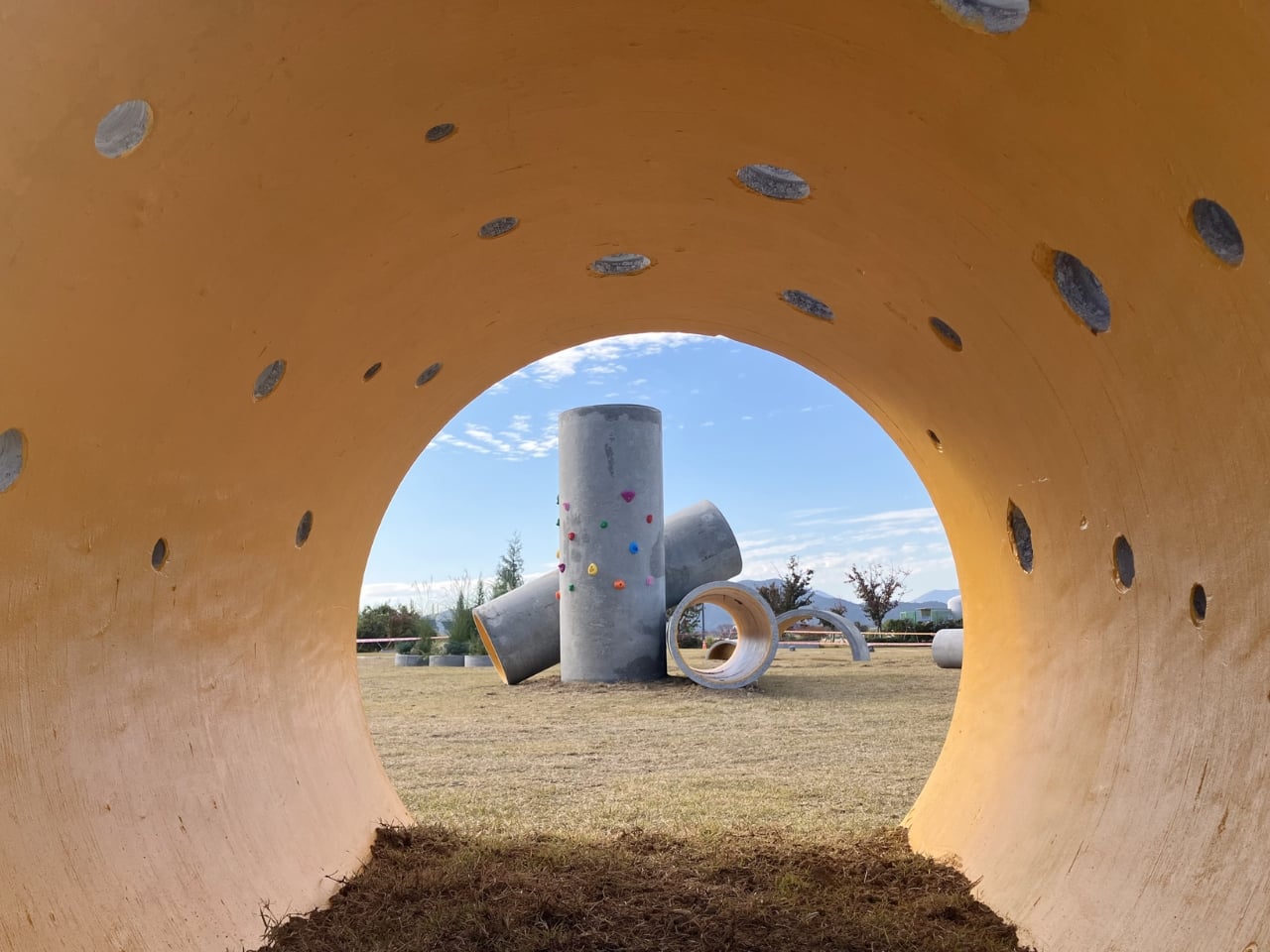
The circular geometry is doing a lot of work here. Repetition is a classic design tool, but it tends to flatten things when overused. Joo avoids that by letting the pipes vary in how they cluster and orient without introducing anything new to the material vocabulary. The result is a rhythm that feels considered without feeling controlled. There’s a looseness to the arrangement that invites you in rather than holding you at a visual distance, which is harder to pull off than it looks.
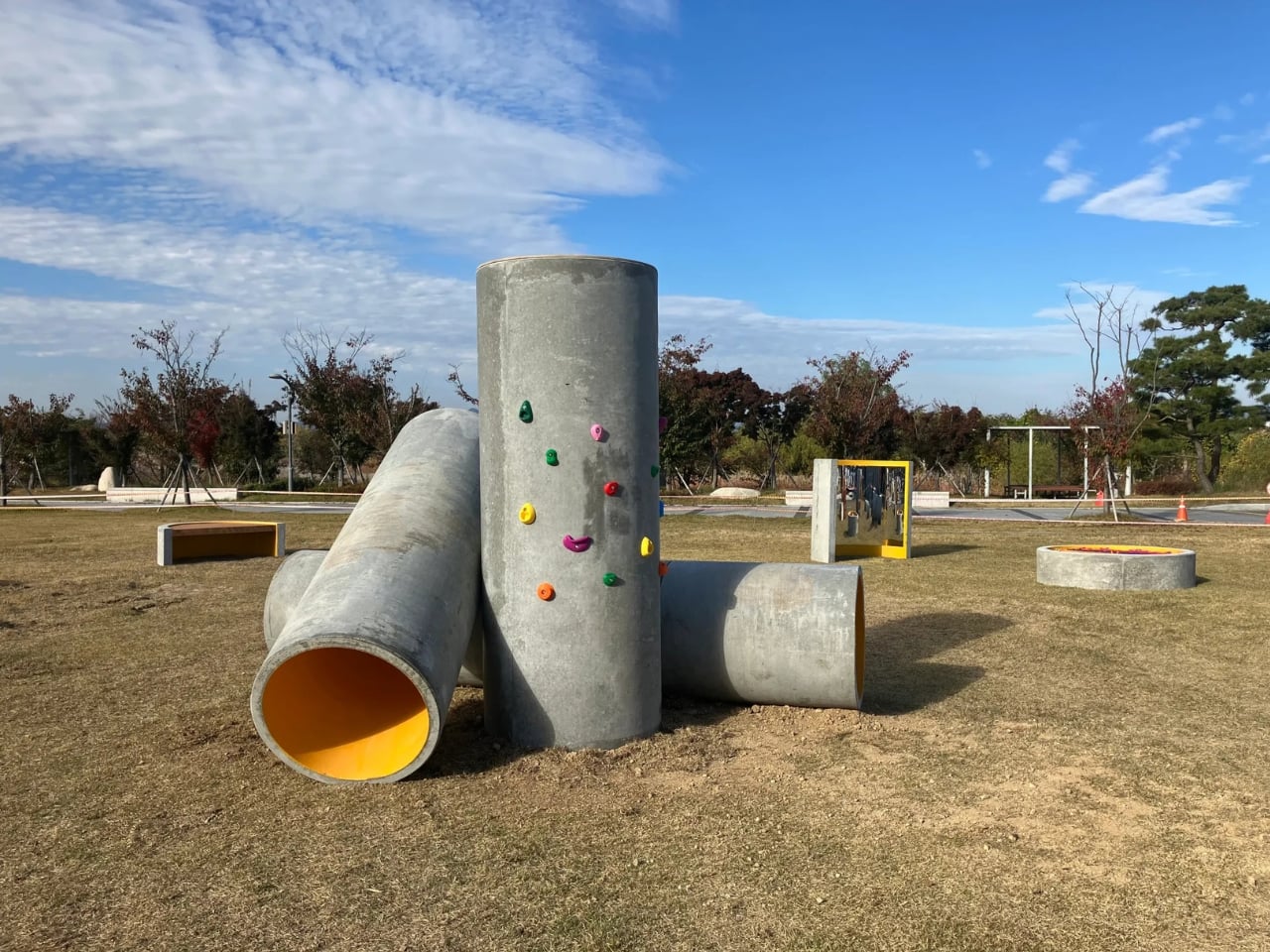
What the design gets genuinely right is the question of scale. These are large industrial pipes, and placing them in a public setting without any softening or mediation could easily read as aggressive or alienating. Instead, the proportions end up working in the project’s favor. The openings in the pipes are wide enough to pass through, to sit inside, to lean against. The structure accommodates a body without being designed around one specific use. A child runs through it differently than an adult pauses inside it, and the design makes room for both without trying to orchestrate either. That kind of spatial generosity is something a lot of more considered, more expensive design projects fail to achieve.
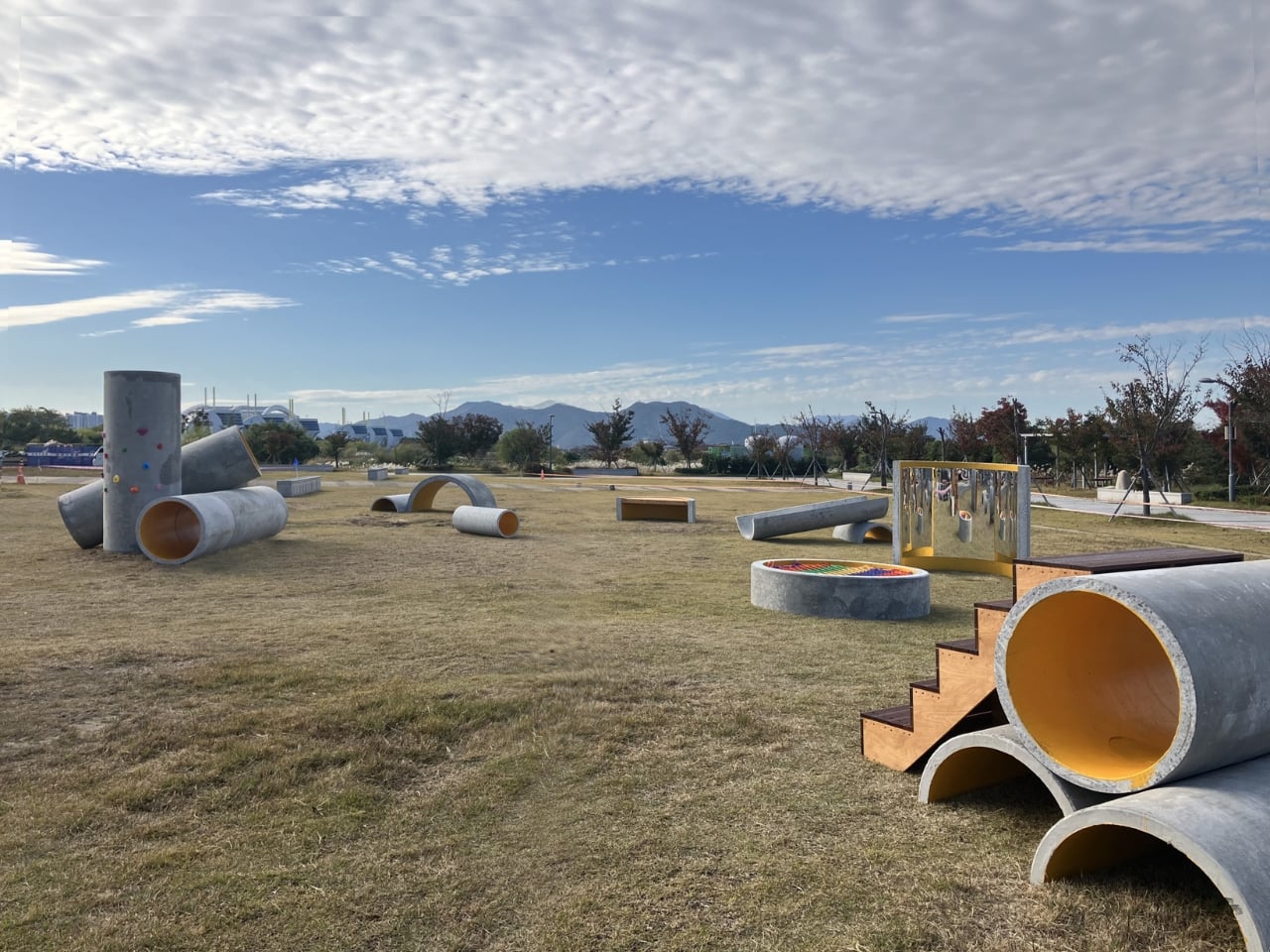
The surface quality matters too. Concrete has a particular visual weight that doesn’t disappear regardless of context. It doesn’t soften under museum lighting or become decorative just because it’s been repositioned. Joo leans into that rather than working against it. The rawness of the material is part of the design language, not an obstacle to it. Up close, the texture of the pipes carries the evidence of their previous life, which gives the project a material honesty that polished surfaces simply can’t replicate.
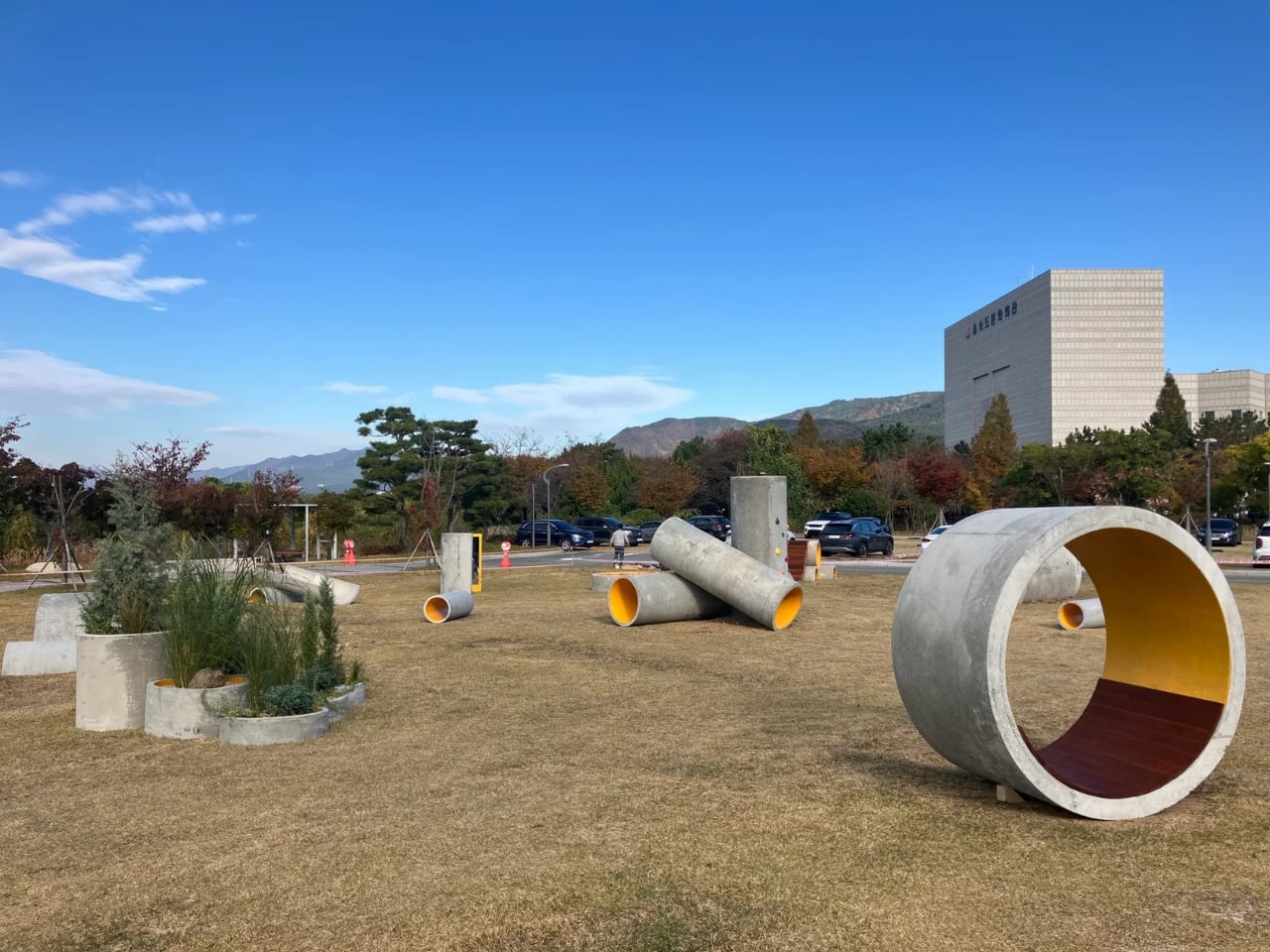
The layout itself avoids fixed hierarchy, meaning there’s no obvious front or back, no primary axis that tells you where to stand or which direction to face. That’s a deliberate compositional choice, and it changes how the space feels to move through. Most public structures, even good ones, have a logic that steers you. Concrete Utopia doesn’t. You arrive at your own reading of it, and that openness is built into the arrangement rather than incidentally landing there.
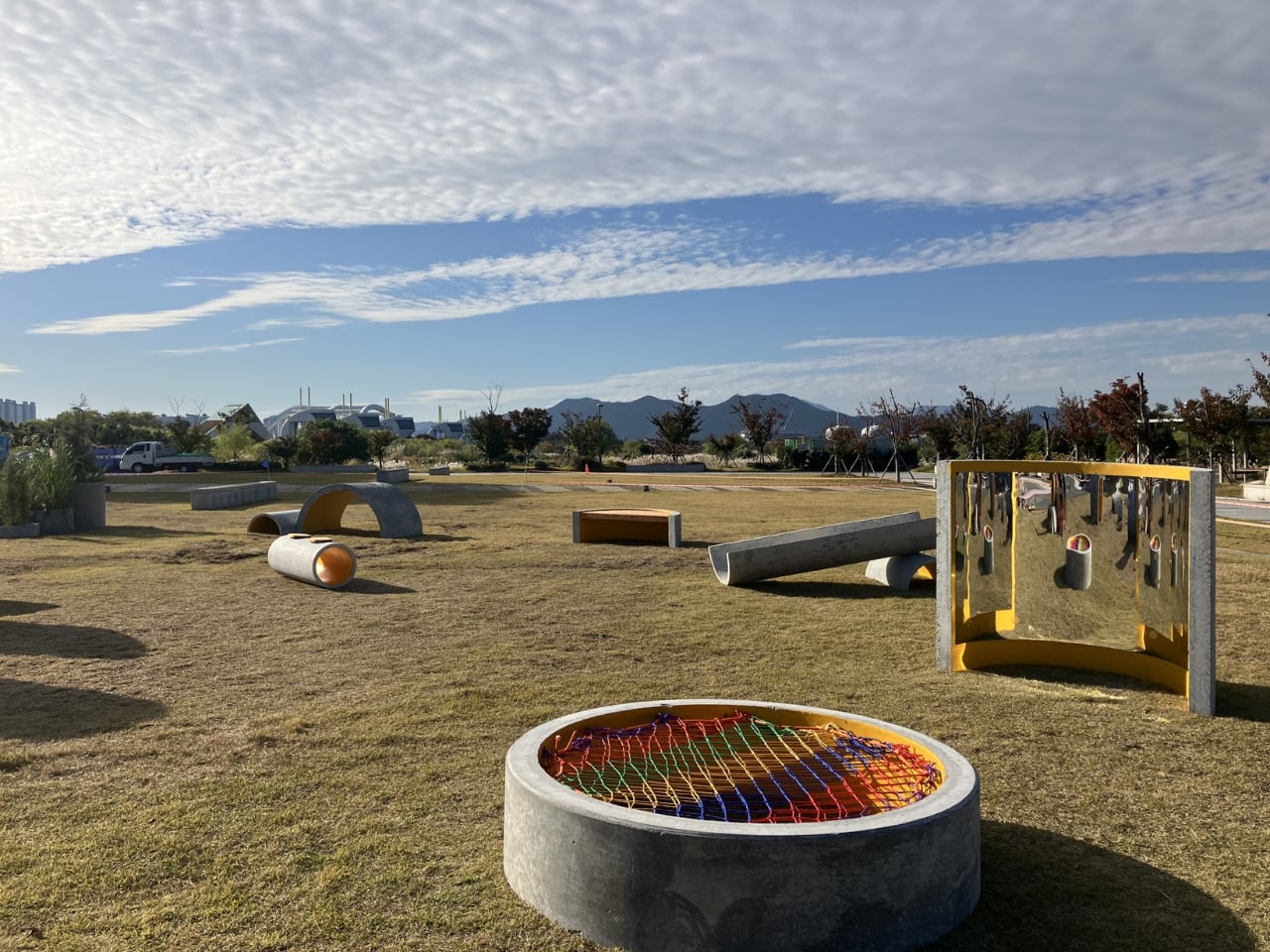
Placed within the grounds of a contemporary art museum, the project sits in an interesting position between sculpture and architecture. It functions like a building but doesn’t resolve like one. It reads like an installation but behaves like infrastructure. That in-between quality is where the design lives, and it’s what makes Concrete Utopia more compelling than a straightforward sustainability gesture or a purely formal exercise would have been. Joo found a space where the design question and the material answer are the same thing. That’s not a given. Most design keeps those two things at a distance from each other for the whole project.