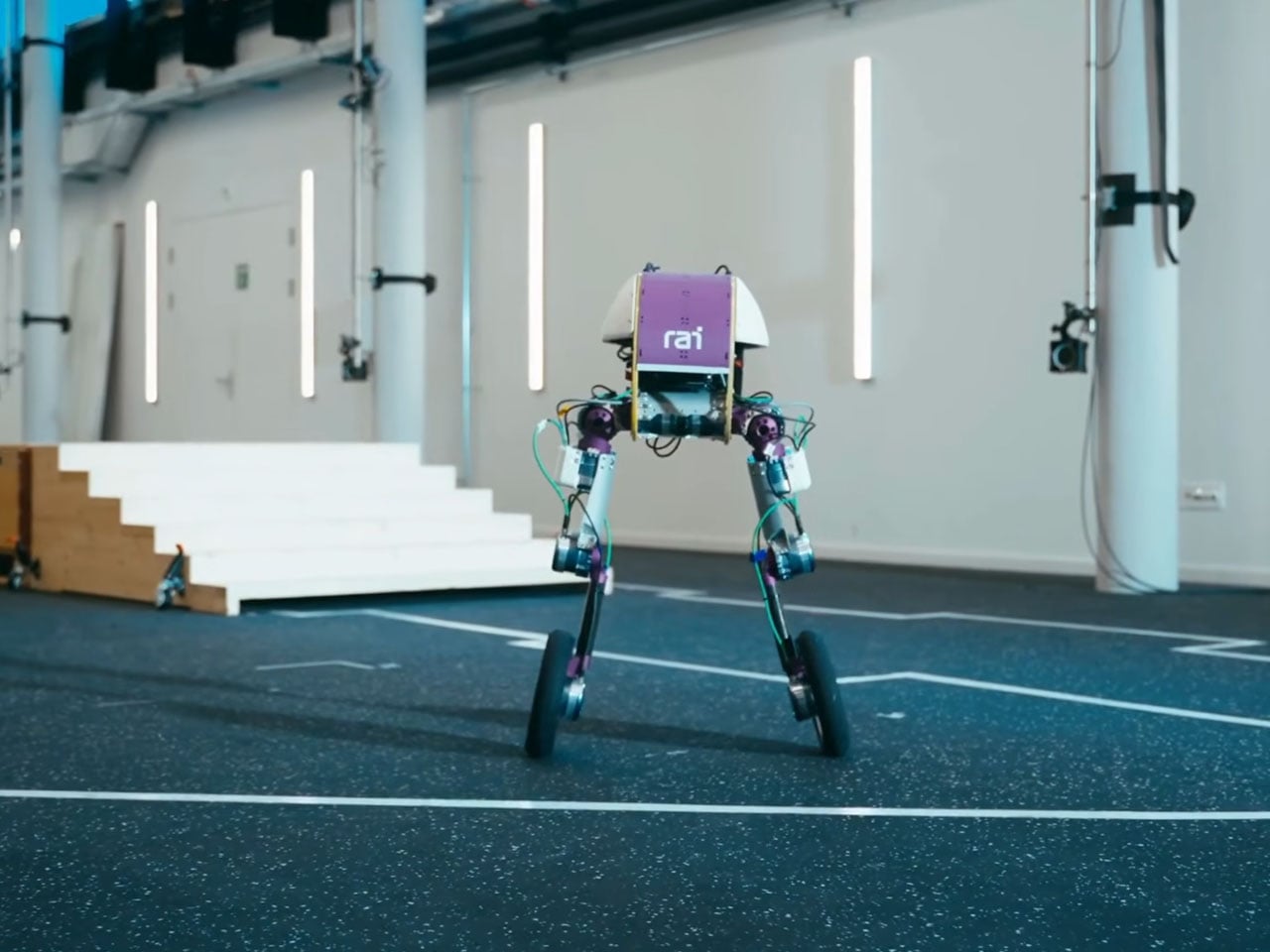
RAI (Robotics and AI) Institute has built a new bipedal-wheeled robot prototype that gives us a glimpse of what versatile legs with efficient wheels can be. Designed for multi-mode locomotion, the Roadrunner weighs roughly 15 kilograms (33 pounds). Owing to its design and configuration, the robot on wheels with a set of symmetric legs can switch mobility modes based on the navigation requirement.
Roboticists are already racking their brains on developing humanoids to get work done in households. Now, with the possibility of a robot like the Roadrunner, we are definitely headed in the direction of smarter robots that thrive on agility and dexterity, and are designed to go where it’s dangerous for humans to venture. A few robotic options, in the shape of animals et al., that have semantic understanding of their surroundings have been around for a few years, but the bipedal-wheeled robot is really in a different league.
Designer: RAI
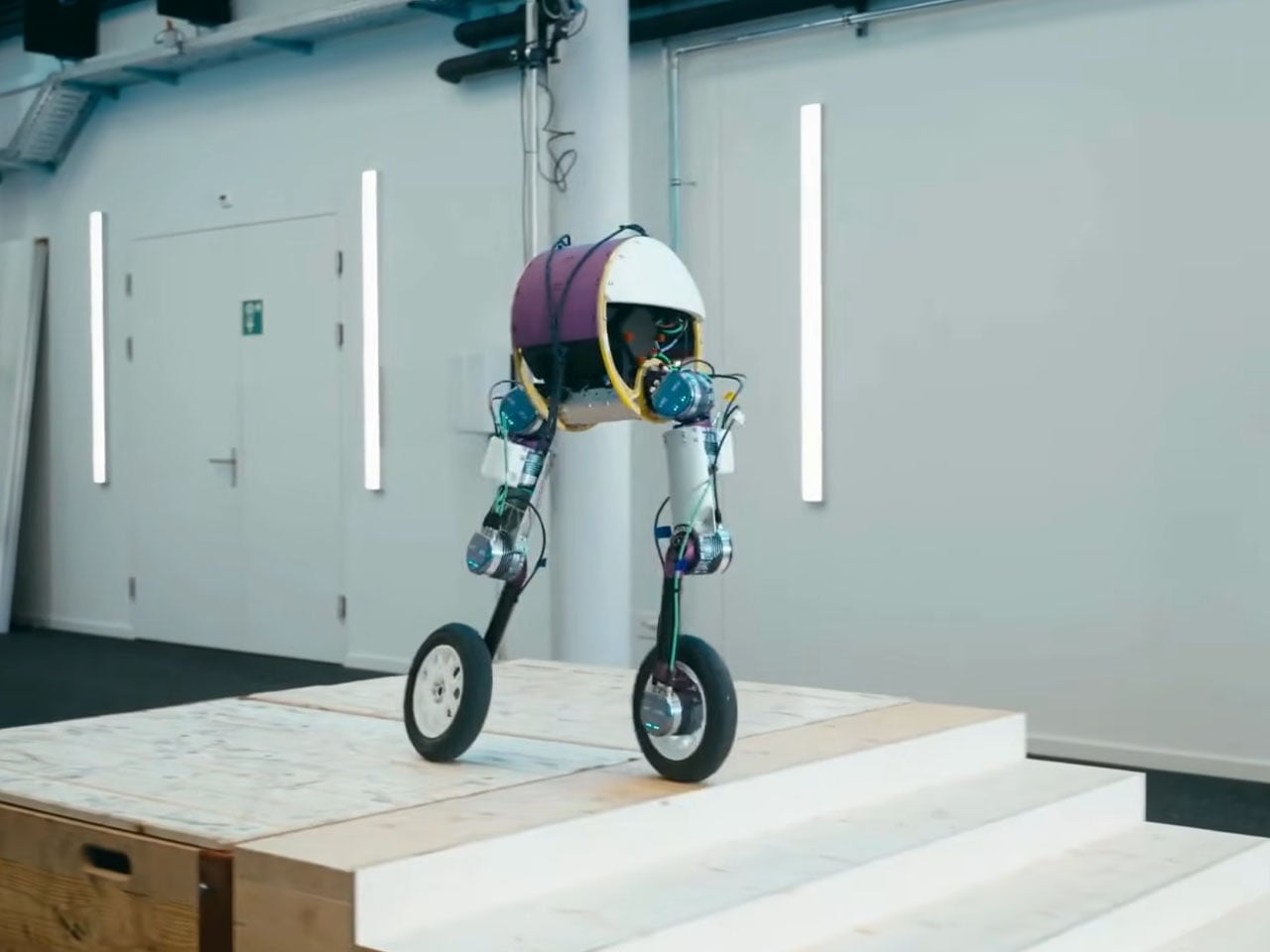

The brainchild of the Massachusetts-based institute, the Roadrunner robot is in the prototype stage, but it has moves to impress. If you don’t believe my word, take a look at the video (above) doing rounds on social media. The robot is designed to seamlessly switch between side-by-side and in-line wheel modes and stepping configurations, based on the environment it is navigating. “A single control policy” is “trained to handle both side-by-side and in-line driving,” RAI informs.
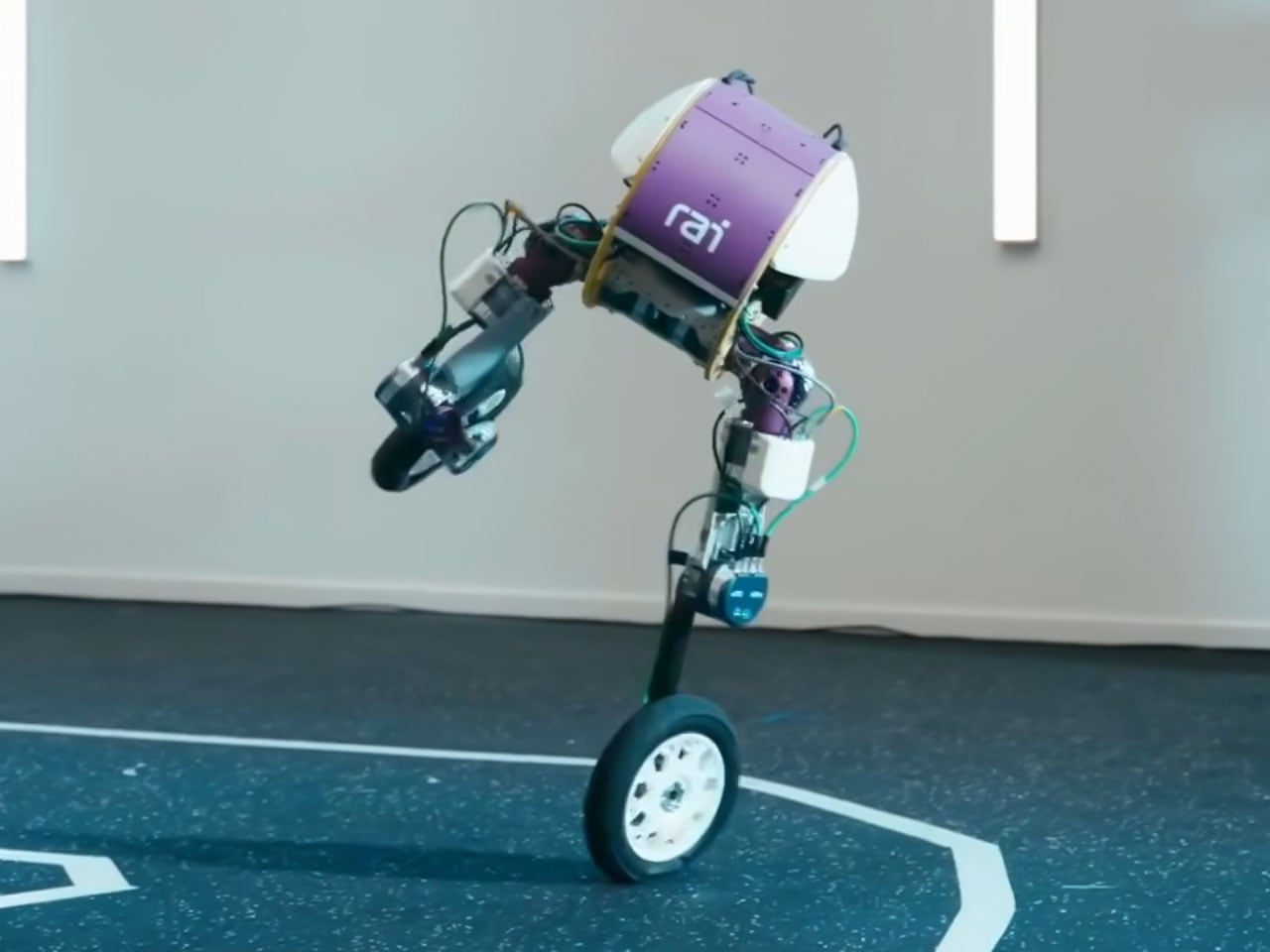
From the demonstration video, you can easily figure out the remarkable versatility of the Roadrunner. The combination of the balance on its legs and the efficiency of its wheels really allows us to watch the robot’s multi-modal locomotion properties being pulled off in style. This is possible because of the robot’s symmetrical knee joints and legs that permit it to avoid obstacles easily.
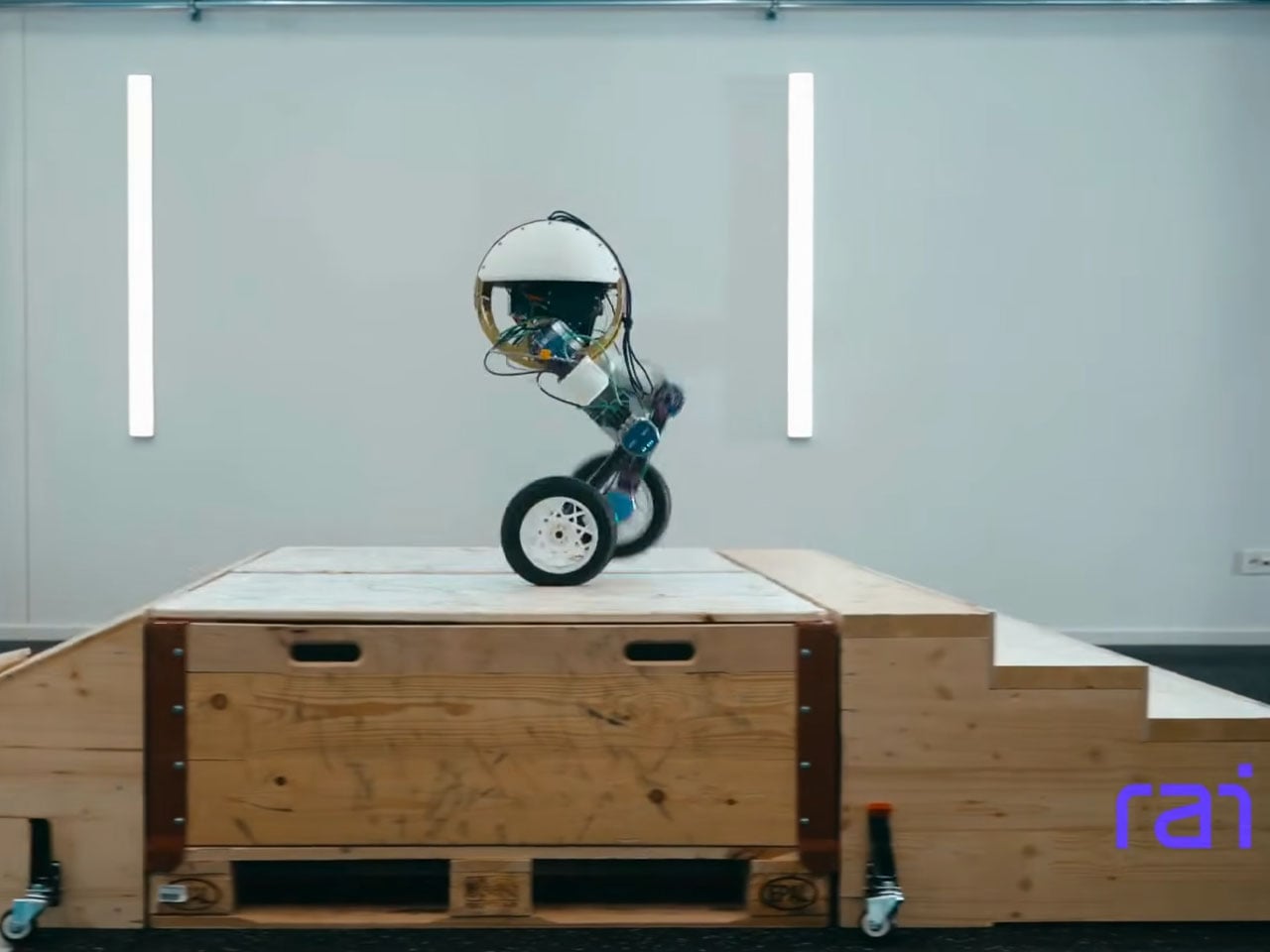
Roadrunner is able to effortlessly stand up from various ground positions and walk or roll on its wheels. It can step over obstacles with the same convenience. What really blew my mind is the robot’s balance; the ease with which it can stand up on a single wheel. All of these were successfully deployed zero-shot on the hardware,” performing every task without specific prior training for them.
RAI Institute plans to use the Roadrunner as a research platform, an agile and dynamic option to legged humanoid robots that have their restrictions with pace and mobility. RAI, founded by Marc Raibert, the man behind Boston Dynamics, has built its image in agile and highly dynamic robots, and the Roadrunner is a reflection of this. If the robot in the prototype stage is apt enough to leave us all impressed, what the advanced version would be able to pull off is anyone’s guess.