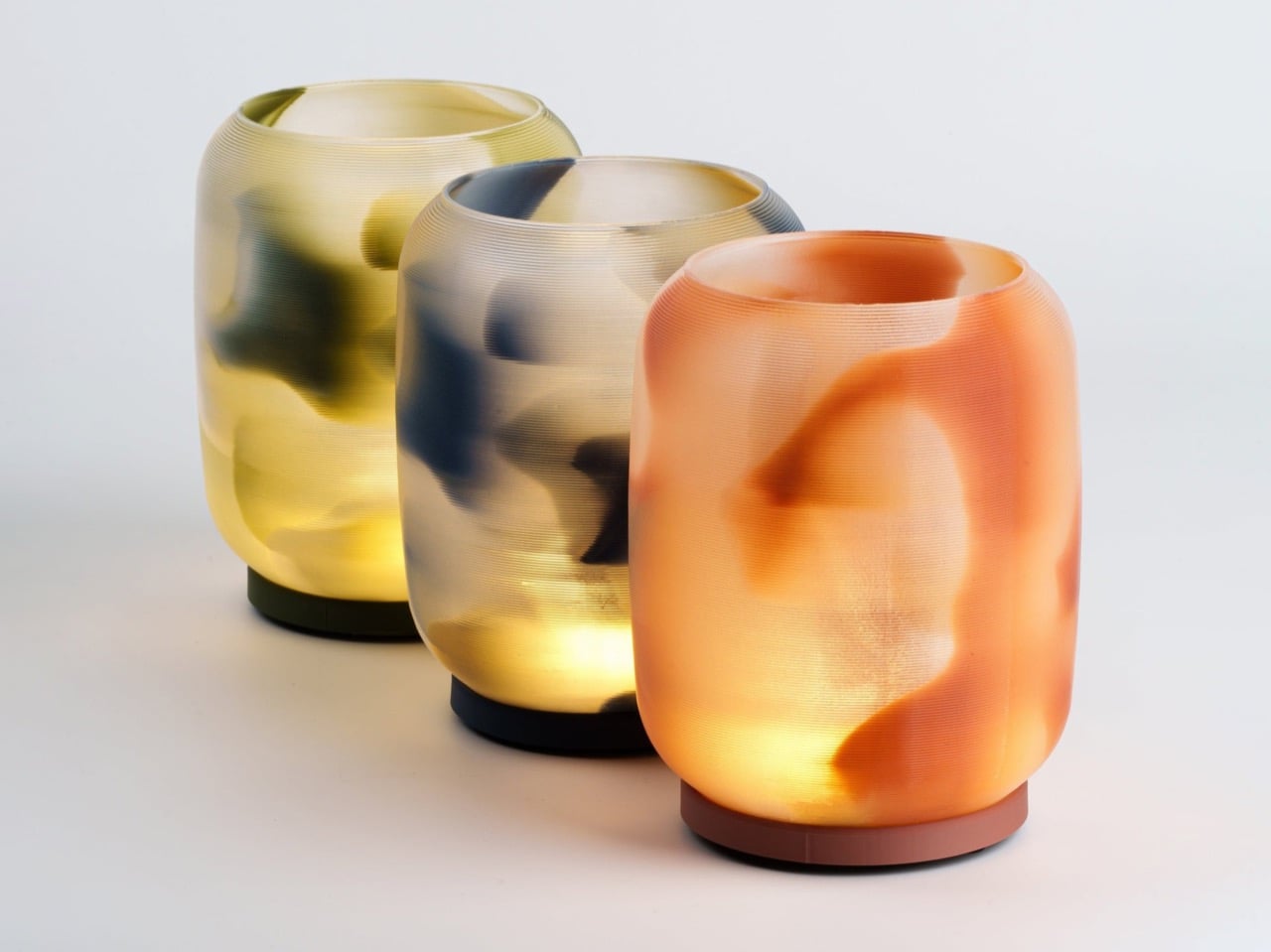

Many of us first encountered the magic of lenticular printing on a pocket-sized novelty card. Tilting it back and forth would make a cartoon character move or a flat image suddenly appear to have three-dimensional depth. The principle was simple and clever: a series of tiny, parallel lenses on a plastic sheet would direct different slivers of an underlying image to our eyes depending on the viewing angle. It was a fun, tactile illusion, a small piece of optical engineering designed to create a moment of surprise and delight from a static object.
Imagine taking that same principle and applying it to a gracefully curved, three-dimensional lamp. This is precisely what the Japanese brand QUQU has achieved with its Nishiki line. The entire body of the lamp functions as a lenticular lens, using the fine, horizontal ridges of the 3D printing process as the optical array. As you move around the lamp, patterns of colour suspended within its translucent walls shift and swim, revealing new dimensions and tones. It transforms a simple light source into a dynamic object that performs a quiet, constant dance with the viewer’s perspective.
Designer: QUQU
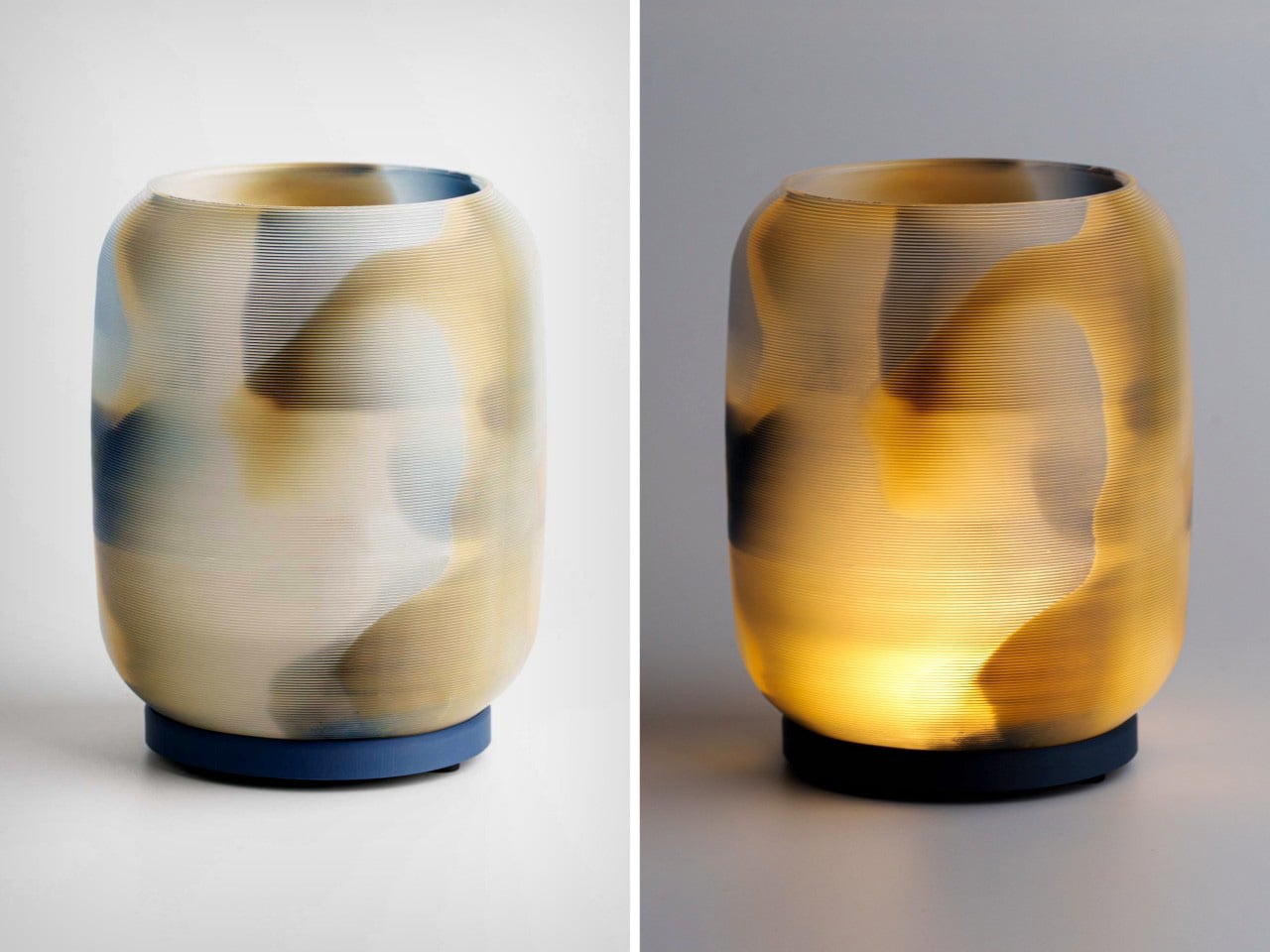

The entire trick hinges on QUQU’s decision to weaponize what most of the FDM printing world considers an imperfection. We spend countless hours and dollars on post-processing to eliminate layer lines, chasing that injection-molded smoothness to prove the technology is “ready.” QUQU went in the complete opposite direction and made those 0.2mm or 0.3mm ridges the star of the show. Each concentric line acts as a cylindrical lens, refracting light that passes through the lamp’s wall. Instead of a flaw, the texture becomes the engine of the visual effect. This is a genuinely sharp piece of design thinking that elevates the manufacturing process itself into an aesthetic feature, rather than something to be hidden.


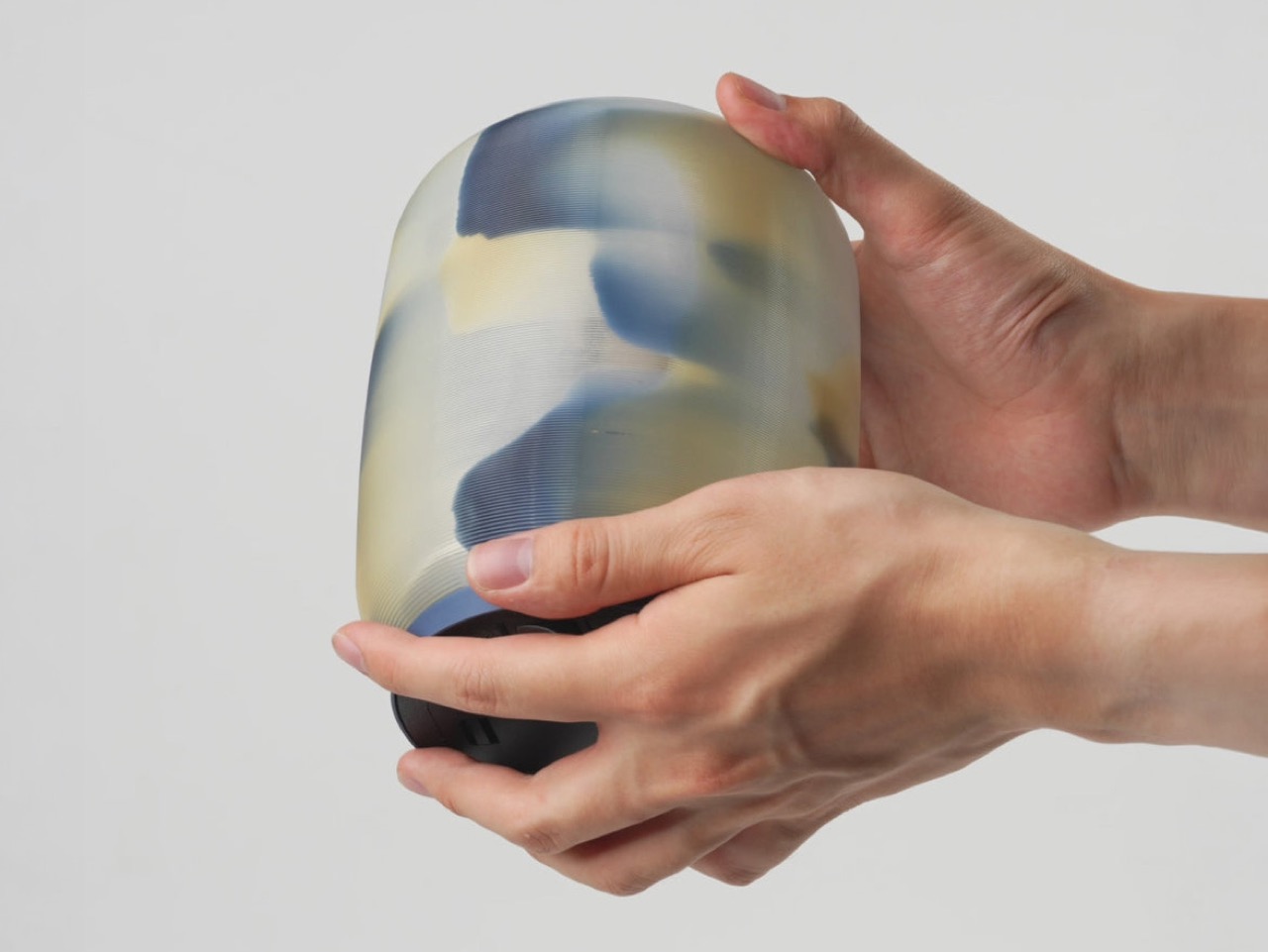

This effect would fall completely flat with the wrong material. A standard PLA or PETG filament would be too opaque or have the wrong refractive index, turning the whole thing into a muddy mess. QUQU’s use of a semi-translucent, grain-derived biomass plastic is the critical second half of the equation. This specific material choice gives the 155mm tall shade a soft, fibrous quality that diffuses light beautifully, preventing harsh hotspots from the internal LED. It has just enough clarity to let you perceive depth but enough haze to blend the suspended colours into those soft, koi-like patterns. The material is doing as much optical work as the surface geometry is.
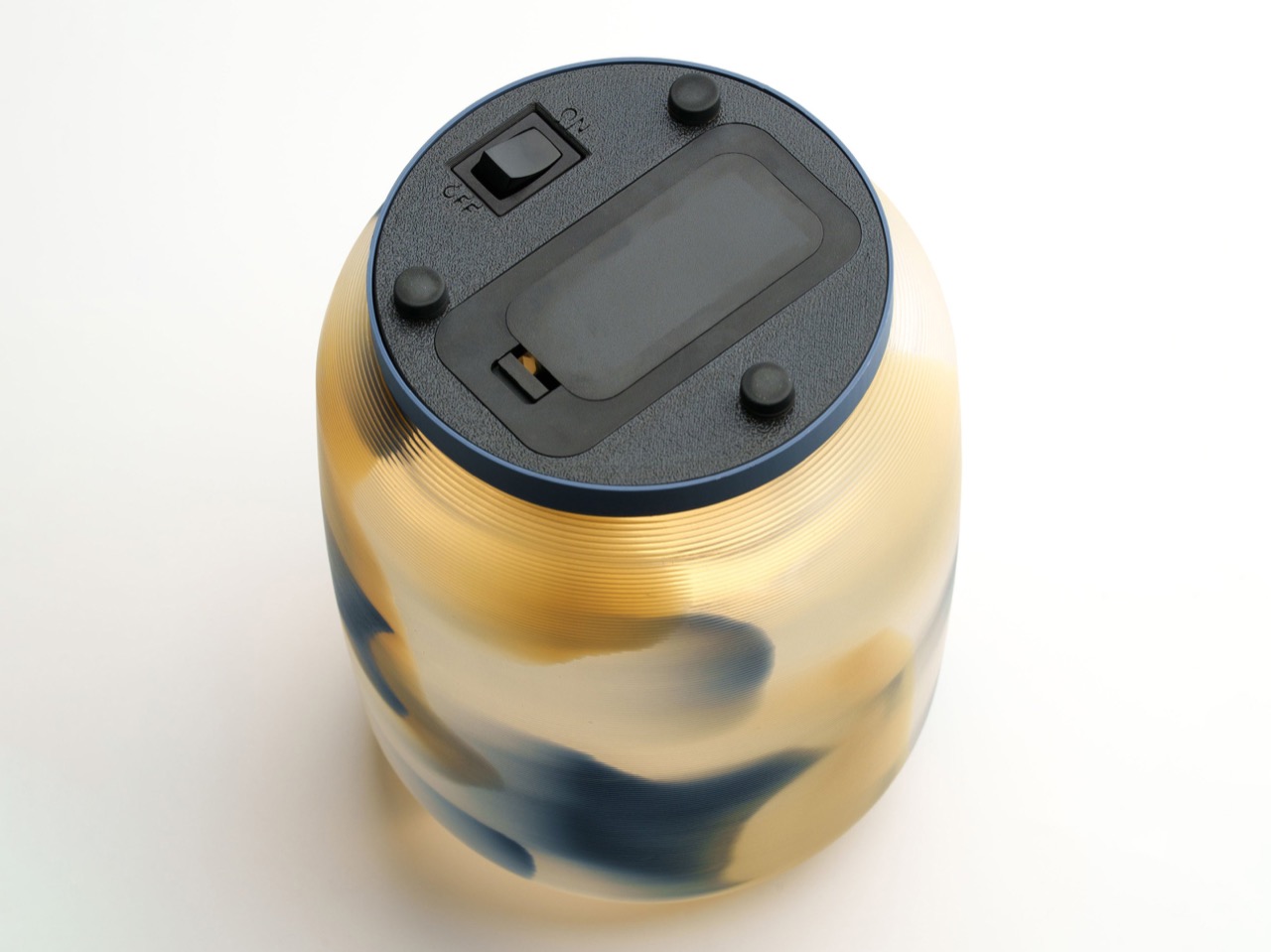
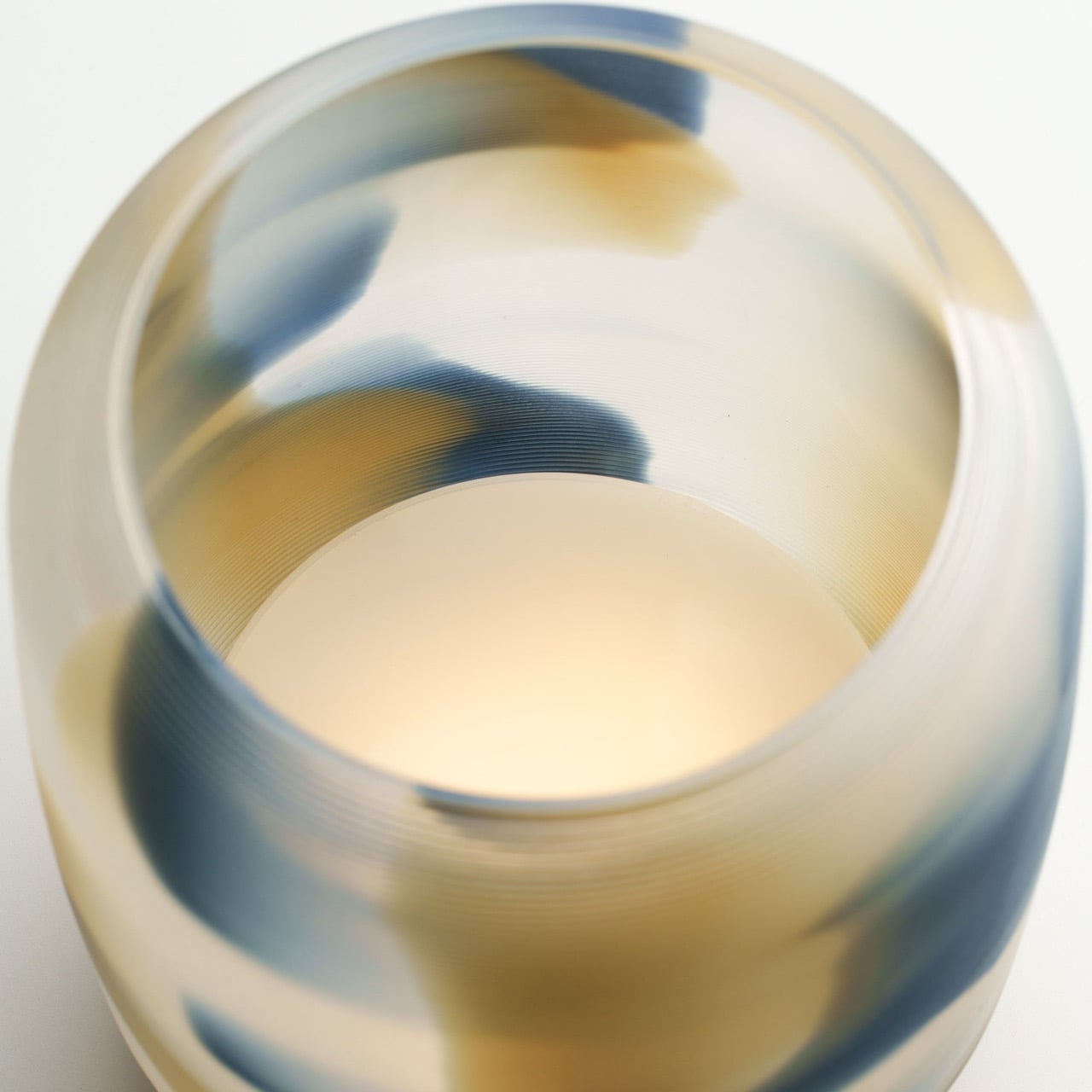
The printer deposits coloured filament at varying depths inside the thick wall of the shade, sandwiching it between inner and outer layers of the translucent base material. This is a level of algorithmic control that feels like a form of digital craft, placing colour with volumetric precision. When you see the lamp unlit, the colours appear soft and suspended. Turning the internal LED on then completely inverts the experience, as the pigmented patterns become dark, dramatic silhouettes against a warm, glowing background. This gives the object a compelling dual personality, making it an entirely different piece depending on whether it is active or at rest.
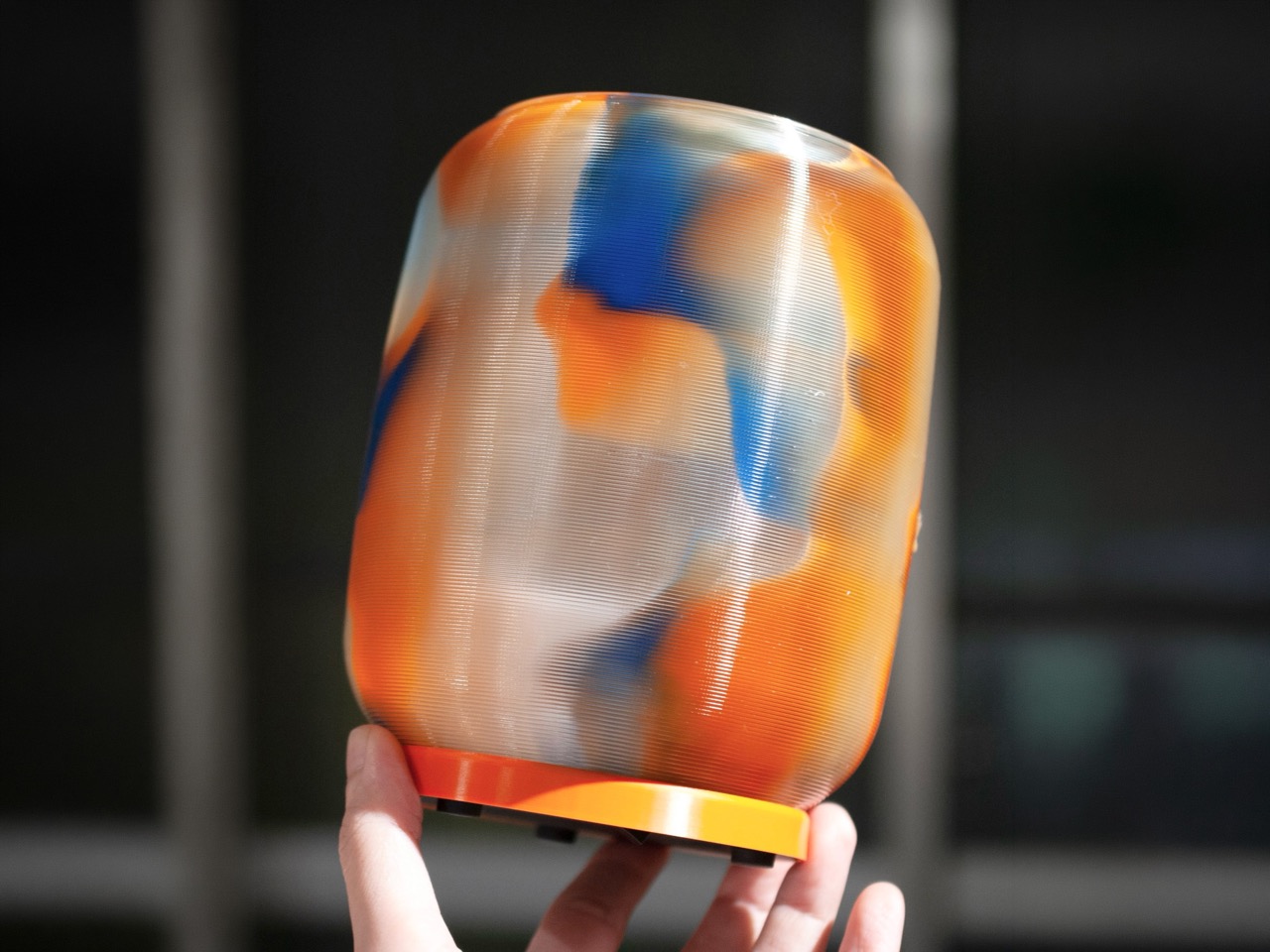
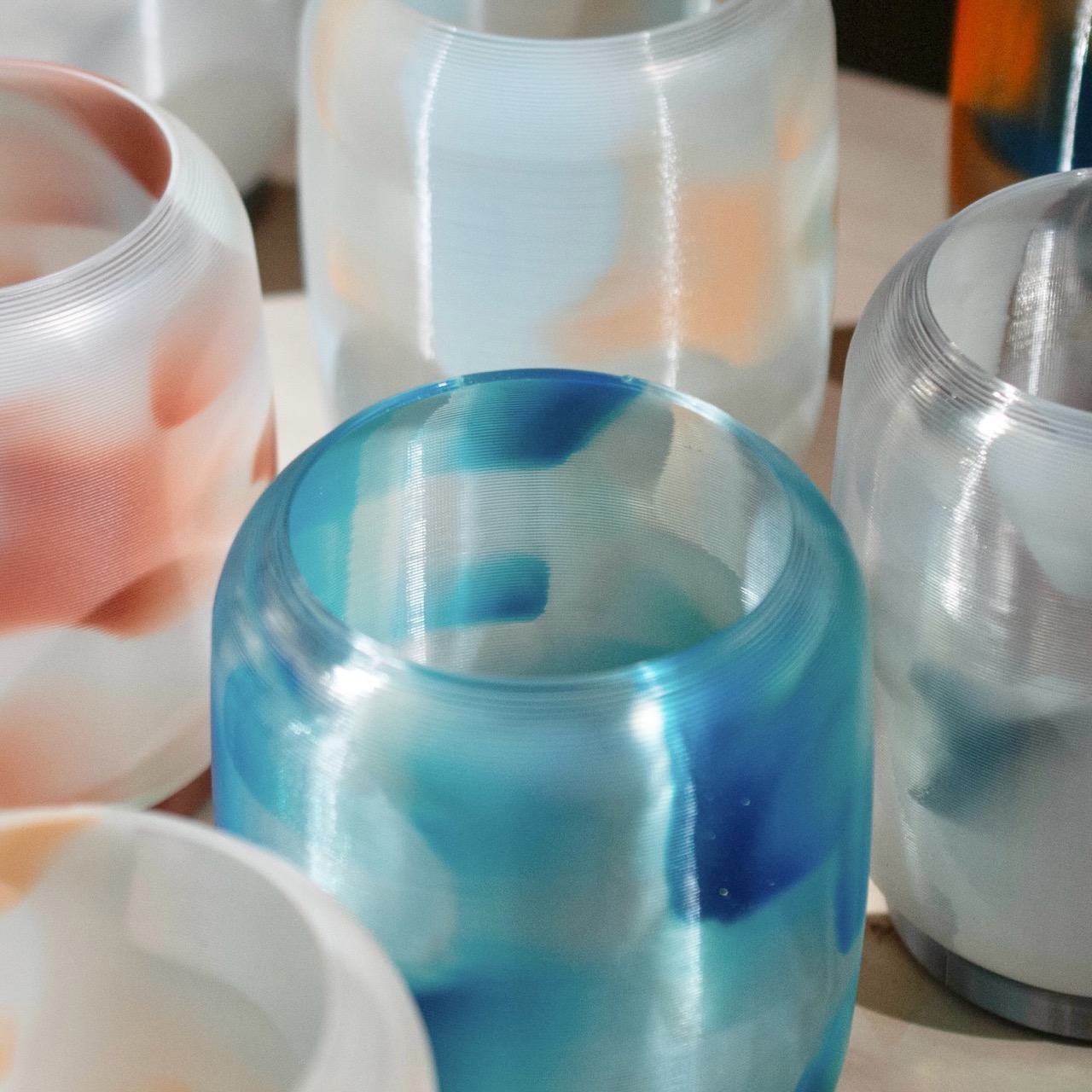
The Ruri colorway, with its deep lapis lazuli tones, is the one getting the most attention, but the line includes others worth a look. The Koubai offers a warm plum red, Moegi provides a fresh spring green, and Hakumu is a subtle “white mist” variant. They are available directly from QUQU’s Japanese webstore for ¥19,800, which works out to roughly $125 USD. Now imagine this technique being used on other 3D printed products. I’d kill for a phone case made this way!