
Most public sculptures are meant to be looked at from the outside. You walk past, glance up, maybe take a photo, and move on. The relationship between the object and the person stops at the surface. Five Fragmented Cubes, a large-scale interactive sculpture made of painted steel, refuses that arrangement entirely: it was built specifically to be entered, climbed, and walked through, so that the thing you came to look at ends up surrounding you on all sides.
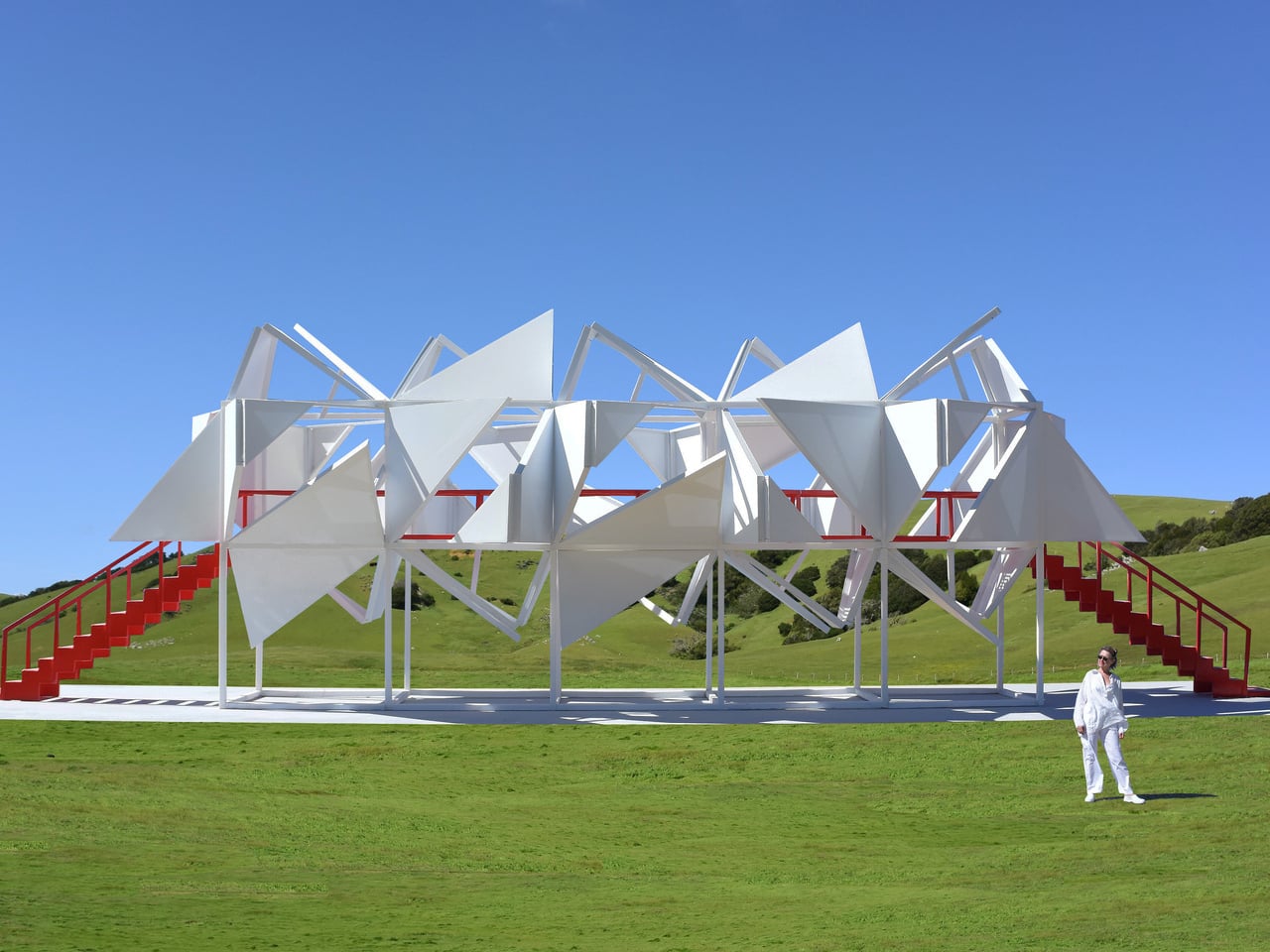
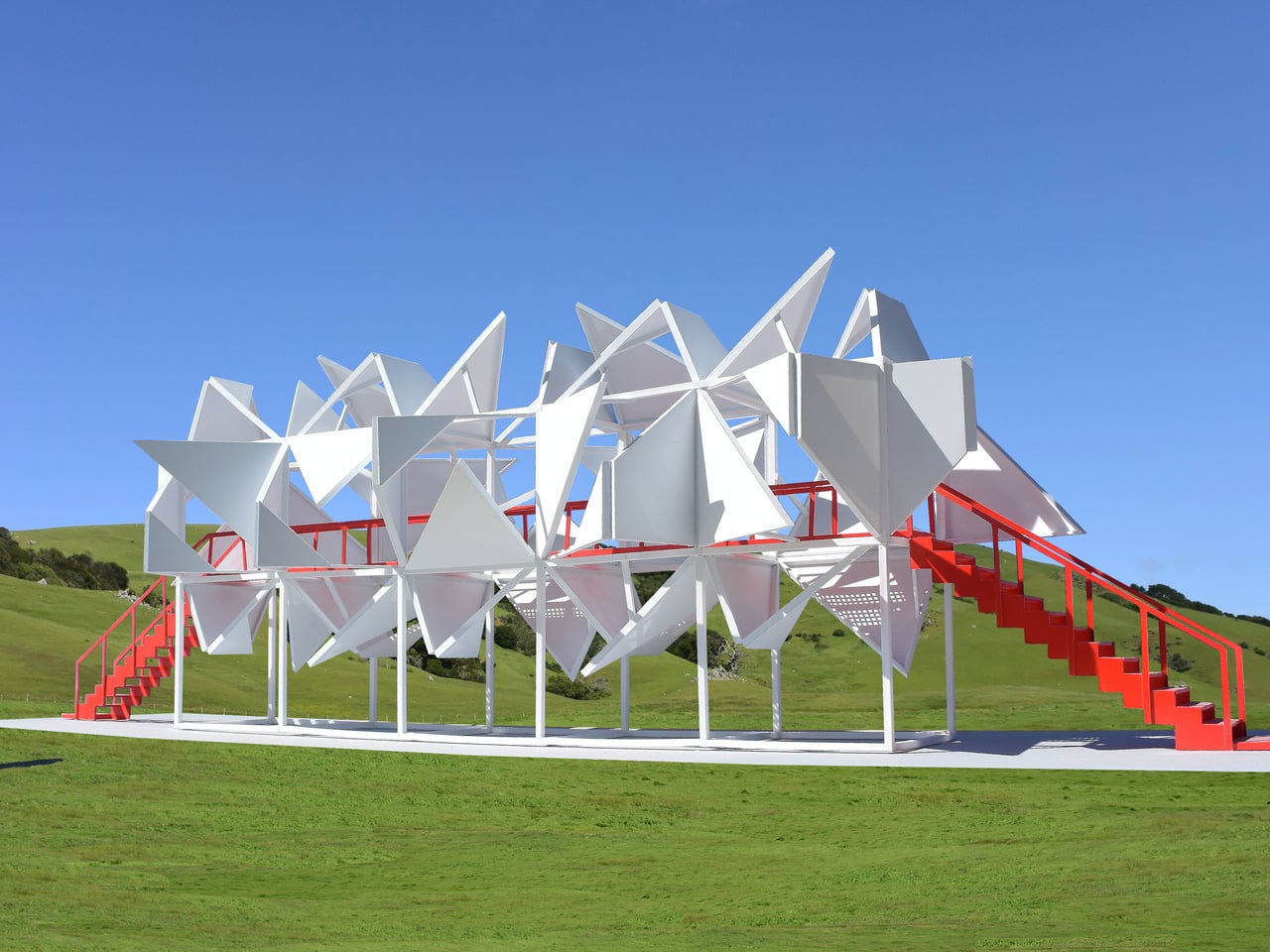
The structure consists of 10 cube frames arranged in two stacked tiers on a concrete base, with five cubes forming the lower support grid and five more sitting on top. The upper tier is where the visual action happens. Each face of those top cubes is clad with painted steel panels, and each panel face is divided into two triangles. One of those triangles is subdivided again and folded inward, while both are folded outward from the face of the cube frame and locked in place, projecting into space at fixed angles.
Designer: Michael Jantzen
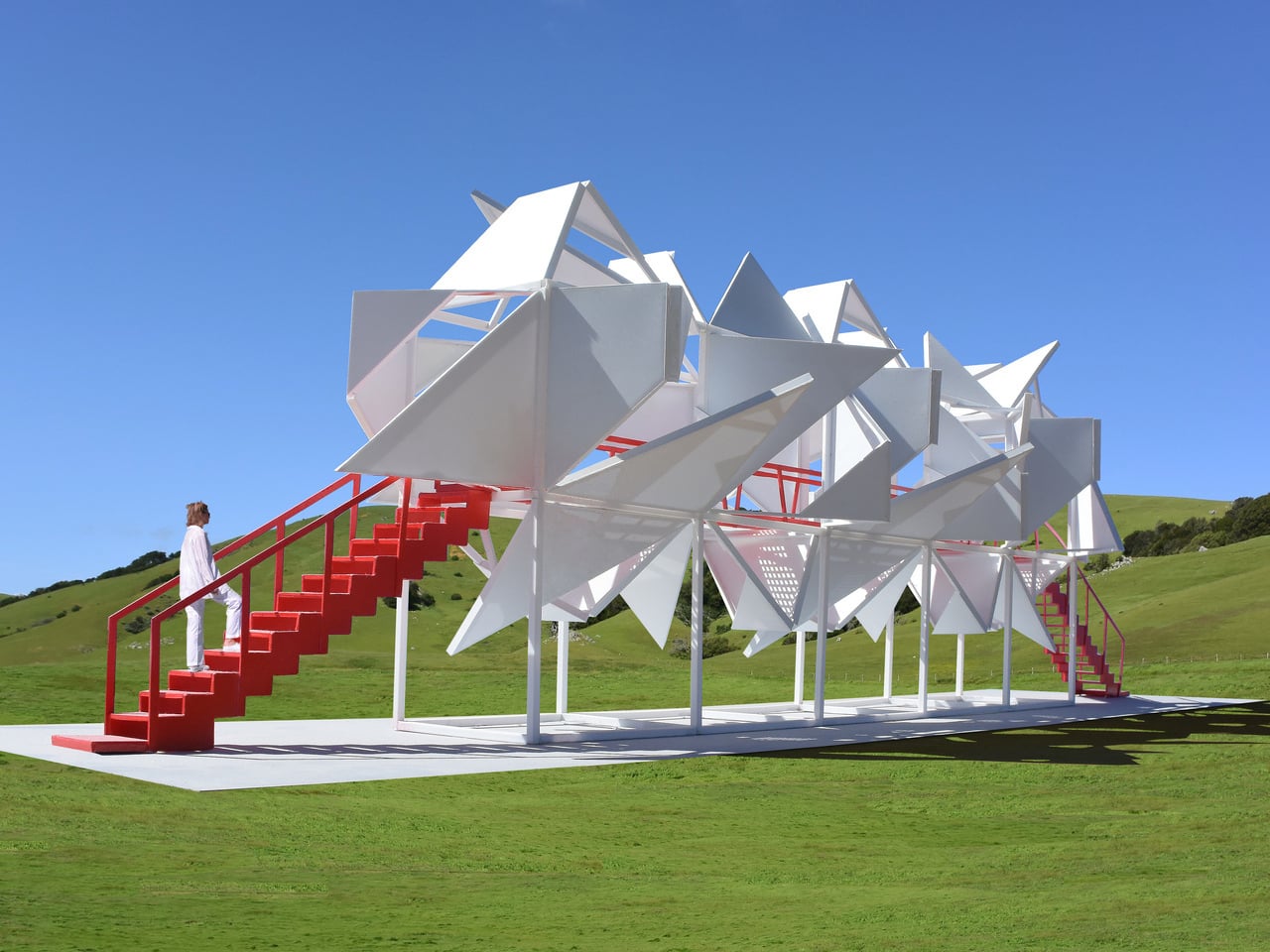
What keeps the whole thing from feeling mechanical or predictable is one deliberate decision: the orientation of every triangle has been rotated randomly relative to its cube face. There is no repeating pattern, no symmetrical rhythm across the surface. Up close, the geometry is legible; from a distance, the cumulative effect reads as dense, spiky, and almost organic. The same steel panels and the same folding logic appear across every face, yet the result looks nothing like a system built from identical parts.
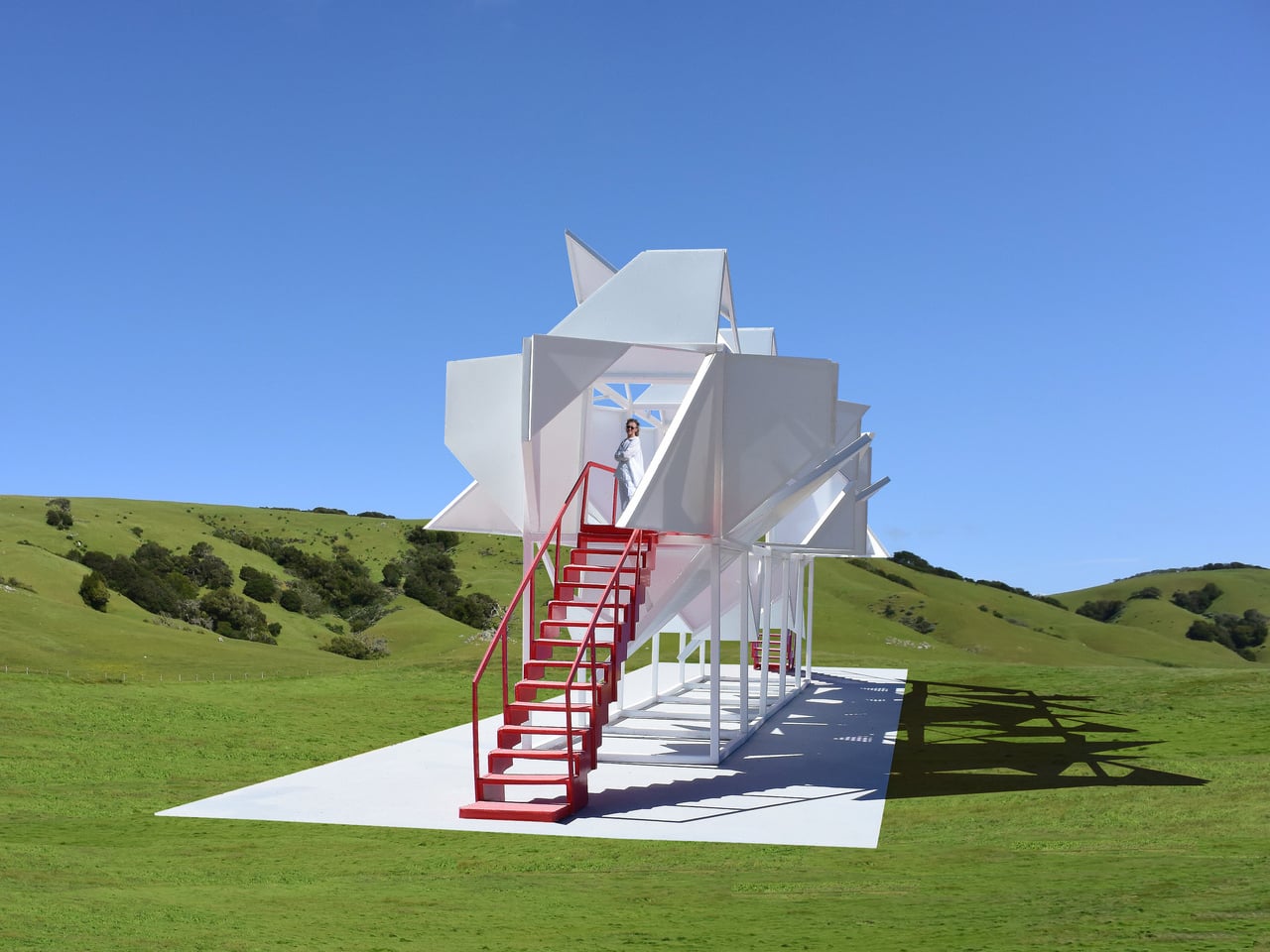
That tension between the simple and the complex is the actual subject of the sculpture. The designer frames it as an exploration of how identical, interconnecting, repeating parts can generate extreme perceived complexity, drawing a comparison to objects in nature, where elaborate forms frequently emerge from a limited set of rules applied at scale. Whether the built result actually produces that sense of discovery depends entirely on where you are standing.
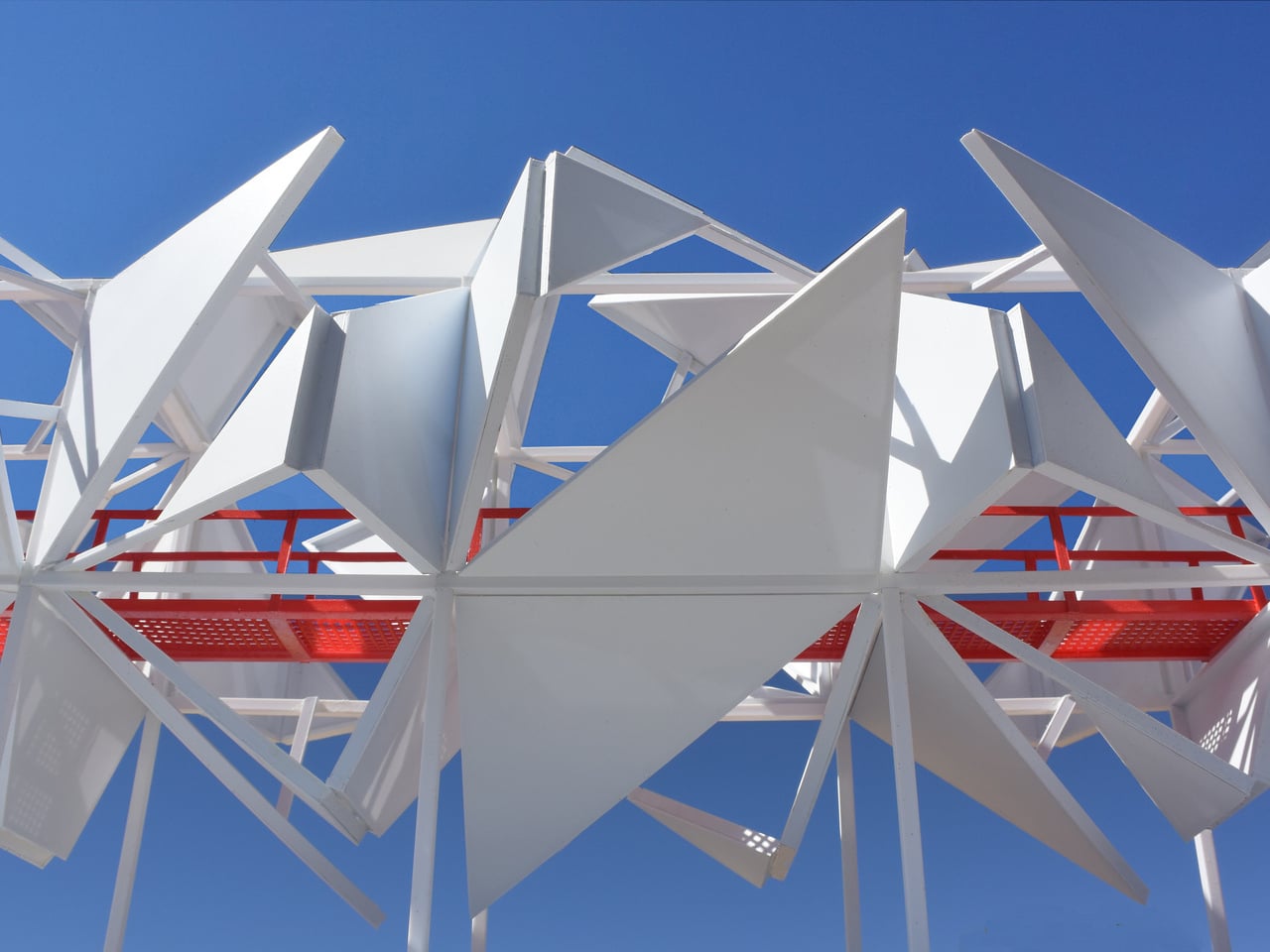
Two red staircases, one at each end of the structure, lead up to a mid-level catwalk with red perforated steel grating underfoot and tubular red railings. The red is not subtle. Against the all-white panels and columns, it functions less as a safety feature and more as a graphic element, separating the structure’s circulation path from its expressive surface. Inside, the folded panels create a partially enclosed space, with light cutting through the gaps between triangles at angles that shift as you move.
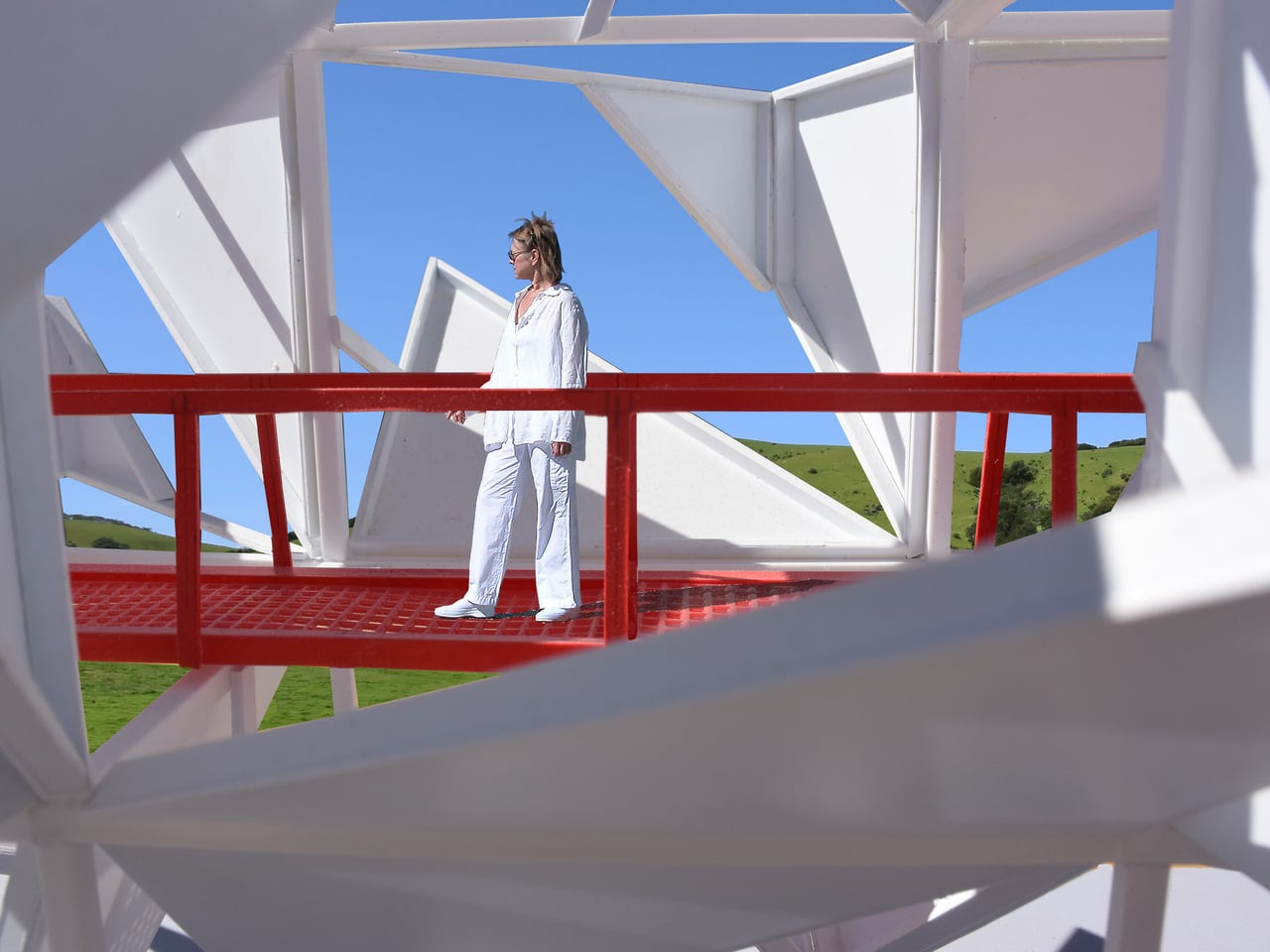
The pastoral setting, open green hills, and clear sky make the white-and-red contrast sharper still. A sculpture this geometrically dense, placed in an undisturbed landscape, is a deliberate provocation, and it earns visual authority because of it. The mesmerizing structure does make one wonder whether the interior experience, walking the catwalk surrounded by folded steel at close range, delivers the complexity it promises from a distance, or does the chaos quietly resolve once you are standing inside it?