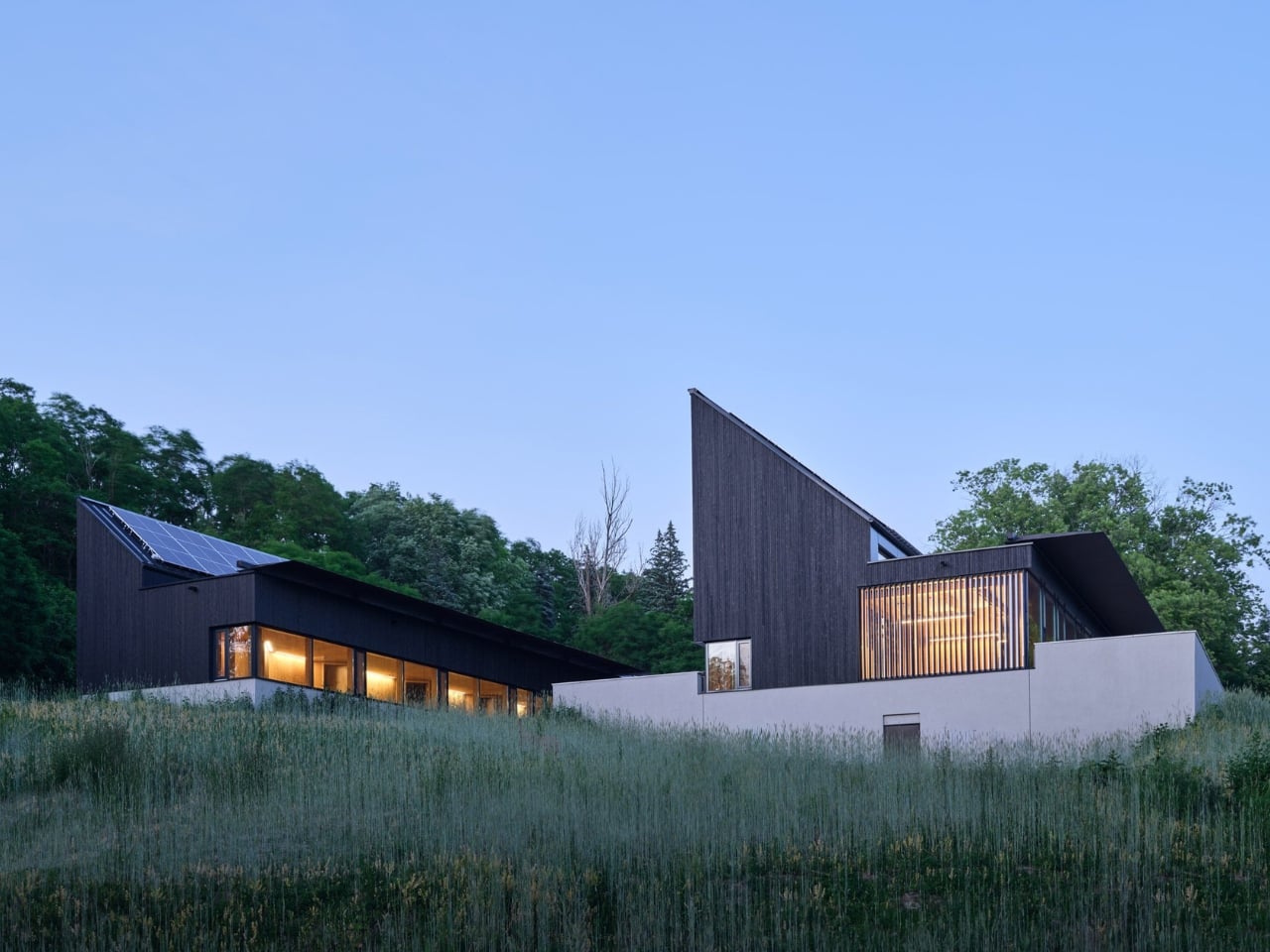

Most university research facilities share a certain visual language. You know the one: utilitarian, slightly apologetic in appearance, the kind of building that exists to check boxes and contain equipment rather than inspire the people who work inside it. The University of Toronto’s Koffler Scientific Reserve is not that building.
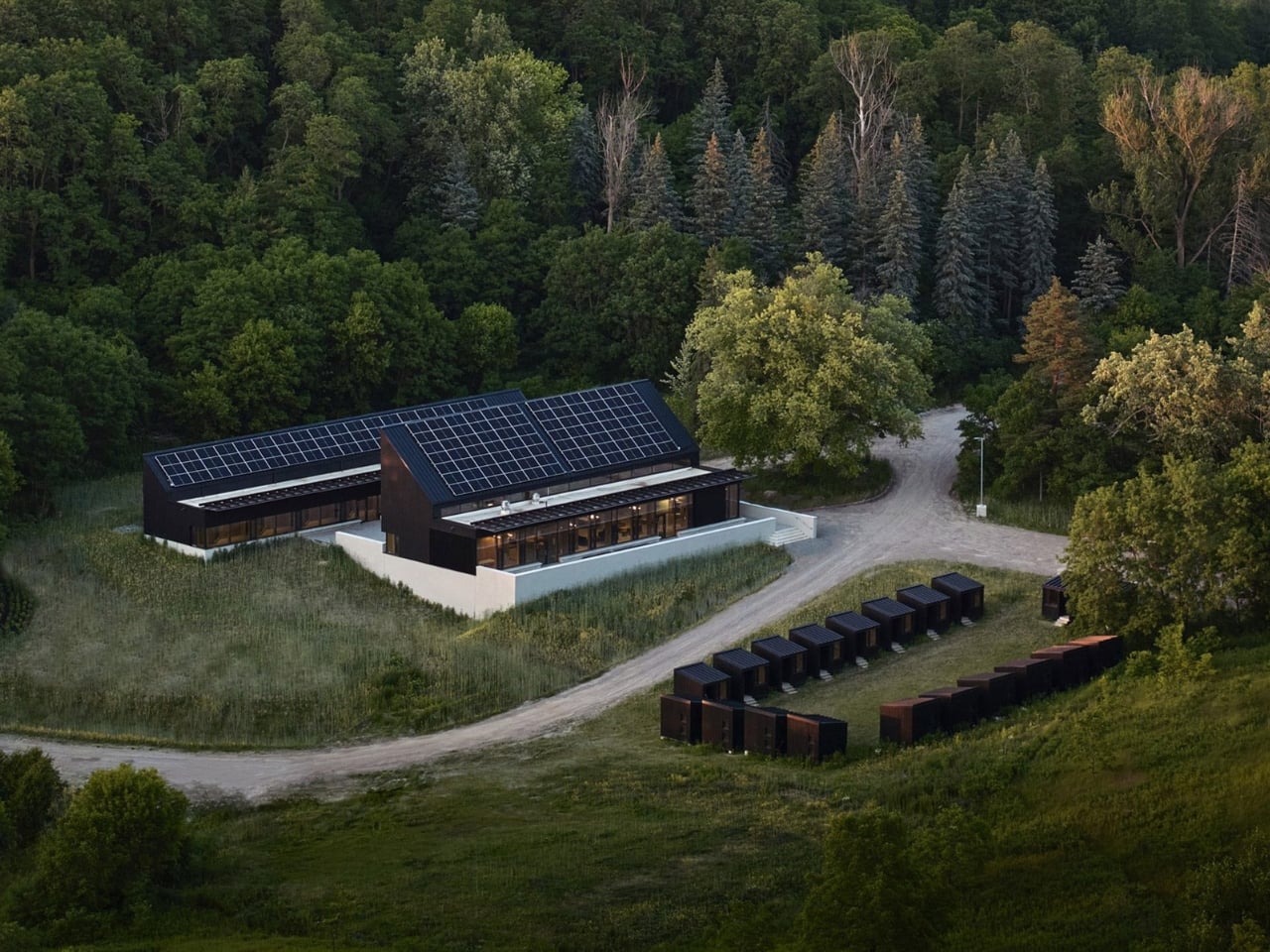
Completed in May 2025 and designed by Toronto-based Montgomery Sisam Architects, the 2,680-square-metre facility sits on 350 hectares in the Oak Ridges Moraine in King Township, Ontario, about an hour north of the city. It serves as a research and teaching base for ecology and environmental biology students and faculty, combining dormitory space, a dining hall, a classroom, and a common room into a single, beautifully considered structure. On paper, that sounds modest. In execution, it’s one of the more thoughtful buildings to come out of Canada recently.
Designer: Montgomery Sisam Architects
What makes the Koffler Reserve stand out is how deliberate its design philosophy is. Principal Robert Davies put it plainly: “Researchers there study the smallest changes in organisms to understand systems at a global scale, and that relationship between the micro and the macro became the lens through which we evaluated every design decision.” That’s not just a nice quote for a press release. You can actually feel that thinking in the architecture.
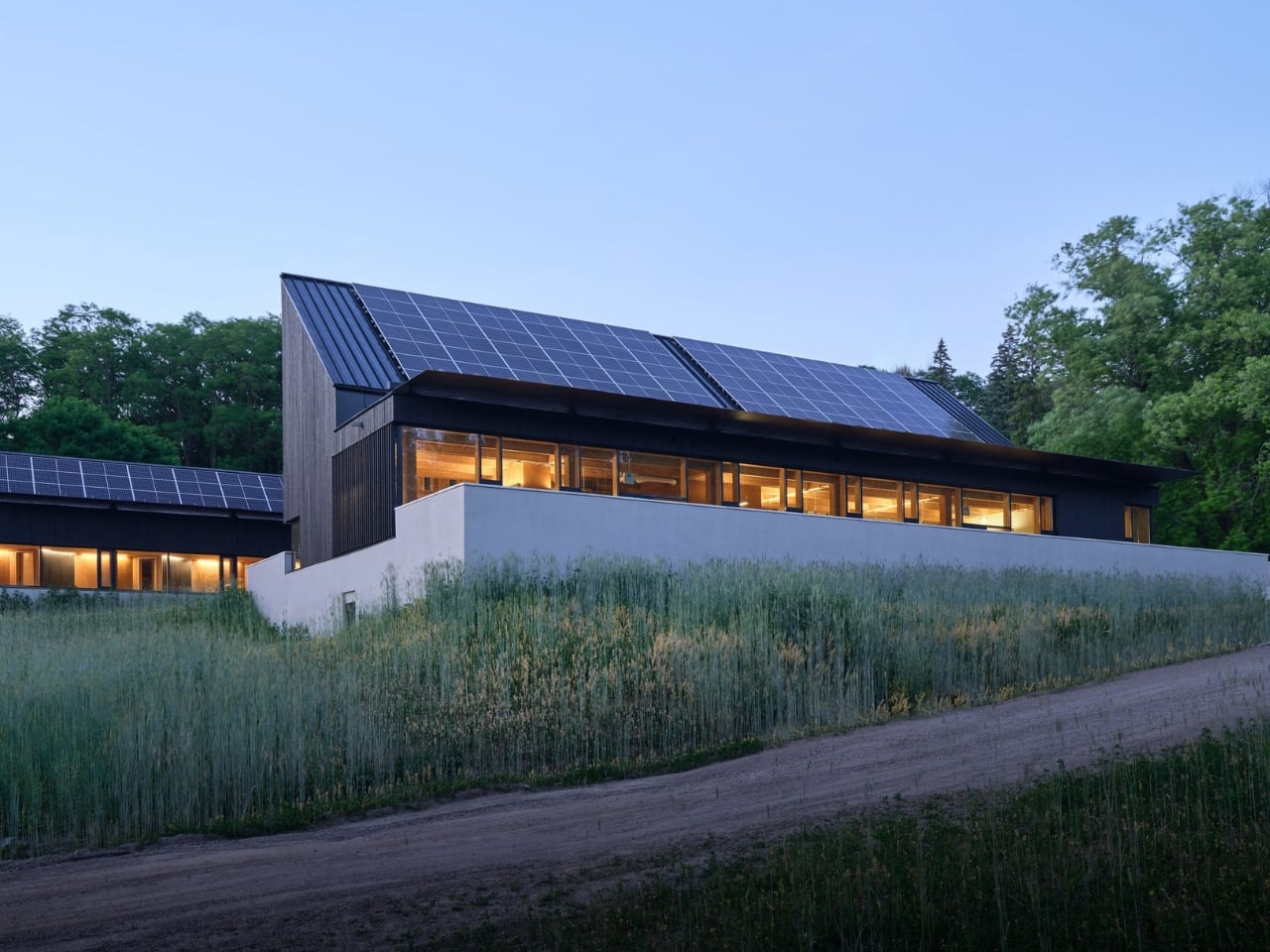
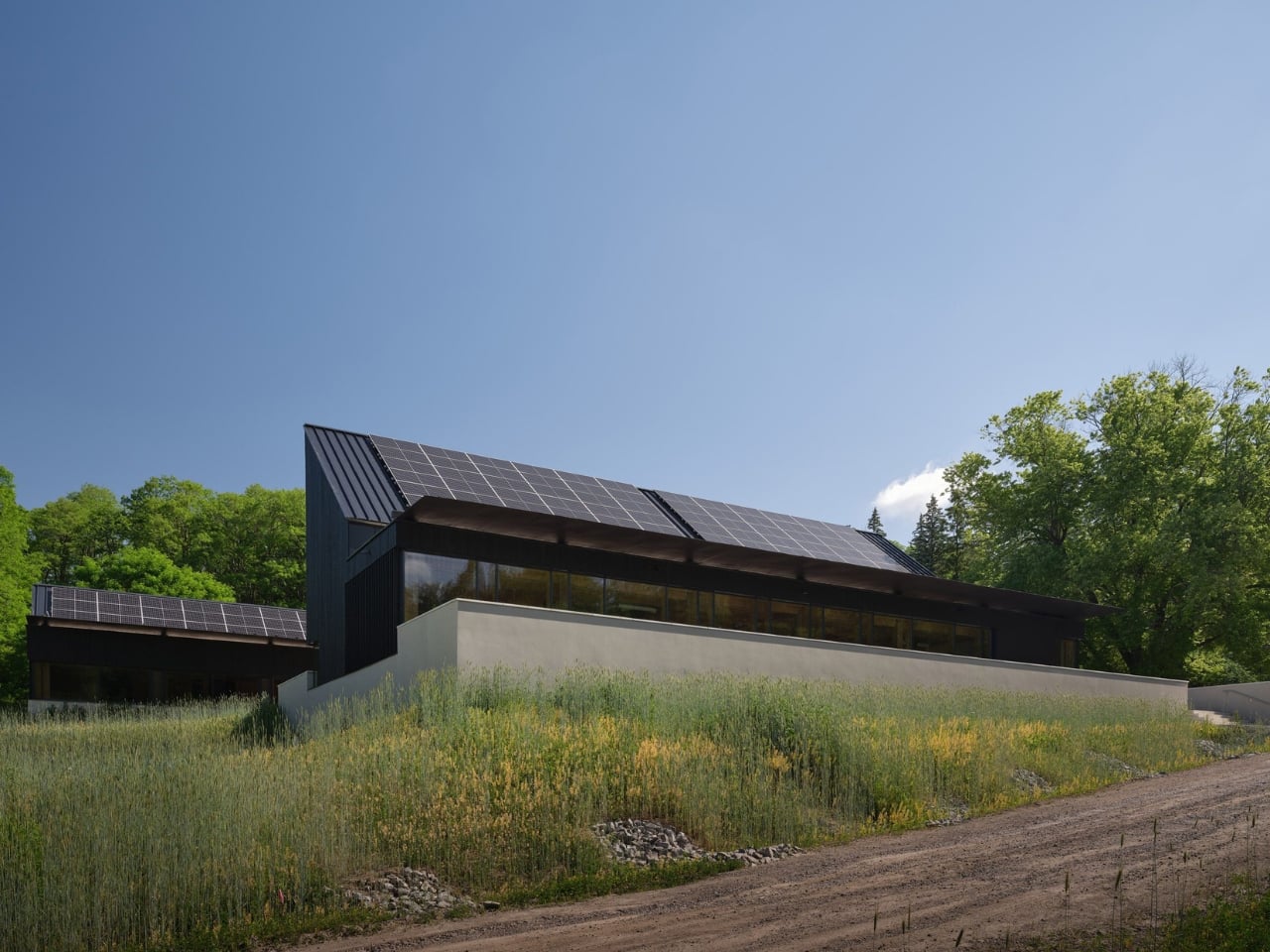
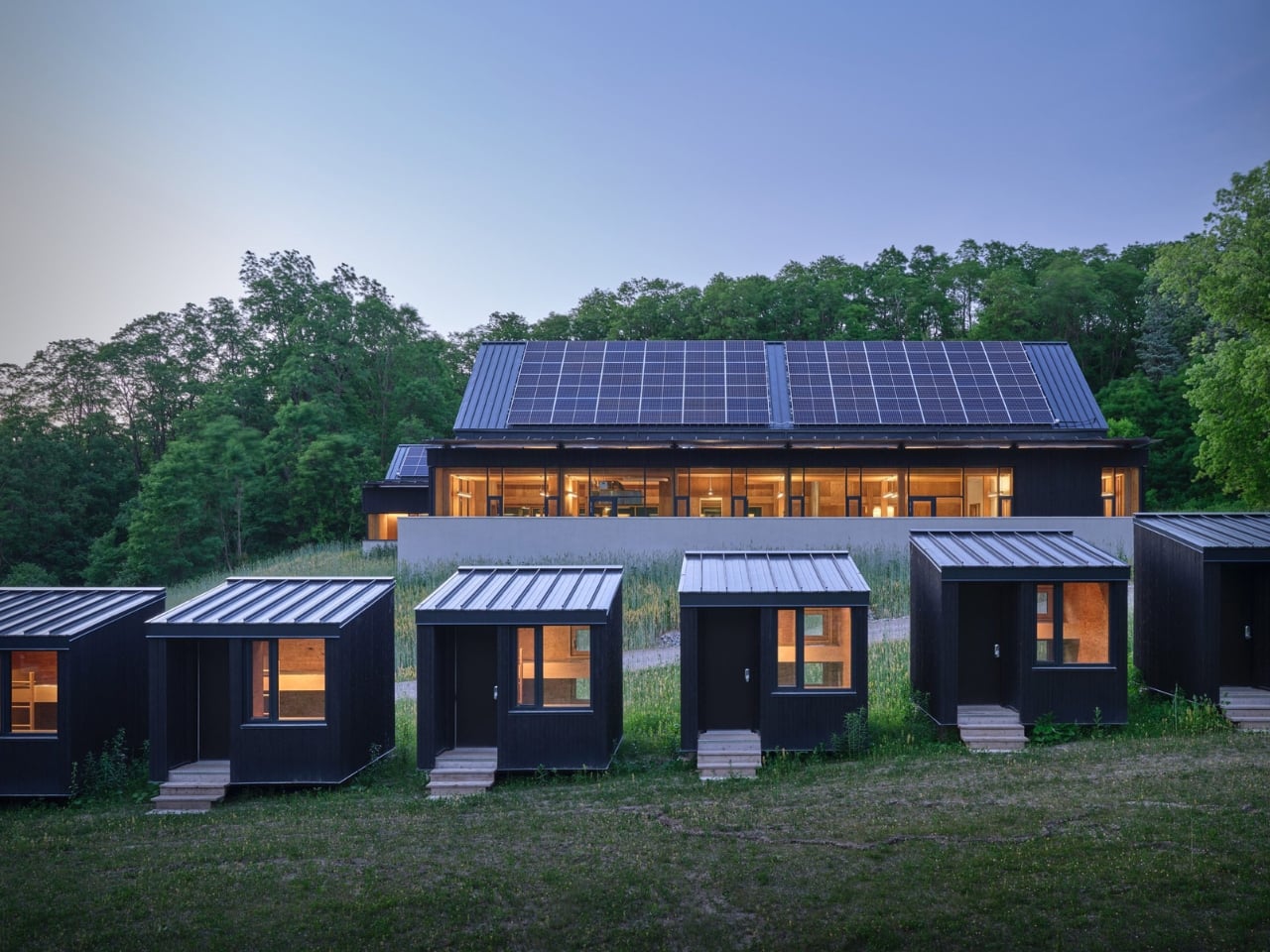
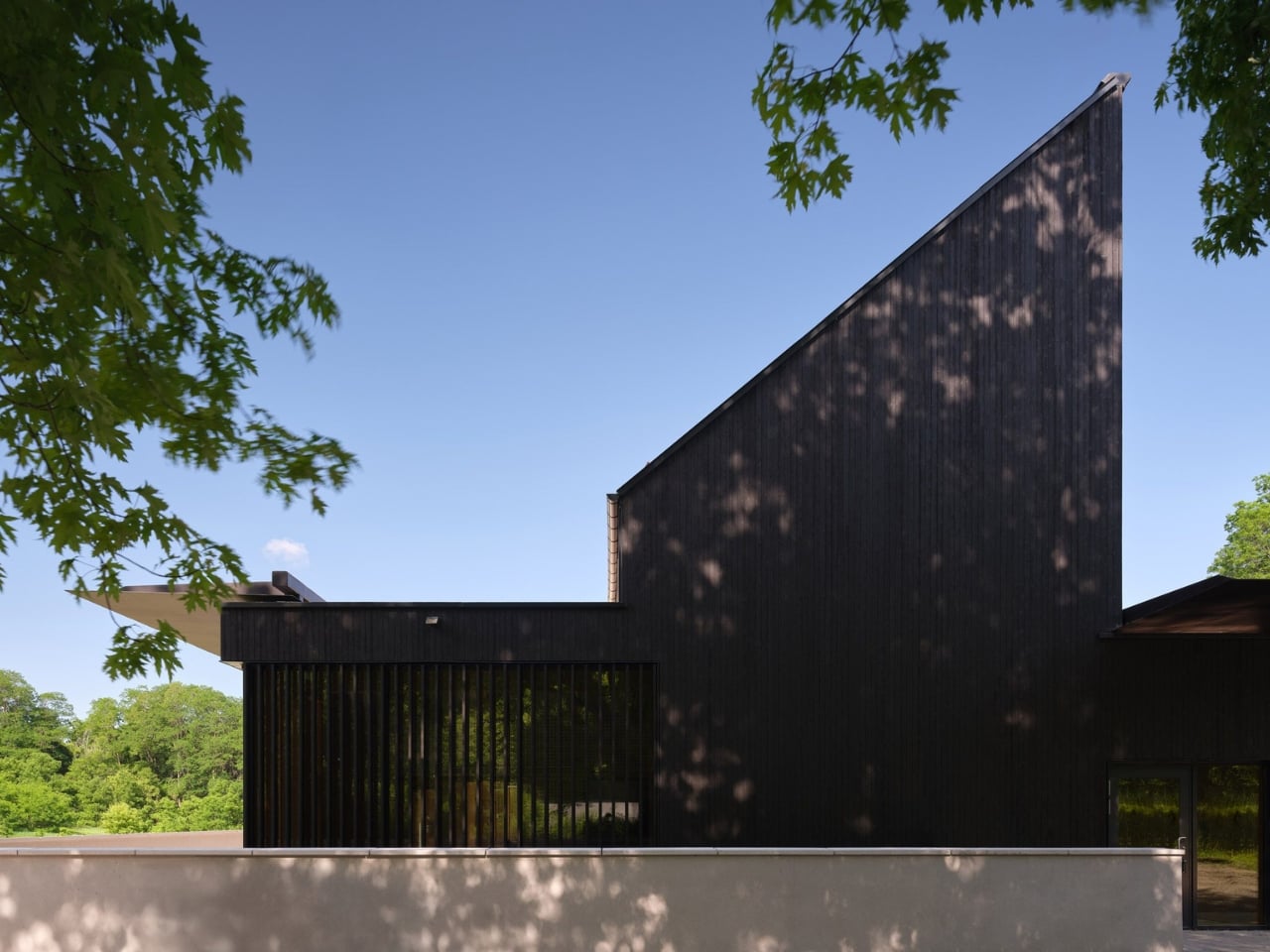
The building’s two prominent shed roofs, for instance, aren’t purely aesthetic choices. They’re angled precisely to optimize solar panel placement based on the site’s latitude, which in turn informed the entire formal expression of the structure. The flat roof and sunshade over the common room’s pitched elevation are carefully positioned to welcome the warming winter sun while blocking the uncomfortable heat of summer rays. Every element earns its place, and that’s exactly the kind of intentional design thinking that makes a building worth talking about.
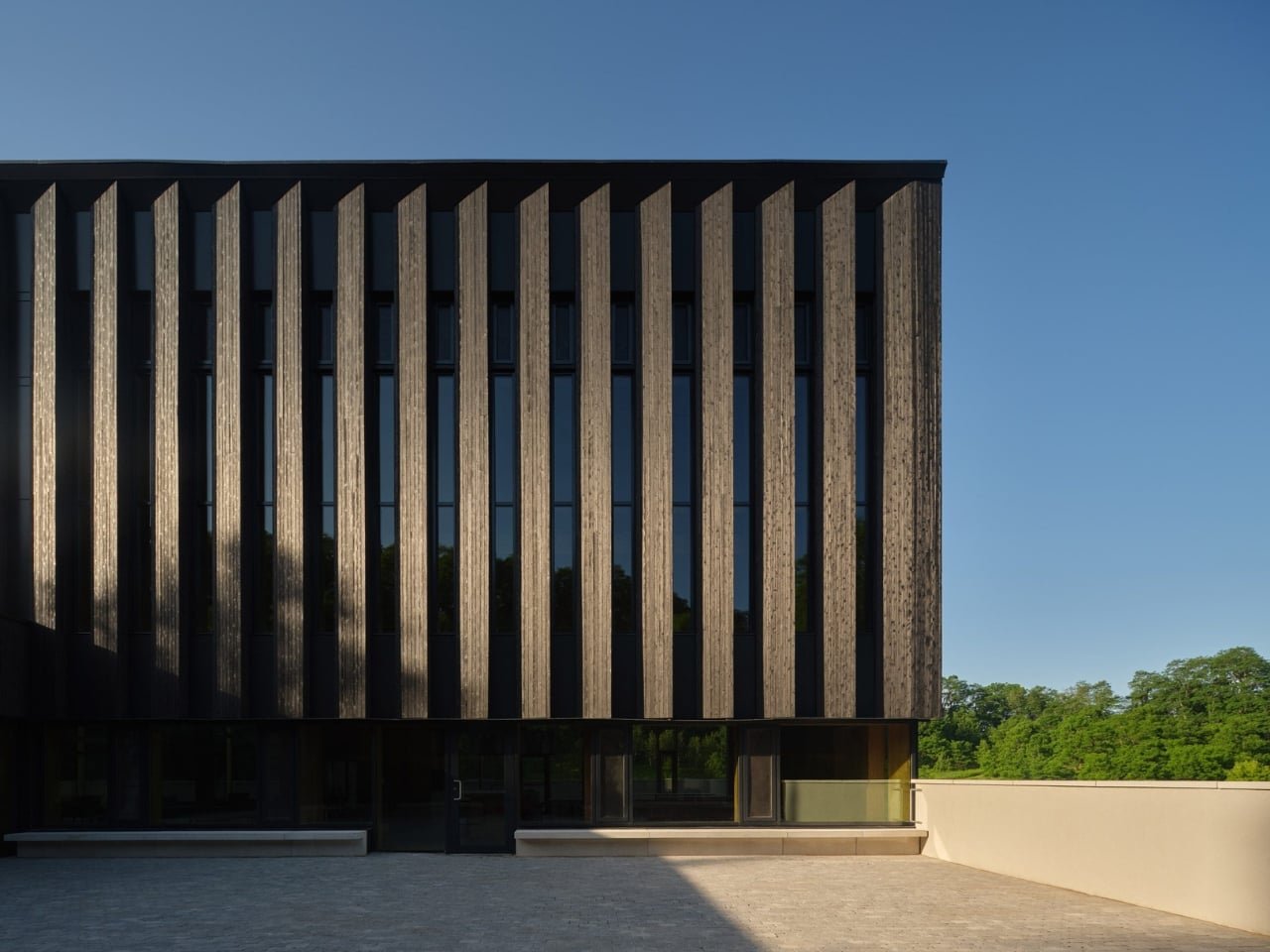
The material choices reinforce this sensibility. The structure is a hybrid of mass timber and conventional light-frame wood construction, using glulam columns and beams with a tongue-and-groove roof. The exterior is clad in shou sugi ban wood, the Japanese technique of partially charring wood to increase its water-resistance and durability. It’s a material that ages honestly and fits the agrarian character of the site, which started life as a series of agricultural plots, became an equestrian centre in the 1950s, and was donated to the university by philanthropists Murray and Marvelle Koffler in 1995. The building knows where it is, and that’s a quality that is rarer than it should be.
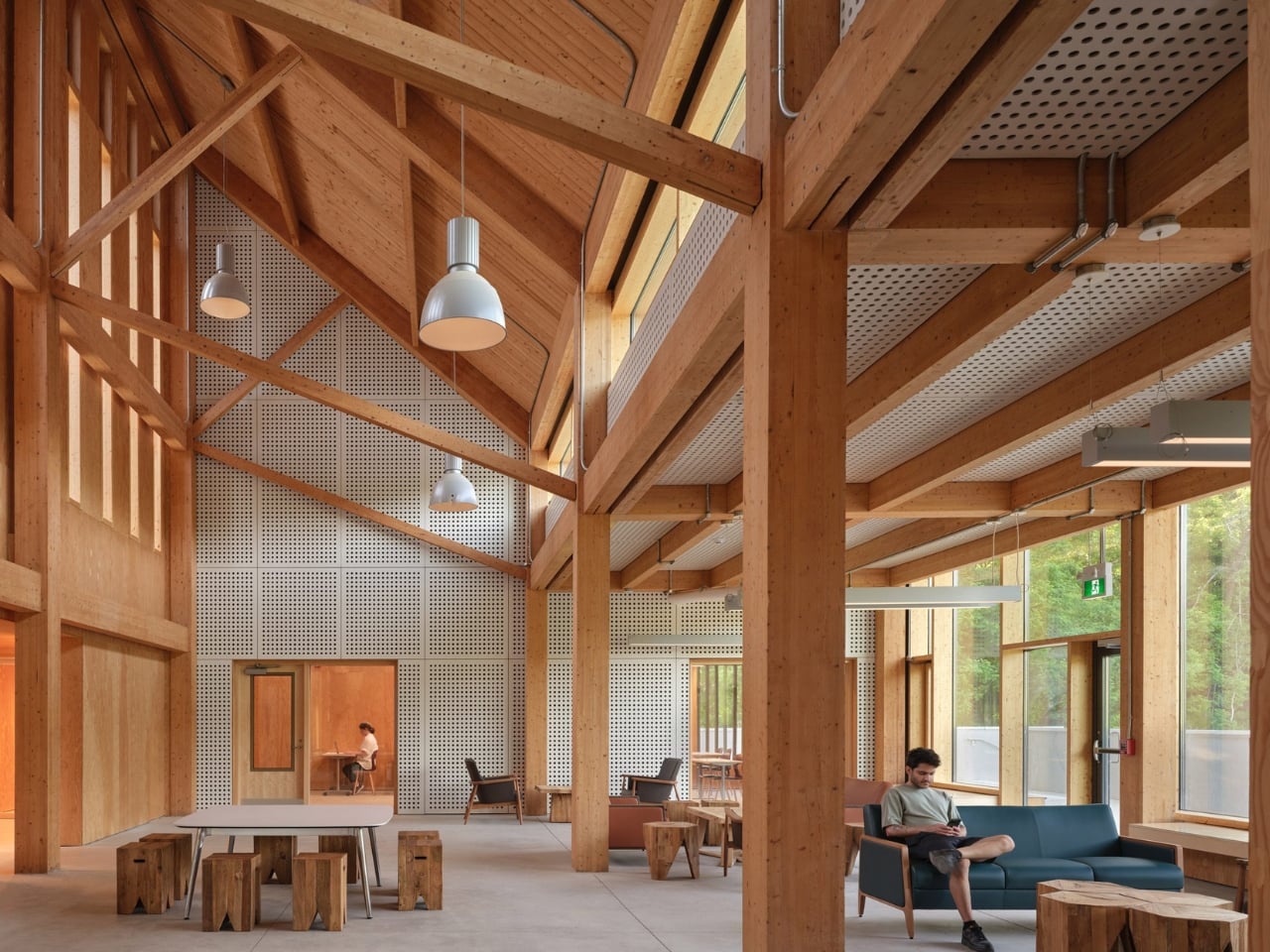
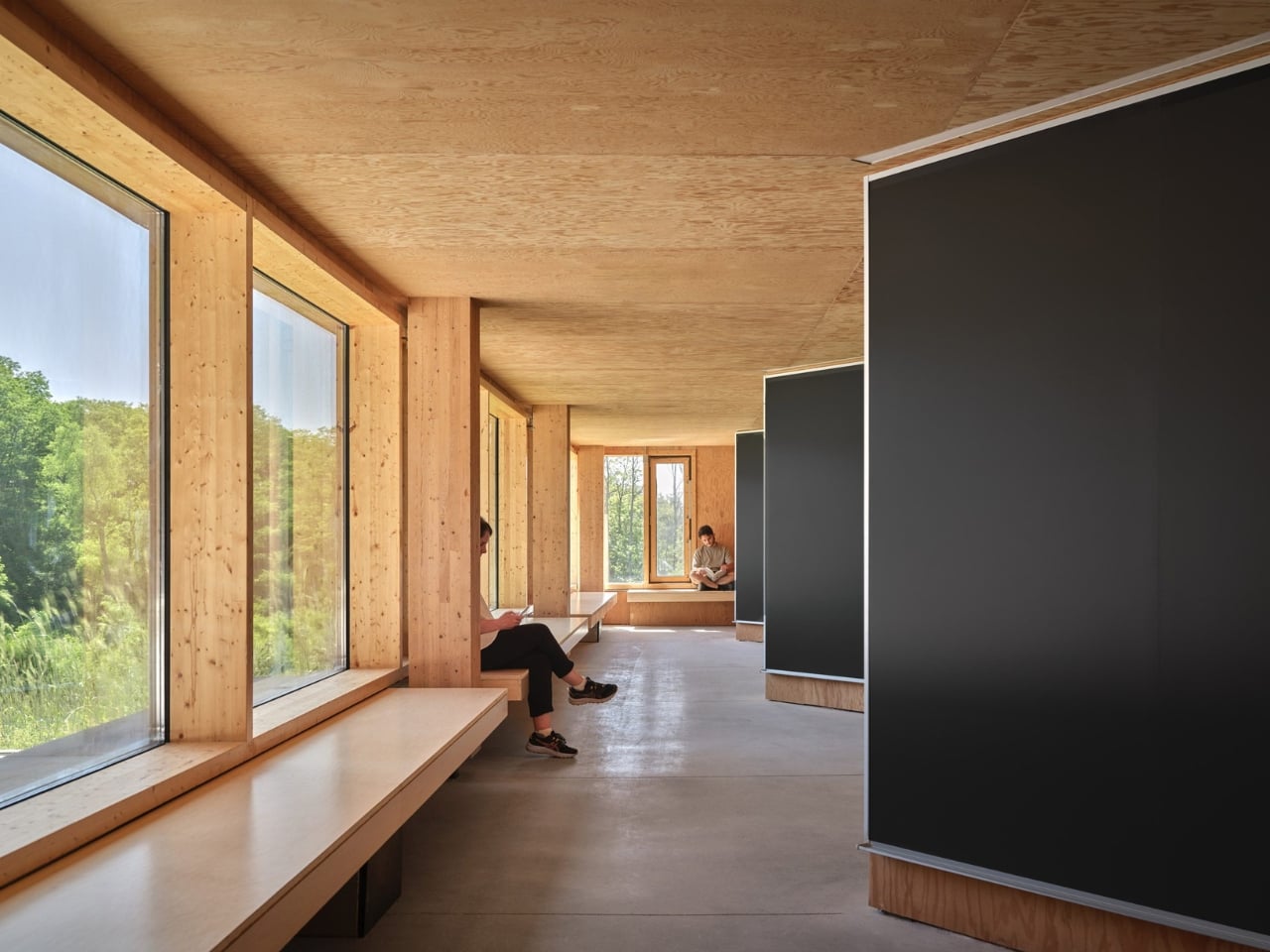
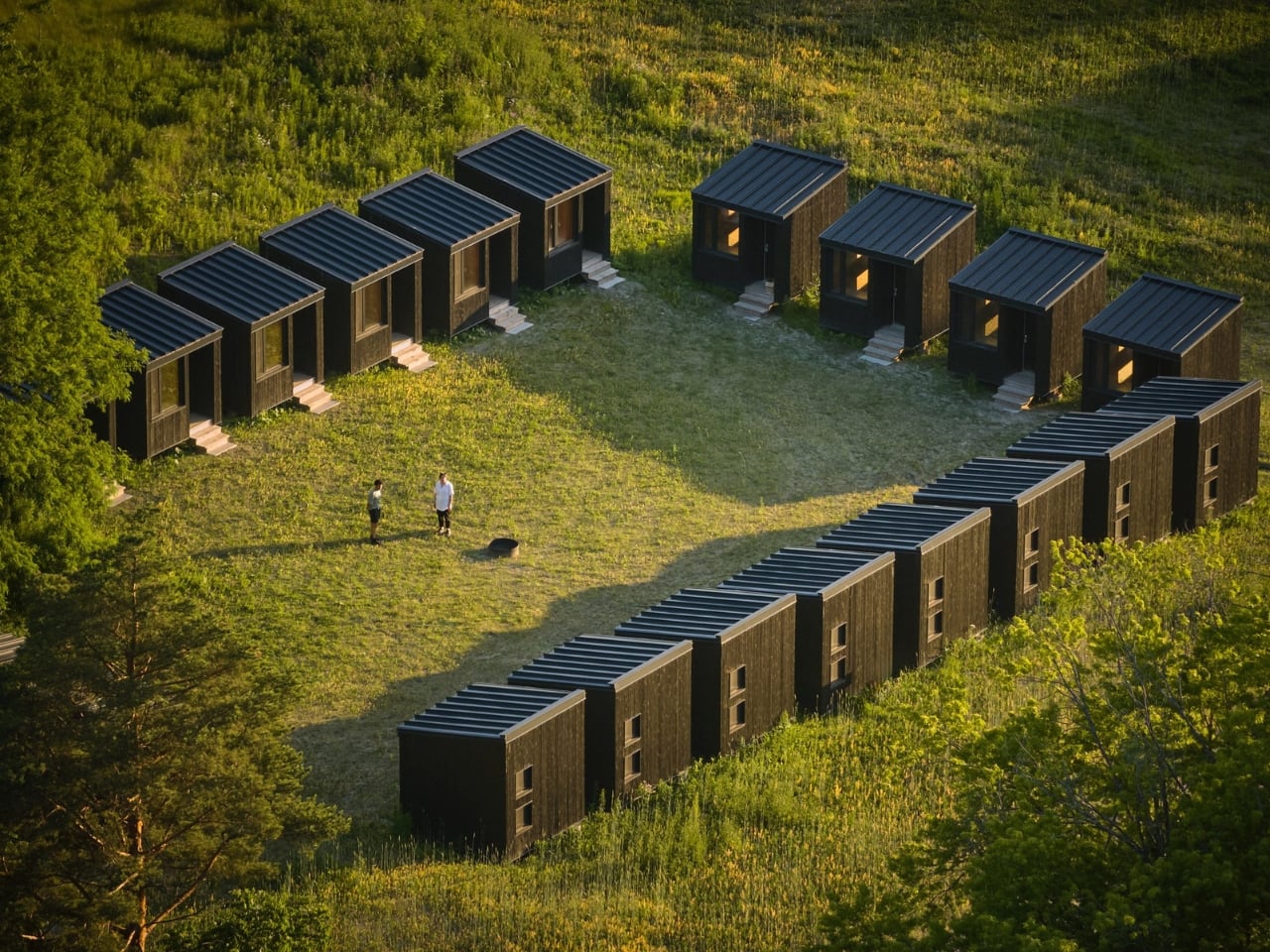
The Reserve’s C-shaped main building houses 20 students, while a cluster of 20 separate bunkies accommodates up to 40 more. The shared amenities, including the kitchen, bathrooms, and living spaces, are deliberately oversized to support larger summer populations and to encourage the kind of informal gathering that actually makes collaborative research work. The design is thinking about people, not just program. That distinction matters more than most architects will admit.
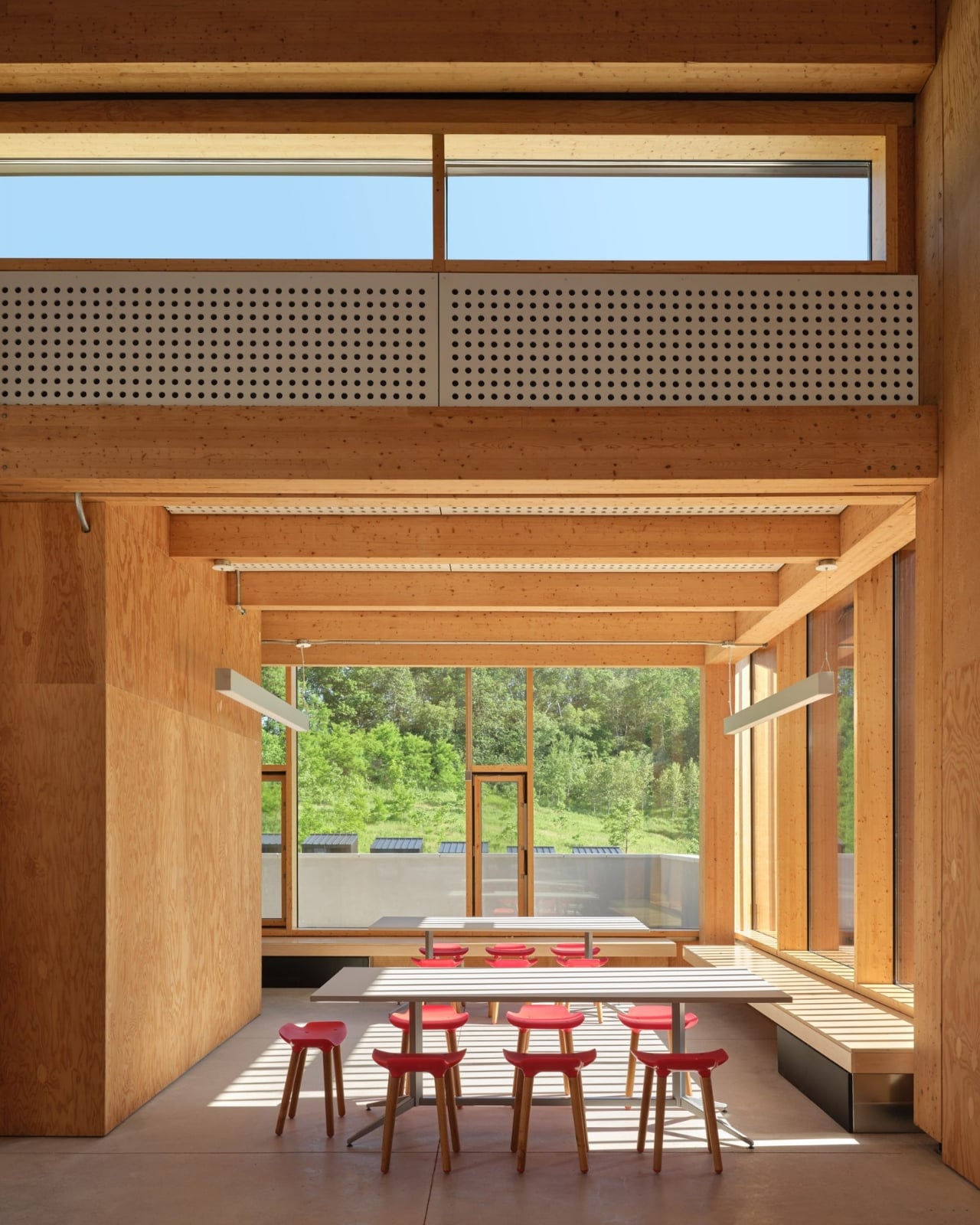

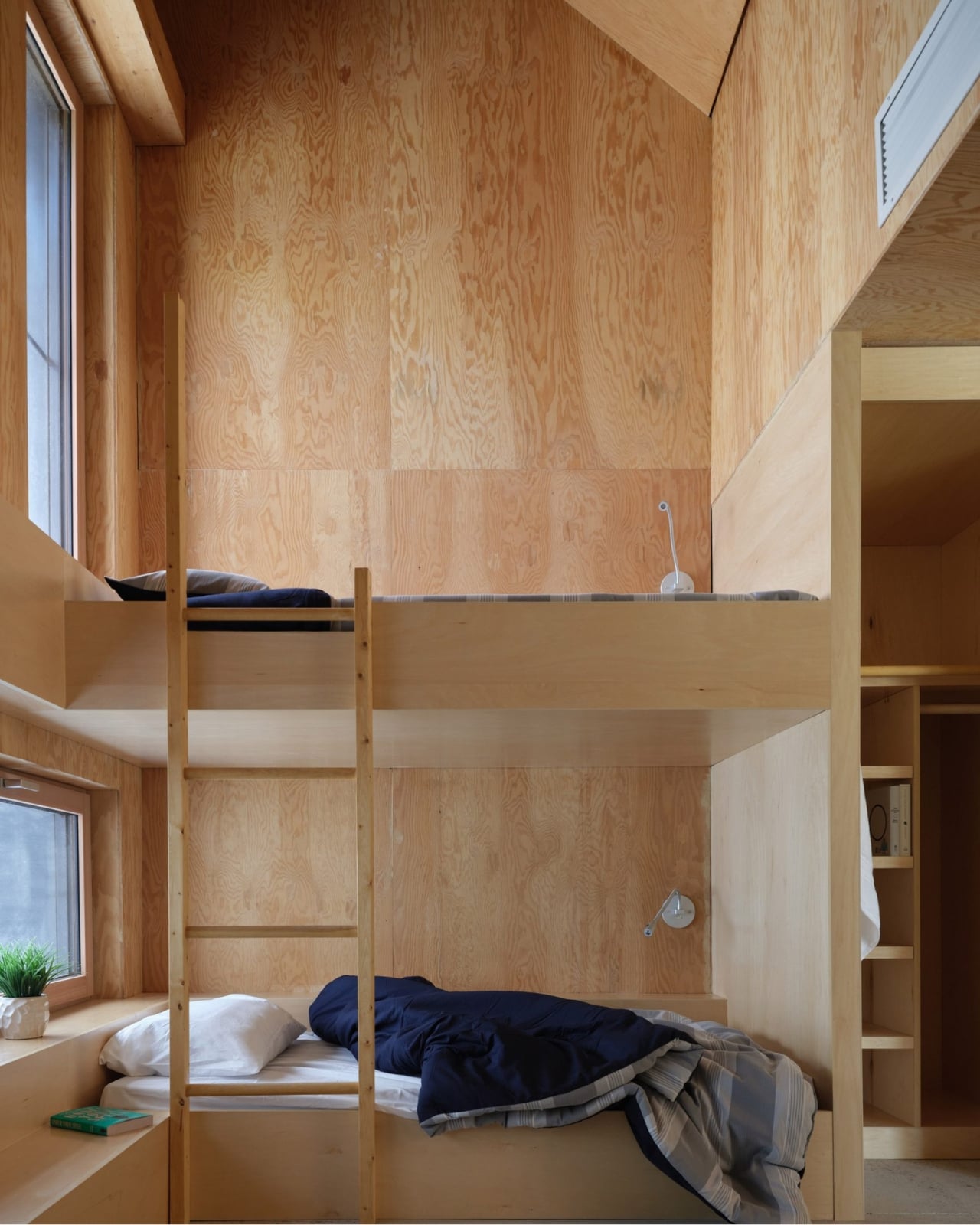
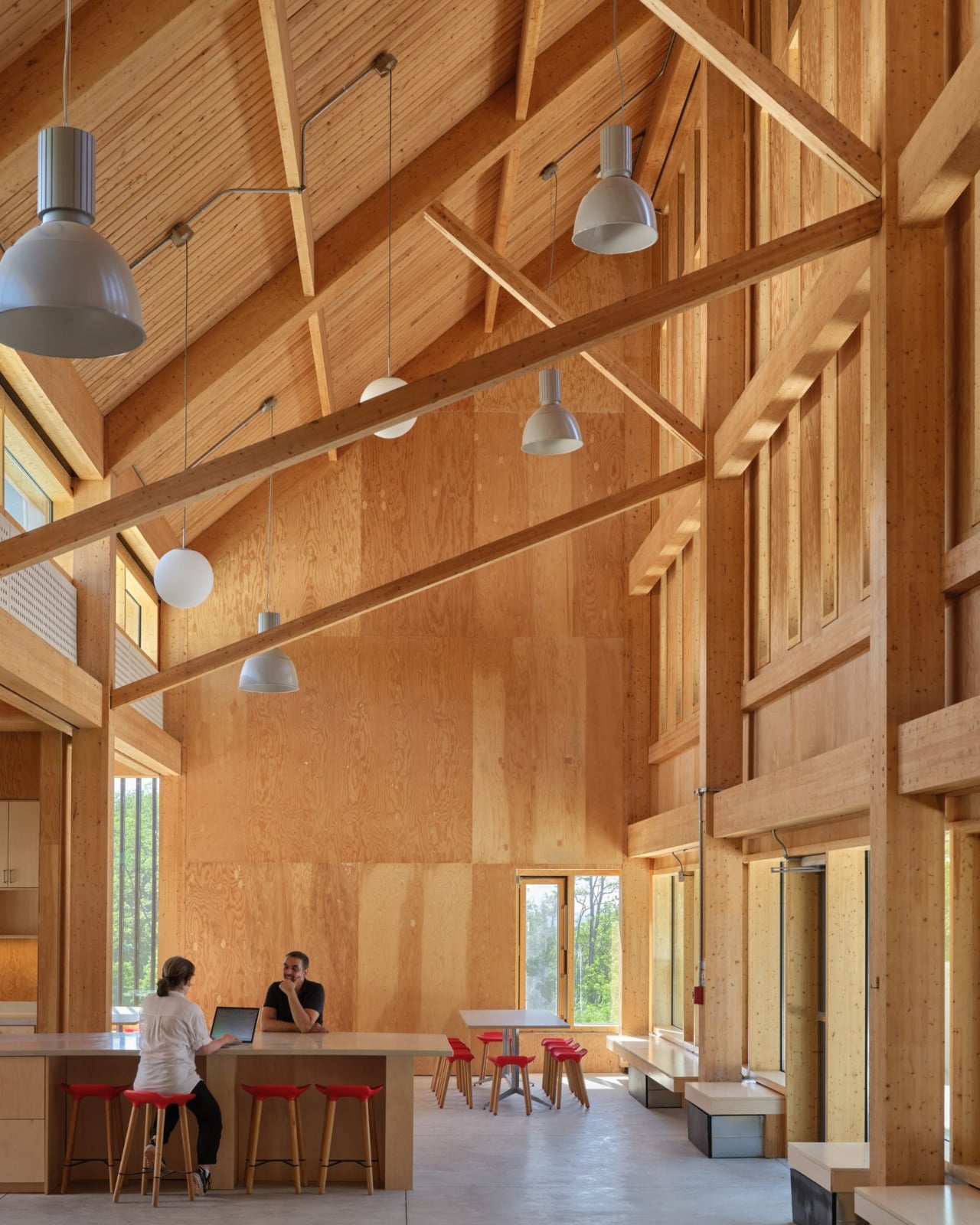
Below grade, a ground source heat pump circulates fluid through deep underground pipes to warm the building in winter and cool it in summer. Paired with the solar panels and passive design strategies, the project is working toward net-zero carbon and energy goals. I’ll be honest: sustainability claims in architecture have become so reflexive and routine that they’ve started to lose meaning. But at Koffler, the sustainable systems are so deeply woven into the structure’s formal logic that they feel like genuine convictions rather than marketing additions.
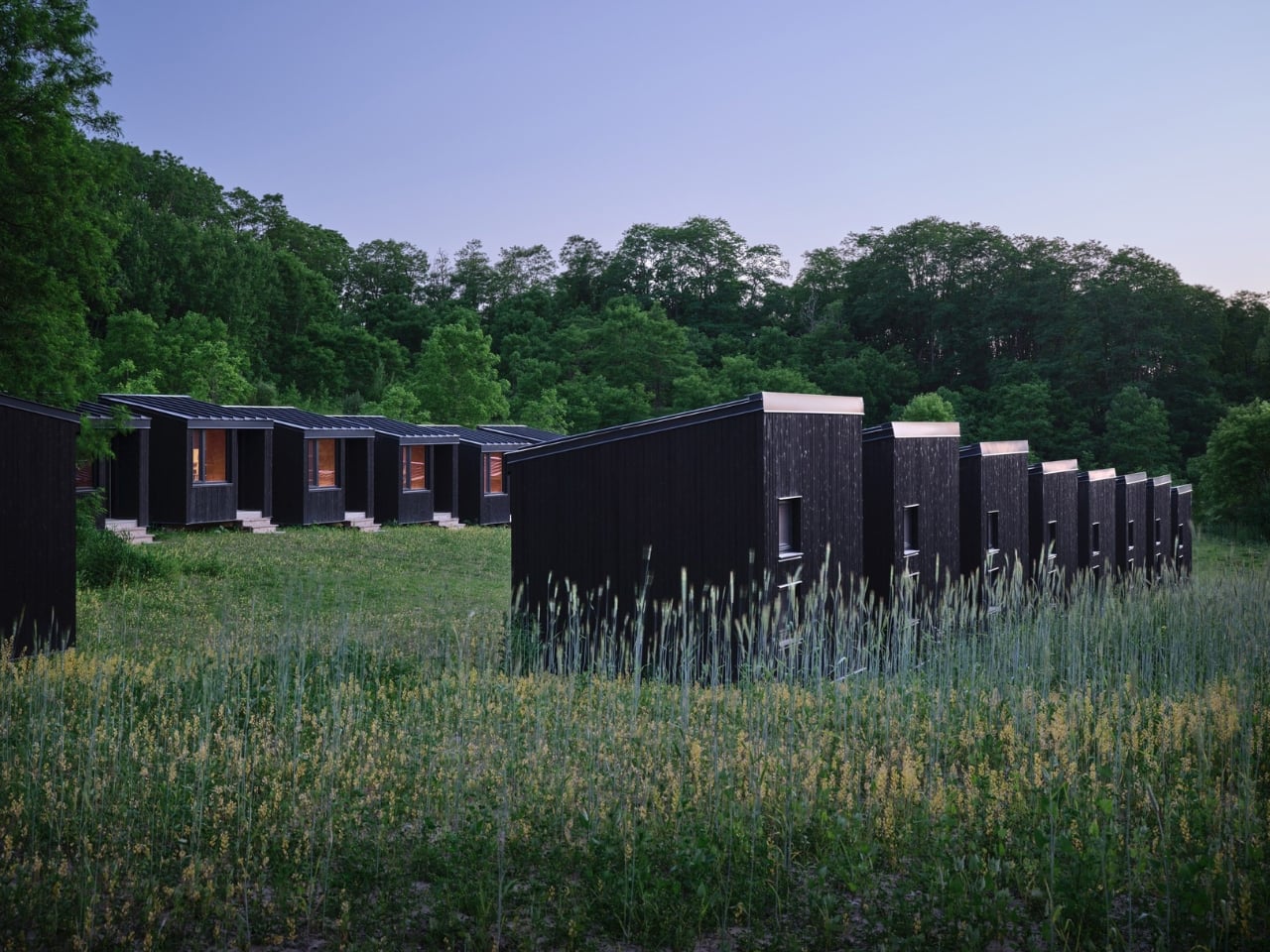
The Reserve sits within a landscape of wetlands, forests, and grasslands that scientists there study every single day. The building respects that by not trying to compete with it. It settles into the site rather than announcing itself, which takes real confidence for an architect to pull off. Confidence, and a genuine understanding of why the building exists in the first place. It would be easy to overlook this project because it doesn’t carry the dramatic scale or cultural visibility of a museum or a concert hall. But the Koffler Scientific Reserve is the kind of work that quietly raises the bar for what institutional architecture can be, and it deserves attention for exactly that reason.