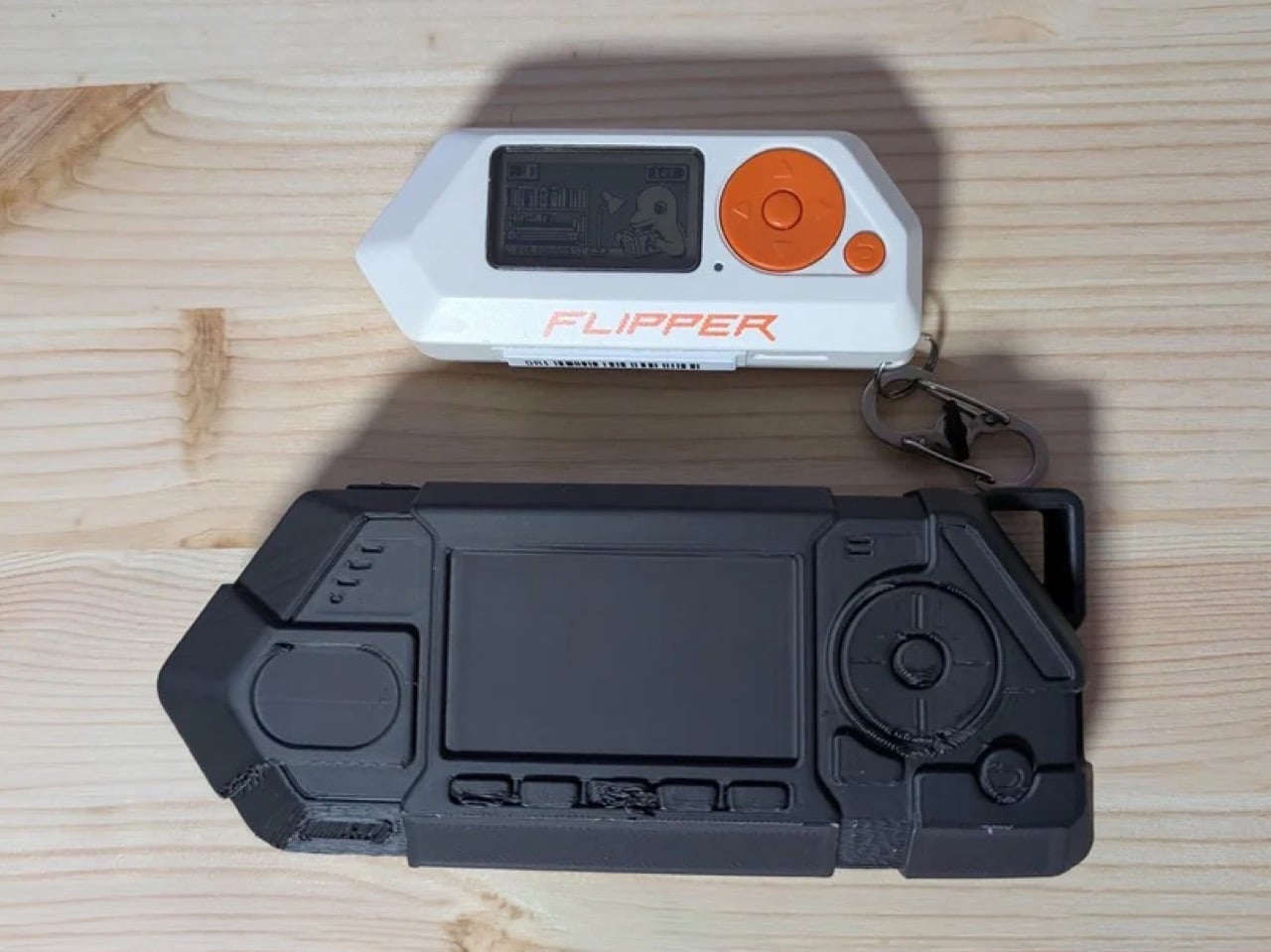

Someone has already printed the Flipper One. Not a real one, but rather a prototype model to show its size compared to the Flipper Zero. First reaction, it’s massive. Second reaction, where did they get the 3D file from? Well, Flipper Devices actually published full mechanical enclosure files for their upcoming Linux-powered handheld on Github. Here’s the link just in case you want to print yours too.
The CAD files put it at 152.6mm wide, against the Zero’s 97.5mm, a difference that becomes viscerally obvious in photos. The front face alone tells you what this device is for: a wide display recess for the 256×144 screen, four function buttons, a D-pad with integrated OK button, a dedicated joystick, and a lanyard/carabiner loop suggesting field carry over pocket carry. A Rockchip RK3576 SoC running Linux, an M.2 slot for modular radios, and dual-processor architecture all need somewhere to live, and Flipper gave them a proper home.
Designer: Flipper Devices
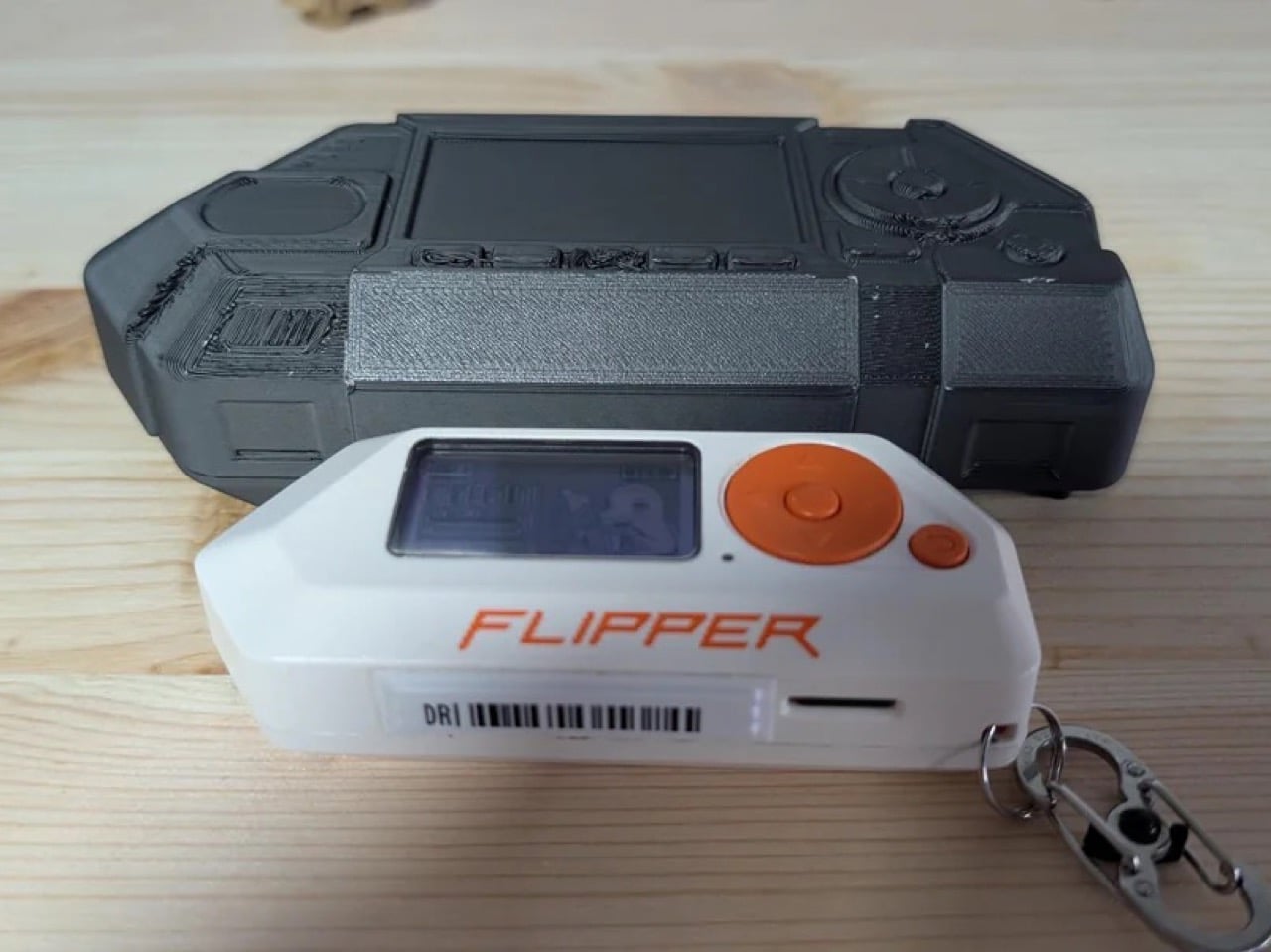
The repository breaks the enclosure into three published parts. The body is the main shell containing everything: display, controls, electronics. It ships as a solid exterior with an intentionally hollow interior in the public files, meaning Flipper is sharing enough geometry for accessory makers to work with while keeping the internal mechanical layout proprietary. The back plate, which covers the M.2 expansion port and swaps out depending on what module you have installed, is published in full including internal surfaces. Same goes for the antenna rail, a separate bracket for routing SMA antenna cables before the back plate closes, a decision born from actual testing where routing cables through an integrated back plate kept damaging connectors during assembly. These are not arbitrary design choices; every split in the enclosure reflects a specific problem someone ran into during prototyping and solved deliberately.
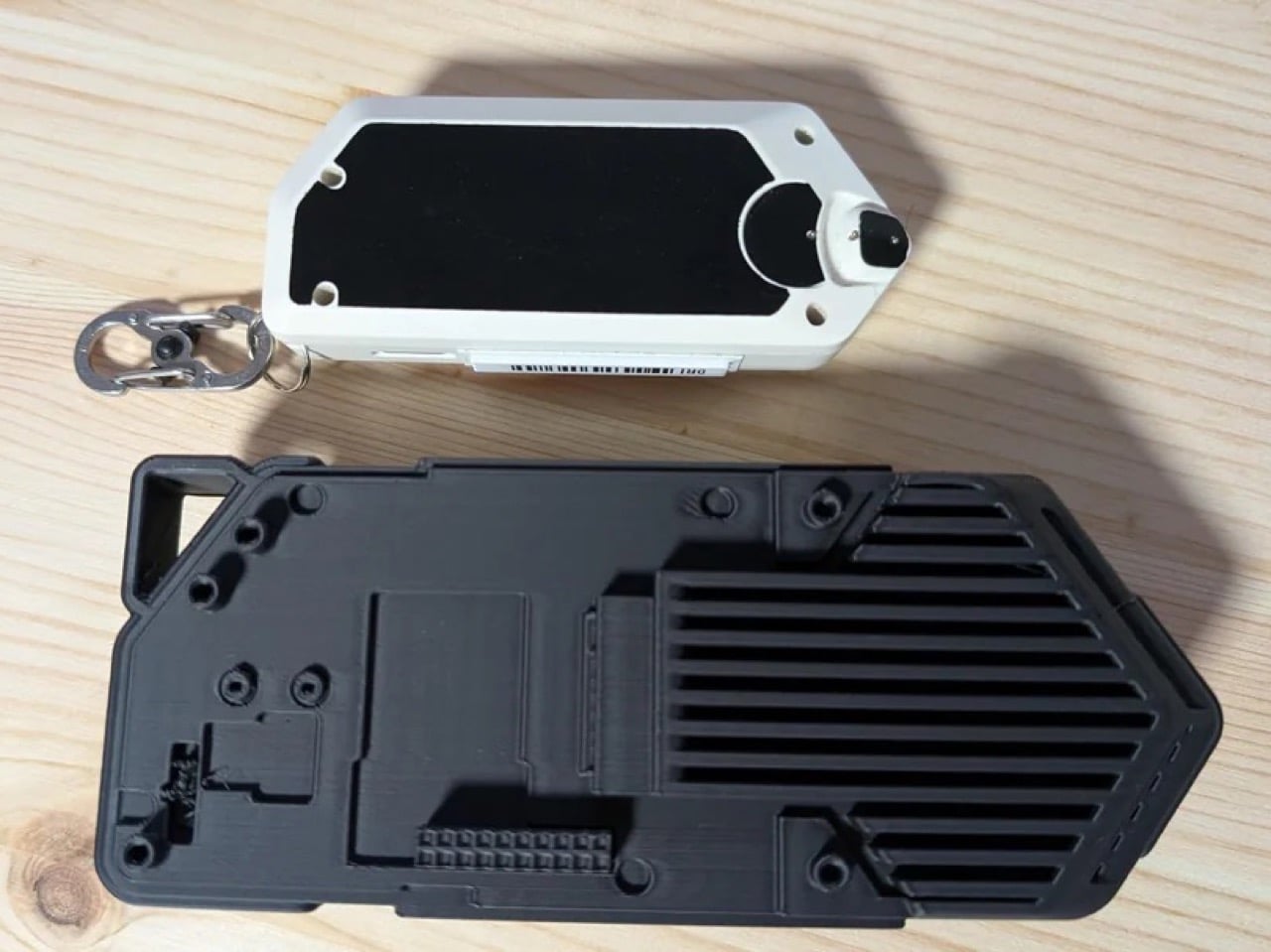
The modular back plate represents a fairly new (and exciting) direction for the Flipper One’s community. Because the back plate geometry is fully open, third-party manufacturers can design their own versions tailored to specific module configurations without waiting on Flipper. Someone building a custom SDR module with a non-standard antenna setup can design a matching back plate that fits the same screw pattern. The Zero had a thriving accessory ecosystem built on top of its GPIO header, and Flipper seems to be seeding the same dynamic for the One, except this time the third-party entry point is baked into the enclosure architecture from day one rather than discovered after launch.
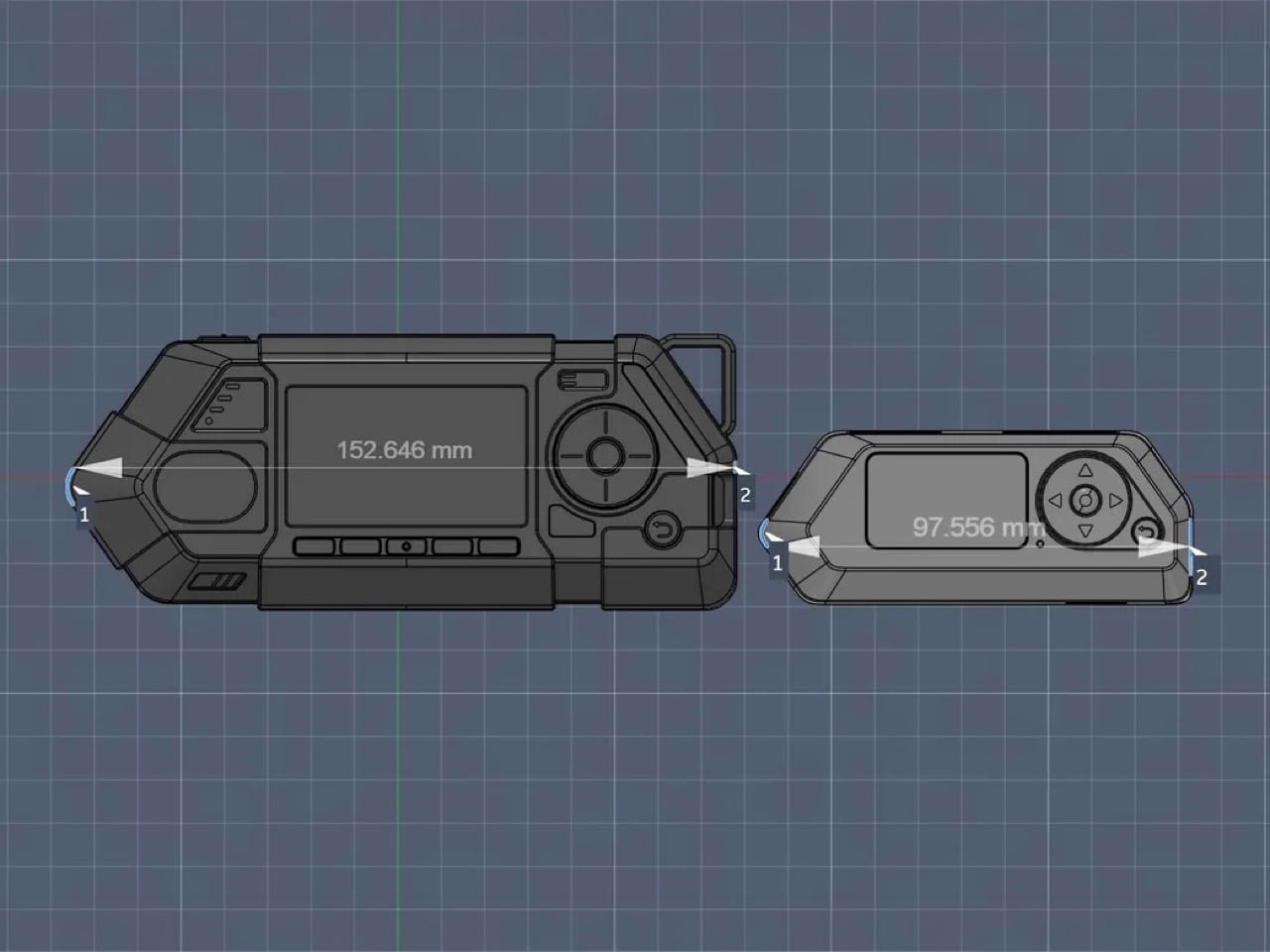

The sheer size of the Flipper One printed next to the Zero tells you something important about where Flipper Devices thinks the market has moved. The Zero was designed for a world where the coolest thing a pocket device could do was clone your hotel key card. The One is designed for a world where security researchers want a full Kali Linux environment, SSH access, and swappable radio hardware on their person during a pentest, without pulling out a laptop. The cyberdeck community has been hand-building devices like this for years at significant cost and effort. Flipper is essentially productizing that whole category, and publishing the enclosure files before the device even ships is a very deliberate signal about who they’re building it for.