
Most autonomous vehicle concepts ask the same question: what do you do with the interior when nobody needs to drive? The answer is almost always some variation of a lounge on wheels, seats rotating to face each other, a table unfolding from nowhere, everyone pretending they’re on a train. Seoul-based designer Seonmyeong Woo looked at that answer and decided it was too blunt. His Volkswagen ID. Counterpoint Concept, developed between January and May 2024, starts from a more interesting premise: what if the two rows of a car don’t need to want the same thing at all?
The project is built around a Level 5 autonomous driving scenario, which is the SAE designation for full, unconditional self-driving with no human input required under any circumstances. At that level of autonomy, the designer argues, the probability of accidents drops so dramatically that it liberates materials and structures previously constrained by crash safety logic. The passenger’s view direction no longer needs to follow the direction of travel. The body of the car doesn’t need to treat every occupant as an identical unit to be protected the same way. This is where the Counterpoint concept gets its name and its actual design logic, because the two rows are treated as fundamentally separate experiential zones with different enclosures, different postures, and different relationships to the outside world.
Designer: Seonmyeong Woo
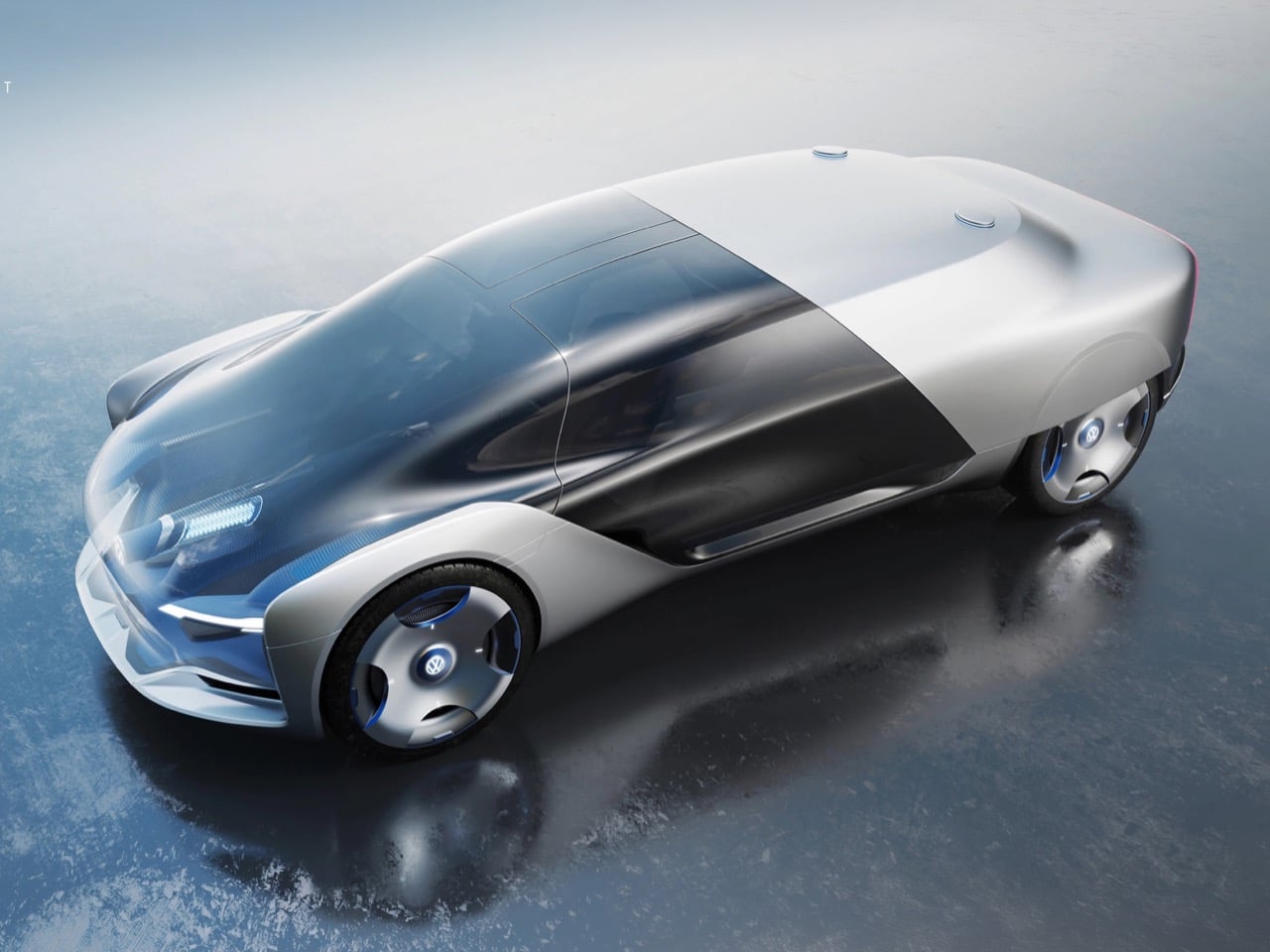
The front row, called Open Window, uses a mono-volume form and a lying-down posture. The windshield is fully glazed and doubles as an AR surface, so the occupant reclines and looks upward through the transparency of the forward section of the car. It reads spatially like an open sky capsule, an almost observatory-like relationship to the environment outside. The rear row, called Private Wall, is a notchback configuration with an opaque body section that creates a large, enclosed private space. The visual language here references the customizable wall that appears in Woo’s moodboards, something closer to a room than a seat. The tension between those two conditions, the transparent front and the opaque rear, is where the exterior form actually comes from. It is not decoration; it is the literal expression of the interior split.
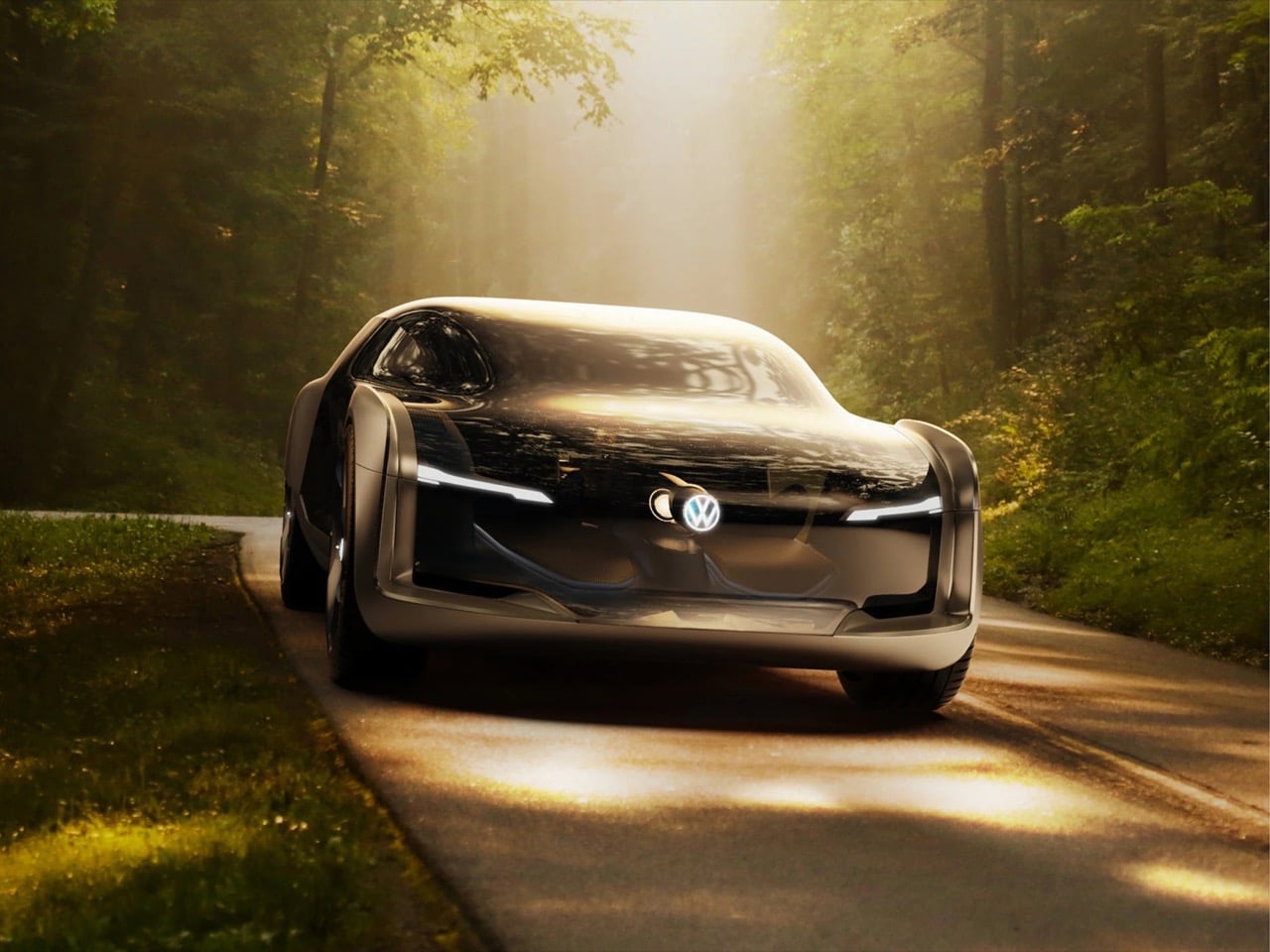
The sketches and ideation process documented in the portfolio show Woo working through the problem of where to place windows and walls across dozens of iterations. Several rejected directions used conventional side window apertures that created visual continuity between rows, which would have defeated the concept’s core argument. The final direction draws a hard material boundary along the body at roughly the B-pillar zone, with the front half clad in glassy, translucent surfaces and the rear half wrapped in the kind of opaque, sculpted body you’d find on a premium notchback. The wheels are covered by enclosed turbine-style rims that give the exterior a sealed, monolithic quality, which reinforces the idea that this is a vehicle you disappear into rather than one you drive.
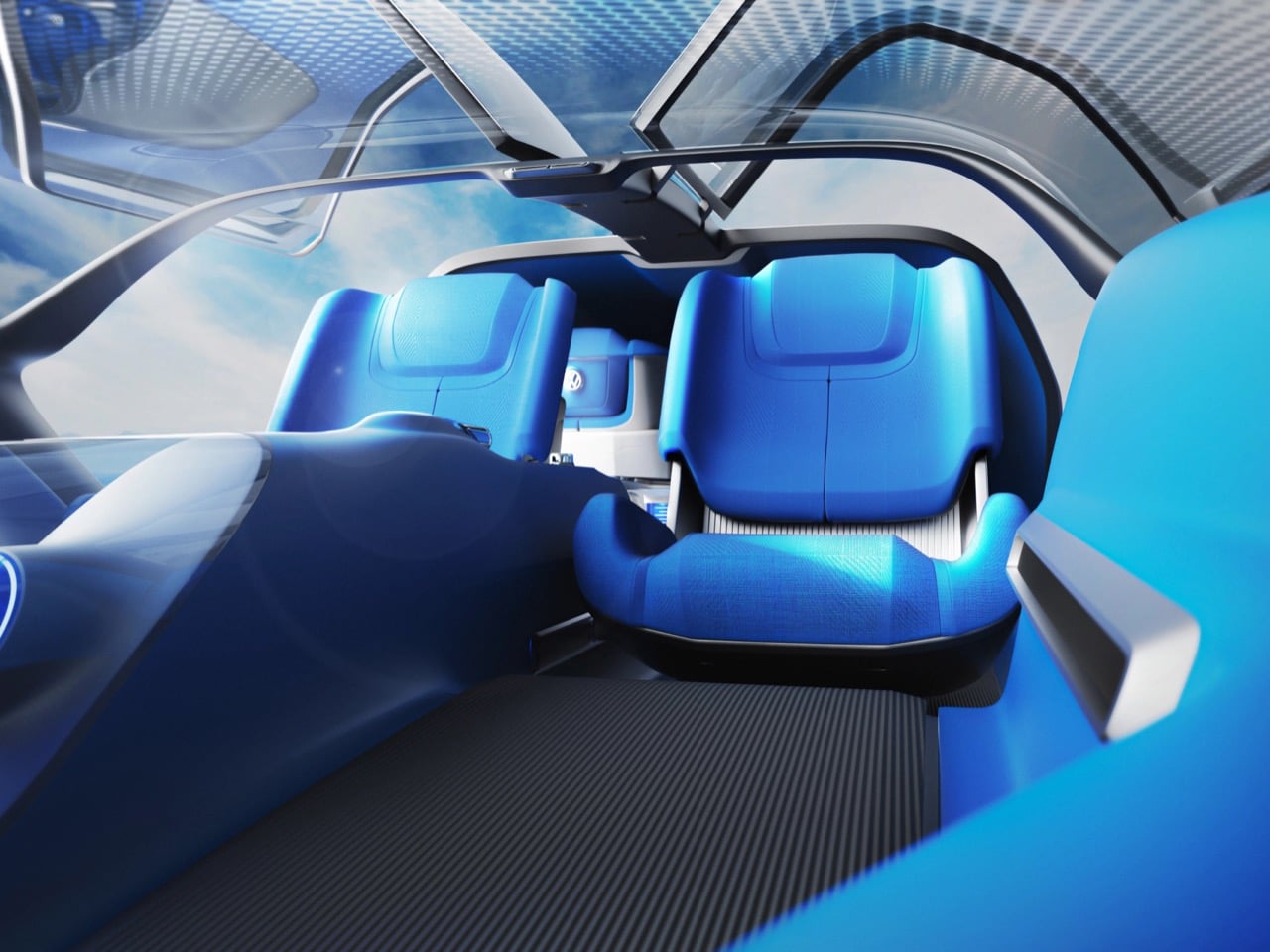
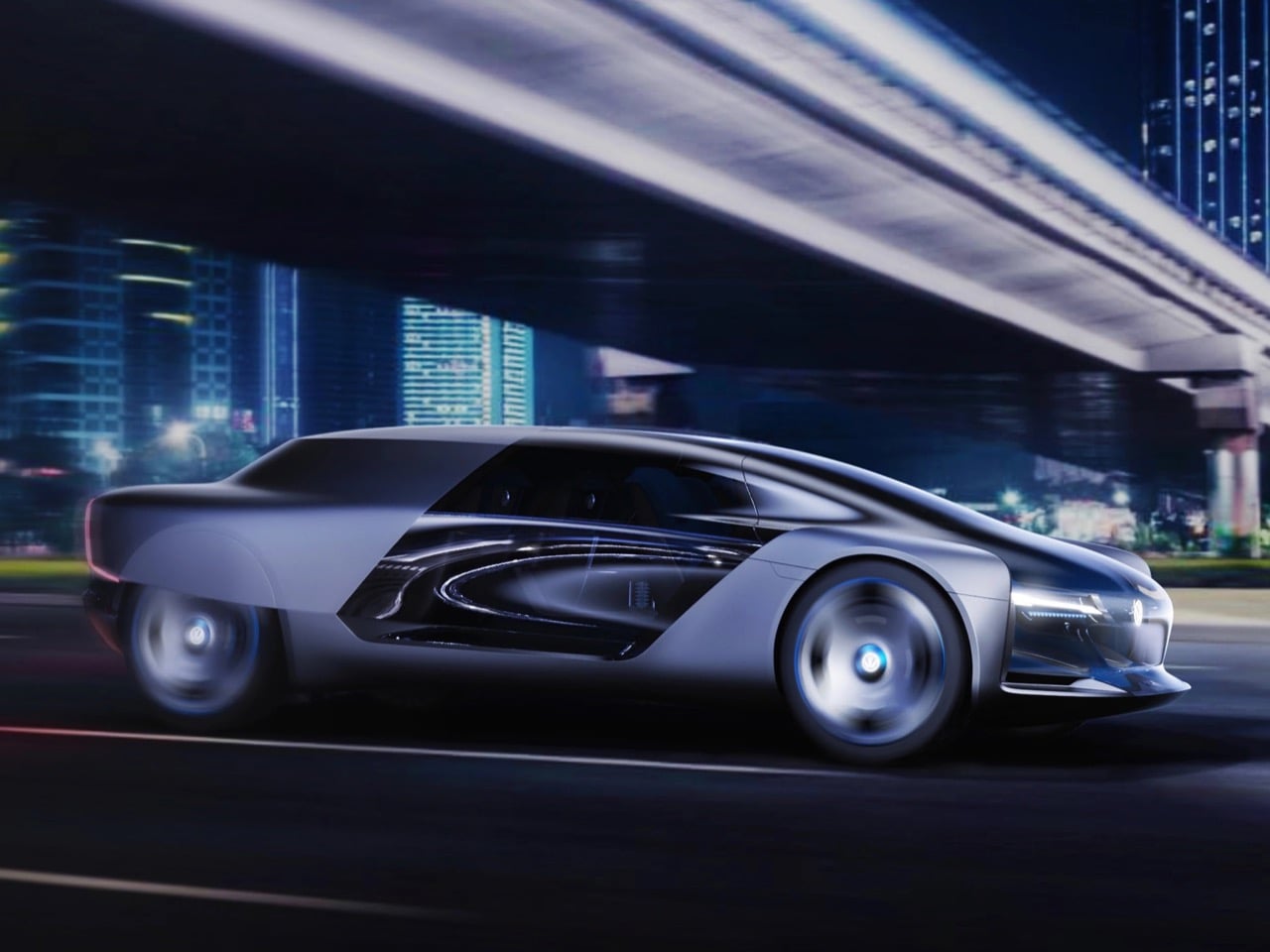
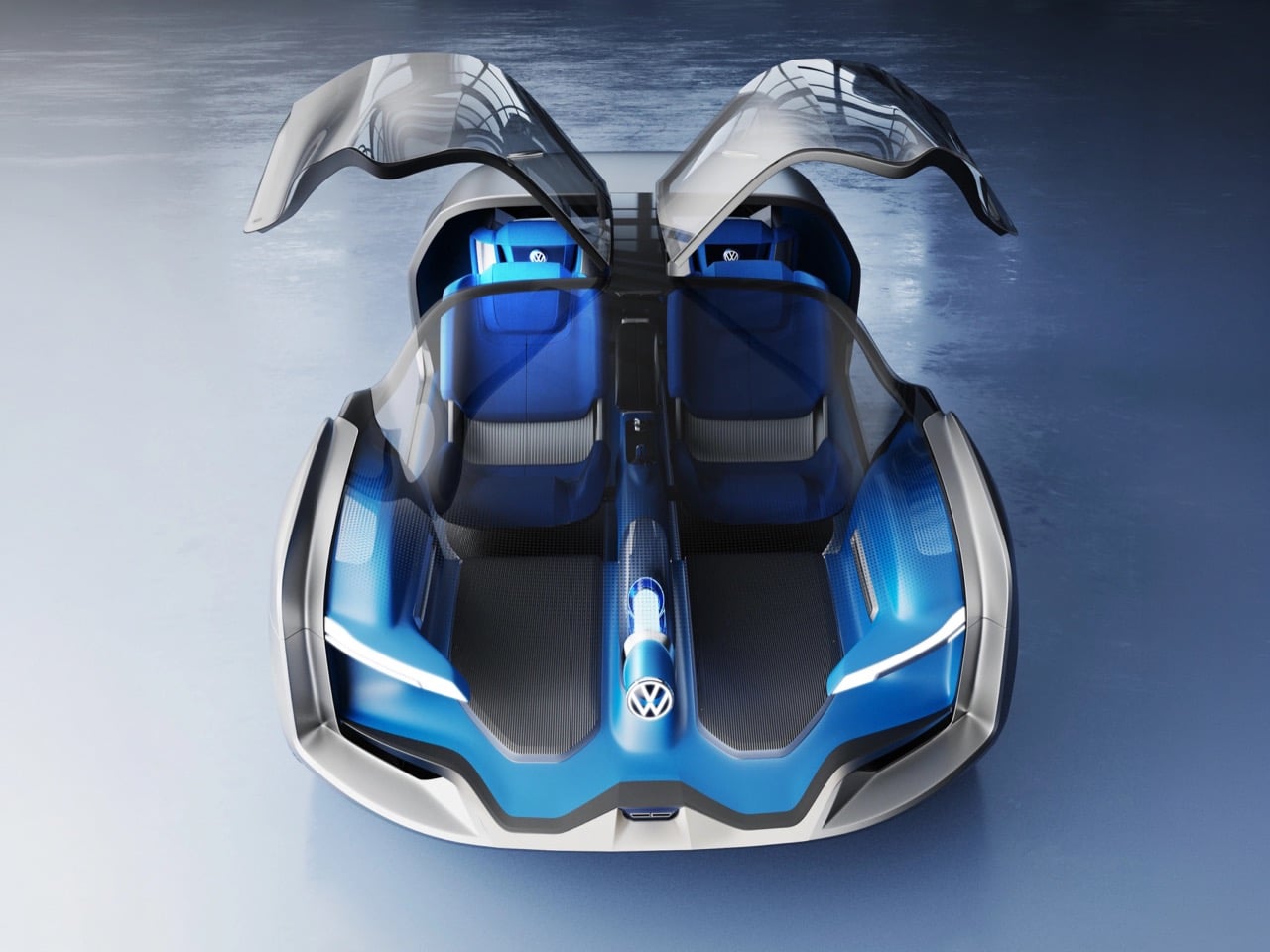
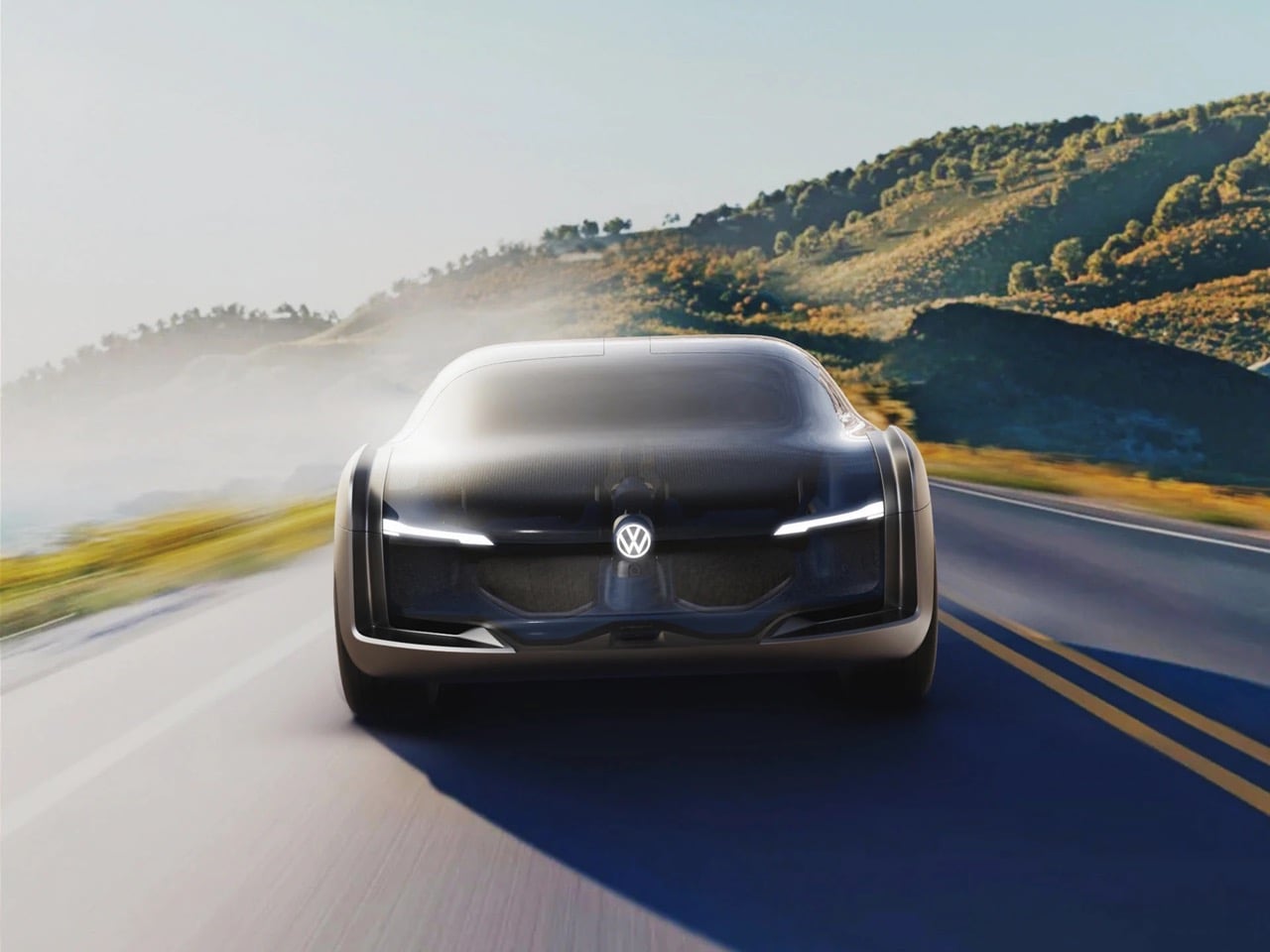
Interior ideation shows rotating and sliding seat mechanisms for the first row alongside a projecting seat configuration that allows the reclining posture without compromising ingress. The renders show the cabin upholstered in a saturated cobalt blue with carbon-weave floor surfaces, giving the inside a deliberately product-forward quality that sits between automotive and industrial design. The gullwing-style opening panels that expose both rows from above in the hero overhead render are clearly concept-specific theater, but they communicate the spatial relationship between the zones clearly in a way a plan view never could. The exterior renderings in lifestyle environments, a pre-dawn forest road, a wet urban expressway at night, show a car that reads as a single coherent object from the outside while containing two completely different spatial logics inside. That is the counterpoint of the title: not contradiction, but controlled contrast between two things that share a structure but operate independently of each other.