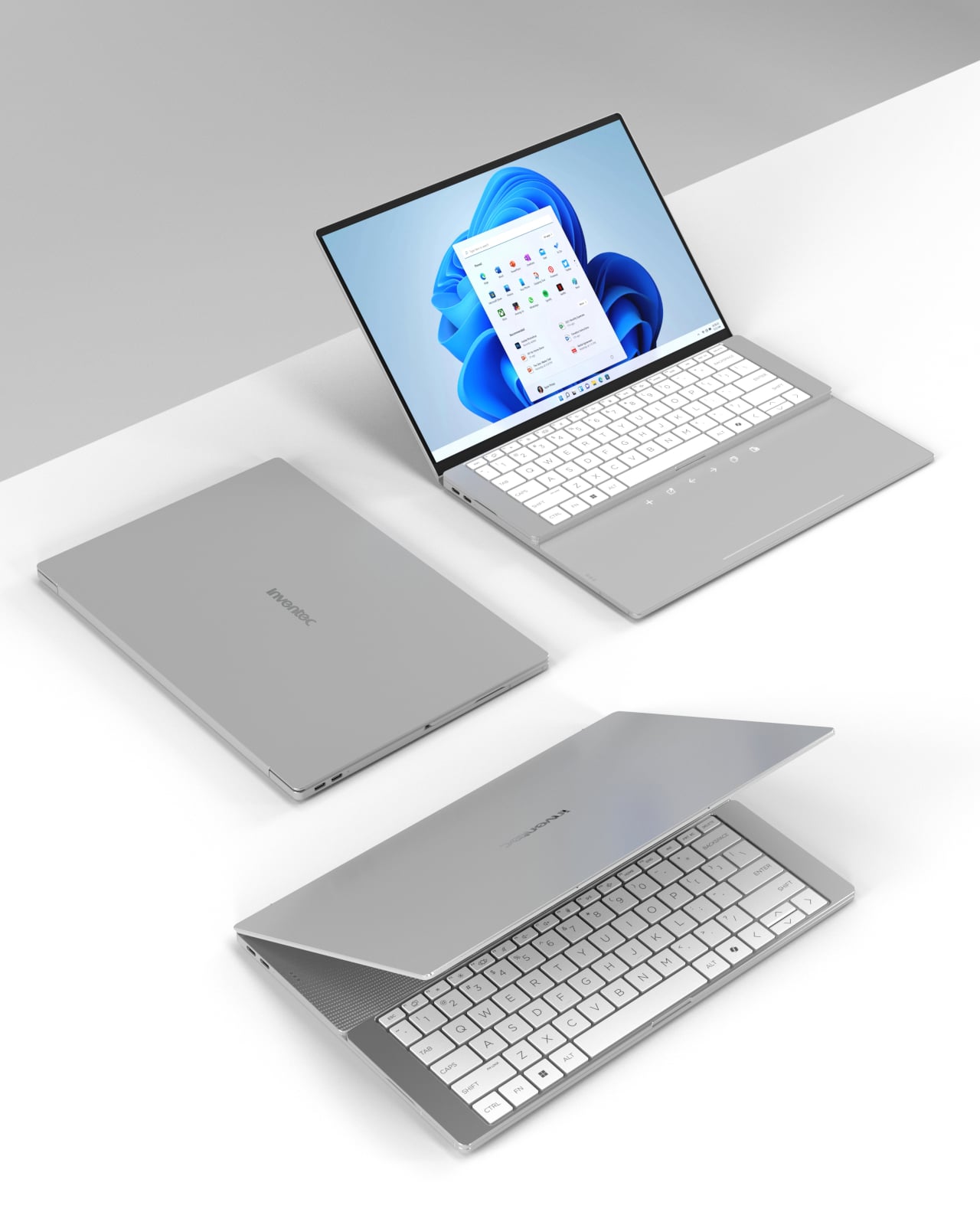

Laptop thinness has always been a trade-off dressed up as progress. The slimmer the chassis, the less room there is for the thermal infrastructure that keeps processors from throttling, and that compromise has long passed as the cost of portability. Inventec’s VeilBook, a 14-inch concept under 10 mm thick, took home an iF Design Award 2026 by rethinking not the materials but the physical behavior of the person using it.
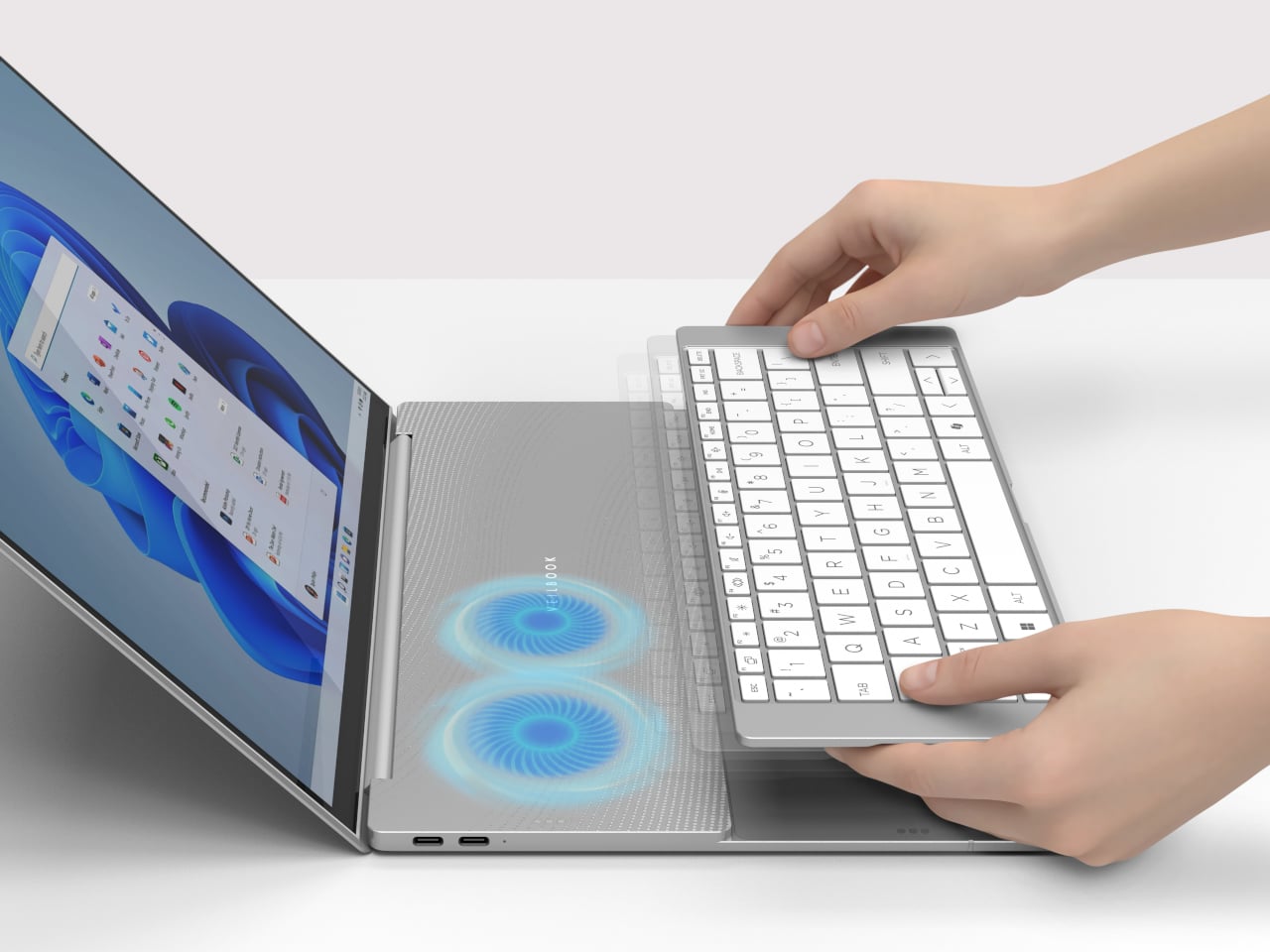
The defining feature is a detachable keyboard that doesn’t stay fixed at the front of the deck. Most laptops position those fans beneath the keyboard, which occupies the upper area of the deck, and the keyboard itself limits how freely air can escape upward. Removing that obstruction improves airflow enough to keep the processor and memory from throttling under sustained load.
Designer: Inventec
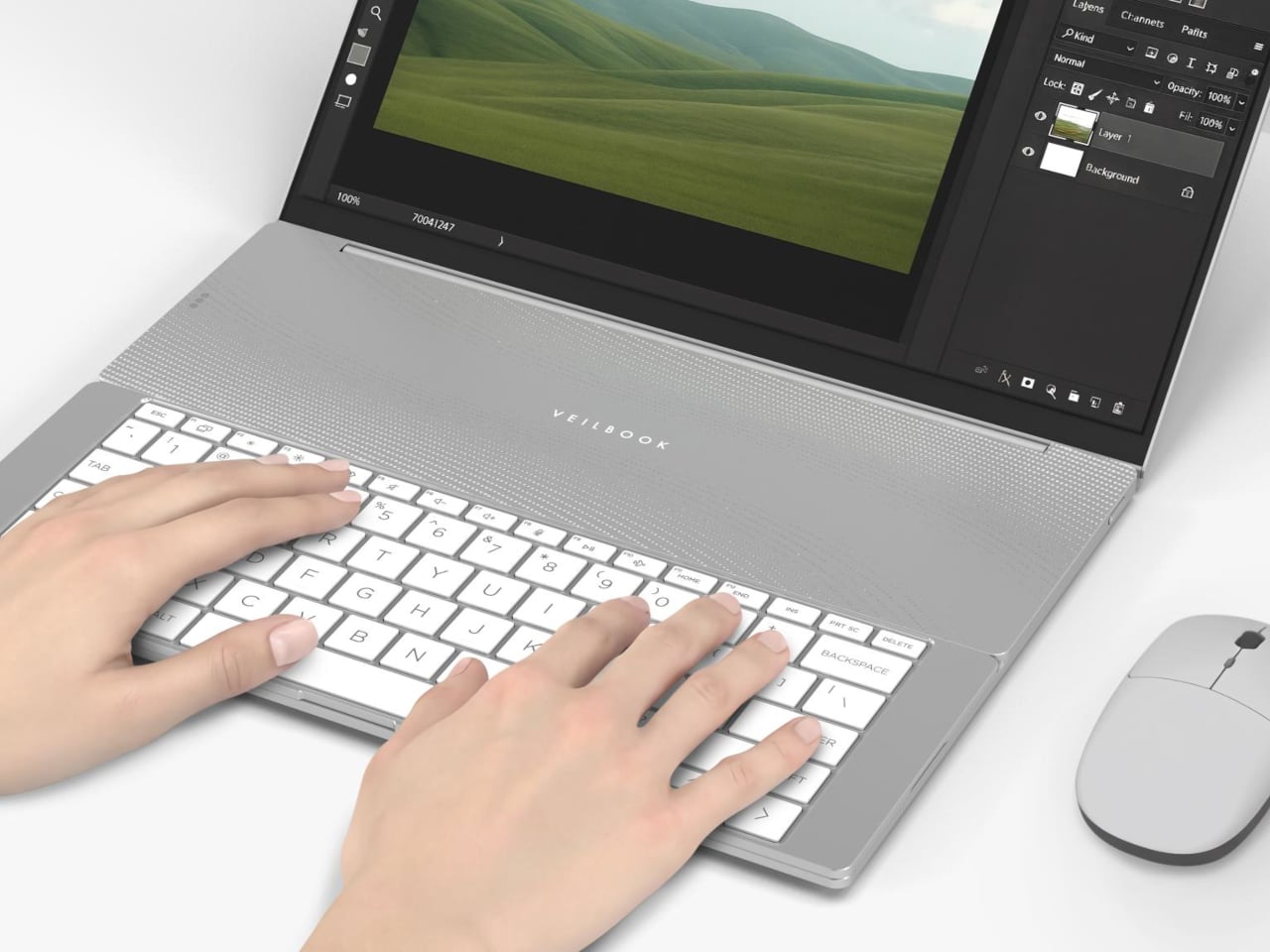
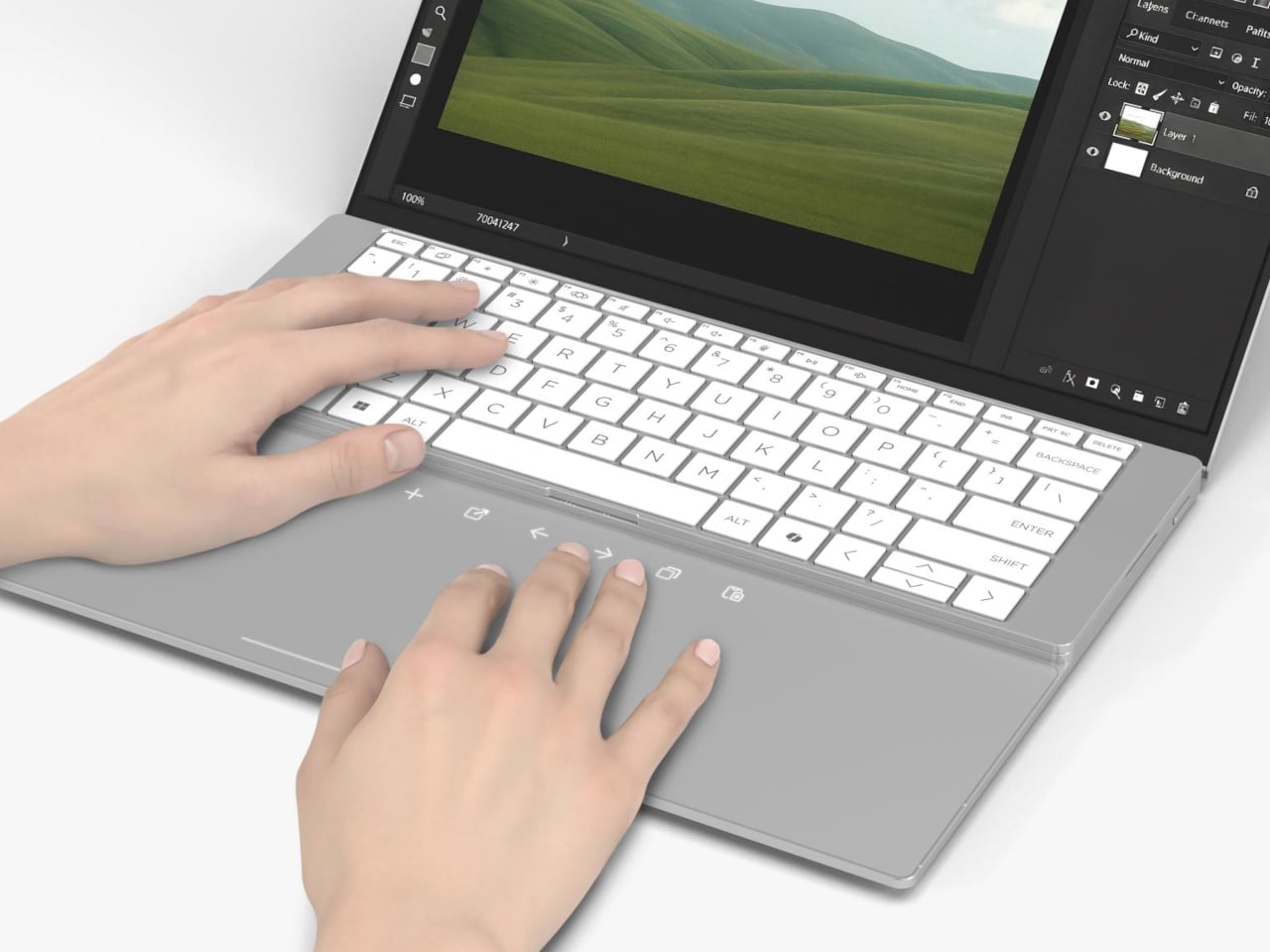
At rest, the keyboard covers the touchpad and palm rest, leaving the vent area above the cooling fans completely unobstructed. When you do need to use the touchpad, you can simply lift the keyboard and place it toward the back, a more natural position as far as traditional laptops are concerned. You can keep the keyboard there or put it back over the touchpad, depending on your needs and workflow.
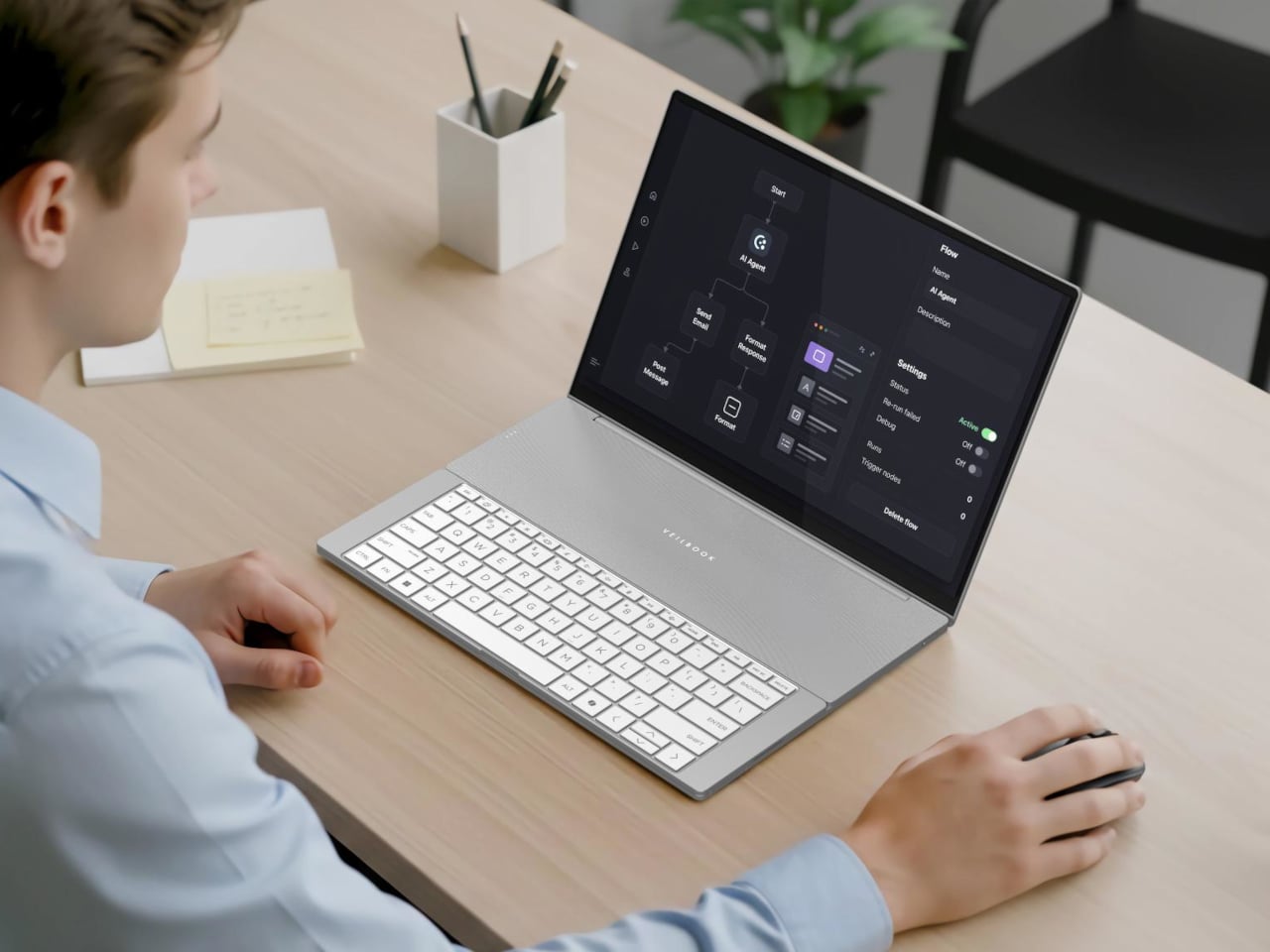
That repositioning comes with a catch. To get the best thermal performance out of the VeilBook, the touchpad has to stay covered. If a workflow runs on keyboard shortcuts or an external mouse, that trade-off barely registers. For anyone accustomed to resting their palms beside the touchpad while typing, or reaching for it mid-sentence, it’s a more disruptive ask than the concept’s clean renders suggest.

When the keyboard stays back and the touchpad is exposed, it doubles as a shortcut surface, a secondary input layer available without requiring a full posture shift. The VeilBook also incorporates behavior-linked power management, tying energy consumption to actual usage states rather than running at a fixed profile. When the keyboard is stowed and input activity drops, the system scales back power draw, which at least means the thermal compromise isn’t a constant condition.

What the VeilBook makes visible is a problem the industry has spent years papering over. Thin laptops throttle partly because keyboards sit on top of vents, and the obvious fix, moving the keyboard, apparently needed a concept award to surface. Whether blocking the touchpad is an acceptable price for better sustained performance is a question every potential user will answer differently, depending on how much of their day actually runs through that glass rectangle.