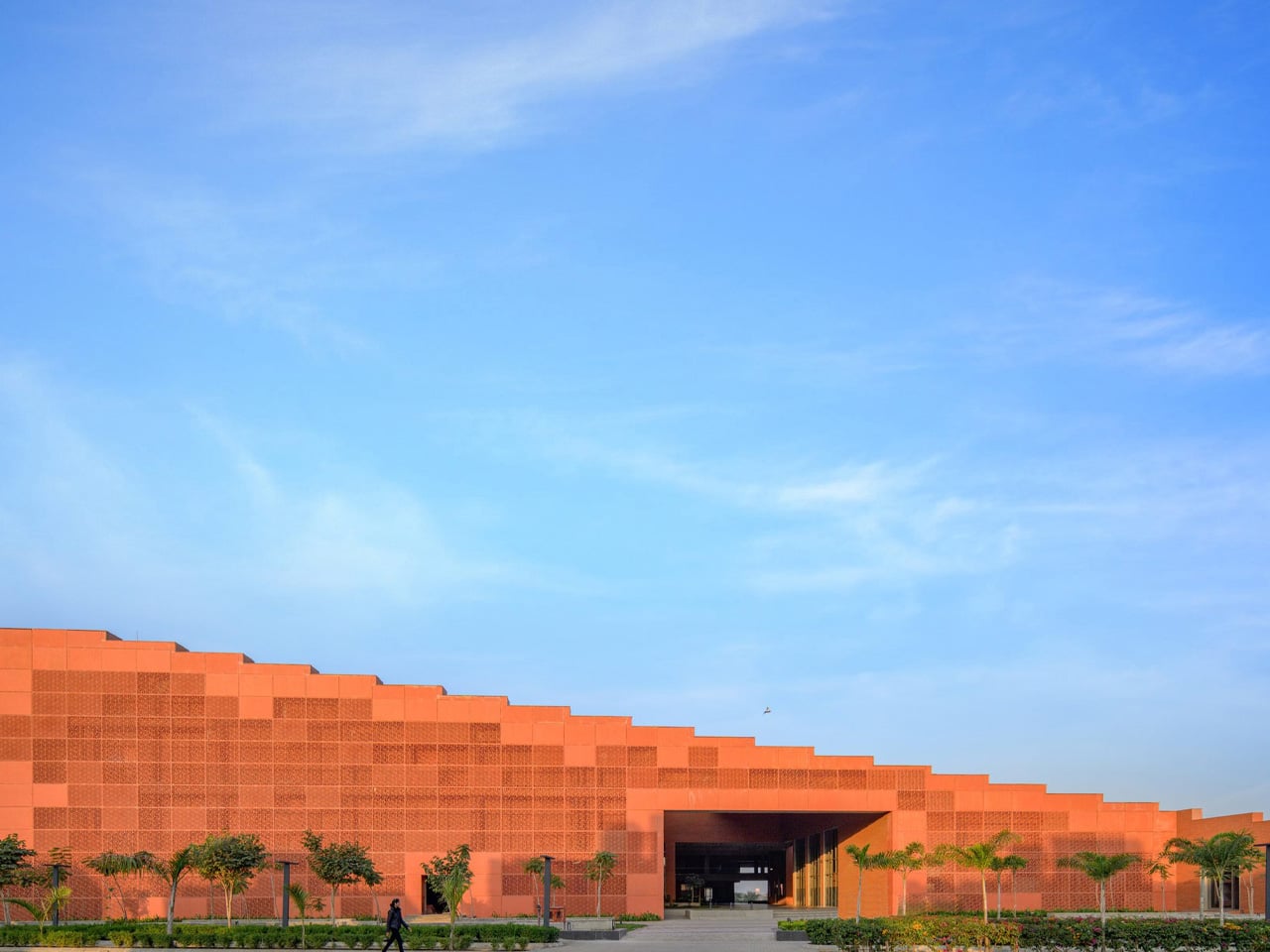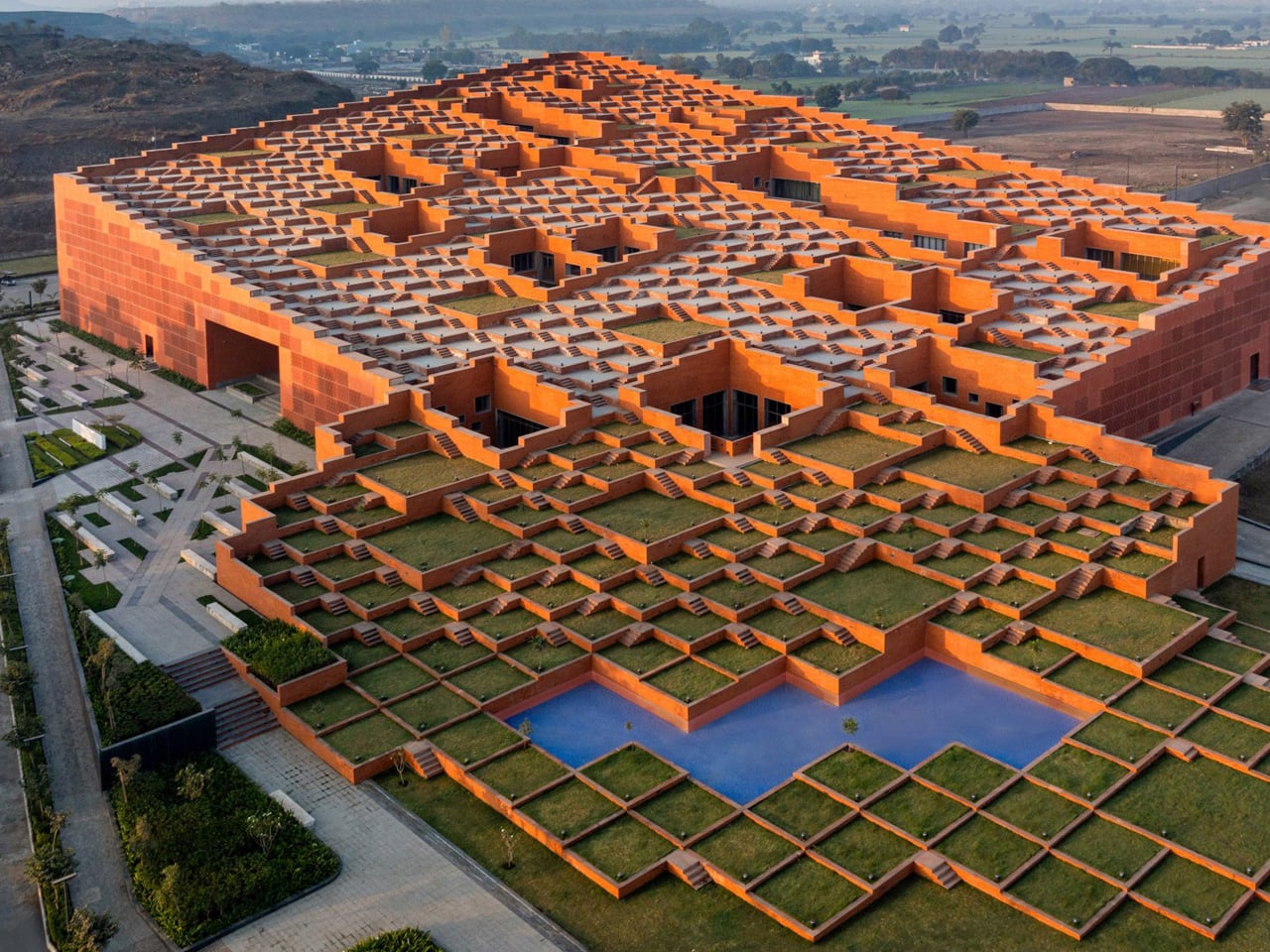

Most university buildings treat their rooftops as mechanical afterthoughts, a surface for HVAC units and waterproofing membranes that no one is meant to see. Sanjay Puri Architects inverted that logic entirely at Prestige University in Indore, turning a 97,000-sq-ft roofscape into a stepped public landscape that seats 9,000 people. The five-story building beneath it almost reads as infrastructure for what happens above.
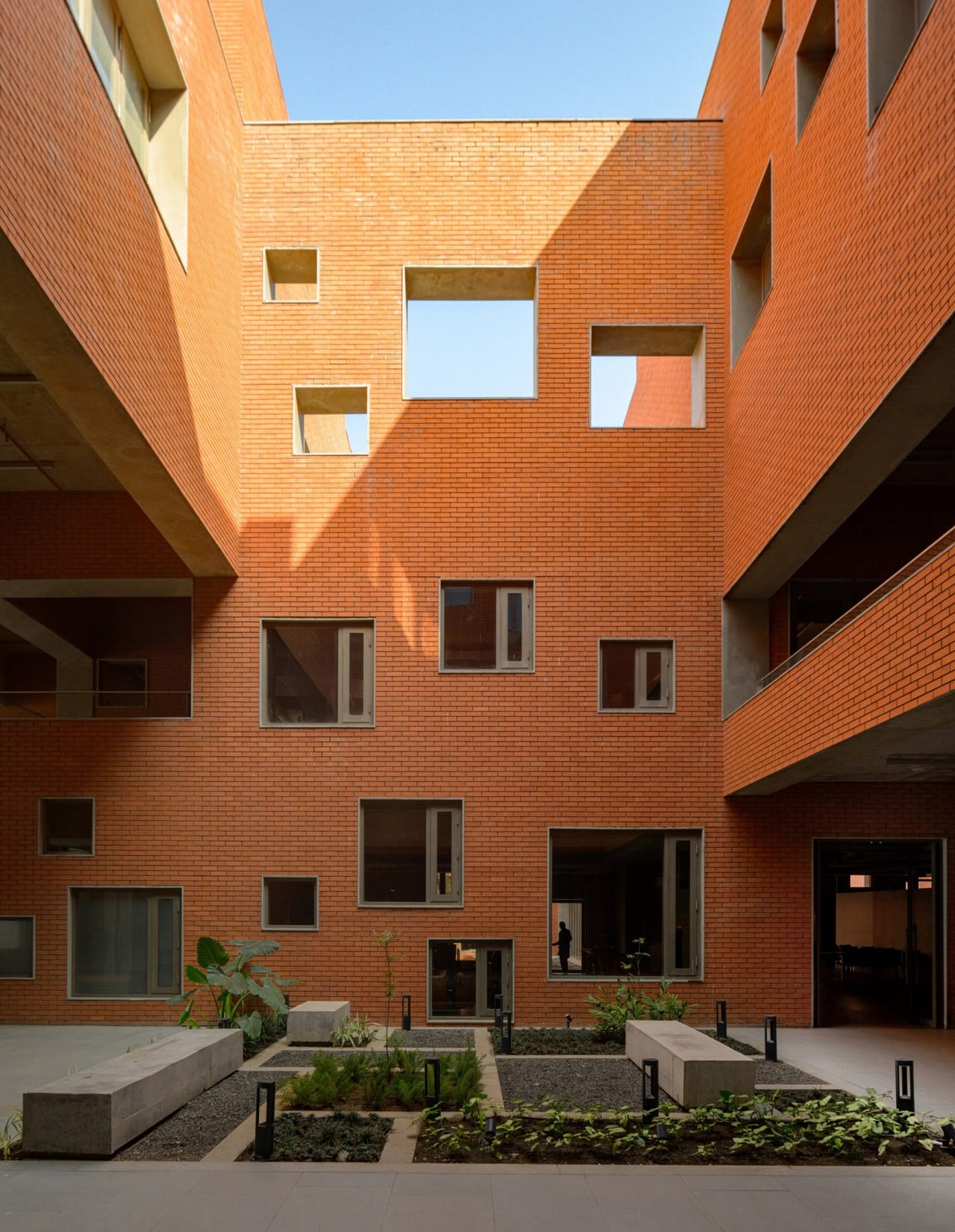
The roof is composed of 463 individual stepped platforms that rise diagonally from the building’s northern point, with landscaped courtyards breaking up the geometry at intervals to allow natural light into the floors below. The formal reference is India’s historic stepwells, subterranean water storage structures built between the 7th and 19th centuries across western India. Stepwells like Rajasthan’s Chand Baori were never purely utilitarian; they doubled as gathering spaces for social and religious life. Sanjay Puri’s interpretation lifts that same dual-purpose logic above ground, and the campus has already used the roofscape for lectures, games, and a flag hoisting on India’s Independence Day.
Designer: Sanjay Puri Architects
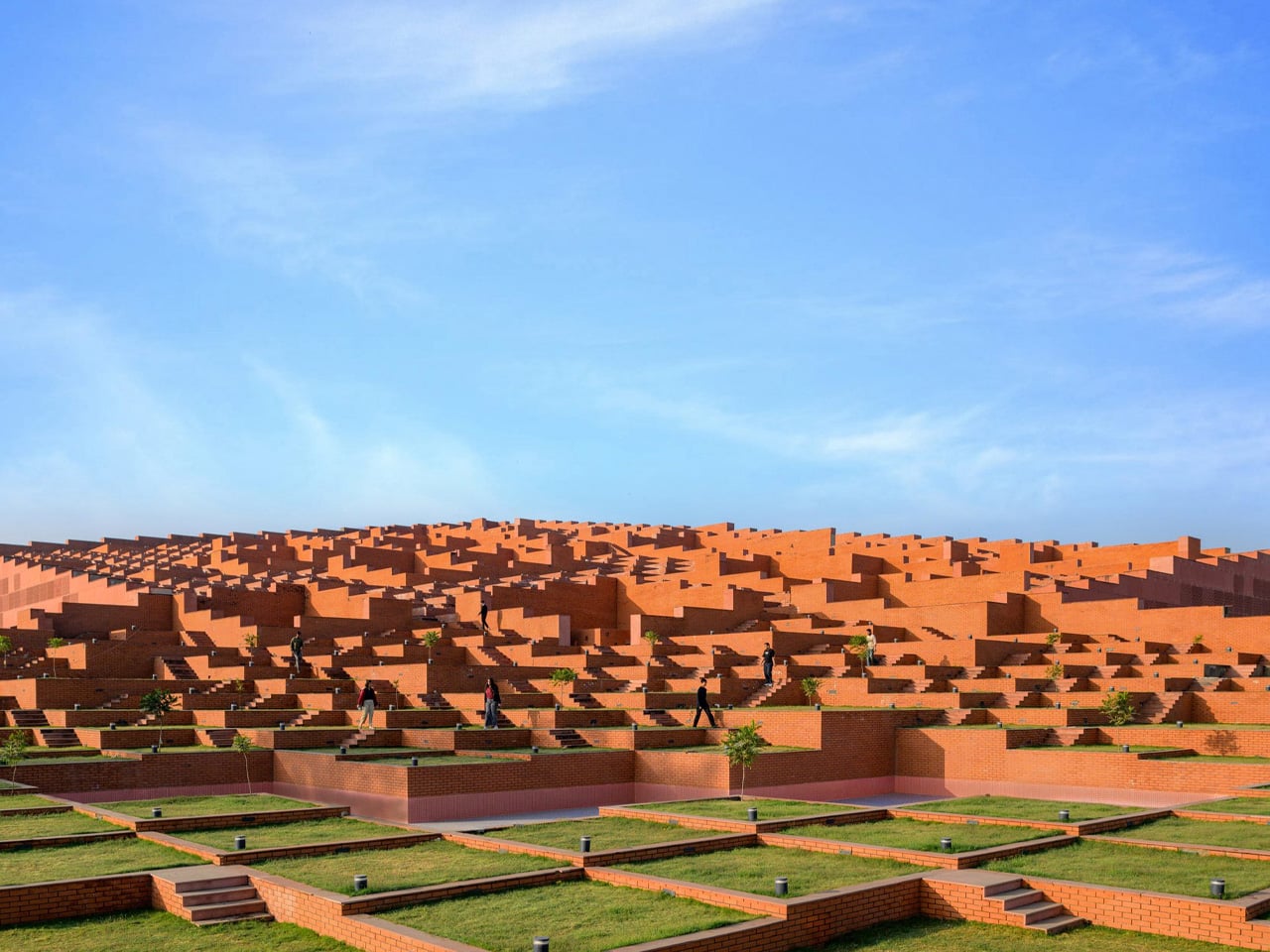
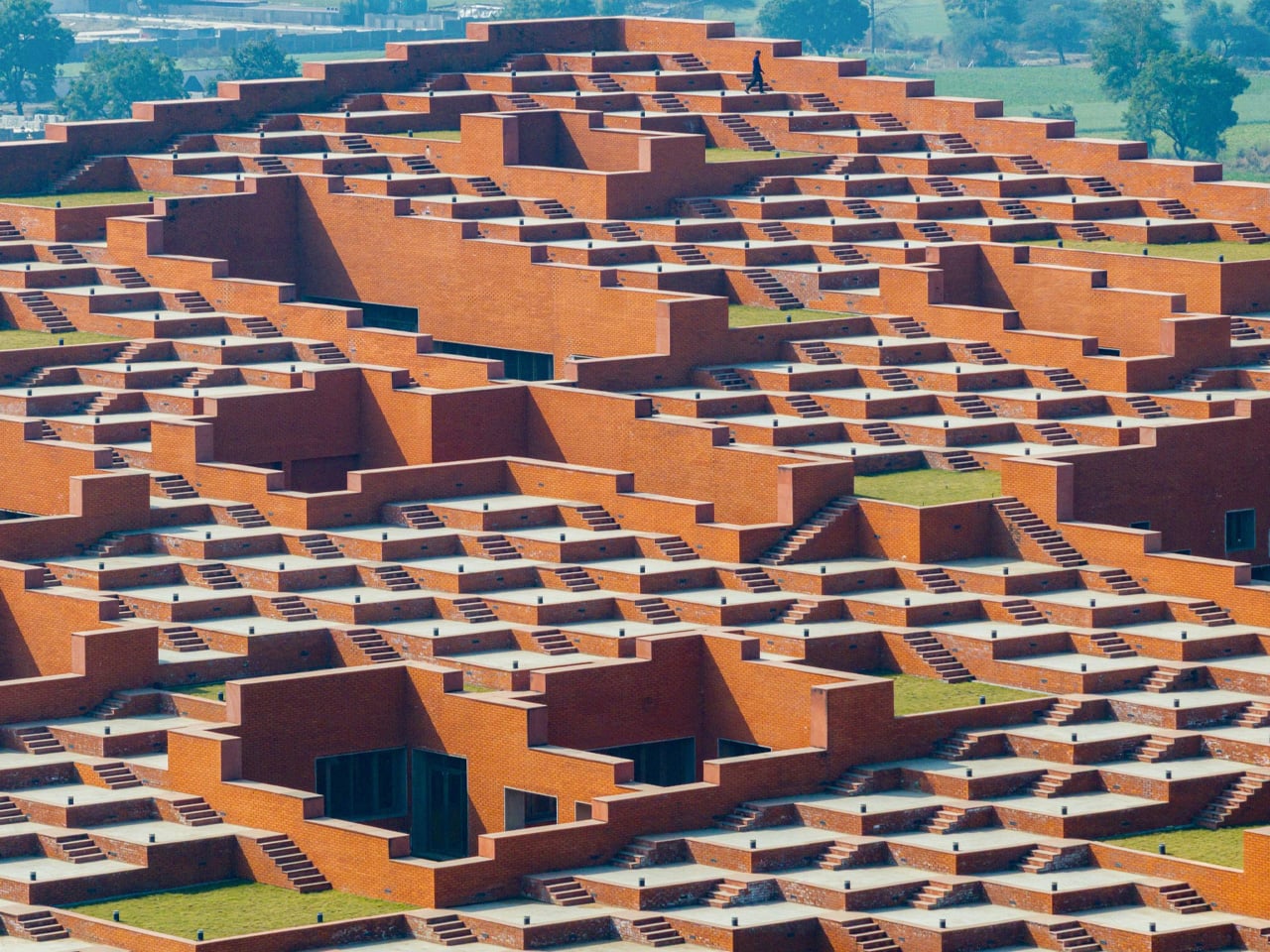
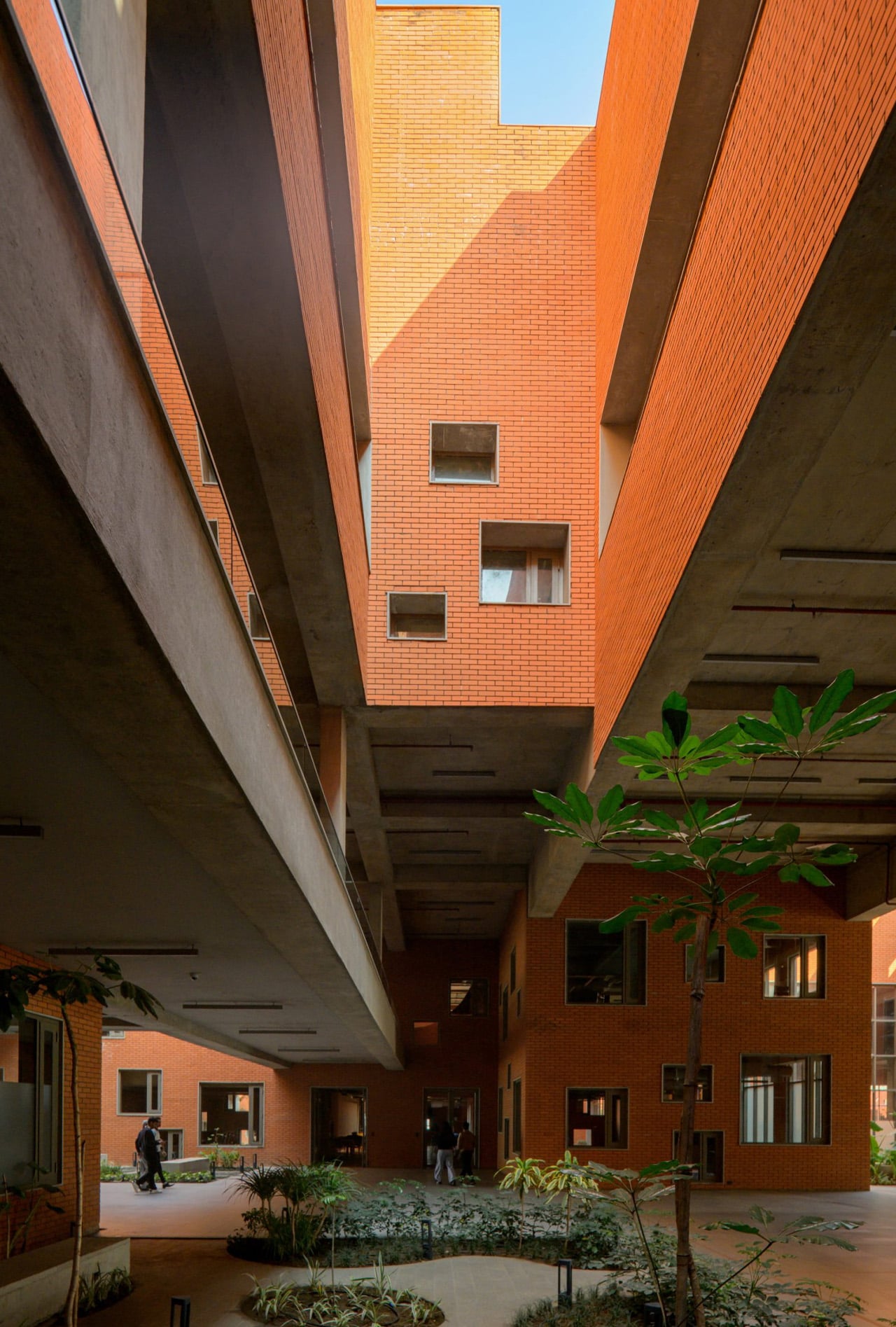
Indore’s climate demanded more from the design than a compelling silhouette. Temperatures sit between 86°F and 104°F for most of the year, and the stepped form itself reduces the vertical circulation load needed to cool the building. A continuous diagonal indoor street running the length of the ground floor drives natural ventilation through internal spaces, while perforated glass fiber reinforced concrete screens wrap the eastern, western, and southern elevations to limit heat gain. A shallow pool at the base of the main building adds passive cooling. None of these strategies are novel in isolation, but layering all of them into a single structure shows a climate response that goes beyond token gestures.
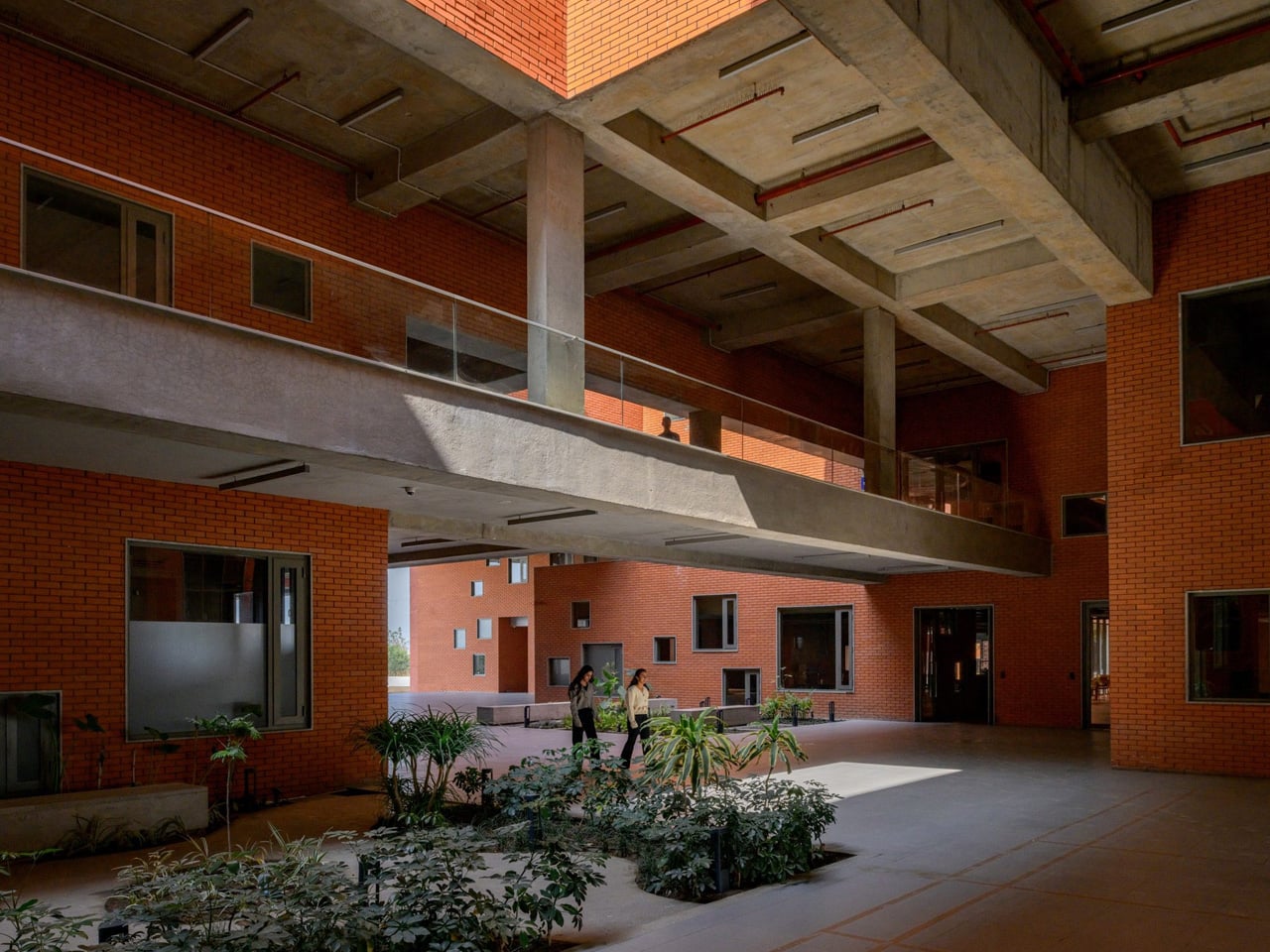
The 32-acre campus is built for 3,000 students. Ground-floor programming includes a 700-seat cafeteria, the shaded courtyards, and an indoor auditorium. A first-floor library features a bridge that spans the corridor below. Forty-five classrooms occupy the second and third floors, with faculty offices and administration on the fourth.
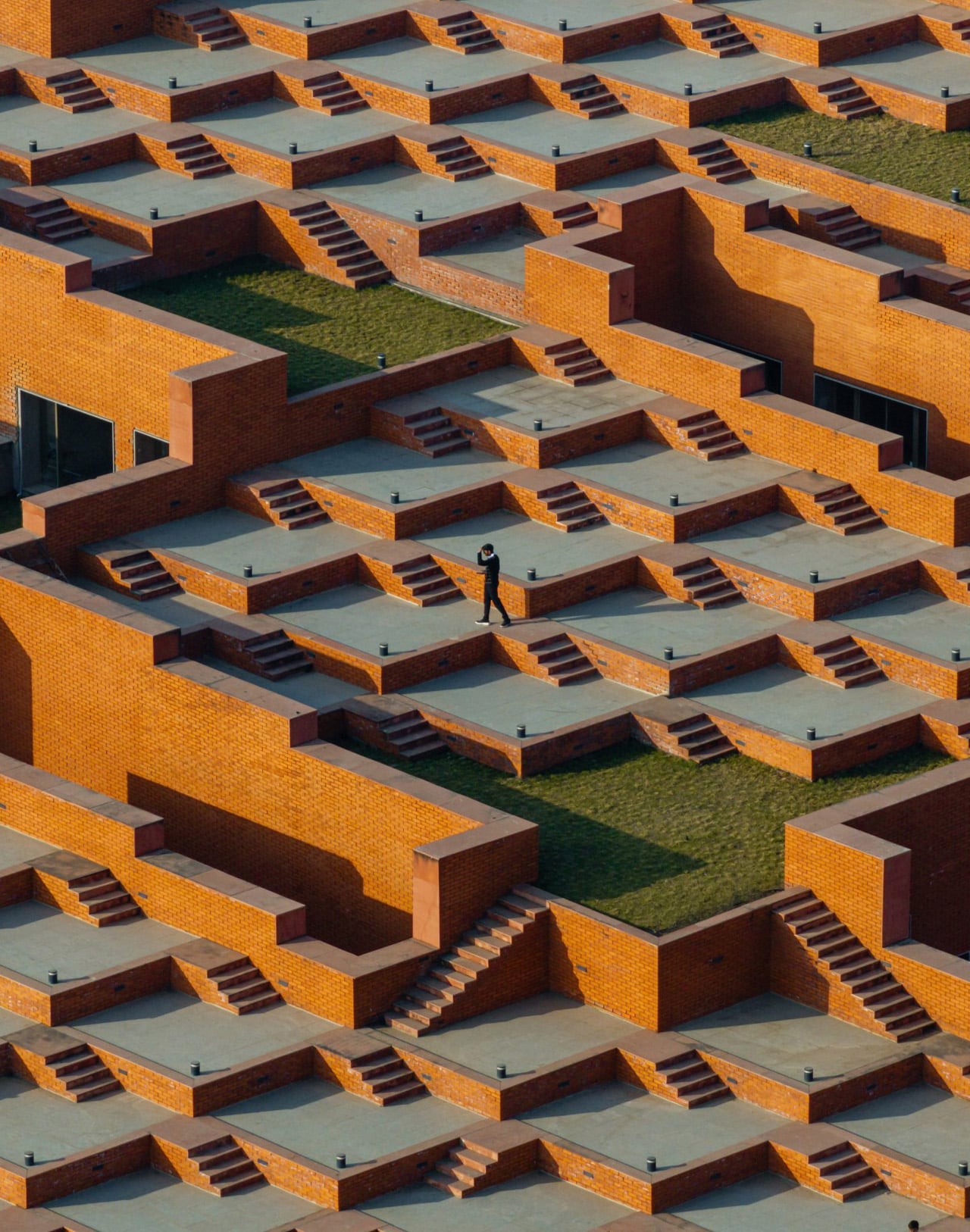

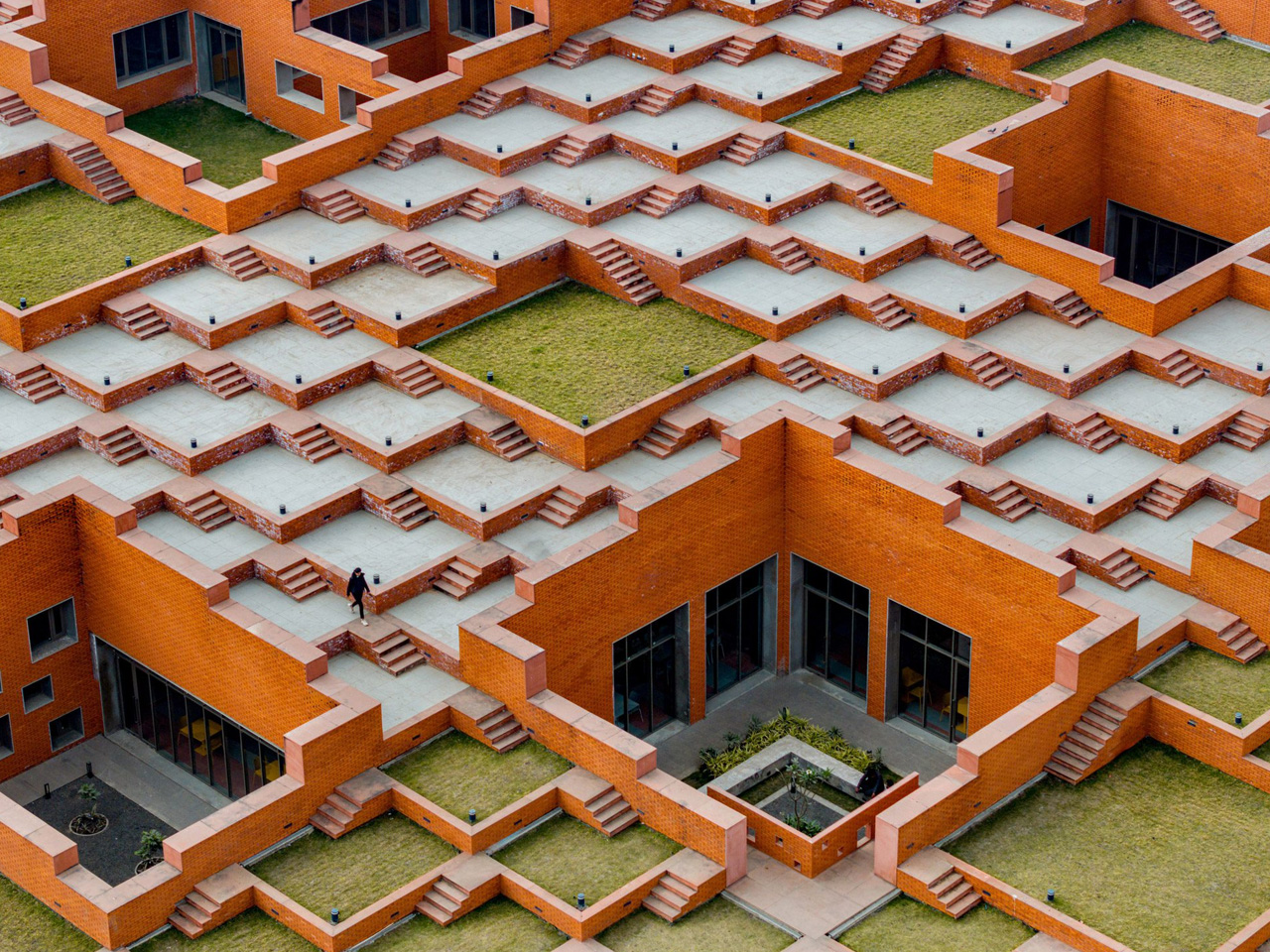
Material choices stay regional and direct. Clay brick cladding covers the concrete and fly ash brick structure on the exterior. Inside, exposed concrete pairs with Indian sandstone flooring, creating interiors that feel grounded without relying on applied finishes to manufacture warmth.
Sanjay Puri Architects, now 34 years into practice, has a deep portfolio of climate-responsive work across India. Prestige University pushes that lineage further by making the passive strategy legible; the stepped roofscape is not hidden engineering but the building’s most public face. Whether that openness survives the wear of 3,000 students and Indore’s punishing summers will determine if the idea scales beyond spectacle.