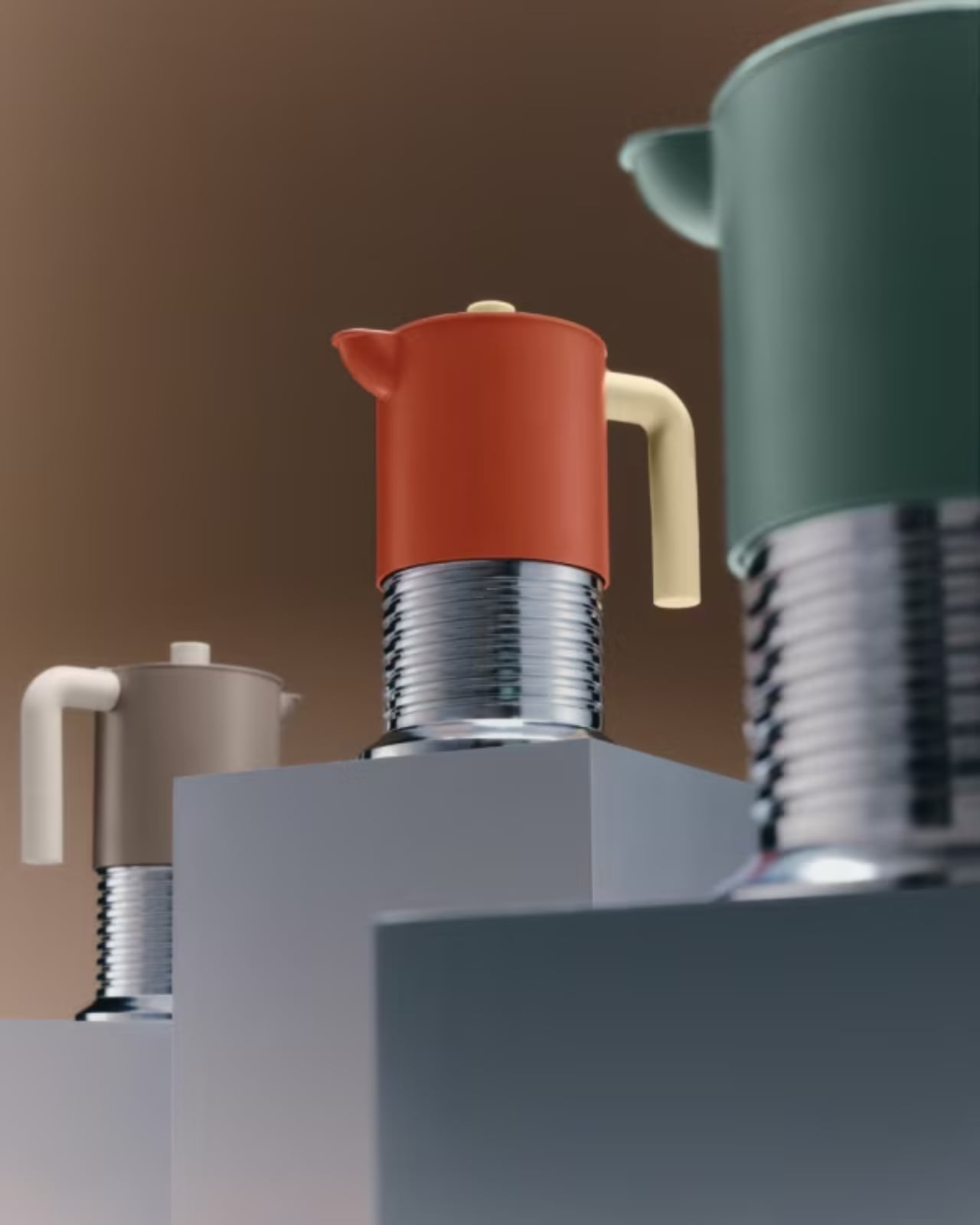

If you’ve ever watched someone twist the top half of a moka pot onto its base, you already understand the Vite. You just didn’t know it yet. That twisting motion, the one you do without thinking every morning, the mechanical ritual of threading metal against metal until it locks into place: that’s the entire design concept, made physical. Philippe Malouin took the gesture and turned it into the object itself, which is the kind of move that seems so simple you wonder why it took this long for someone to try it.
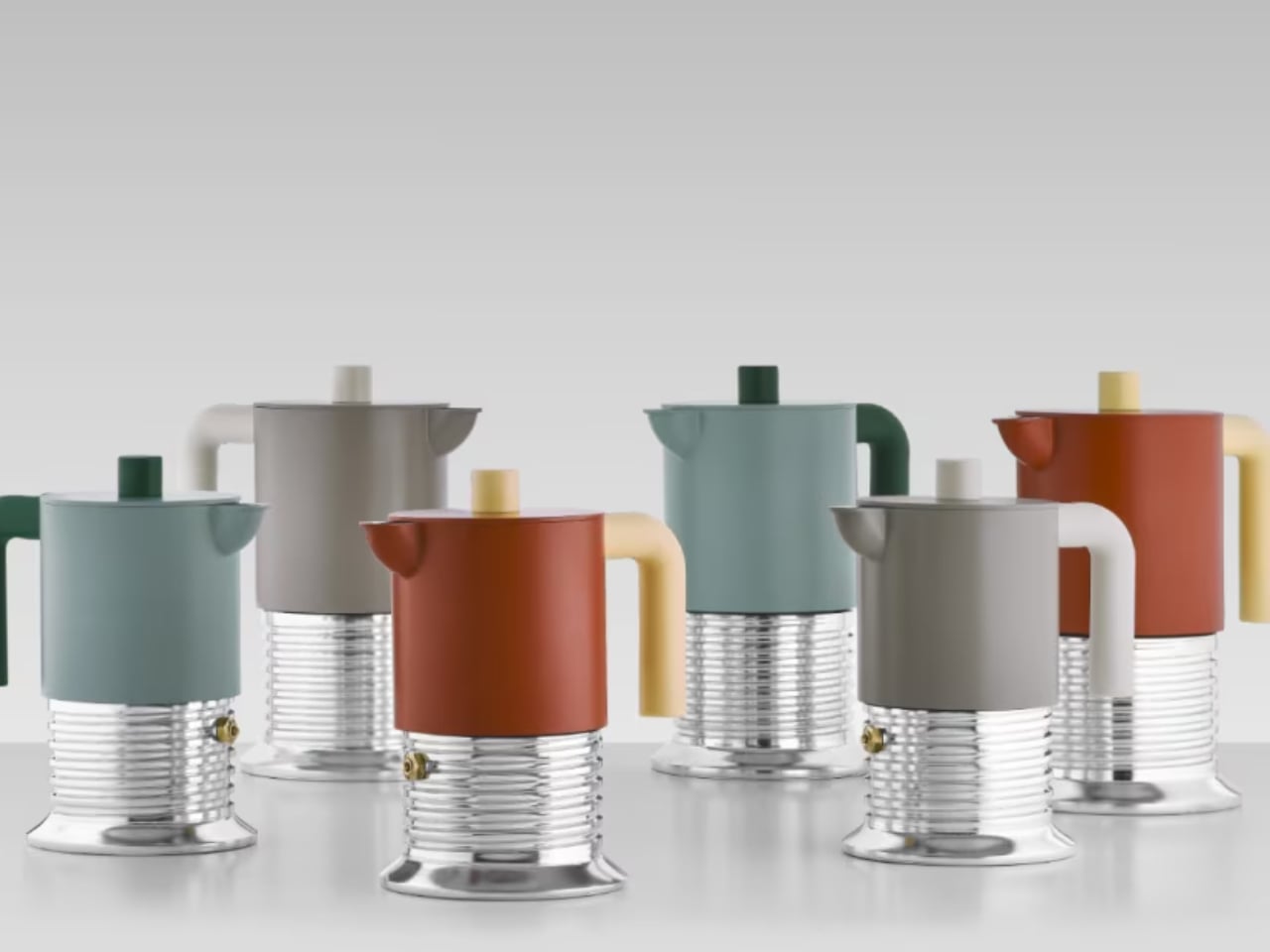
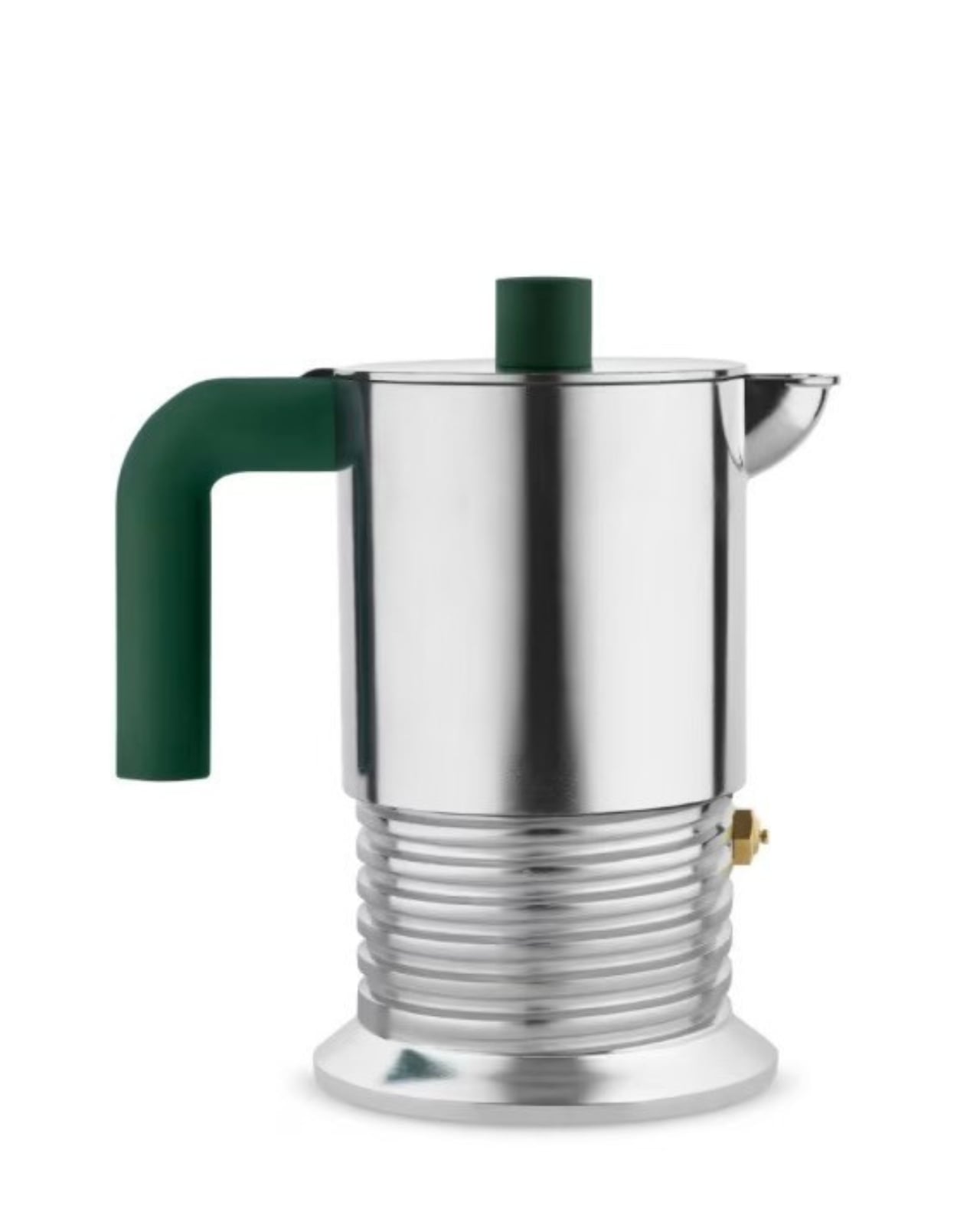
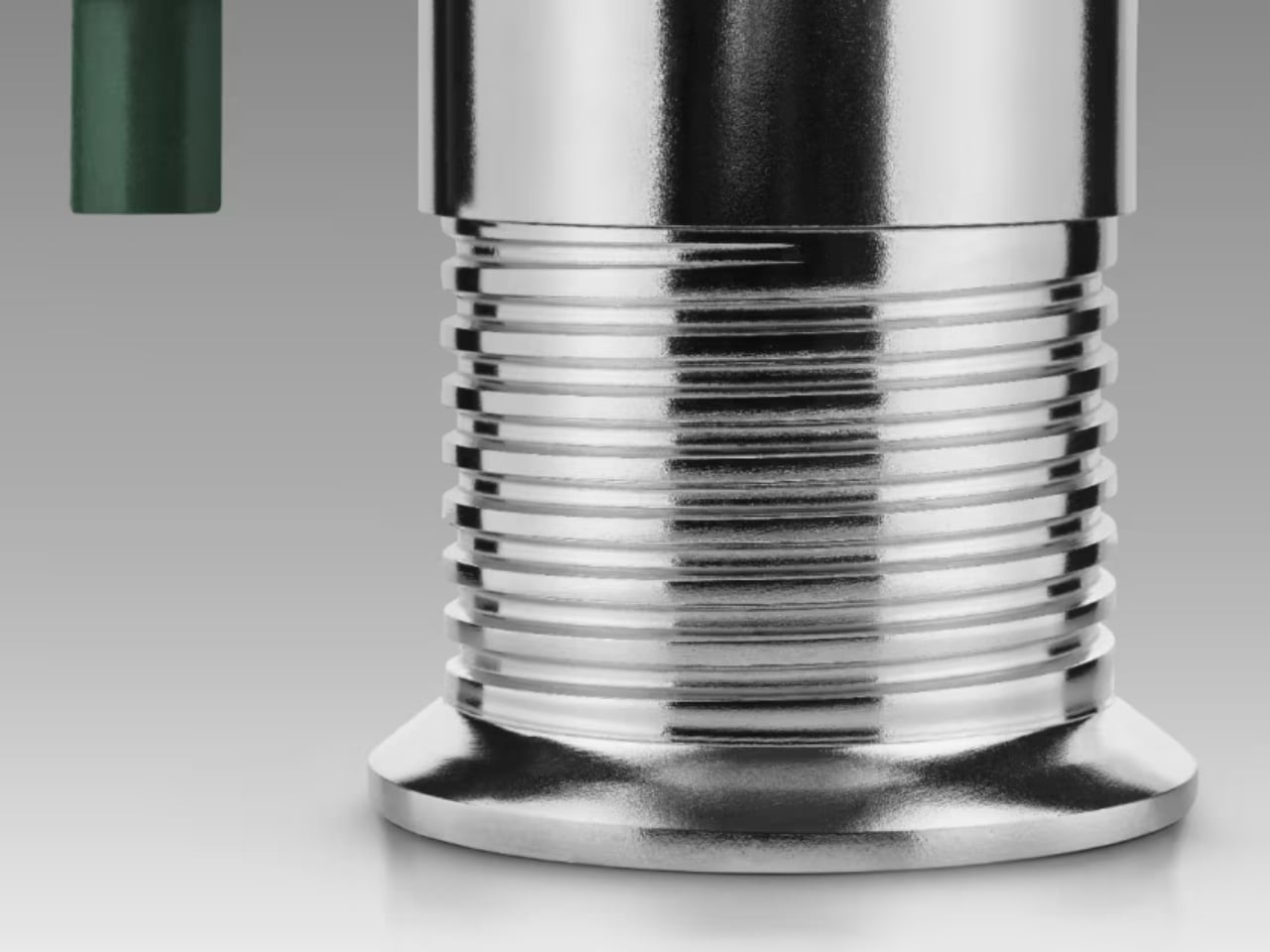
Alessi has just unveiled its latest moka pot, designed by Anglo-Canadian designer Philippe Malouin, and the concept is so obvious in hindsight that it’s almost frustrating nobody did it sooner. The pot is shaped like a screw. The boiler, which is the bottom chamber you fill with water, is wrapped in a pronounced helical thread that mirrors the exact twisting gesture you use to seal the two halves together. Form literally follows function, except here the form is the function, made visible and tactile and almost theatrical.
Designer: Philippe Malouin for Alessi
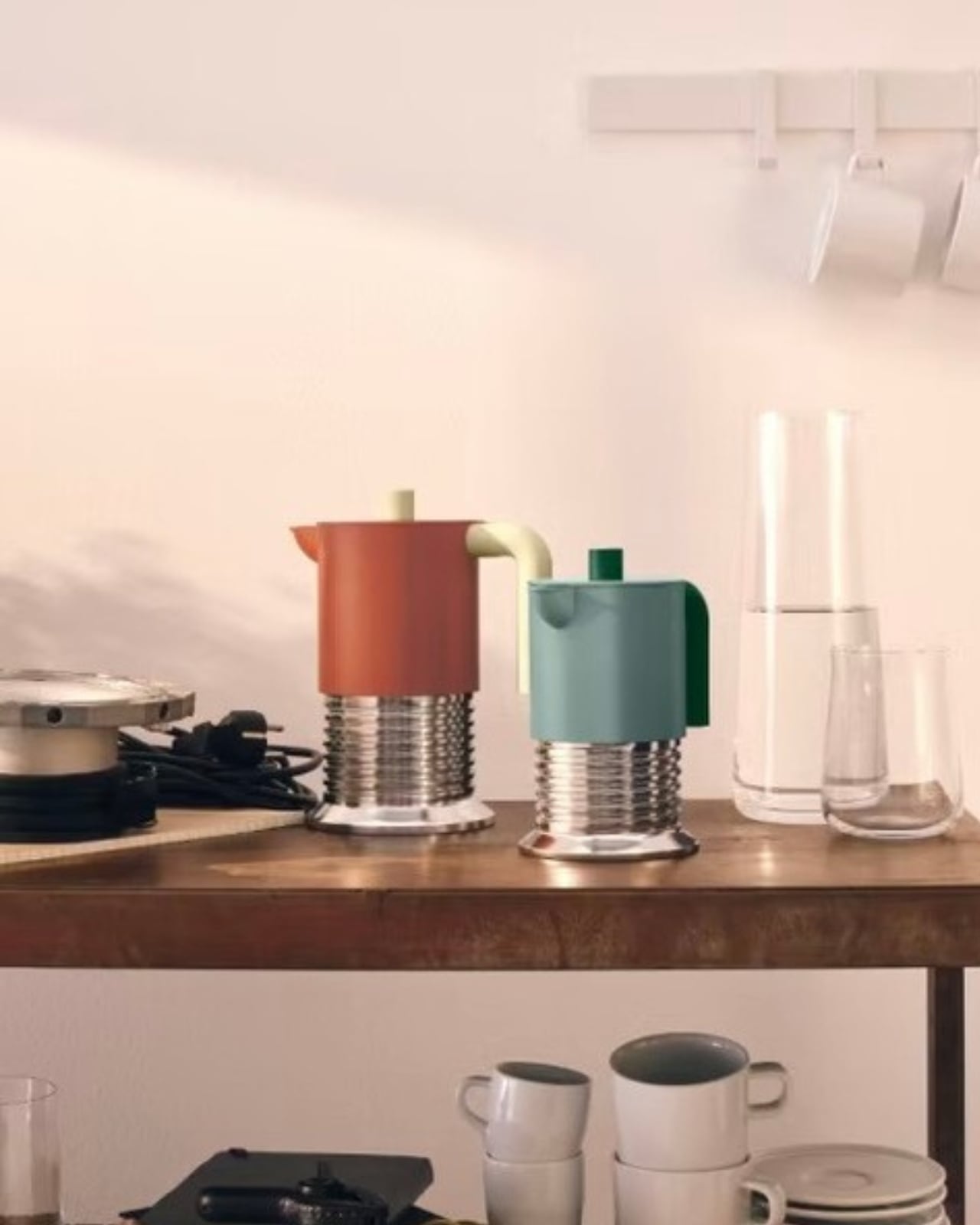

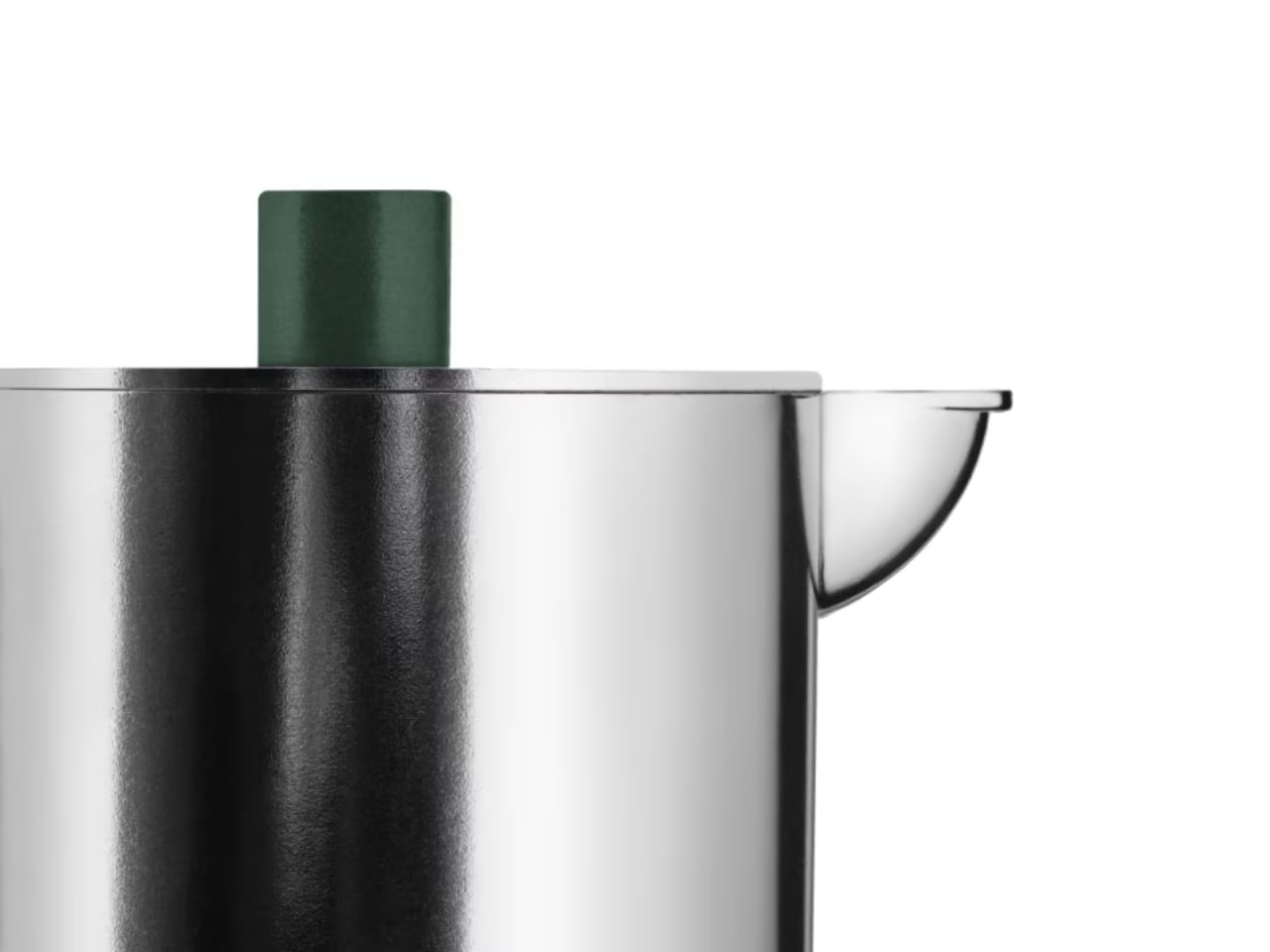
What makes the design work is how committed it is to the concept. Malouin didn’t soften the industrial reference or add decorative elements to make it friendlier. The thread is deep and aggressive, giving the aluminum body a tactile grip that feels engineered rather than styled. The upper chamber sits on top like a bolt head, clean and geometric, while a tapered pedestal at the base anchors the whole composition. That pedestal isn’t just aesthetic, it’s functional, designed to work on both gas flames and induction cooktops. Every element serves the central idea without compromise.

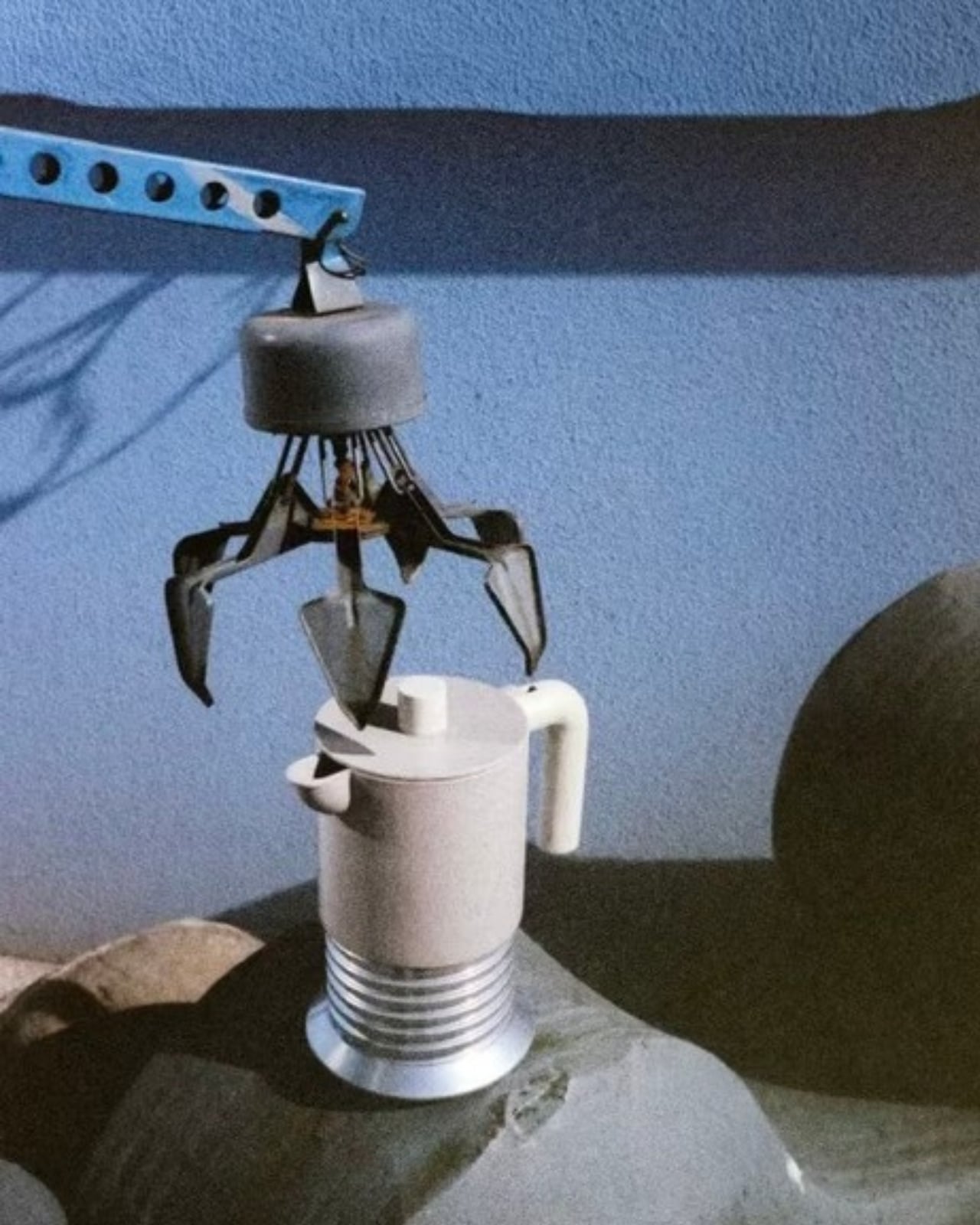
The construction is straightforward in the way good tools are straightforward. The helical form creates natural contours that make the pot easier to hold and twist, which means the design logic actually improves usability rather than sacrificing it for concept. The thread grooves catch light in a way that makes the object more visually dynamic depending on the angle, and the repetition of the spiral gives it a kinetic quality even when it’s sitting still on a counter.
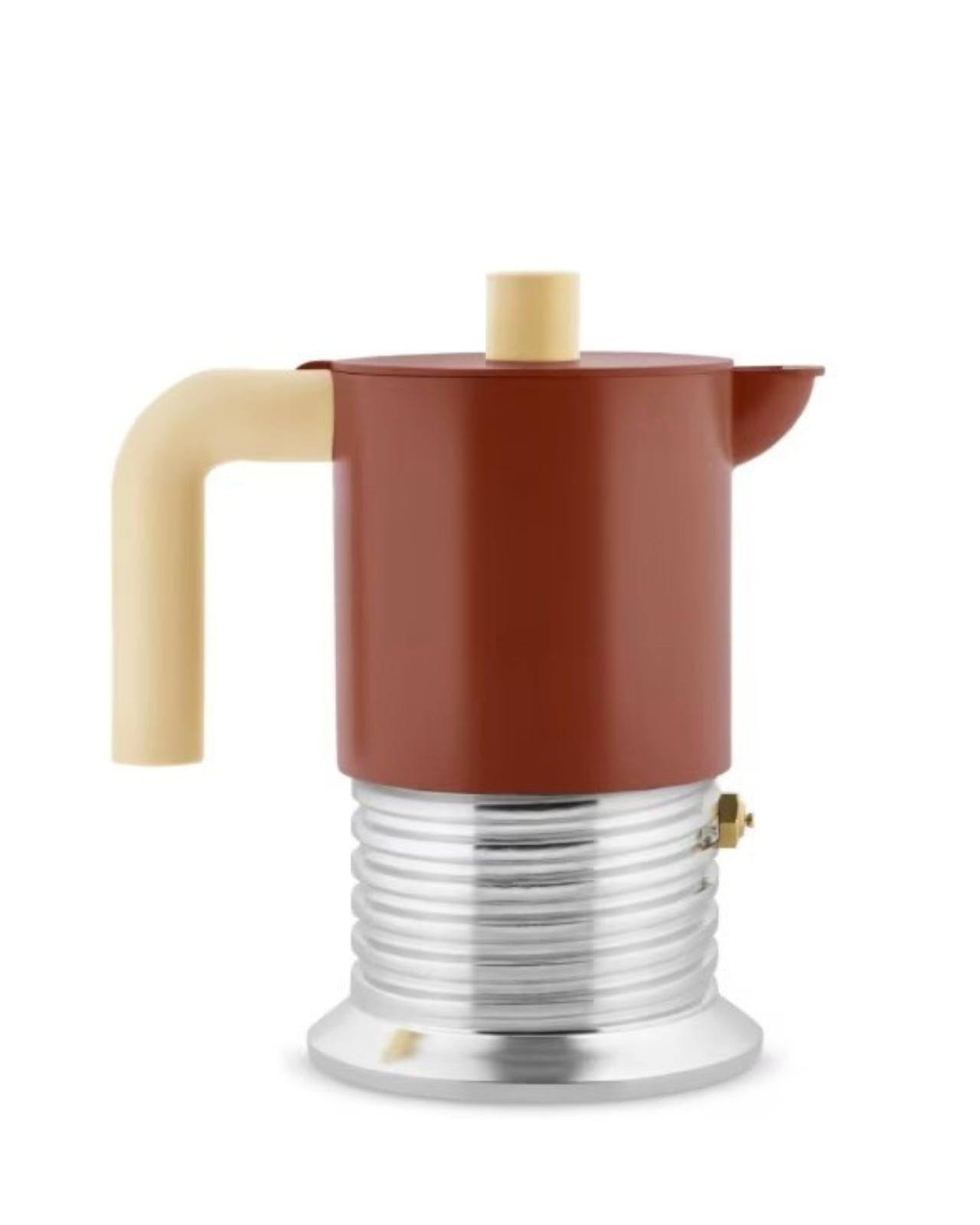
Malouin has described his research process as drawing from “scrapyard works,” recovering discarded metal parts and recombining them into something new. That approach is visible here. The Vite looks like it was pulled from a bin of machine components and repurposed, which gives it an honesty that a lot of contemporary design lacks. It doesn’t try to hide what it is or smooth over its mechanical origins. The aluminum stays raw and utilitarian, the proportions stay true to hardware logic, and the result is something that feels more like a precision instrument than a kitchen accessory.
The name reinforces the concept. “Vite” is Italian for screw, but it also means “quickly” or “fast,” which layers in a reference to espresso culture and the speed of the brewing ritual. Whether that double meaning was intentional or accidental, it works. Good design tends to accumulate meaning like that, where the formal decisions align with the cultural context in ways that feel inevitable once you notice them.
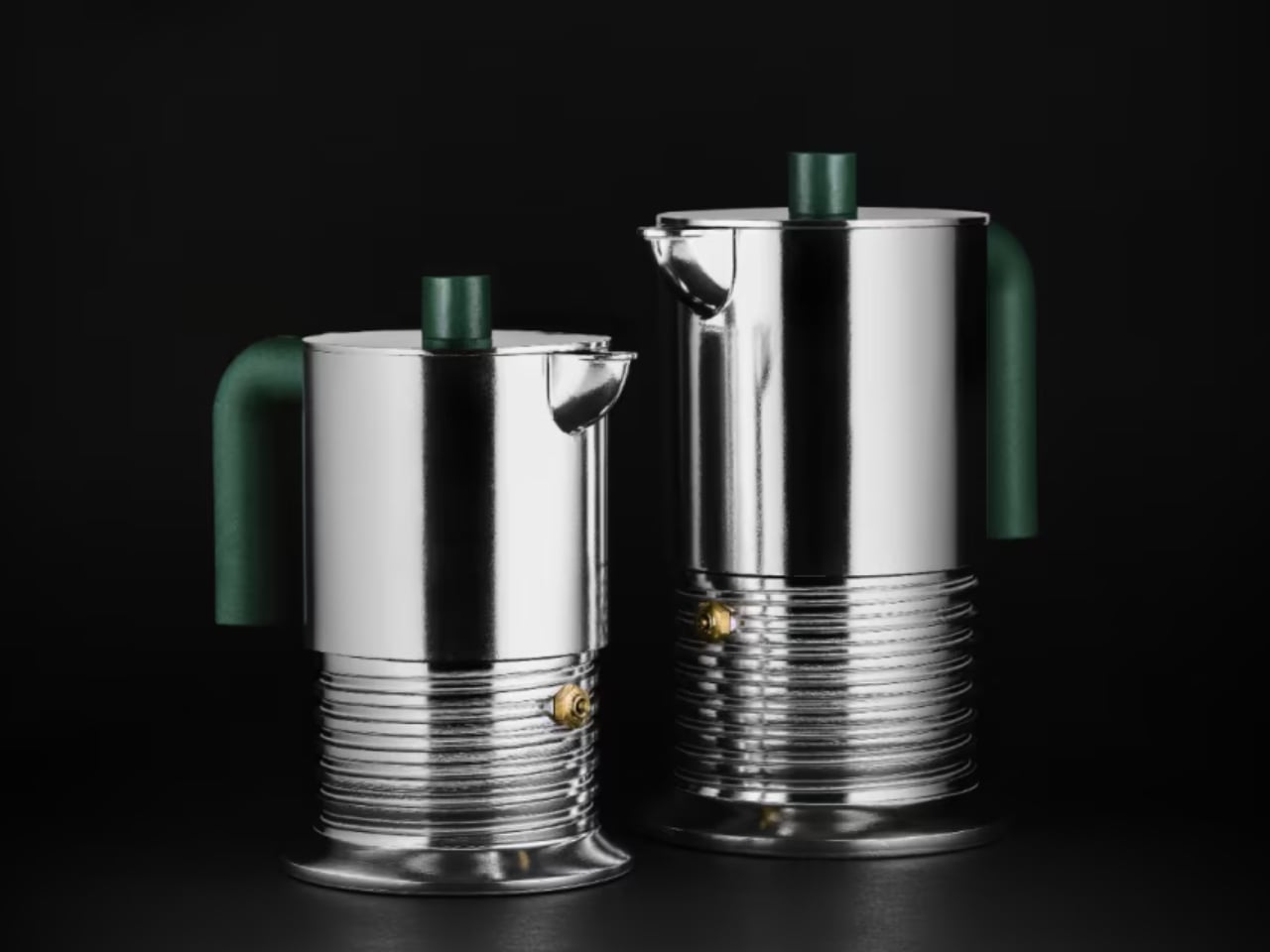
What I find most compelling is how the design makes you pay attention to something you normally ignore. Every time you screw a moka pot shut, you’re performing the exact motion the Vite is built around, but the traditional design doesn’t acknowledge it. Malouin’s version does. It takes an unconscious gesture and makes it conscious, turns routine into ritual, and does it without adding complexity or decoration. The form just clarifies what was always there.
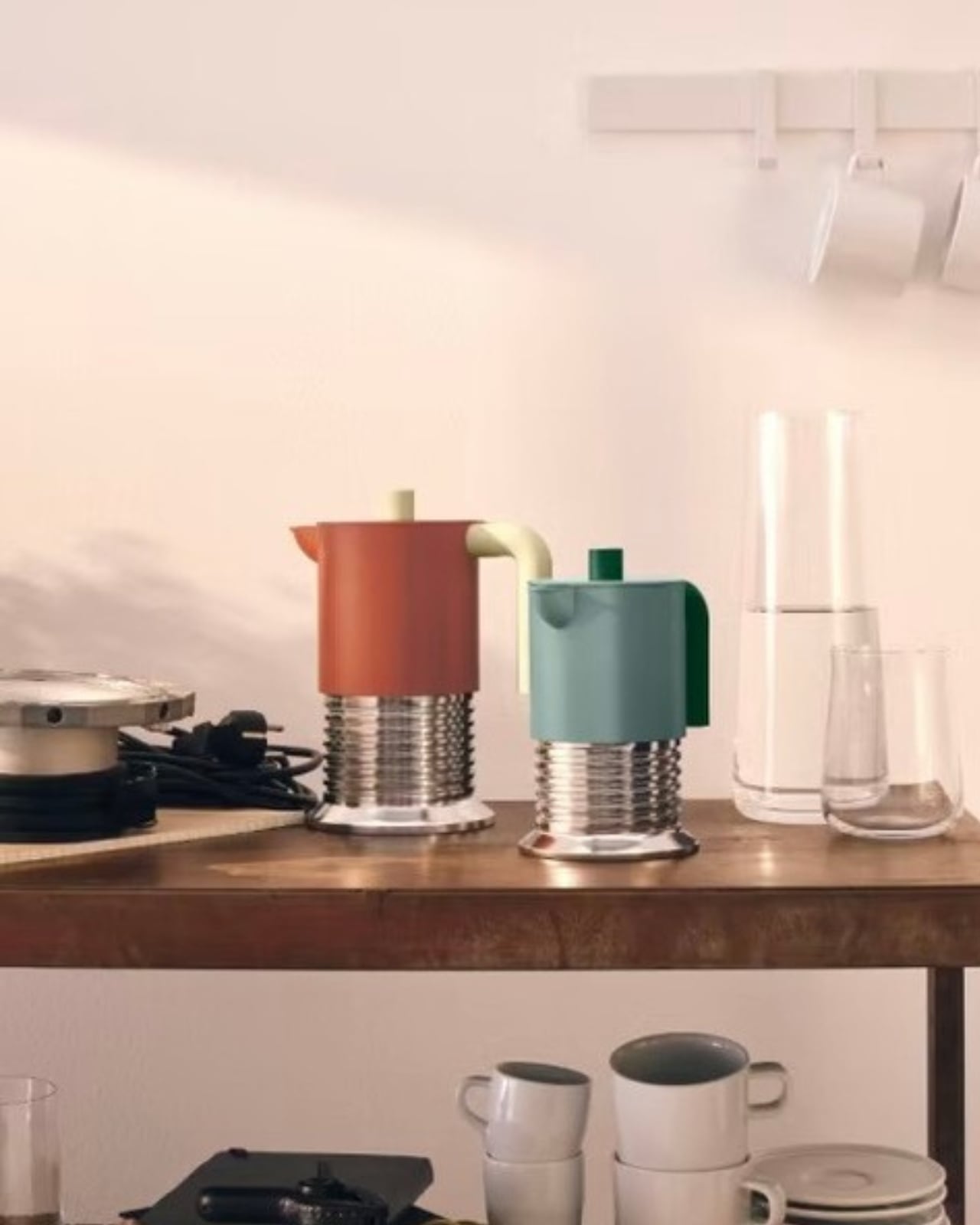
That clarity is what separates this from novelty design. The screw isn’t a gimmick. It’s the logic of the object, made legible. The thread pattern serves the function, the industrial aesthetic serves the origin, and the overall composition serves the experience of using it. Everything aligns, which is harder to achieve than it looks.