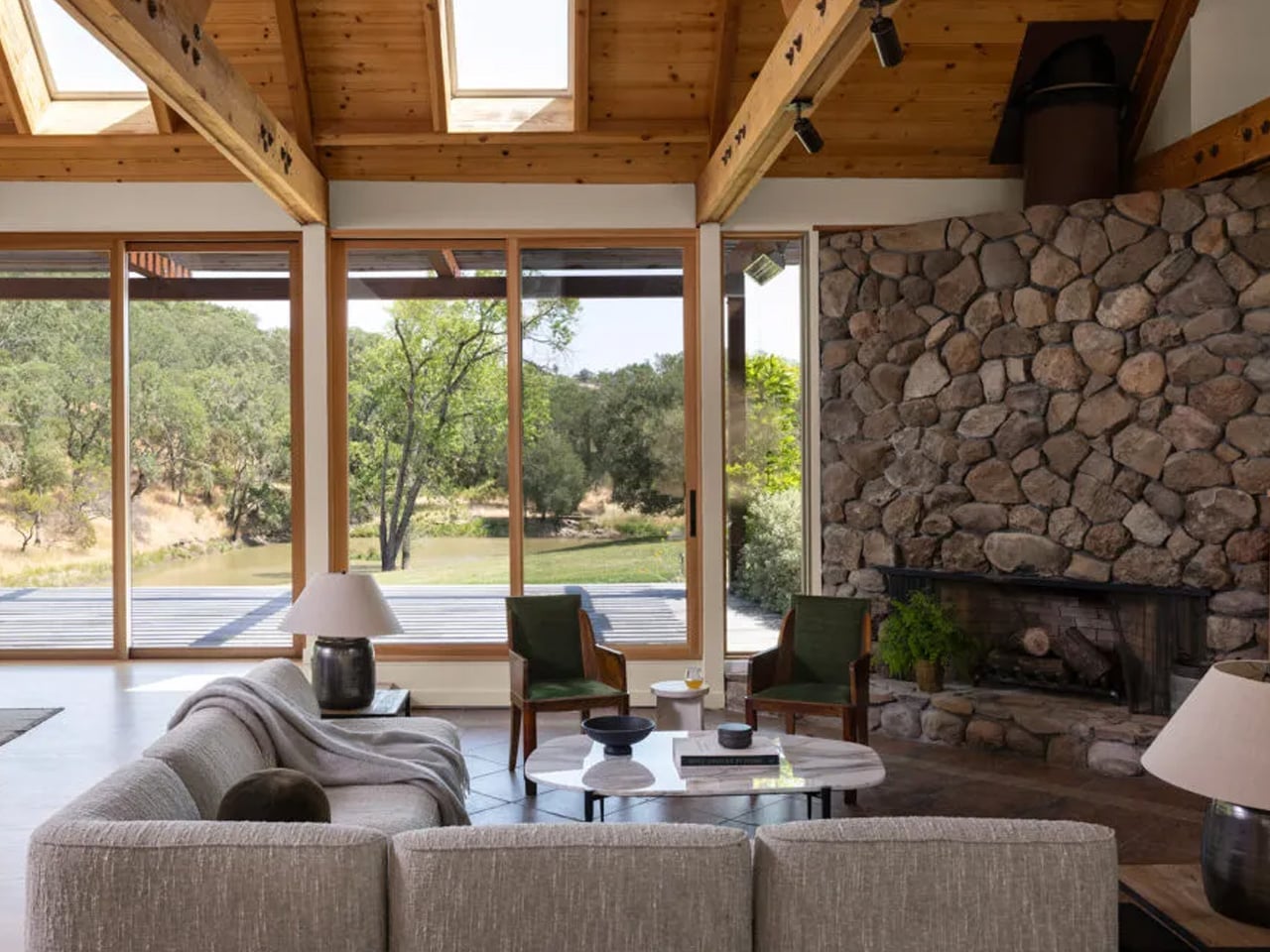

Tucked into the rolling hills of Glen Ellen in Sonoma County, a 14-acre estate carries the kind of stillness that most people spend a lifetime chasing. The land has its own private lake, wildlife moving freely at every hour, and a canopy of Northern California nature that presses in from every direction. At its center sits a house — modest in its ambitions but precise in its relationship to the ground beneath it.
That precision traces back to its original designer, J. Lamont Langworthy, an architect whose name sits just outside the mainstream conversation about California Modernism despite a body of work that more than earns a place in it. Langworthy spent a decade designing hillside homes in Laguna Beach, developing a philosophy rooted in site sensitivity and structural clarity. Architecture critic Alan Hess described his work as carrying a disciplined spatial intelligence — houses that didn’t impose themselves on their environments but instead grew out of them organically.
Designer: J.Lamont Langworthy
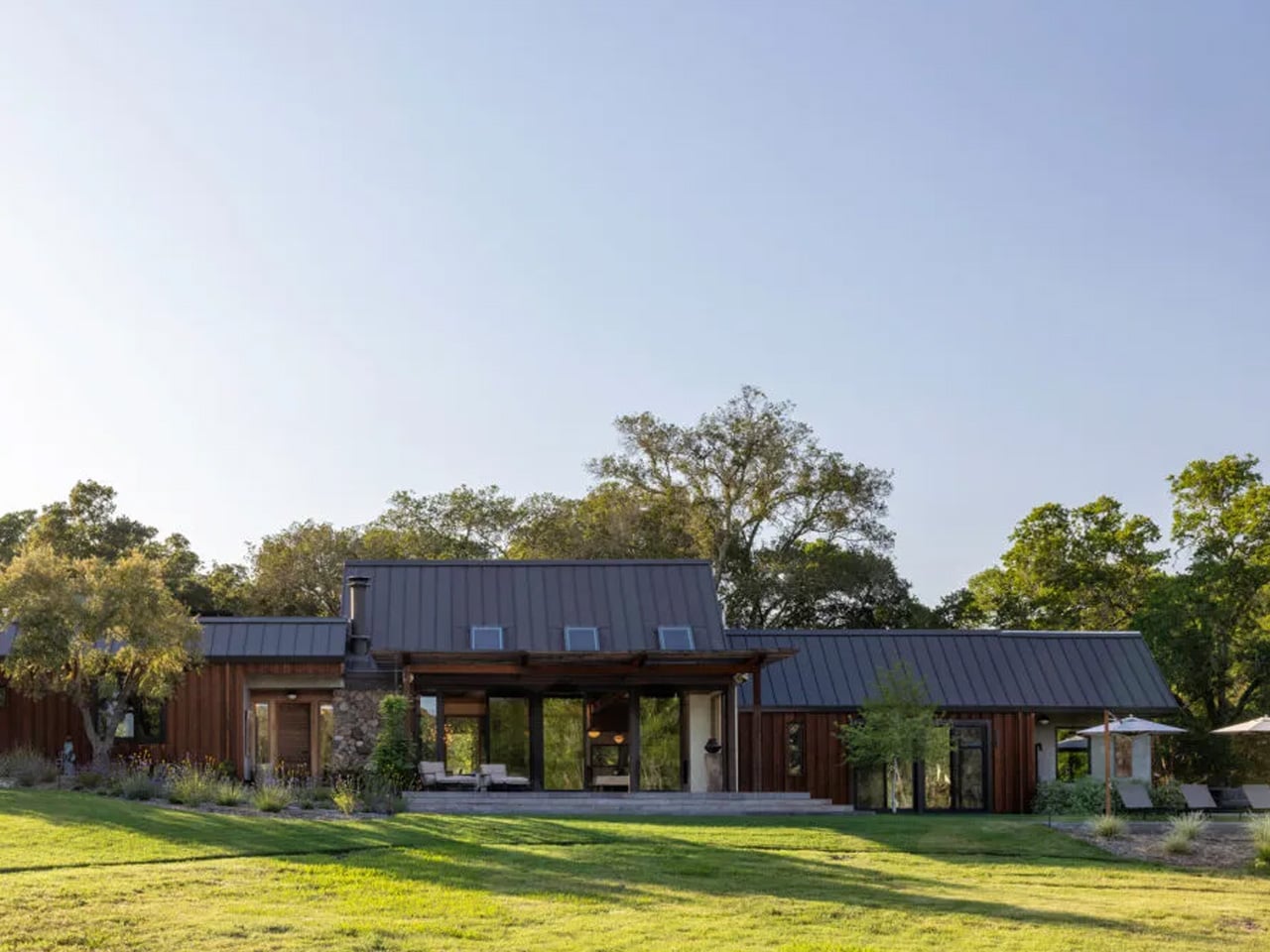
Langworthy himself is as layered as his architecture. A home winemaker, sculptor, painter, and self-published author, he eventually settled in Sonoma County, where he spent years managing a century-old building he had personally renovated. The Glen Ellen house represents an earlier chapter of his career — one that, by the time the current owners purchased the property in 2014, had quietly come to an end. The architecture still held its shape, but years of neglect had taken a toll on everything surrounding it.
The renovation was handed to Westward Atelier, whose approach mirrored the same instinct Langworthy brought to the original design — let the land lead. Principal Nikki spoke about the project with the reverence the setting demands, describing the property as something her clients recognized immediately as rare. The brief wasn’t to modernize or reimagine from scratch. It was to restore confidence to a house that had lost it, while preserving the spatial logic that made it worth saving in the first place.
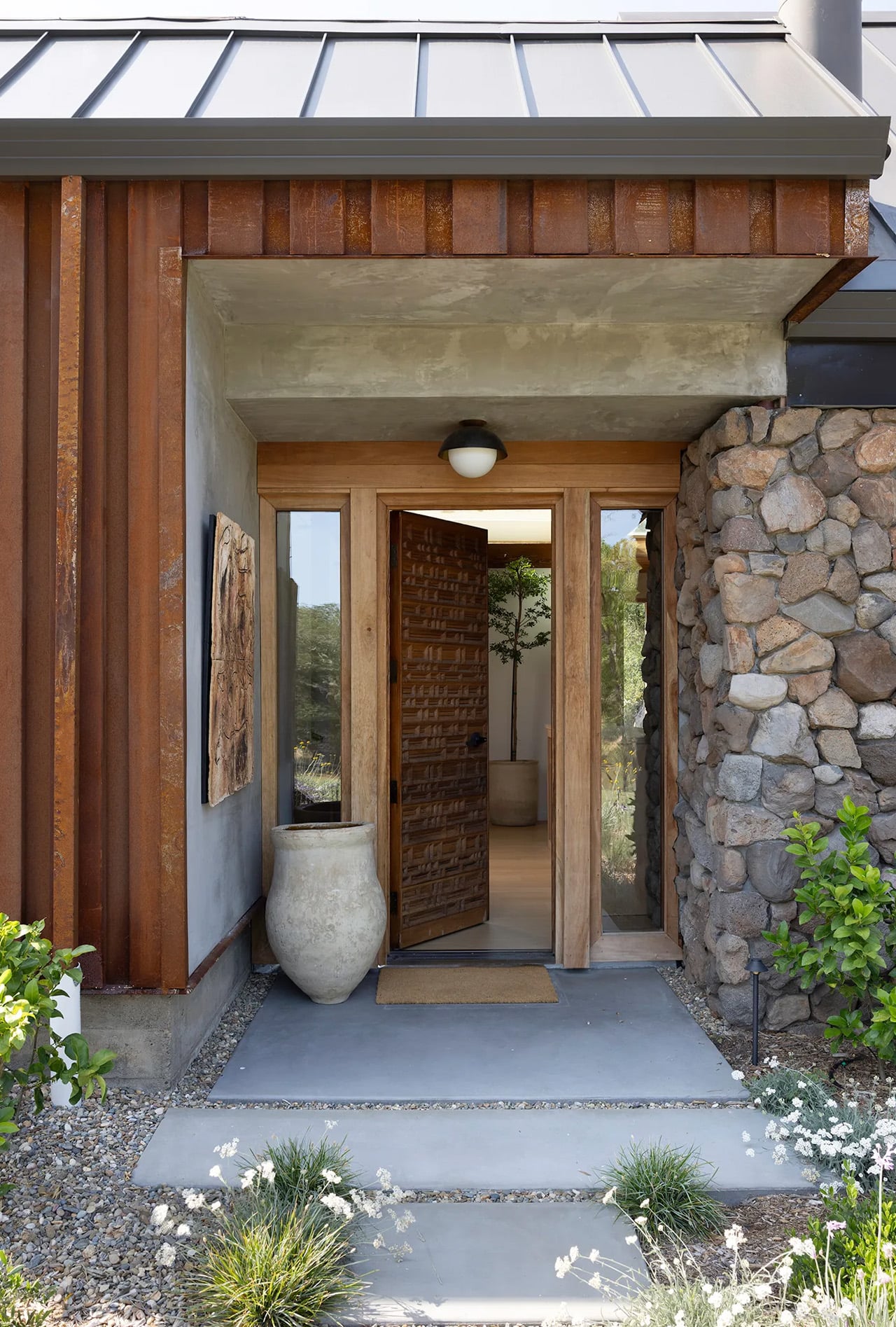

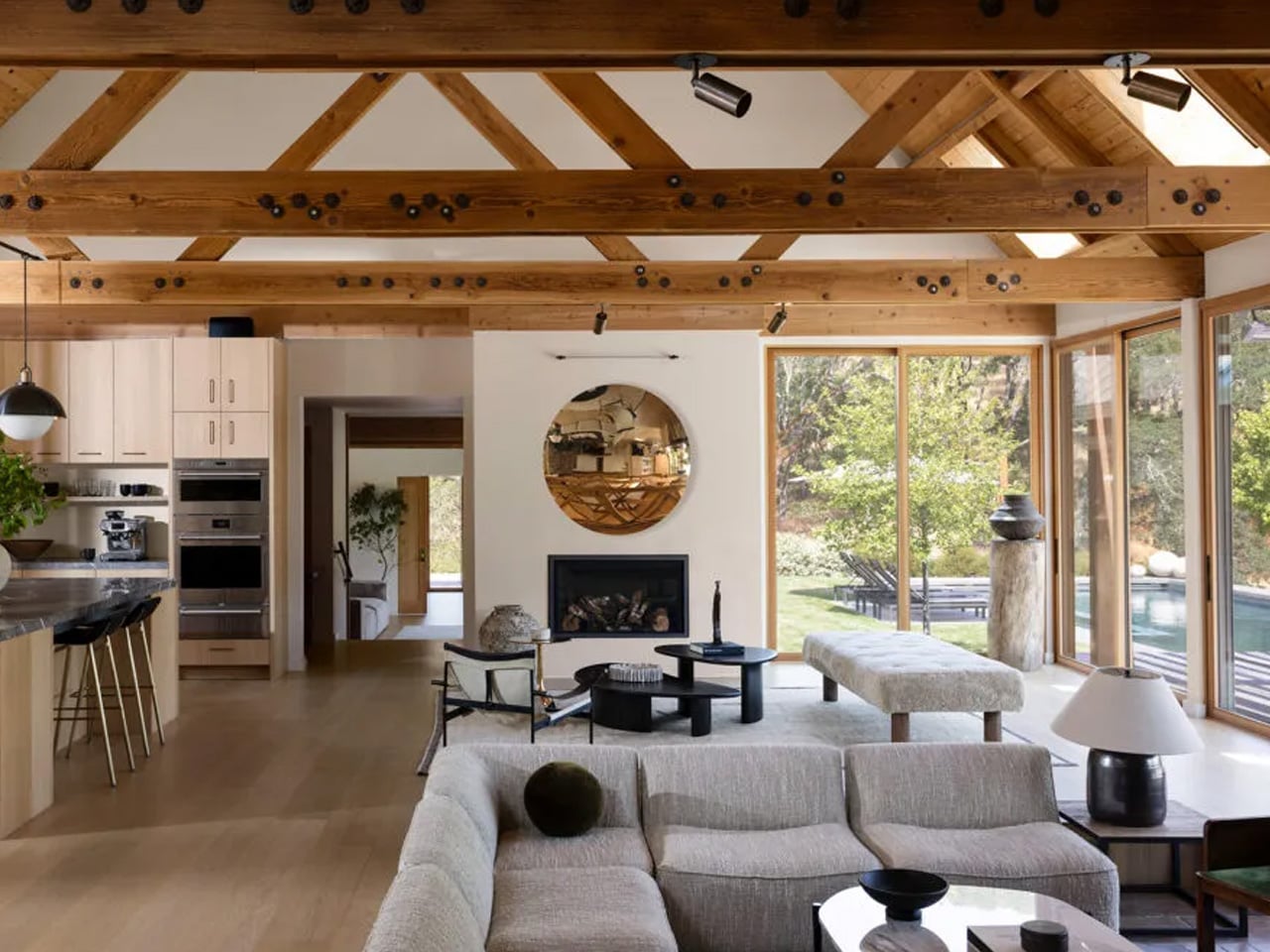
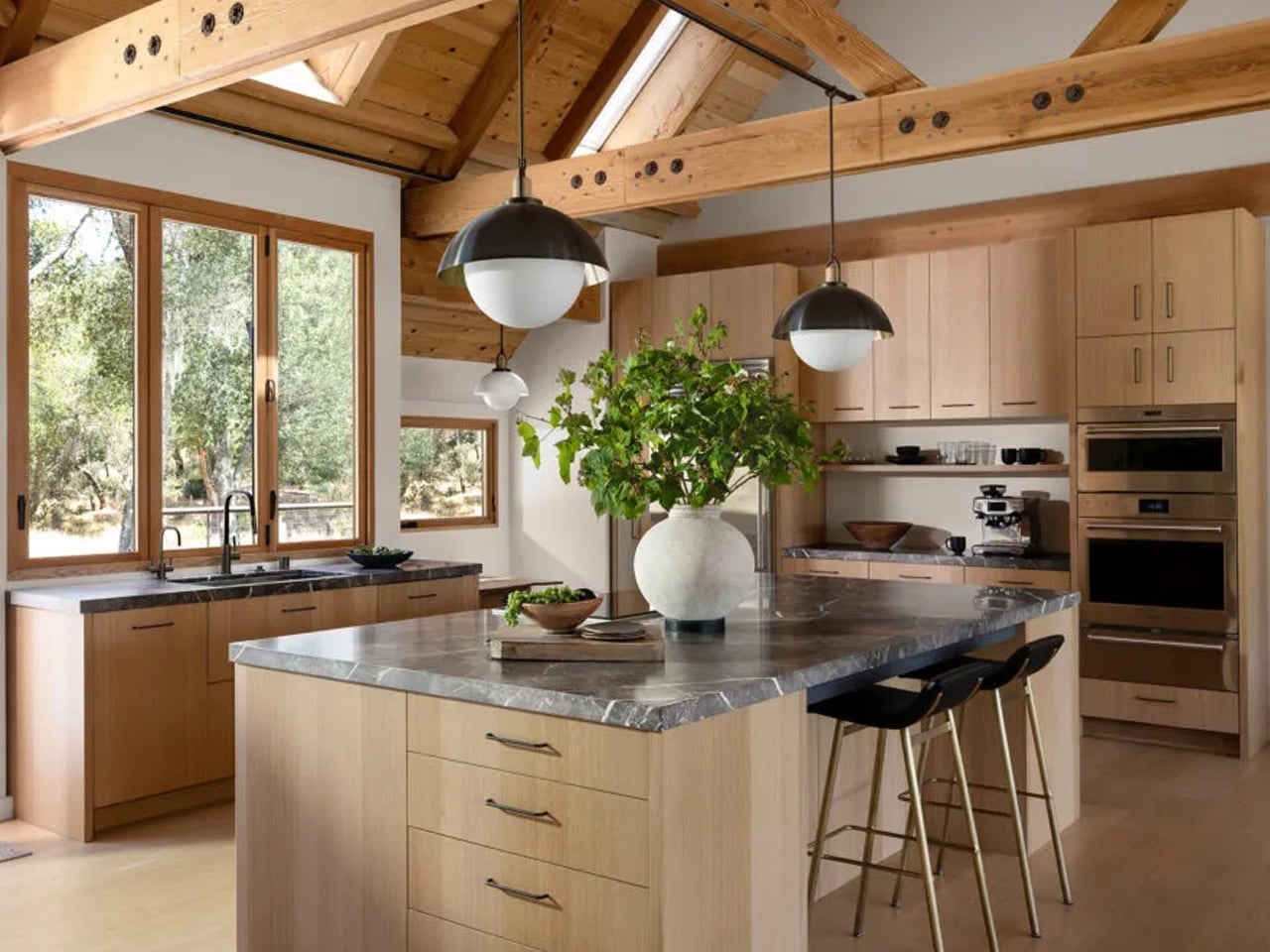
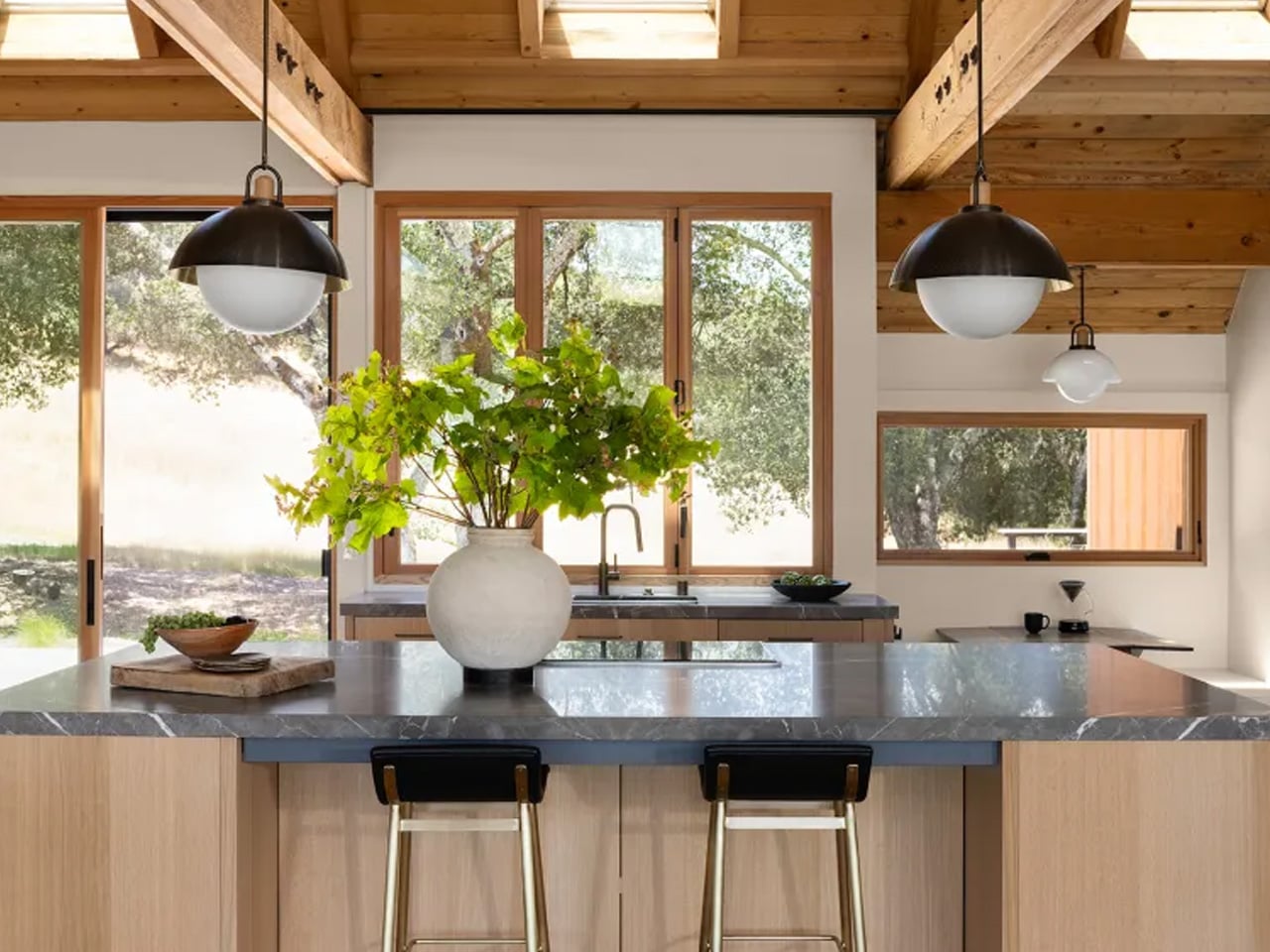
Inside, the most significant transformation occurred in the kitchen. What had been a closed, compartmentalized room was opened to the main living area, with a natural stone island becoming the new visual and social anchor of the space. Concrete countertops and timber cabinetry were paired with bronze hardware and brass fixtures, pulling warmth into what could have easily read as cold. A collection of Southwestern pottery arranged on open shelving added personality without noise, while white oak floors carried the palette quietly through the rest of the home.
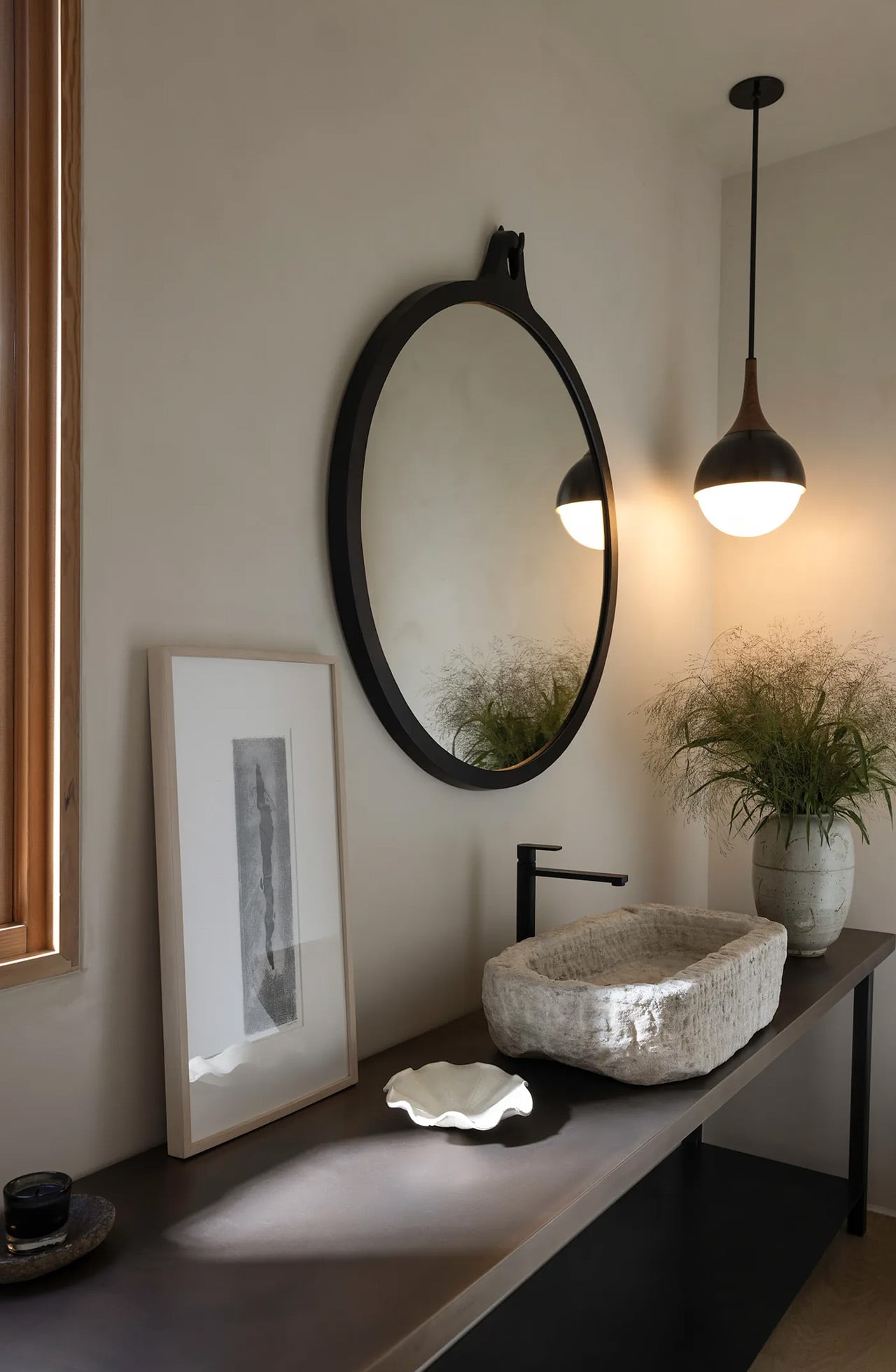
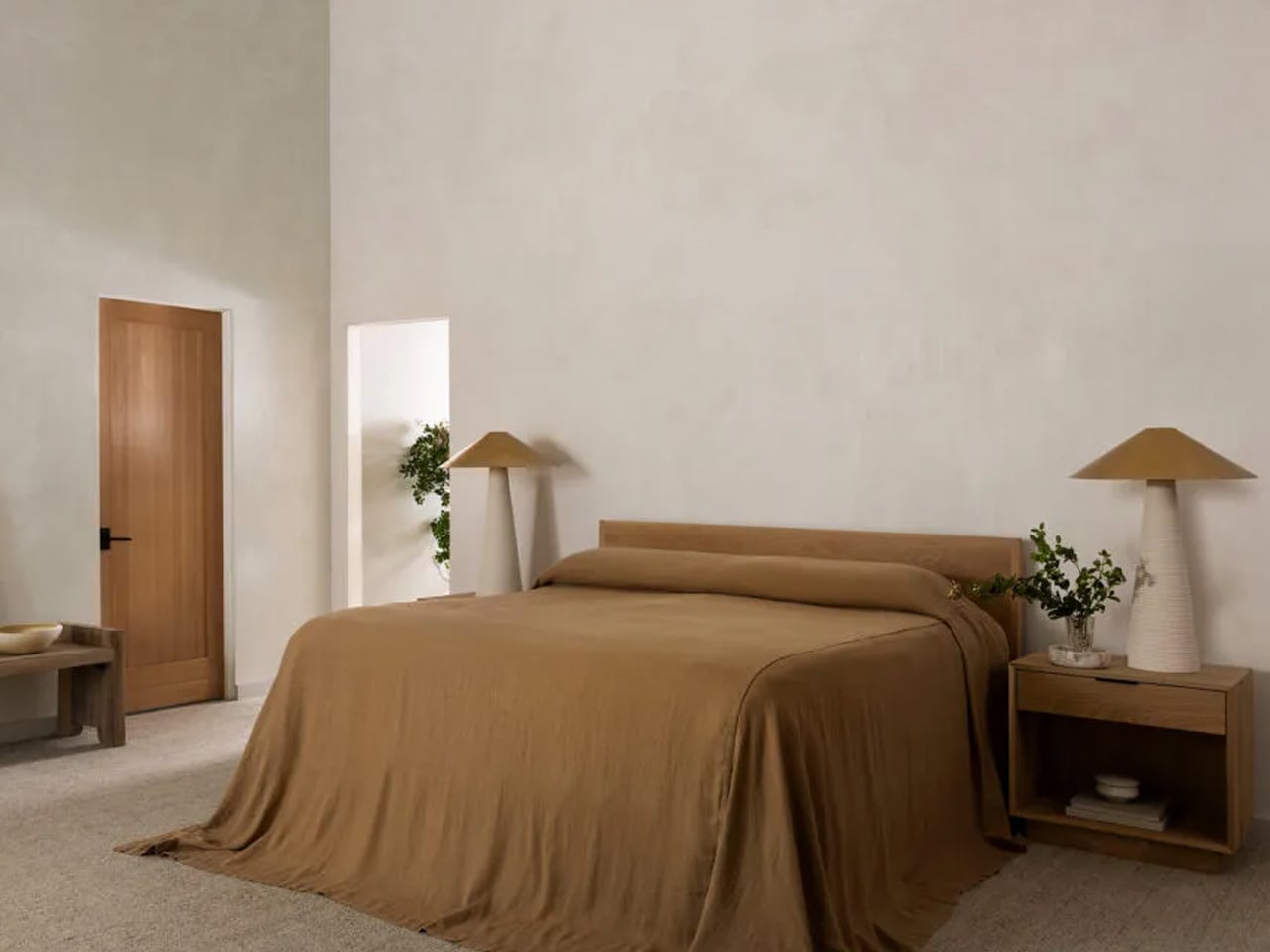
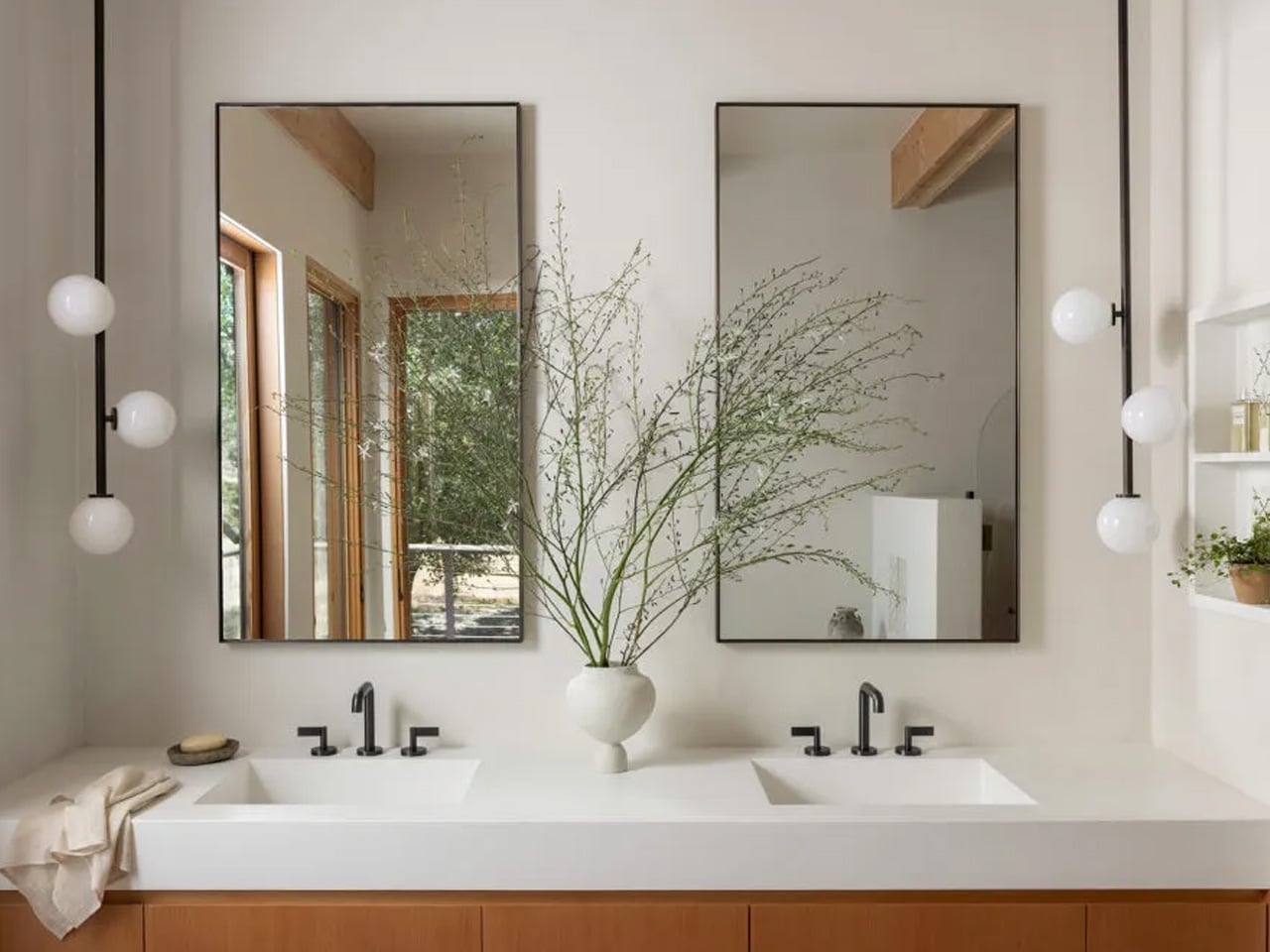
The primary suite presented its own challenge. Rather than reconfigure the existing bedroom, the team added a new north-facing suite designed entirely around calm and privacy. The original master was then converted into a communal gathering space oriented toward the sweeping outdoor views — a decision that rebalanced the whole home around generosity rather than hierarchy. Creamy white walls, marble surfaces, and expansive glass throughout keep the interior quiet enough that the lake, the trees, and the wildlife beyond the windows remain, always, the main event.