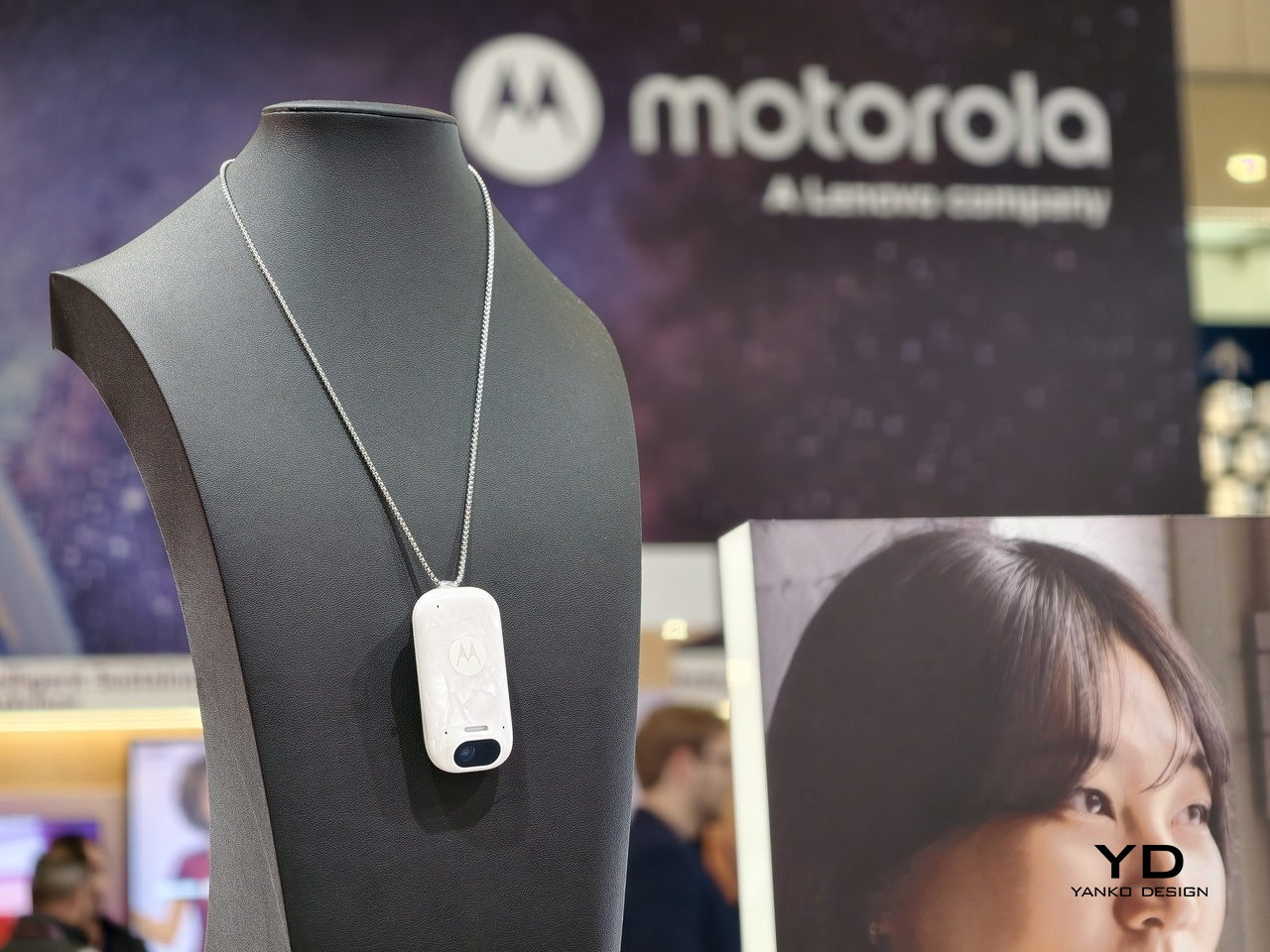

There’s a particular kind of friction that comes with using AI during moments that actually matter. You’re in a meeting or a keynote, and consulting your phone means breaking focus, fumbling with a screen, and silently signaling to everyone around you that you’d rather be somewhere else. Motorola’s 312 Labs team identified this as a design problem worth solving, and Project Maxwell is what came out of it.
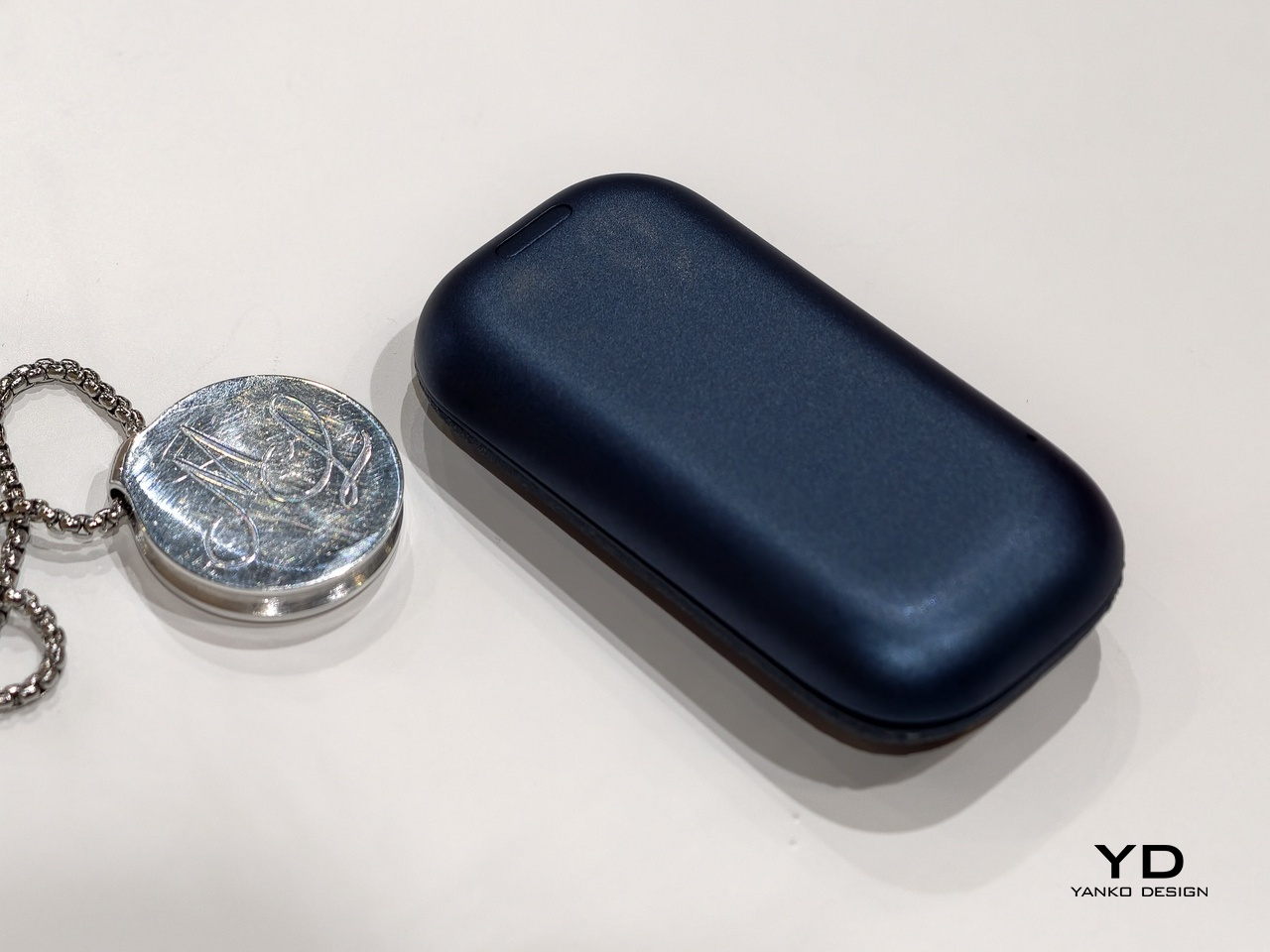
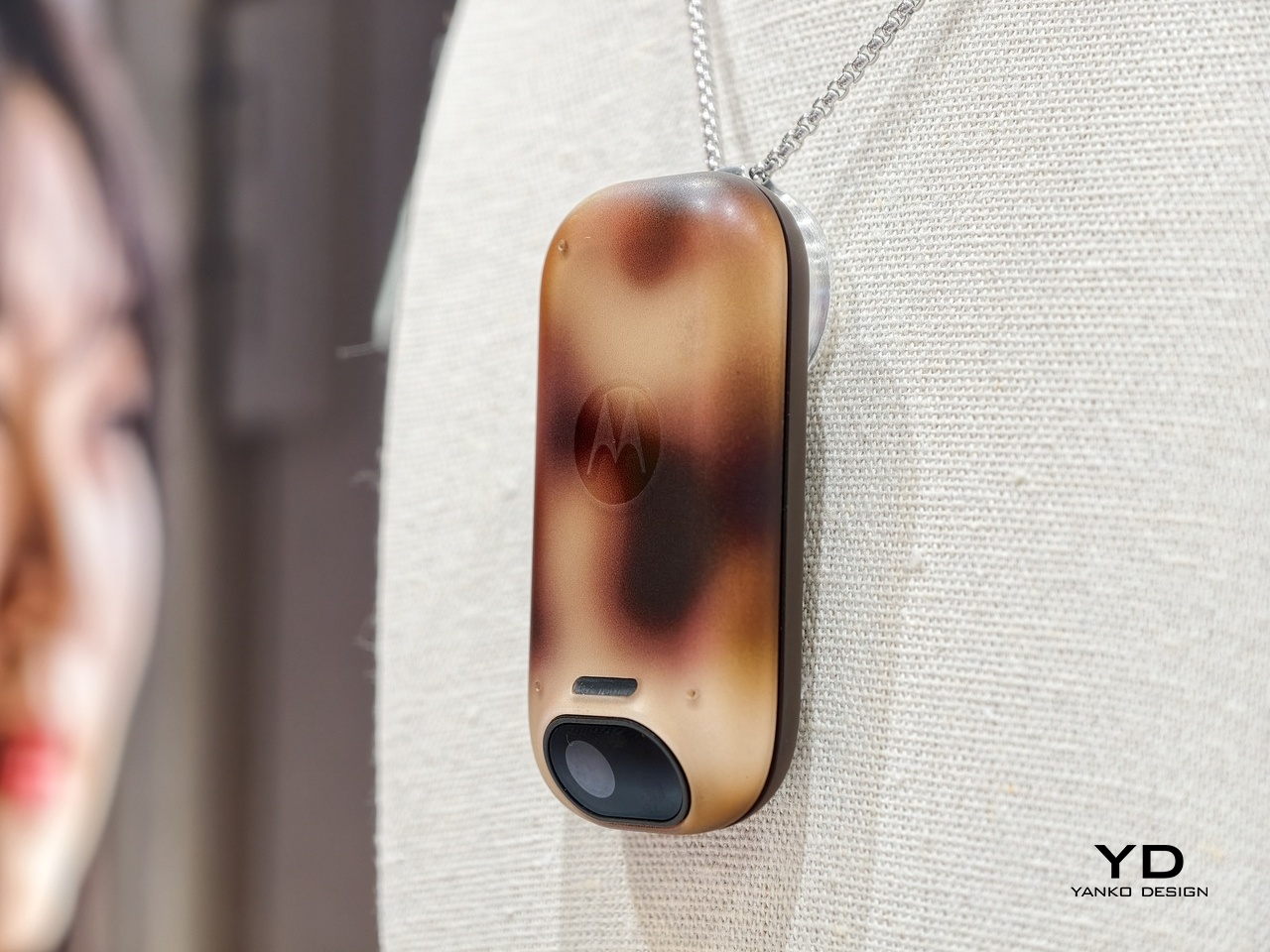
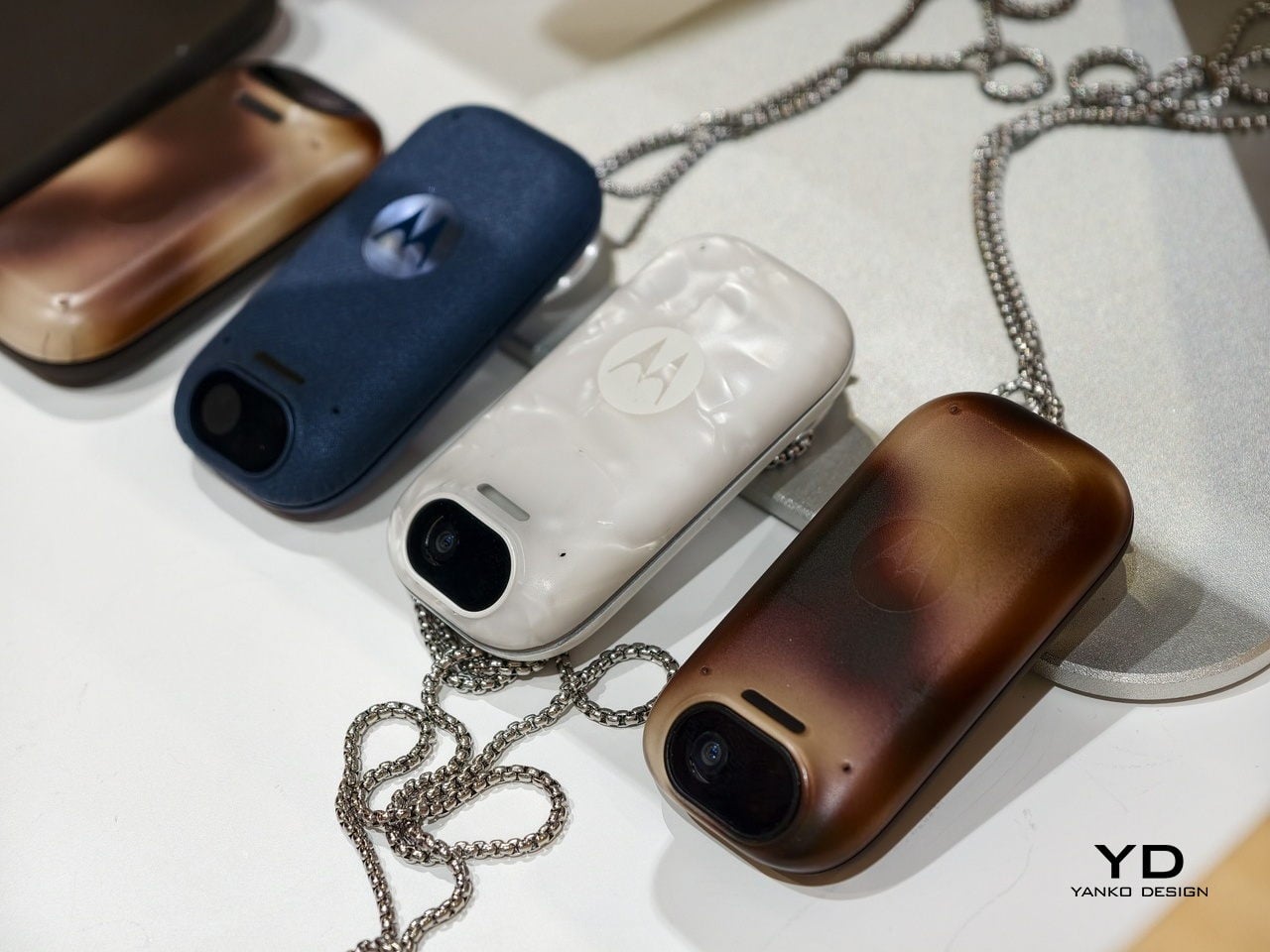
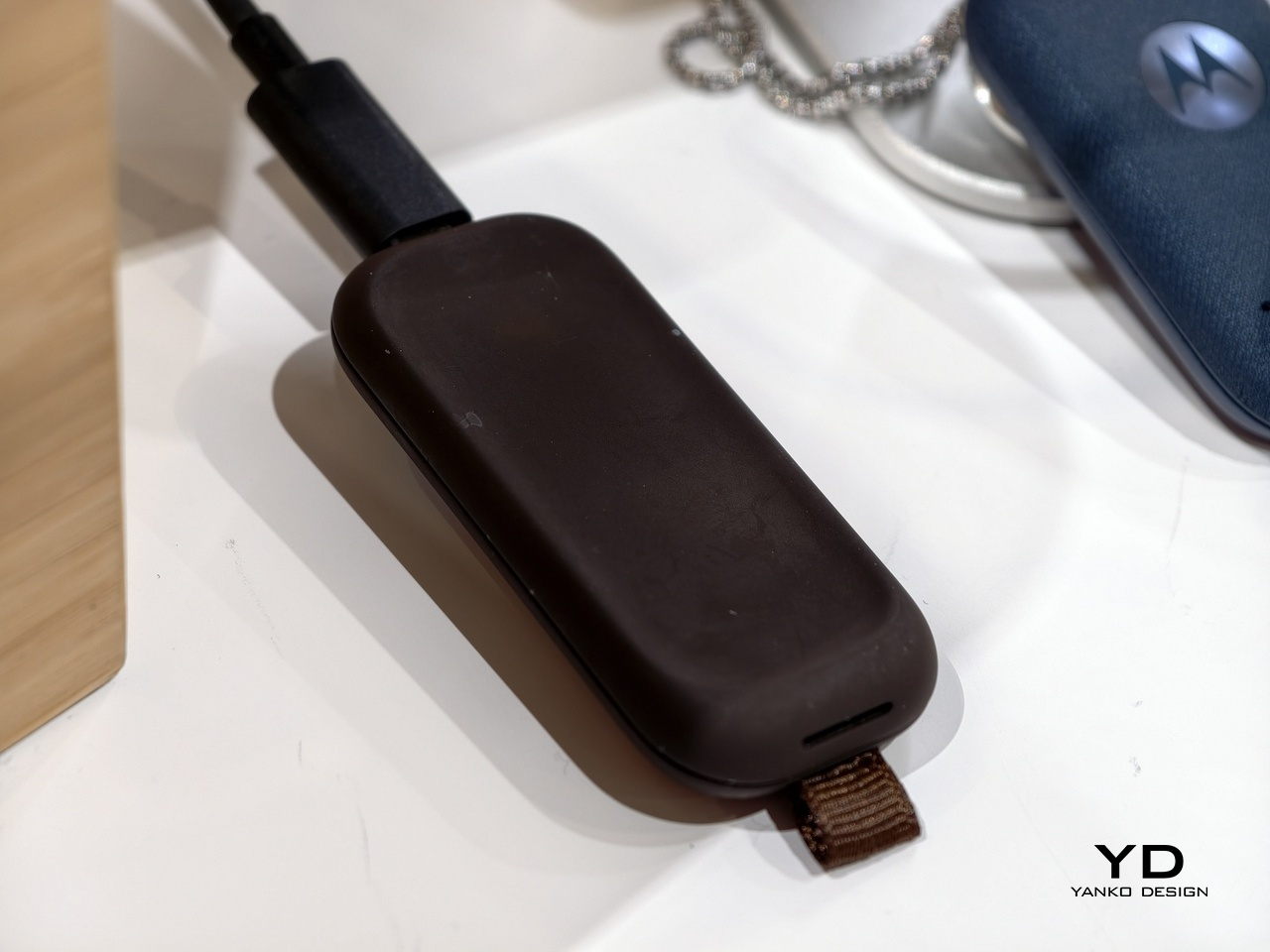
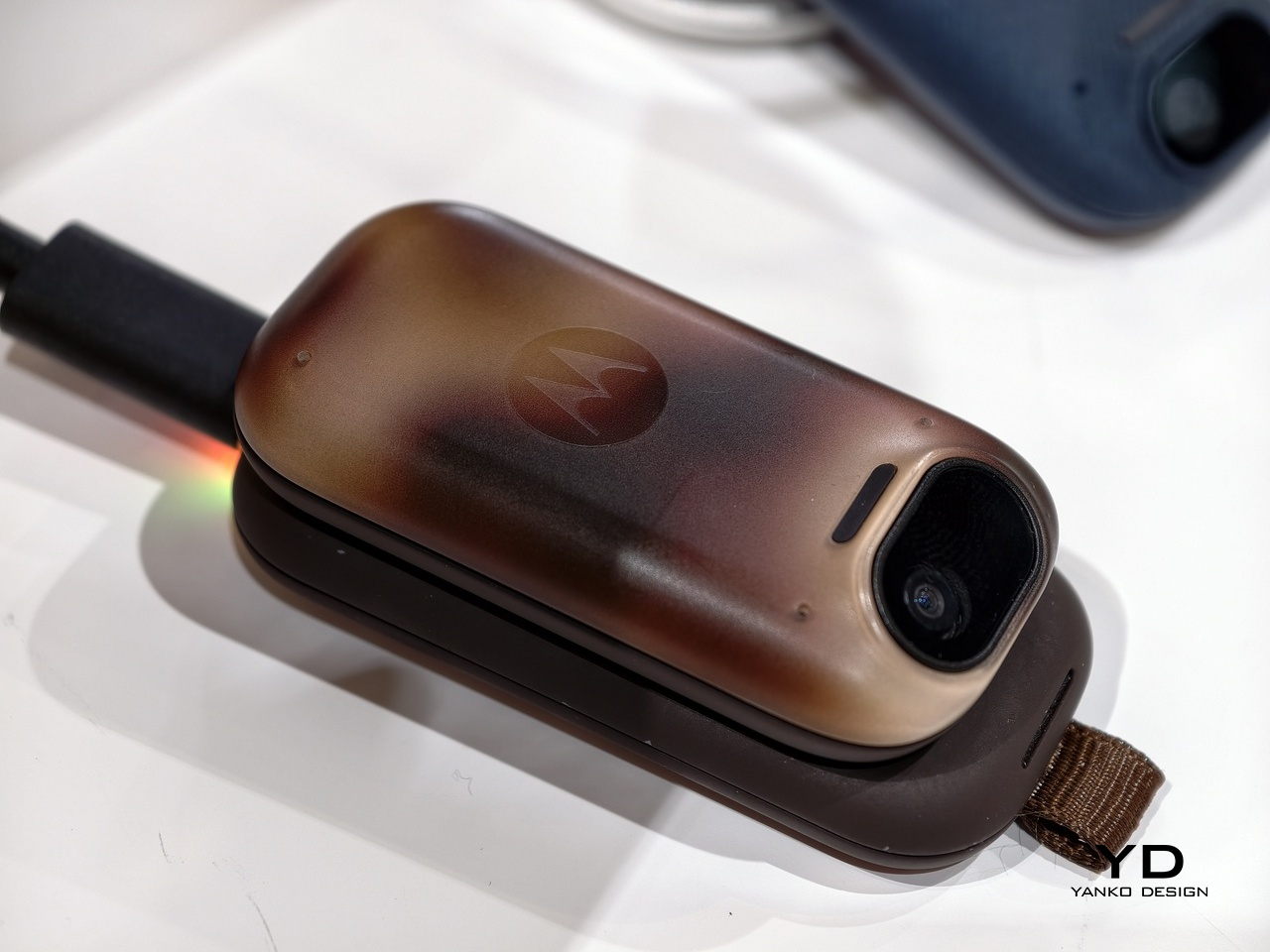
The device is a pendant, small enough to disappear against a shirt, worn on a metal chain with a rounded rectangular body that wouldn’t look out of place as functional jewelry. At one end sits a wide-angle camera lens in a dark housing, flanked by a slim LED indicator. It comes in a range of distinct finishes: a tortoiseshell amber with deep brown gradients, a matte navy with woven textile-like texture, a sculptural marbled white, and a deep chocolate brown.
Designer: Motorola
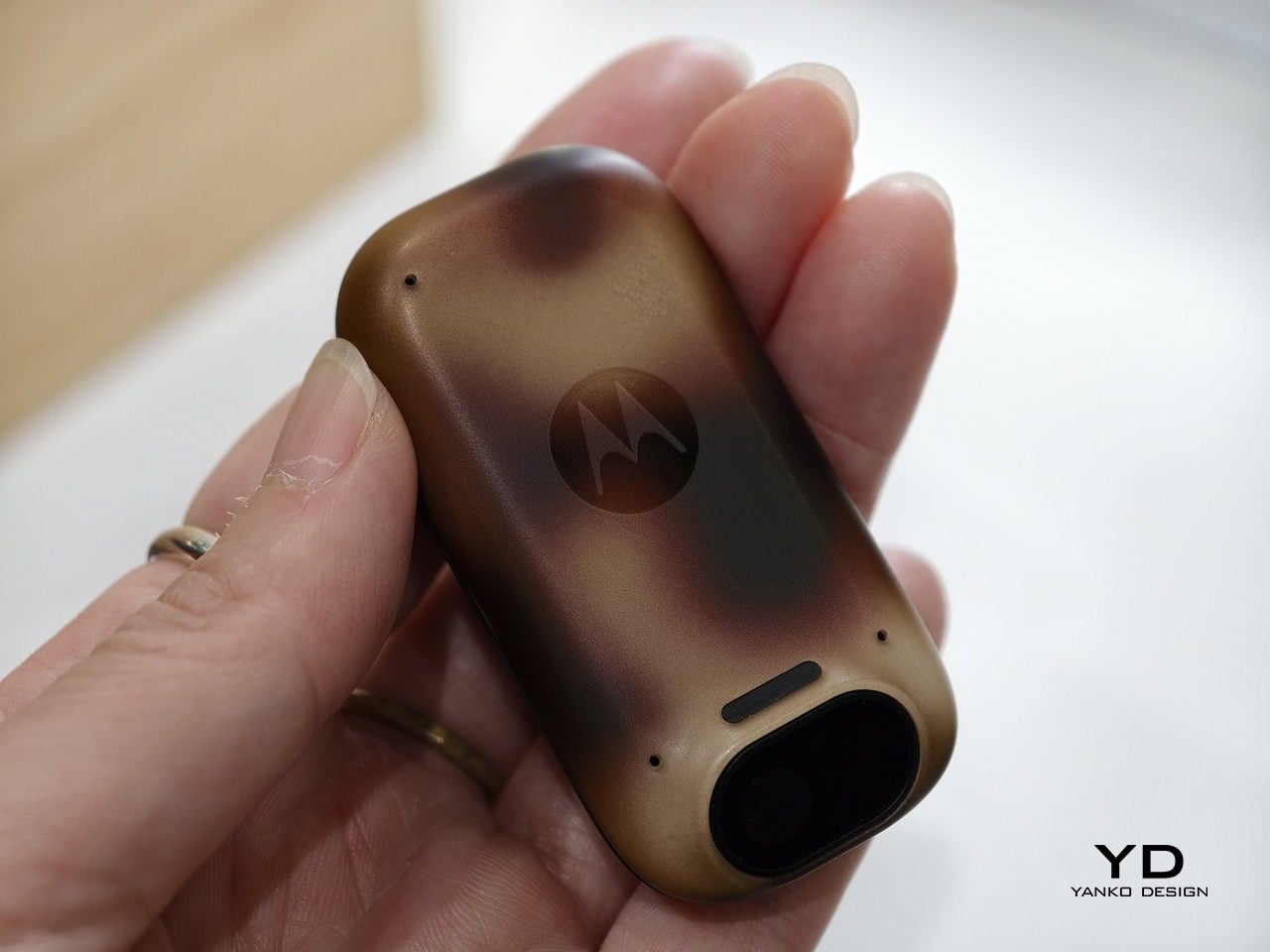
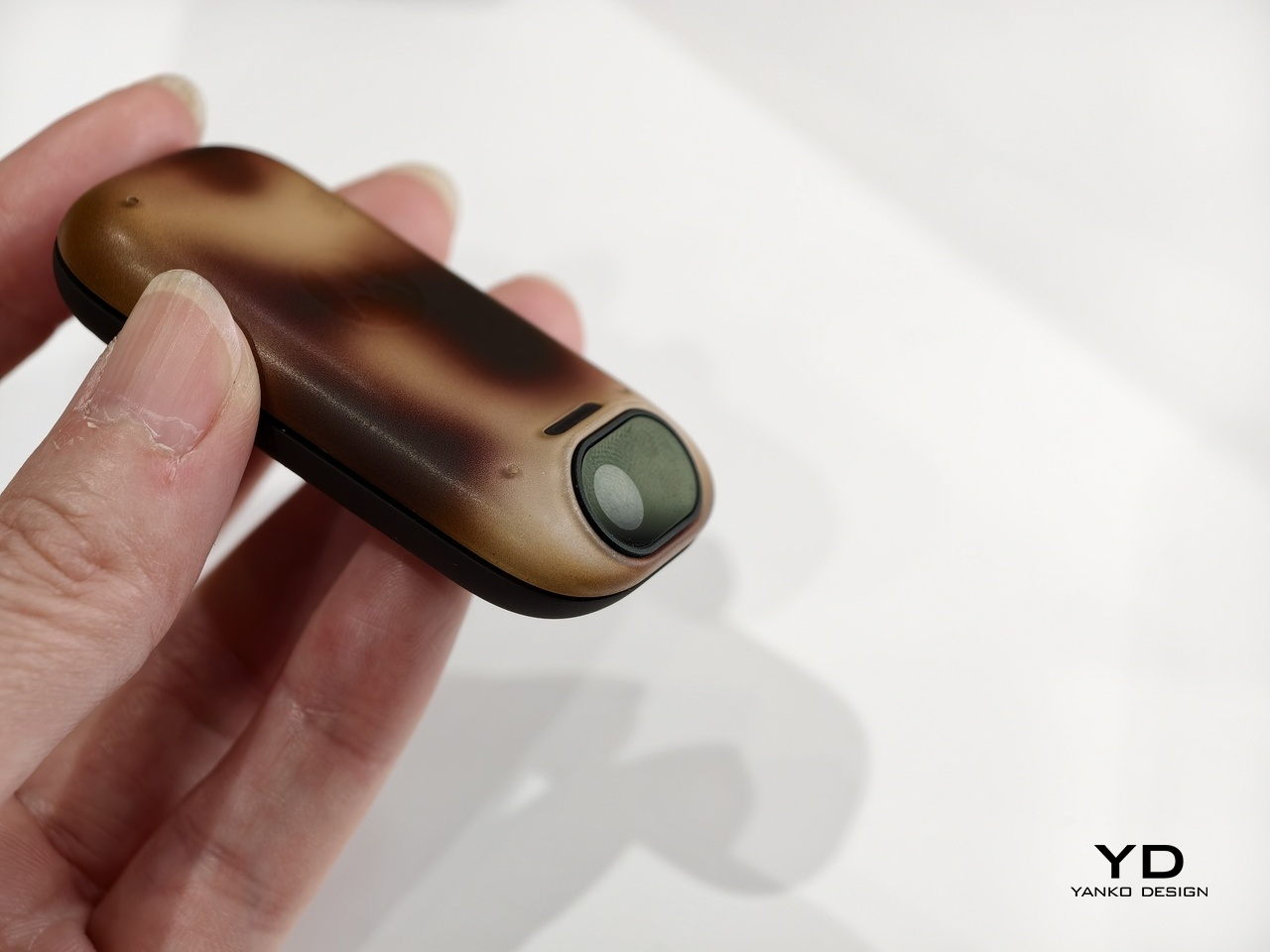
When prompted, Project Maxwell continuously captures what you see and hear, then processes that through what Motorola calls Multimodal Perception Fusion, combining input from its camera, microphones, and sensors to deliver real-time, contextual recommendations. The second technical layer, Natural Language Interaction and Intention Capture, is built on Large Action Models that don’t just respond to queries but execute tasks. The difference between describing an action and performing it is exactly the point.
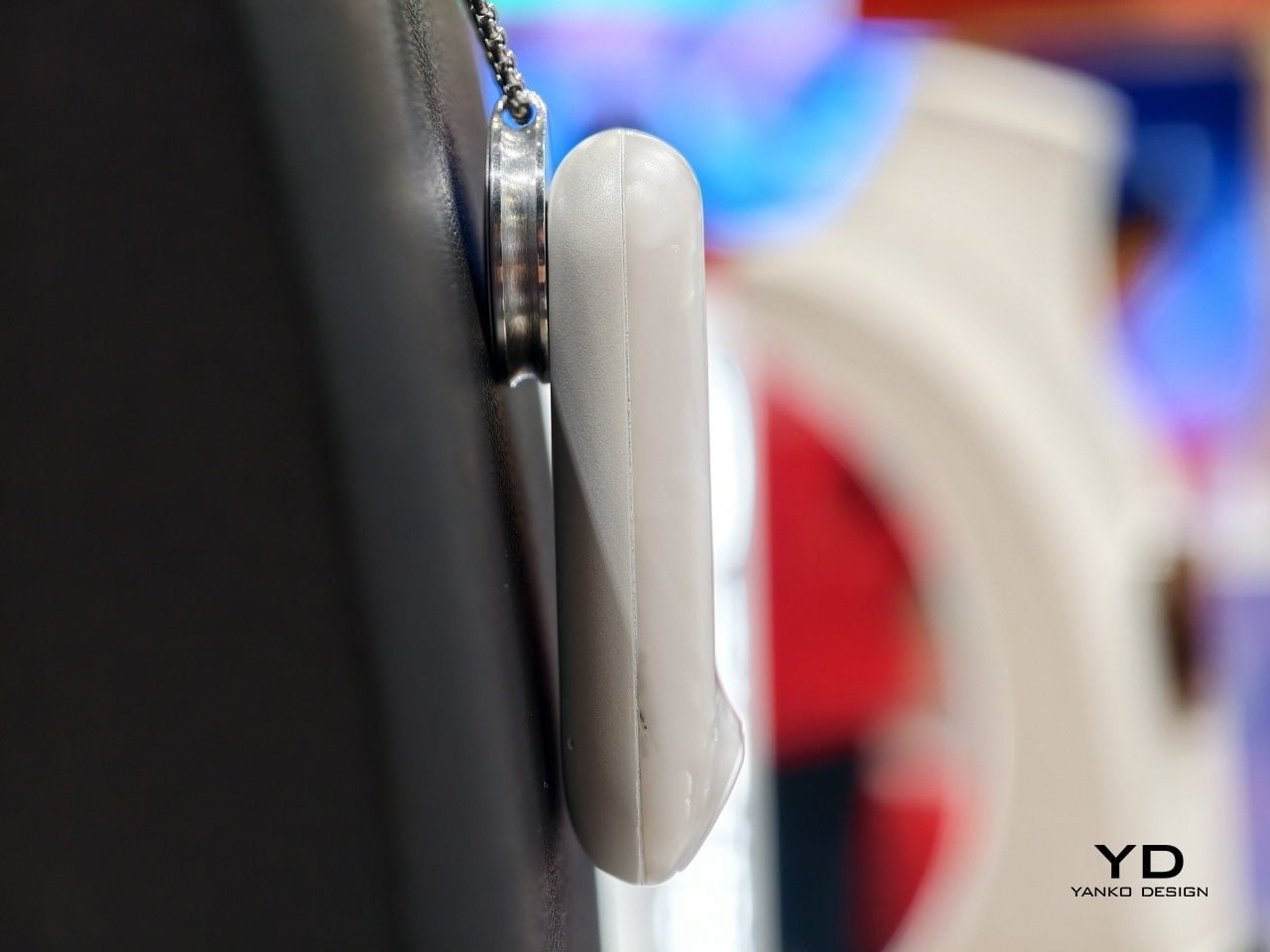
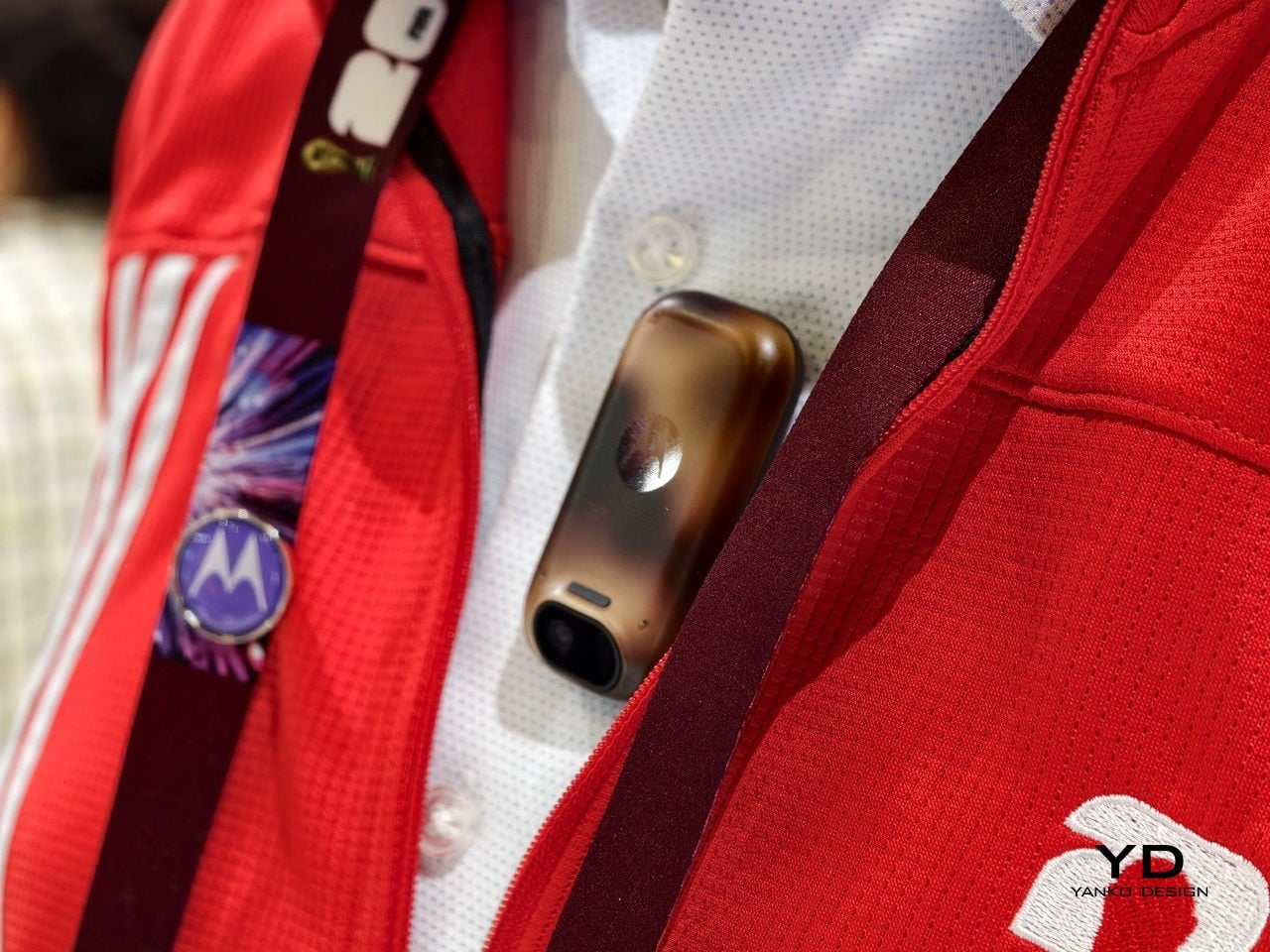
Motorola illustrates the concept with a conference scenario: you prompt Maxwell before a keynote, let it absorb the room, and walk out with a ready-to-edit LinkedIn post, without opening a single app. The idea is that AI works best when it fits into what you’re already doing rather than demanding you stop to interact with it. That’s not a new pitch for wearable tech, but it’s rarely been this well-considered from a form standpoint.
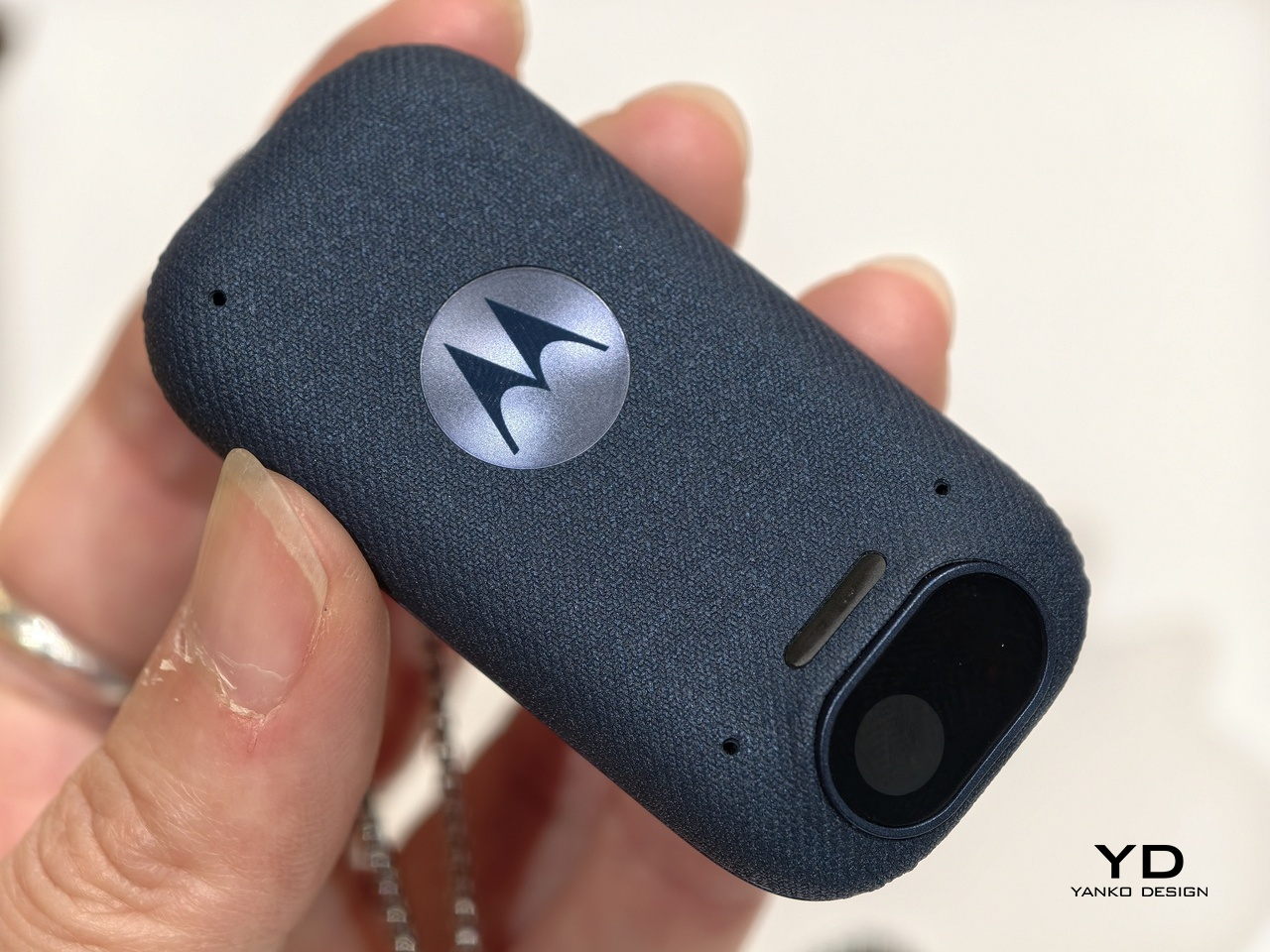
Real questions remain, and Motorola is the first to say so. Project Maxwell is a proof of concept without pricing, a release date, or confirmed hardware specifications. The concerns around continuous environmental capture, consent, and data handling tend to get louder the closer a device like this gets to an actual shelf. How those boundaries get communicated in any future product will matter as much as the hardware.
What 312 Labs has made clear is that Maxwell’s learnings feed directly into Motorola’s Qira AI ecosystem. Even if this exact pendant never ships, the interaction model it’s testing, hands-free, context-aware, and action-capable, is the direction Motorola is heading. The more interesting question isn’t whether a wearable AI pendant is useful. It’s whether people will actually want to wear one.