
Business laptops have spent years getting thinner without getting more useful. The result is a category of machines that travel well and perform adequately, but ask them to flex beyond their fixed configuration, and they politely refuse. A second screen means a separate bag. Different ports mean a separate adapter. Lenovo’s ThinkBook Modular AI PC Concept, announced at MWC 2026, starts from the premise that the laptop’s form factor itself is the problem worth solving.
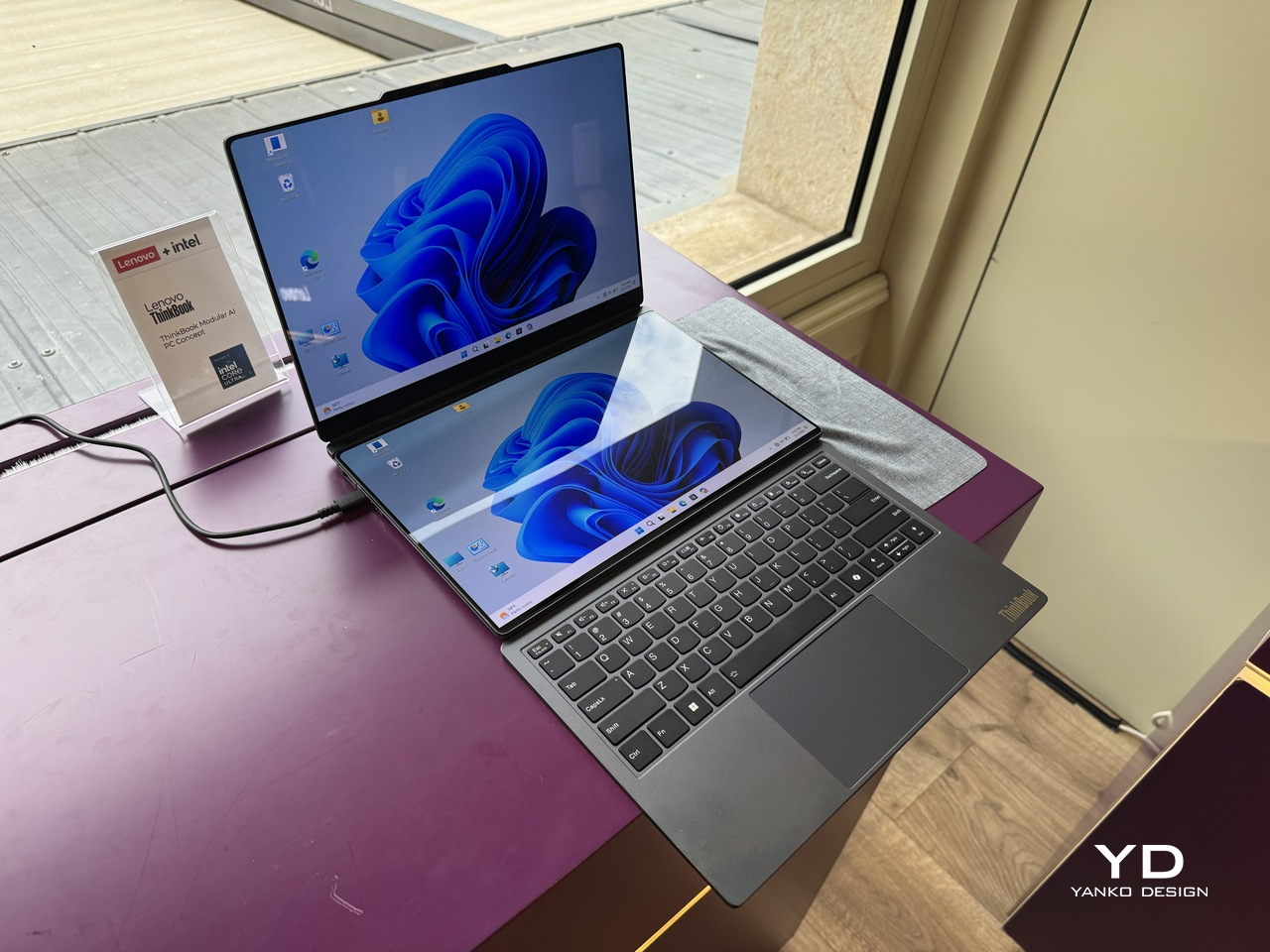
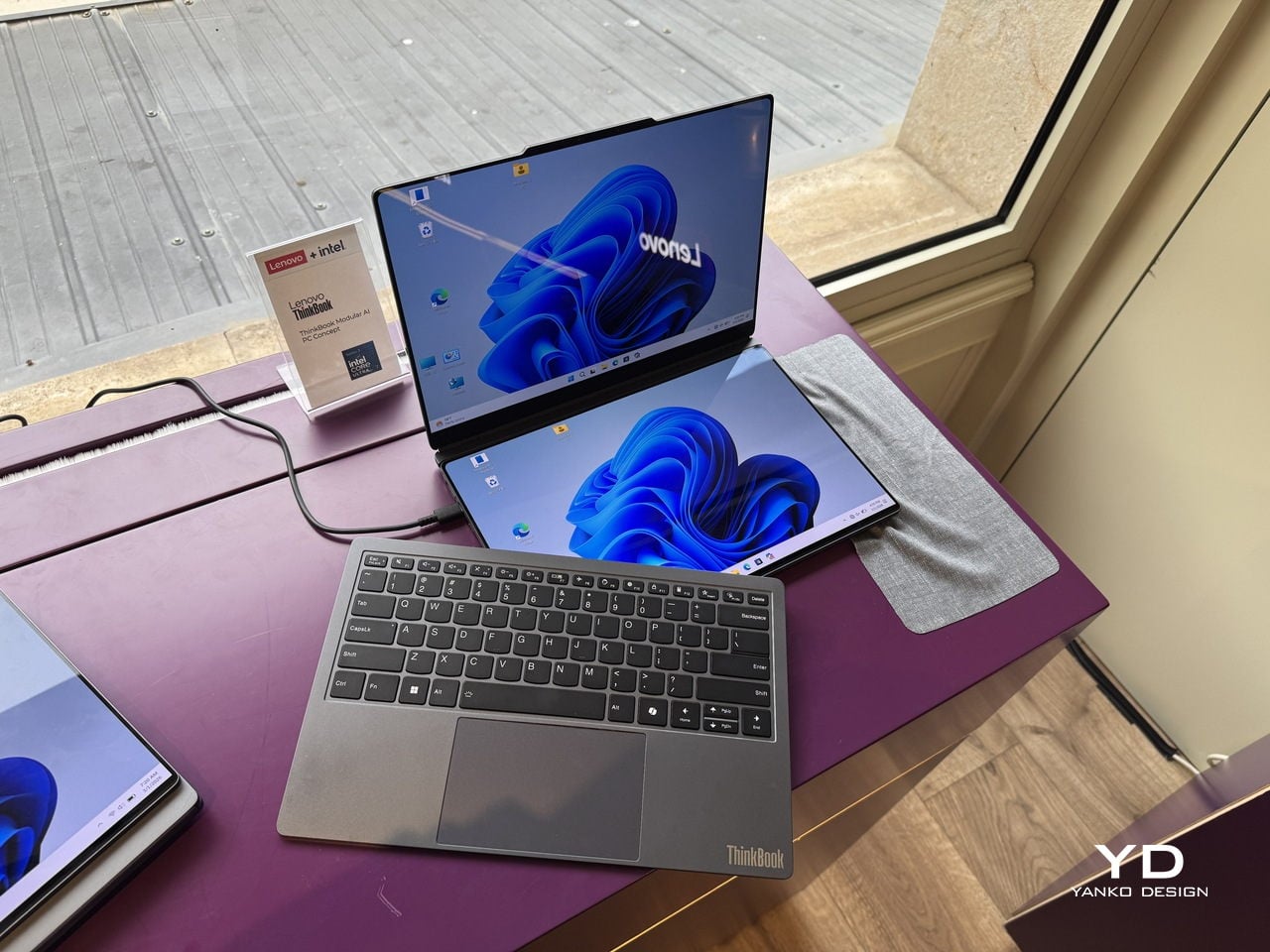
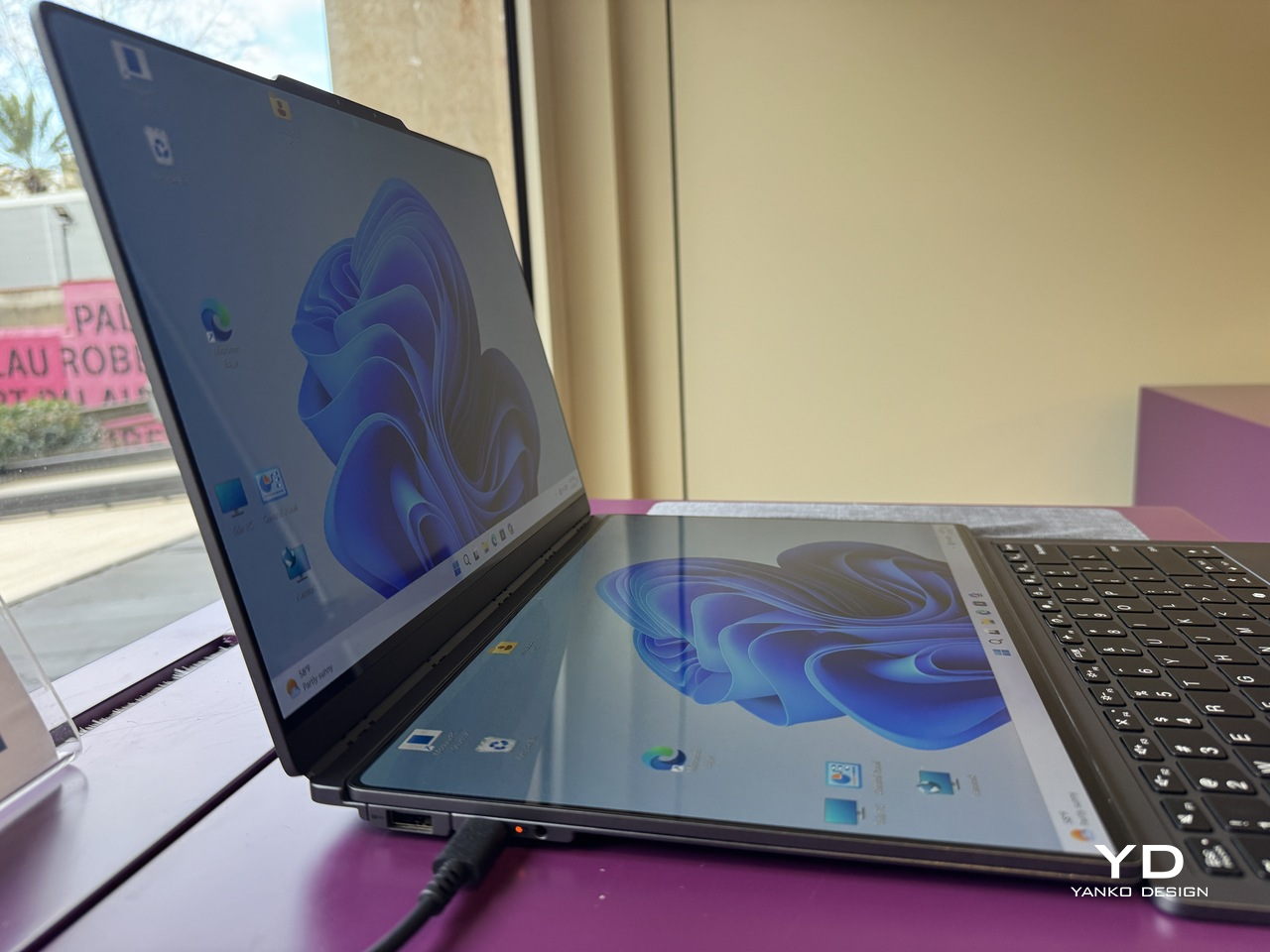
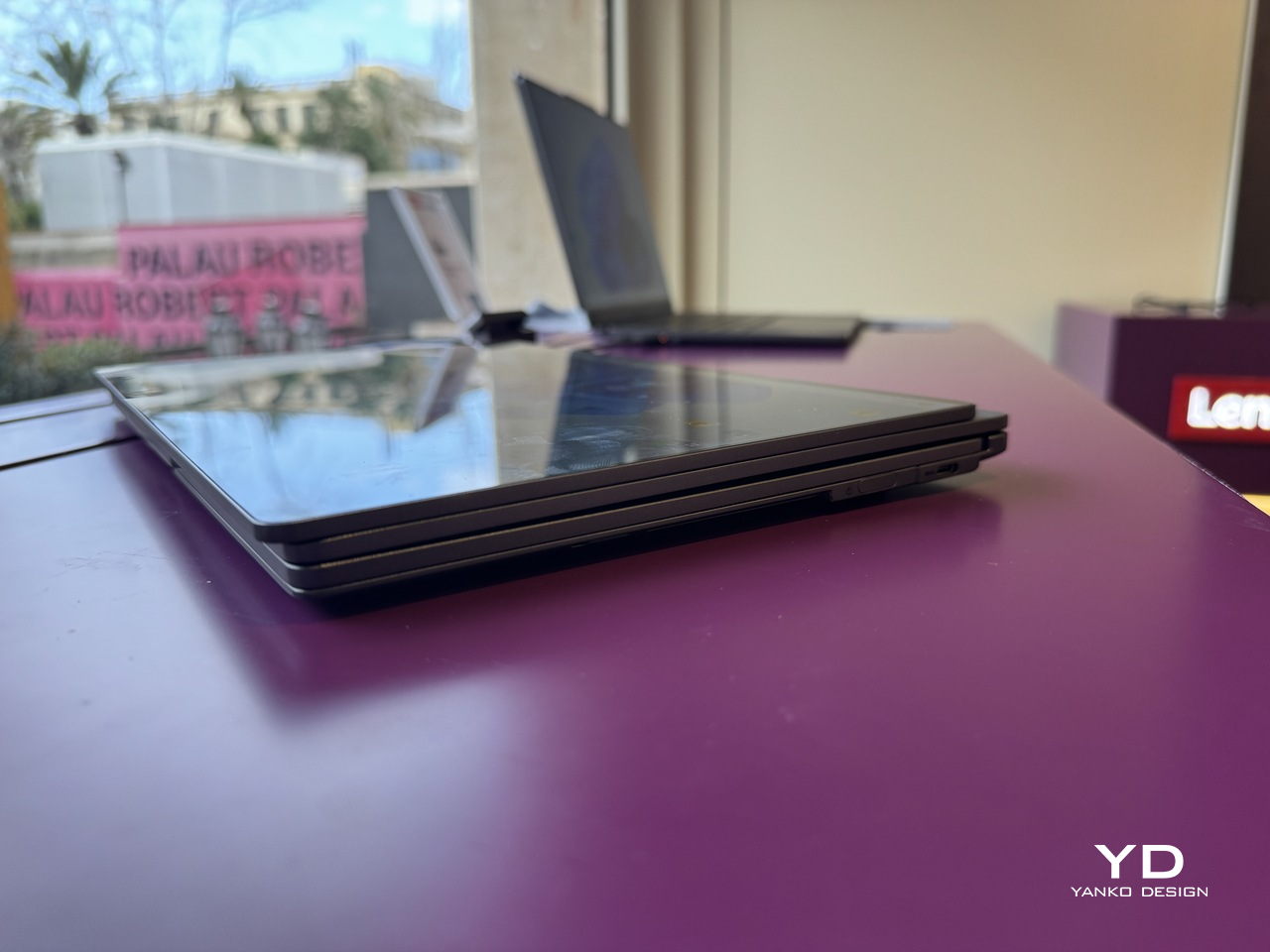
The concept is built around a 14-inch base unit in dark navy aluminum, conventional enough in isolation. The keyboard detaches completely over Bluetooth, and a secondary display module connects via pogo pins, the same spring-contact system that keeps the pieces in reliable communication without cables between them. That secondary display is the part that does the most work.
Designer: Lenovo
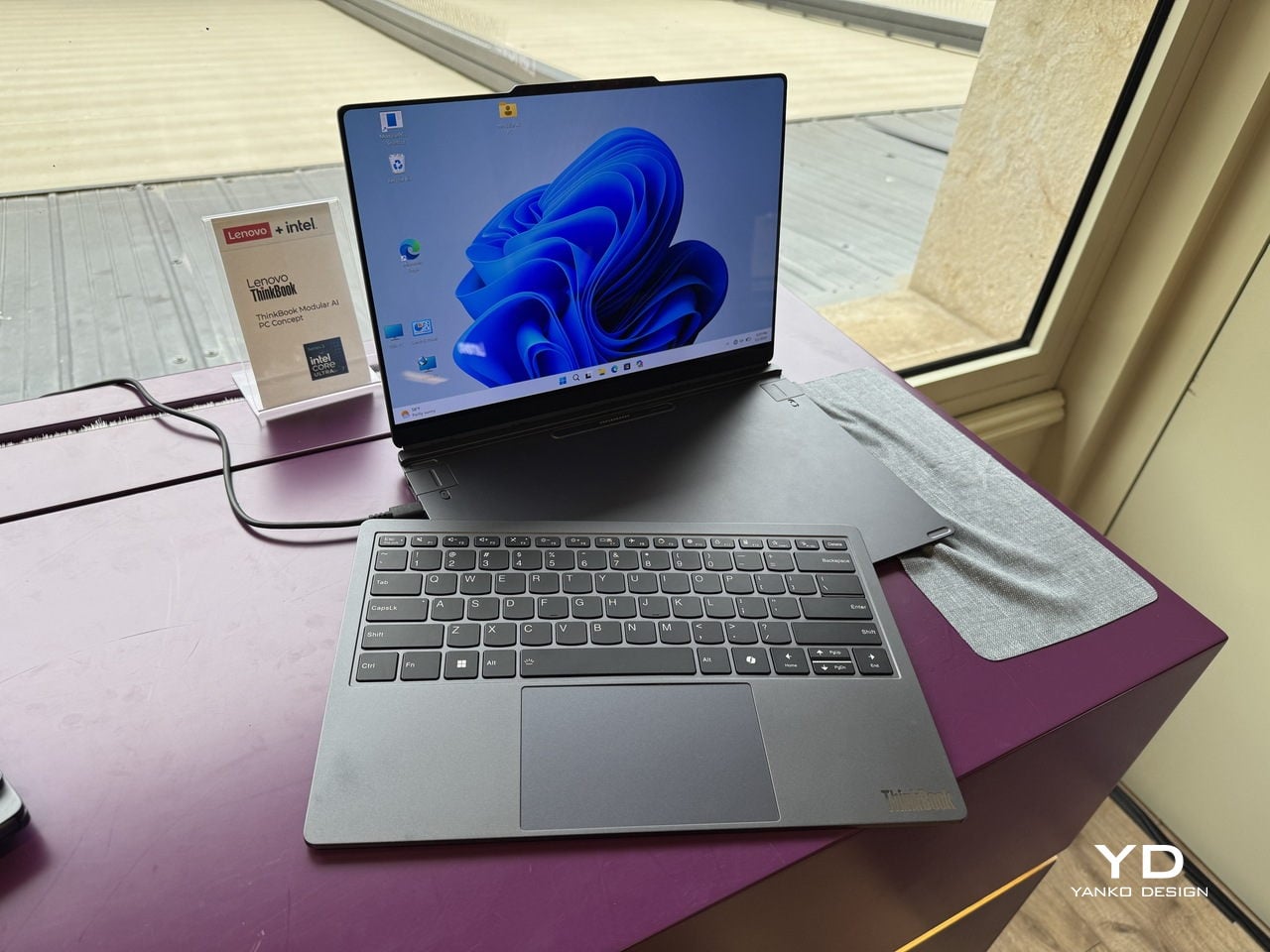
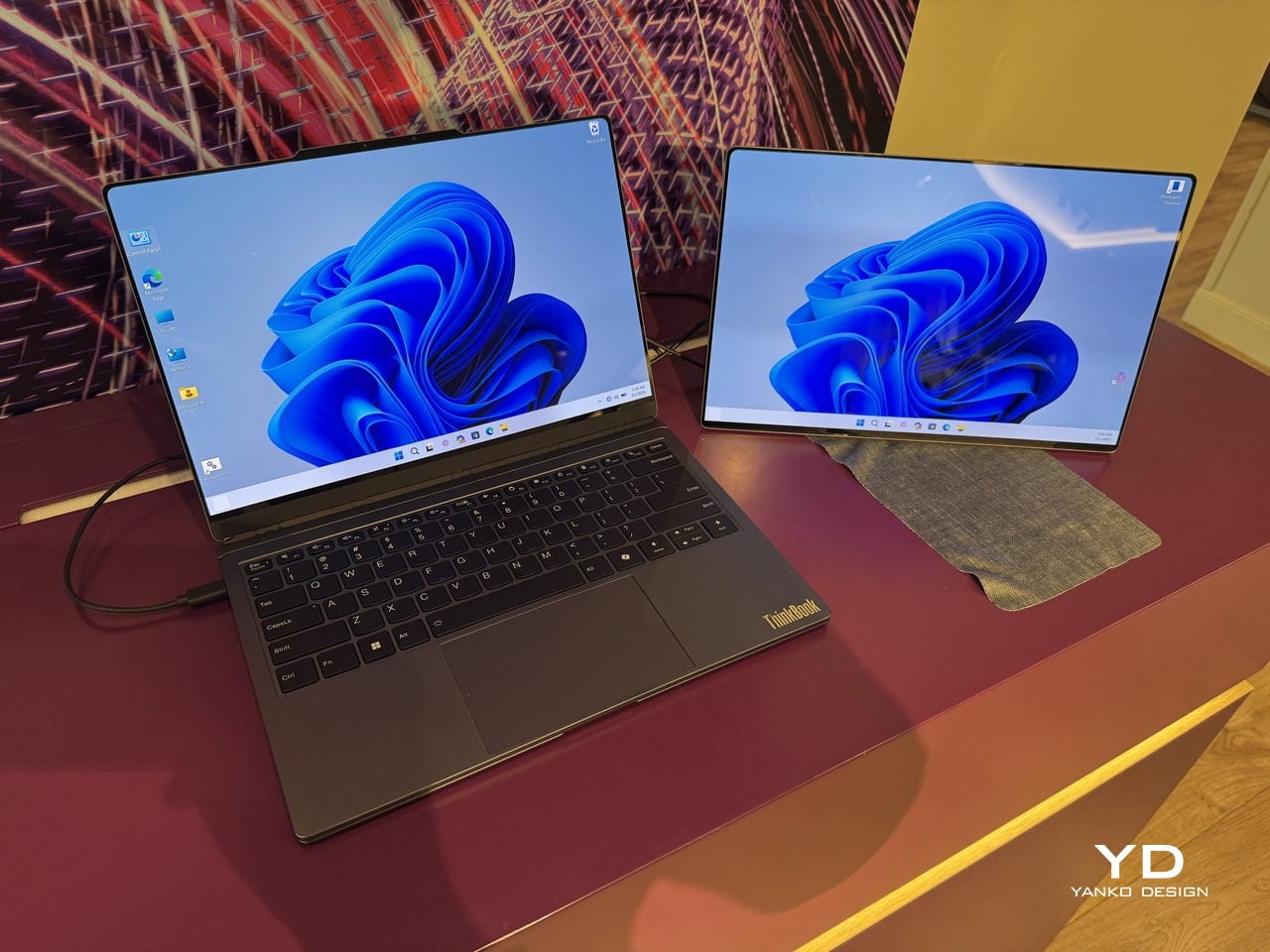
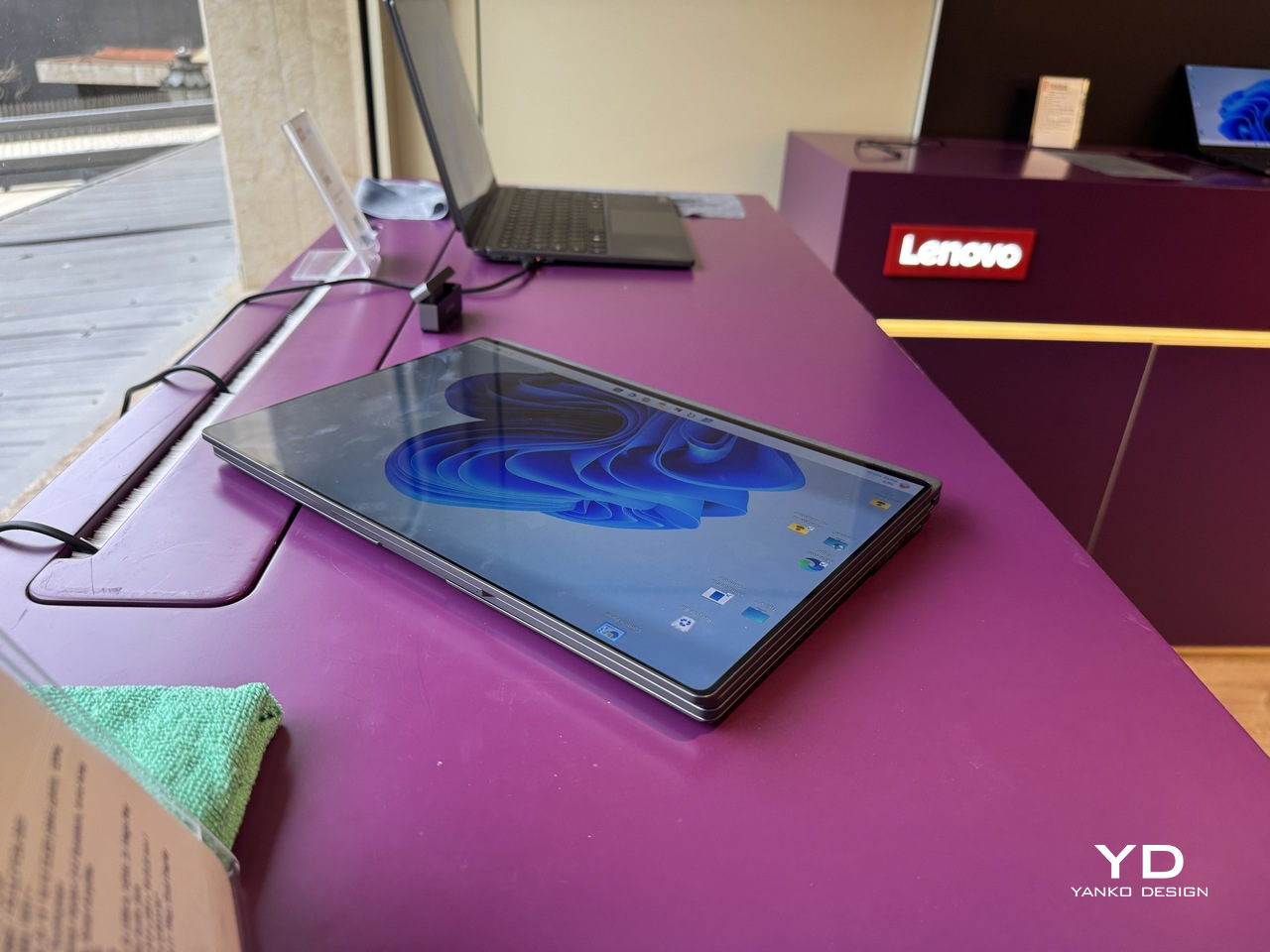
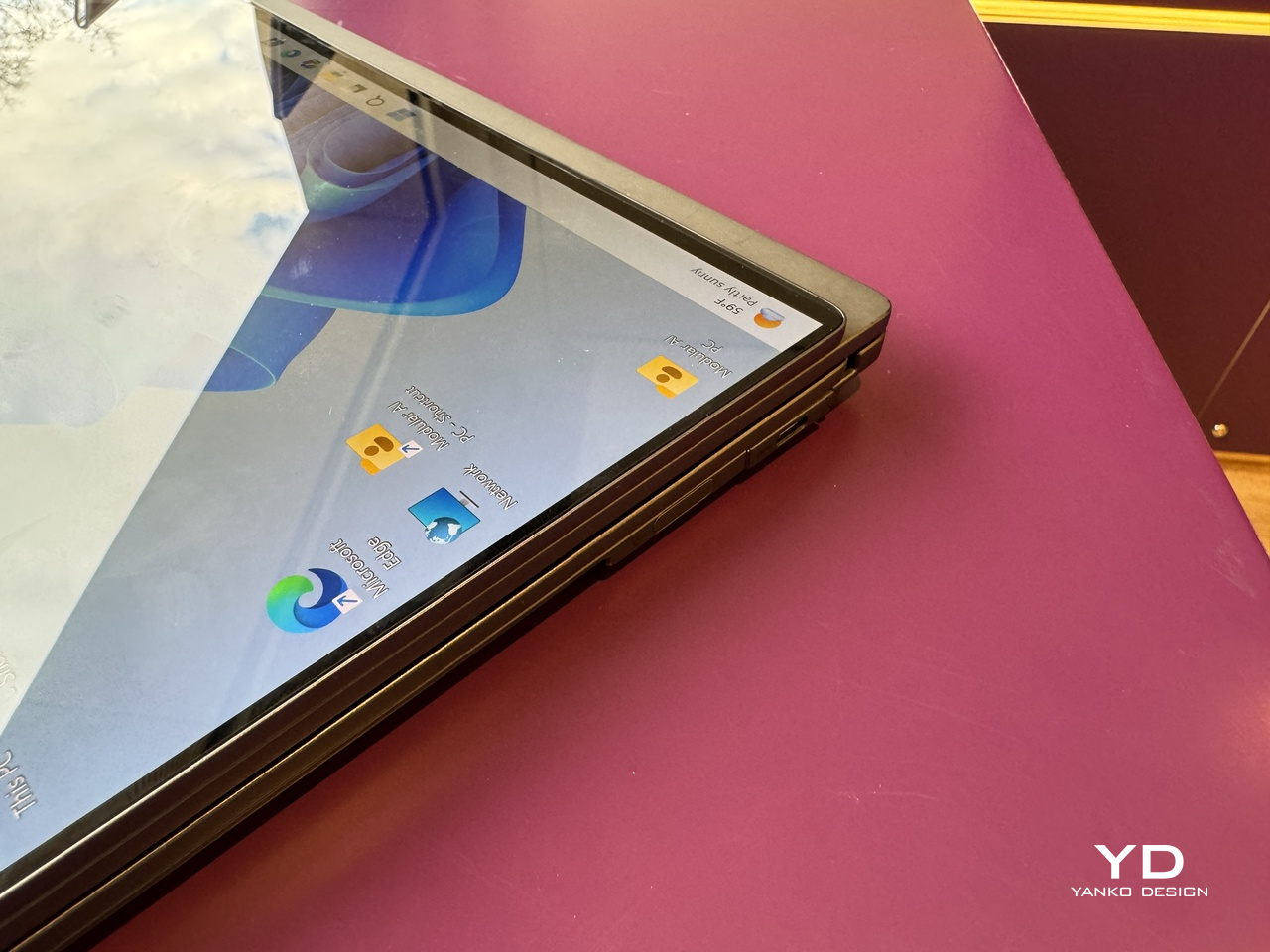
Positioned alongside the base on its own kickstand, it functions as a portable travel monitor in portrait or landscape orientation. Swapped with the keyboard instead, it turns the system into a dual horizontal screen setup with a combined viewing area of roughly 19 inches. Mounted on the top cover, it faces outward, which makes sharing content across a table a matter of flipping a panel rather than rotating an entire laptop.
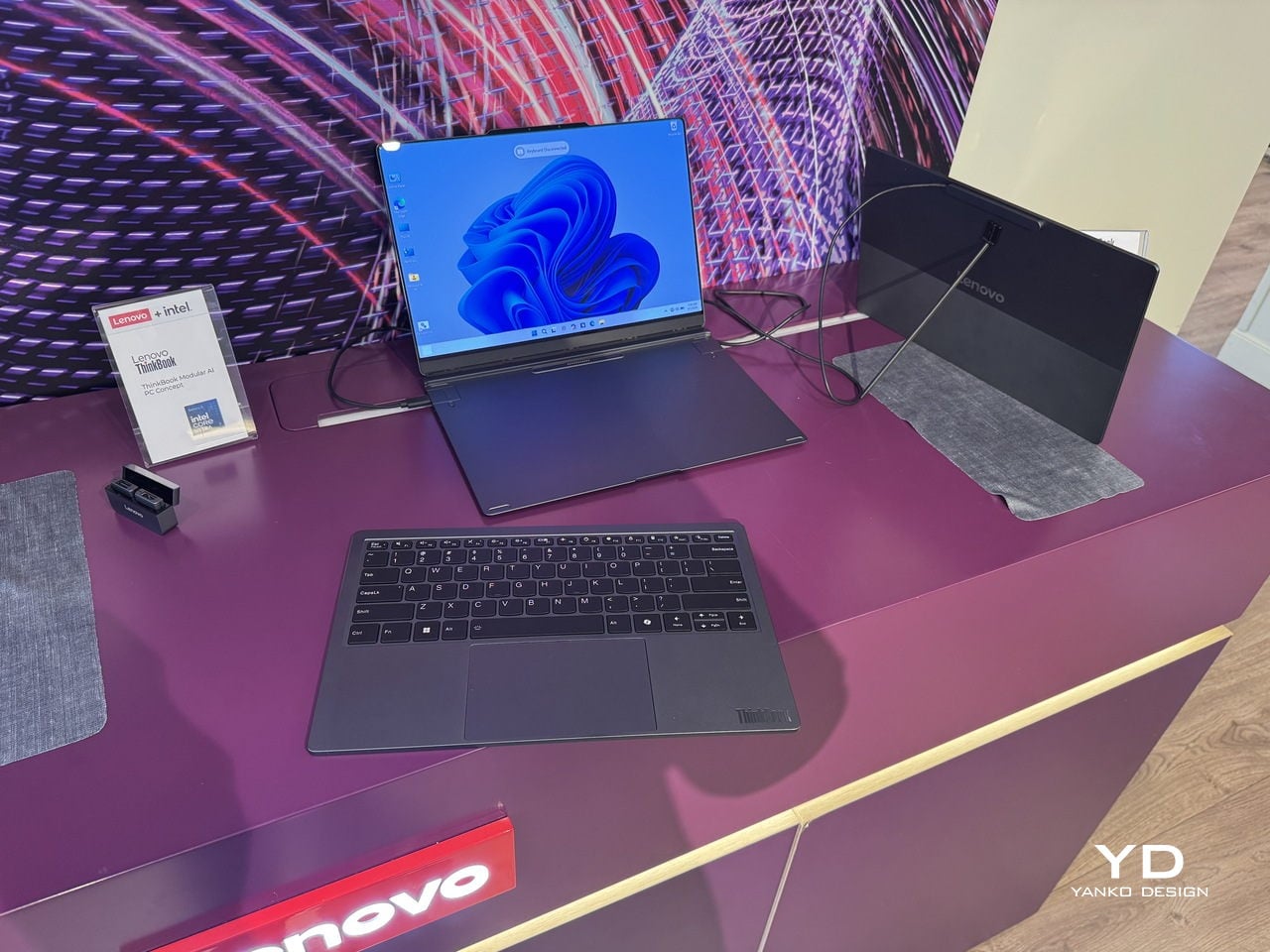
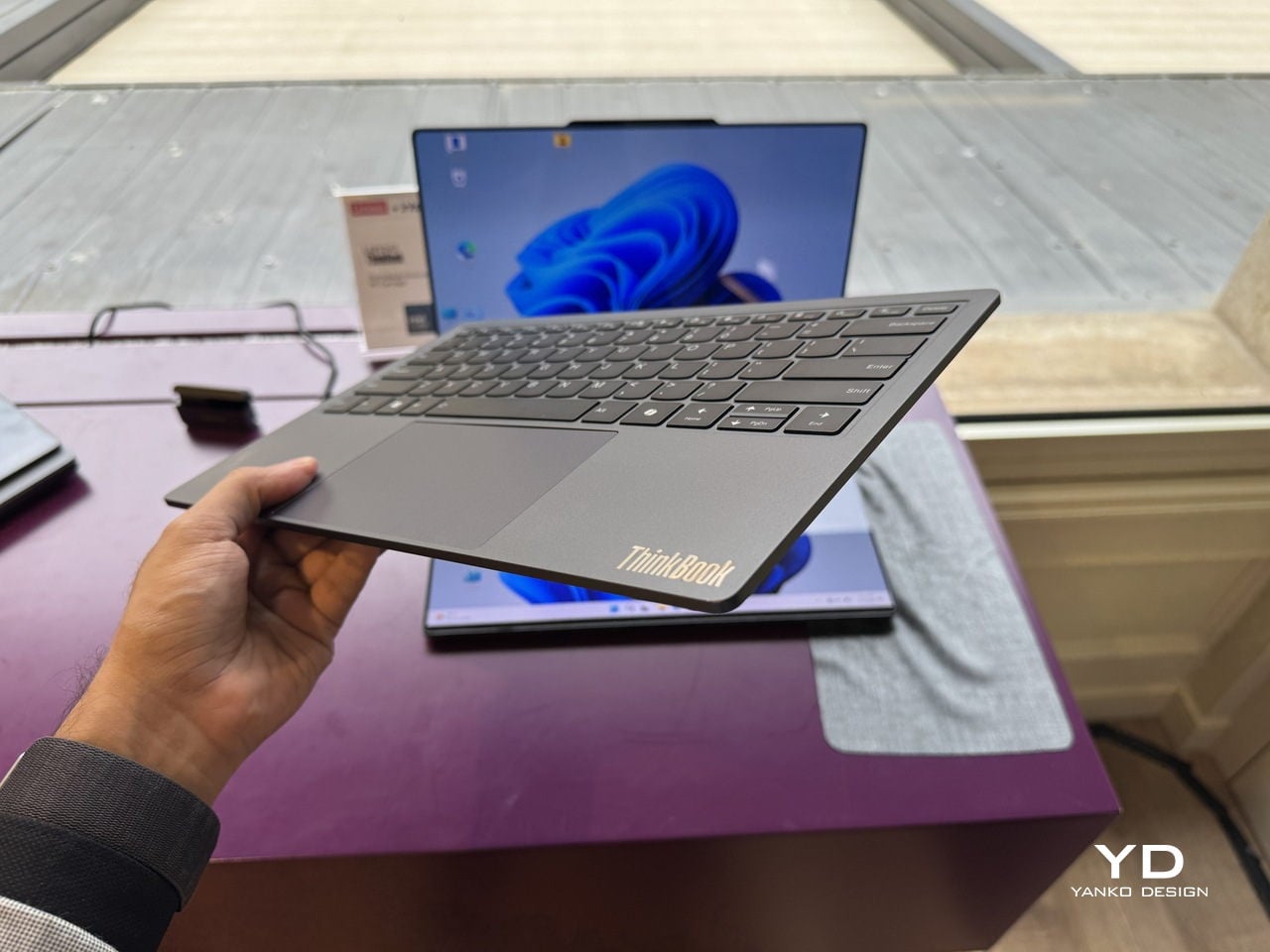
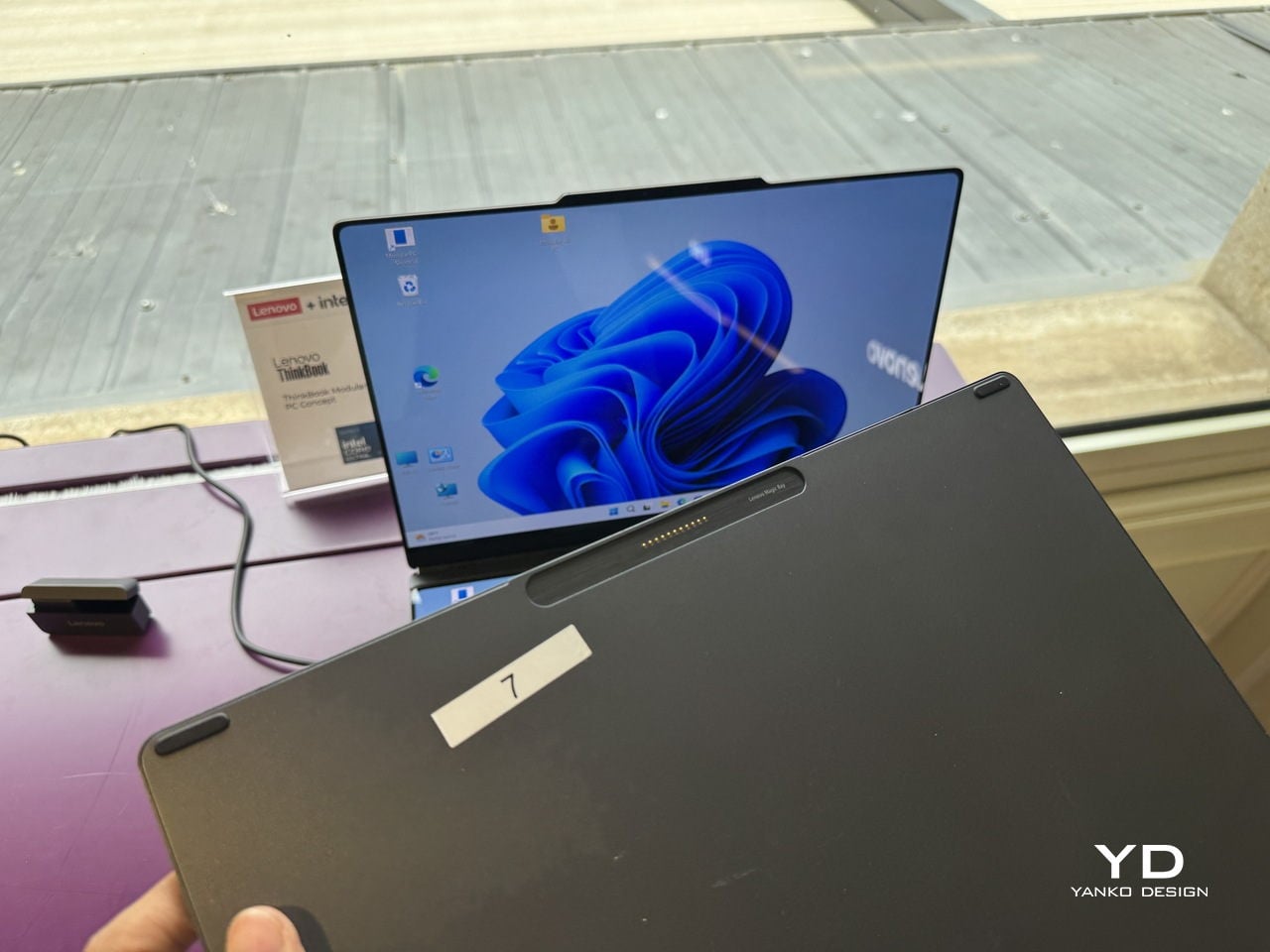
The IO port modules are a smaller but equally considered detail. Each is a compact cube carrying a single connector, USB-A, USB-C, or HDMI, that slots into a shared housing on the base. Rather than committing to a fixed port arrangement, the base accepts whichever combination a given situation calls for, swapped out as needed, and stored in a small clamshell case that travels with the system.
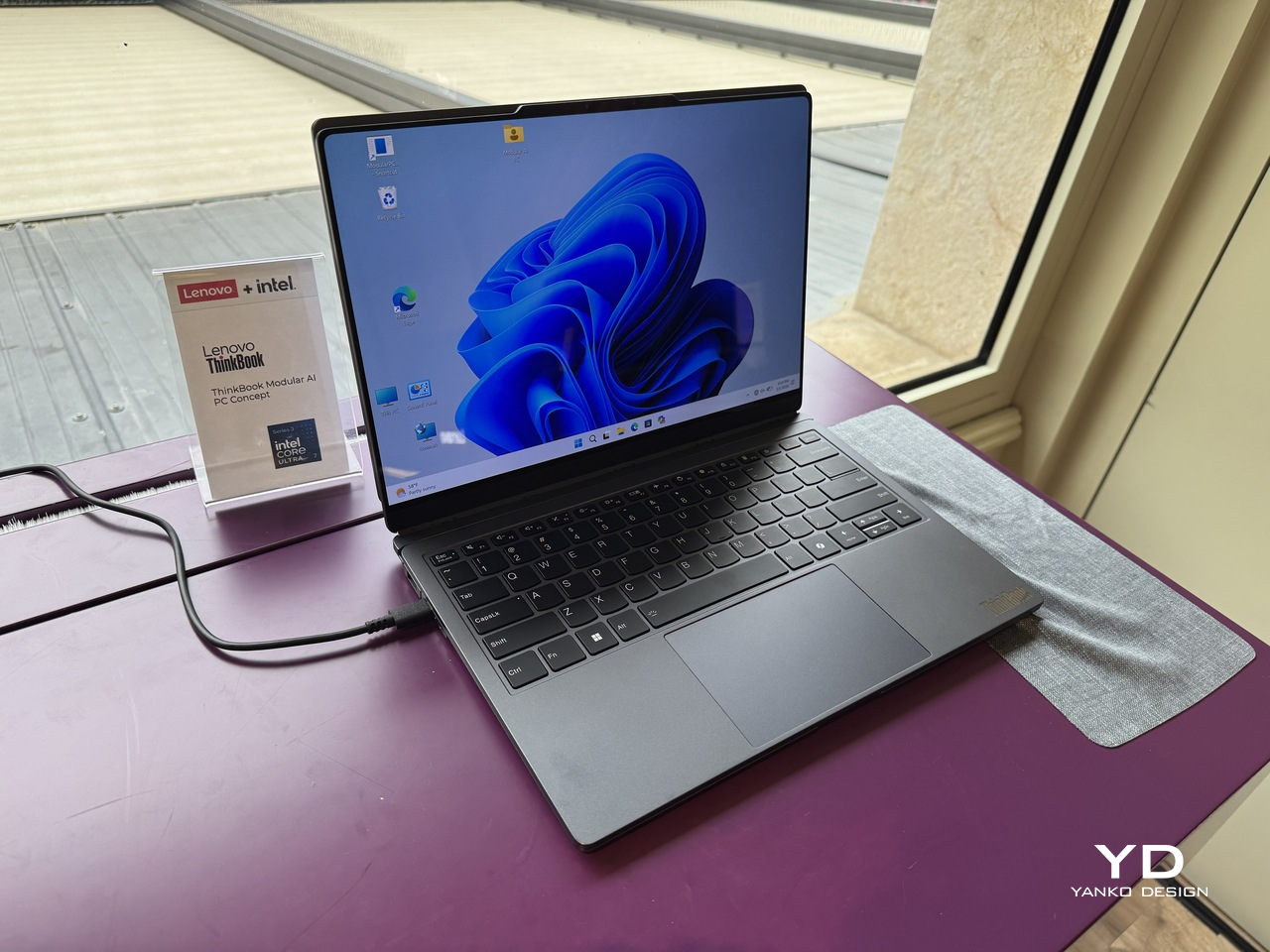
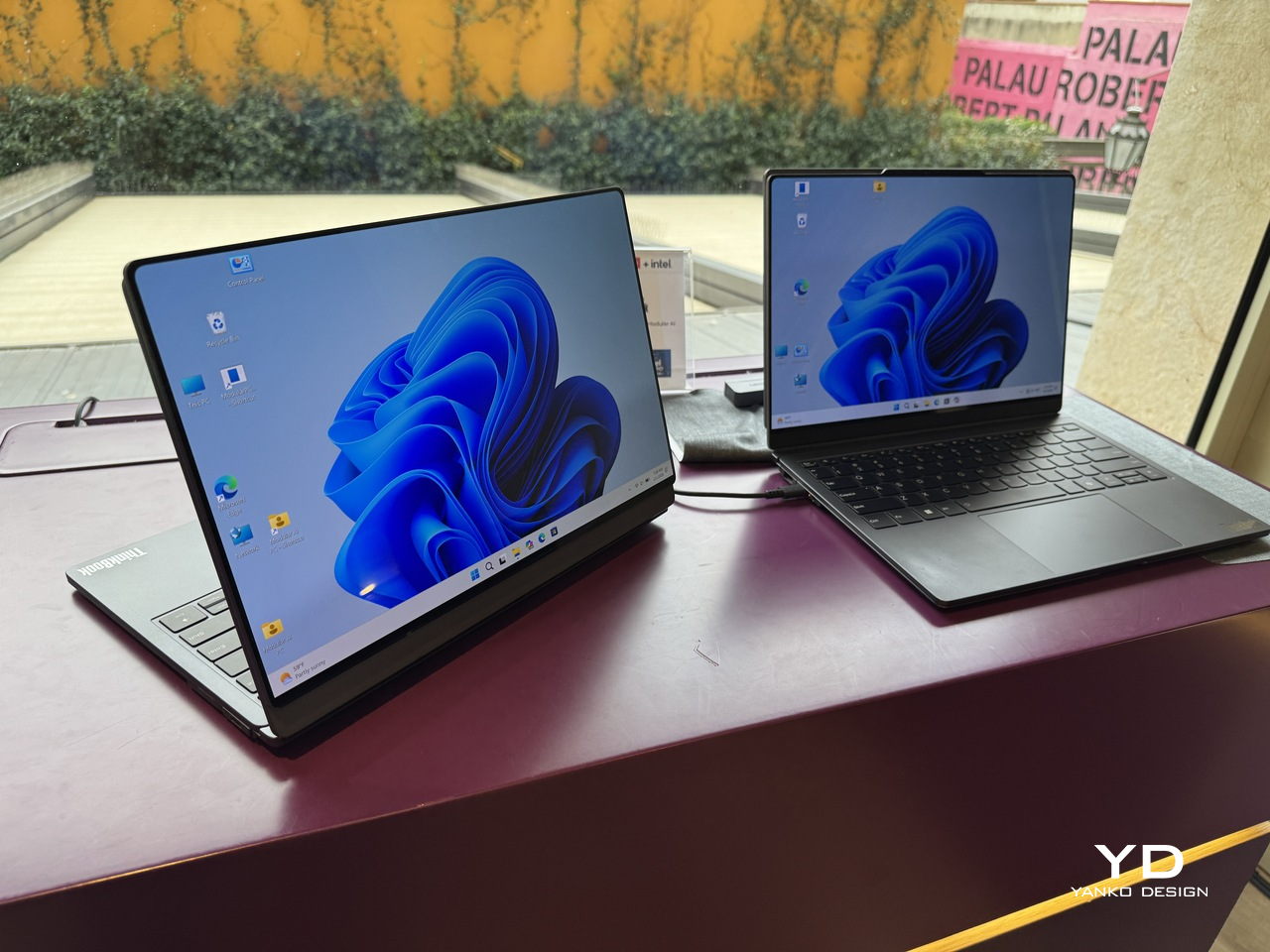
The honest tension in all of this is that modularity trades one kind of inconvenience for another. A fixed laptop is limiting but uncomplicated. A modular one is flexible but requires keeping track of several small components that each have their own way of going missing. The pogo-pin connection is a good answer to the cable problem, and the accessories shown are compact enough to fit in a jacket pocket, but the system only works as promised if all its pieces arrive together.
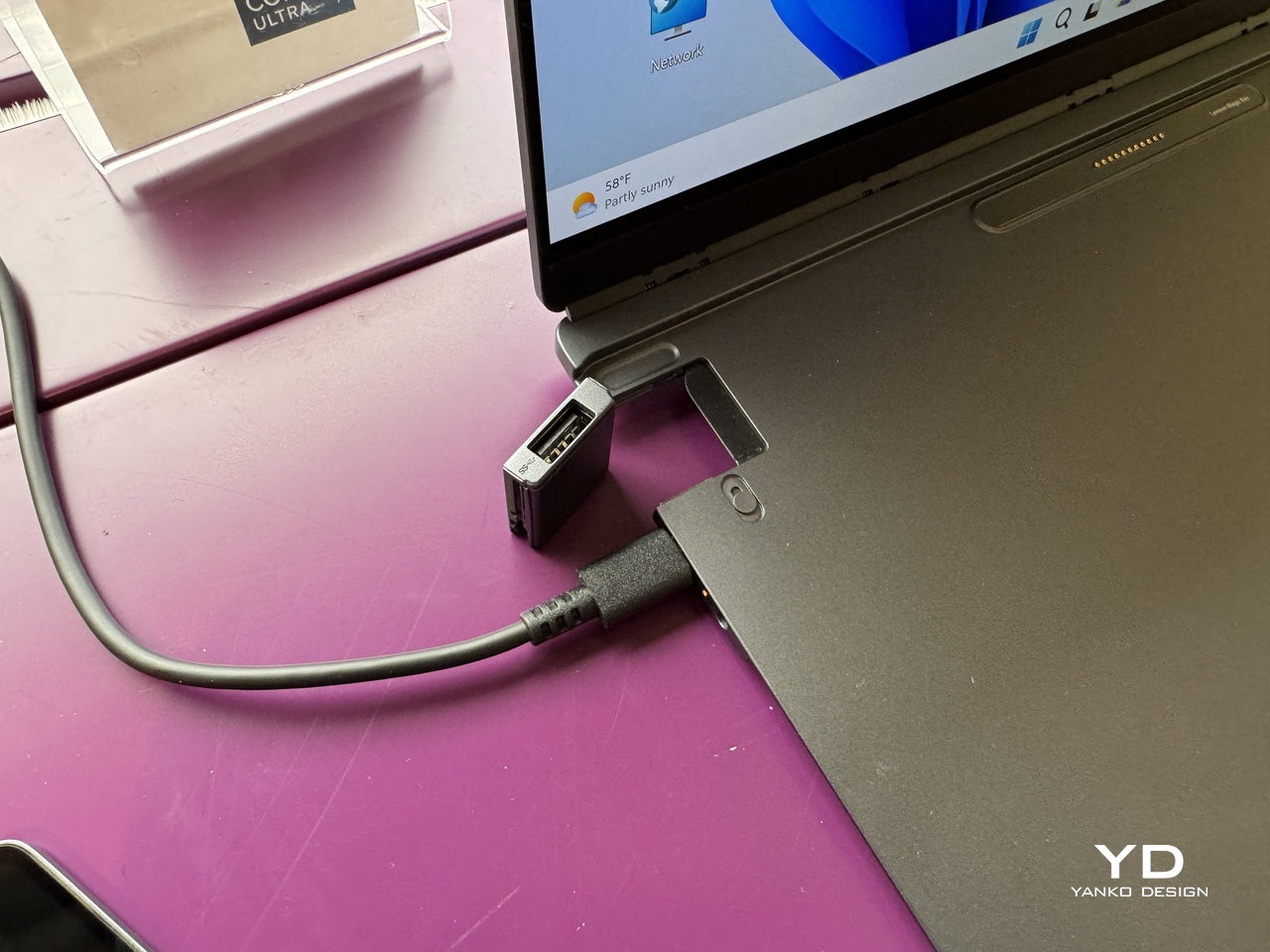
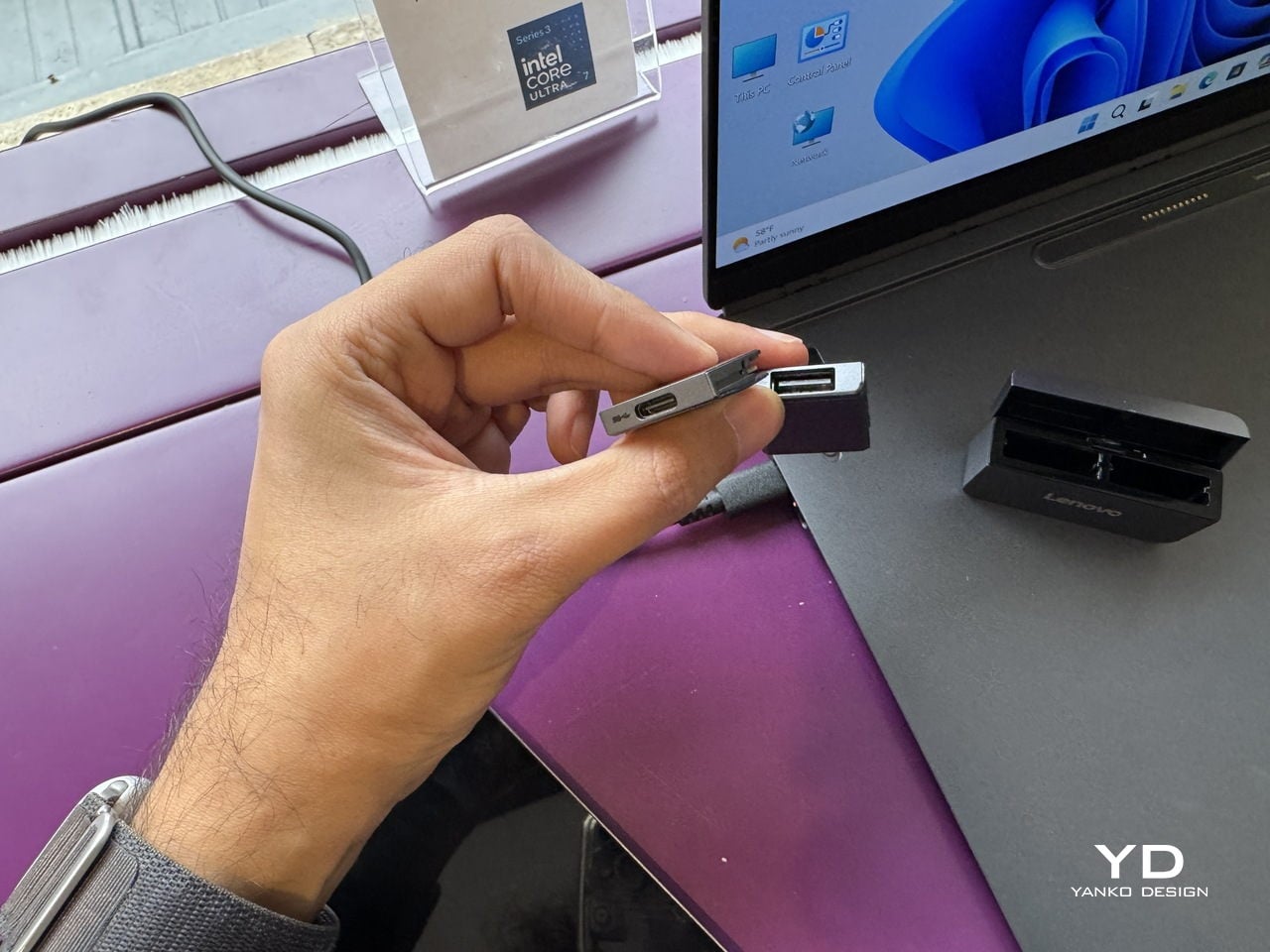
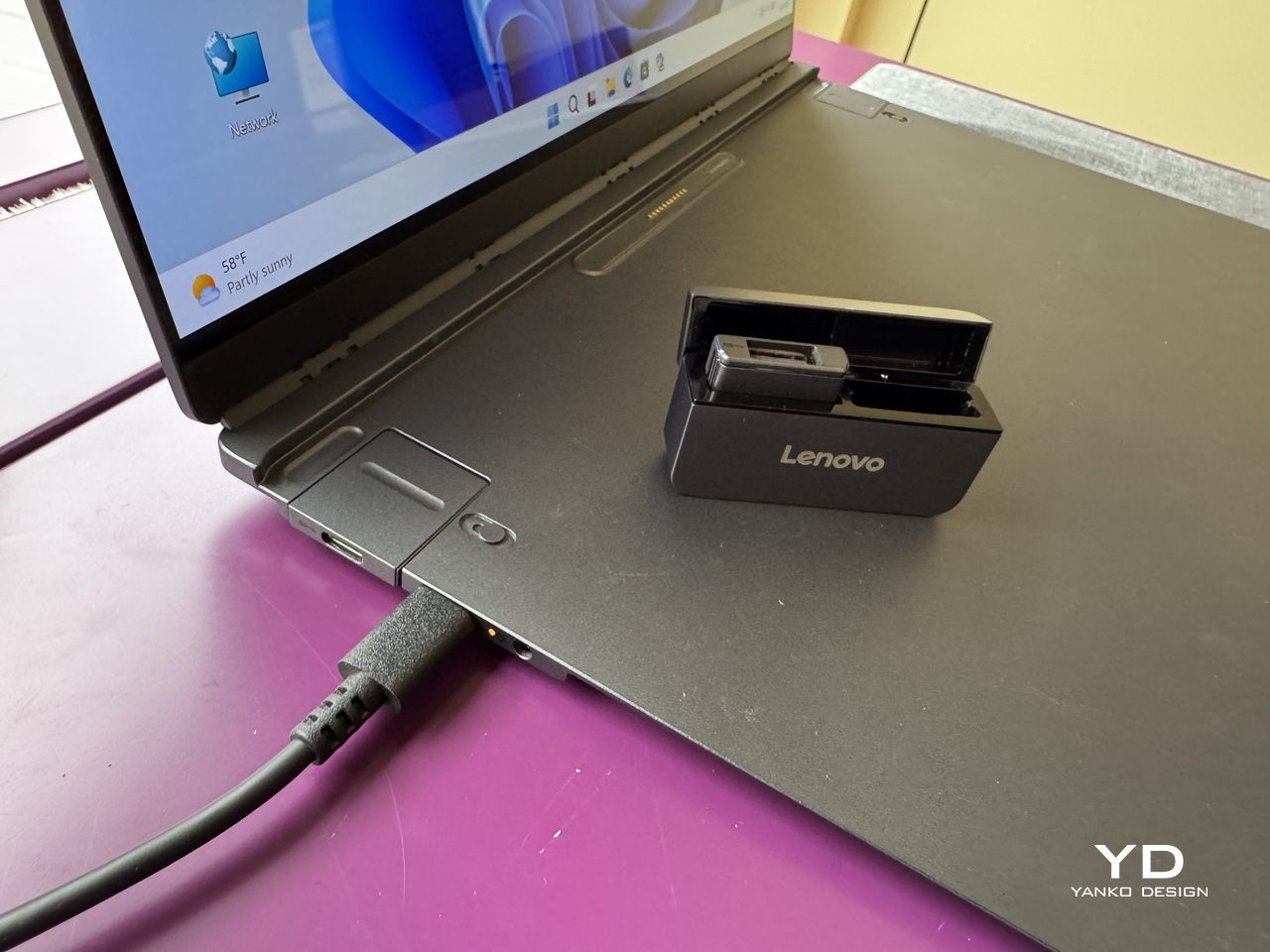
What the concept gets right is identifying that most professionals don’t use their laptops the same way twice in a single day. The morning commute, the desk setup, the client meeting, and the hotel room at the end of it all make different demands, and a device that can reconfigure itself for each of them without requiring a separate piece of hardware for every scenario is a reasonable thing to want.
Whether the modularity holds up to daily handling, with real wear on the pogo pins and real risk of leaving the keyboard module in a conference room, is a question that only a shipping product could answer. For now, the ThinkBook Modular AI PC Concept is an argument that the laptop doesn’t have to be a fixed object, but one that can adapt to your needs and lifestyle.