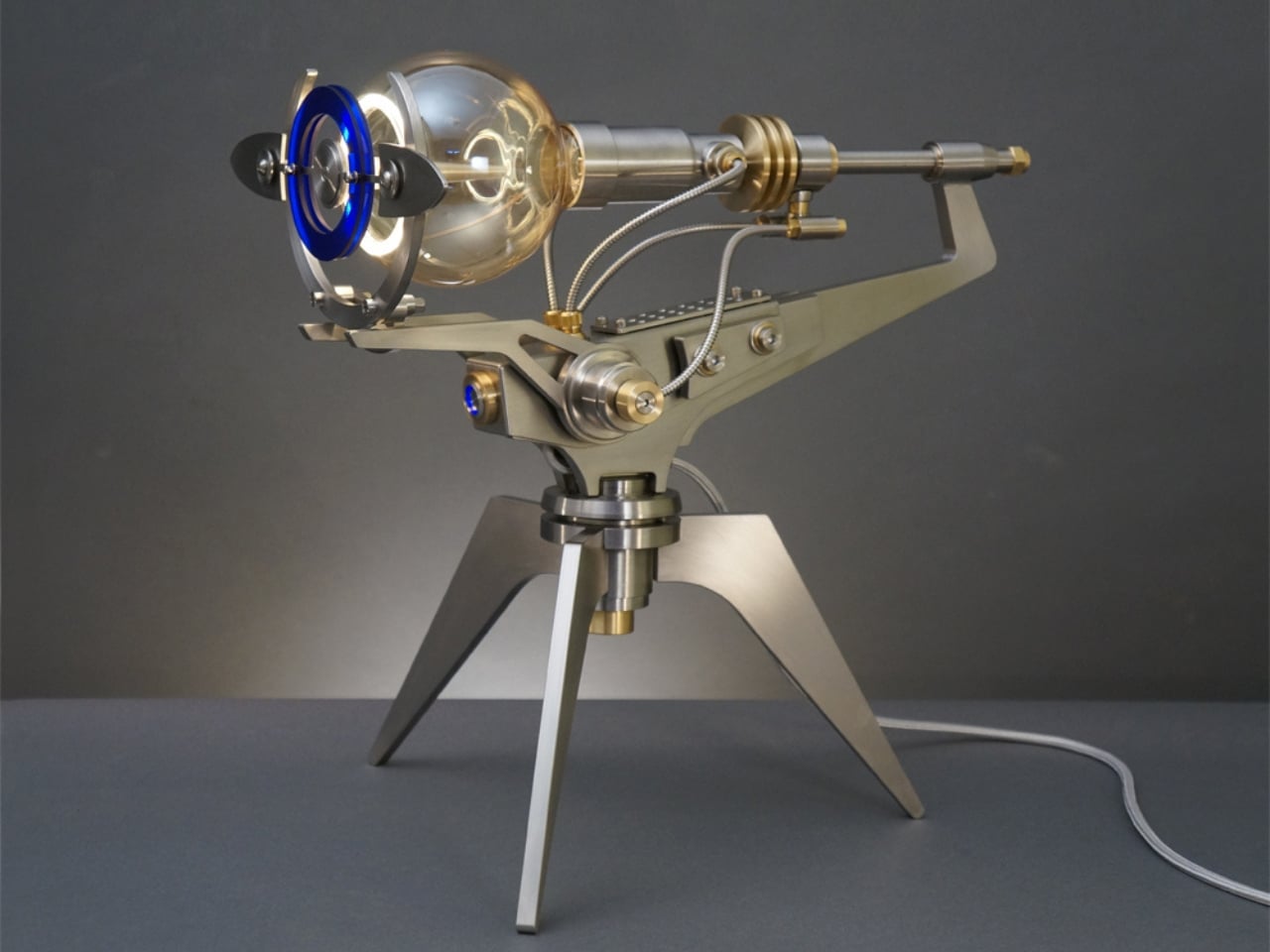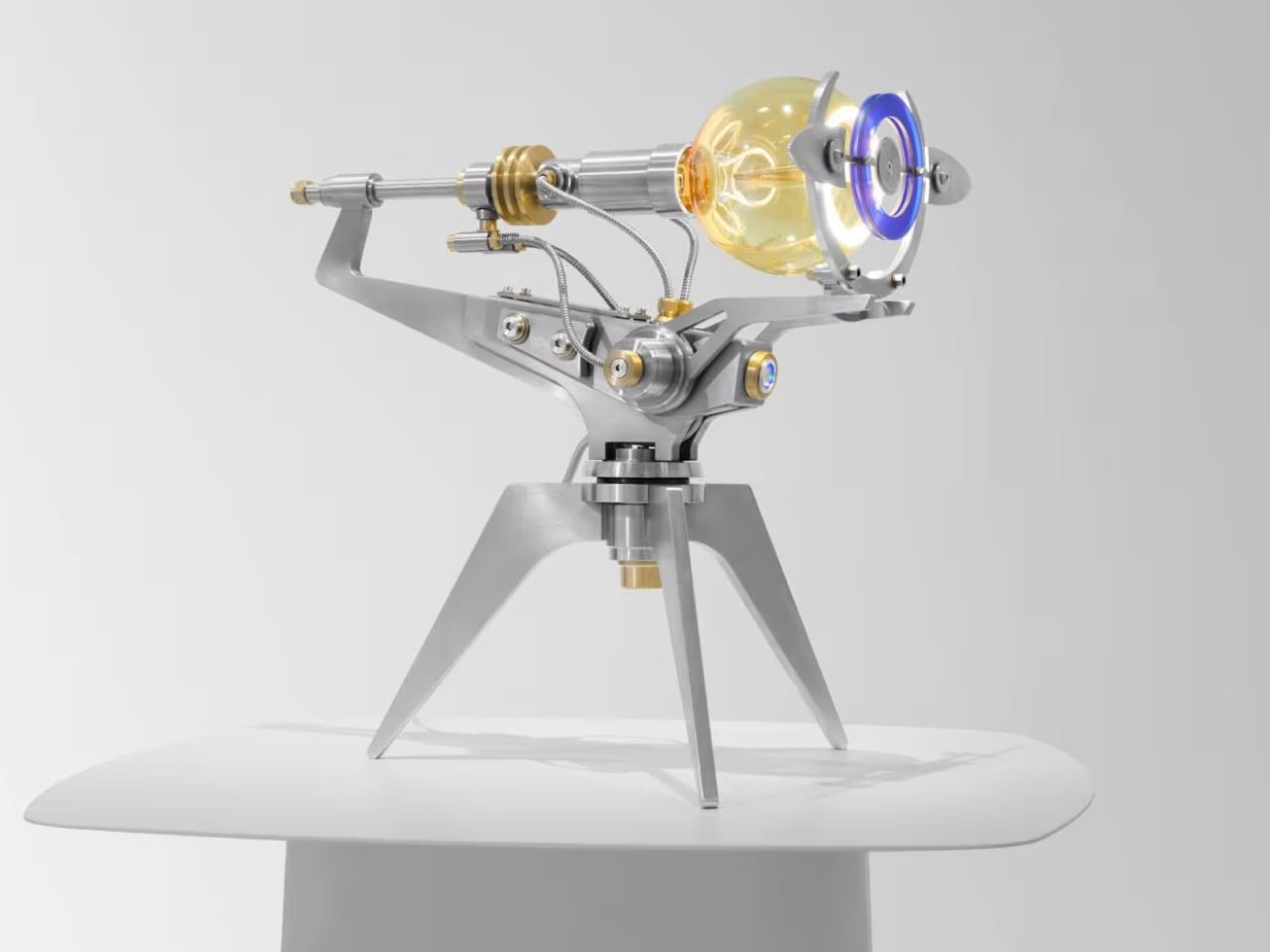

Most lamps want to disappear into a room, but every now and then, one shows up that demands the room reorganize itself around it. The ML15 Helios, designed by Berlin-based artist Frank Buchwald in collaboration with MB&F’s M.A.D.Gallery, is one of those objects. It’s a lamp, technically. It gives off light, it has a switch, it plugs into a wall. But calling it a lamp feels reductive in the same way calling a Porsche 911 a commuter car technically isn’t wrong but misses the entire point.
The ML15 Helios was created to mark the 15th anniversary of the M.A.D.Gallery, MB&F’s network of spaces dedicated to what they call Mechanical Art Devices. The gallery itself was born out of a kind of beautiful stubbornness. Back in 2011, MB&F founder Maximilian Büsser couldn’t get traditional retailers to properly display his three-dimensional watches, and art galleries told him his creations weren’t really art. So he opened his own space in Geneva’s Old Town and started curating the kind of work that lived between disciplines. Frank Buchwald was one of the very first artists to join.
Designer: Frank Buchwald
The origin story between the two is almost too good. Büsser discovered Buchwald’s retro-futuristic Machine Lights online, visited his scarred industrial workshop in Berlin, and left having committed to buying the next ten lights for a gallery that didn’t even exist yet. That kind of instinct, that willingness to bet on something before the infrastructure is in place, is rare. Fifteen years later, the ML15 Helios feels like the natural product of a creative relationship built on that kind of trust.
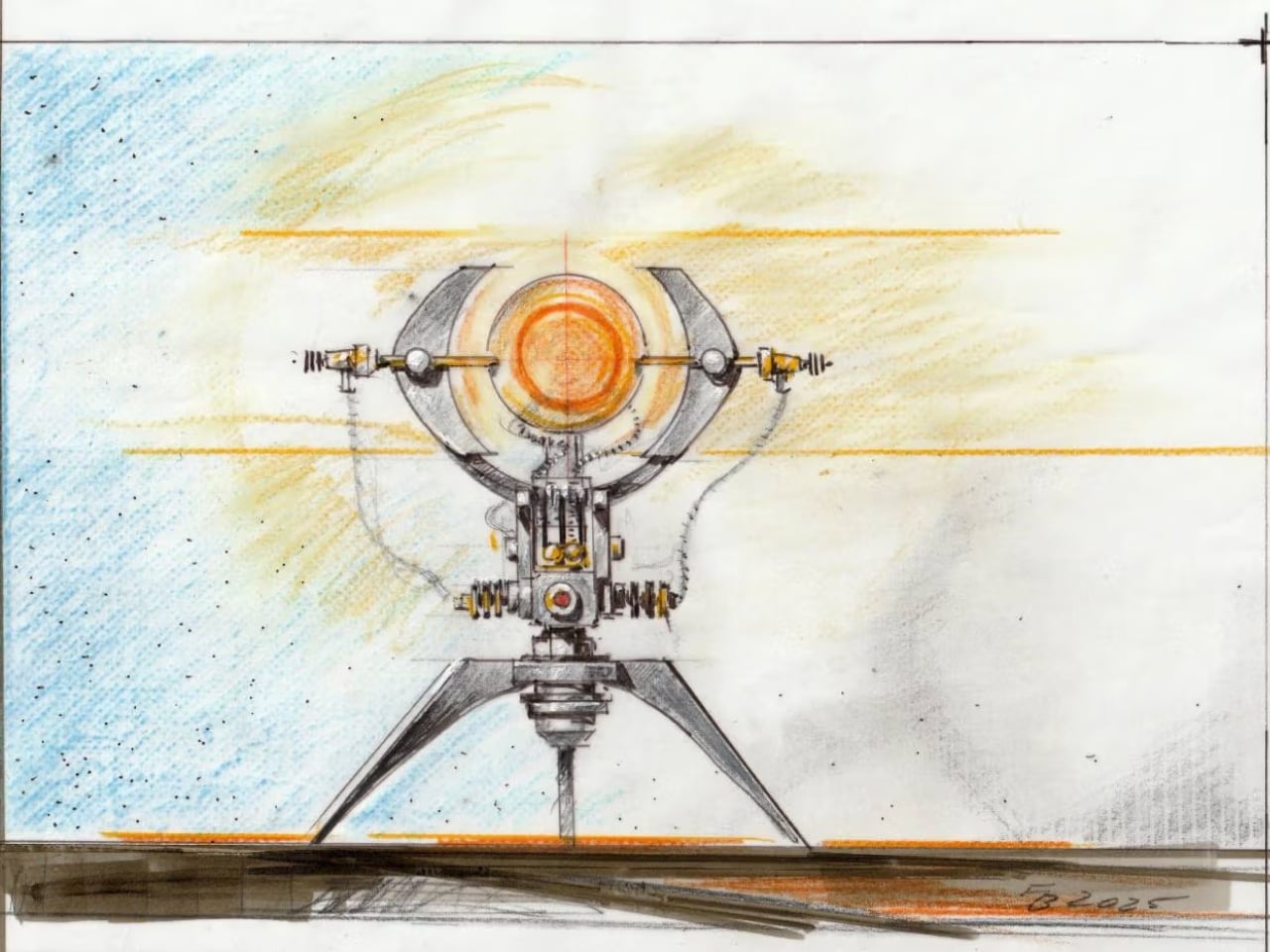
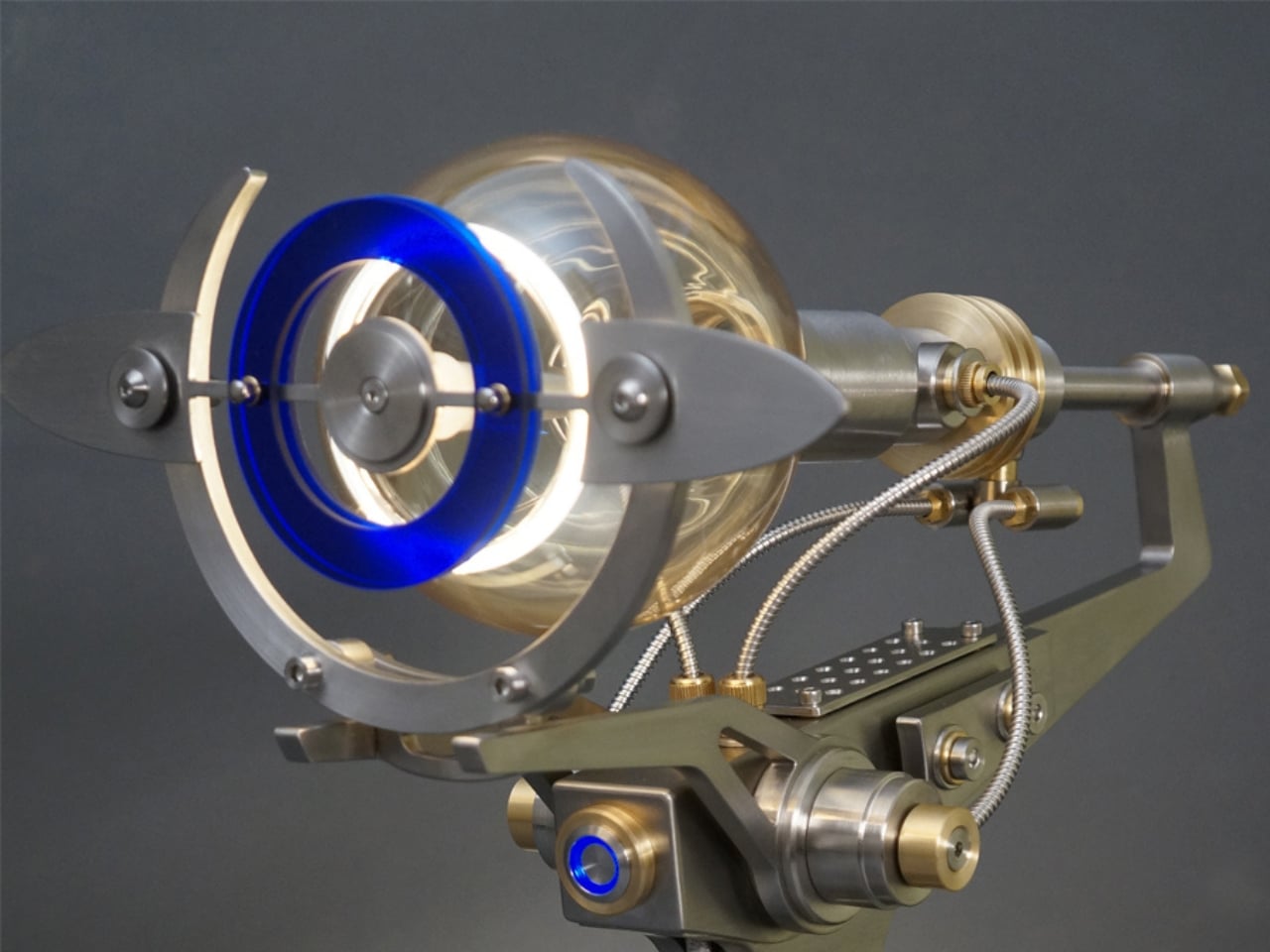
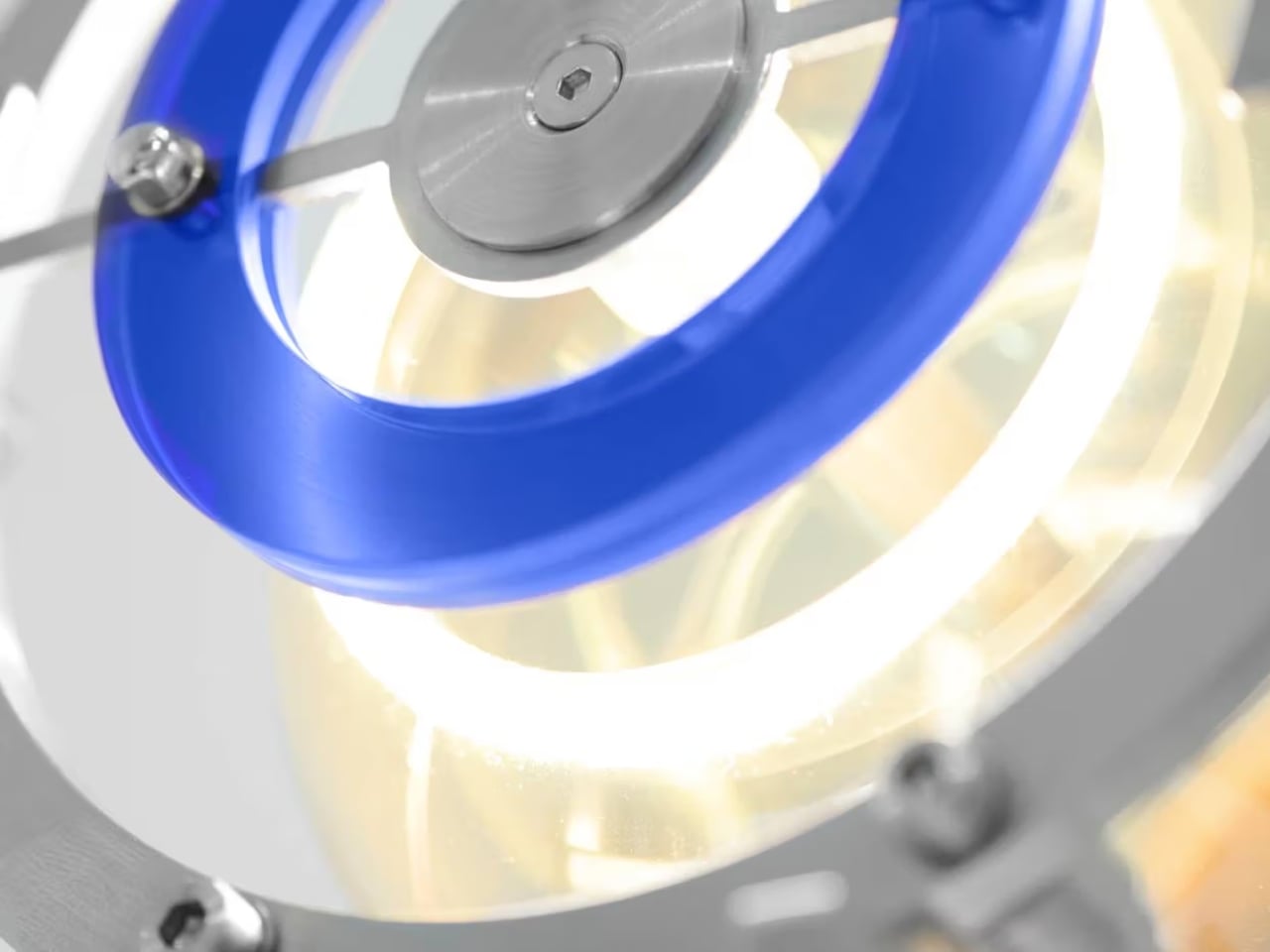
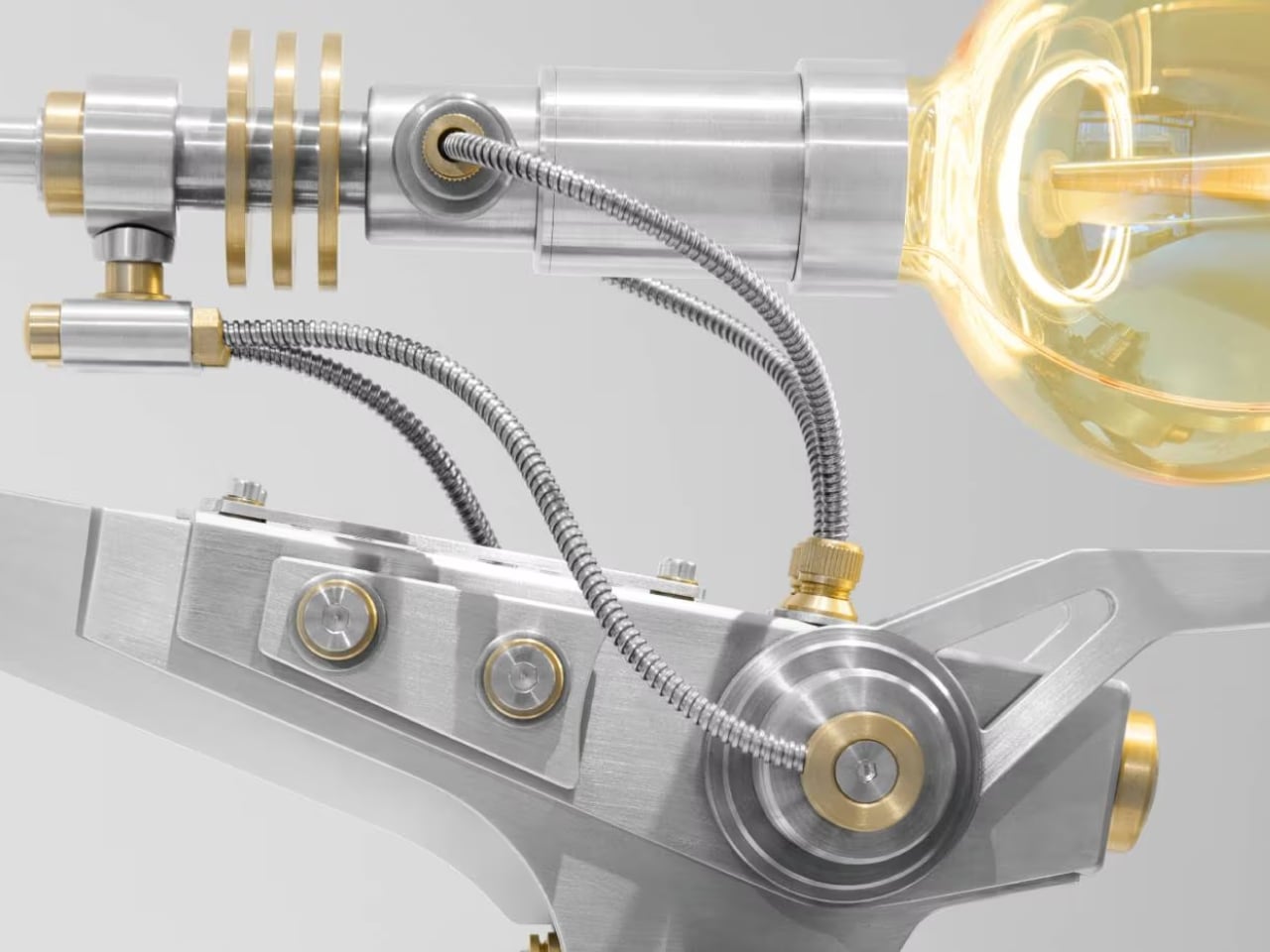
The piece itself is a 9-kilogram sculpture made from stainless steel and brass, standing on three legs that give it an almost biological quality, like something that evolved rather than was engineered. At its center sits a 120mm spherical globe bulb surrounded by a dimmable LED ring that replicates a solar corona. Two blue diffuser rings frame the sphere, and this is where the design gets interesting. Depending on your angle and your mood, the Helios can look like a celestial body, a precision scientific instrument, or a human eye staring back at you. That ambiguity is intentional, and it’s what separates Buchwald’s work from decorative lighting that simply tries to look expensive.
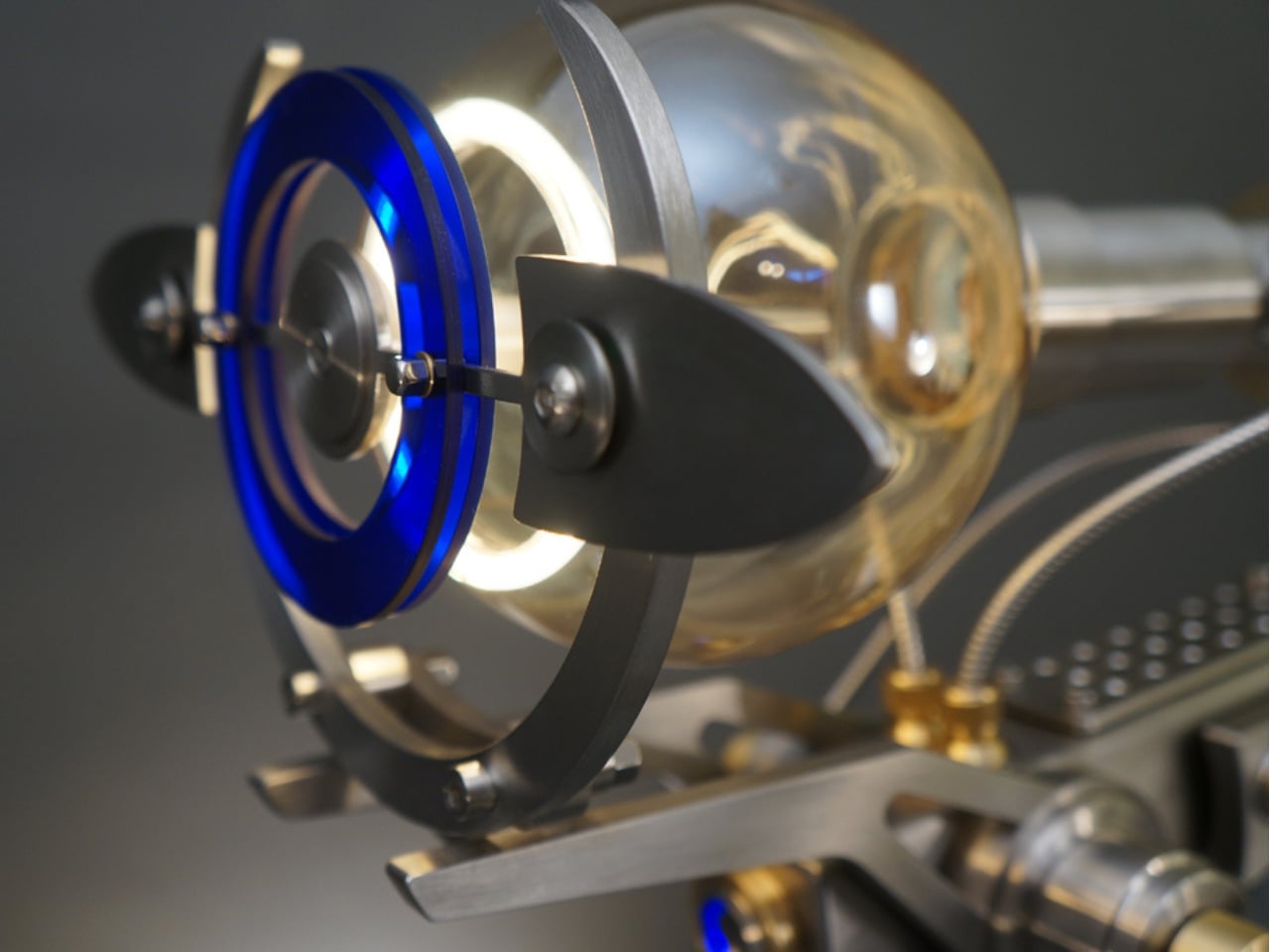
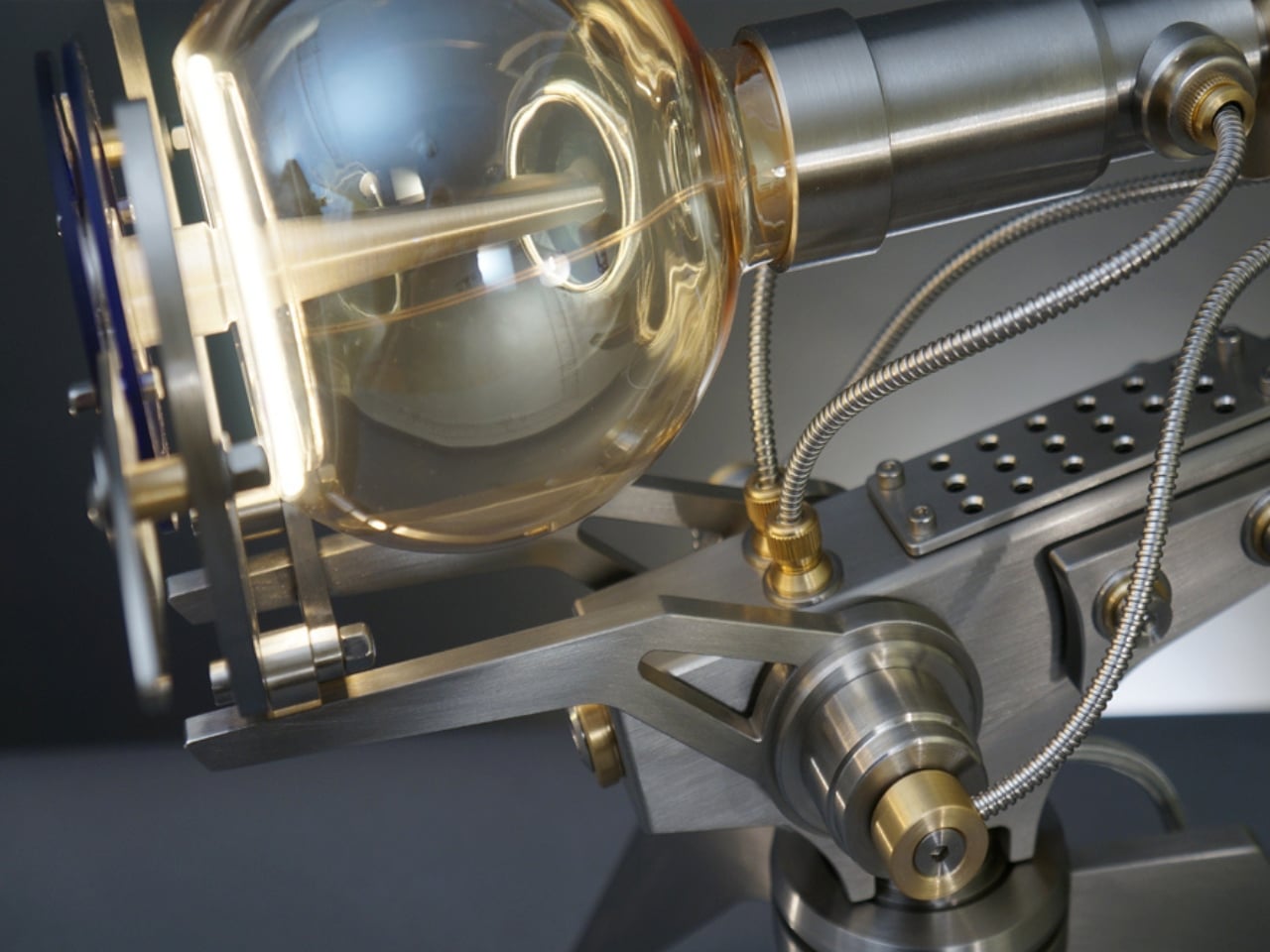
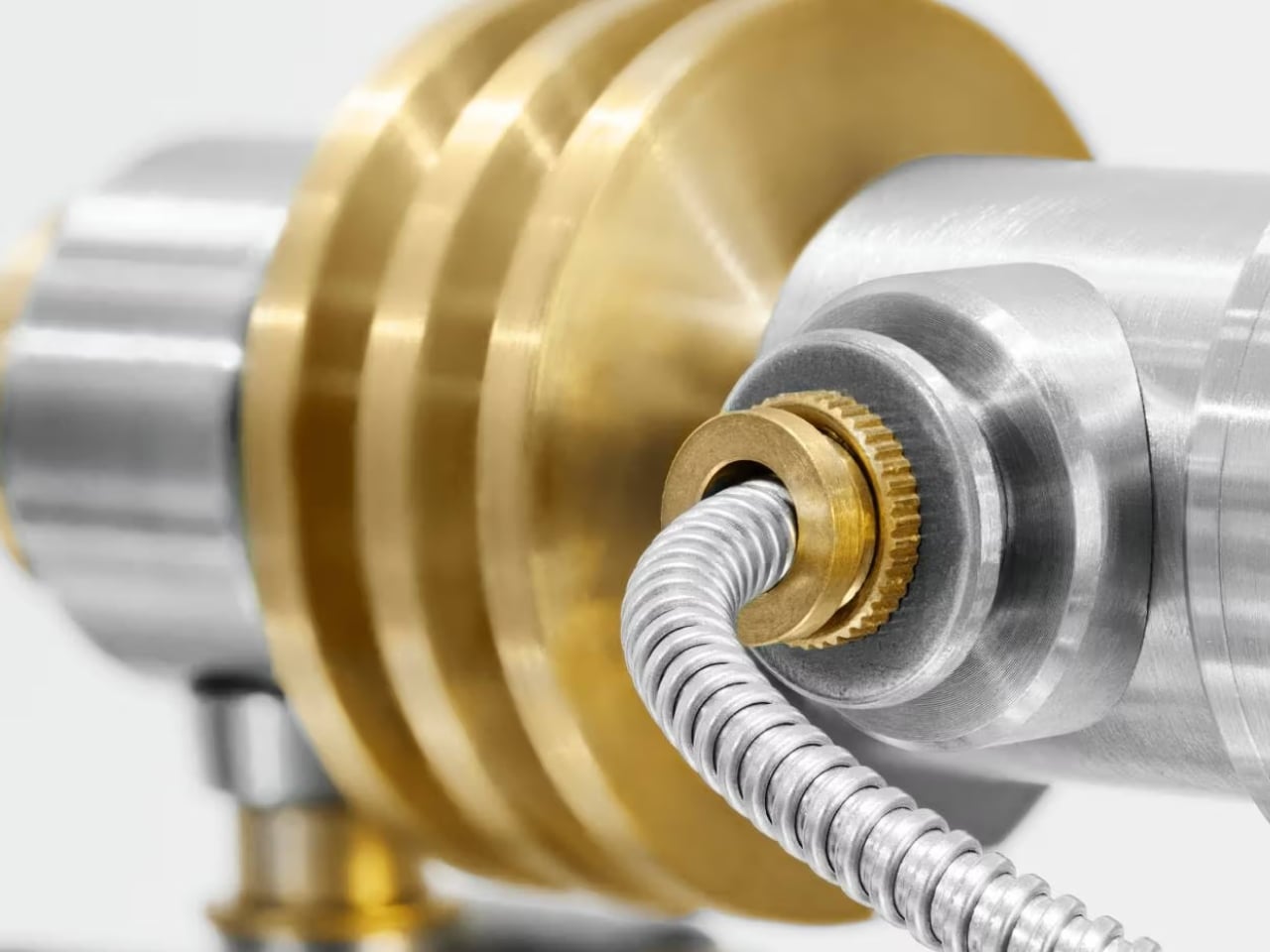
Every one of the 120 individual components is handcrafted in Buchwald’s Berlin workshop. The electrical wiring runs through flexible stainless steel tubes, kept visible rather than hidden, because Buchwald believes in showing the inner workings of his machines. Even the laser-cut parts get extensive manual reworking, and each piece takes several weeks to complete. The head rotates 90 degrees, which means the Helios isn’t just a static sculpture but something you physically interact with to direct light across a room.
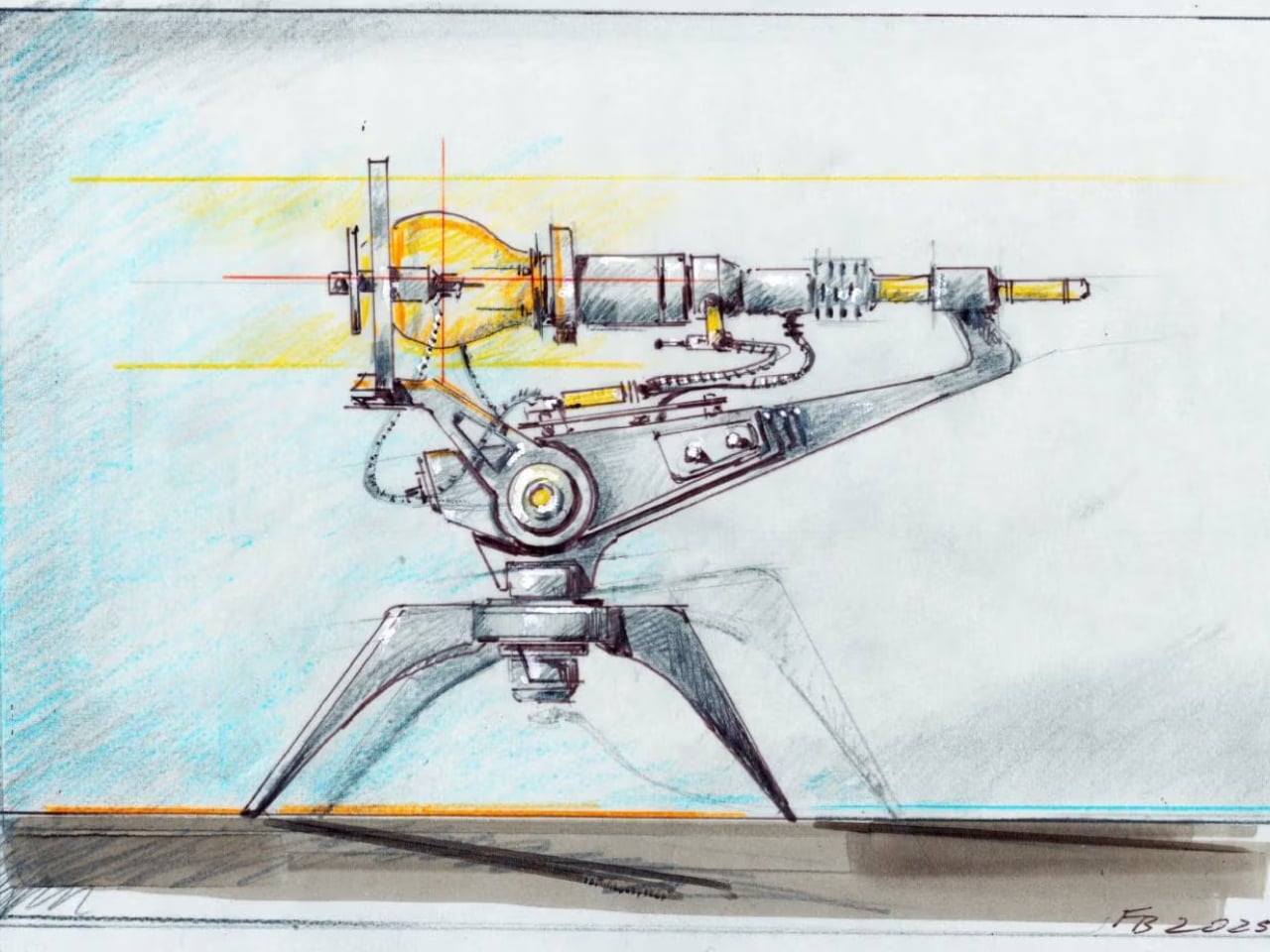
What I find most compelling about the ML15 Helios is how it occupies a space that most designers avoid entirely. It’s not minimalist, it’s not maximalist, it’s not mid-century modern, and it doesn’t reference any trend you could pin to a specific decade. Buchwald was a science fiction illustrator before he started working with metal, and that background shows. There’s a narrative embedded in the object, a sense that it belongs to a fictional world where machines are revered for their beauty as much as their function.
Limited to just 15 pieces and exclusive to M.A.D.Gallery locations in Geneva, Dubai, and the MB&F Labs network, the Helios is priced on request, which in this world means it’s not for the casually curious. But I think the limitation is part of what makes it meaningful. In an era where everything scales, where even luxury brands chase volume, there’s something quietly radical about a handmade object that exists in a quantity of 15 because that’s all one artist can responsibly make.
The ML15 Helios isn’t trying to be the future of lighting design. It’s trying to be a singular object that earns its place in a room not through branding or spectacle, but through the sheer quality of its craft and the clarity of its vision. In that sense, Buchwald and Büsser have made something that the M.A.D.Gallery was always meant to celebrate: a machine that gives light, and in doing so, becomes art.