
Frequent flyers develop rituals. Not superstitions, but systems, small corrections built over dozens of boarding passes and red-eye recoveries that separate a tolerable trip from a miserable one. The gear that survives this process tends to be invisible in the best sense: compact enough to vanish into a carry-on, functional enough to earn its pocket space, and designed with the kind of restraint that does not scream “gadget” at TSA.
We have spent a good chunk of this year tracking products that solve the specific, unglamorous problems of constant air travel. Not the flashy stuff that lives in a CES sizzle reel, but the tools that answer real questions: how do I sleep upright, stay caffeinated in a hotel with terrible coffee, or keep my workout intact when the gym is a repurposed storage closet? These eight picks are the ones that survived the edit, each one earning its spot through a combination of smart engineering and a refusal to waste space.
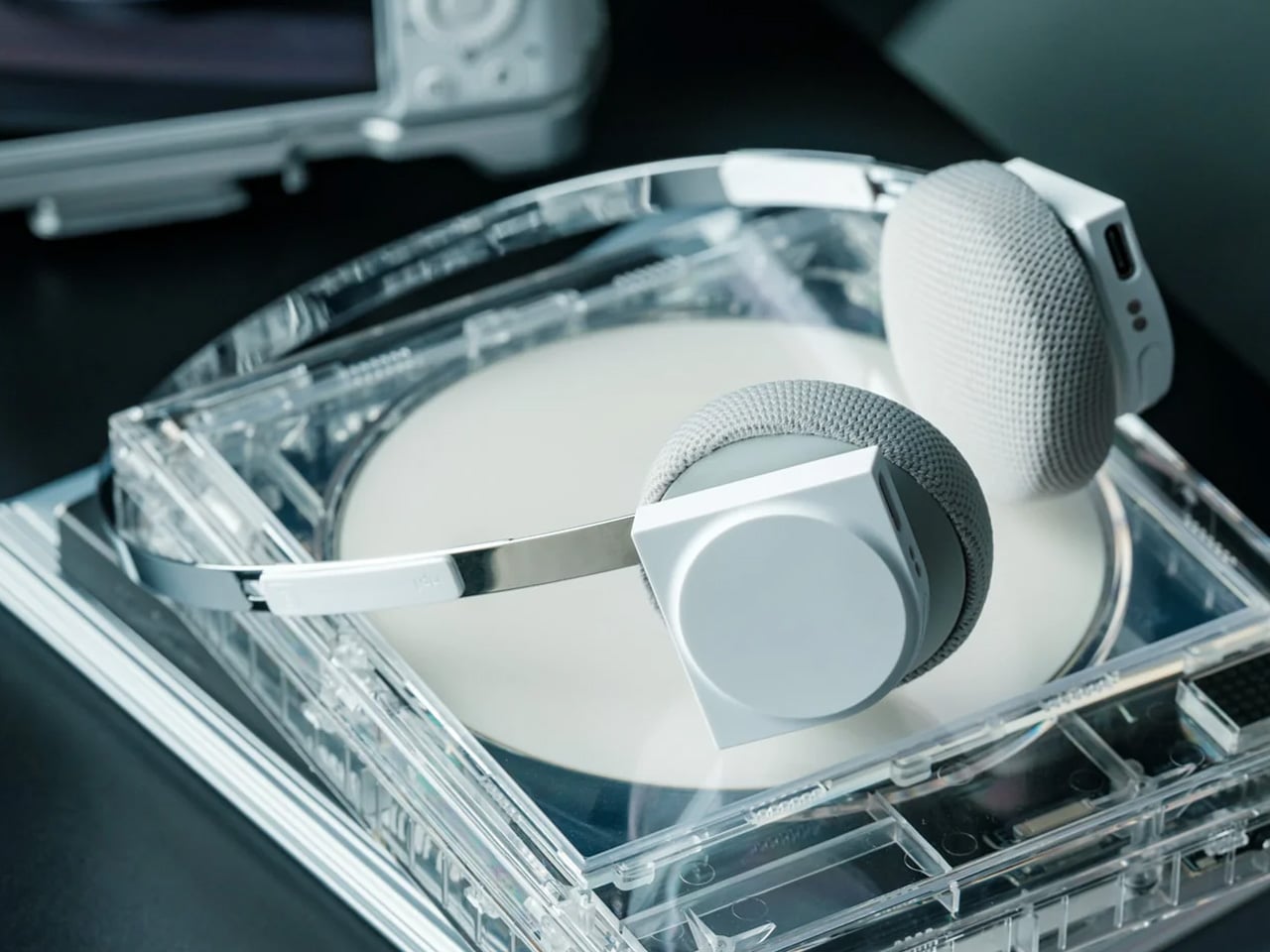
1. StillFrame Headphones – A slow, deliberate approach to travel audio.
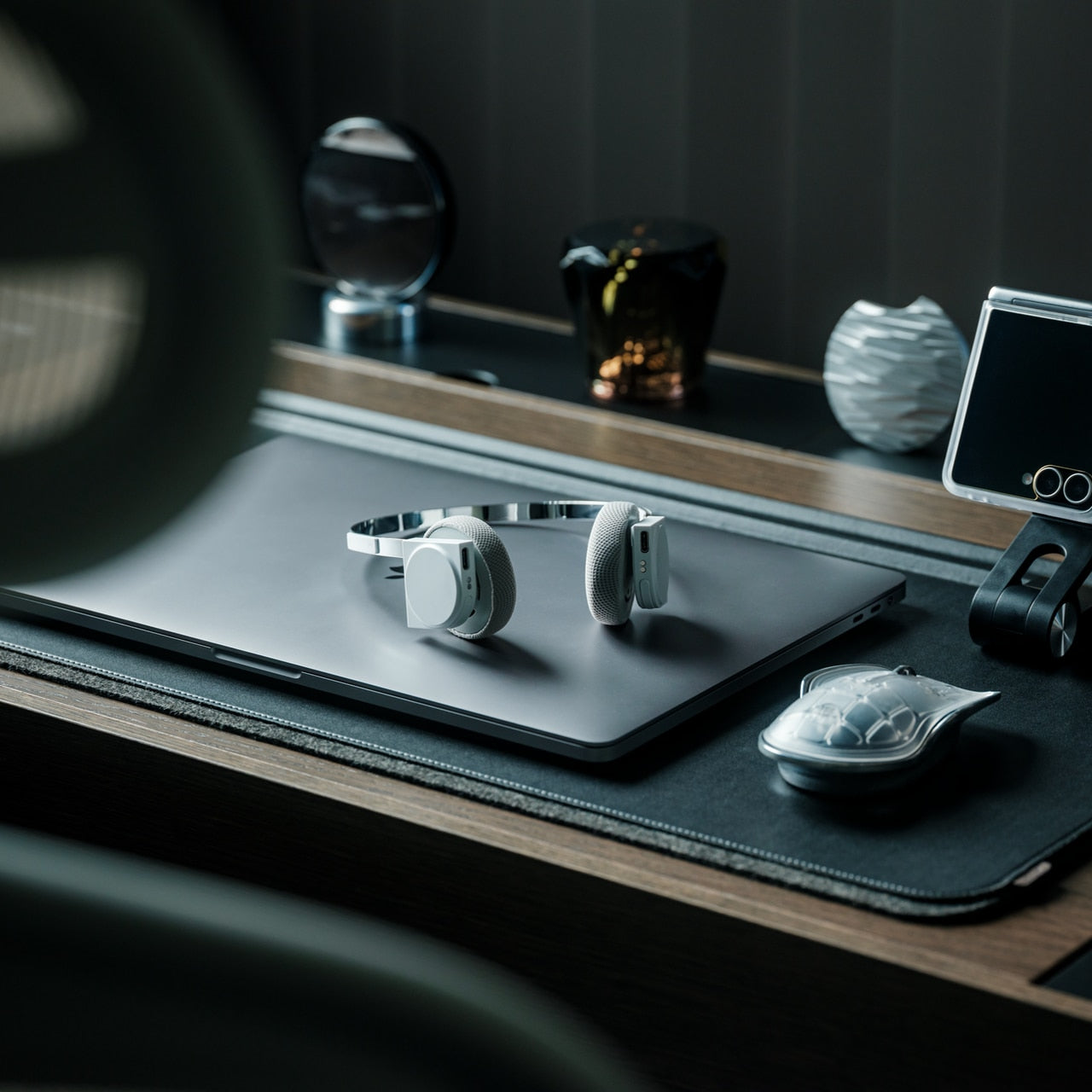

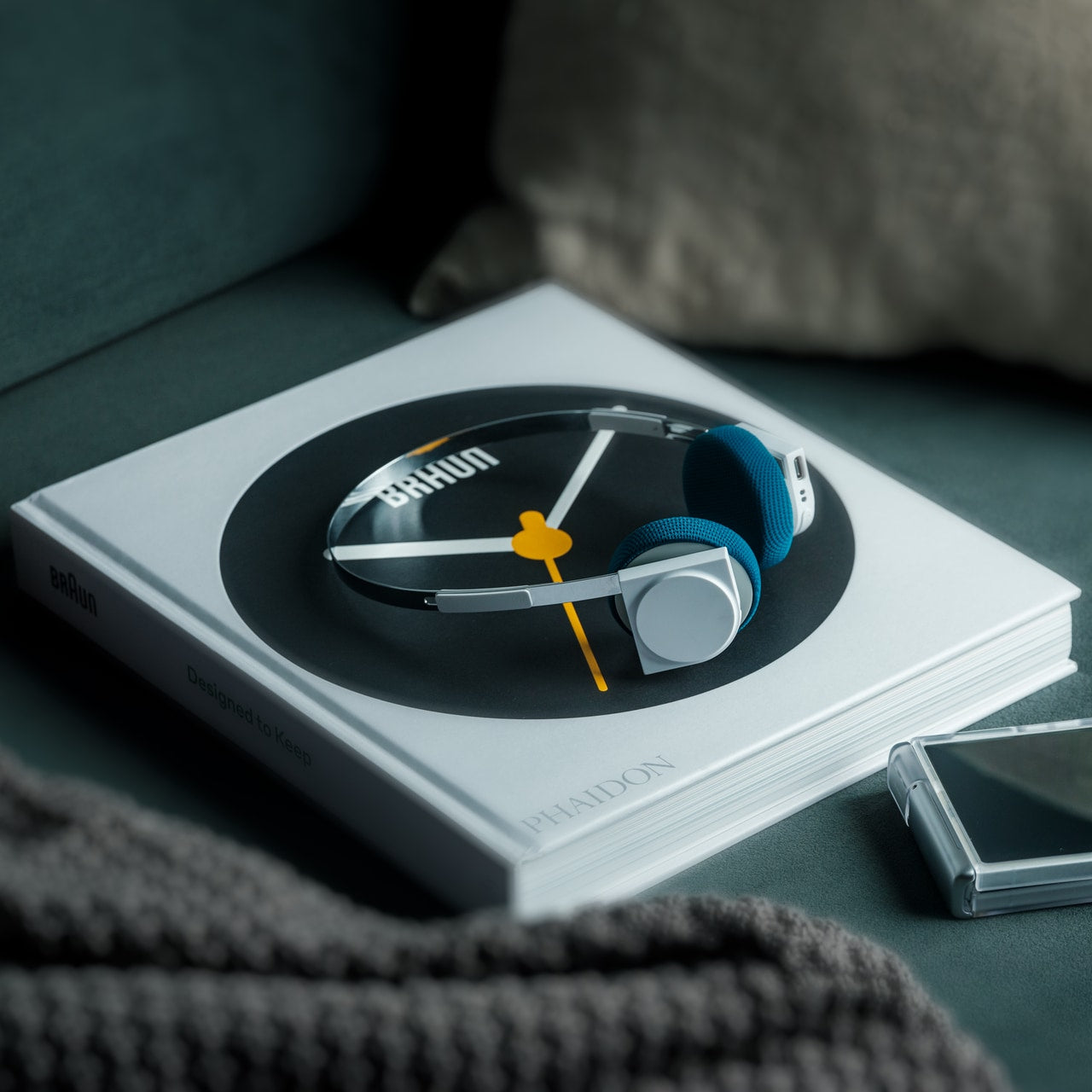
StillFrame wireless headphones took the predictable race toward bass-heavy, noise-blasting cans and went the opposite direction. The form echoes the quiet geometry of ’80s and ’90s CDs, a deliberate reference that signals intent before a single track plays. These headphones are built around the idea that listening on a plane doesn’t have to mean sealing yourself inside a foam-padded vault.
The 40mm drivers produce a wide, open soundstage that treats quiet tracks like small environments rather than compressed streams of data. Noise cancelling kicks in when isolation is needed, and transparency mode pulls the world back in with a tap. For men who fly weekly and spend hours with headphones on, the fit matters more than the spec sheet. StillFrame sits between the suffocation of over-ears and the intrusion of in-ears, offering something lighter and more sustainable for long-haul wear. That middle ground is where most travel headphones fall short, and where these headphones excel.
Click Here to Buy Now: $245.00
What we like
- The open soundstage brings texture to quieter music that gets lost in most closed-back travel headphones.
- Switching between noise-cancelling and transparency mode is seamless enough to use mid-conversation with the cabin crew.
What we dislike
- The on-ear form factor will not block as much ambient noise as a full over-ear design, which limits effectiveness on louder aircraft.
- Battery life details remain sparse, and wireless headphones live or die by how well they survive a transatlantic route.
2. Nikon 4x10D CF Pocket Binoculars – Optical clarity that fits a jacket pocket.
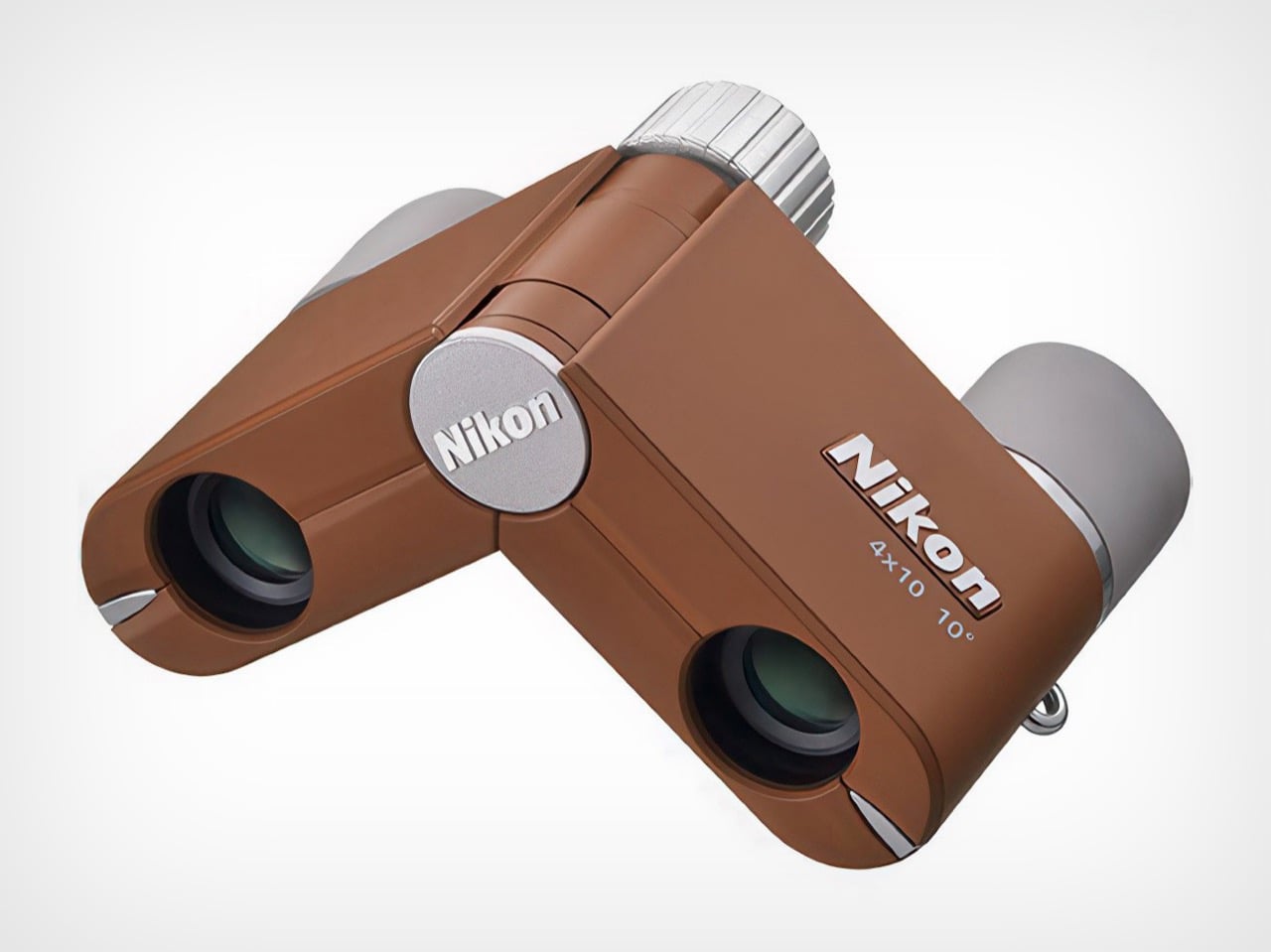

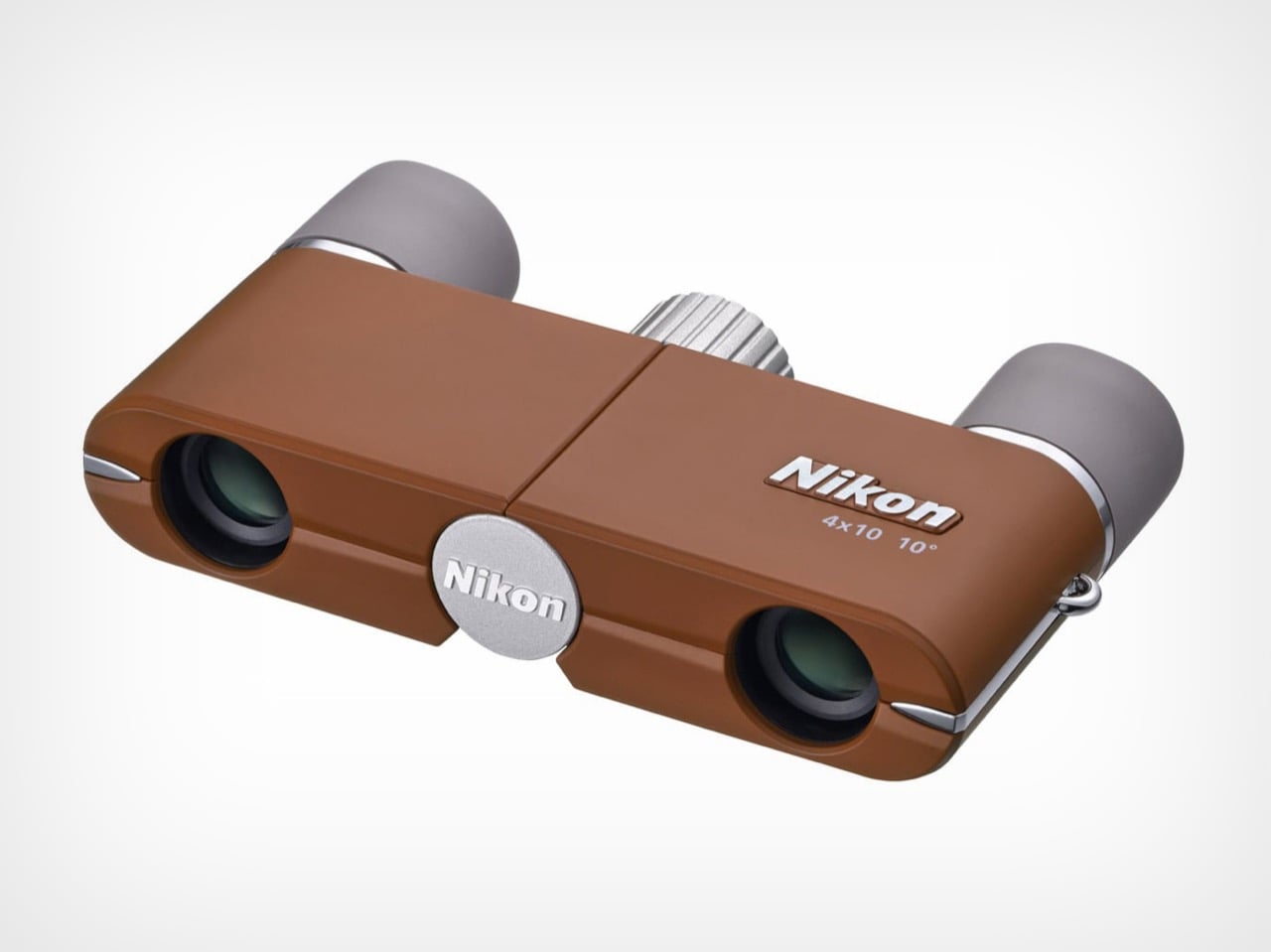
Binoculars feel like relics from a leather-cased era. Nikon’s 4x10D CF pocket binoculars challenge that perception by shrinking the form factor down to something that slips into a blazer without creating a bulge or demanding its own case. These are not competing with a smartphone’s digital zoom. They exist in a different category, prioritizing the experience of true optical viewing over pixel counts and algorithmic processing.
The design decision that makes these work for frequent flyers is the discretion. Traditional binoculars announce themselves. These almost disappear. The optical quality stays sharp for the size, delivering a viewing experience that feels immediate and free of the digital artifacts that plague phone-based zoom. Reading a departure board from across a terminal, catching architectural details in a layover city, or scanning a landscape from an airport lounge window: the use cases are oddly specific and consistently useful for anyone whose life involves constant movement through unfamiliar places.
What we like
- The form factor is compact enough to carry daily without dedicating bag space or adding noticeable weight.
- Optical viewing quality avoids the processing lag and color distortion of smartphone zoom.
What we dislike
- 4x magnification is modest, which limits usefulness for anything beyond mid-range observation.
- The compact size means a smaller objective lens, so performance drops in low-light conditions where larger binoculars thrive.
3. COFFEEJACK – Nine bars of pressure, zero dependence on hotel equipment.
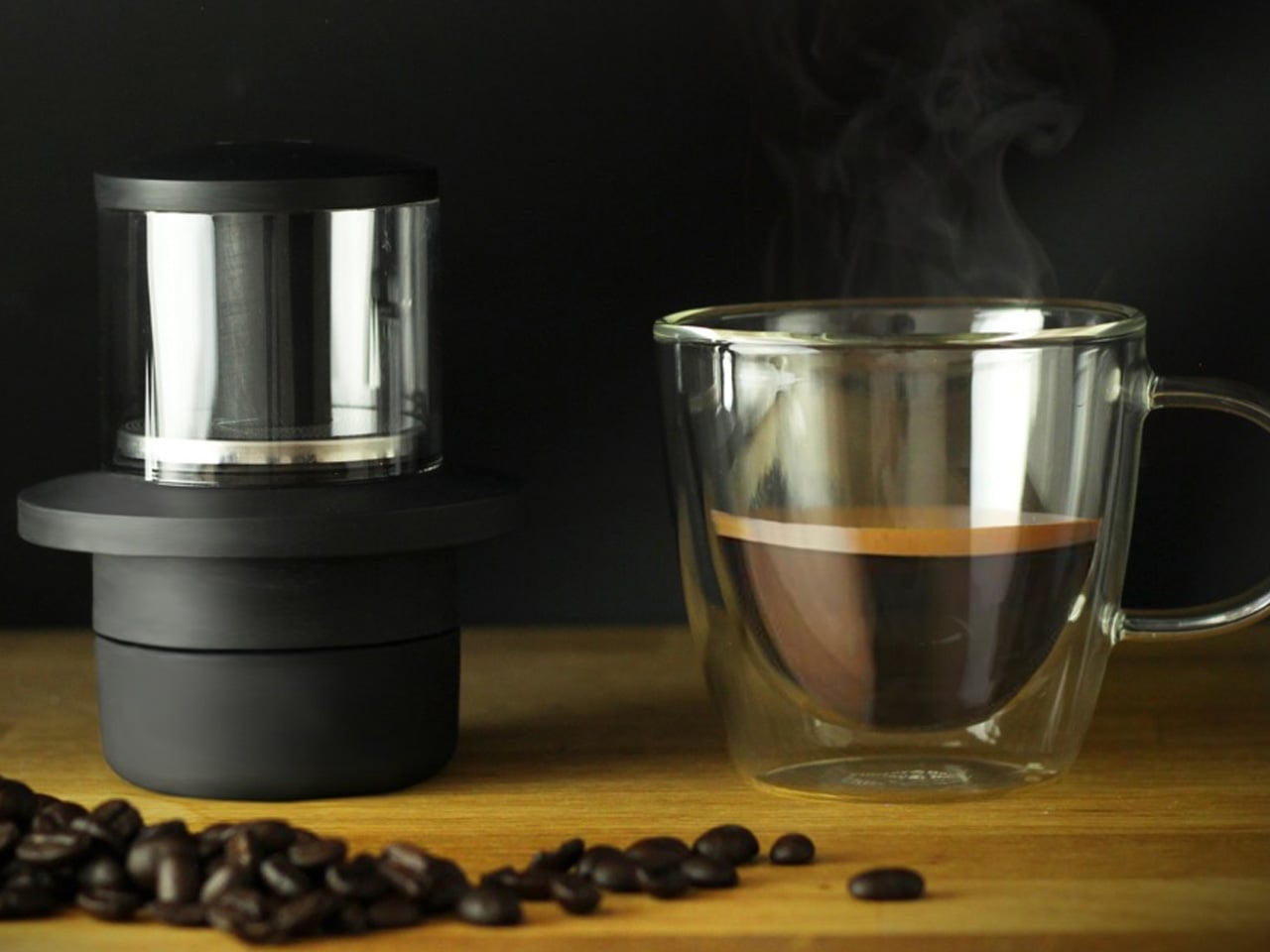
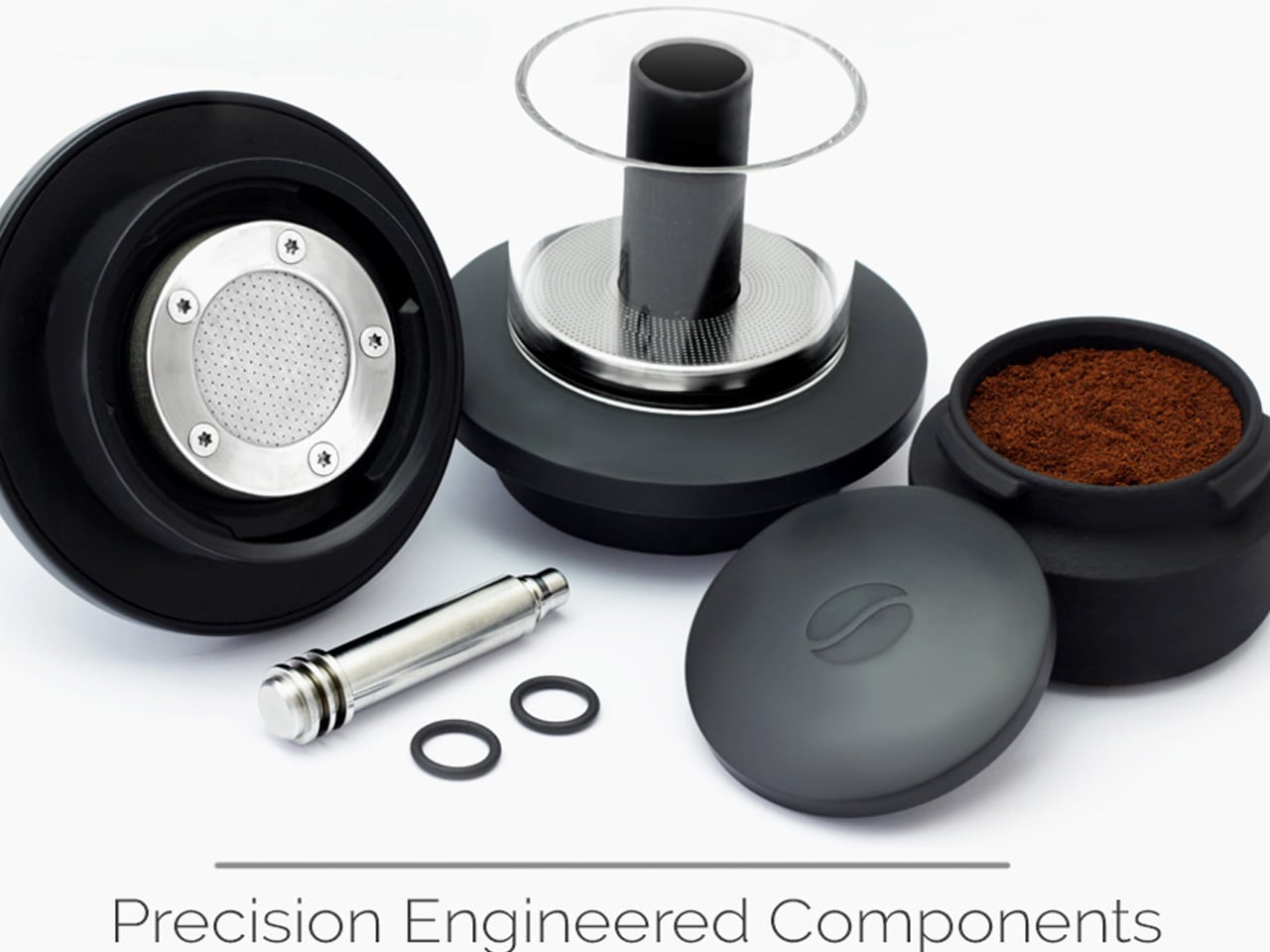
Hotel coffee is a problem that frequent travelers have accepted for too long. COFFEEJACK, built by Hribarcain, was designed to make that acceptance unnecessary. This pocket-sized espresso maker generates 9 to 10 bars of pressure through a manual hydraulic pump, matching the extraction output of professional café equipment. The lower chamber holds ground coffee, a built-in tamper levels and packs the grounds automatically, and hot water goes into the upper chamber. Work the pump, and a crema-topped espresso appears in the field.
The engineering gap between this and other portable coffee options is worth understanding. A French press operates under 1 bar of pressure. An Aeropress or Moka pot peaks at roughly 3 to 4 bars. COFFEEJACK reaches 9 to 10 consistently, manually, without a power source. That difference is what separates hotel-lobby drip from the real thing. The entire device is made from 100% recycled plastic, making it a more considered alternative to the pod-based systems that generate single-use waste with every cup. For men who treat their morning coffee as non-negotiable (and after a 6 AM landing, it absolutely is), this earns permanent carry-on status.
What we like
- 9 to 10 bars of manual pressure match professional espresso machines without electricity, pods, or proprietary cartridges.
- The built-in tamper eliminates the need to carry a separate tool, keeping the kit self-contained.
What we dislike
- Hot water is still a requirement, which means sourcing it from a kettle, hotel tap, or thermos before brewing.
- The manual pump action requires a bit of effort and technique that takes a few attempts to master.
4. BlackoutBeam Tactical Flashlight – 2300 lumens in a body that fits a Dopp kit.
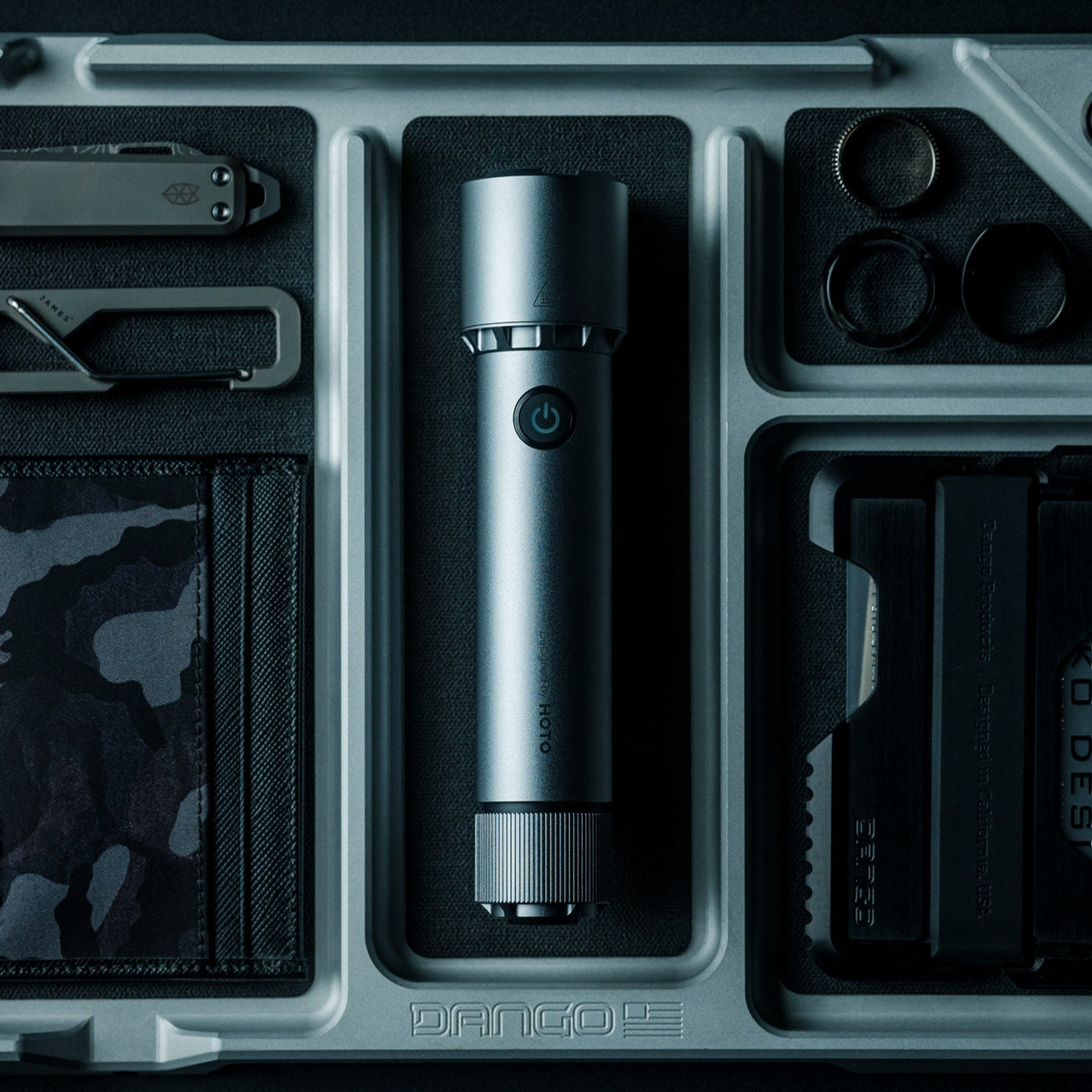
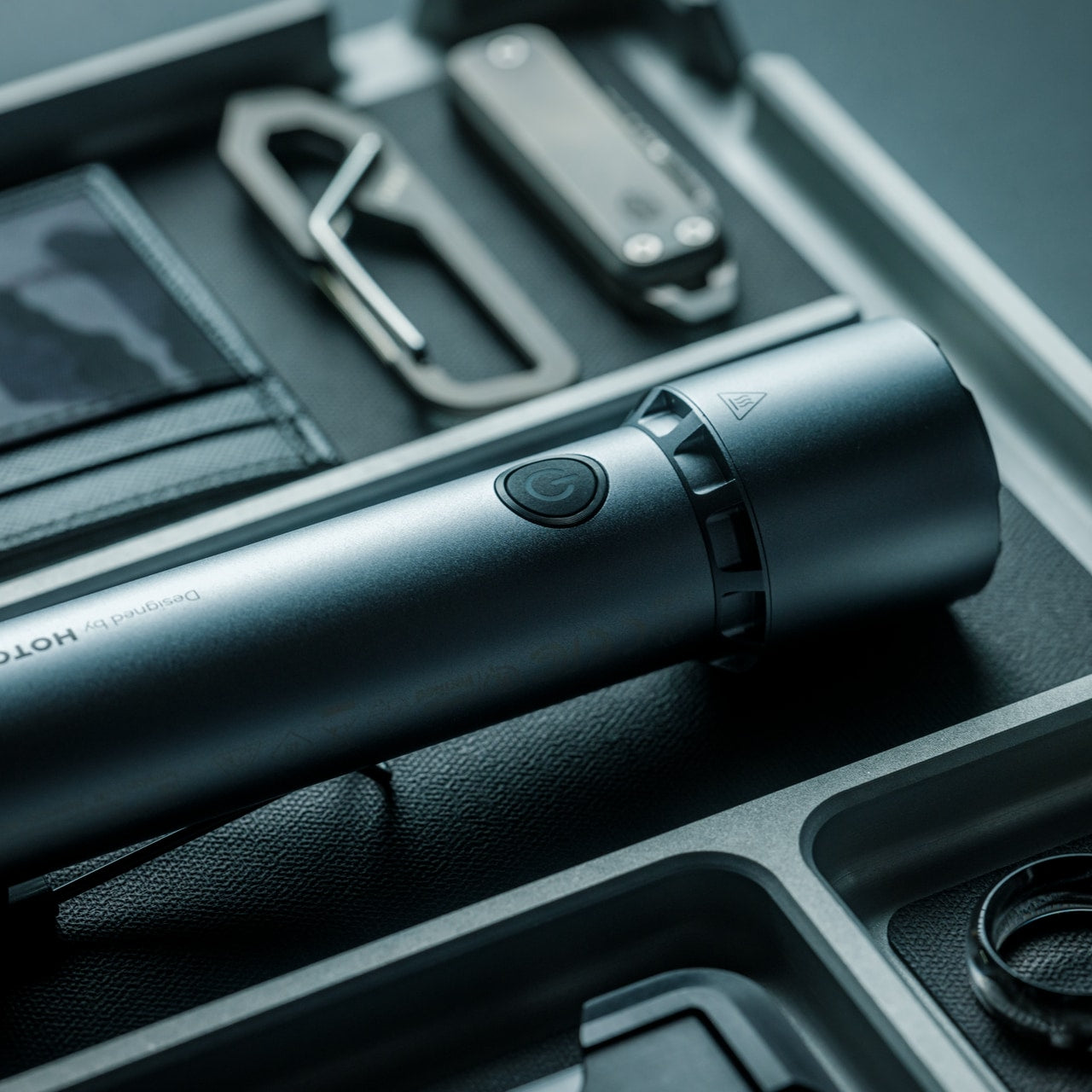
Most flashlights either look like they belong in a military surplus store or feel like cheap giveaways from a trade show. BlackoutBeam sits between those extremes with 2300 lumens of output, a 300-meter throw, and an industrial design that does not embarrass itself sitting next to a passport wallet. The 0.2-second response time means light arrives the moment the button is pressed, with no warm-up delay.
The travel case for a flashlight this capable is more practical than dramatic. Navigating poorly lit hotel parking garages, finding a rental car in an unlit airport lot, walking unfamiliar streets after dark. These are not survival scenarios; they are Tuesday nights on a business trip. The aluminum body carries an IP68 rating for water and dust resistance, so rain and rough handling are non-issues. What makes this particular light worth its bag space is the combination of output and size. At 2300 lumens with a 300-meter range, it outperforms most flashlights twice its size while slipping into a side pocket without protest.
What we like
- 2300-lumen output with a 300-meter throw handles everything from close-range tasks to illuminating distant areas.
- IP68-rated aluminum construction handles rain, drops, and the general abuse of constant travel without degradation.
What we dislike
- A light this powerful will drain batteries faster than lower-output alternatives, meaning recharging becomes another travel task.
- The tactical aesthetic, while restrained, could attract unwanted attention at security checkpoints in certain countries.
5. Comes AI travel companion – An AI assistant that sees what is around the corner.
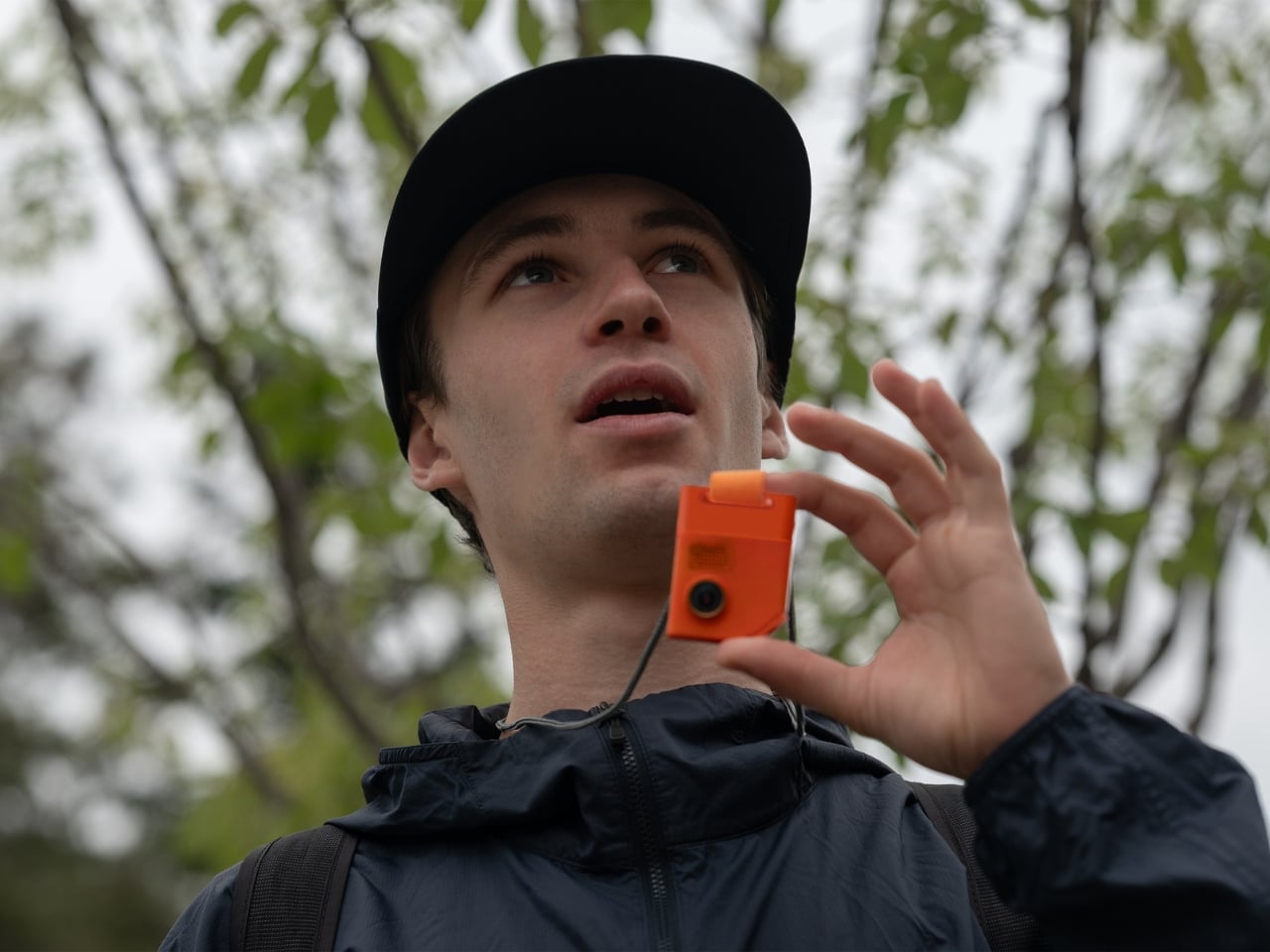

Solo travel has a specific kind of friction that apps alone cannot solve. Comes is a small AI-powered companion device equipped with a high-performance camera that observes surroundings and offers assistance in real time. The design has a modular, detachable structure that adapts to different travel situations, functioning as a navigation aid, translator, and contextual guide depending on the moment.
The scenario it solves best is the one frequent travelers know well: arriving in a new city, stepping off a train or out of an airport, and facing that brief window of disorientation before the phone GPS loads and the bearings click into place. Comes fills that gap by walking through navigation in a way that feels supportive rather than screen-dependent. Voice interaction keeps hands free, and the camera-based awareness means it can interpret signs, menus, and spatial context without requiring manual input. For men who move through multiple cities in a single week, the device acts as a persistent local guide that does not need Wi-Fi to be useful in the moment it matters most.
What we like
- The modular design adapts to different carry and mounting configurations depending on the travel context.
- Camera-based awareness interprets real-world visual information without requiring the user to stop and type.
What we dislike
- AI-powered devices in this category still depend heavily on software updates and server-side processing, which introduces latency in areas with weak connectivity.
- Battery management across the camera, AI processing, and wireless communication will be a limiting factor on long travel days.
6. Pocket Monkii 2 – A full bodyweight training system that packs smaller than a book.

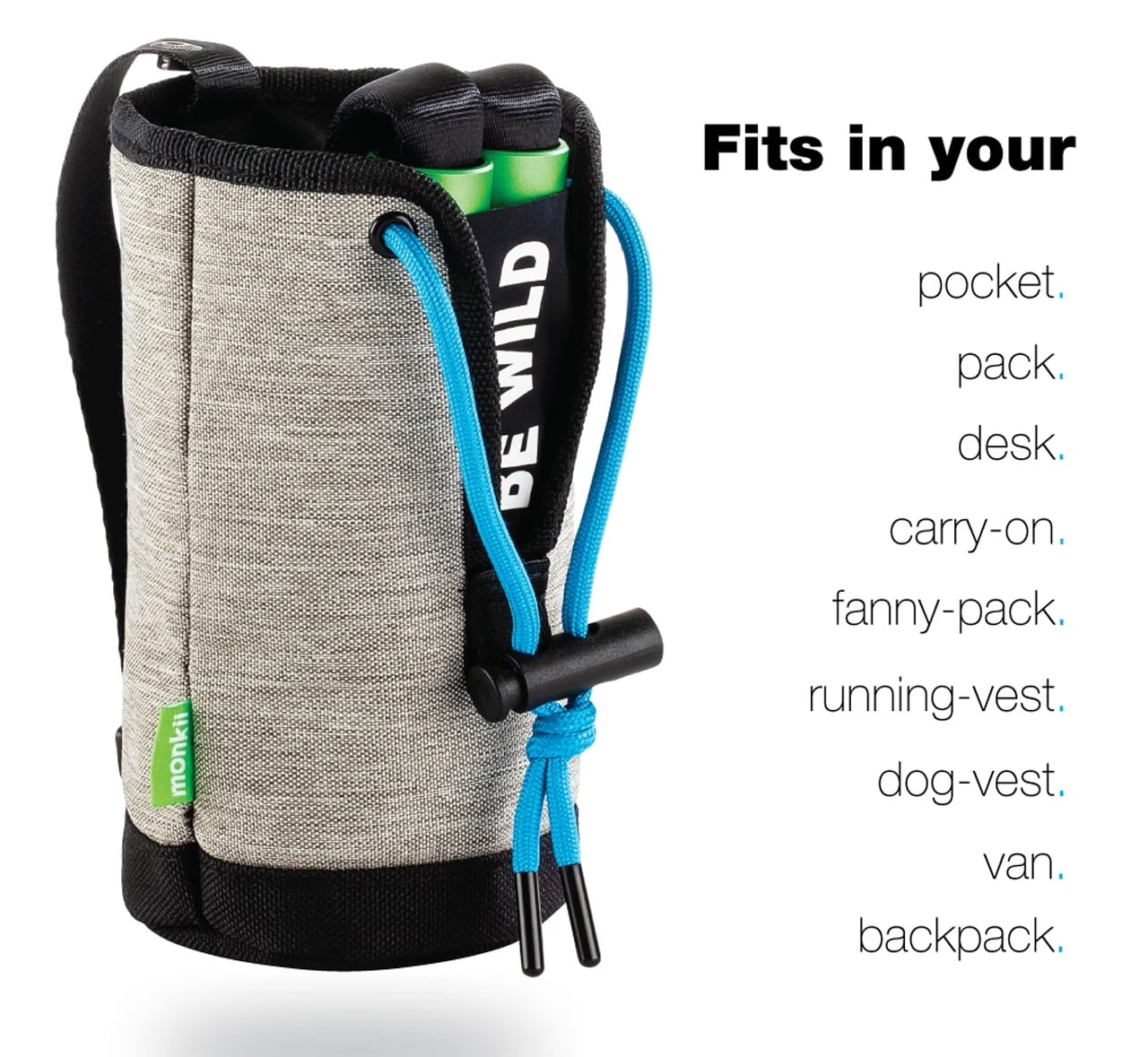

Gym access on the road is either a depressing hotel treadmill or a day pass at a facility that requires a 20-minute detour. Pocket Monkii 2 is a compact training system that packs cables, handles, a ladder, and an isometric tool into a kit small enough to throw into a carry-on without sacrificing space for anything else. The all-new package includes unlimited access to the Monkii app, which provides workout instructionals and progress tracking.
What makes this different from a resistance band tossed into a suitcase is the system design. The cables are built for durability across hundreds of sessions, and the combination of tools allows for a full bodyweight program rather than a handful of isolated exercises. The 21-Day Habit guide included with purchase pushes past the typical “use it twice and forget it” pattern that plagues most portable fitness equipment. For frequent flyers who refuse to lose their training momentum to a travel schedule, this is the closest thing to a portable gym that does not feel like a compromise or require anchoring to a hotel door frame that was never designed to hold body weight.
What we like
- The compact kit fits inside a carry-on and provides enough variety for a complete bodyweight training session.
- App integration with workout instructionals and progress tracking adds structure that standalone resistance bands lack.
What we dislike
- Cable-based systems require an anchor point, and not every hotel room has a suitable door or fixture for secure attachment.
- The learning curve for isometric and suspension-style exercises is steeper than traditional resistance training.
7. Auger PrecisionLever Nail Clipper – A century of Japanese blade-making in an 86mm package.
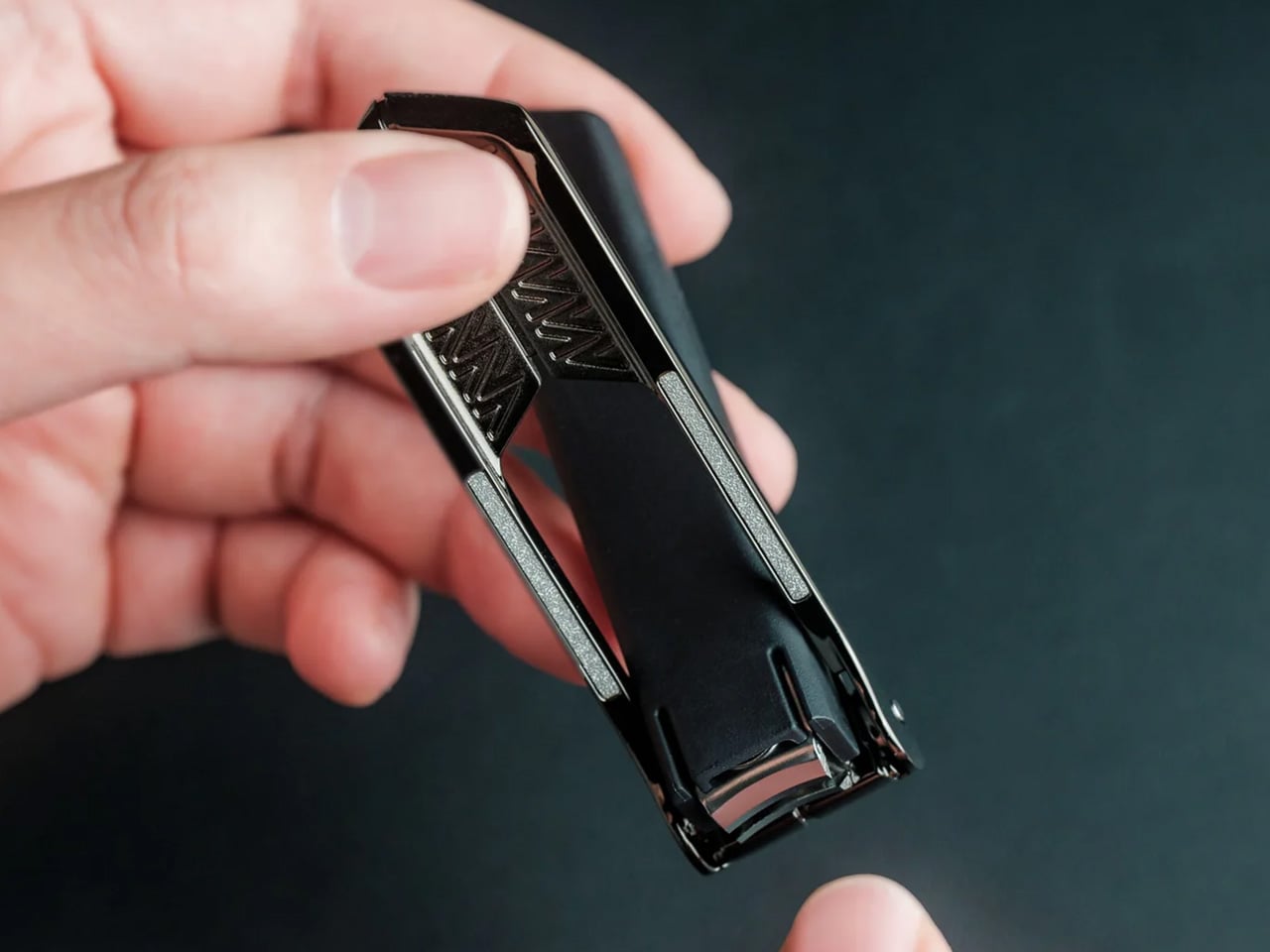
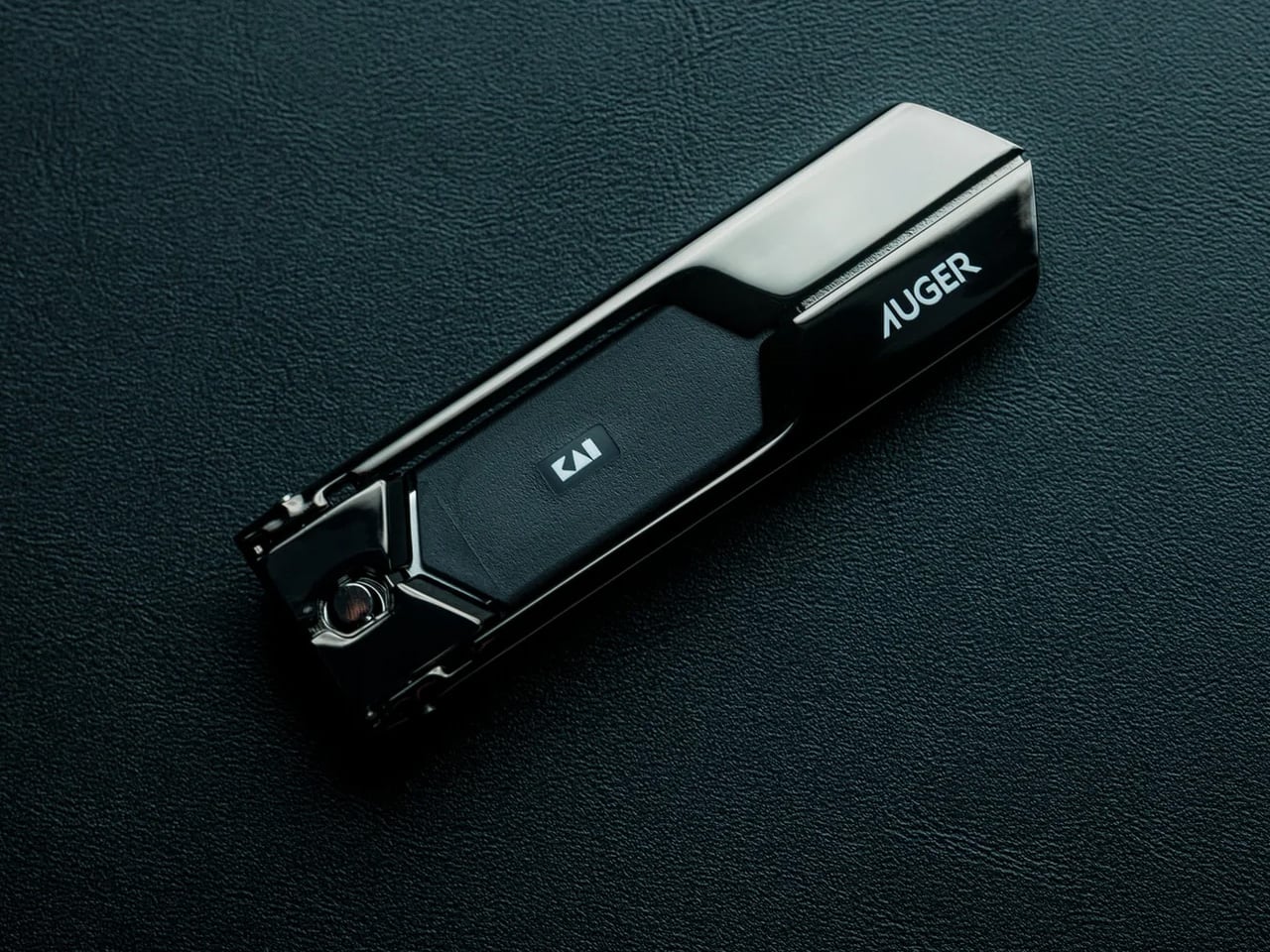
Grooming on the road tends to fall apart at the small details. Nail clippers are the item most likely to be forgotten, borrowed from a front desk, or purchased in desperation from an airport convenience store where the options are universally terrible. Kai Corporation, Japan’s blade authority since 1908, built the Auger PrecisionLever to make that entire cycle unnecessary.
The patented revolver-style lever shifts the pivot point closer to the blade, optimizing pressure with every press. That mechanical advantage means cleaner cuts on thicker nails with less effort and more control. The blades are crafted from stainless cutlery steel, cutting cleanly without tearing or splitting. At 67 grams with an 86mm footprint, the clipper has a weighted feel that is stable in hand while still slipping into a Dopp kit without claiming space. For a tool that gets used a few times a week and lives in the bottom of a toiletry bag, the difference between a precision instrument and a generic clipper is felt every single time. This one makes the case that even the smallest object in a travel kit deserves actual engineering.
What we like
- The patented lever mechanism delivers more cutting force with less manual effort, especially on thicker nails.
- Stainless cutlery steel blades cut cleanly without the tearing or crushing common in cheaper clippers.
What we dislike
- Premium nail clippers occupy a price point that most people will not consider until they have suffered through enough bad ones.
- The 67-gram weight, while satisfying in hand, adds up when every gram in a dopp kit is contested.
8. Loop – A neck pillow that abandoned the U-shape entirely.
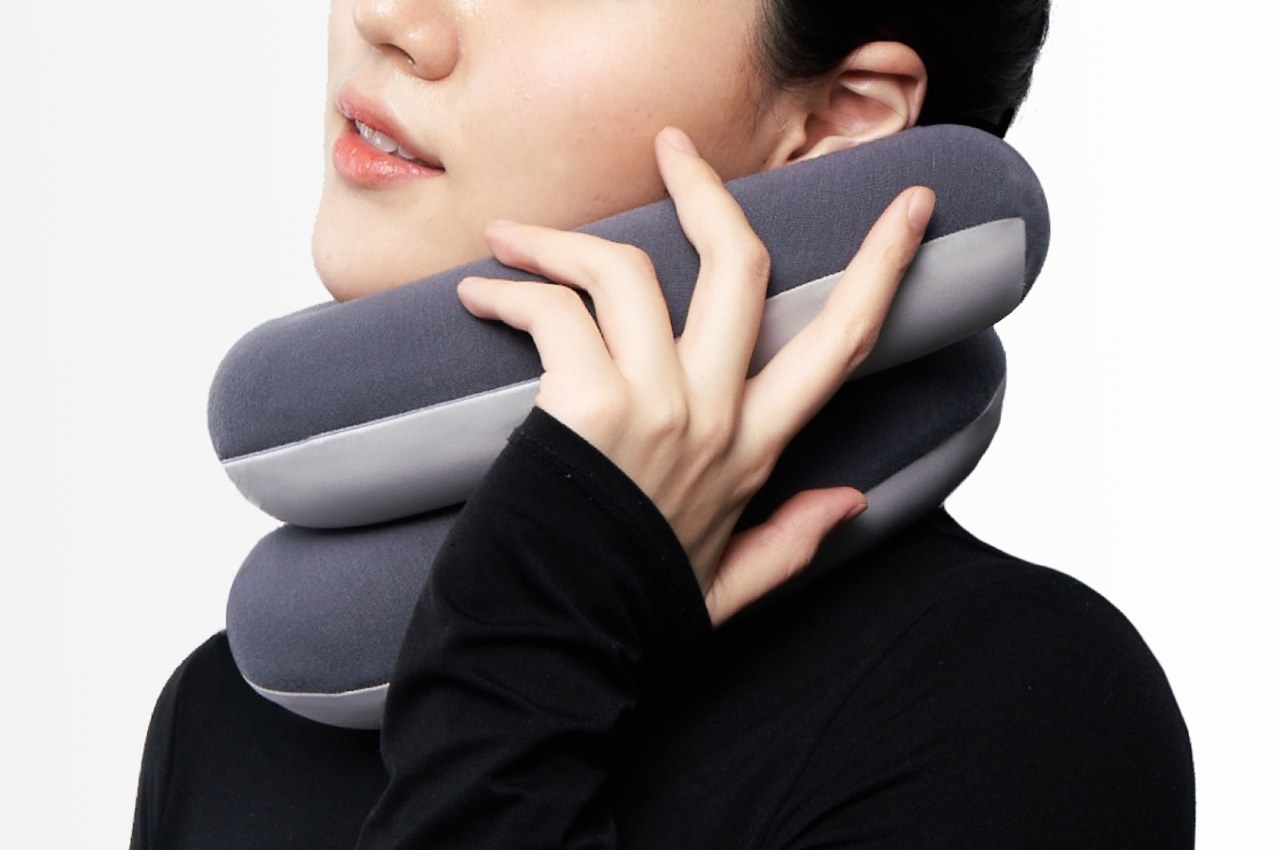

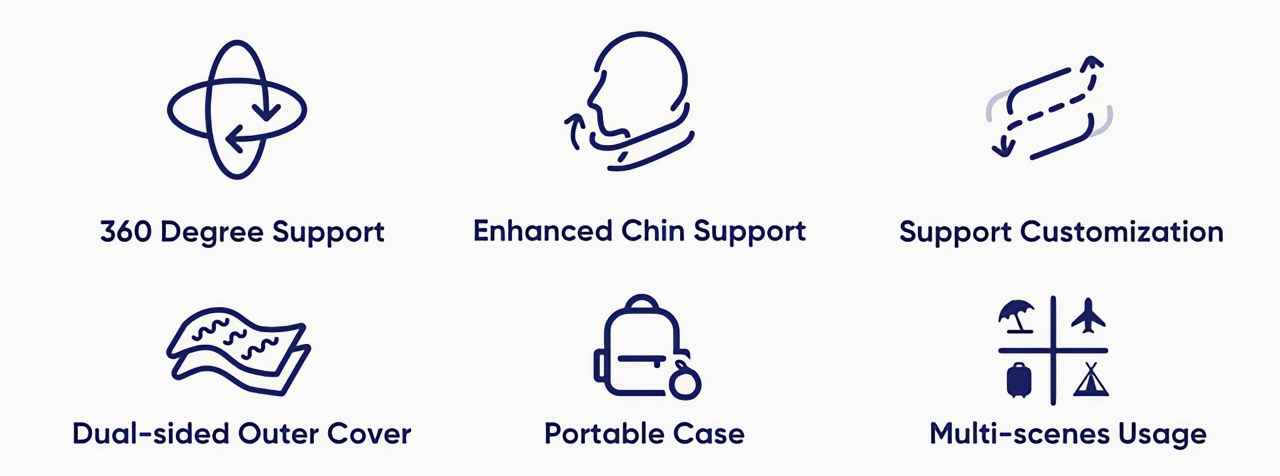

The U-shaped travel pillow has been the default for decades, and it has been mediocre for every single one of those decades. The Loop Pillow rejected the template. Its infinitely adjustable loop design wraps around the neck tightly or loosely, providing lift near the shoulder to support the head at whatever angle sleep actually arrives. If the U-shape is a one-size-fits-all solution, the Loop is a continuous adjustment that conforms to the person rather than the other way around.
The construction uses thermo-sensitive memory foam that molds to neck contours over time, paired with a moisture-wicking, breathable outer cover that keeps skin dry during sleep. Two cover colors correspond to a warm side and a cool side, allowing the sleeper to choose based on cabin temperature. The pillow works whether the head rests forward, to the side, or against the back of the seat, which alone puts it ahead of every rigid U-pillow on the market. For men who fly red-eyes regularly and have accepted that airplane sleep will always be imperfect, the Loop does not promise perfection. It promises adaptability, and on a cramped overnight flight, that distinction makes all the difference.
What we like
- The infinitely adjustable loop design works with multiple sleeping positions instead of forcing a single neck angle.
- Thermo-sensitive memory foam and a dual-temperature cover adapt to both the body and the cabin environment.
What we dislike
- The loop form factor looks unconventional and takes a few uses to figure out the wrapping technique that works best.
- Memory foam retains heat over long periods, and the breathable cover can only offset so much warmth during a 10-hour flight.
Where The Suitcase Closes
These eight products share a common thread. None of them demands attention, and none of them wastes space. They are corrections to the small, recurring failures of constant travel: bad coffee, bad sleep, bad lighting, lost training days, and the slow erosion of routine that comes with living out of a carry-on. The best travel gear is the kind that disappears into the rhythm of a trip rather than creating new problems to manage.
What ties this list together is not a category or a price point but a design philosophy. Each product earned its spot by answering a specific question that frequent flyers have asked, tested, and refined through repetition. The carry-on has limited real estate. These eight justify every square inch they claim.