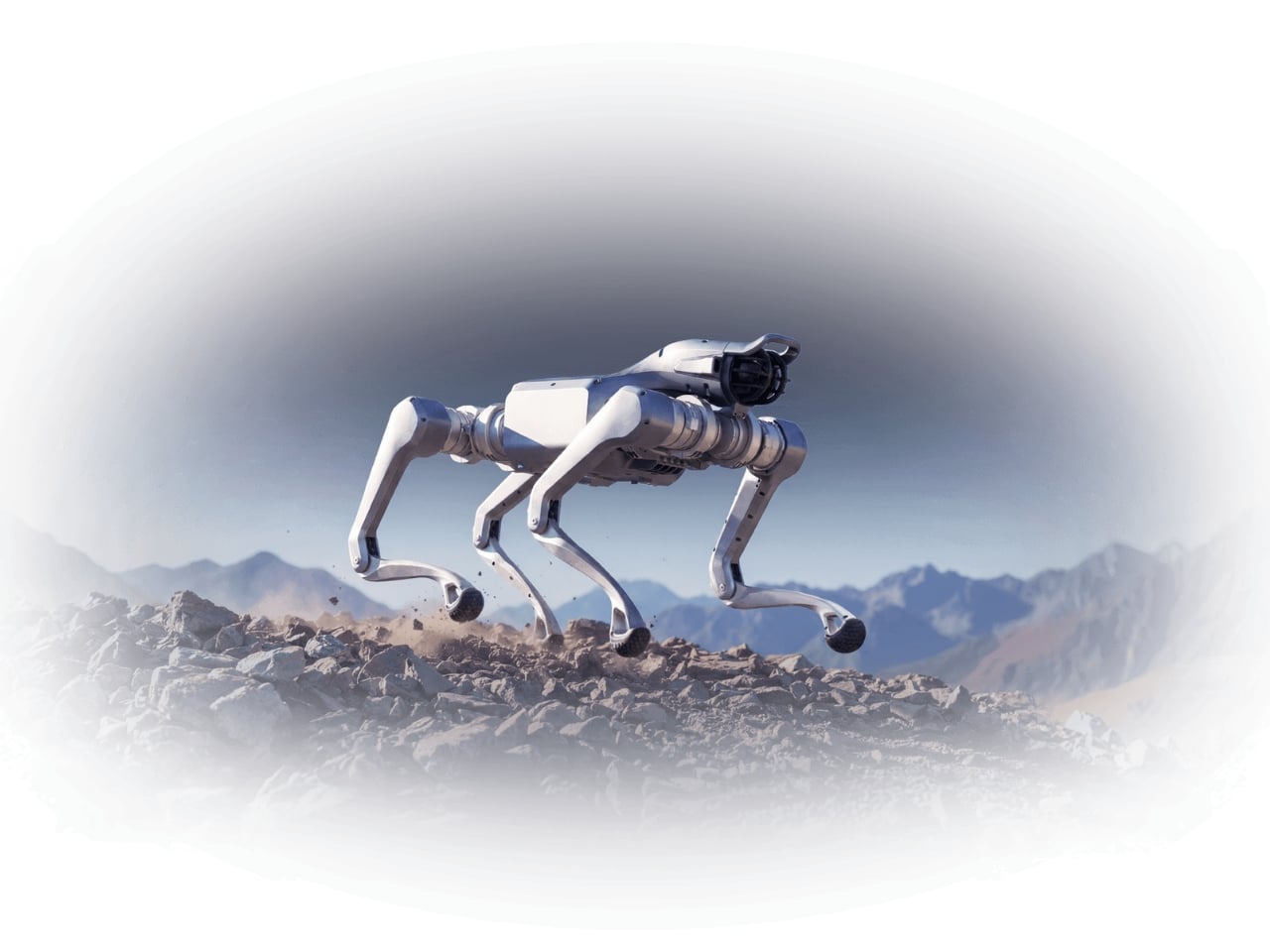
Robot dogs have been having a moment for a few years now. From Boston Dynamics’ Spot strutting through construction sites to viral videos of four-legged machines dancing to pop songs, the quadruped robot has gone from fringe sci-fi concept to a fixture of the modern tech conversation. But most of what we’ve seen has felt like proof of concept, interesting to watch but not quite ready to show up and do real work. Unitree’s new As2 feels like the machine that finally closes that gap.
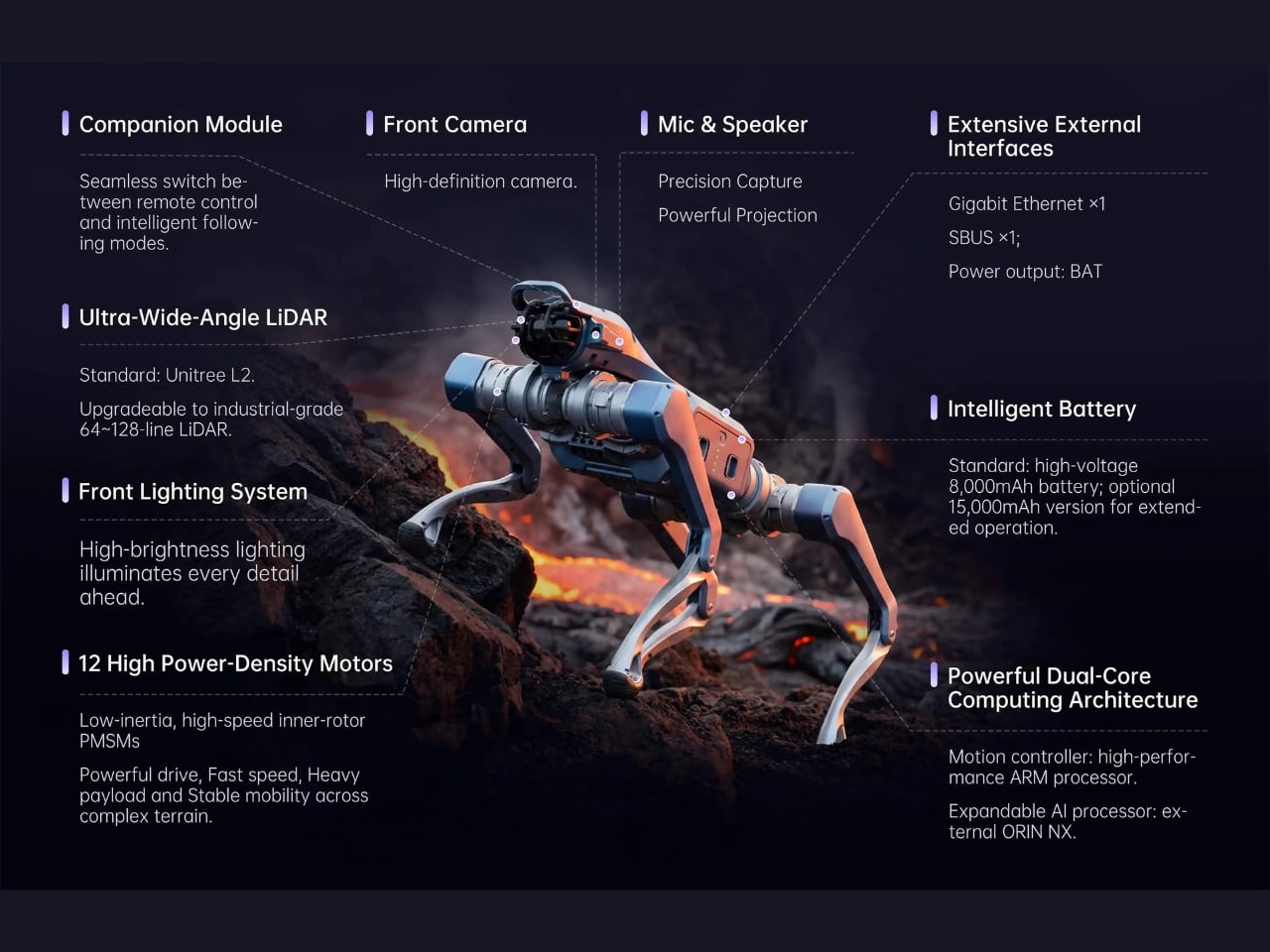
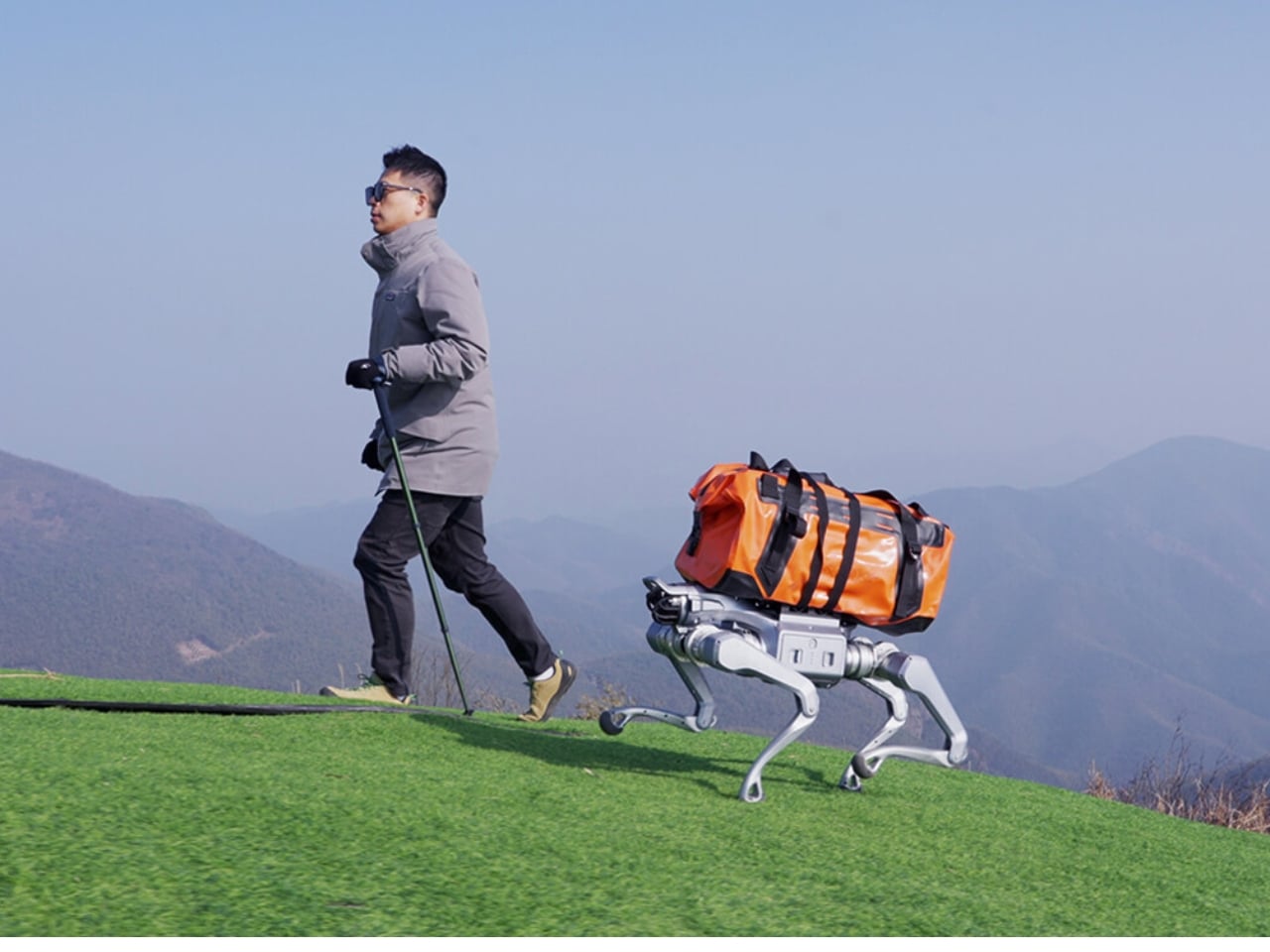
Unitree, the Chinese robotics firm behind the popular Go2 robot dog, just unveiled the As2, and the spec sheet alone is enough to make you stop scrolling. At about 18 kilograms, roughly 40 pounds with its battery included, the As2 is compact enough to move through tight spaces, yet built to handle a standing payload of up to 65 kilograms. That’s more than 143 pounds sitting on top of a 40-pound robot, which is genuinely impressive and a little hard to picture until you actually see it in action. For continuous walking with a load, it handles up to 15 kilograms and keeps going for over 13 kilometers. Its battery, a 648Wh, 15,000mAh unit, gives the As2 more than four hours of runtime when unloaded, covering over 20 kilometers. For an industrial robot, that’s a serious range.
Designer: Unitree

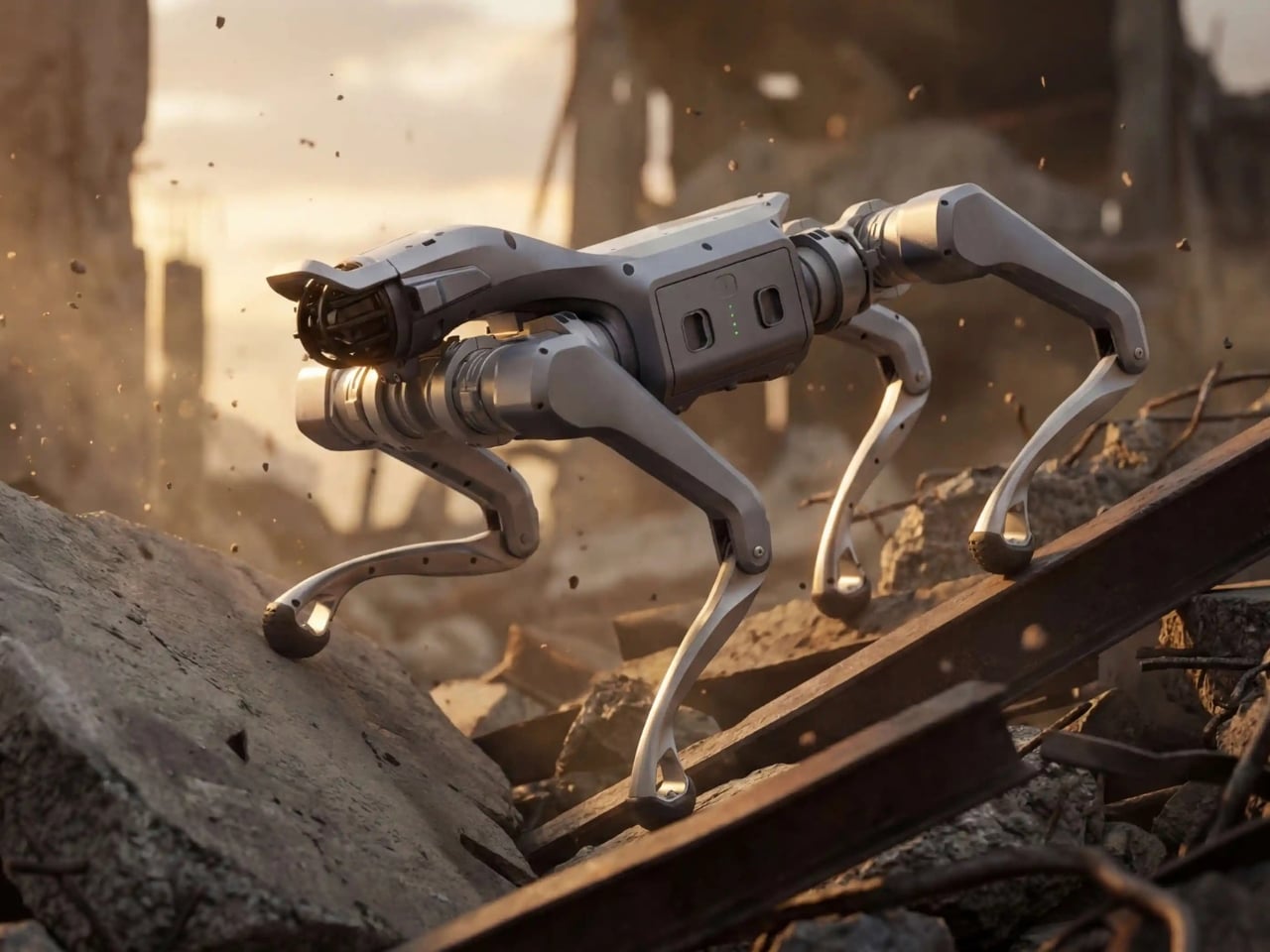
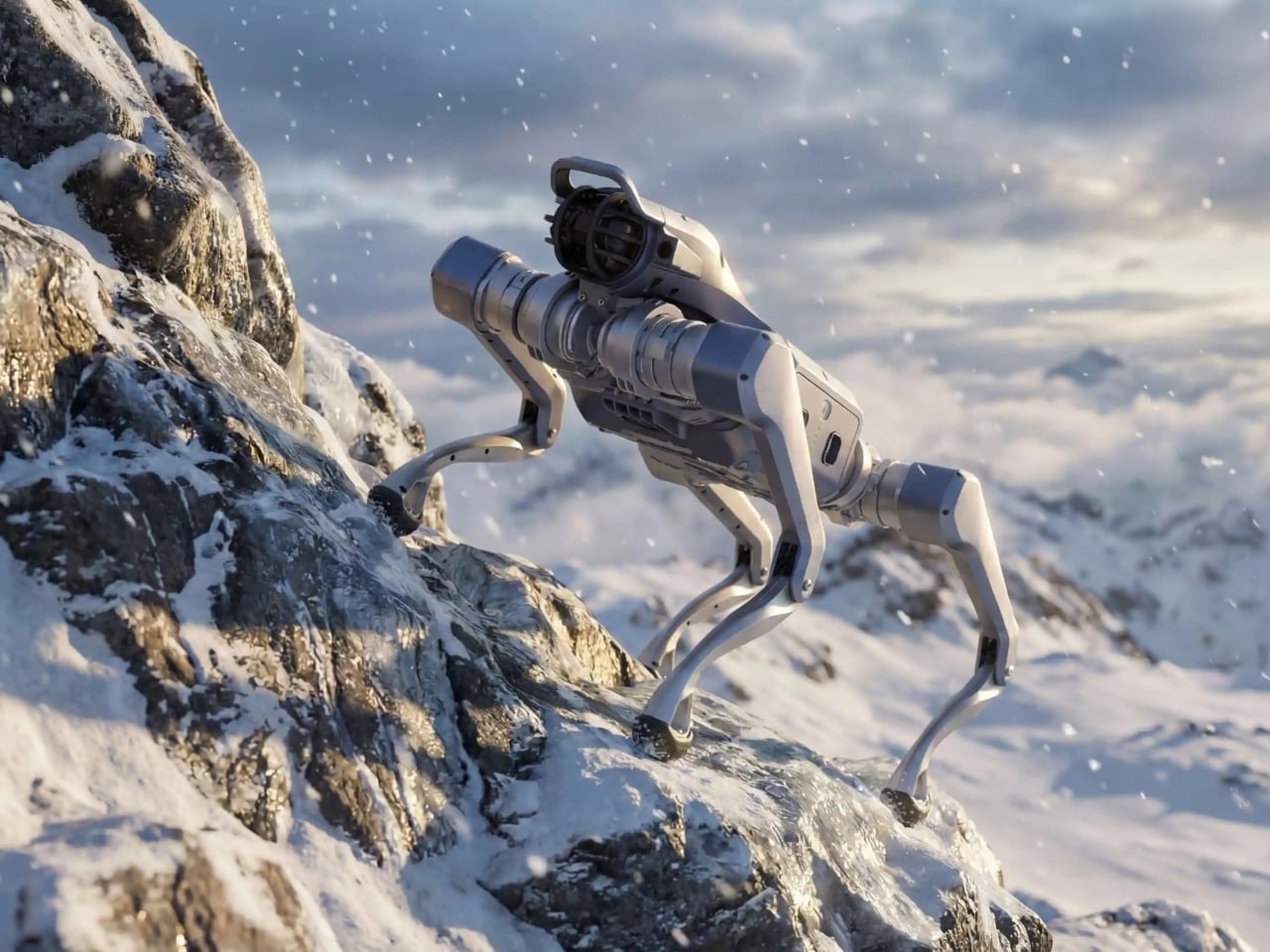
Speed-wise, it hits over 5 meters per second, roughly 11 miles per hour, which is faster than most people jog. It can climb stairs up to 25 centimeters high, tackle slopes at 40 degrees, and mount vertical platforms as high as 50 centimeters. The torque output sits at approximately 90 N·m with a torque-to-weight ratio of about 5 N·m/kg, driven by low-inertia inner rotor motors paired with industrial-grade crossed roller bearings. The engineering here is dense and deliberate. This isn’t a toy built to look capable; it’s a machine built to actually be capable.
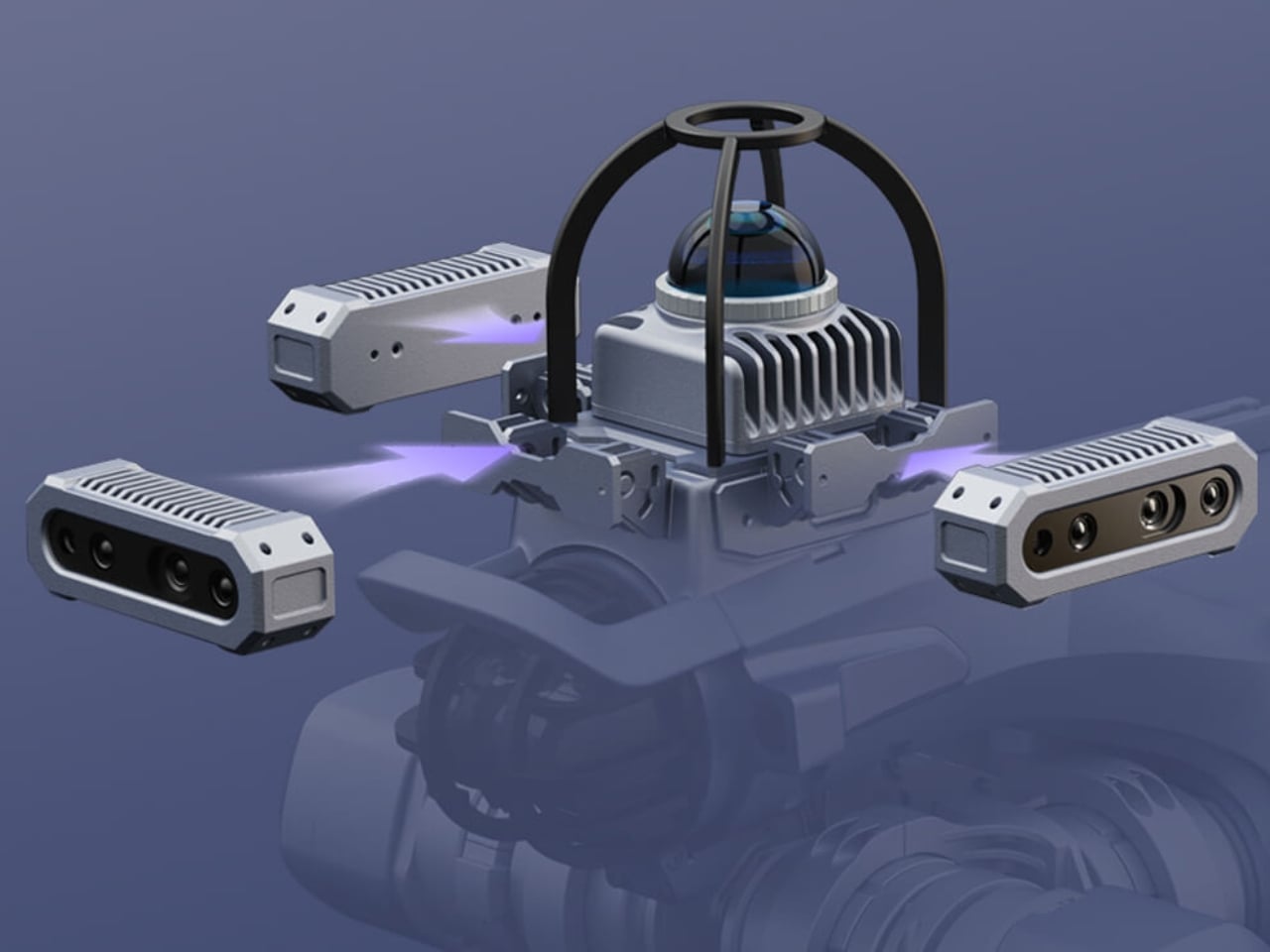
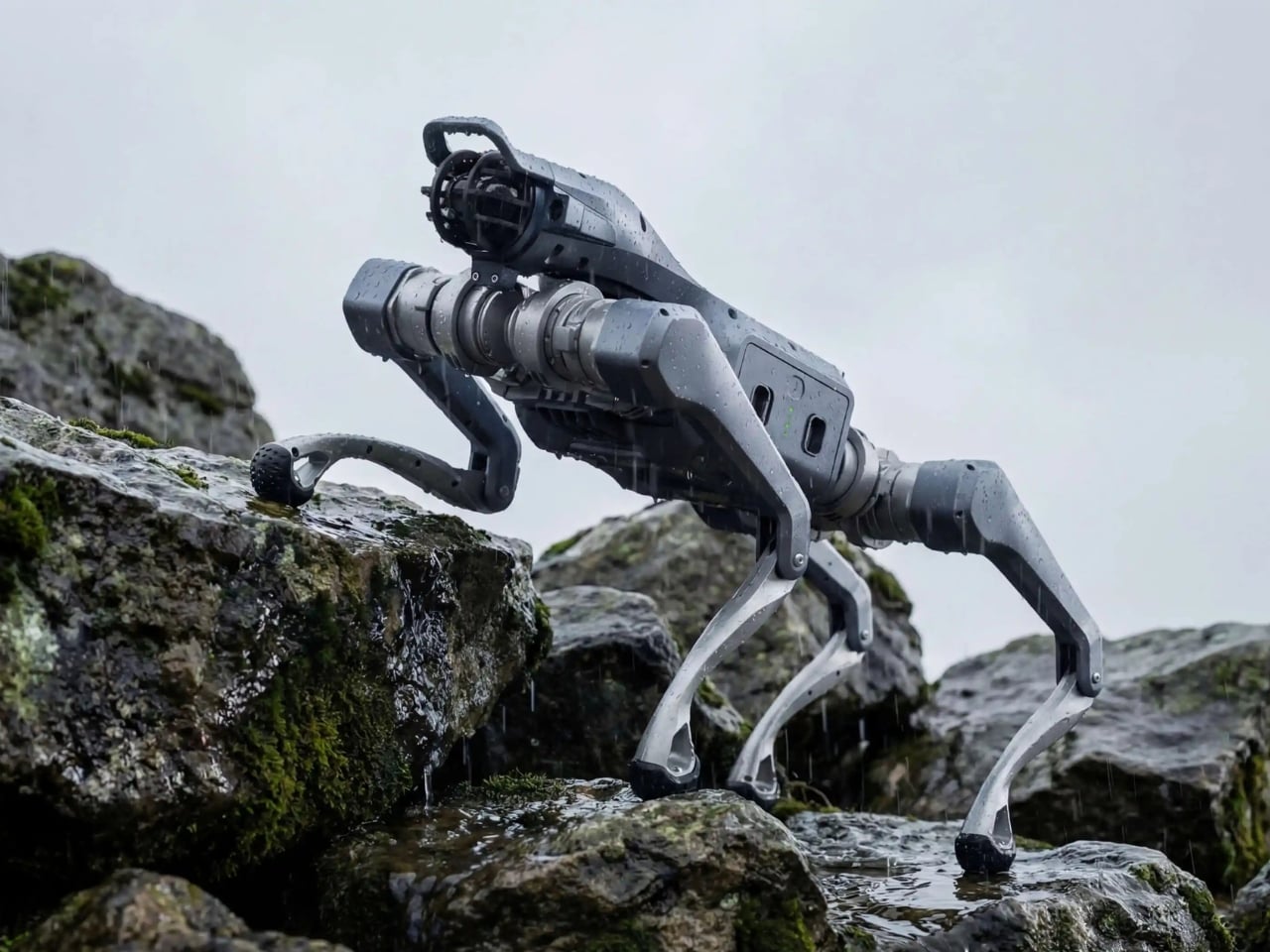
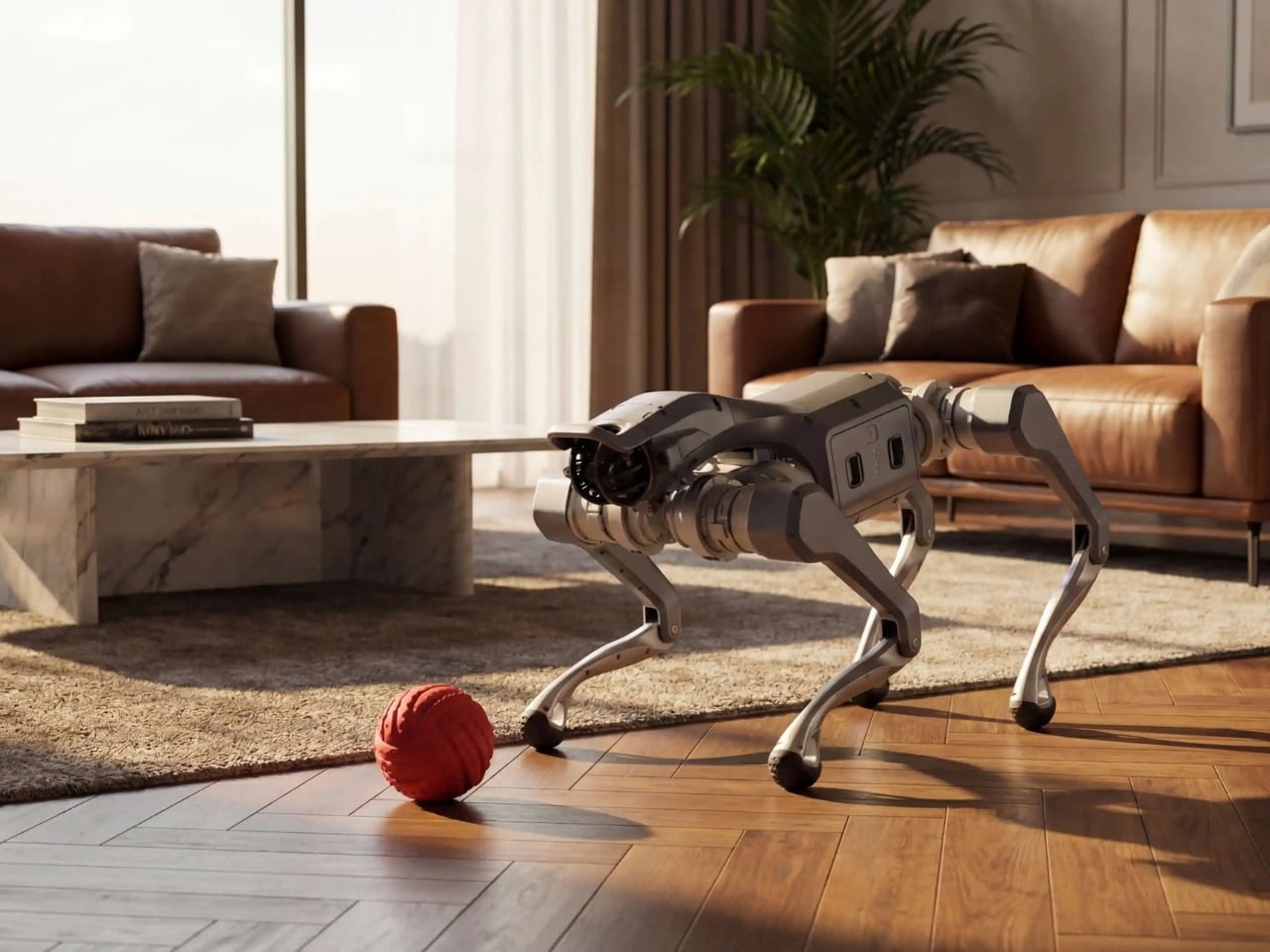
What I find most interesting about the As2, though, is how Unitree is positioning it. The tagline is “Compact Size, Industrial Capability,” but the word they keep coming back to is “companion.” That’s a deliberate choice, and it tells you something about where the company sees this going. The robot dog market has largely split into two camps: big industrial machines that feel cold and utilitarian, and smaller consumer products that are more novelty than anything else. The As2 seems to be genuinely trying to live in the middle, built tough enough for real environments with an IP54 weatherproofing rating and an operating range from -20°C to 50°C, but designed with a level of approachability that suggests Unitree has a broader audience in mind.
The platform is also open, which matters more than it might seem. The As2 supports large AI models for what Unitree calls “embodied AI interaction,” essentially giving developers the tools to build autonomous behavior on top of the hardware. The EDU model can even be expanded with an NVIDIA Jetson Orin NX, which opens the door to more complex AI applications. GPS and 4G are built in, though disabled by default. It runs on an 8-core CPU and comes in three configurations, AIR, PRO, and EDU, each scaled for different use cases from general exploration to full industrial deployment.
What strikes me about the As2 is that it represents a shift in tone for robot dogs as a category. The conversation around this technology has often leaned either dystopian, think surveillance and military use, or dismissive, as if legged robots are just expensive novelties. The As2 doesn’t entirely escape those conversations, but it does reframe them a bit. A machine this capable, this portable, and this open as a development platform has real potential in search and rescue, agriculture, infrastructure inspection, and logistics. The vision of a robot companion that is genuinely useful rather than just impressive is within reach, and the As2 is one of the better arguments for it.
Whether Unitree can translate this hardware into widespread, practical adoption is a different question entirely. But as a statement of where robot dogs are heading, the As2 is worth paying attention to.