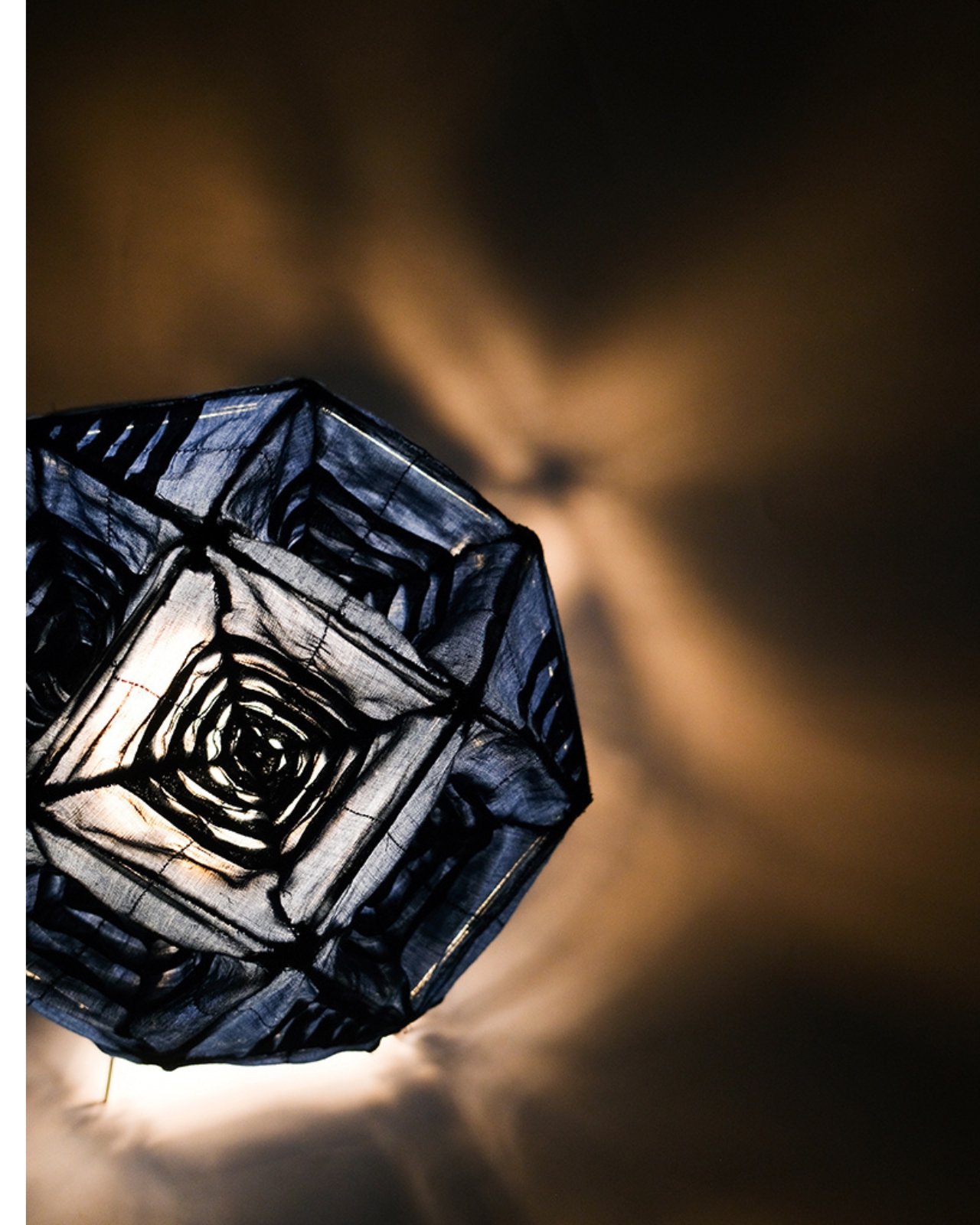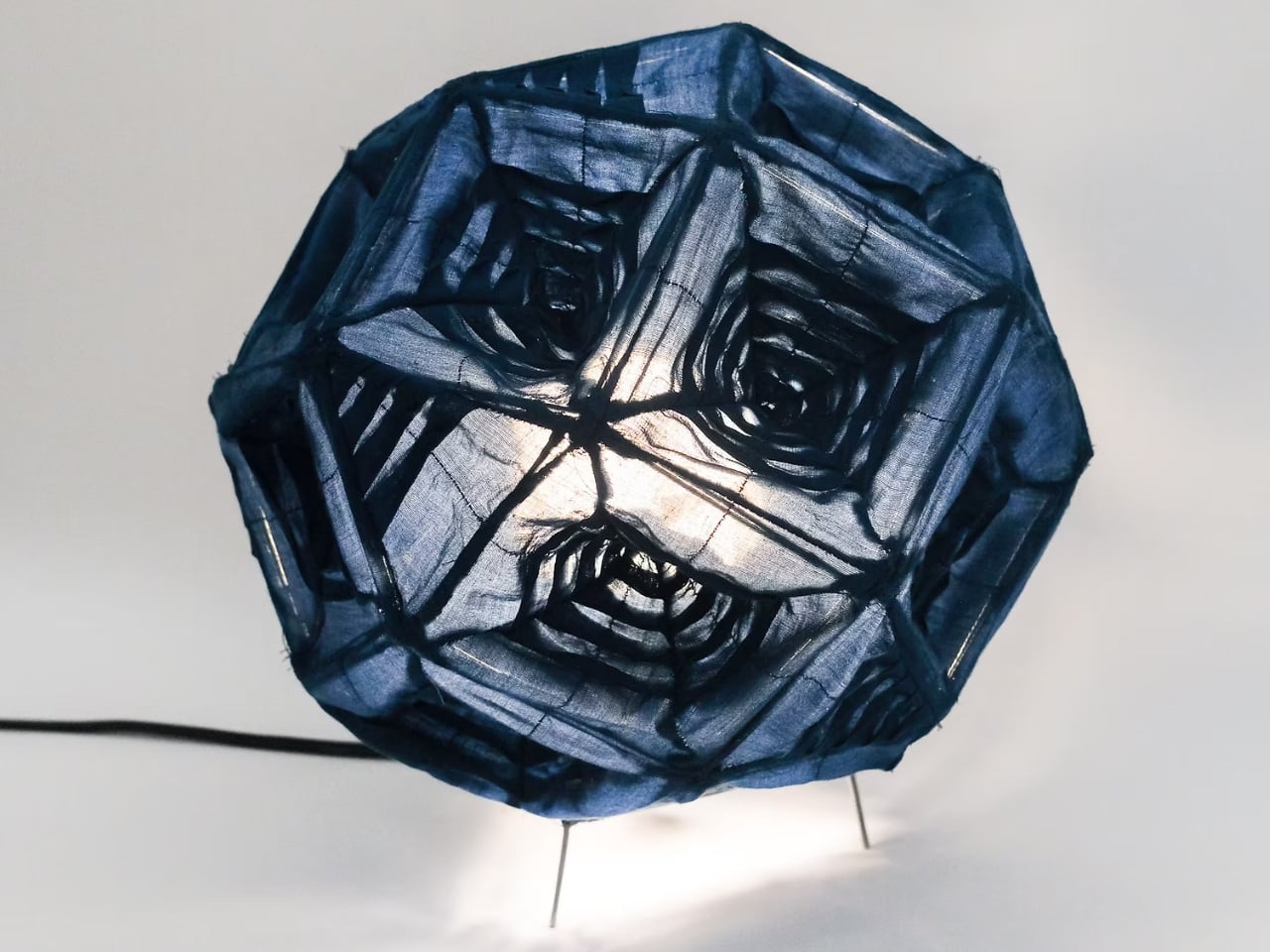

There’s a moment when you look at a well-designed object and feel something shift quietly inside you. Not a gasp, not a dramatic reaction, just a quiet recognition that someone thought deeply about what they were making and why. That’s exactly how I felt when I came across Aoi, a pleated lighting fixture by designer Ingrid Ng of InOutGrid, and I haven’t stopped thinking about it since.
At first glance, Aoi looks like geometry made soft. The lampshade is built in the shape of a twenty-four-sided icositetragon, which sounds like something out of a math textbook but translates visually into something surprisingly graceful. It sits somewhere between origami and architecture, structured enough to feel intentional but tactile enough to feel human. And that tension, that careful balance between rigor and warmth, is really what makes the piece worth paying attention to.
Designer: Ingrid Ng / InOutGrid
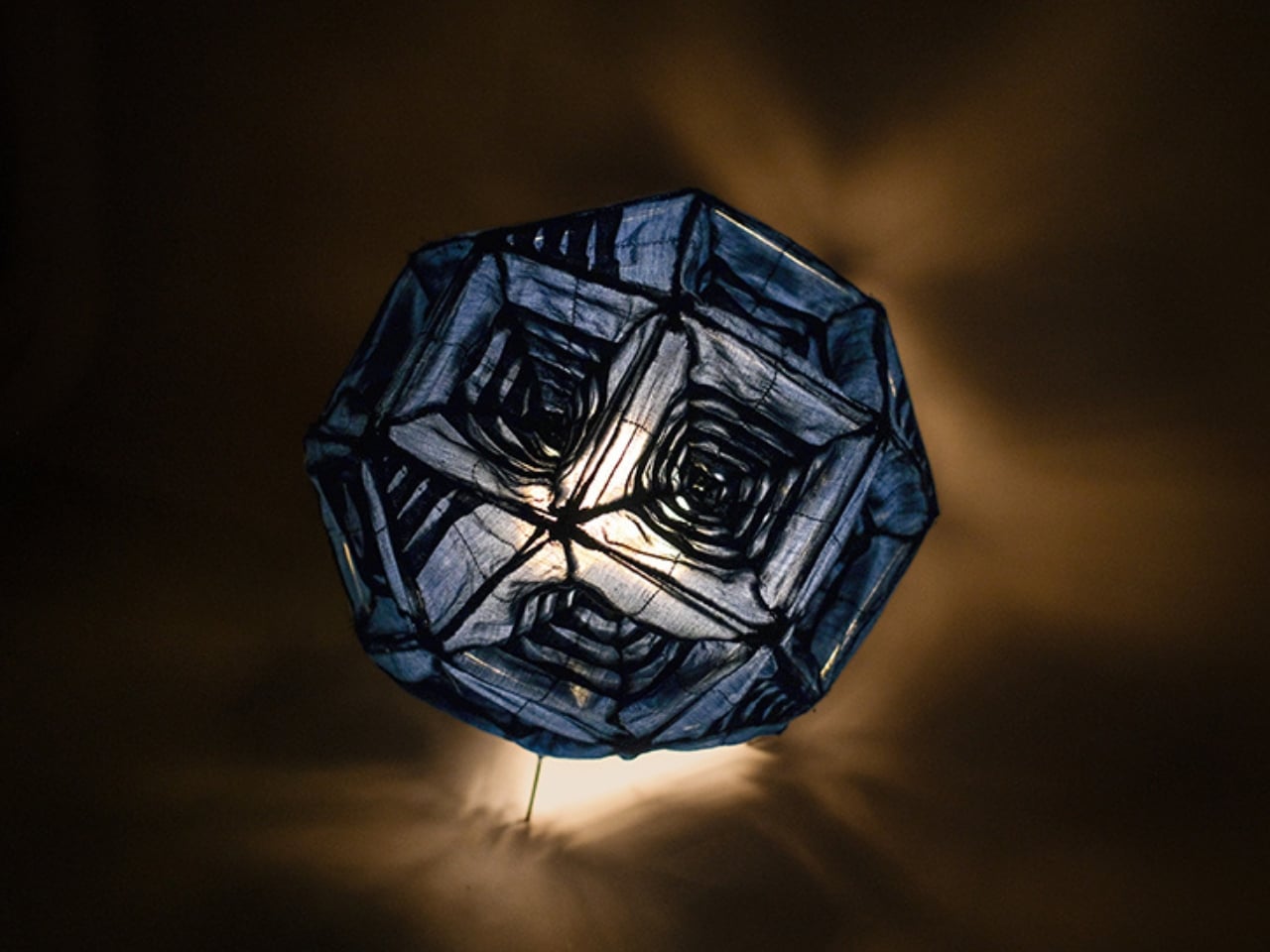
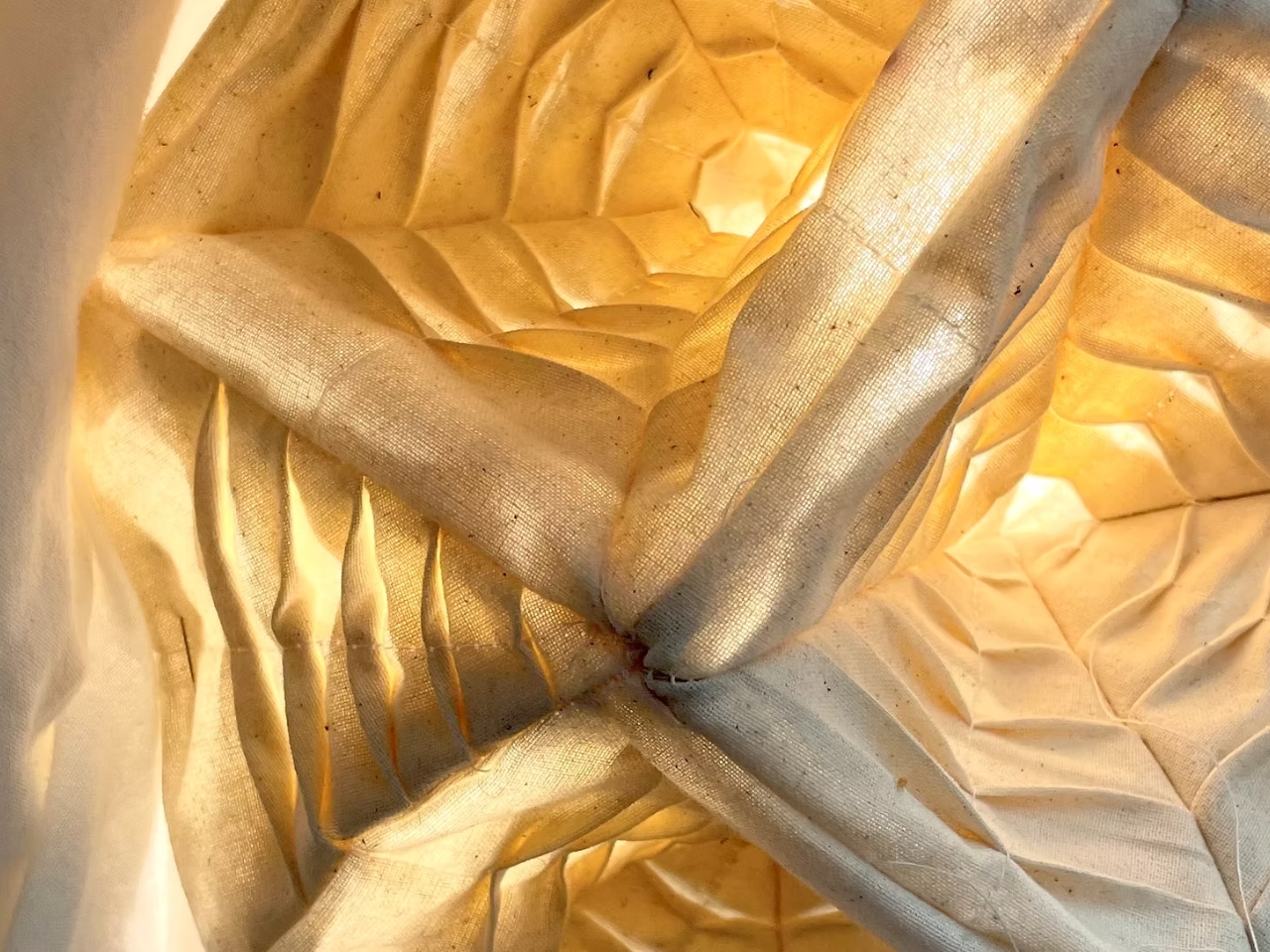
Ng’s approach centers on traditional pleating techniques applied to sheer layered fabrics. Pleating, of course, is one of the oldest forms of textile manipulation we have. It’s been used in clothing, in paper crafts, in Japanese lanterns for centuries. What Ng does with Aoi is take that heritage and redirect it toward function and light in a way that feels both reverent and completely fresh. The design draws from the proportions and framing logic of traditional Japanese lanterns, and you can feel that lineage in the piece without it ever feeling like a costume or a direct reference.
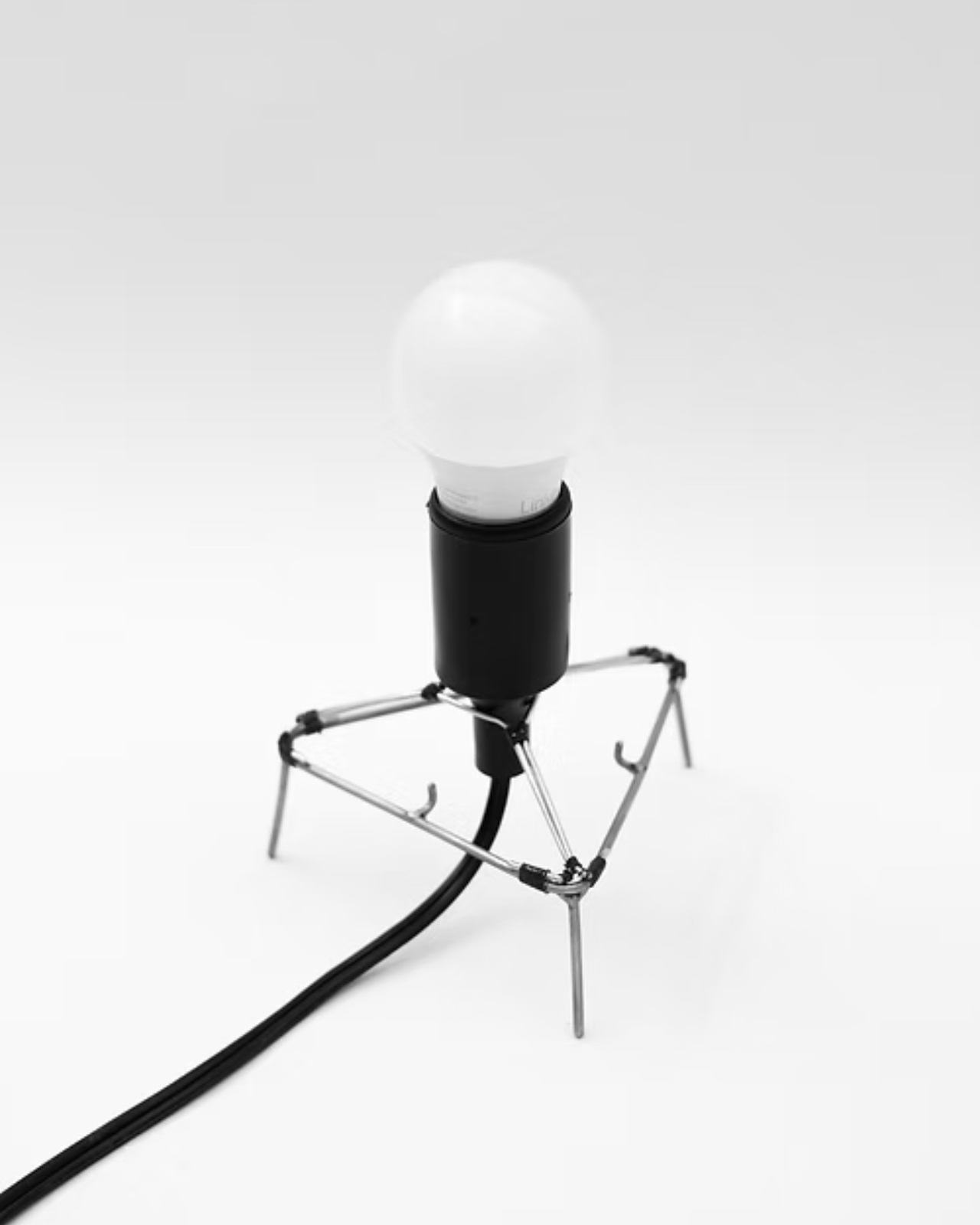

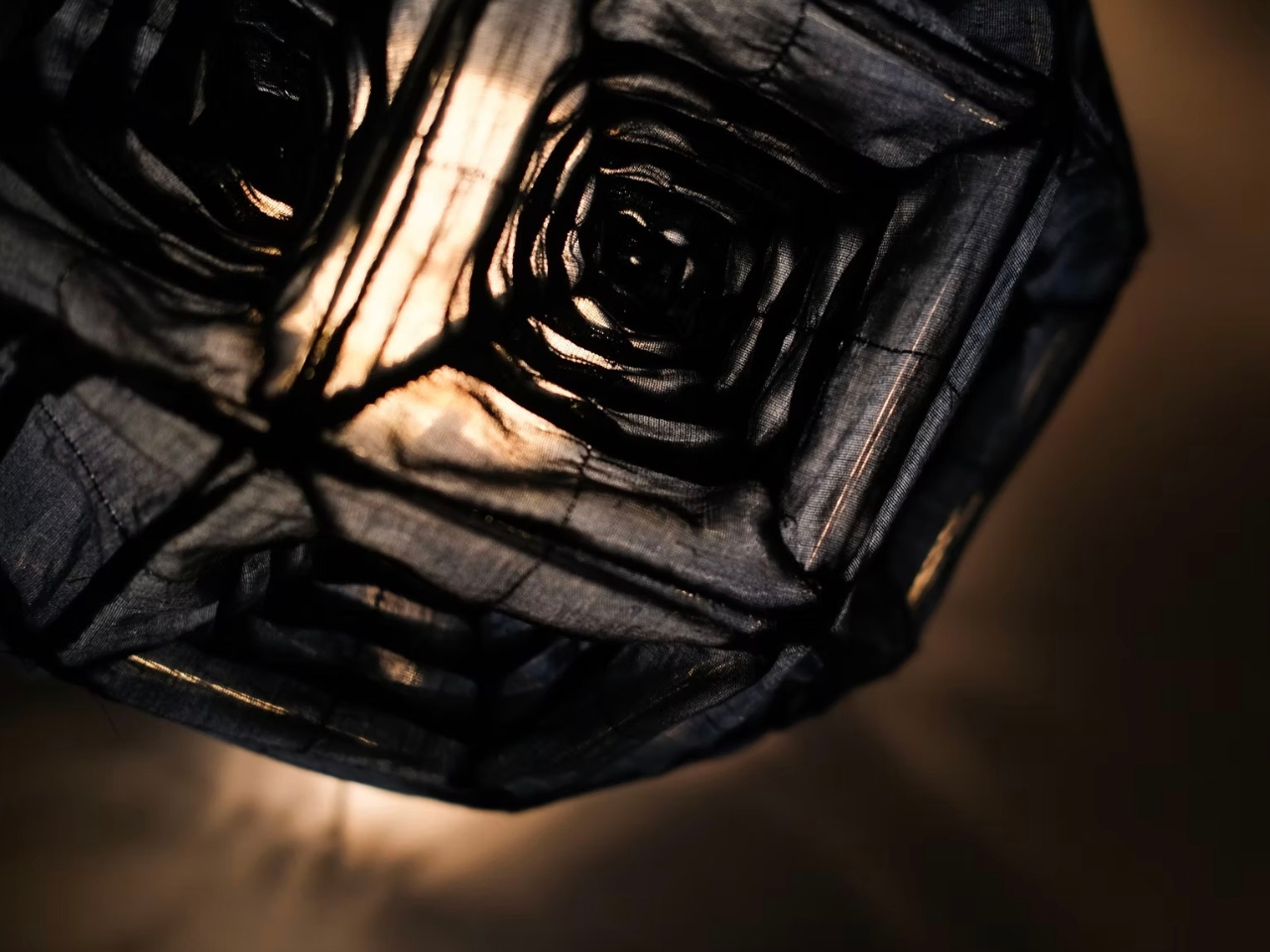
What’s genuinely clever about Aoi is what happens when you turn it on. In its unlit state, the exterior reads as mostly monochromatic, clean and composed. But the moment light is introduced, the superimposed sheer fabric layers begin to interact with each other in ways you wouldn’t predict from looking at it cold. Layered shades of blue emerge, arranged in geometric configurations. Shadows shift in calibrated patterns across surrounding surfaces. The lamp doesn’t just illuminate a room, it performs in it. And I mean that as a compliment, not a critique. There’s a meaningful difference between performance that’s gratuitous and performance that reveals something true about an object’s construction.
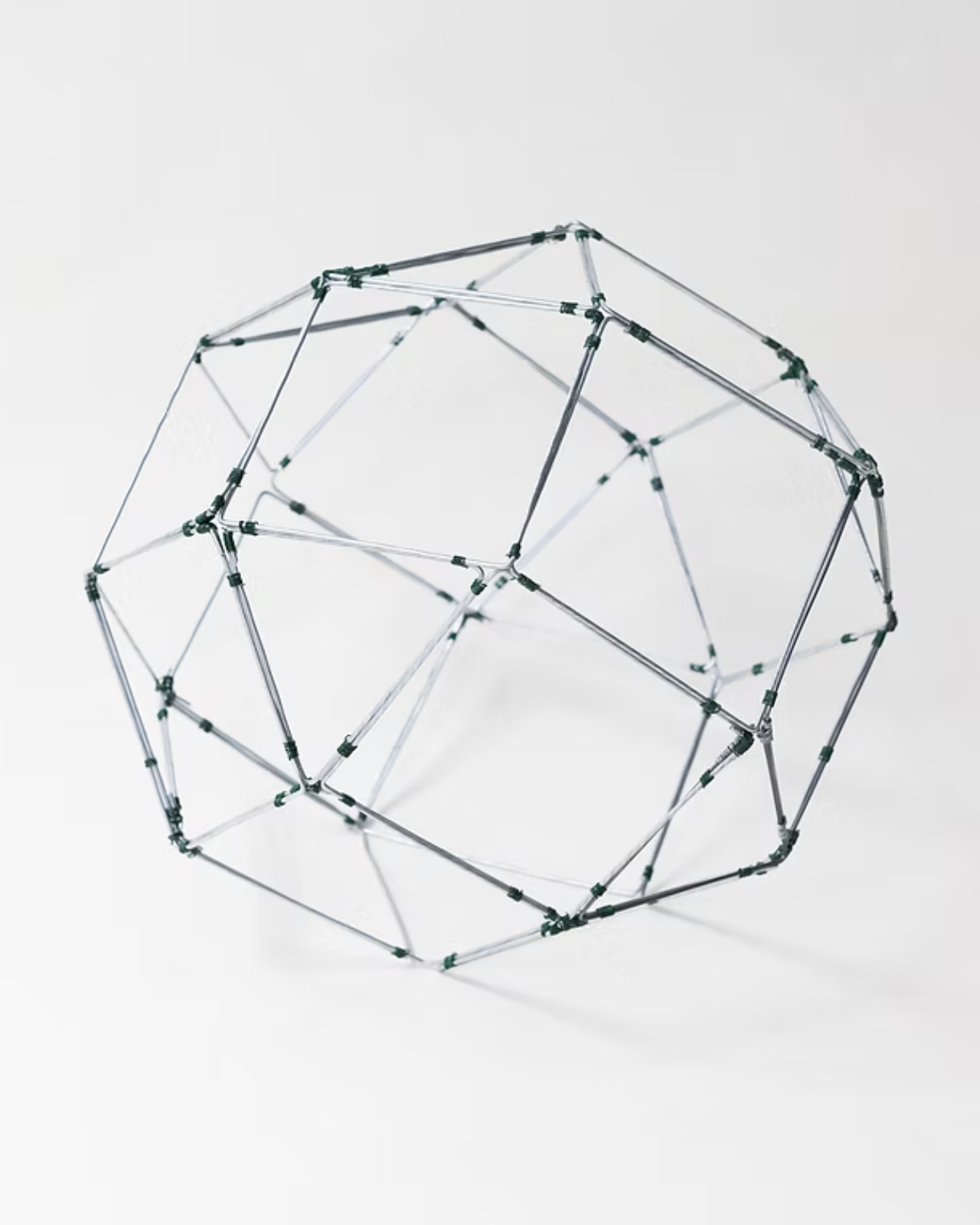
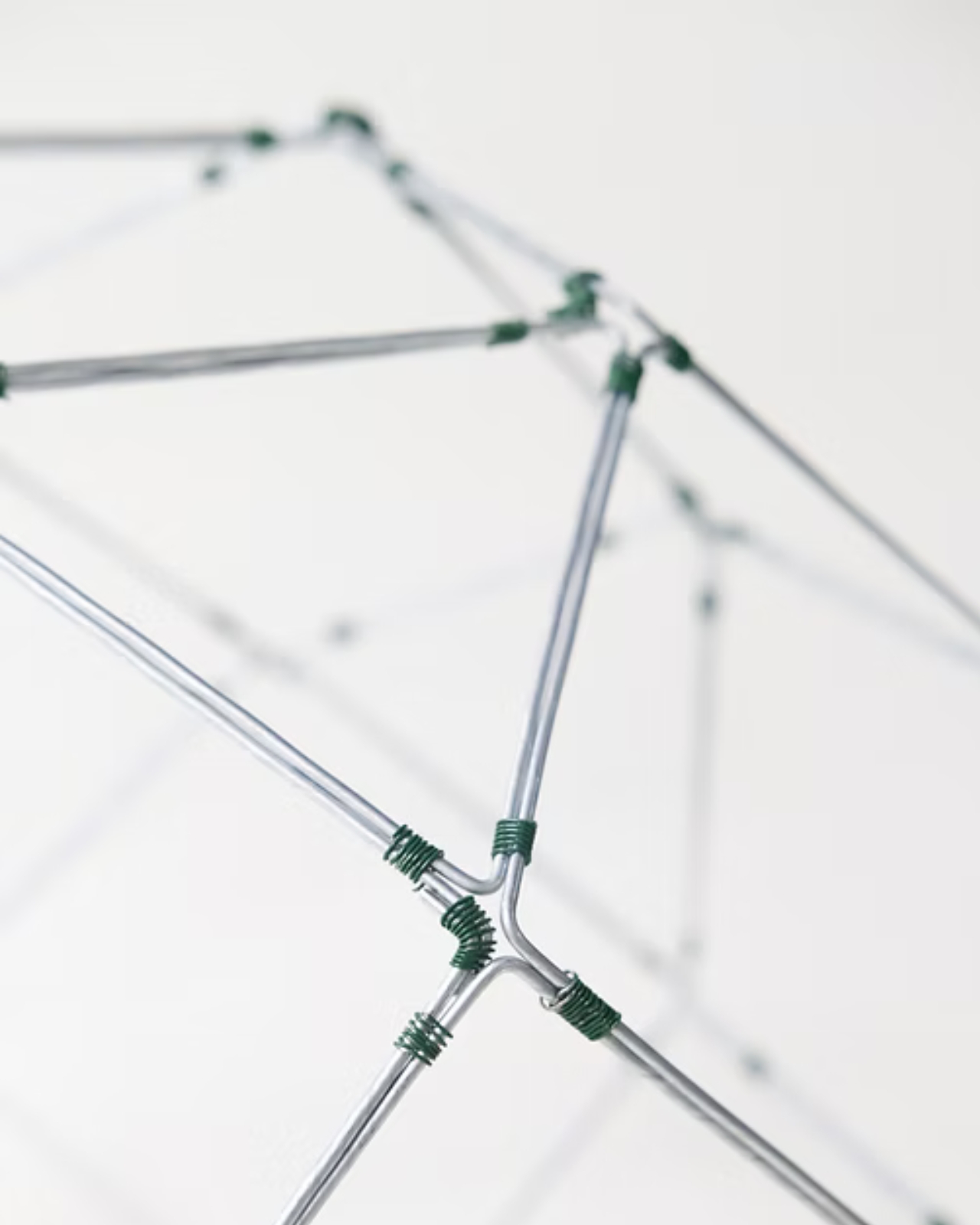
The internal structure is worth mentioning too. A wire armature supports the pleated fabric envelope, keeping everything stable without visually intruding on the lightness of the textile. It’s the kind of detail that rarely gets appreciated because when it works, you simply don’t notice it. The fabric appears to float and hold its shape simultaneously, which sounds contradictory until you see it and understand that the whole point was to let the material speak for itself, without interference.

What I appreciate most about Aoi is that it doesn’t overcomplicate its own thesis. So much of contemporary product design is about stacking features or making an aesthetic statement loud enough to be photographed. Ng does the opposite. The idea here is elegant in its restraint: fabric can be structural. Fabric can modulate light. Fabric, when handled with precision and care, can become a medium as rigorous as steel or glass. That argument doesn’t need a manifesto. The lamp makes it entirely on its own.
There’s also something meaningful about rooting contemporary work in craft traditions that predate digital tools by centuries. In an era where generative design and algorithmic aesthetics dominate so many design conversations, Aoi is a gentle but firm reminder that the fold, the pleat, the carefully stitched edge, these are not primitive precursors to modern design thinking. They are sophisticated techniques with as much to offer today as they ever did, perhaps more so, precisely because they require patience and physical understanding that no software can replicate or shortcut.
Aoi isn’t trying to reinvent lighting design. It’s doing something more interesting than that. It’s asking what happens when you apply genuine craft curiosity to a very ordinary object, and it keeps proving that the answer can be quietly extraordinary. Not every design needs to shout. Some of the best ones just glow.