
There’s a common saying that beauty hurts. Pretty shoes that blister your heels by noon. A dress cut so perfectly that breathing becomes a optional. The needle of a tattoo tracing something meaningful into your skin. Or even a surgical knife, for the dream of a better face or physique. People have always been willing to trade comfort for something that looks or feels transcendent, and the logic has always made a strange kind of sense. What I never anticipated was applying that same sentiment to sitting on an iMac.
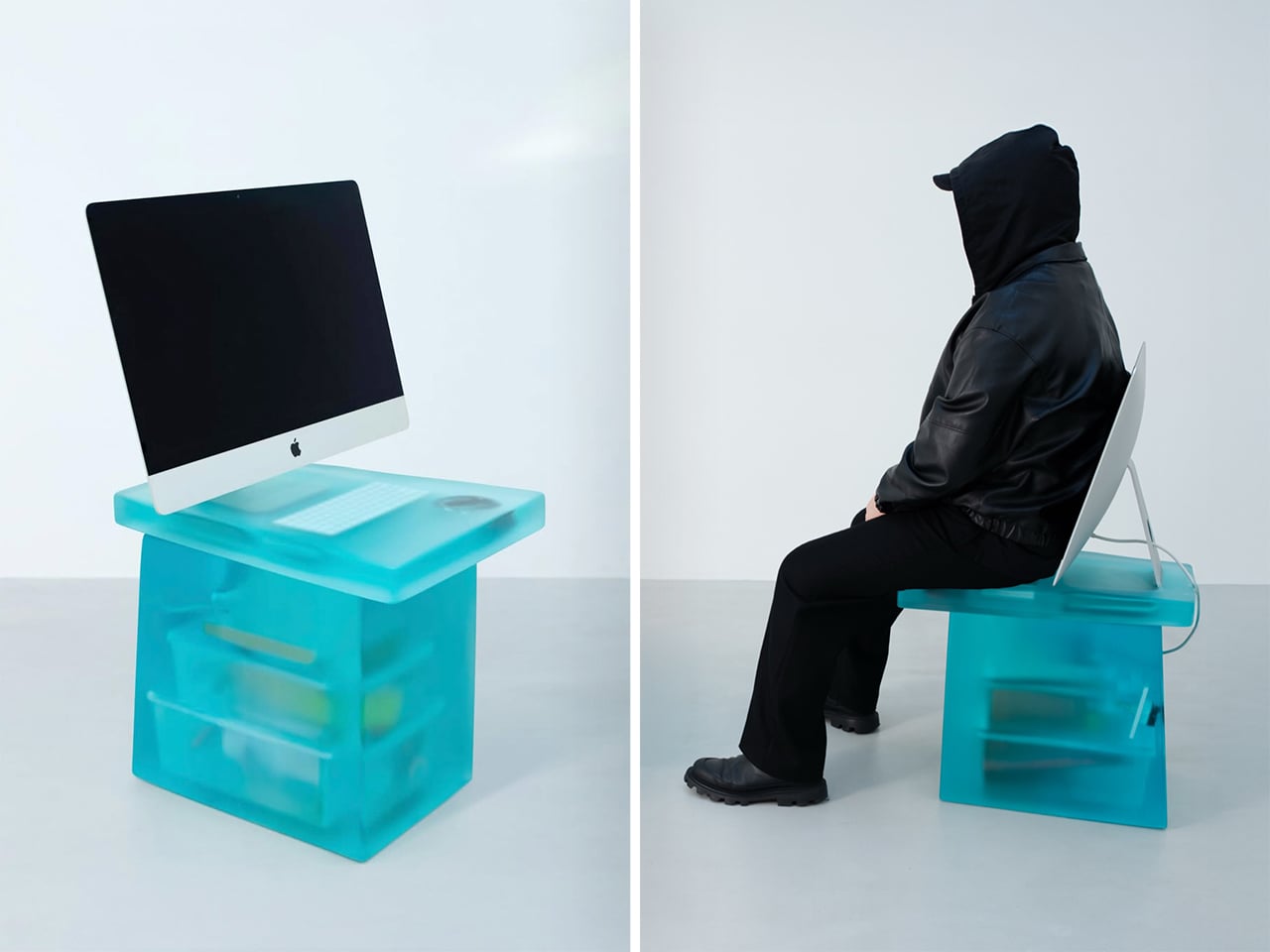
Dip1, a chair by Korean designer Lim Wootek, takes that idea literally. The backrest is a real iMac monitor, its slim aluminum frame pressed against your spine as you settle in. It sounds wrong. It feels wrong. And somehow, that wrongness is exactly what makes it so addictive to look at. The keyboard, mouse, and storage bins are encased beneath the seat in a glowing block of cyan resin, visible through the haze like memories you recognize but can no longer touch. I guarantee you, you’ll grimace at the thought of sitting on the chair, as you lean back against what might be the most expensive and engineered backrest known to mankind.
Designer: Lim Wootek
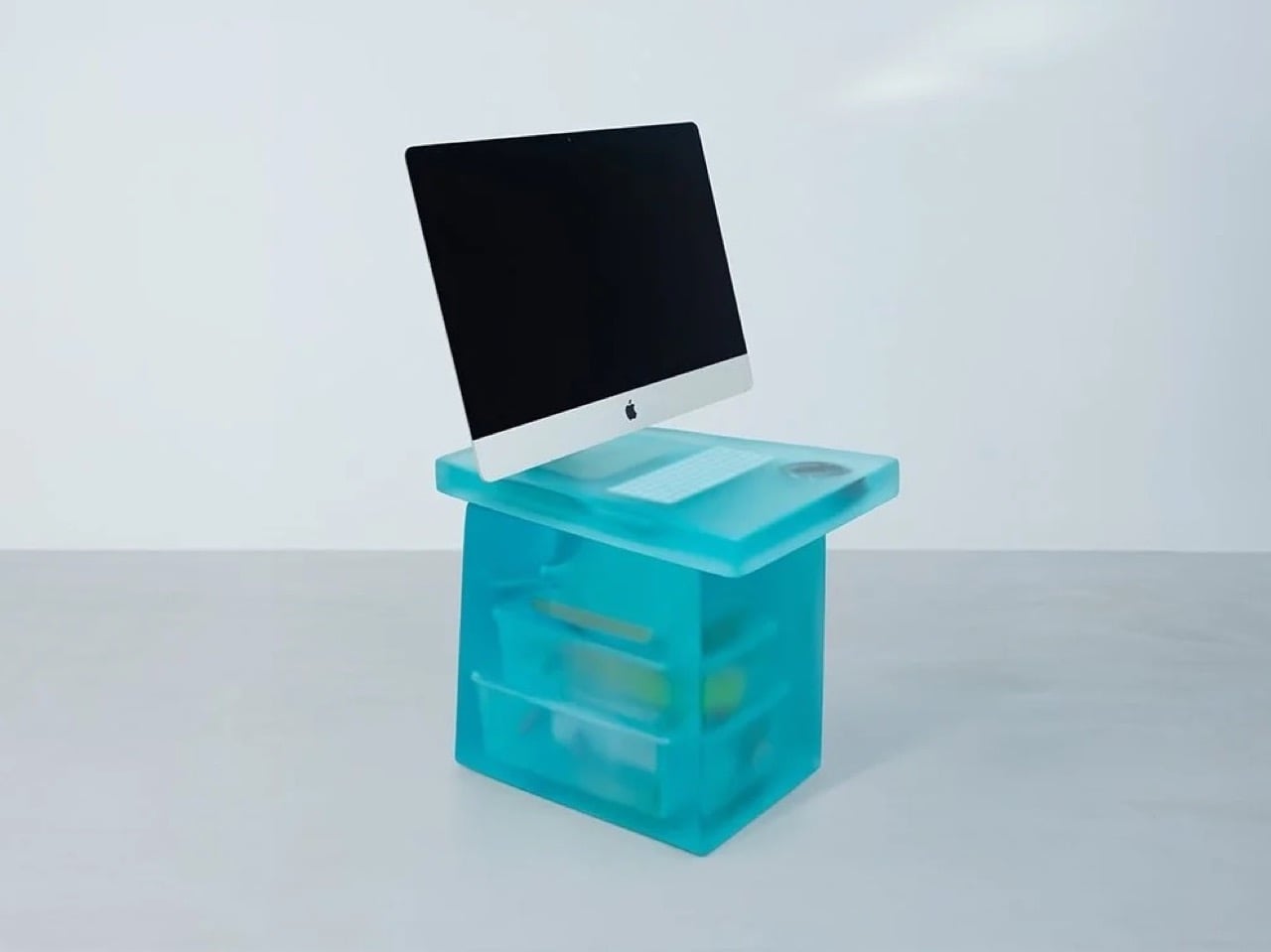

The resin block is where the craft gets interesting. Lim sealed a full Apple Magic Keyboard, a Magic Mouse, and a set of colored desktop storage bins inside the body of the chair. The bins are the kind that live on studio shelves holding batteries, USB cables, and every small object that never quite found a permanent home. Through the semi-translucent resin, their shapes read clearly near the seat surface and dissolve into soft blur toward the base. That gradient from legible to ghosted is the whole thesis of the piece made physical, and it required real material control to pull off at this scale.
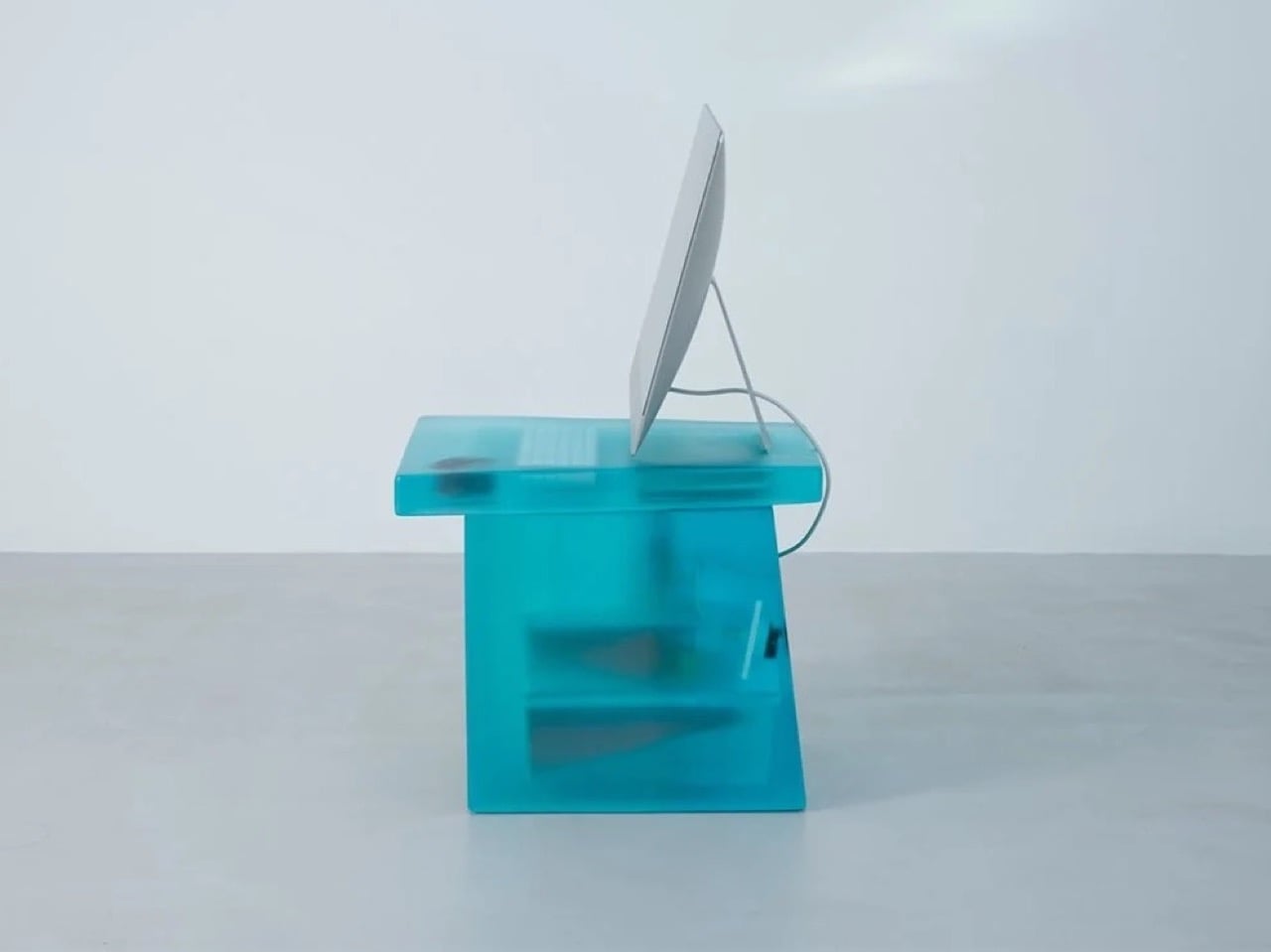
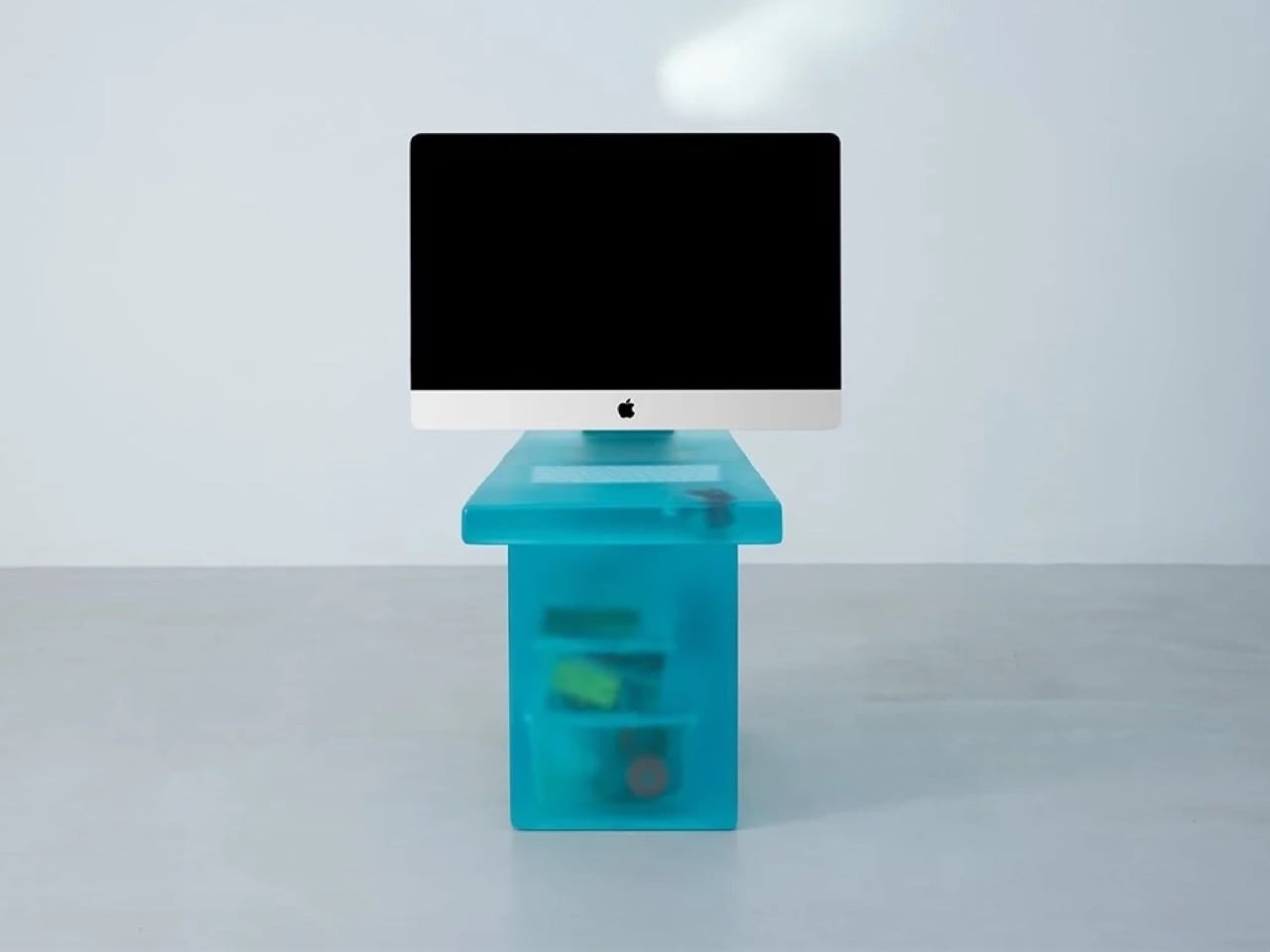
The iMac is a 27-inch model, the flat-chinned aluminum design that Apple ran from 2012 through 2022, with the display sitting at 68.6cm diagonally and the full unit standing around 65cm tall. These are not small numbers, and the chair has the presence to match. The monitor backrest positions the screen at exactly the height you would have once made eye contact with it, which means the sitter has literally turned their back on it. The screen now faces outward, away from the person in the chair, and that single spatial decision carries more conceptual weight than most designers manage in an entire project.
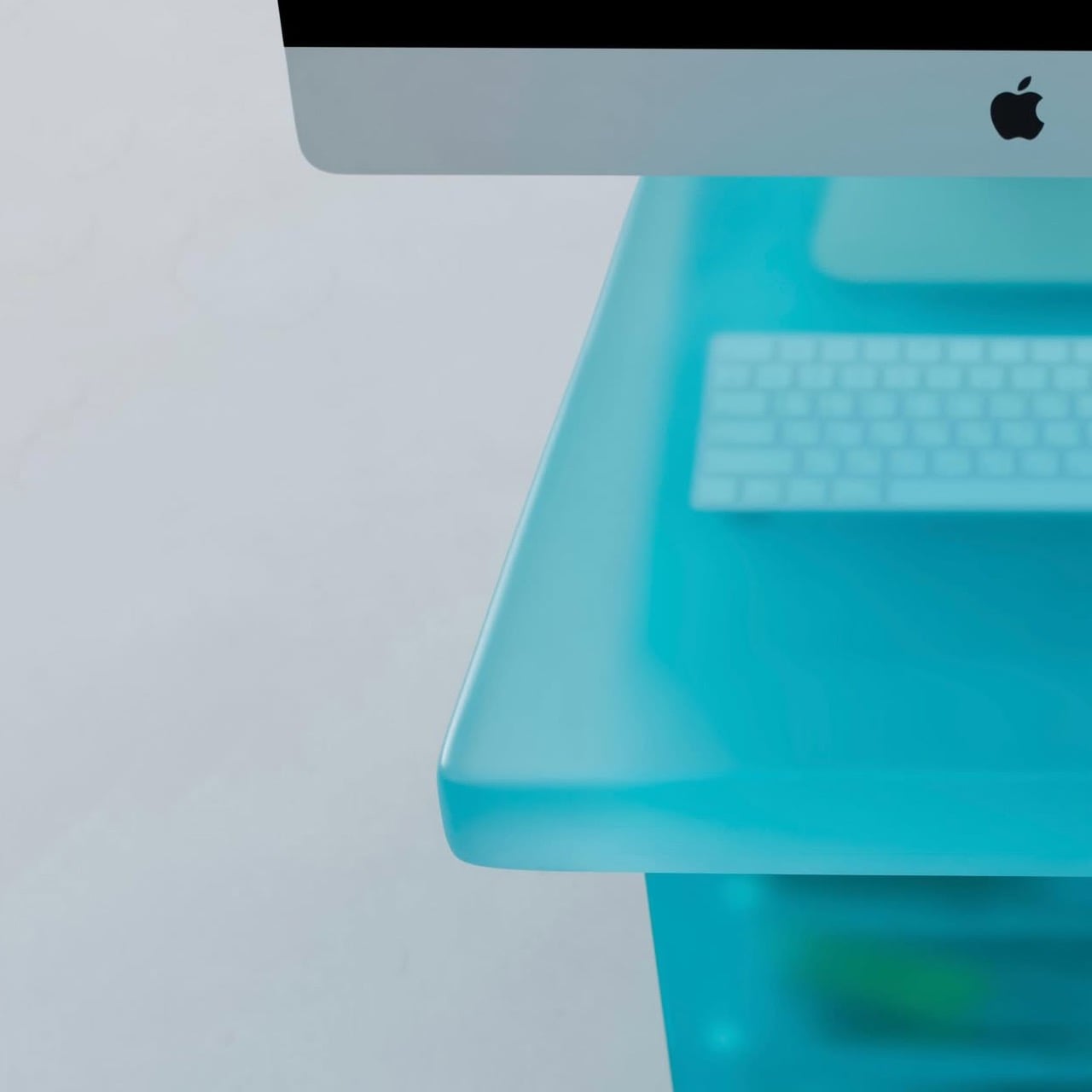

Standard seat height on the resin block sits at around 45cm, which is ergonomically normal, and that normality is part of what makes the piece so disorienting. You could actually sit in this. People do sit in this, as the campaign photos show. A figure in all black, hooded, leaning back against the aluminum monitor stand with the posture of someone who has fully accepted the situation. The chair functions, and that functionality makes the statement sharper rather than softer.
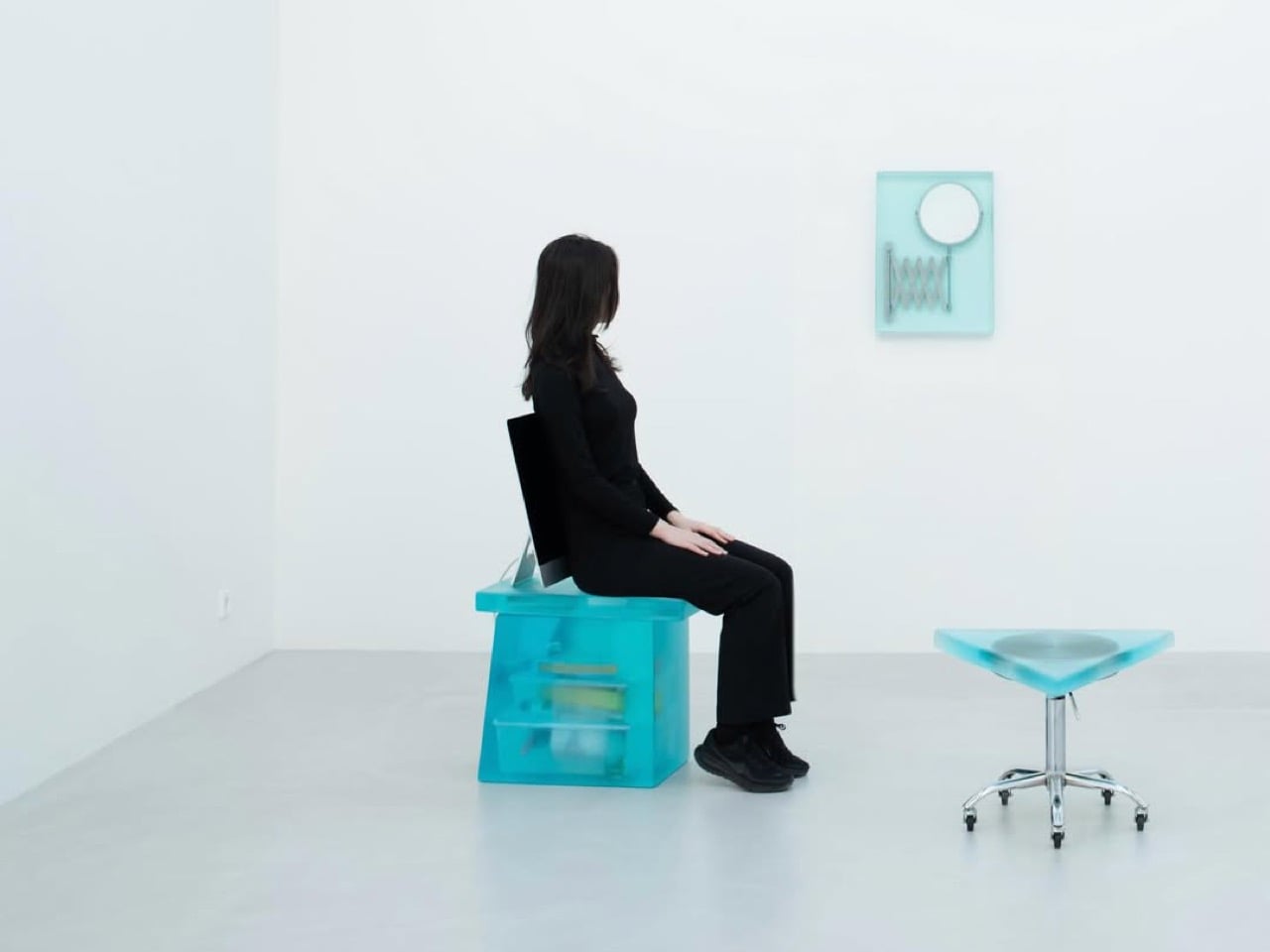
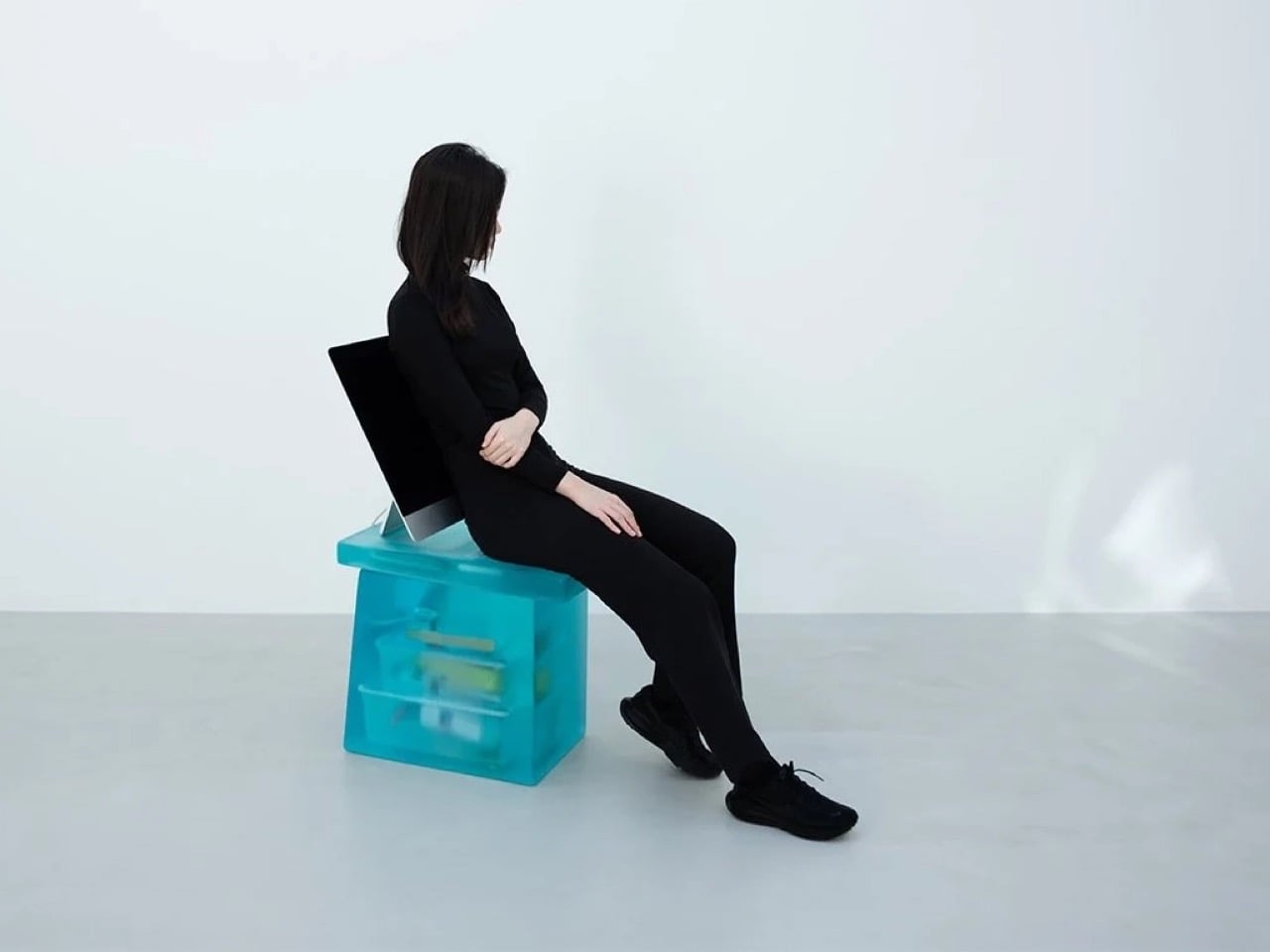
Lim Wootek’s studio works across industrial design, digital design, mold design, and CMF, and Dip1 has all four disciplines firing together. The resin body has soft radii on the seat edges and a gently tapered base that stops it from reading as a plain block. The cyan is specific, close to shallow tropical water, which is why the submerged objects feel genuinely drowned rather than just encased. Getting optical clarity, structural load capacity, and color depth to coexist in a resin cast this large is a serious material engineering problem, and the fact that it reads as effortless is the tell of someone who actually knows what they’re doing.