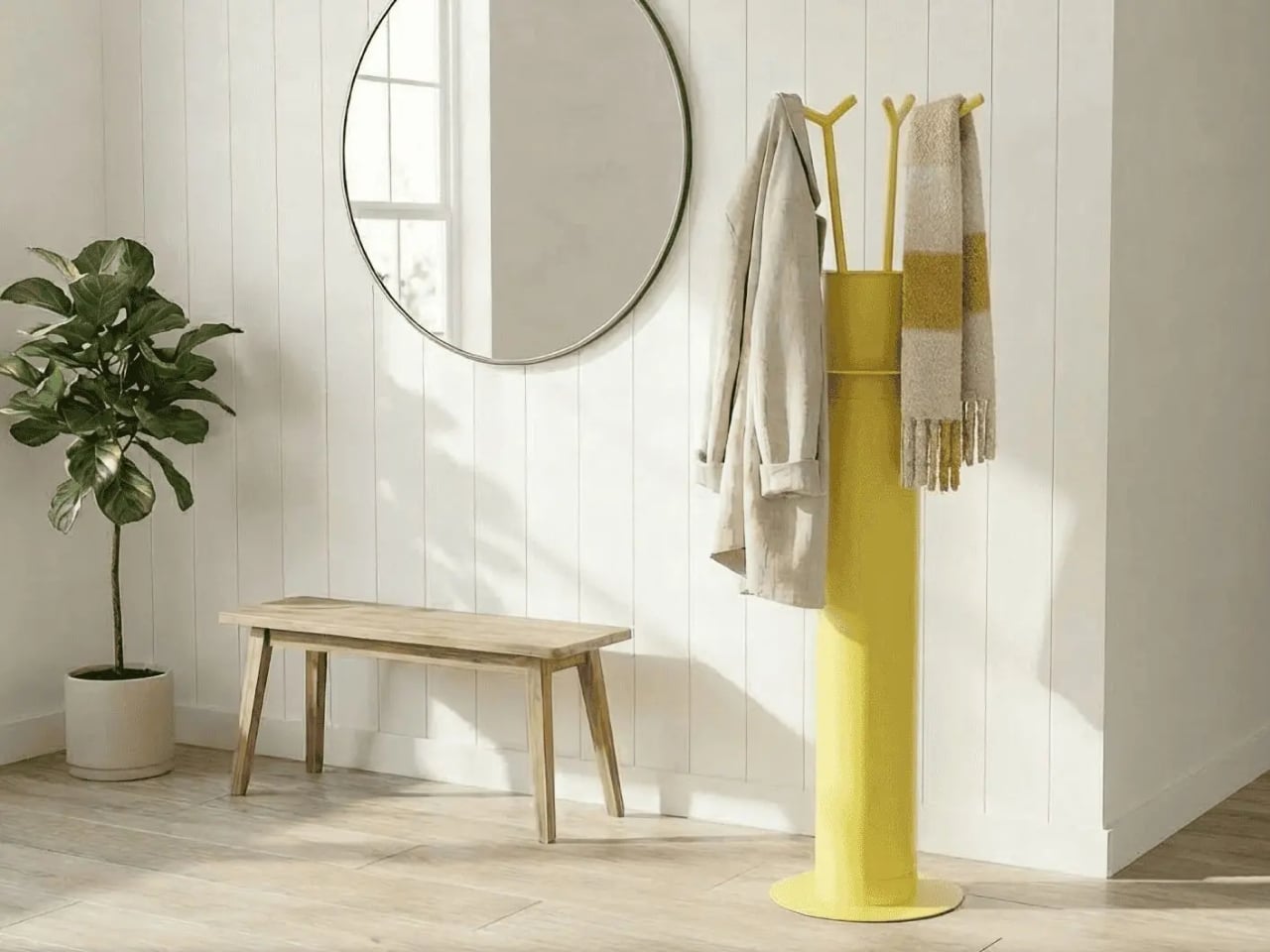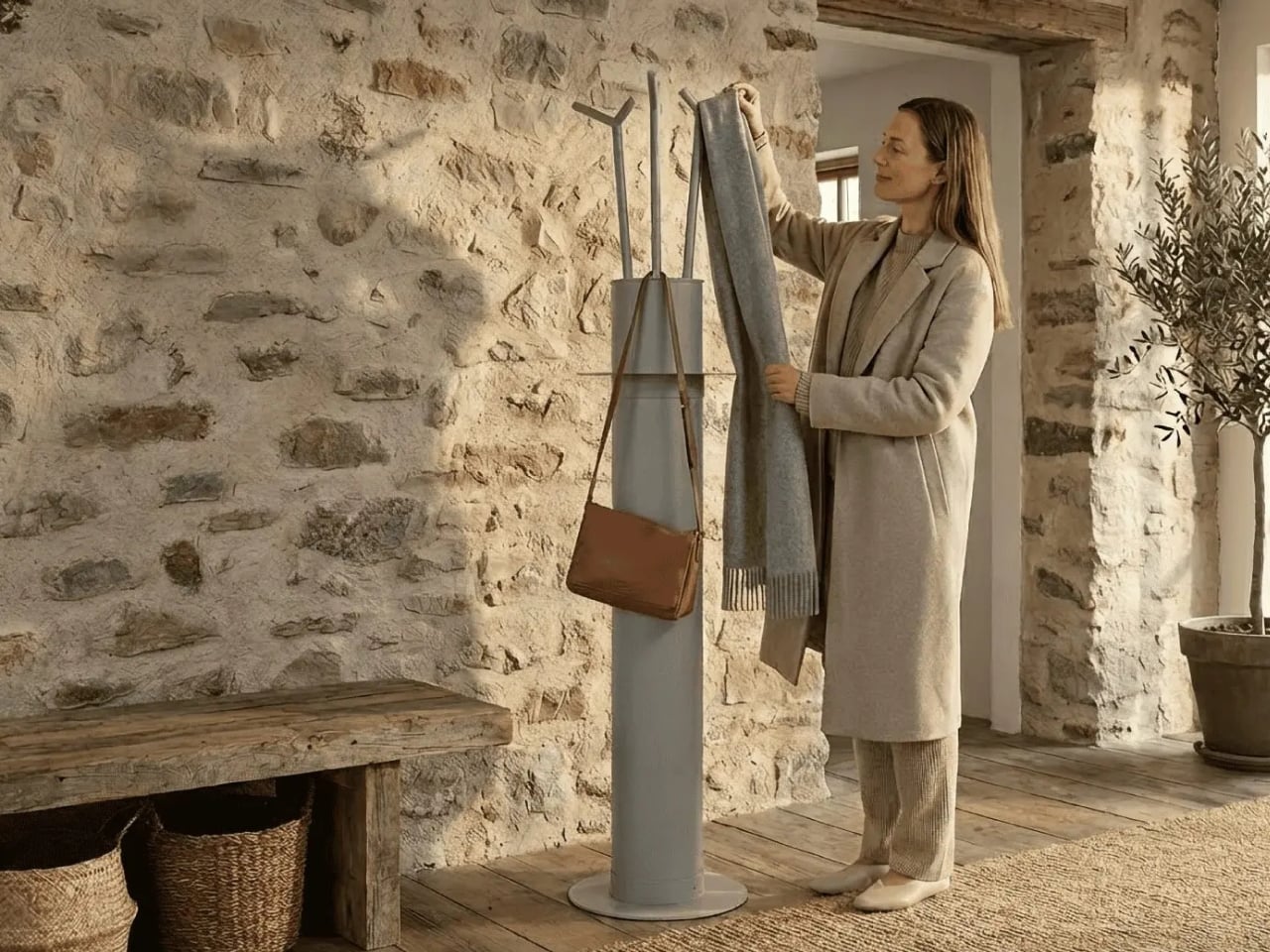

Picture yourself arriving home on a rainy afternoon. You reach for your coat rack to hang up your wet jacket, but instead of leaving it behind, you grab one of its branches and head back out the door. That branch? It’s now your walking stick. Welcome to Cesare Miozzi’s brilliantly weird world, where furniture refuses to stay put.
The Walking Coat Rack recently won the Ideas for Business Call #4, a design competition that challenges creators to reimagine everyday objects. It’s exactly what it sounds like: a coat rack that moonlights as a walking stick. Or maybe it’s a walking stick that moonlights as a coat rack. Either way, it’s one of those designs that makes you wonder why nobody thought of it sooner.
Designer: Cesare Miozzi
Miozzi, a young Italian designer, started with a simple observation: coat racks are boring. They stand there in your entryway, silently judging you for that jacket you draped over the chair instead. They’re functional, sure, but they’re about as exciting as watching paint dry. Yet we can’t escape them because we’ve been hanging our clothes on hooks since Ancient Rome, when tunics and togas needed somewhere to rest.
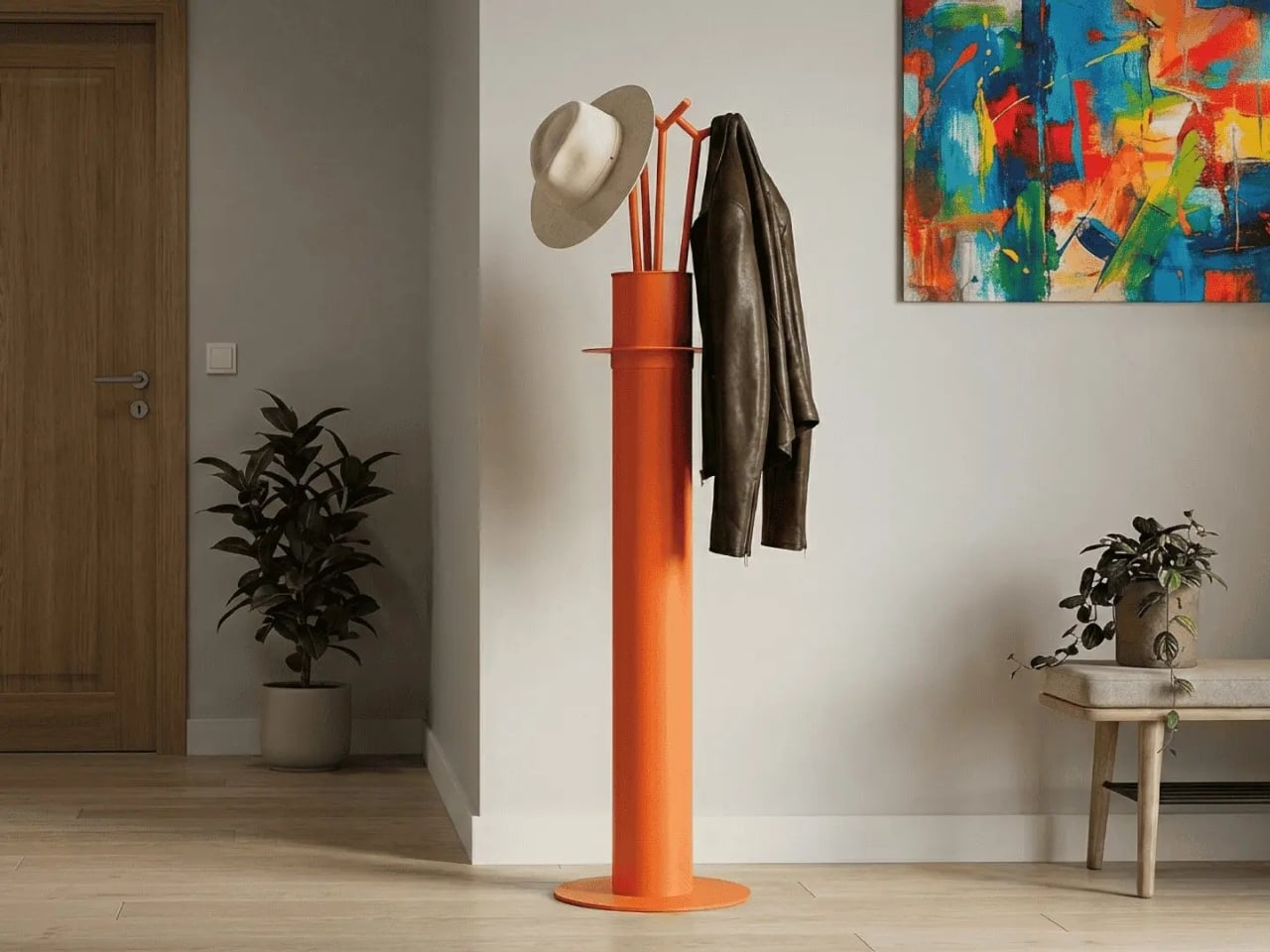
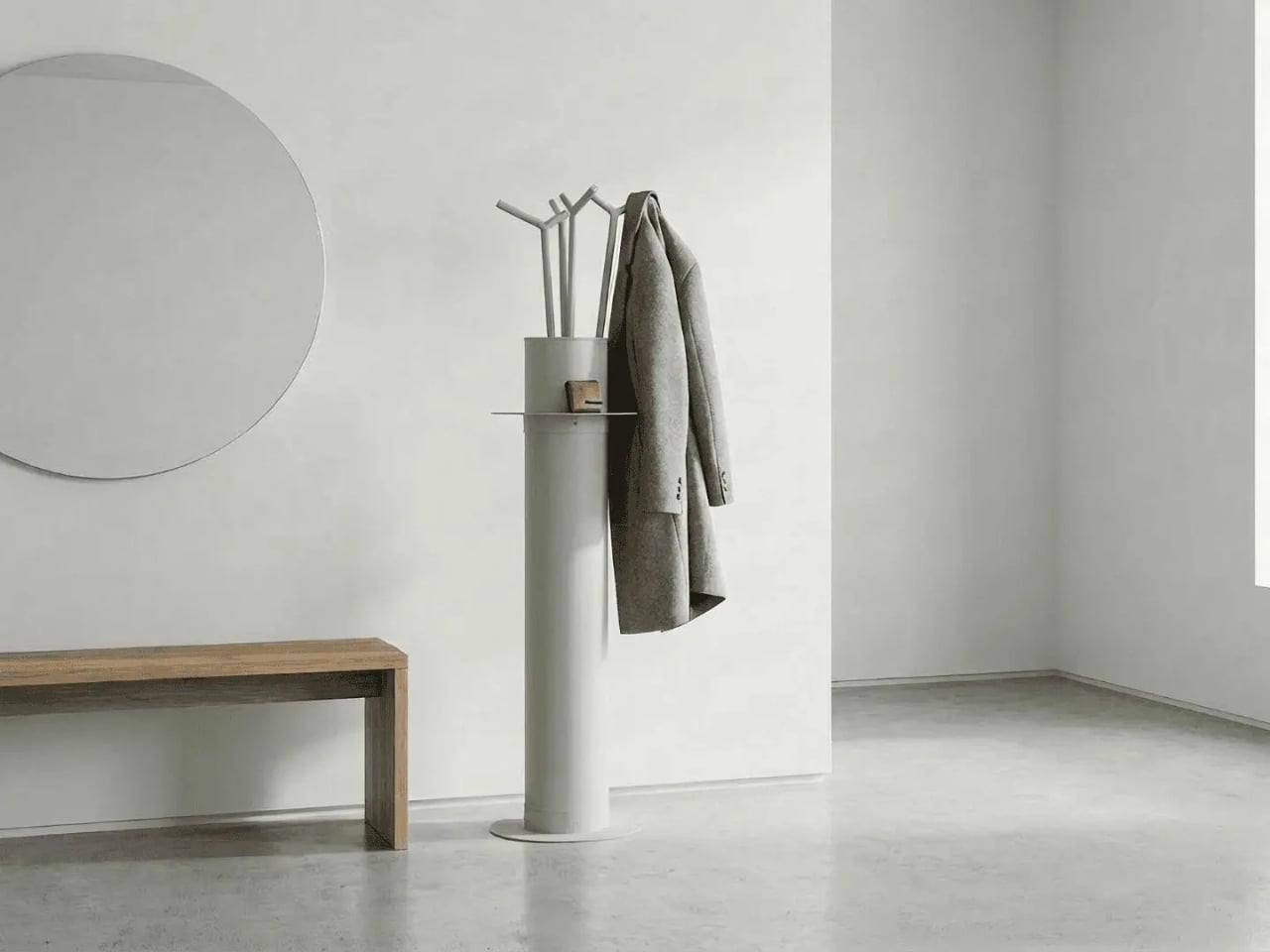
Rather than accept the coat rack’s fate as furniture wallflower, Miozzi decided to give it a personality and, more importantly, portability. His design draws inspiration from trees, which makes perfect sense when you think about it. Trees are nature’s original coat racks, after all. The Walking Coat Rack features a tubular structure that mimics a trunk, with three large branches emerging from a hollow top. These branches do double duty: they hold your coats when the rack is standing still and become walking sticks when you need to venture outside.
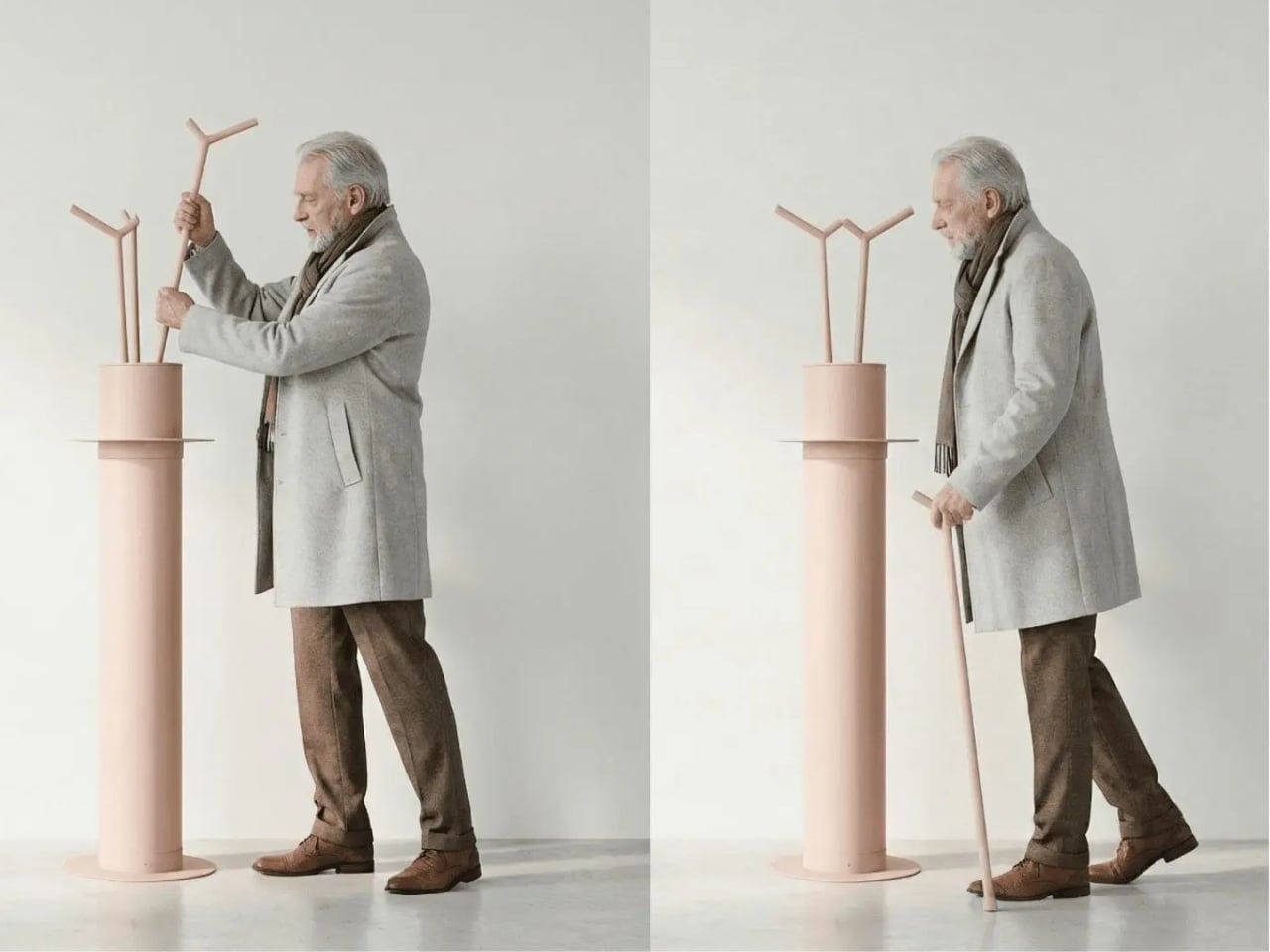
The details are what make this concept sing. A circular ring at the base represents roots, anchoring the design both literally and metaphorically. At the top, another ring serves as a pocket emptier, that perfect little spot for your keys, coins, and whatever mysterious receipts you’ve accumulated throughout the day. It’s the kind of thoughtful touch that shows Miozzi wasn’t just designing a coat rack with legs. He was designing an object that understands how we actually live.
What’s refreshing about this design is its playfulness. We’ve become so accustomed to our furniture staying in its designated corner that the idea of taking part of it with us feels almost rebellious. There’s something delightful about blurring the line between what stays home and what goes out into the world. It transforms a purely domestic object into something with agency, something that participates in your life beyond the front door.
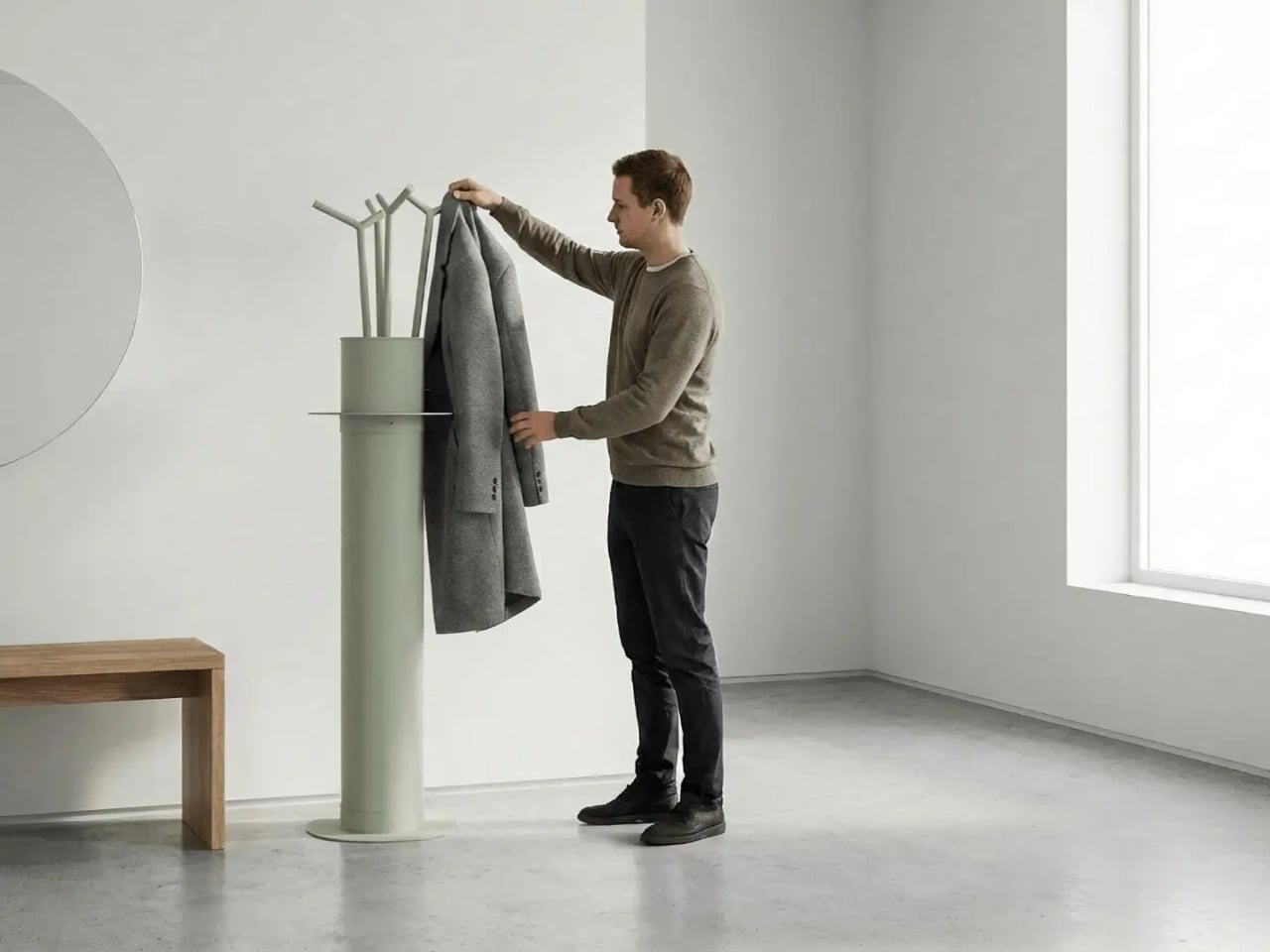
The contemporary aesthetic keeps things clean and approachable. This isn’t precious design that makes you nervous about actually using it. The tubular construction suggests durability while maintaining visual lightness. You can imagine it fitting into different spaces, from minimalist apartments to eclectic homes that celebrate conversation pieces.
Of course, the real genius lies in how the design increases our interaction with the object throughout the day. Traditional coat racks sit quietly until you need them twice: once when you come home, once when you leave. The Walking Coat Rack inserts itself into more moments. Heading out for a stroll? Grab a branch. Need support on an icy sidewalk? Your coat rack has your back. It’s furniture that earns its keep.
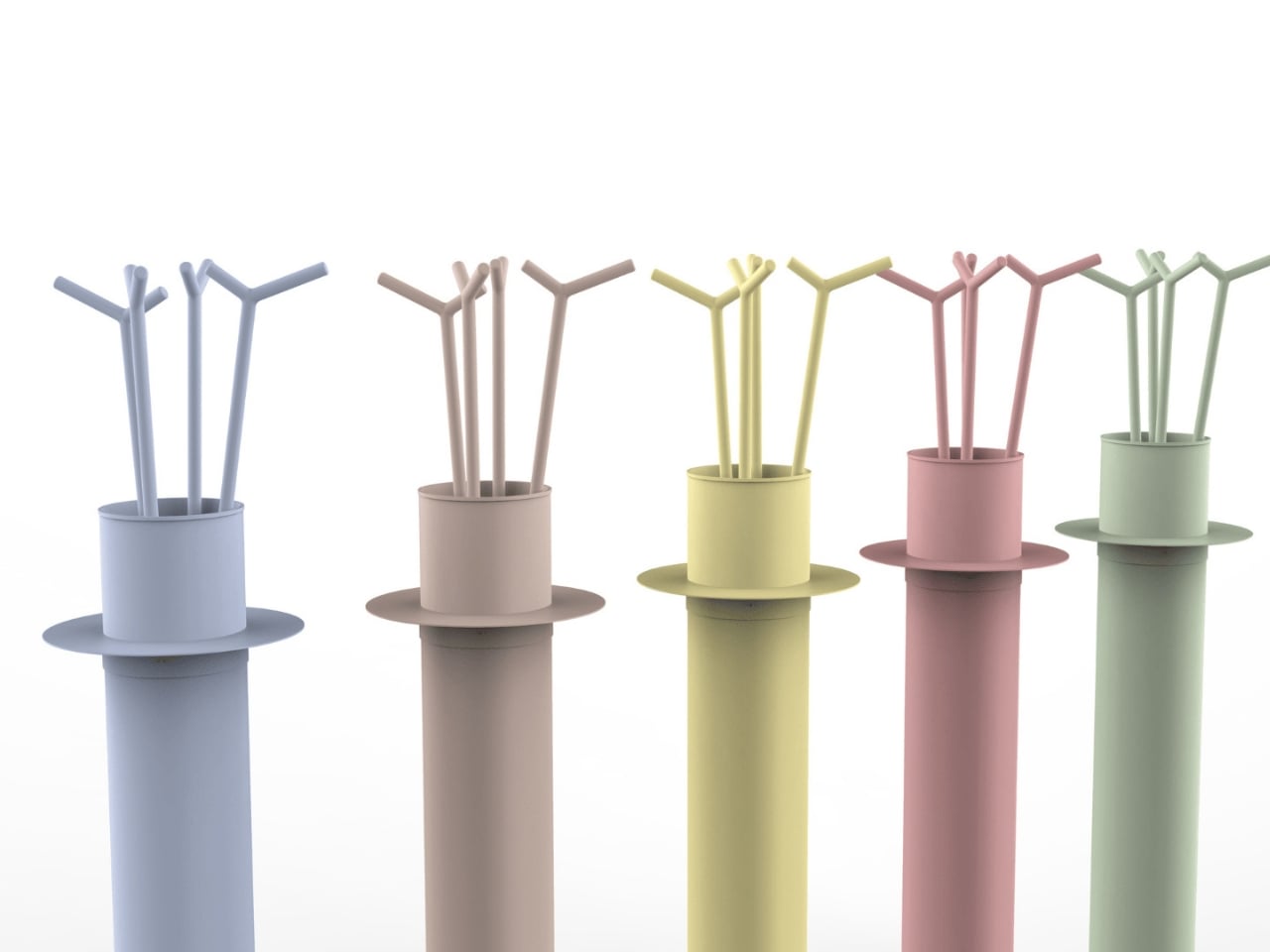
This kind of multifunctional thinking feels particularly relevant right now, when smaller living spaces make every piece of furniture work harder. Why own separate items when one clever design can do both jobs? It’s efficiency wrapped in whimsy, practicality disguised as play. Miozzi’s creation also taps into our growing interest in objects that tell stories. Nobody asks about your regular coat rack at dinner parties. But a coat rack that transforms into a walking stick? That’s a conversation starter. It’s the kind of design that makes people stop and reconsider what furniture can be, what it can do, and how we relate to the things we live with.