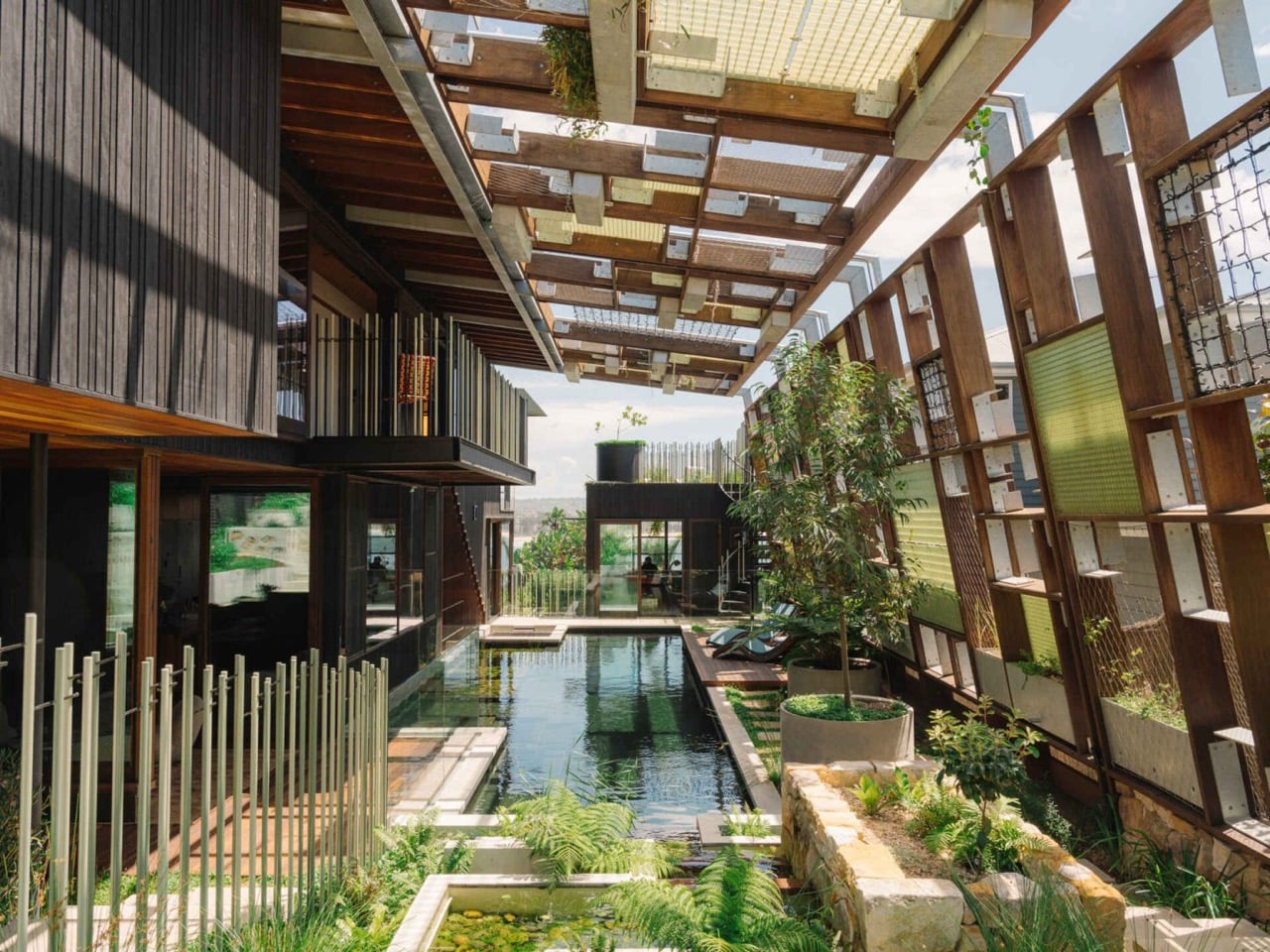

The pool doesn’t sit beside the house. It doesn’t occupy the backyard. It runs straight through the middle of the living space, dark-tiled and creek-like, with stepping stones crossing it at the entry. This is the organizing principle of Holocene House: water as hallway, water as climate control, water as the thing everything else revolves around.
Above this central watercourse, a canopy of floating planters and geometric panels creates its own microclimate. Timber beams intersect with structural steel. Translucent jade FRP panels catch and scatter light. Plants spill from concrete boxes suspended in the grid. The whole structure has this disorienting quality, like multiple dimensions of garden folded into the same space. It’s both hyper-technical and completely organic, which makes sense for a home that’s carbon positive while feeling more like a living ecosystem than a building.
Designer: CplusC Architects + Builders
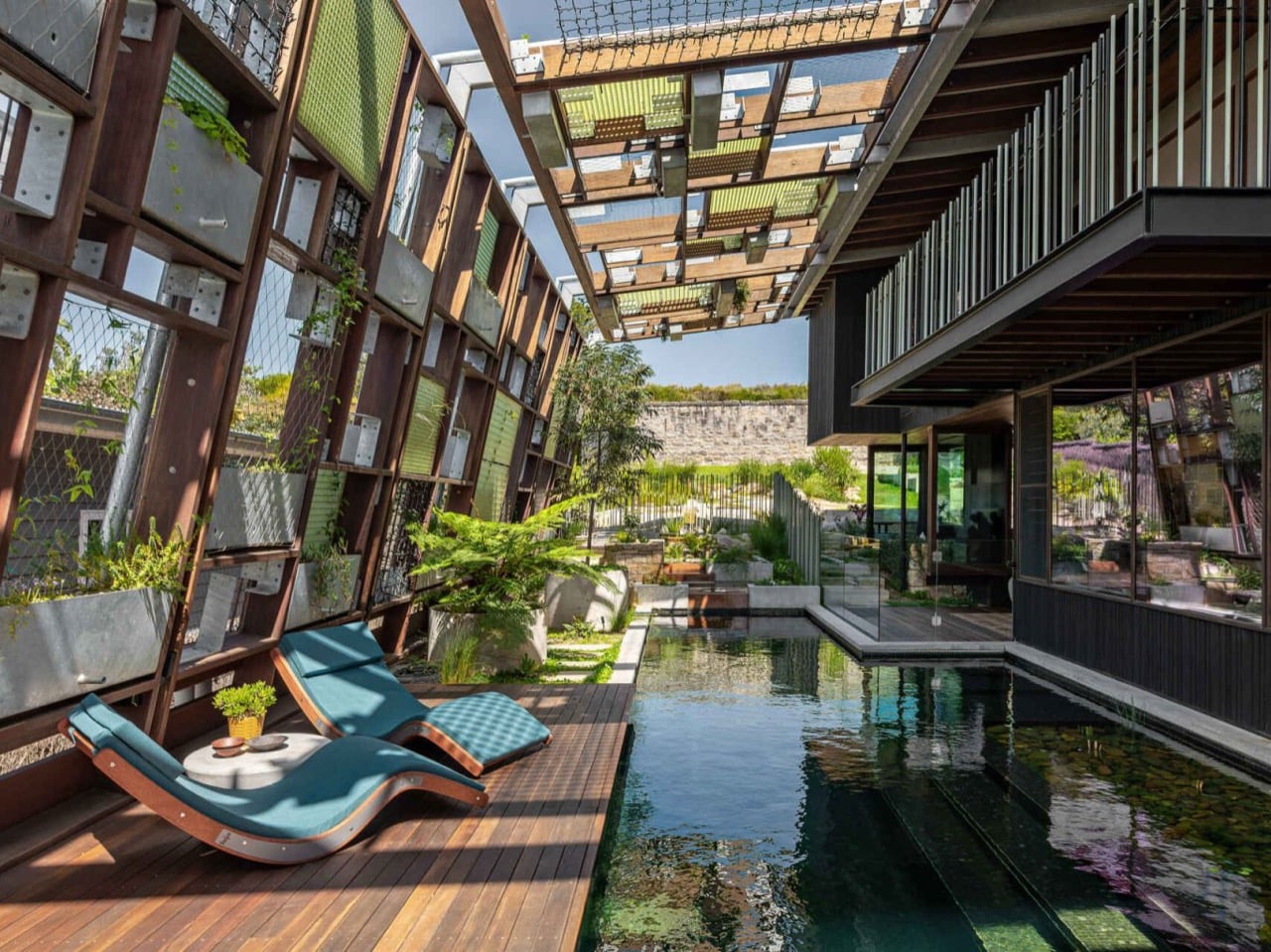

CplusC Architects + Builders designed this thing, and honestly, they went harder than they needed to. The brief could have been “nice sustainable house with pool,” but instead they built something that reorganizes how residential architecture relates to water and vegetation. The swimming pool measures roughly 12 meters long and runs parallel to the main living spaces. Dark tiles give it the appearance of a natural creek bed, which sounds precious in theory but actually works because the water is moving and filtering constantly through reed beds, polishing ponds, charcoal, and pebbles. No chlorine. The system mimics what happens in actual wetlands.
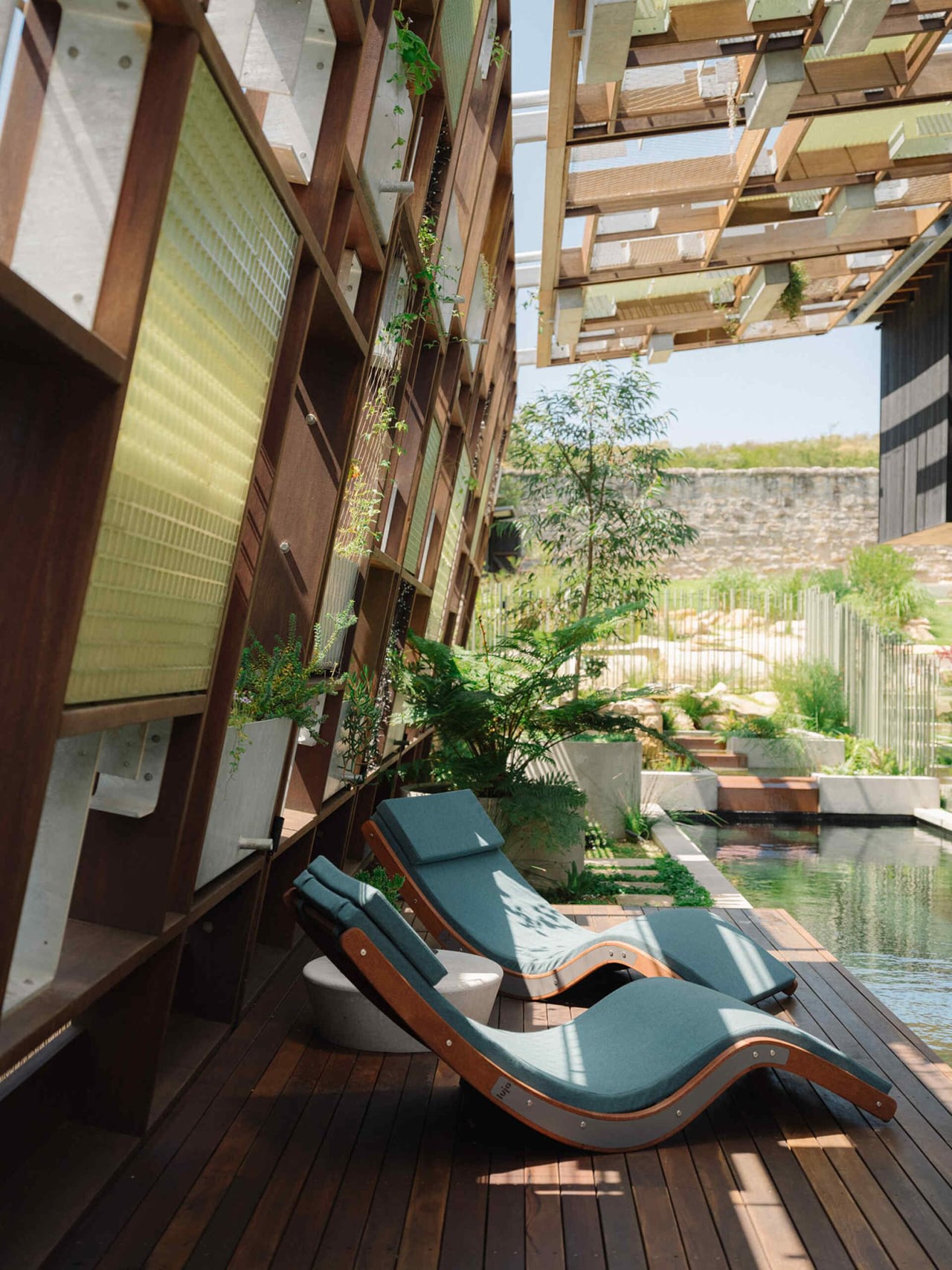

The canopy overhead is immersive and disorienting in the best way possible. Structural steel beams intersect with timber framing at multiple angles, supporting concrete planters that float at different heights. Between them, translucent jade-colored FRP (fiber-reinforced plastic) panels fill gaps in the grid. The whole assembly casts this dappled, constantly shifting light that changes character throughout the day. It’s functional shading that drops the temperature on the deck by several degrees, but it also creates this spatial ambiguity where you lose track of what’s ceiling, what’s wall, what’s garden. Very Escher. Very disorienting if you stare at it too long.
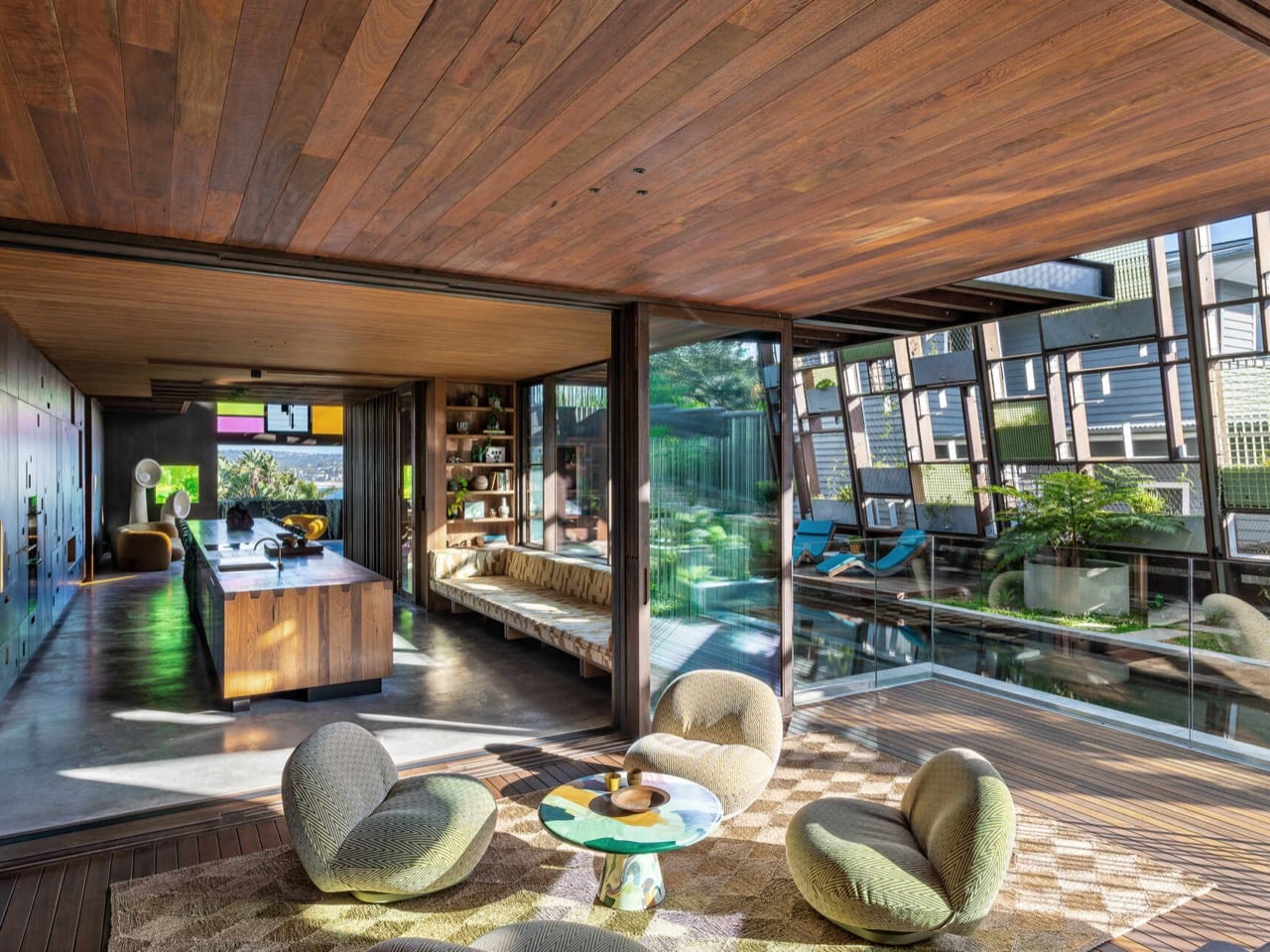
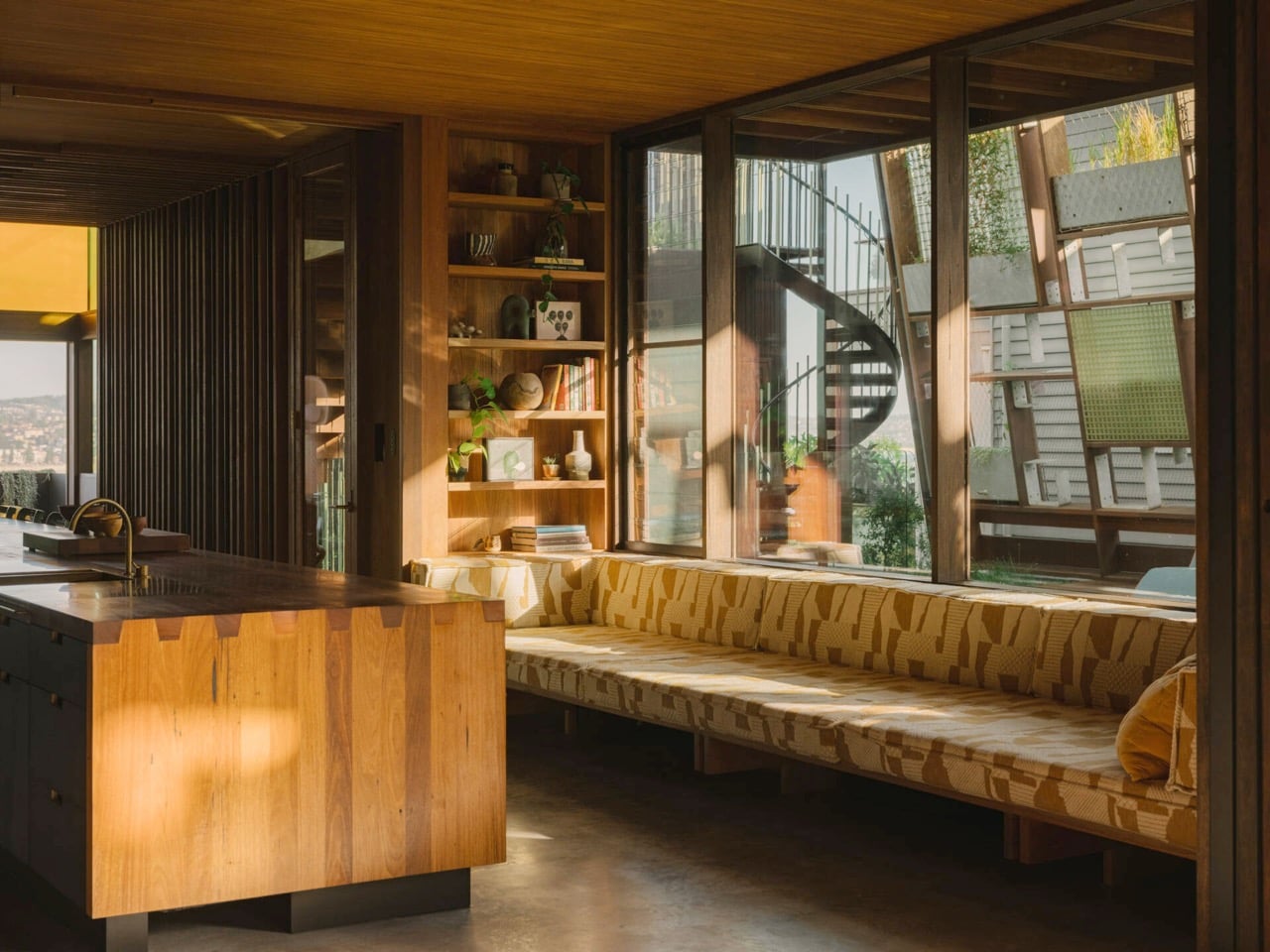
This is Australia’s first certified carbon-positive home under the Active House Alliance, which means it produces more energy than it consumes over a year. Solar panels handle the energy generation. Rainwater and greywater systems irrigate the productive garden, which includes fruit trees, vegetables, herbs, and even chickens. The spotted gum cladding on the exterior got the Shou Sugi Ban treatment, that Japanese charring technique that makes timber more resilient and gives it a charcoal finish. Low embodied energy material that will age well in the coastal climate near Shelly Beach.
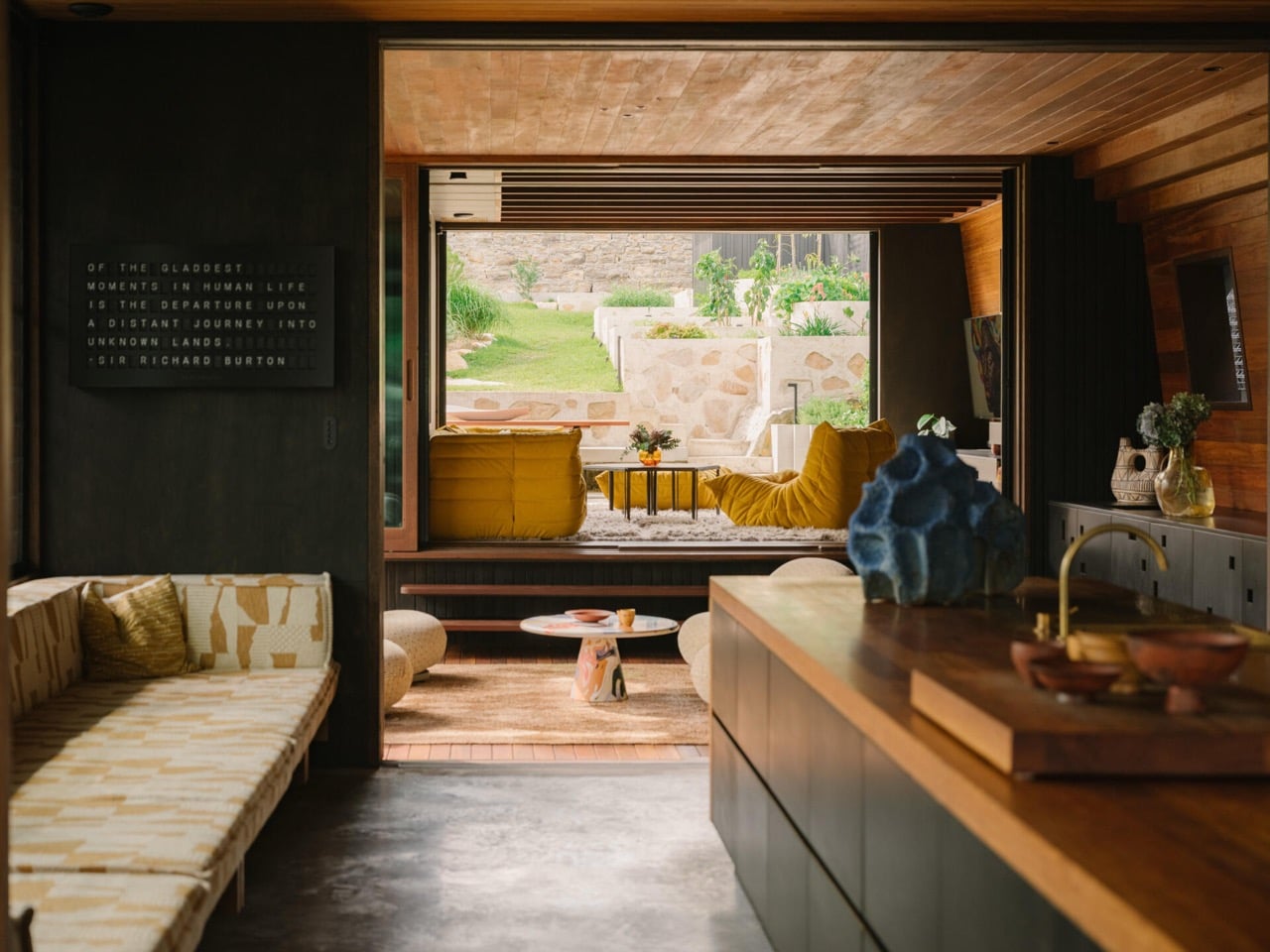
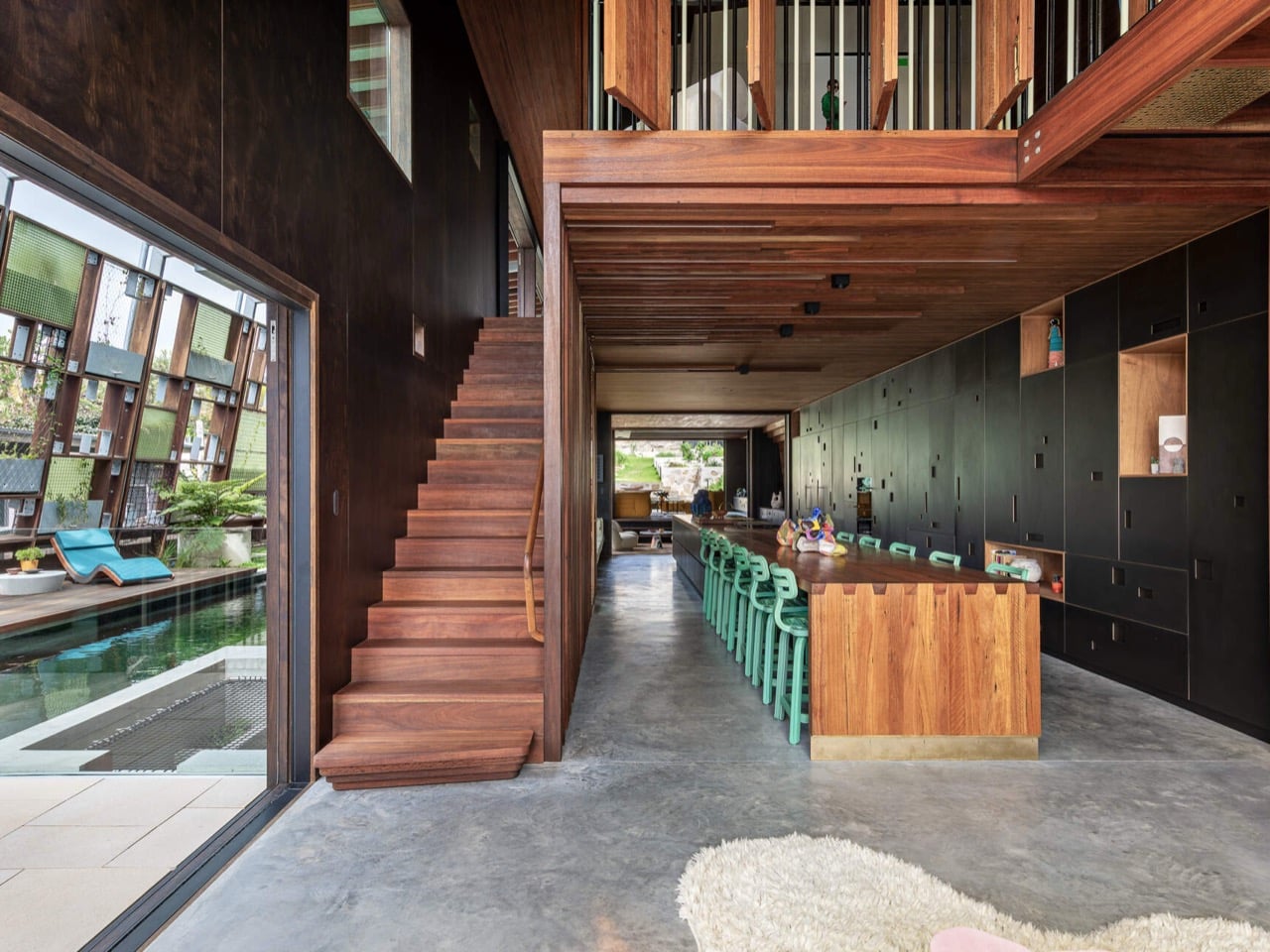
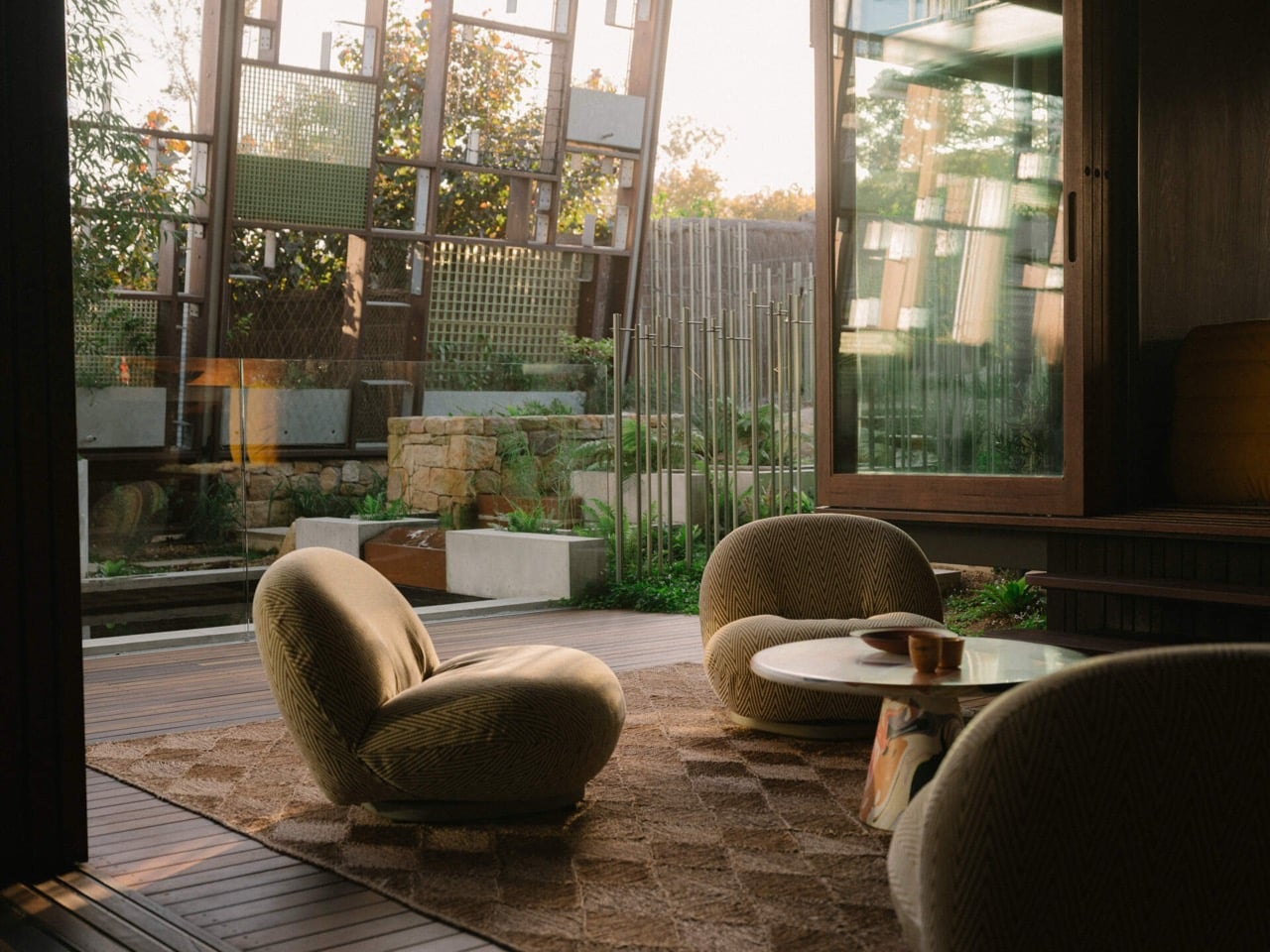
Inside, a 9.2-meter recycled hardwood island stretches through the kitchen and doubles as the dining table. That’s over 30 feet of continuous timber. The cabinetry uses Paperock, a composite material made from recycled paper and resin, formed into panels with these small perforations that create textured shadows. Floor-to-ceiling storage hides appliances and maintains clean sightlines. A built-in daybed sits in the kitchen area with views straight through to the pool and back garden. The whole spatial layout keeps pulling your attention back to that central water feature, which becomes the thing every other design decision orbits around.
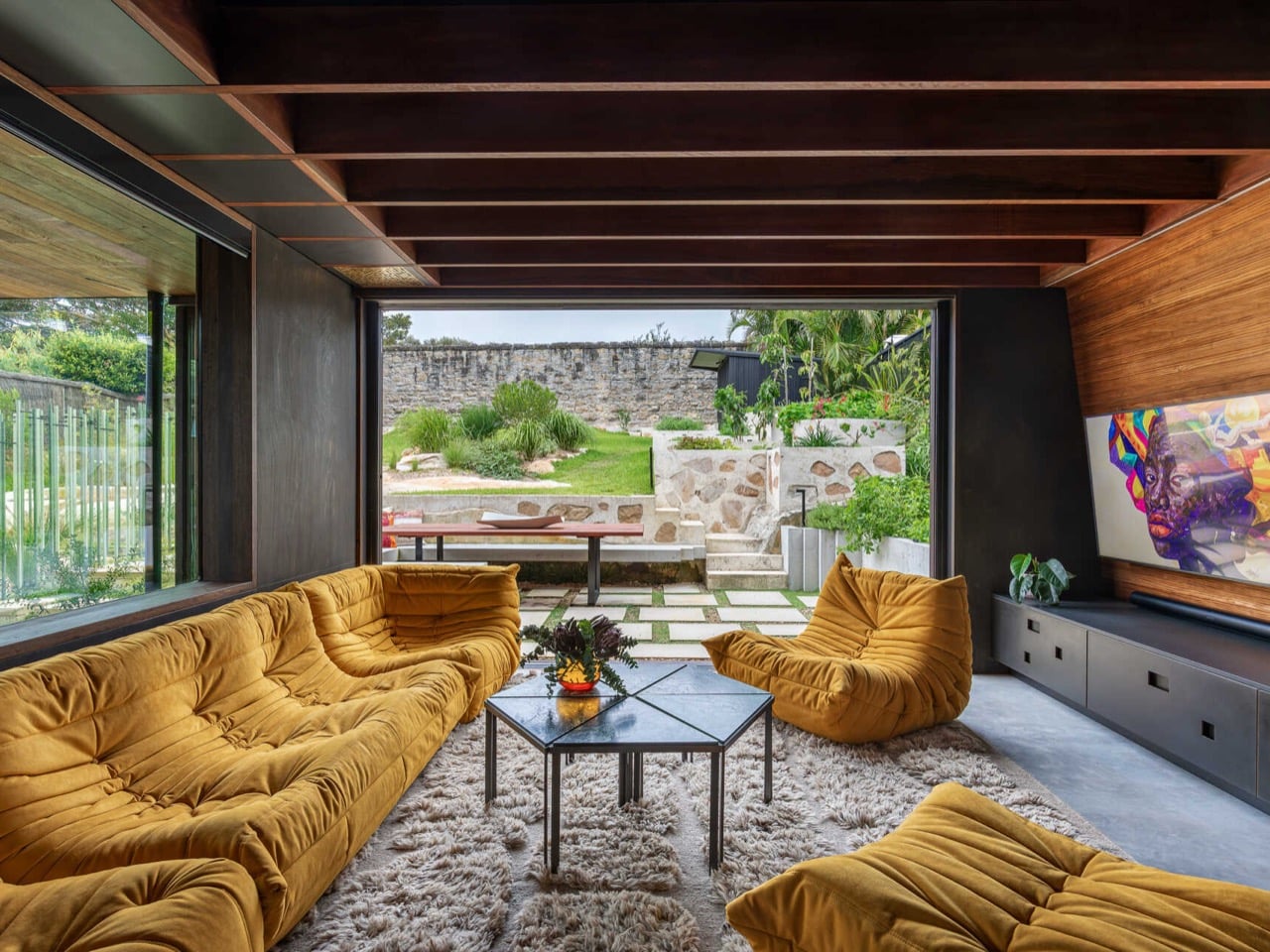
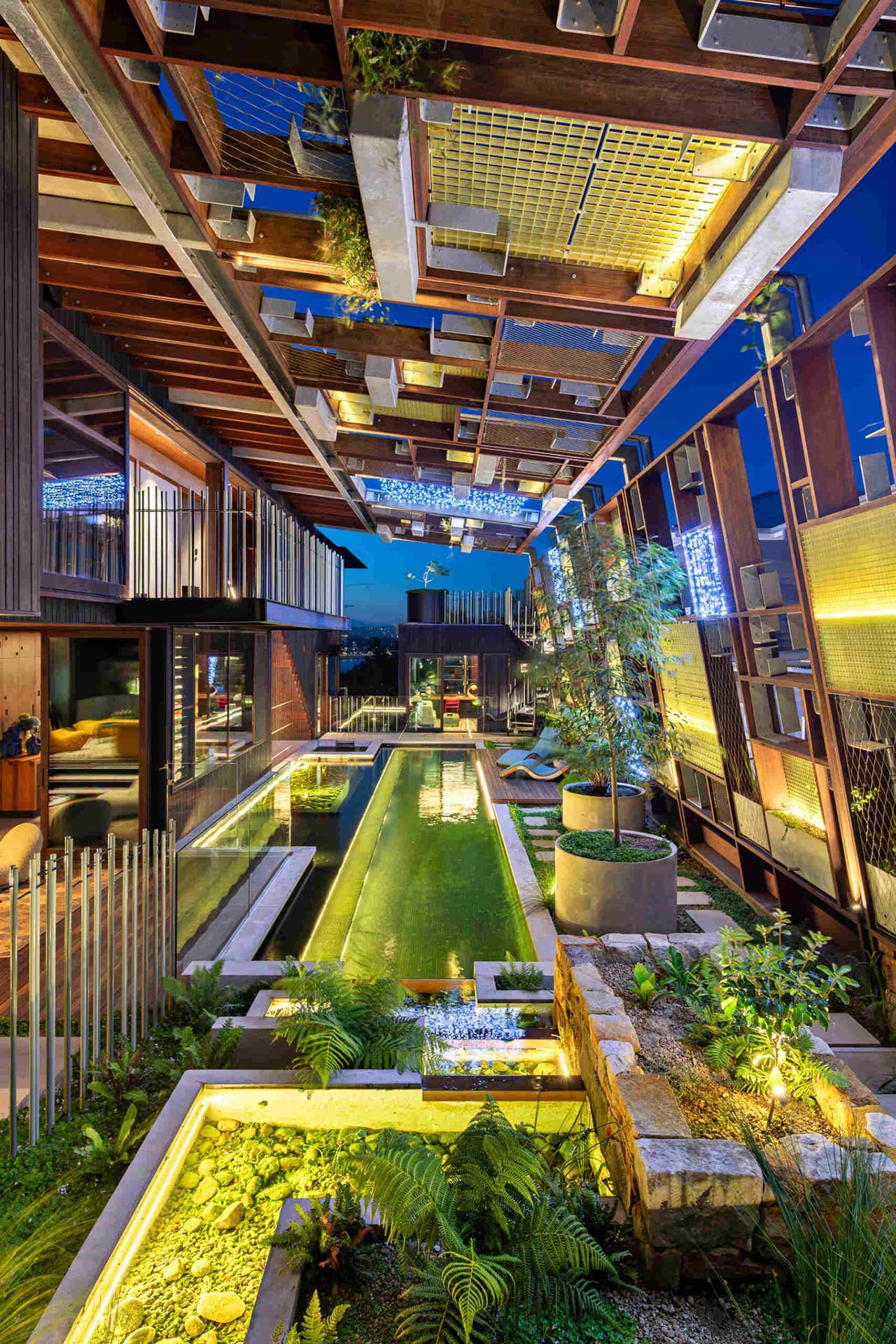

What makes this work is that it’s rigorous about the systems. The natural pool filtration, the greywater recycling, the solar array, the thermal mass of the concrete, the cross-ventilation through operable walls. These aren’t aesthetic gestures. They’re load-bearing infrastructure that allows the house to function as a net positive contributor rather than just a less-bad consumer. And somehow that rigor produces spaces that feel loose and organic rather than over-engineered. You can see the thinking, but it doesn’t announce itself.
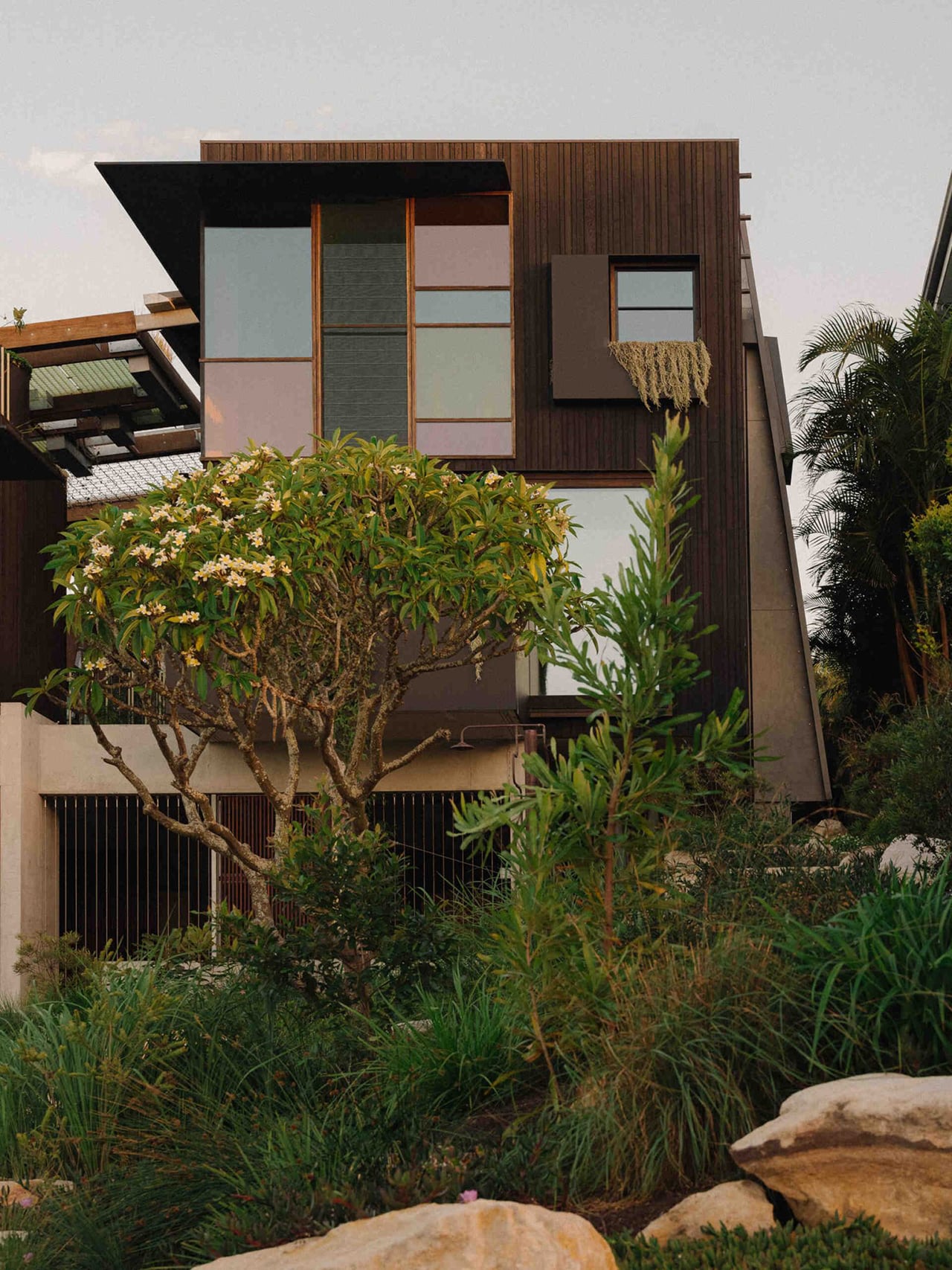
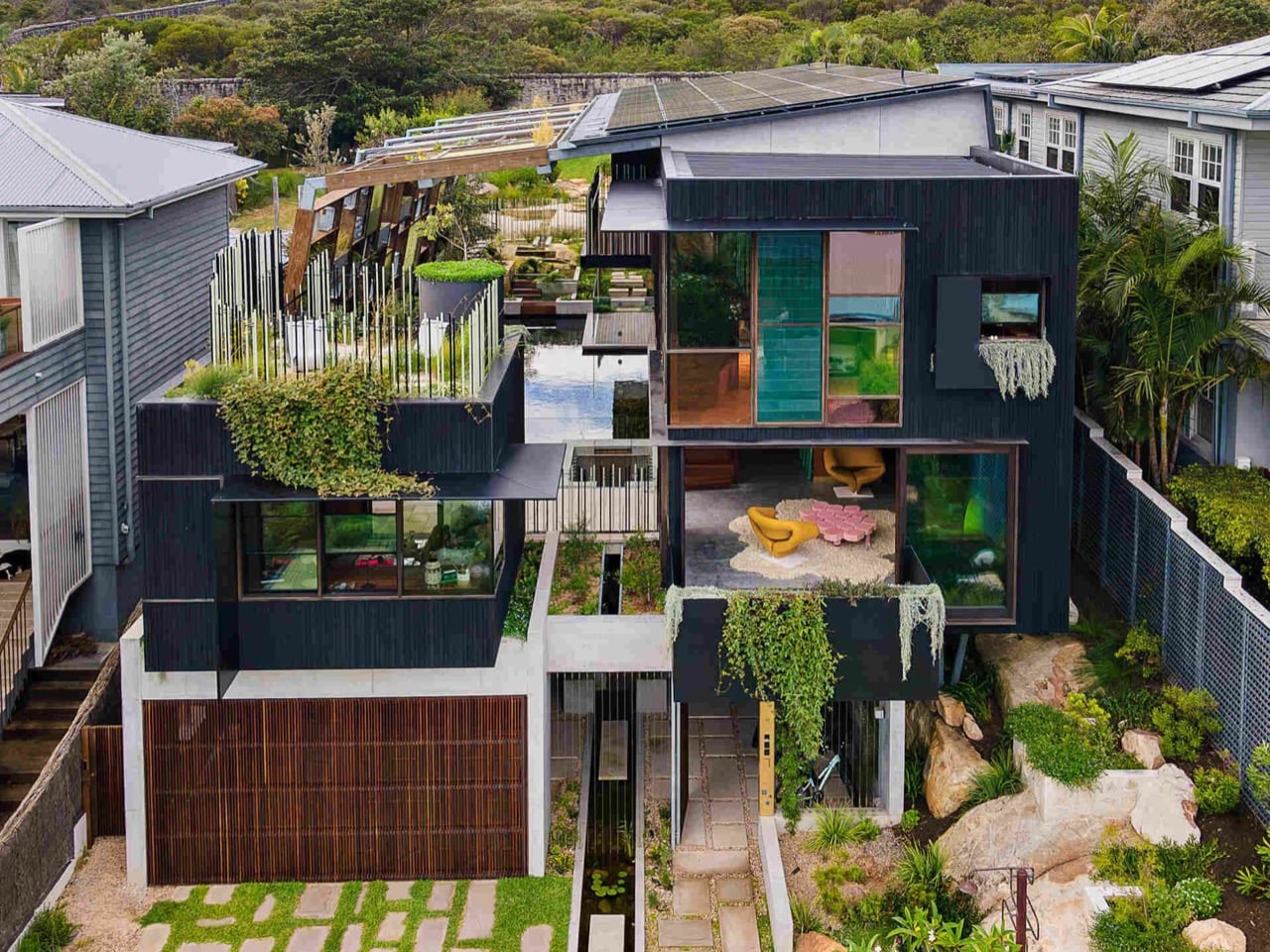
The project sits between a national park and million-dollar beach views, which is both an advantage and a responsibility. The landscape architect, Duncan Gibbs, designed the garden to support local bandicoot habitat while producing food for the residents. That’s a specific kind of design challenge: make it productive and beautiful and ecologically functional for native species all at once. The planting selections reinforce local ecology rather than importing exotic specimens that need constant maintenance. It’s a working garden that happens to look good, not the other way around.
Photos by Renata Dominik