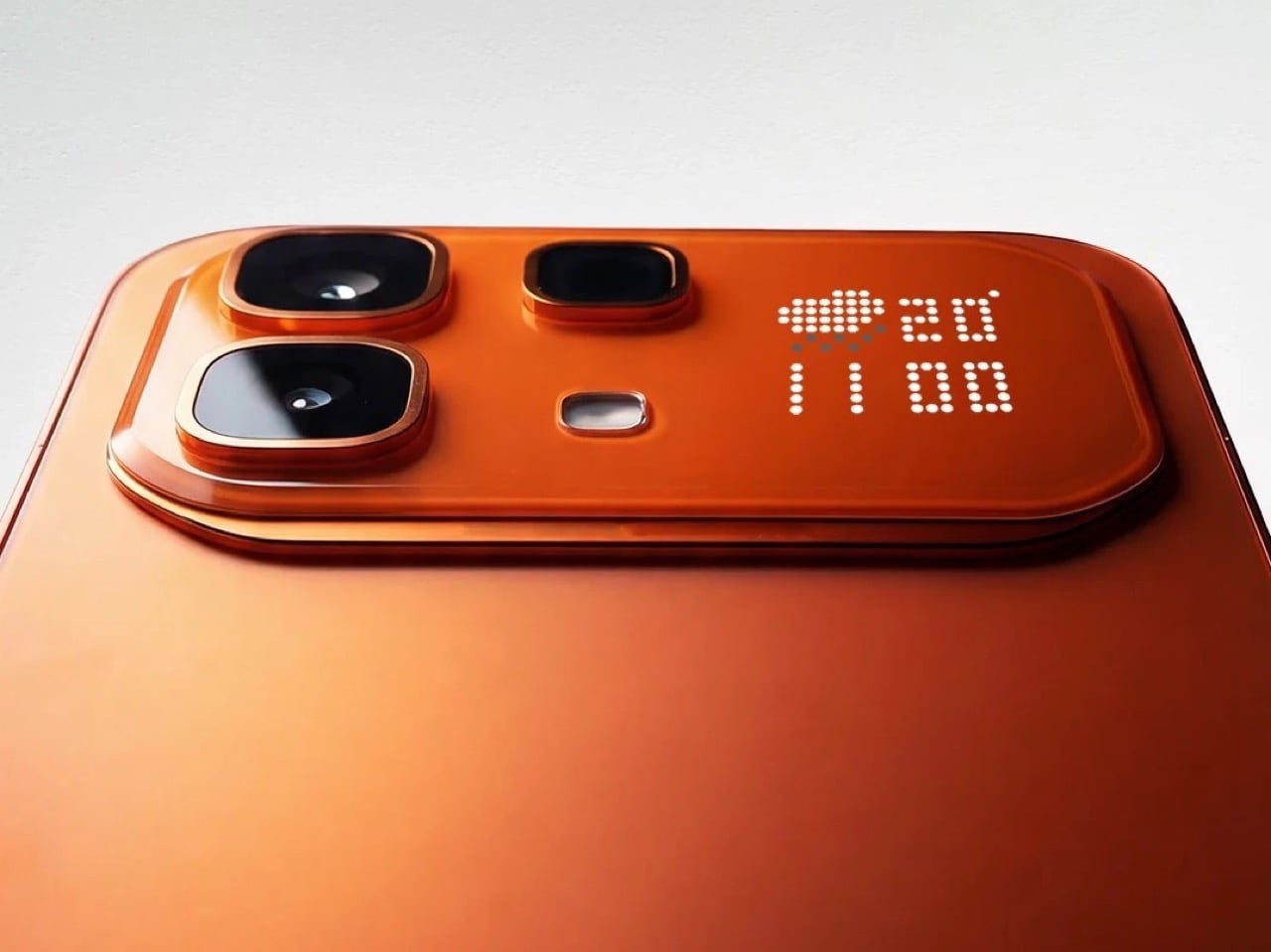

Infinix looked at the iPhone 17 Pro, looked at the Nothing Phone (3), and decided both phones had one good idea worth combining. The Note 60 Pro’s camera plateau is lifted directly from Apple’s design playbook: that horizontal pill shape spanning the phone’s width, housing three vertical lenses on the left side, available in a Solar Orange finish that’s Apple down to the shade. The right side of that plateau, though, gets filled with a dot-matrix display borrowed from Nothing’s Glyph experiments, showing weather, time, notifications, and music controls in small illuminated dots.
This collision of reference points could have produced incoherent design, but Infinix committed hard enough to make it work. The plateau provides a unified canvas rather than trying to bolt disparate elements together, and the matrix display gets proper size instead of being minimized into uselessness. You can actually read the information displayed without straining, which already puts it ahead of the Phone (3)’s too-small implementation. The question isn’t whether Infinix executed the feature better, but whether the feature itself is anything more than a solution looking for a problem.
Designer: Infinix
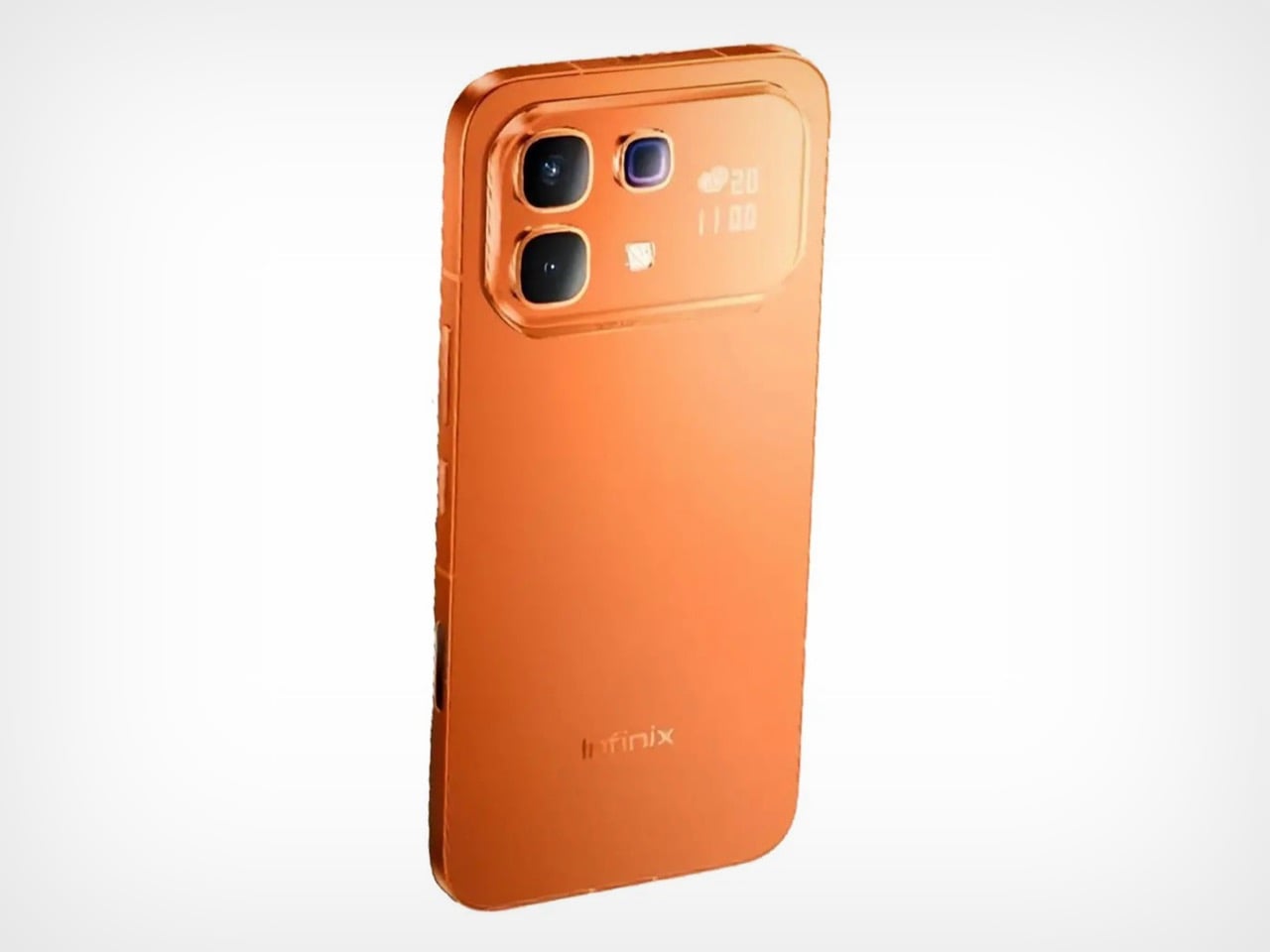

Let’s be direct: this is a derivative design. It’s a collage of other companies’ proven successes, banking on the idea that combining two popular aesthetics will create a third. While the integration is clean, it reveals a lack of a core design identity from Infinix itself. This is the strategy of a market follower, not a leader. The approach is to create something that feels familiar enough to be desirable but different enough to be noticeable. It’s a tactic for grabbing attention in a crowded mid-range space, but it does little to build a unique, recognizable brand language for the long term.
Of course, the spec sheet is designed to impress, and on paper, it does. Switching to a Qualcomm Snapdragon 7s Gen 4 is a solid move for performance credibility. That chip drives a large 6.78-inch display with a 1.5K resolution and a 144Hz refresh rate, numbers that are undeniably competitive. A 6,500mAh battery with 90W charging is equally impressive. The risk with spec-heavy mid-rangers is that the software experience often fails to optimize the hardware. The real test will be in the day-to-day performance, software support, and whether the user interface is clean or laden with bloatware.
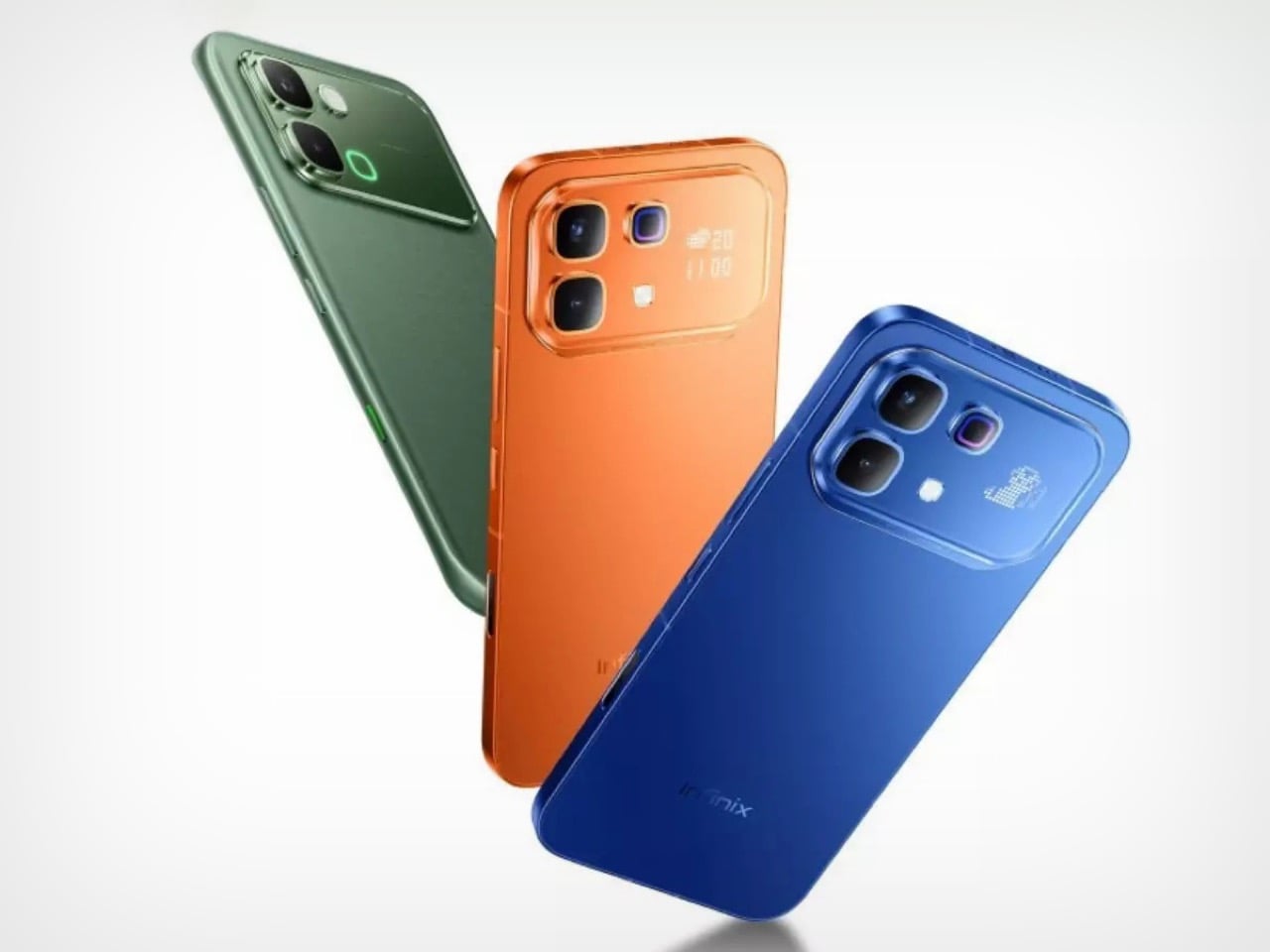
As of now, Infinix has not released official pricing or a specific launch date, which keeps the final verdict in limbo. The company’s typical strategy involves aggressive pricing in markets across Africa, Southeast Asia, and India, so we can expect it to land in a competitive sub-$400 bracket to undercut established players. Its success will ultimately hinge on that price tag (as well as how functional that ‘glyph matrix’ is). If it’s priced too close to the devices it’s mimicking, the derivative design becomes a liability. If it’s cheap enough, this combination of high-end specs and borrowed aesthetics could be a disruptive formula in its target regions.