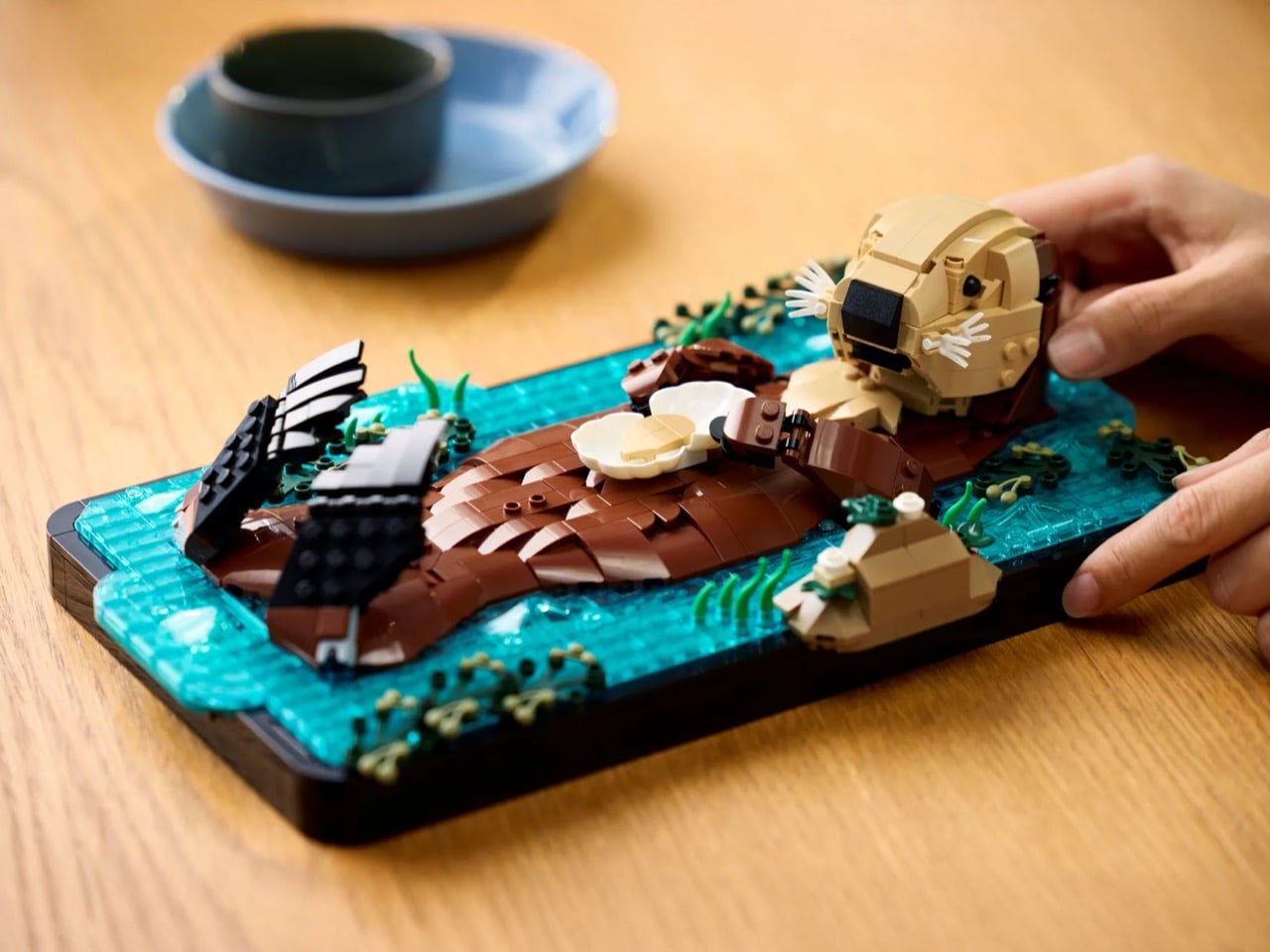

Sea otters hold hands when they sleep. It’s one of those facts that makes you stop scrolling and smile, the kind of detail that feels almost too charming to be true. But it is true, and now it’s immortalized in LEGO form.
The Floating Sea Otters set (21366) started as a fan submission by Maximilian Lambrecht and evolved into something even more endearing than the original design. What began as a single otter floating in kelp became a mother cradling her pup, complete with articulated arms and a secret feature that lets two sets connect so the otters can hold hands. The LEGO designers didn’t just approve the concept. They found ways to make it cuter.
Designers: LEGO & Maximilian Lambrecht
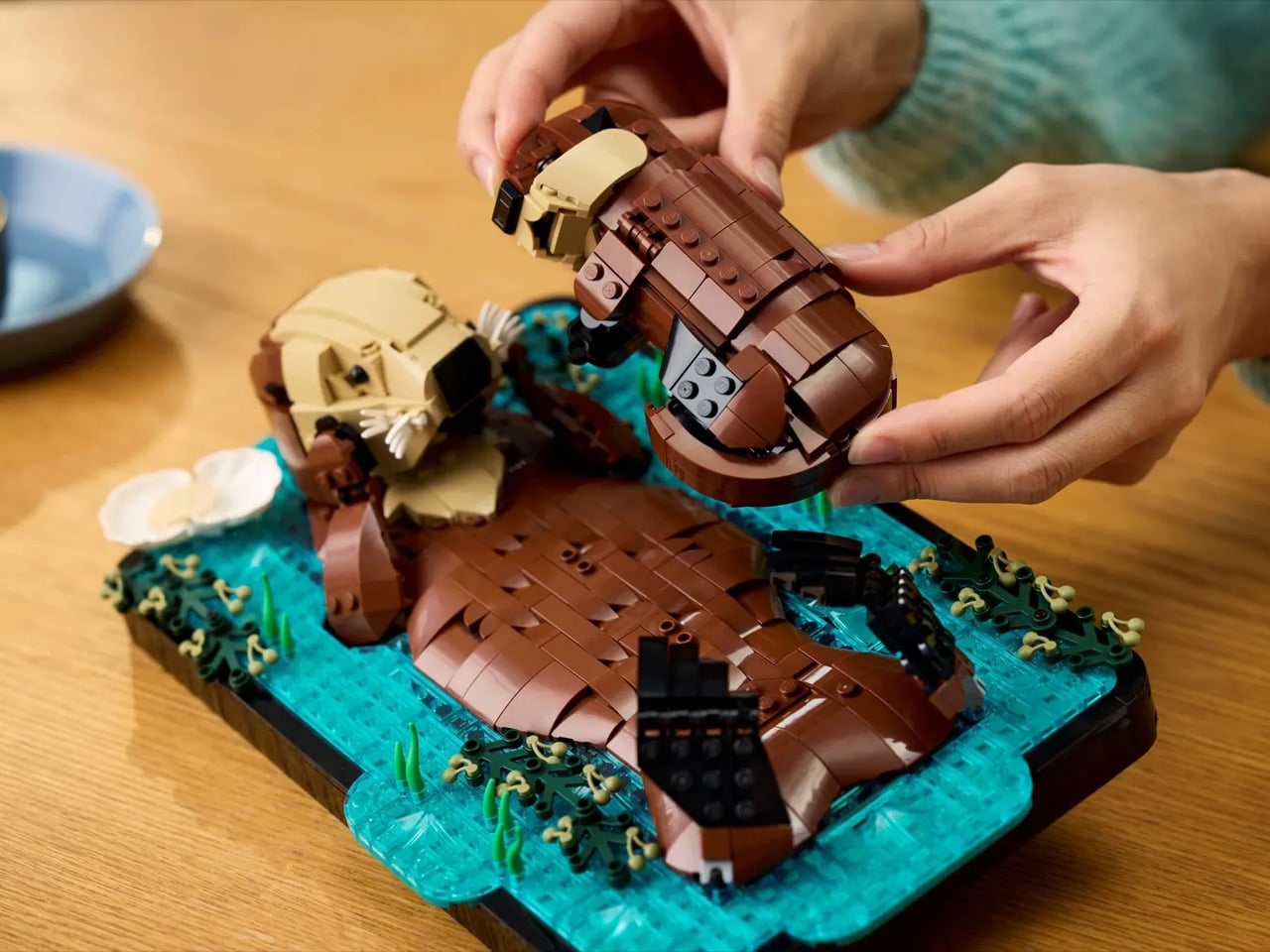
LEGO Ideas has always been the platform’s most interesting experiment in crowdsourced design, and this set demonstrates why the model works when it actually works. Lambrecht submitted his original concept in April 2024 after spending two months researching sea otter ecology and visiting the Berlin Zoo to nail the anatomical details. His submission hit 10,000 supporters, clearing the first hurdle, and then LEGO Designer Chris McVeigh got his hands on it. The transformation between fan concept and retail product tells you everything about how professional iteration elevates good ideas into genuinely compelling builds.
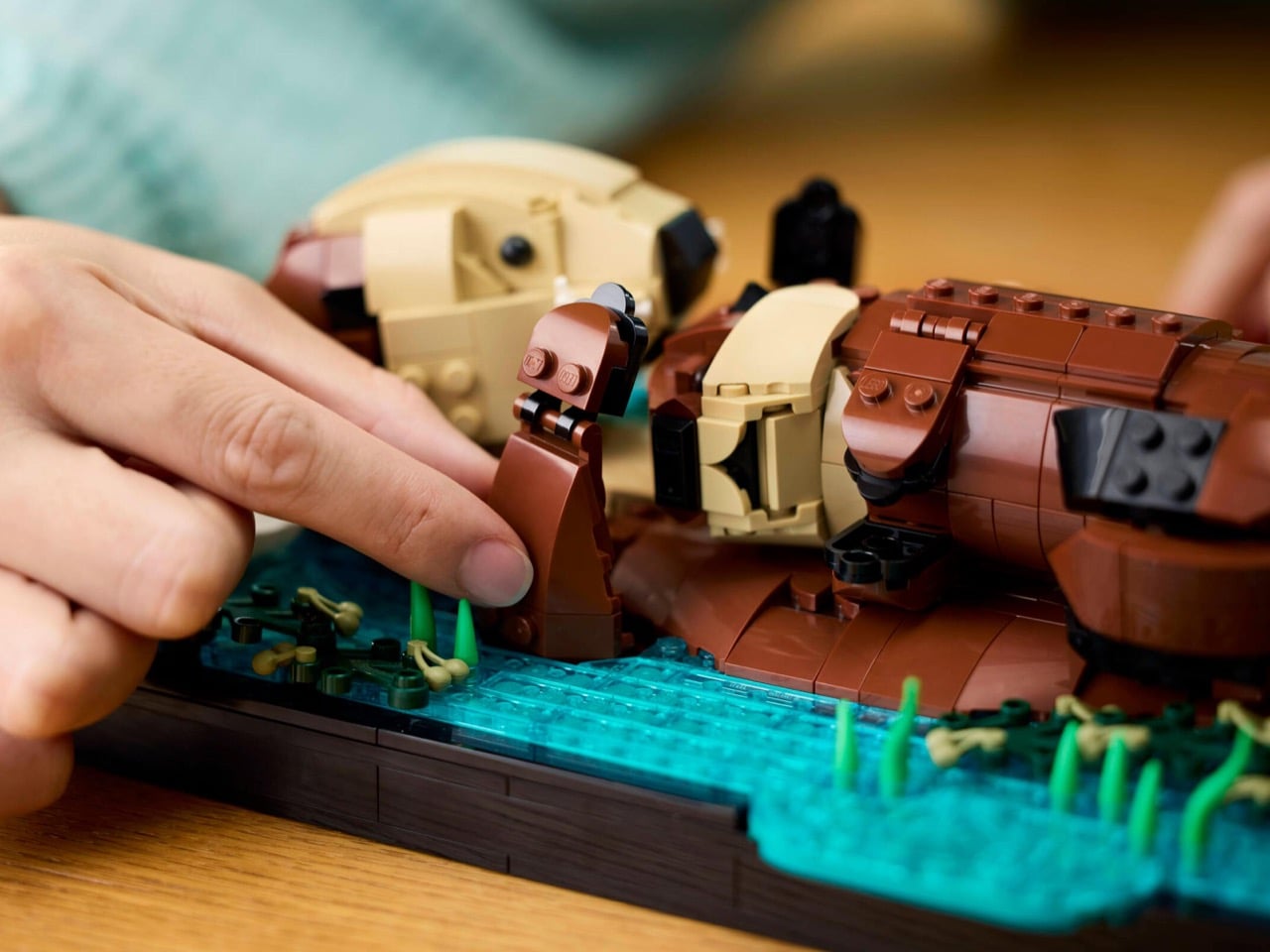
Lambrecht’s original design featured a single otter with movable paws, head, and mouth. Solid foundation, but McVeigh saw room to amplify the emotional hook. Adding the pup required rethinking the entire structural approach. The mother needed to be fully reclined rather than partially upright, which meant her arms had to articulate underwater to cradle the baby. That change cascaded into making the base thicker to accommodate the elbow joints, then extending the water elements over the edge of the base to maintain visual balance. Each decision triggered the next, the kind of iterative refinement that separates amateur builds from retail products.
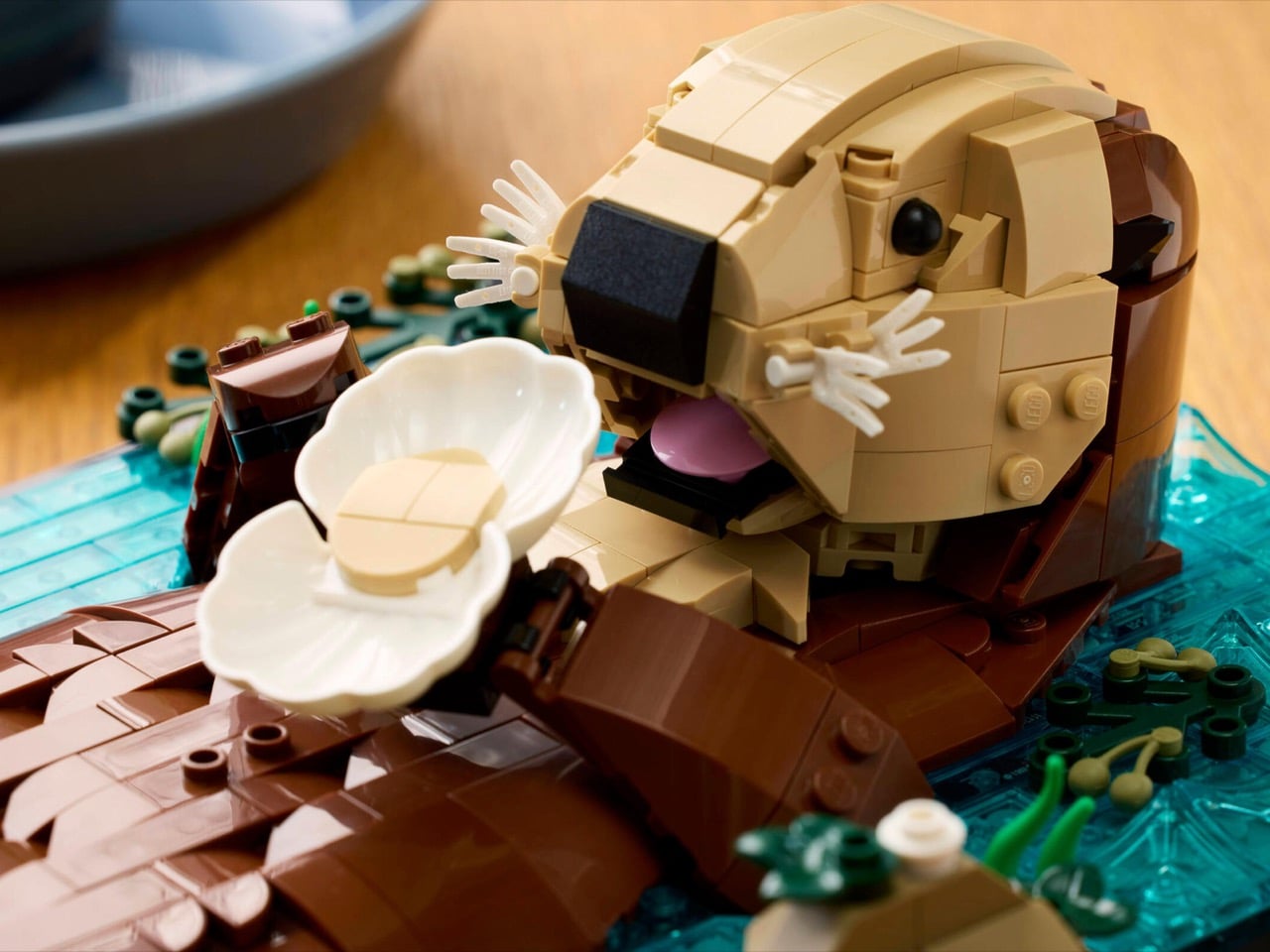
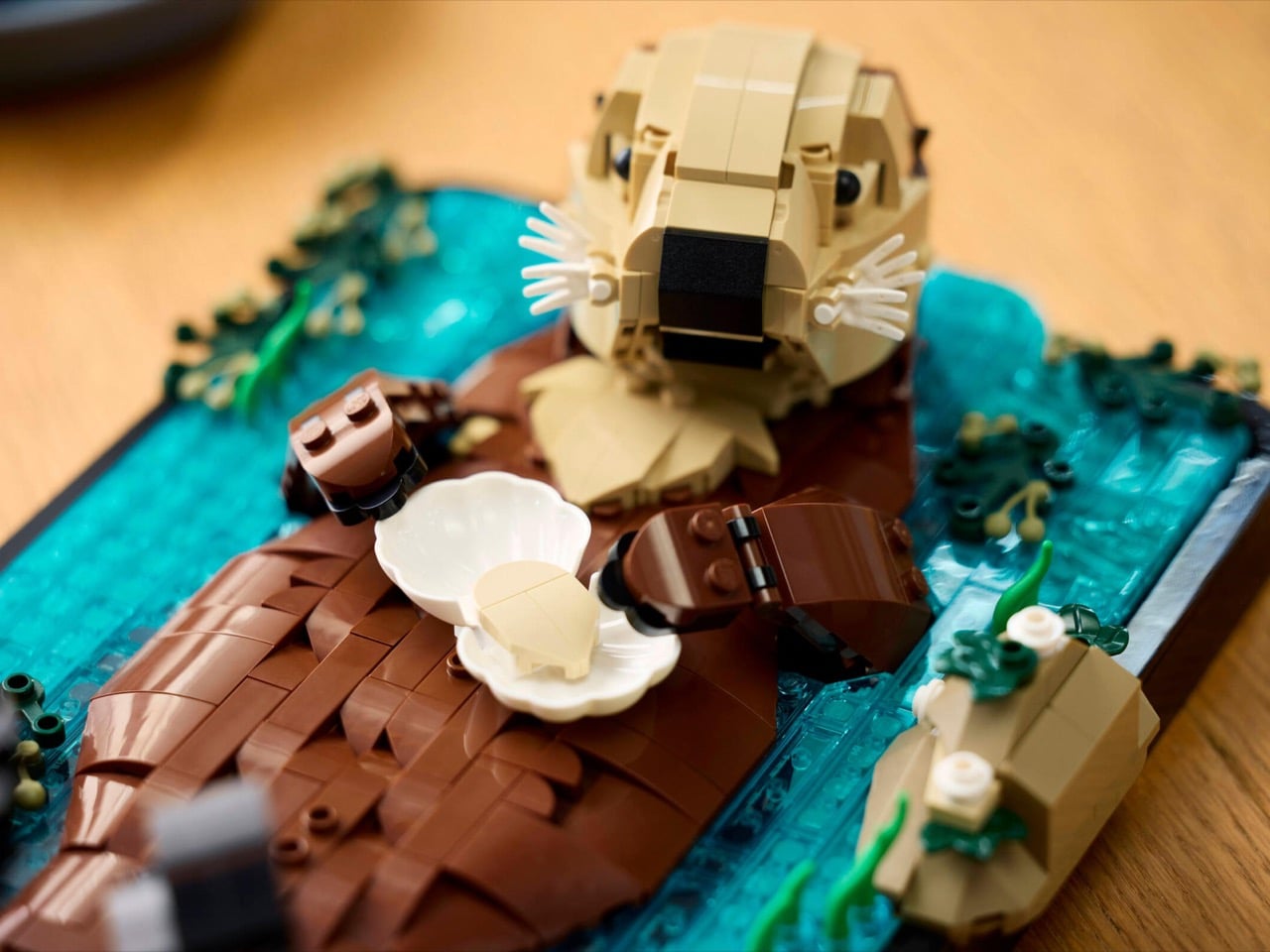
Clear blue tiles layered over teal plates create the water surface, and the effect punches well above its complexity. You get depth and shimmer without overcomplicating the build or inflating the piece count. LEGO hasn’t released official specs yet, but based on the photos this looks like a 400 to 500 piece range, putting it in that sweet spot for display sets: complex enough to be satisfying, simple enough to finish in an evening. The technique isn’t revolutionary, but the execution nails the balance between realism and LEGO’s inherent abstraction. Sometimes the best design choices are the ones that don’t call attention to themselves.
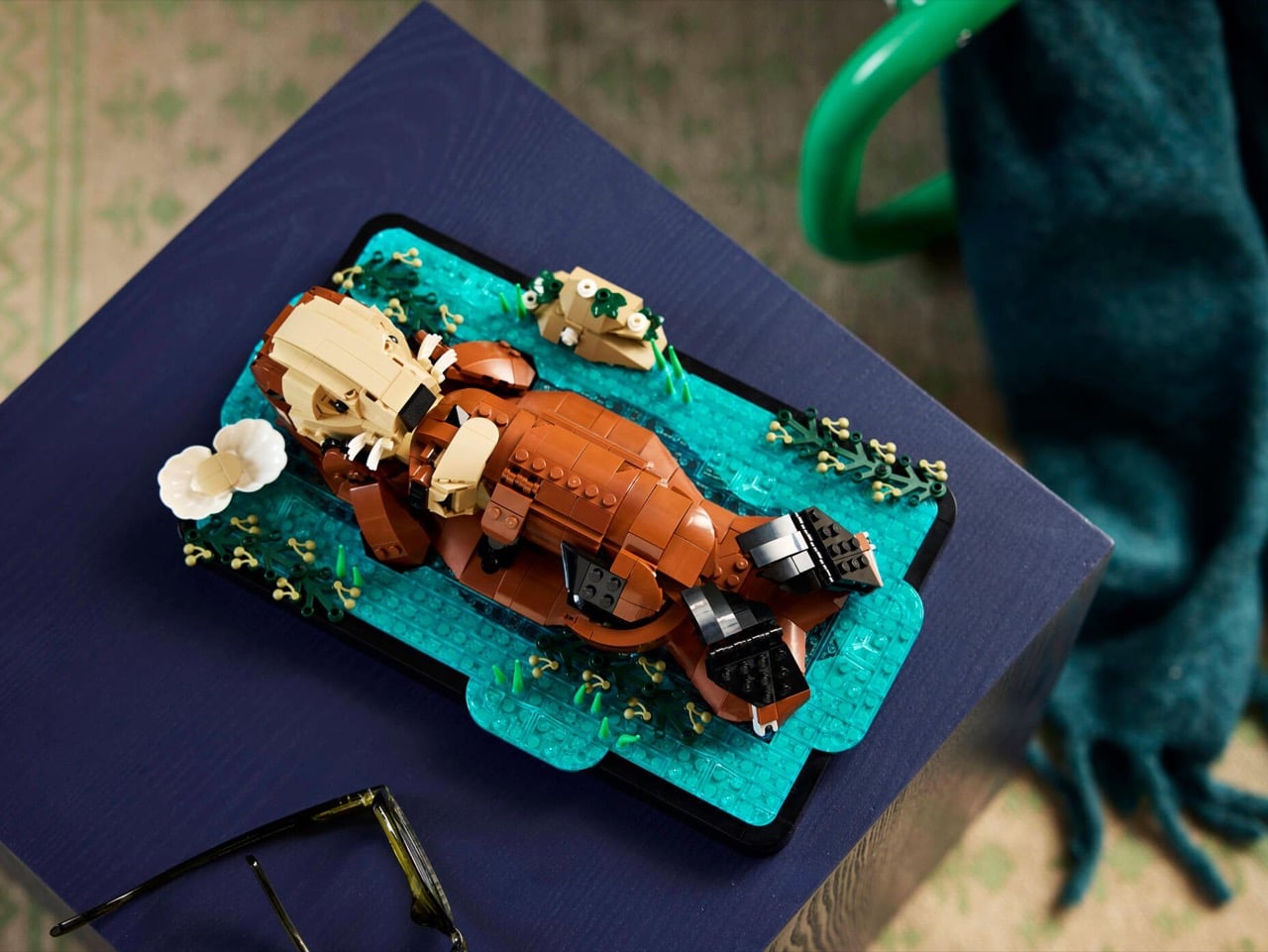

Two sets can connect so the otters hold hands while floating. Real sea otters do this to avoid drifting apart while sleeping, and McVeigh could have easily skipped this feature in favor of simpler construction. But keeping that behavioral detail intact means the set works as both a display piece and an actual reflection of sea otter ecology. Lambrecht wanted the educational angle from the start. “The sea otter plays a key factor in maintaining and nurturing kelp forests as well as affecting rocky ecosystems,” he explained during development. “It was important to me to implement those aspects into my build as well.” McVeigh honored that intent instead of stripping it away for mass market appeal, which is rarer than you’d think in licensed product development.
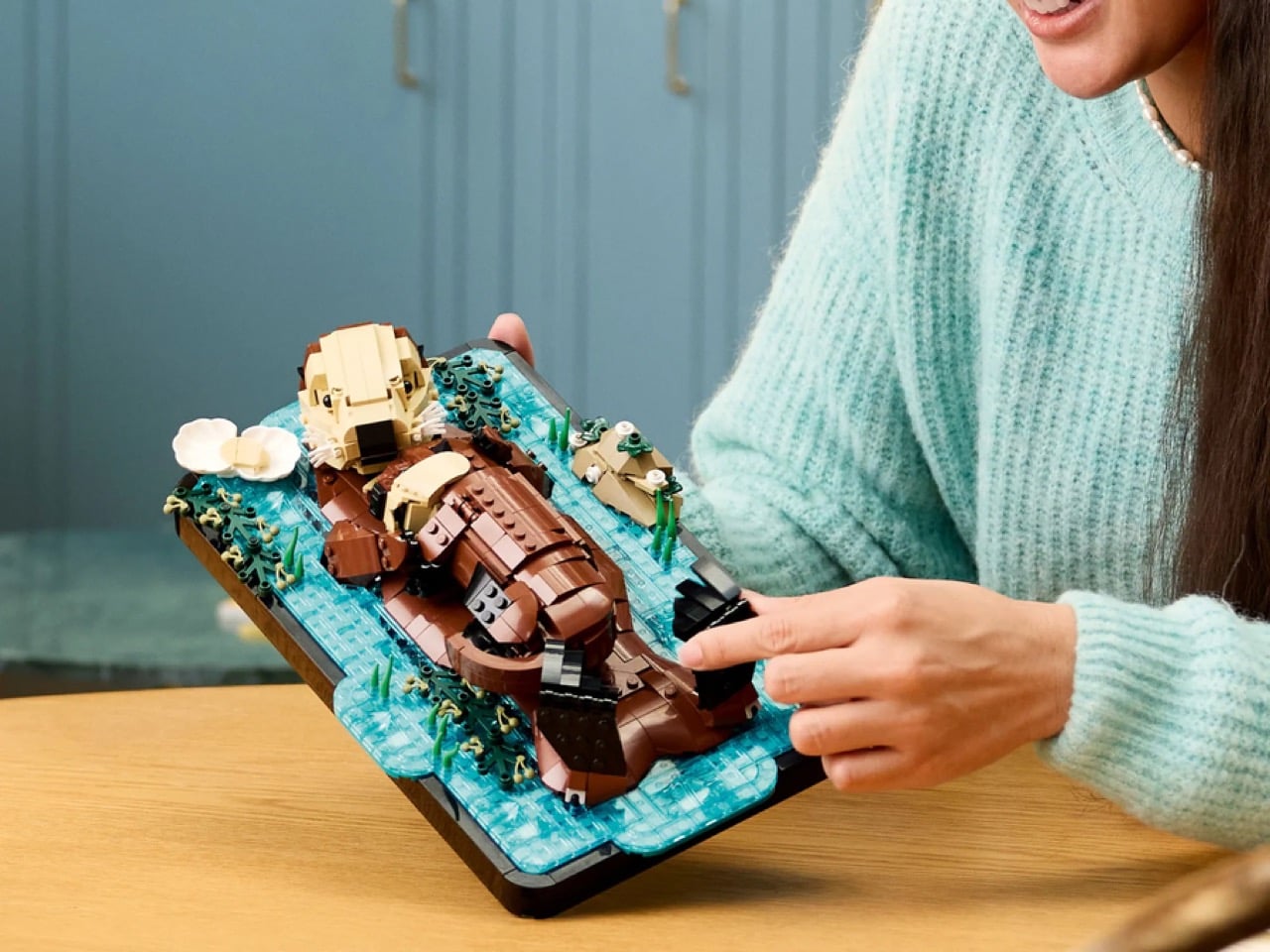
Curved brown plates stack to suggest the otter’s rounded body, white shell pieces become claws, and the head construction uses enough articulation to give each build a slightly different personality. Lambrecht mentioned that “getting the head right was definitely a tough shell to crack,” which makes sense when you’re trying to capture organic shapes with rectangular bricks. The retail version keeps that challenge visible in a good way. You can see the construction technique, understand how it works, and still read it as unmistakably otter. Lambrecht’s kayaking encounter with a river otter stuck with him. “For me, this experience was truly magical. It’s a memory I wanted to cherish, brick by brick.” That kind of personal connection to source material shows up in the final product, which is probably why McVeigh’s team worked to preserve it rather than homogenize it.
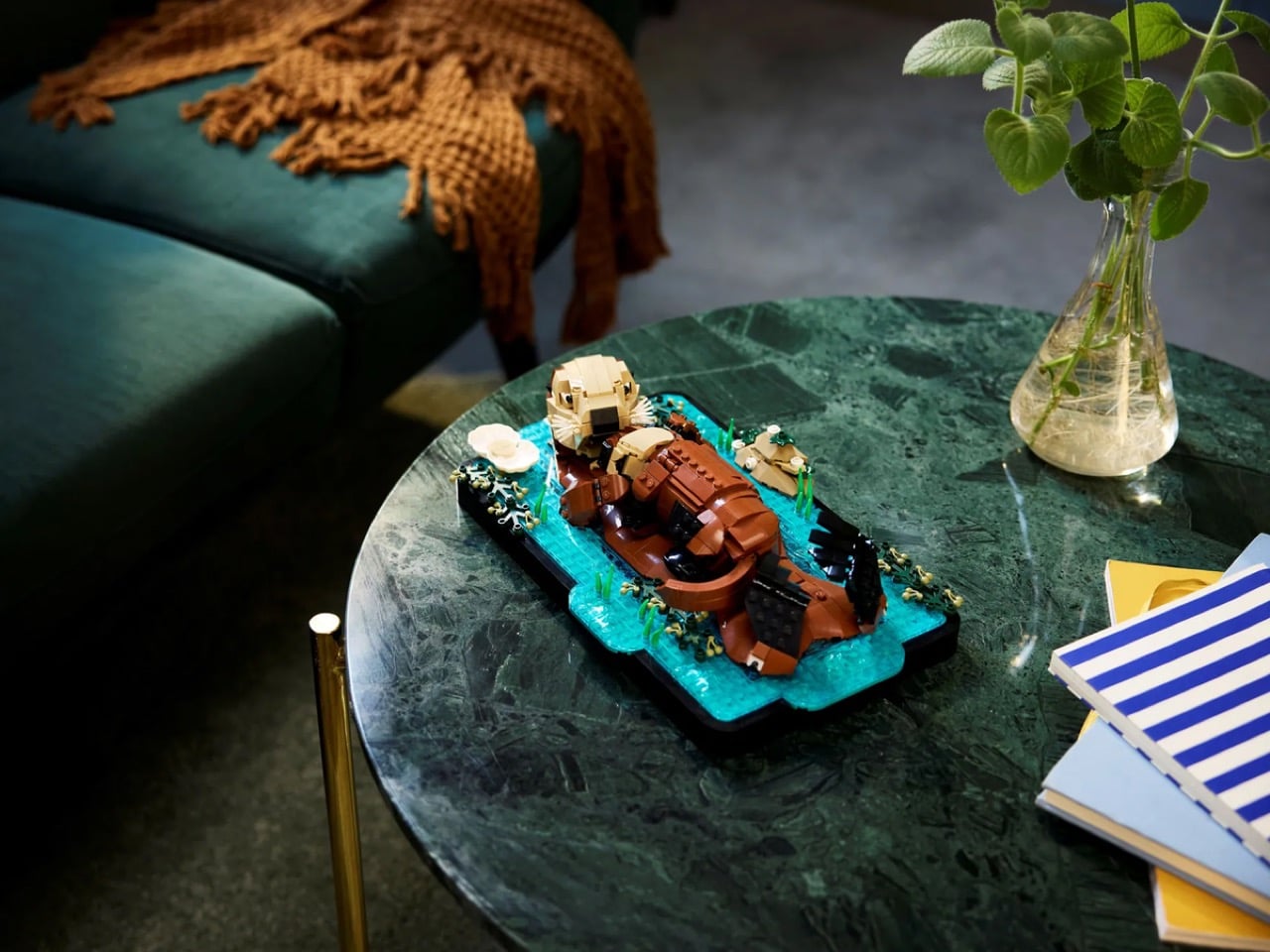
The set is up for pre-order now at $119.99 and ships March 1, 2026. That’s steeper than I expected for the piece count, but Ideas sets have been creeping up in price across the board lately. You’re paying partly for the articulation engineering, partly for the fan designer royalty structure, and partly because LEGO knows people will pay premium for cute animal builds. If you want the hand-holding feature to actually work, you’re looking at nearly $240 for two sets, which is a tough sell unless you’re really committed to the bit. Still, for a single display piece with actual ecological messaging baked in, it’s competitive with other recent Ideas releases. Pre-orders tend to sell through fast on these, so if you’re interested, don’t sleep on it.