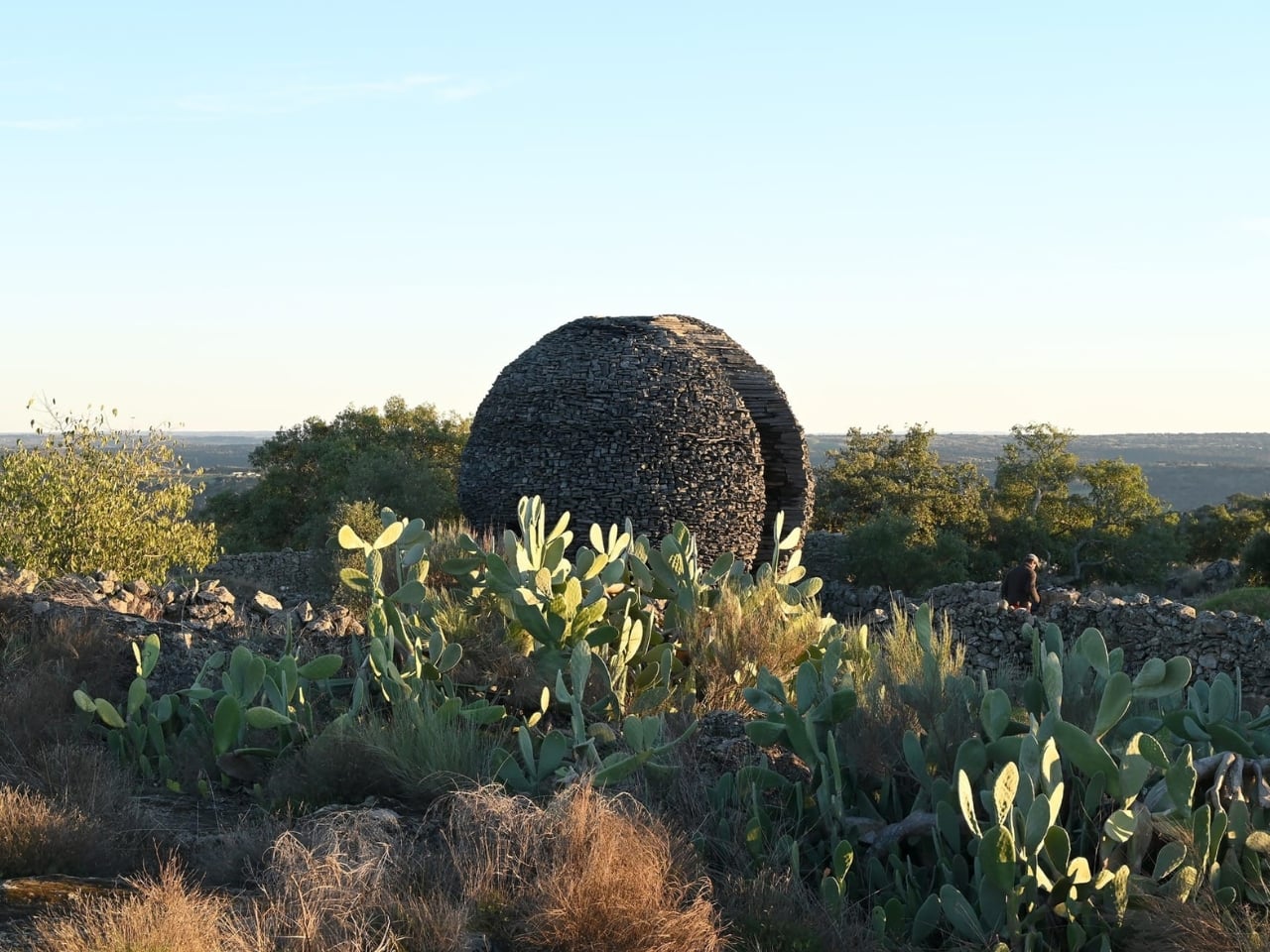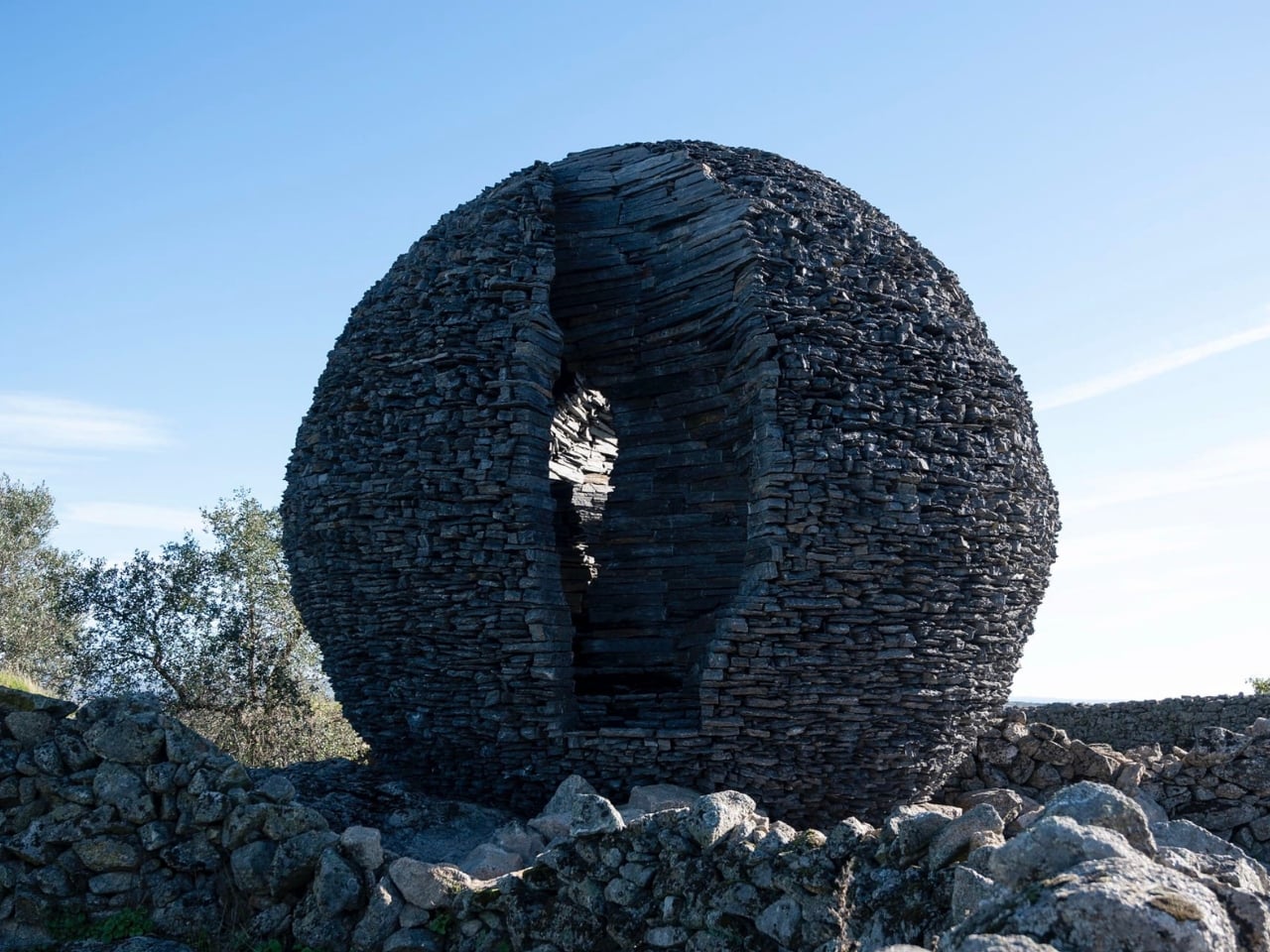

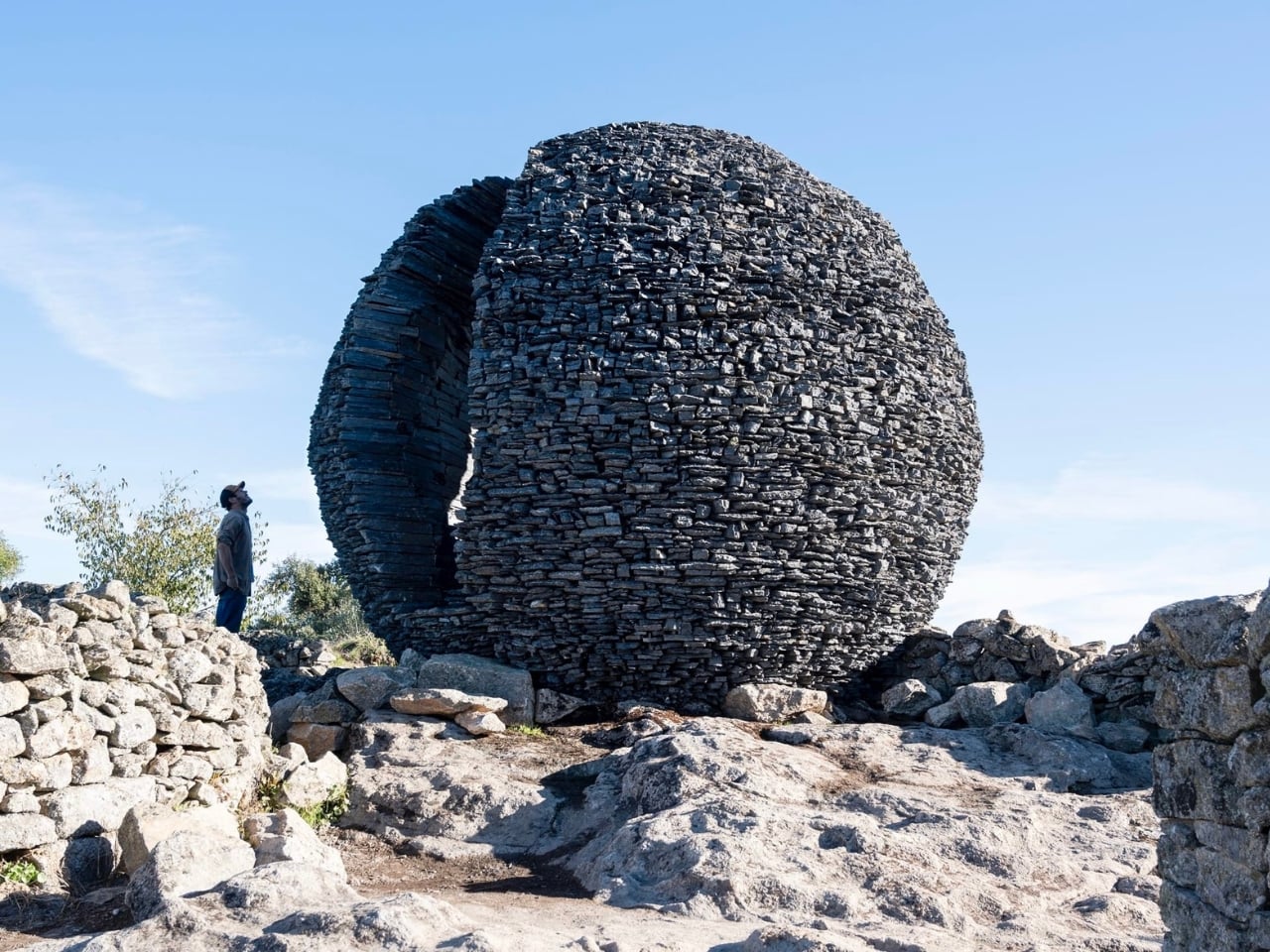
There’s something profoundly strange about seeing a perfect sphere sitting in the middle of nowhere. It doesn’t belong there in the way a building or a bridge would, yet somehow it looks like it’s been there forever. That’s the magic of Ninho Globo, a monumental stone installation by Paris-based studio Atelier Yokyok that just landed in the windswept landscape of eastern Portugal.
Picture this: you’re standing on a rocky plateau in Salvaterra do Extremo, a small border town where Portugal meets Spain. The terrain is rough, dotted with old dry stone walls and scrubby vegetation. And right there, perched on what used to be a farm, sits this five-meter sphere made entirely of local black schist, a rock that splits into beautiful flat layers. Against the sky, it looks like something that either fell from space or grew from the earth itself. Maybe both.
Designer: Atelier Yokyok
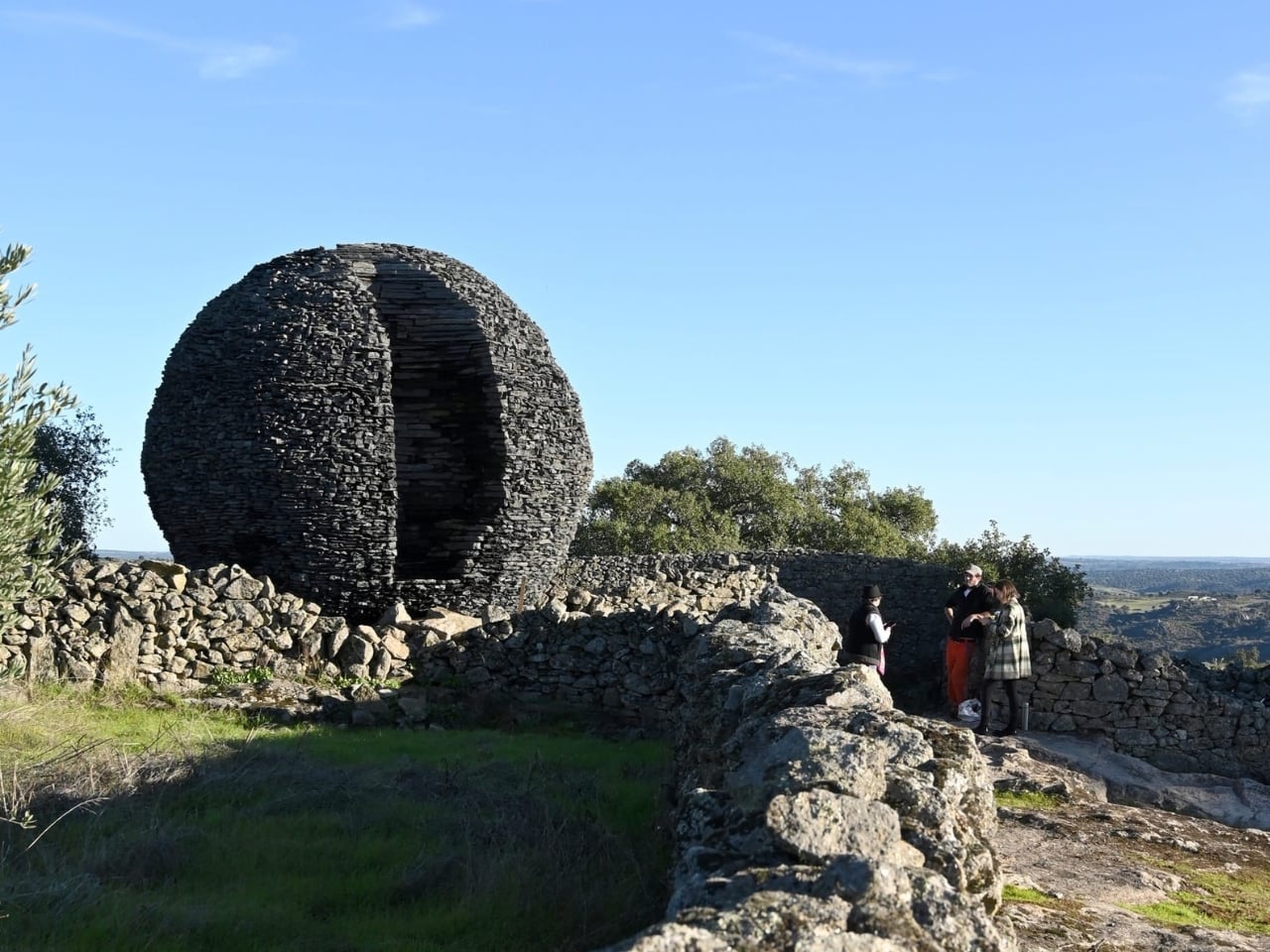
Atelier Yokyok, a four-person team founded by architects Samson Lacoste and Luc Pinsard (later joined by Laure Qaremy and Pauline Lazareff), built this sphere by hand with the local community. This wasn’t a case of a design team parachuting in with prefab materials and machines. They used the schist that’s native to this region, honoring the geological identity of the place while creating something that feels both ancient and futuristic.
What really gets you is how the piece plays with your sense of scale. From far away, Ninho Globo looks planetary, like a dark moon that’s settled into the landscape. The name itself means “Global Nest” in Portuguese, and that double meaning is intentional. Is it a celestial body? A giant nest? A seed pod waiting to crack open? It refuses to be just one thing, and that ambiguity is part of its power.
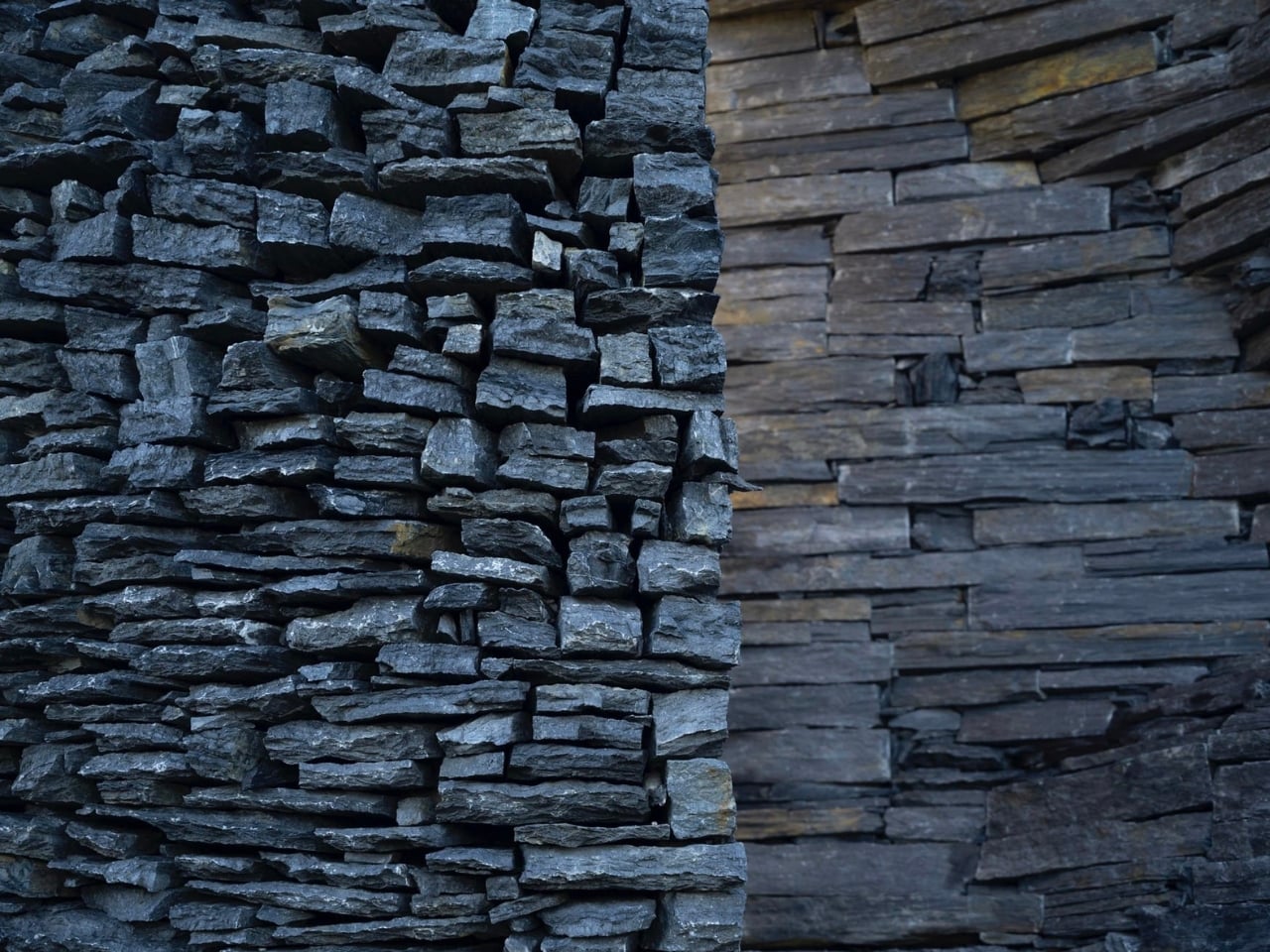
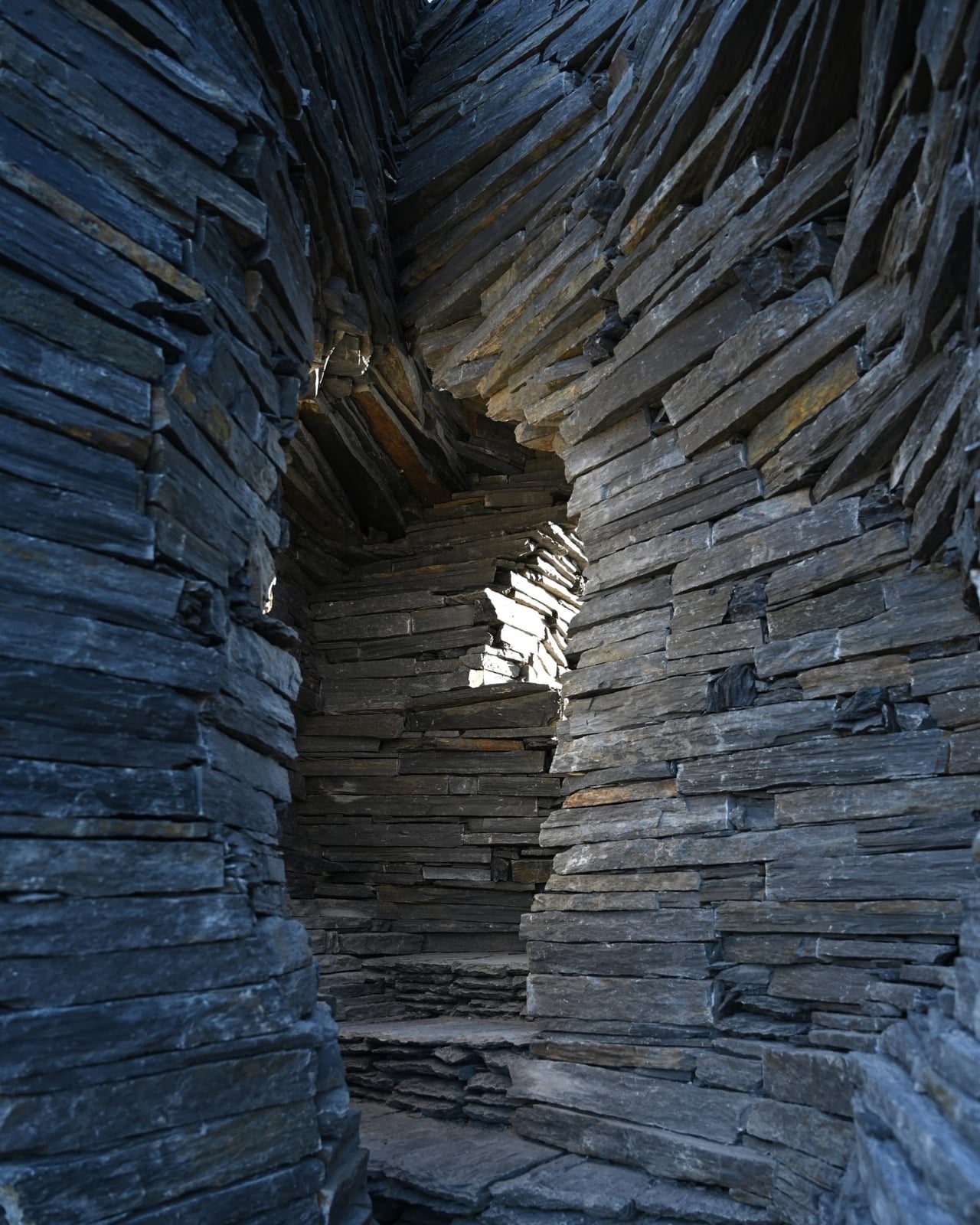
Then you get closer and notice the fissure. There’s a deliberate crack called the “Canyon” that cuts through the sphere, inviting you inside. Step through, and suddenly you’re in a hollowed-out chamber where the scale flips completely. Now you’re not looking at something massive. You’re inside it, cradled by layers of stacked stone, experiencing the weight and texture of the schist up close. The space is cool and shadowy, a shelter carved from geometry. It makes you think about what it means to inhabit a space, to be protected by it.
This kind of visceral, physical experience is what Atelier Yokyok does best. The studio has spent years exploring how our bodies interact with space, often using lightweight materials like textiles in their earlier work. But with Ninho Globo, they’ve shifted toward mineral permanence, something that will weather and age with the landscape rather than disappear. It’s a move that speaks to bigger questions about what we build, why we build it, and what we leave behind.

The project was part of Landscape Together, a program co-funded by the European Union’s Creative Europe initiative that brings artists, institutions, and local communities together to breathe new life into rural areas. Ninho Globo is now part of the permanent collection at Museu Experimenta Paisagem, an open-air museum dedicated to site-specific art. The work embodies something we’re seeing more of in contemporary art and architecture right now: a turn toward low-tech, community-driven projects rooted in place. In an era obsessed with speed and novelty, building something slowly, collectively, and with local materials feels almost radical.
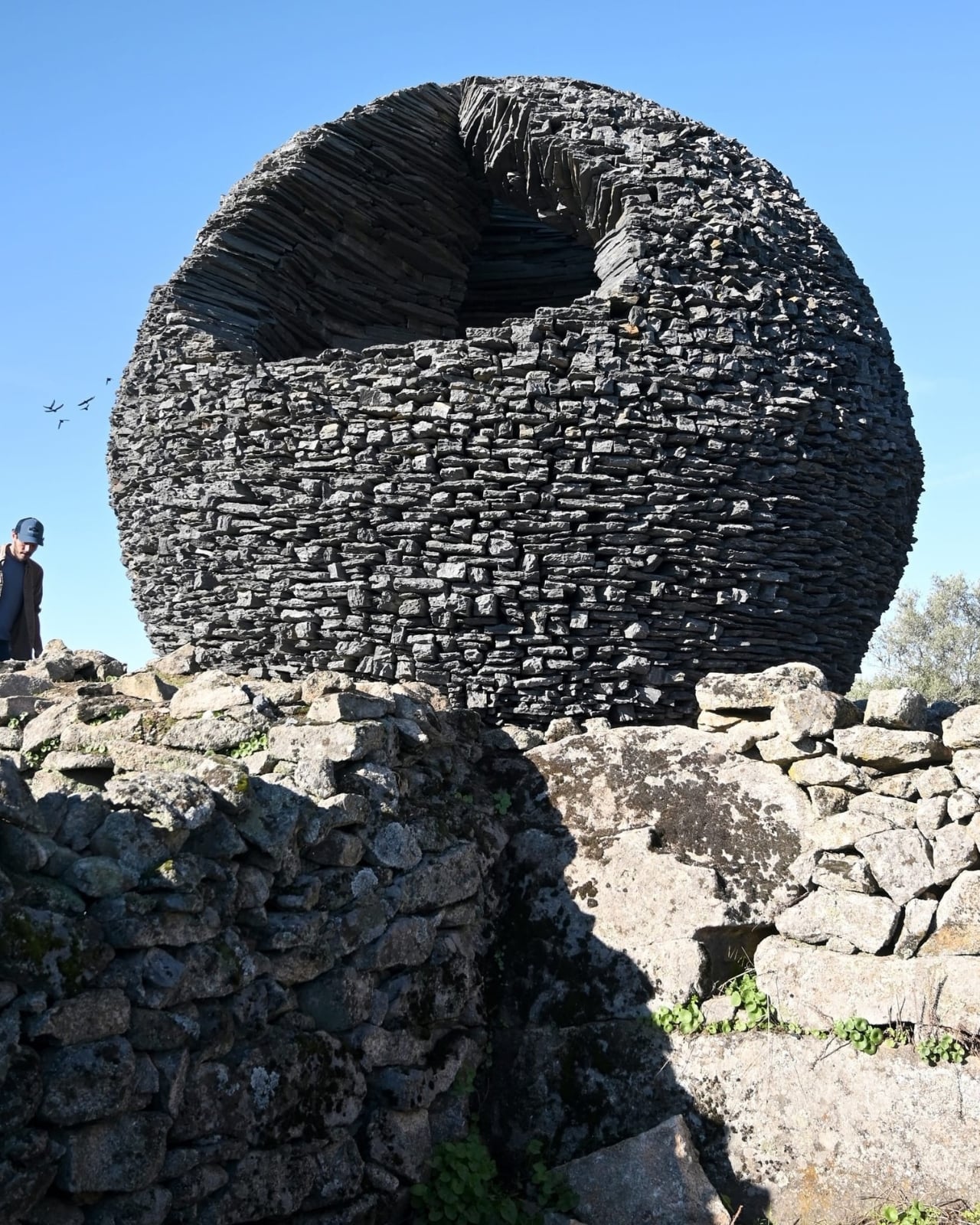
There’s also something to be said about the location. This is a border territory, a place that exists in the margins between two countries. It’s not a tourist destination. It’s remote, rugged, and deeply connected to the rhythms of the land. Water is scarce here, and the hollowed interior of Ninho Globo speaks to that absence, turning it into a meditative space where geological memory becomes tangible.
What Atelier Yokyok has created isn’t just a sculpture. It’s a conversation starter about habitat, shared resources, and how we relate to the places we live. It’s about time, both geological and human. And it’s a reminder that sometimes the simplest shape, a sphere, can hold the most complex meanings.